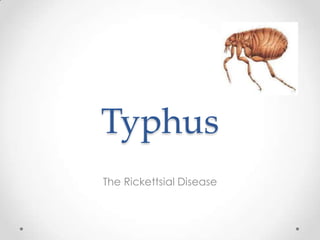
Typhus
The Rickettsial Disease
Rickettsiae:
•   parasitic bacteria
•   Obligate intracellular parasite
•   Bigger than virus
•   Smaller than bacteria
•   Carried by host arthropods
•   Invade human mononuclear cells, neutrophils, bld
    vessel endotheliums
Pathology
• Widespread vasculitis and endothelial
  proliferation affect organs
• Thrombotic occlusion  gangrene
• Travellers/ inhabitants of endemic areas likely have
  septicemia but (-)cultures ?Typhus
• Incubation period: 2 -23 days
Signs
 Mild/ asymptomatic
 Severe/ systemic: sudden fever, frontal
  headache, confusion & jaundice
 Eschar: dark crusty ulcer at the site of a bite
 Rickettsial rash: macular, papular, petechial or
  hemorrhagic
Laboratory
•   Hemolysis
•   Neutrophilia
•   Thrombocytopenia
•   Dec clotting
•   Hepatitis
•   Renal impairment
Epidemic typhus
•   R. prowazeki
•   Spread: human lice Pediculus humanus
•   Brill Zinnser Disease
•   Rash: truncal, then peripheral
Rocky Mountain Spotted
         Fever
• R. rickettsii
• Tick- borne
• Rash begins as macules on hands/feet
Spreading, becoming petechial or hemorrhagic
Tick Typhus
•   R. conorri
•   Rash starts in axilla
•   Becoming purpuric as it spreads
•   Conjunctival suffusion
•   Jaundice, deranged
    clotting, meningoencephalitis, renal
    failure, cerebritis
Scrub typhus
•   Oriental tsutsugamushi
•   Most common in SE Asia
•   Signs:
•   Eschar from chigger bite
•   Hepatomegaly, cough, lymphadenopathy, tachyp
    nea, abdominal
    pain, constipation, edema, splenomegaly, vomiting
    , rash, petechiae, sudden deafness,
Scrub typhus
• CXR: bilateral infiltration
• Blood: LFT
  inc, thrombocytopenia, neutrophilia, lymphocytosis,
   +/- atypical lymphocytosis
• Complications: pneumonia, pulmonary
  edema, meningitis, shock
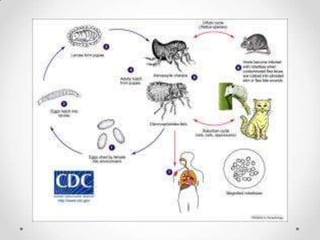
Murine Endemic Typhus
• R. typhi
• Spread: fleas from rats to humans
• Prevalent in warm coastal ports
Diagnosis
• clinical history
• physical exam
• tests based on identification of the bacterial genus
  and species by PCR testing of skin biopsy of skin
  rash, skin lesions/blood samples
• immunohistological staining that identifies the
  bacteria within infected tissue (skin tissue, usually)
• Dx late or after the disease has been treated with
  antibiotics, when significant titers of antirickettsial
  antibodies are detected by immunological
  techniques.
Diagnosis
•   CBC: show anemia and low platelets
•   High level of typhus antibodies
•   Low level of albumin
•   Low sodium level
•   Mild kidney failure
•   Mildly high liver enzymes
Treatment
• Doxycycline 100mg/ 12hrs PO/IV for 7 days or
48 hours after temp is normal
• Chloramphenicol 500mg/ 6 hours PO for 10-14 days
• Azithromycin 500 mg 1 dose for tick & Scrub typhus
http://crisbertcualteros.page.tl

Typhus

  • 1.
  • 2.
    Rickettsiae: • parasitic bacteria • Obligate intracellular parasite • Bigger than virus • Smaller than bacteria • Carried by host arthropods • Invade human mononuclear cells, neutrophils, bld vessel endotheliums
  • 3.
    Pathology • Widespread vasculitisand endothelial proliferation affect organs • Thrombotic occlusion  gangrene
  • 4.
    • Travellers/ inhabitantsof endemic areas likely have septicemia but (-)cultures ?Typhus • Incubation period: 2 -23 days
  • 5.
    Signs  Mild/ asymptomatic Severe/ systemic: sudden fever, frontal headache, confusion & jaundice  Eschar: dark crusty ulcer at the site of a bite  Rickettsial rash: macular, papular, petechial or hemorrhagic
  • 6.
    Laboratory • Hemolysis • Neutrophilia • Thrombocytopenia • Dec clotting • Hepatitis • Renal impairment
  • 7.
    Epidemic typhus • R. prowazeki • Spread: human lice Pediculus humanus • Brill Zinnser Disease • Rash: truncal, then peripheral
  • 8.
    Rocky Mountain Spotted Fever • R. rickettsii • Tick- borne • Rash begins as macules on hands/feet Spreading, becoming petechial or hemorrhagic
  • 9.
    Tick Typhus • R. conorri • Rash starts in axilla • Becoming purpuric as it spreads • Conjunctival suffusion • Jaundice, deranged clotting, meningoencephalitis, renal failure, cerebritis
  • 10.
    Scrub typhus • Oriental tsutsugamushi • Most common in SE Asia • Signs: • Eschar from chigger bite • Hepatomegaly, cough, lymphadenopathy, tachyp nea, abdominal pain, constipation, edema, splenomegaly, vomiting , rash, petechiae, sudden deafness,
  • 11.
    Scrub typhus • CXR:bilateral infiltration • Blood: LFT inc, thrombocytopenia, neutrophilia, lymphocytosis, +/- atypical lymphocytosis • Complications: pneumonia, pulmonary edema, meningitis, shock
  • 12.
    Murine Endemic Typhus •R. typhi • Spread: fleas from rats to humans • Prevalent in warm coastal ports
  • 13.
    Diagnosis • clinical history •physical exam • tests based on identification of the bacterial genus and species by PCR testing of skin biopsy of skin rash, skin lesions/blood samples • immunohistological staining that identifies the bacteria within infected tissue (skin tissue, usually) • Dx late or after the disease has been treated with antibiotics, when significant titers of antirickettsial antibodies are detected by immunological techniques.
  • 14.
    Diagnosis • CBC: show anemia and low platelets • High level of typhus antibodies • Low level of albumin • Low sodium level • Mild kidney failure • Mildly high liver enzymes
  • 16.
    Treatment • Doxycycline 100mg/12hrs PO/IV for 7 days or 48 hours after temp is normal • Chloramphenicol 500mg/ 6 hours PO for 10-14 days • Azithromycin 500 mg 1 dose for tick & Scrub typhus
  • 17.