http://crisbertcualteros.page.tl 
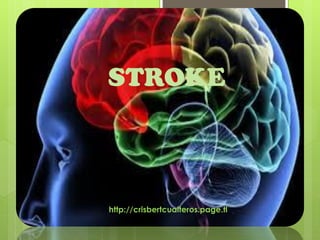
STROKE
Stroke occurs when the supply of blood to the brain is either interrupted or reduced 
Brain does not get enough oxygen or nutrients which causes brain cells to die.
Stroke Classification: 
Ischemic 
-Ischemic strokes are the most common ( 80%) of stokes 
-occur when there is an occlusion of a blood vessel impairing the flow of blood to the brain 
-Ischemic strokes are divided into: 
a) thrombotic b) embolic c) systemic hypoperfusion. 
Hemorrhagic
Red Flags 
Pain in Acute Stroke Patient: 
 AMI 
Aortic Dissection 
Pneumothorax 
Limb Ischemia
Low BP in Acute Stroke Patient: 
Silent MI 
Infective Endocarditis
Mimics of Stroke: 
Hypoglycemia 
Neuropathies/plexopathies 
Structural Brain Lesion(SDH) 
Focal Epilepsy with Todd’s Paralysis 
Migraine Aura 
Transient Global Amnesia 
Labyrithine D/O 
Parkinsons Disease 
Alcohol Intoxication
Golden Hour: 
within 3.5 hours  thrombolysis 
Apply ABC 
HTN: treat only if BP >220/110
Labs: 
FBC 
Renal Panel 
PT/ PTT 
Fasting Glucose 
HBA1C 
CT brain
Emergencies in Stroke 
Seizure: <2% of patients 
-Large cortical stroke 
-Bleeding 
-CVT 
Delirium 
Intracranial Hemorrhage 
-Inform Neurosurgery ASAP 
-Target BP: <160/90 
-? hemicraniectomy
Emergencies in Stroke 
Large Cerebellar Stroke 
-High risk for posterior fossa compression 
-Hydrocephalus 
Potentially Malignant MCA Infarcts 
Sepsis/DVT/PE
Chronic Strokes 
TACI 
PACI 
LACI 
POCI
Total anterior circulation syndrome 
Unilateral motor, sensory deficit, or both affecting at least two of face, arm, and leg 
Higher cerebral dysfunction, e.g. dysphasia, dyspraxia, neglect, dyscalculia 
Homonymous hemianopia
Partial anterior circulation syndrome 
Two of the three components of TACS or pure higher cortical dysfunction or pure motor or sensory deficit not as extensive as for lacunar syndromes
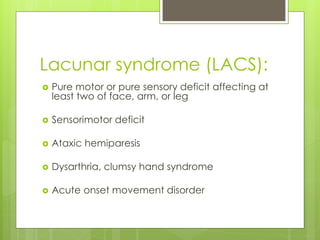
Lacunar syndrome (LACS): 
Pure motor or pure sensory deficit affecting at least two of face, arm, or leg 
Sensorimotor deficit 
Ataxic hemiparesis 
Dysarthria, clumsy hand syndrome 
Acute onset movement disorder
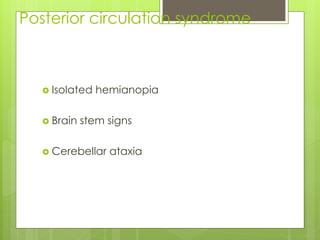
Posterior circulation syndrome 
Isolated hemianopia 
Brain stem signs 
Cerebellar ataxia
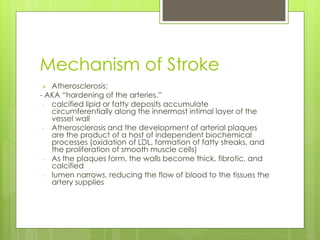
Mechanism of Stroke 
Atherosclerosis: 
- AKA “hardening of the arteries,” 
-calcified lipid or fatty deposits accumulate circumferentially along the innermost intimal layer of the vessel wall 
-Atherosclerosis and the development of arterial plaques are the product of a host of independent biochemical processes (oxidation of LDL, formation of fatty streaks, and the proliferation of smooth muscle cells) 
-As the plaques form, the walls become thick, fibrotic, and calcified 
-lumen narrows, reducing the flow of blood to the tissues the artery supplies
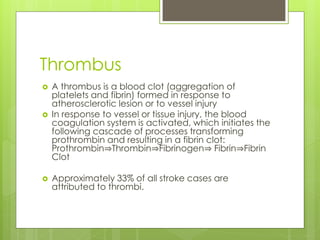
Thrombus 
A thrombus is a blood clot (aggregation of platelets and fibrin) formed in response to atherosclerotic lesion or to vessel injury 
In response to vessel or tissue injury, the blood coagulation system is activated, which initiates the following cascade of processes transforming prothrombin and resulting in a fibrin clot: Prothrombin⇒Thrombin⇒Fibrinogen⇒ Fibrin⇒Fibrin Clot 
Approximately 33% of all stroke cases are attributed to thrombi.
CVD 
Cardiovascular diseases: 
atrial fibrillation and myocardial infarction weaken the cardiac wall and introduce abnormalities in the physiological function of the heartbeat 
result in reduced systemic pressure and conditions of ischemia.
HTN in Stroke (Ischemic) 
Not to start anti-HTN in 24hours 
To aim <140/90 in 2weeks post stroke 
Lacunar Stroke: AIM: <130/90 
With IHD: use bets blocker / ACEI 
With DM: use ACEI 
Severe Intracranial Disease: allow SBP 130- 150; to drop BP slowly
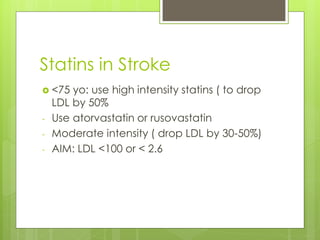
Statins in Stroke 
<75 yo: use high intensity statins ( to drop LDL by 50% 
-Use atorvastatin or rusovastatin 
-Moderate intensity ( drop LDL by 30-50%) 
-AIM: LDL <100 or < 2.6
DM in Stroke 
AIM HBA1C: <7.0
Anticoagulation in AF 
Target INR: 2-3 
NOAC vs Warfarin 
Pt with contraincation for warfarin: Aspirin + clopidogrel 
Pt with Intracranial Stenosis: DAPT x 3/12 then back to single antiplate 
CHANCE TRIAL: Aspirin + Plavix x 3/52 then LIFELONG Aspirin
Sources: 
Medscape 
Harrisons 
Oxford 
Google

Stroke

  • 1.
  • 2.
    Stroke occurs whenthe supply of blood to the brain is either interrupted or reduced Brain does not get enough oxygen or nutrients which causes brain cells to die.
  • 3.
    Stroke Classification: Ischemic -Ischemic strokes are the most common ( 80%) of stokes -occur when there is an occlusion of a blood vessel impairing the flow of blood to the brain -Ischemic strokes are divided into: a) thrombotic b) embolic c) systemic hypoperfusion. Hemorrhagic
  • 4.
    Red Flags Painin Acute Stroke Patient:  AMI Aortic Dissection Pneumothorax Limb Ischemia
  • 5.
    Low BP inAcute Stroke Patient: Silent MI Infective Endocarditis
  • 6.
    Mimics of Stroke: Hypoglycemia Neuropathies/plexopathies Structural Brain Lesion(SDH) Focal Epilepsy with Todd’s Paralysis Migraine Aura Transient Global Amnesia Labyrithine D/O Parkinsons Disease Alcohol Intoxication
  • 7.
    Golden Hour: within3.5 hours  thrombolysis Apply ABC HTN: treat only if BP >220/110
  • 8.
    Labs: FBC RenalPanel PT/ PTT Fasting Glucose HBA1C CT brain
  • 9.
    Emergencies in Stroke Seizure: <2% of patients -Large cortical stroke -Bleeding -CVT Delirium Intracranial Hemorrhage -Inform Neurosurgery ASAP -Target BP: <160/90 -? hemicraniectomy
  • 10.
    Emergencies in Stroke Large Cerebellar Stroke -High risk for posterior fossa compression -Hydrocephalus Potentially Malignant MCA Infarcts Sepsis/DVT/PE
  • 11.
    Chronic Strokes TACI PACI LACI POCI
  • 12.
    Total anterior circulationsyndrome Unilateral motor, sensory deficit, or both affecting at least two of face, arm, and leg Higher cerebral dysfunction, e.g. dysphasia, dyspraxia, neglect, dyscalculia Homonymous hemianopia
  • 13.
    Partial anterior circulationsyndrome Two of the three components of TACS or pure higher cortical dysfunction or pure motor or sensory deficit not as extensive as for lacunar syndromes
  • 14.
    Lacunar syndrome (LACS): Pure motor or pure sensory deficit affecting at least two of face, arm, or leg Sensorimotor deficit Ataxic hemiparesis Dysarthria, clumsy hand syndrome Acute onset movement disorder
  • 15.
    Posterior circulation syndrome Isolated hemianopia Brain stem signs Cerebellar ataxia
  • 16.
    Mechanism of Stroke Atherosclerosis: - AKA “hardening of the arteries,” -calcified lipid or fatty deposits accumulate circumferentially along the innermost intimal layer of the vessel wall -Atherosclerosis and the development of arterial plaques are the product of a host of independent biochemical processes (oxidation of LDL, formation of fatty streaks, and the proliferation of smooth muscle cells) -As the plaques form, the walls become thick, fibrotic, and calcified -lumen narrows, reducing the flow of blood to the tissues the artery supplies
  • 17.
    Thrombus A thrombusis a blood clot (aggregation of platelets and fibrin) formed in response to atherosclerotic lesion or to vessel injury In response to vessel or tissue injury, the blood coagulation system is activated, which initiates the following cascade of processes transforming prothrombin and resulting in a fibrin clot: Prothrombin⇒Thrombin⇒Fibrinogen⇒ Fibrin⇒Fibrin Clot Approximately 33% of all stroke cases are attributed to thrombi.
  • 18.
    CVD Cardiovascular diseases: atrial fibrillation and myocardial infarction weaken the cardiac wall and introduce abnormalities in the physiological function of the heartbeat result in reduced systemic pressure and conditions of ischemia.
  • 19.
    HTN in Stroke(Ischemic) Not to start anti-HTN in 24hours To aim <140/90 in 2weeks post stroke Lacunar Stroke: AIM: <130/90 With IHD: use bets blocker / ACEI With DM: use ACEI Severe Intracranial Disease: allow SBP 130- 150; to drop BP slowly
  • 20.
    Statins in Stroke <75 yo: use high intensity statins ( to drop LDL by 50% -Use atorvastatin or rusovastatin -Moderate intensity ( drop LDL by 30-50%) -AIM: LDL <100 or < 2.6
  • 21.
    DM in Stroke AIM HBA1C: <7.0
  • 22.
    Anticoagulation in AF Target INR: 2-3 NOAC vs Warfarin Pt with contraincation for warfarin: Aspirin + clopidogrel Pt with Intracranial Stenosis: DAPT x 3/12 then back to single antiplate CHANCE TRIAL: Aspirin + Plavix x 3/52 then LIFELONG Aspirin
  • 23.