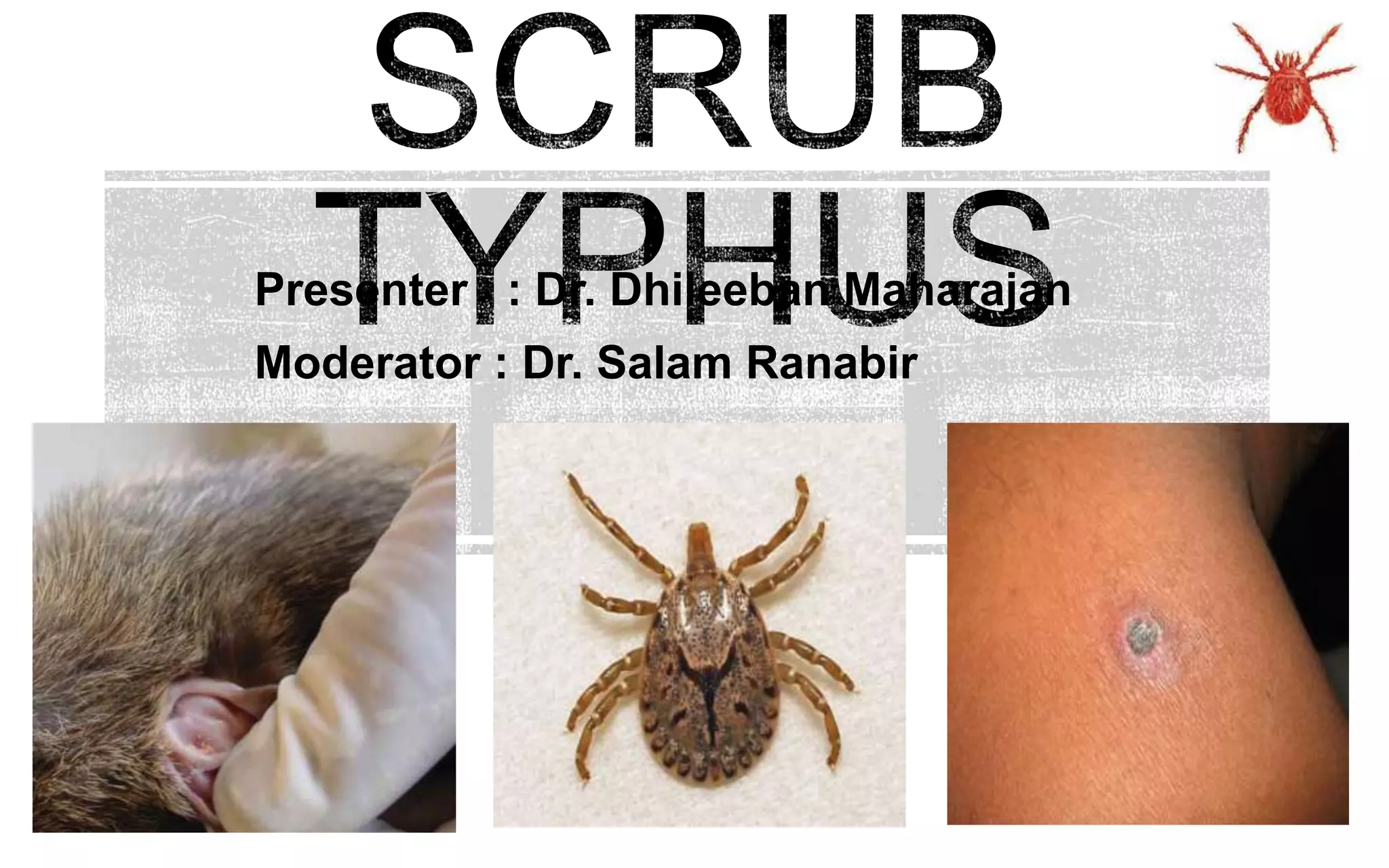
Presenter : Dr. Dhileeban Maharajan
Moderator : Dr. Salam Ranabir
 Most common re-emerging diseases in India
 Documented in India since 1930
 First reported in Assam during second world war
 Scrub is the commonest Rickettsioses
 *50% of undifferentiated fever due to Rickettsioses (*Selected Areas)
 Obligate intracellular, gram-negative bacteria
 Rickettsia, Orientia, Ehrlichia, Neorickettsia, Neoehrlichia, and
Anaplasma
 Divided into typhus group and spotted fever group
 Orientia spp. makes up the scrub typhus group
 Zoonoses where human beings are accidentally involved
 Among the major groups of
rickettsioses, commonly reported
diseases in India are
 scrub typhus
 murine flea-borne typhus
 Indian Tick Typhus
 Q fever.
 Among Rickettsioses, scrub is the commonest
 Mite borne infectious disease
 Orientia tsutsugamushi
 Transmitted through Larval mites or “chiggers”
 Belonging to family Trombiculidae
 Only larval stages take blood meal
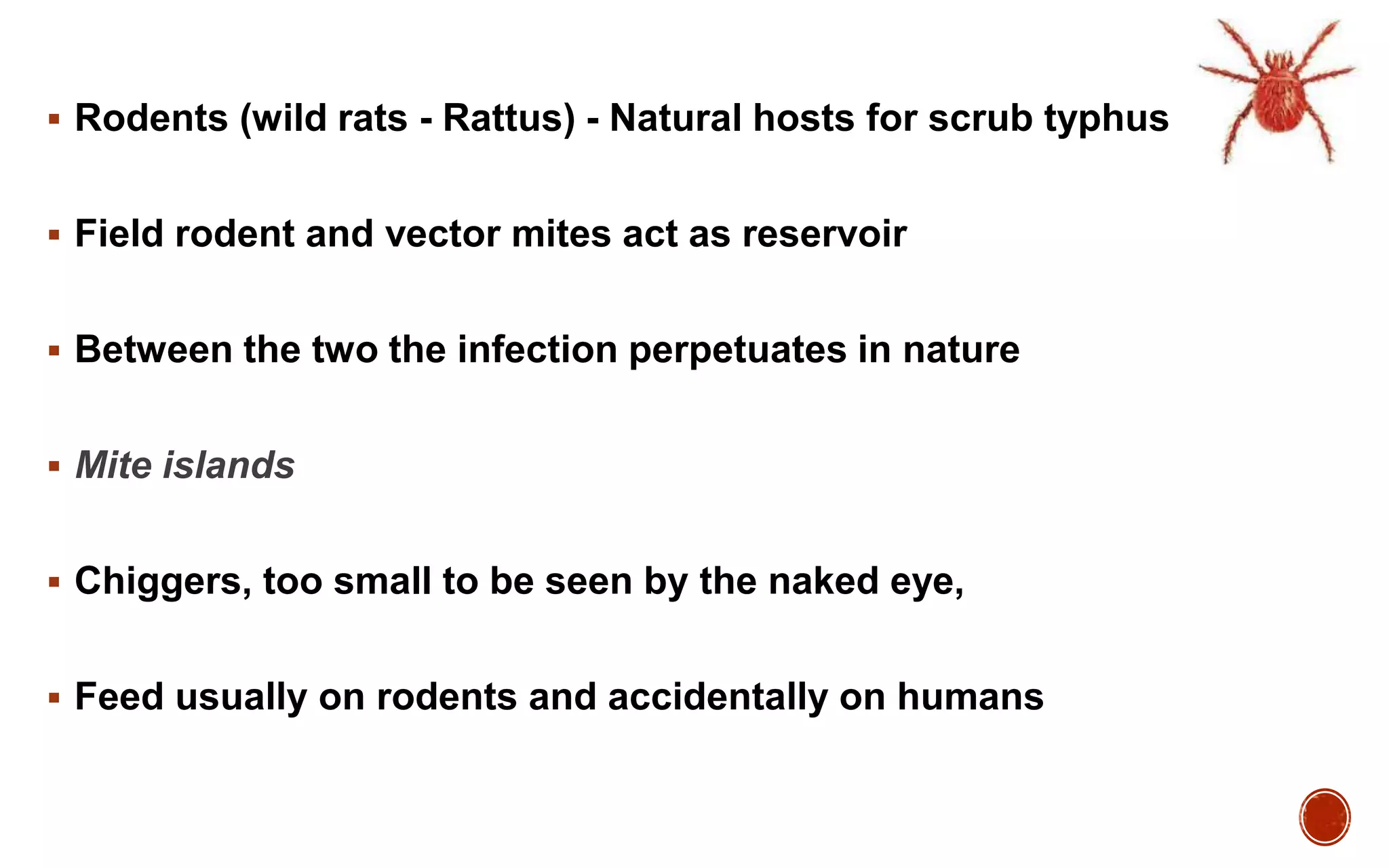
 Rodents (wild rats - Rattus) - Natural hosts for scrub typhus
 Field rodent and vector mites act as reservoir
 Between the two the infection perpetuates in nature
 Mite islands
 Chiggers, too small to be seen by the naked eye,
 Feed usually on rodents and accidentally on humans
 Transmit infection during the prolonged feeding which can last
1-3 days
 Incidence of scrub typhus is higher among rural population
 Obligate intracellular pathogens
 Rod shaped bacterium.
 Can be cultured in cell monolayers.
 Gram Staining - appear as gram negative bacteria.
 Highly virulent - need biosafety level 3 facilities
 Exhibit extensive genomic and antigenic heterogeneity
(Orientia tstsugamushi)
 Found throughout the mites body but
greatest number in salivary glands.
 Does not have a vacuolar membrane -
grows freely in the cytoplasm of infected
cells
 Needs to infect eukaryotic cells in order to
multiply
Serotypes
1. Karp
2. Gilliam
3. Kawazaki
4. Boryon
5. Kato
 First described in China in 313 AD
 First isolated in Japan in 1930
 Asia Pacific Rim
 2/3 are Farmers
 Highest in 40 to 60 years
 80% during summer and autumn
Tsutsugamushi Triangle
Regions where scrub
typhus is endemic
 60 species of mites
 Chigger mites (0.2 to 0.4mm)
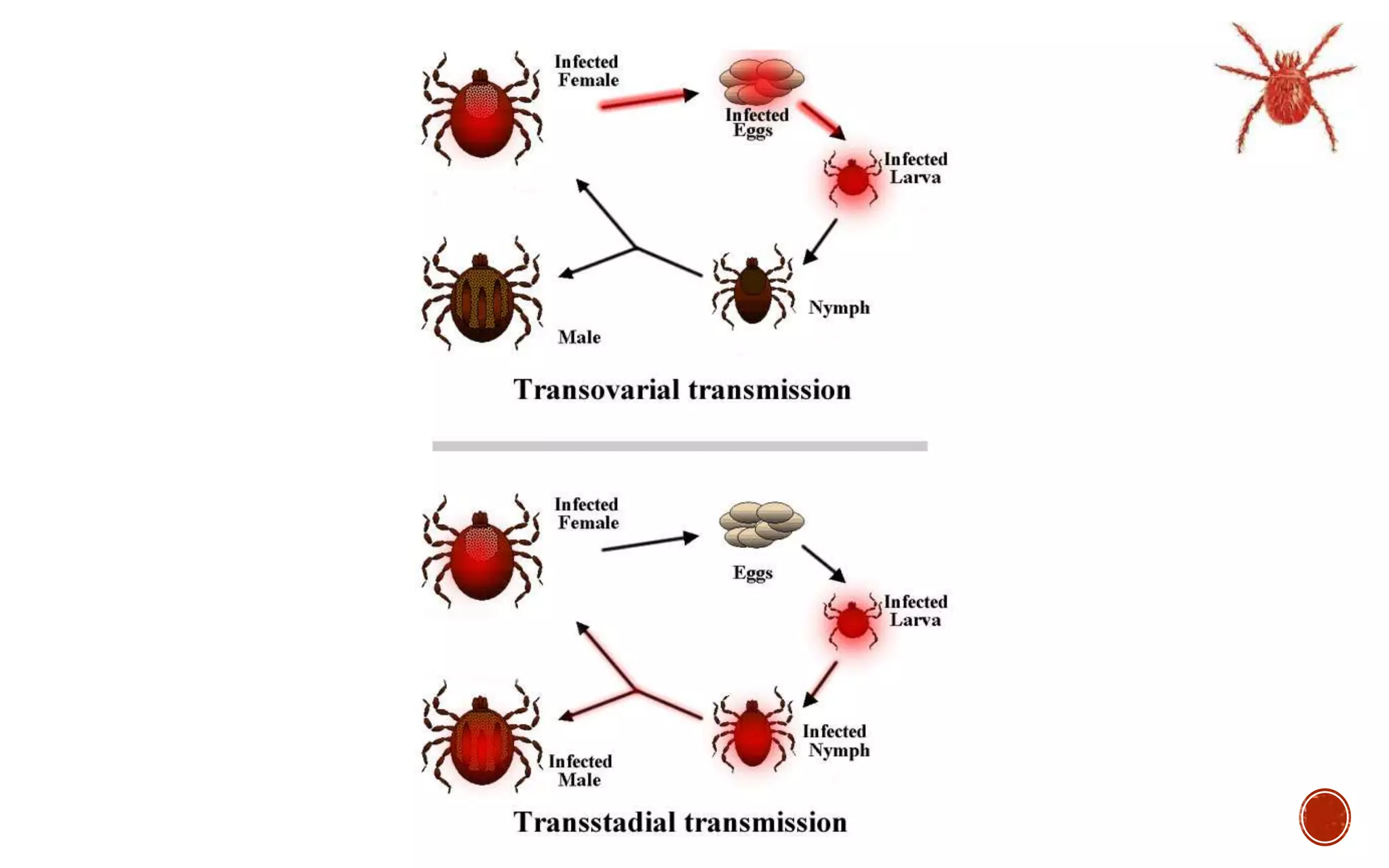
 Both Vector and Reservoir
 Transovarial transmission
 Transstadial transmission
(Larval trombiculid mites - Chiggers)
Chigger Bite
Bacteria multiply at
Innoculation site
Attach to
Endothelial cells
Stimulate Phagocytosis
Escapes Phagosomes
Replicate in cytoplasm
Disseminate into multiple organs
(Through endothelial cells and macrophages)
Type 1 immune
response
Papule
Ulcer
Necrosis
Eschar
+
Lymphadenopathy
Cytokines
 Geographically focal disease
 Mite islands
 Incubation period of 6–21 days
 Mild and self-limiting to fatal.
 Scrub typhus lasts for 14 to 21 days without treatment.
 Death may occur end of 2nd week due to complications.
 Common symptoms
 Fever (High Grade > 104 F; Median 14.4 days)
 Intense Generalized Headache
 Diffuse myalgias
 Nausea, Vomiting, Diarrhea
 Cough
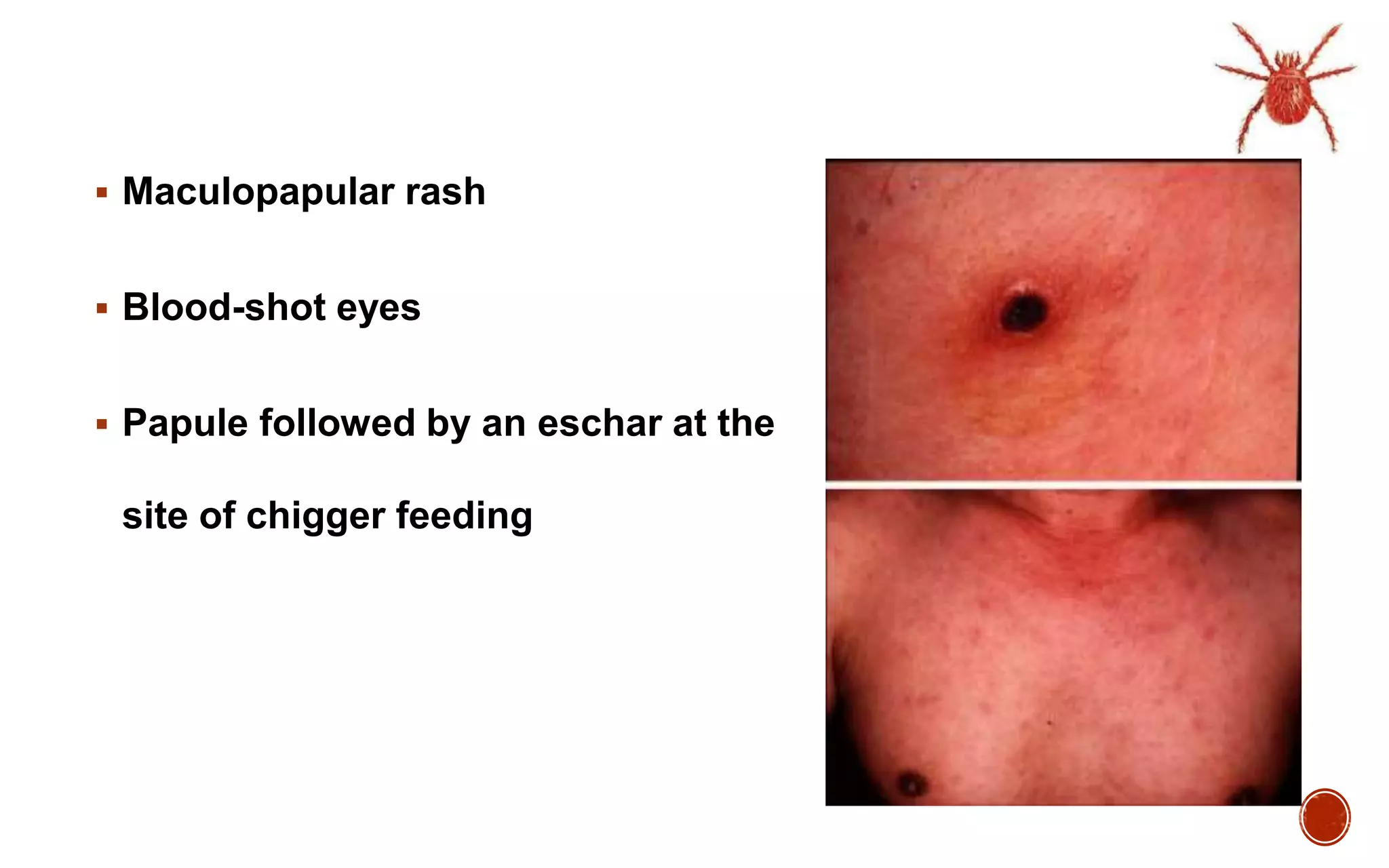
 Maculopapular rash
 Blood-shot eyes
 Papule followed by an eschar at the
site of chigger feeding
 50% Develop Rash
 Nonpruritic
 Macular or maculopapular rash
 Face also involved
 Begins in the abdomen and spreads to extremities
 Only in 46% (5 to 80%) patients
 1 cm in size
 Painless papule at chigger bite site
 Central necrosis
 Then characteristic black crust
 One or multiple eschars may develop
 Relative bradycardia
 Lymphadenopathy - Tender lymph node, usually proximal to
site of mite bite
 • Hepatomegaly and splenomegaly can be observed
Respiratory-
 Cough
 Acute Respiratory Distress Syndrome
 Pathogenesis of ARDS in scrub typhus not known, thought to be
immunological response of the lung to the infection without
direct invasion of the organism
 Diffuse alveolar damage without evidence of vasculitis.
Neurological
• Involvement of blood vessels in the central nervous
system may produce meningitis
• slight intellectual blunting to coma or delirium
• In severe cases, evolution to a multiple-organ dysfunction
syndrome with hemorrhage can be observed
 Overwhelming pneumonia with ARDS–like presentation
 Acute Kidney Injury
 Atypical pneumonia,
 Myocarditis, Congestive heart failure
 Pulmonary edema
 Circulatory collapse
 Disseminated intravascular coagulation (DIC).
 Some patient recover spontaneously.
 Case-fatality rate for untreated classic cases is 70%
(the fatality rate ranges from 0 to 30%.)
 No laboratory test is reliable in early phase
 Usually recognized with symptoms signs laboratory
features with epidemiological clues
1. Immunofluorescence and immunoperoxydase assays
2. Rapid immunochromatographic Flow Assay (RFA)
3. Dot blot immunoassay
4. The Weil-Felix test
5. Orientia tsutsugamushi can be cultivated on L929 cells.
6. ELISA
7. PCR (Polymerase Chain Reaction)
8. Sequencing of the 56-kDa protein gene
 Sharing of antigens between rickettsia and proteus is the basis
 Agglutinins to P.vulgaris strain OX19, OX2 and P.mirabilis OXK.
 Lacks sensitivity
 Serves as a useful and inexpensive diagnostic tool
 Should be carried out only after 5-7 days of onset of fever.
 Titre of 1:80 to be considered possible infection.
 Immunoglobulin M (IgM) capture assays for serum, are probably the
most of sensitive tests available for rickettsial diagnosis
 Presence of IgM antibodies, indicate comparatively recent infection
 Significant IgM antibody titre is observed at the end of 1st week
 IgG antibodies appear at the end of 2nd week.
 The cut off value is Optical Density of 0.5.
 Rapid and specific test for diagnosis.
 Can be used to detect rickettsial DNA in whole blood and eschar
samples.
 PCR is targeted at the gene encoding the major 56 Kda and/or 47
Kda surface antigen gene.
 The results are best within first week for blood samples because
of presence of rickettsemia in first 7-10 days.
 This is a reference serological method and considered
serological ‘gold standard’
 Cost and requirement of expertise limit its wide use.
 Recommended only for research and in areas where sero-
prevalence is high
 It gives comparable result as IFA but requires special
instrument and experienced personnel for interpretation of
the test.
 Thrombocytopenia in severe illness
 Elevation in hepatic enzymes
 Leukopenia or leukocytosis
 Infiltrates in chest X-ray (Mostly bilateral)
 Malaria and dengue
 Leptospirosis
 Other rickettsial diseases
 Typhoid fever
 Anthrax
 Spider bite
Definition of Suspected/clinical case:
 Acute undifferentiated febrile illness of 5 days or more with or
without eschar should be suspected as a case of Rickettsial
infection.
 If eschar is present, fever of less than 5 days duration should be
considered as scrub typhus.
 Other presenting features may be headache and rash,
lymphadenopathy, multi-organ involvement like liver, lung and
kidney involvement.
 Dengue, malaria, pneumonia, leptospirosis and typhoid – D/D
Definition of Probable case:
 A suspected clinical case showing titres of 1:80 or above in OX2,
OX19 and OXK antigens by Weil Felix test
 An optical density (OD) > 0.5 for IgM by ELISA
 Considered positive for typhus and spotted fever groups of
Rickettsiae.
Definition of Confirmed case:
 Rickettsial DNA is detected in eschar samples or whole blood by
PCR
 Rising antibody titers on acute and convalescent sera detected
by Indirect Immune Fluorescence Assay (IFA) or Indirect
Immunoperoxidase Assay (IPA)
 Paucity of evidence based on randomized controlled trials for
the management of Scrub typhus
 Without waiting for laboratory confirmation of the Rickettsial
infection, antibiotic therapy should be instituted when rickettsial
disease is suspected
At Primary level:
 Recognition of disease severity. Patients comes with
complications, considers it as rickettsial infection, treatment
with doxycycline should be initiated before referring.
 Referral to secondary or tertiary centre in case of complications
like ARDS, acute renal failure, meningo-encephalitis, multi-organ
dysfunction.
 Community acquired pneumonia, doxycycline is to be initiated
when scrub typhus is considered likely.
 In fever cases , duration of 5 days or more where malaria, dengue
and typhoid have been ruled out Doxy should be started
Adults
 Doxycycline 200 mg/day in two divided doses for individuals
above 45 kg for duration of 7 days.
(Patients should be advised to swallow capsules with
plenty of fluid during meals while sitting or standing)
 Azithromycin 500 mg in a single oral dose for 5 days.
Children
 Doxycycline in the dose of 4.5 mg/kg body weight/day in two
divided doses for children below 45 kg
 Azithromycin in the single dose of 10mg/kg body weight for 5
days.
Pregnant women
 Azithromycin is the drug of choice in pregnant women, as
doxycycline is contraindicated
 Azithromycin 500 mg in a single dose for 5 days.
During pregnancy, scrub typhus may lead to spontaneous
abortion, stillbirth, preterm delivery and small for gestational
age infants
Secondary and Tertiary care:
 The treatment as specified above in uncomplicated cases.
 In complicated cases the following treatment is to be initiated –
 i) Intravenous doxycycline (wherever available) 100mg twice daily in
100 ml normal saline to be administered as infusion over half an hour
initially followed by oral therapy to complete 7-15 days of therapy.
 Intravenous Azithromycin in the dose of 500mg IV in 250 ml
normal saline over 1 hour once daily for 1-2 days followed by oral
therapy to complete 5 days of therapy.
 Intravenous chloramphenicol 50-100 mg/kg/d 6 hourly doses to be
administered as infusion over 1 hour initially followed by oral
therapy to complete 7-15 days of therapy.
 Management of the individual complications should be done as
per the existing practices
 Doxycycline and/or Chloramphenicol resistant strains have
been seen in South-East Asia.
(These strains are sensitive to Azithromycin)
 In endemic areas, wear full-length clothing, socks and shoes.
Avoid walking barefoot.
 Apply, as necessary, insect repellents containing dibutyl
phthalate, benzyl benzoate, diethyltoluamide, and other
substances to the skin and clothing to prevent chigger bites.
 Do not sit or lie on bare ground or grass; use a suitable
groundsheet or other ground cover.
Community
 Rapid case identification by health-care workers.
 Public education on case recognition and personal protection
 Rodent control and improve living conditions
 Recommended for short period, high- risk exposure.
 Weekly doxycycline started before and for 6 weeks after
exposure is recommended.
 No vaccine is available for scrub typhus
 Research and development should focus on following issues:
 (i) Vaccines for rickettsial diseases
 (ii) Rapid diagnostic card test combining antigen and antibody
 (iii) Intravenous preparation of doxycycline
 (iv) Robust surveillance and reporting system.
 Scrub typhus is a re-emerging disease in India.
 Important cause of community acquired undifferentiated febrile illness
 Considered in the differential diagnosis of sepsis and multiorgan
dysfunction syndrome.
 Search for an eschar in hidden areas of body
 Diagnosis is done by IgM scrub typhus ELISA.
 Doxycycline is the drug of choice.
Scrub typhus

Scrub typhus

  • 1.
    Presenter : Dr.Dhileeban Maharajan Moderator : Dr. Salam Ranabir
  • 2.
     Most commonre-emerging diseases in India  Documented in India since 1930  First reported in Assam during second world war  Scrub is the commonest Rickettsioses  *50% of undifferentiated fever due to Rickettsioses (*Selected Areas)
  • 3.
     Obligate intracellular,gram-negative bacteria  Rickettsia, Orientia, Ehrlichia, Neorickettsia, Neoehrlichia, and Anaplasma  Divided into typhus group and spotted fever group  Orientia spp. makes up the scrub typhus group  Zoonoses where human beings are accidentally involved
  • 5.
     Among themajor groups of rickettsioses, commonly reported diseases in India are  scrub typhus  murine flea-borne typhus  Indian Tick Typhus  Q fever.
  • 6.
     Among Rickettsioses,scrub is the commonest  Mite borne infectious disease  Orientia tsutsugamushi  Transmitted through Larval mites or “chiggers”  Belonging to family Trombiculidae  Only larval stages take blood meal
  • 7.
     Rodents (wildrats - Rattus) - Natural hosts for scrub typhus  Field rodent and vector mites act as reservoir  Between the two the infection perpetuates in nature  Mite islands  Chiggers, too small to be seen by the naked eye,  Feed usually on rodents and accidentally on humans
  • 8.
     Transmit infectionduring the prolonged feeding which can last 1-3 days  Incidence of scrub typhus is higher among rural population
  • 9.
     Obligate intracellularpathogens  Rod shaped bacterium.  Can be cultured in cell monolayers.  Gram Staining - appear as gram negative bacteria.  Highly virulent - need biosafety level 3 facilities  Exhibit extensive genomic and antigenic heterogeneity (Orientia tstsugamushi)
  • 10.
     Found throughoutthe mites body but greatest number in salivary glands.  Does not have a vacuolar membrane - grows freely in the cytoplasm of infected cells  Needs to infect eukaryotic cells in order to multiply Serotypes 1. Karp 2. Gilliam 3. Kawazaki 4. Boryon 5. Kato
  • 11.
     First describedin China in 313 AD  First isolated in Japan in 1930  Asia Pacific Rim  2/3 are Farmers  Highest in 40 to 60 years  80% during summer and autumn Tsutsugamushi Triangle Regions where scrub typhus is endemic
  • 12.
     60 speciesof mites  Chigger mites (0.2 to 0.4mm)  Both Vector and Reservoir  Transovarial transmission  Transstadial transmission (Larval trombiculid mites - Chiggers)
  • 15.
    Chigger Bite Bacteria multiplyat Innoculation site Attach to Endothelial cells Stimulate Phagocytosis Escapes Phagosomes Replicate in cytoplasm Disseminate into multiple organs (Through endothelial cells and macrophages) Type 1 immune response Papule Ulcer Necrosis Eschar + Lymphadenopathy Cytokines
  • 16.
     Geographically focaldisease  Mite islands
  • 17.
     Incubation periodof 6–21 days  Mild and self-limiting to fatal.  Scrub typhus lasts for 14 to 21 days without treatment.  Death may occur end of 2nd week due to complications.
  • 19.
     Common symptoms Fever (High Grade > 104 F; Median 14.4 days)  Intense Generalized Headache  Diffuse myalgias  Nausea, Vomiting, Diarrhea  Cough
  • 20.
     Maculopapular rash Blood-shot eyes  Papule followed by an eschar at the site of chigger feeding
  • 21.
     50% DevelopRash  Nonpruritic  Macular or maculopapular rash  Face also involved  Begins in the abdomen and spreads to extremities
  • 22.
     Only in46% (5 to 80%) patients  1 cm in size  Painless papule at chigger bite site  Central necrosis  Then characteristic black crust  One or multiple eschars may develop
  • 24.
     Relative bradycardia Lymphadenopathy - Tender lymph node, usually proximal to site of mite bite  • Hepatomegaly and splenomegaly can be observed
  • 25.
    Respiratory-  Cough  AcuteRespiratory Distress Syndrome  Pathogenesis of ARDS in scrub typhus not known, thought to be immunological response of the lung to the infection without direct invasion of the organism  Diffuse alveolar damage without evidence of vasculitis.
  • 26.
    Neurological • Involvement ofblood vessels in the central nervous system may produce meningitis • slight intellectual blunting to coma or delirium • In severe cases, evolution to a multiple-organ dysfunction syndrome with hemorrhage can be observed
  • 27.
     Overwhelming pneumoniawith ARDS–like presentation  Acute Kidney Injury  Atypical pneumonia,  Myocarditis, Congestive heart failure  Pulmonary edema  Circulatory collapse  Disseminated intravascular coagulation (DIC).
  • 28.
     Some patientrecover spontaneously.  Case-fatality rate for untreated classic cases is 70% (the fatality rate ranges from 0 to 30%.)
  • 29.
     No laboratorytest is reliable in early phase  Usually recognized with symptoms signs laboratory features with epidemiological clues
  • 30.
    1. Immunofluorescence andimmunoperoxydase assays 2. Rapid immunochromatographic Flow Assay (RFA) 3. Dot blot immunoassay 4. The Weil-Felix test 5. Orientia tsutsugamushi can be cultivated on L929 cells. 6. ELISA 7. PCR (Polymerase Chain Reaction) 8. Sequencing of the 56-kDa protein gene
  • 31.
     Sharing ofantigens between rickettsia and proteus is the basis  Agglutinins to P.vulgaris strain OX19, OX2 and P.mirabilis OXK.  Lacks sensitivity  Serves as a useful and inexpensive diagnostic tool  Should be carried out only after 5-7 days of onset of fever.  Titre of 1:80 to be considered possible infection.
  • 32.
     Immunoglobulin M(IgM) capture assays for serum, are probably the most of sensitive tests available for rickettsial diagnosis  Presence of IgM antibodies, indicate comparatively recent infection  Significant IgM antibody titre is observed at the end of 1st week  IgG antibodies appear at the end of 2nd week.  The cut off value is Optical Density of 0.5.
  • 33.
     Rapid andspecific test for diagnosis.  Can be used to detect rickettsial DNA in whole blood and eschar samples.  PCR is targeted at the gene encoding the major 56 Kda and/or 47 Kda surface antigen gene.  The results are best within first week for blood samples because of presence of rickettsemia in first 7-10 days.
  • 34.
     This isa reference serological method and considered serological ‘gold standard’  Cost and requirement of expertise limit its wide use.  Recommended only for research and in areas where sero- prevalence is high
  • 35.
     It givescomparable result as IFA but requires special instrument and experienced personnel for interpretation of the test.
  • 36.
     Thrombocytopenia insevere illness  Elevation in hepatic enzymes  Leukopenia or leukocytosis  Infiltrates in chest X-ray (Mostly bilateral)
  • 37.
     Malaria anddengue  Leptospirosis  Other rickettsial diseases  Typhoid fever  Anthrax  Spider bite
  • 38.
    Definition of Suspected/clinicalcase:  Acute undifferentiated febrile illness of 5 days or more with or without eschar should be suspected as a case of Rickettsial infection.  If eschar is present, fever of less than 5 days duration should be considered as scrub typhus.  Other presenting features may be headache and rash, lymphadenopathy, multi-organ involvement like liver, lung and kidney involvement.  Dengue, malaria, pneumonia, leptospirosis and typhoid – D/D
  • 39.
    Definition of Probablecase:  A suspected clinical case showing titres of 1:80 or above in OX2, OX19 and OXK antigens by Weil Felix test  An optical density (OD) > 0.5 for IgM by ELISA  Considered positive for typhus and spotted fever groups of Rickettsiae.
  • 40.
    Definition of Confirmedcase:  Rickettsial DNA is detected in eschar samples or whole blood by PCR  Rising antibody titers on acute and convalescent sera detected by Indirect Immune Fluorescence Assay (IFA) or Indirect Immunoperoxidase Assay (IPA)
  • 41.
     Paucity ofevidence based on randomized controlled trials for the management of Scrub typhus  Without waiting for laboratory confirmation of the Rickettsial infection, antibiotic therapy should be instituted when rickettsial disease is suspected
  • 42.
    At Primary level: Recognition of disease severity. Patients comes with complications, considers it as rickettsial infection, treatment with doxycycline should be initiated before referring.  Referral to secondary or tertiary centre in case of complications like ARDS, acute renal failure, meningo-encephalitis, multi-organ dysfunction.
  • 43.
     Community acquiredpneumonia, doxycycline is to be initiated when scrub typhus is considered likely.  In fever cases , duration of 5 days or more where malaria, dengue and typhoid have been ruled out Doxy should be started
  • 44.
    Adults  Doxycycline 200mg/day in two divided doses for individuals above 45 kg for duration of 7 days. (Patients should be advised to swallow capsules with plenty of fluid during meals while sitting or standing)  Azithromycin 500 mg in a single oral dose for 5 days.
  • 45.
    Children  Doxycycline inthe dose of 4.5 mg/kg body weight/day in two divided doses for children below 45 kg  Azithromycin in the single dose of 10mg/kg body weight for 5 days.
  • 46.
    Pregnant women  Azithromycinis the drug of choice in pregnant women, as doxycycline is contraindicated  Azithromycin 500 mg in a single dose for 5 days. During pregnancy, scrub typhus may lead to spontaneous abortion, stillbirth, preterm delivery and small for gestational age infants
  • 47.
    Secondary and Tertiarycare:  The treatment as specified above in uncomplicated cases.  In complicated cases the following treatment is to be initiated –  i) Intravenous doxycycline (wherever available) 100mg twice daily in 100 ml normal saline to be administered as infusion over half an hour initially followed by oral therapy to complete 7-15 days of therapy.
  • 48.
     Intravenous Azithromycinin the dose of 500mg IV in 250 ml normal saline over 1 hour once daily for 1-2 days followed by oral therapy to complete 5 days of therapy.  Intravenous chloramphenicol 50-100 mg/kg/d 6 hourly doses to be administered as infusion over 1 hour initially followed by oral therapy to complete 7-15 days of therapy.
  • 49.
     Management ofthe individual complications should be done as per the existing practices  Doxycycline and/or Chloramphenicol resistant strains have been seen in South-East Asia. (These strains are sensitive to Azithromycin)
  • 50.
     In endemicareas, wear full-length clothing, socks and shoes. Avoid walking barefoot.  Apply, as necessary, insect repellents containing dibutyl phthalate, benzyl benzoate, diethyltoluamide, and other substances to the skin and clothing to prevent chigger bites.  Do not sit or lie on bare ground or grass; use a suitable groundsheet or other ground cover.
  • 51.
    Community  Rapid caseidentification by health-care workers.  Public education on case recognition and personal protection  Rodent control and improve living conditions
  • 52.
     Recommended forshort period, high- risk exposure.  Weekly doxycycline started before and for 6 weeks after exposure is recommended.  No vaccine is available for scrub typhus
  • 53.
     Research anddevelopment should focus on following issues:  (i) Vaccines for rickettsial diseases  (ii) Rapid diagnostic card test combining antigen and antibody  (iii) Intravenous preparation of doxycycline  (iv) Robust surveillance and reporting system.
  • 54.
     Scrub typhusis a re-emerging disease in India.  Important cause of community acquired undifferentiated febrile illness  Considered in the differential diagnosis of sepsis and multiorgan dysfunction syndrome.  Search for an eschar in hidden areas of body  Diagnosis is done by IgM scrub typhus ELISA.  Doxycycline is the drug of choice.

Editor's Notes

  • #8 • Infected chiggers are particularly likely to be found in areas of heavy scrub vegetation during the wet season, when mites lay eggs
  • #10 The Gimenez staining technique uses biological stains to detect and identify bacterial infections in tissue samples. Although largely superseded by techniques like Giemsa staining, the Gimenez technique may be valuable for detecting certain slow-growing or fastidious bacteria. Basic fuchsin stain in aqueous solution with phenol and ethanol colours many bacteria (both gram positive and Gram negative) red, magenta, or pink. A malachite green counterstaingives a blue-green background cast to the surrounding tissue.
  • #12 They are endemic across extensive part of Asia, South Asia, Australia and the Pacific. It is found in India, Pakistan, China, Thailand, Malaysia, Taiwan, Tibet, Japan, Russia, South Korea and Nepal. During World War II, 18,000 cases were observed in Allied troops stationed in rural or jungle areas of the Pacific theatre. widespread use of b-lactam antimicrobial drugs and urbanization in rural areas The word “tsutsugamushi” is derived from a Japanese word tsutsuga meaning something small and dangerous, mushi, meaning creature, so it was known as small dangerous creature Typhus’ has been derived from the Greek word ‘typos’ which means ‘fever with stupor’. The areas are usually secondary scrub growth which grows after clearance of primary forest hence the term scrub typhus
  • #13 The adult mites have a four-staged lifecycle: (1) egg, (2) larva, (3) nymph and (4) adult. The larva is the only stage (chigger) that can transmit the disease to humans and other vertebrates, since the other life stages (nymph and adult) do not feed on vertebrate animals. Both the nymph and the adult are free-living in the soil. Chigger mites act as the primary reservoirs for O. Tsutsugamushi. Once they are infected in nature by feeding on the body fluid of small mammals, including the rodents, they maintain the infection throughout their life stages and as adults, pass the infection on to their eggs in a process called transovarial transmission. Similarly, the infection passes from the egg to the larva or adult in a process called transstadial transmission. In this way, chigger mite populations autonomously maintain their infectivity over long periods of time. Early workers thought that rodents were the natural reservoir of Infection but it is now believed that mites are both the vector and the Reservoir. Clinical scrub typhus is not known to occur naturally in animals. This mite is fastidious in matters of temperature, humidity and food, and finds everything suitable in restricted areas. Scrub typhus is generally seen in people whose occupational or recreational activities bring them into contact with ecotypes favorable with vector chiggers
  • #16 These mites passes the infection to humans by feeding on the fluid in skin cells. Endothelial cells of most organs including skin, heart, lung, brain, kidney, pancreas, have been presented as the target cells of O. tsutsugamushi. They have been located within cardiac muscle cells and in macrophages of liver and spleen. The bacteria multiply at the inoculation site, and a papule forms that ulcerates and becomes necrotic, evolving into an eschar, with regional lymphadenopathy that may progress to generalized lymphadenopathy within a few days. Stimulates phagocytosis by the immune cells, and then escapes the phagosome. Replicates in the cytoplasm and then buds from the cell. The bacteria are able to harness the microtubule assembly inside the human cell for movement. Antibody-opsonized bacteria are still able to escape the phagosome but cannot effectively move on the microtubule; as a result, overall infectivity is decreased. Scrub typhus may disseminate into multiple organs through endothelial cells and macrophages, resulting in the development of fatal complications. Induces type 1 immune response, associated with elevation of interferon-alpha, IL-18 and IL-15 levels. During the initial inflammatory response to infections, early response cytokines (tumour necrosis factor-alpha, interleukin (IL)-1beta and IL-6) up-regulate cellular adhesion molecules (CAMs) on the surface of host leucocytes and endothelial cells (EC), which co-ordinate leucocyte transmigration across the endothelium. The selectins mediate initial leucocyte contact with EC, capturing cells from the bloodstream, followed by characteristic rolling and firm tethering to the endothelium. This requires higher-affinity leucocyte integrins (LFA-1 and Mac-1) binding to members of the immunoglobulin (Ig) superfamily, intercellular adhesion molecule-1 (ICAM-1) and vascular adhesion molecule-1 (VCAM-1), which are expressed on activated EC, enabling subsequent leucocyte diapedesis.
  • #17 The vector mite is known to be present in diverse ecological niches such as equatorial rain forests, semi deserts and Alpine subarctic terrains in the Himalayan regions. Endemic foci are usually associated with specific habitats such as abandoned plantations, gardens or rice fields, overgrown forest clearings, shrubby fringes of fields and forests, river banks and grassy fields. These ecological patches which attract the natural host of mite vectors are called “mite islands”
  • #20 Korean study- Endoscopy- Superficial ulcers;
  • #21 Indigenous patients do not commonly develop rash or lymphadenopathy which is thought to be related to previous exposure If concomitant G6PD deficiency is present then the severity is increased