CASE PRESENTATION 
A 48 year male, lab assistant by profession 
presented to the casualty of PGIMS, Rohtak 
with following complaints: 
Fever × 10 days 
Difficulty in breathing × 3 days 
Gopika Jagota 
MBBS 2011
HISTORY OF PRESENT ILLNESS 
• FEVER 
High grade fever since 10 days, acute in onset a/w rigors and 
chills; no diurnal variation. 
Relieved by medication with no aggravating factor. 
No h/o cough/epectoration, burning micturition, sore throat, 
cold, abdominal complaints and altered sensorium. 
• SHORTNESS OF BREATH 
There is history of shortness of breath since 3 days which is 
gradually increasing. Now present even at rest(MRC grade 4) 
Past history, personal history, family history: Not significant
PHYSICAL EXAMINATION 
• GPE: General appearance- Patient was febrile. He was calm, 
conscious, well oriented to time, place and person. 
• Pallor⁻,Icterus⁺,Clubbing⁻,Cyanosis⁻, Pedal edema⁻, LAP⁻,JVP⁻ 
• B.P-116/80 mmHg, Pulse Rate- 78/min 
• Resp. system:Patient tachypneic: 24/min. Bilateral basal crepts 
were present. Po₂: 74.6 mmHg 
• No rash was seen. 
• Other systemic examinations were within normal range
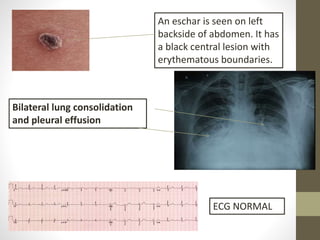
An eschar is seen on left 
backside of abdomen. It has 
a black central lesion with 
erythematous boundaries. 
Bilateral lung consolidation 
and pleural effusion 
ECG NORMAL
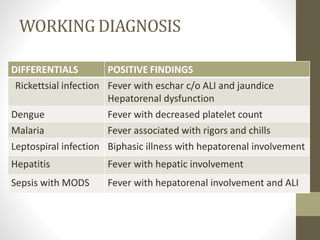
WORKING DIAGNOSIS 
DIFFERENTIALS POSITIVE FINDINGS 
Rickettsial infection Fever with eschar c/o ALI and jaundice 
Hepatorenal dysfunction 
Dengue Fever with decreased platelet count 
Malaria Fever associated with rigors and chills 
Leptospiral infection Biphasic illness with hepatorenal involvement 
Hepatitis Fever with hepatic involvement 
Sepsis with MODS Fever with hepatorenal involvement and ALI
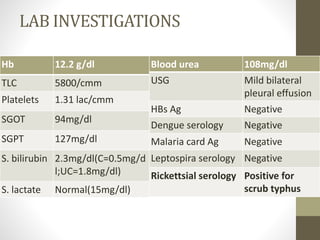
LAB INVESTIGATIONS 
Hb 12.2 g/dl 
TLC 5800/cmm 
Platelets 1.31 lac/cmm 
SGOT 94mg/dl 
SGPT 127mg/dl 
S. bilirubin 2.3mg/dl(C=0.5mg/d 
l;UC=1.8mg/dl) 
S. lactate Normal(15mg/dl) 
Blood urea 108mg/dl 
USG Mild bilateral 
pleural effusion 
HBs Ag Negative 
Dengue serology Negative 
Malaria card Ag Negative 
Leptospira serology Negative 
Rickettsial serology Positive for 
scrub typhus
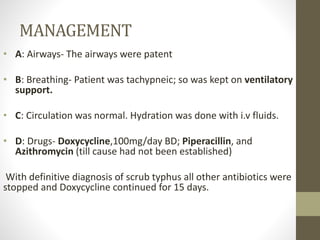
MANAGEMENT 
• A: Airways- The airways were patent 
• B: Breathing- Patient was tachypneic; so was kept on ventilatory 
support. 
• C: Circulation was normal. Hydration was done with i.v fluids. 
• D: Drugs- Doxycycline,100mg/day BD; Piperacillin, and 
Azithromycin (till cause had not been established) 
With definitive diagnosis of scrub typhus all other antibiotics were 
stopped and Doxycycline continued for 15 days.
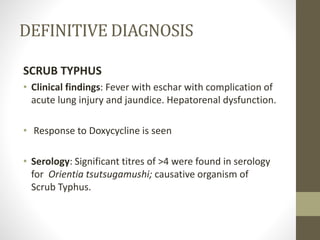
DEFINITIVE DIAGNOSIS 
SCRUB TYPHUS 
• Clinical findings: Fever with eschar with complication of 
acute lung injury and jaundice. Hepatorenal dysfunction. 
• Response to Doxycycline is seen 
• Serology: Significant titres of >4 were found in serology 
for Orientia tsutsugamushi; causative organism of 
Scrub Typhus.
DISCUSSION 
Chigger 
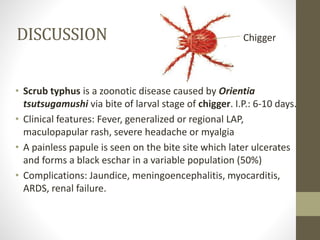
• Scrub typhus is a zoonotic disease caused by Orientia 
tsutsugamushi via bite of larval stage of chigger. I.P.: 6-10 days. 
• Clinical features: Fever, generalized or regional LAP, 
maculopapular rash, severe headache or myalgia 
• A painless papule is seen on the bite site which later ulcerates 
and forms a black eschar in a variable population (50%) 
• Complications: Jaundice, meningoencephalitis, myocarditis, 
ARDS, renal failure.
DISCUSSION 
STAGES CLINICAL 
MANIFETATION 
LAB DIAGNOSIS 
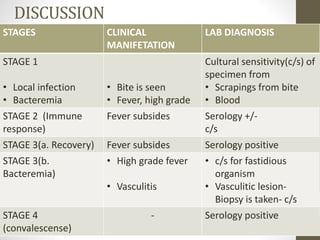
STAGE 1 
• Local infection 
• Bacteremia 
• Bite is seen 
• Fever, high grade 
Cultural sensitivity(c/s) of 
specimen from 
• Scrapings from bite 
• Blood 
STAGE 2 (Immune 
response) 
Fever subsides Serology +/- 
c/s 
STAGE 3(a. Recovery) Fever subsides Serology positive 
STAGE 3(b. 
• High grade fever 
Bacteremia) 
• Vasculitis 
• c/s for fastidious 
organism 
• Vasculitic lesion- 
Biopsy is taken- c/s 
STAGE 4 
(convalescense) 
- Serology positive
CONCLUSION 
• Rickettsiosis is not uncommon 
• Should always be kept as a differential for 
“undifferentiated fever” 
• Eschar= pathognomic 
• Early initiation of Antibiotics= affects mortality 
• Antibiotics= empirical 
• Later on the basis of reports- Descalation
THANK YOU

Scrub Typhus

  • 1.
    CASE PRESENTATION A48 year male, lab assistant by profession presented to the casualty of PGIMS, Rohtak with following complaints: Fever × 10 days Difficulty in breathing × 3 days Gopika Jagota MBBS 2011
  • 2.
    HISTORY OF PRESENTILLNESS • FEVER High grade fever since 10 days, acute in onset a/w rigors and chills; no diurnal variation. Relieved by medication with no aggravating factor. No h/o cough/epectoration, burning micturition, sore throat, cold, abdominal complaints and altered sensorium. • SHORTNESS OF BREATH There is history of shortness of breath since 3 days which is gradually increasing. Now present even at rest(MRC grade 4) Past history, personal history, family history: Not significant
  • 3.
    PHYSICAL EXAMINATION •GPE: General appearance- Patient was febrile. He was calm, conscious, well oriented to time, place and person. • Pallor⁻,Icterus⁺,Clubbing⁻,Cyanosis⁻, Pedal edema⁻, LAP⁻,JVP⁻ • B.P-116/80 mmHg, Pulse Rate- 78/min • Resp. system:Patient tachypneic: 24/min. Bilateral basal crepts were present. Po₂: 74.6 mmHg • No rash was seen. • Other systemic examinations were within normal range
  • 4.
    An eschar isseen on left backside of abdomen. It has a black central lesion with erythematous boundaries. Bilateral lung consolidation and pleural effusion ECG NORMAL
  • 5.
    WORKING DIAGNOSIS DIFFERENTIALSPOSITIVE FINDINGS Rickettsial infection Fever with eschar c/o ALI and jaundice Hepatorenal dysfunction Dengue Fever with decreased platelet count Malaria Fever associated with rigors and chills Leptospiral infection Biphasic illness with hepatorenal involvement Hepatitis Fever with hepatic involvement Sepsis with MODS Fever with hepatorenal involvement and ALI
  • 6.
    LAB INVESTIGATIONS Hb12.2 g/dl TLC 5800/cmm Platelets 1.31 lac/cmm SGOT 94mg/dl SGPT 127mg/dl S. bilirubin 2.3mg/dl(C=0.5mg/d l;UC=1.8mg/dl) S. lactate Normal(15mg/dl) Blood urea 108mg/dl USG Mild bilateral pleural effusion HBs Ag Negative Dengue serology Negative Malaria card Ag Negative Leptospira serology Negative Rickettsial serology Positive for scrub typhus
  • 7.
    MANAGEMENT • A:Airways- The airways were patent • B: Breathing- Patient was tachypneic; so was kept on ventilatory support. • C: Circulation was normal. Hydration was done with i.v fluids. • D: Drugs- Doxycycline,100mg/day BD; Piperacillin, and Azithromycin (till cause had not been established) With definitive diagnosis of scrub typhus all other antibiotics were stopped and Doxycycline continued for 15 days.
  • 8.
    DEFINITIVE DIAGNOSIS SCRUBTYPHUS • Clinical findings: Fever with eschar with complication of acute lung injury and jaundice. Hepatorenal dysfunction. • Response to Doxycycline is seen • Serology: Significant titres of >4 were found in serology for Orientia tsutsugamushi; causative organism of Scrub Typhus.
  • 9.
    DISCUSSION Chigger •Scrub typhus is a zoonotic disease caused by Orientia tsutsugamushi via bite of larval stage of chigger. I.P.: 6-10 days. • Clinical features: Fever, generalized or regional LAP, maculopapular rash, severe headache or myalgia • A painless papule is seen on the bite site which later ulcerates and forms a black eschar in a variable population (50%) • Complications: Jaundice, meningoencephalitis, myocarditis, ARDS, renal failure.
  • 10.
    DISCUSSION STAGES CLINICAL MANIFETATION LAB DIAGNOSIS STAGE 1 • Local infection • Bacteremia • Bite is seen • Fever, high grade Cultural sensitivity(c/s) of specimen from • Scrapings from bite • Blood STAGE 2 (Immune response) Fever subsides Serology +/- c/s STAGE 3(a. Recovery) Fever subsides Serology positive STAGE 3(b. • High grade fever Bacteremia) • Vasculitis • c/s for fastidious organism • Vasculitic lesion- Biopsy is taken- c/s STAGE 4 (convalescense) - Serology positive
  • 11.
    CONCLUSION • Rickettsiosisis not uncommon • Should always be kept as a differential for “undifferentiated fever” • Eschar= pathognomic • Early initiation of Antibiotics= affects mortality • Antibiotics= empirical • Later on the basis of reports- Descalation
  • 12.