Q FeverQ Fever
Stephen FritcheyStephen Fritchey
Origin and SpreadOrigin and Spread
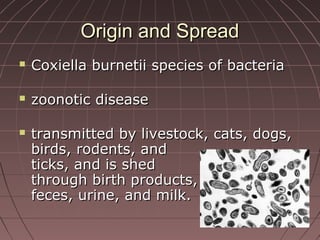
 Coxiella burnetii species of bacteriaCoxiella burnetii species of bacteria
 zoonotic diseasezoonotic disease
 transmitted by livestock, cats, dogs,transmitted by livestock, cats, dogs,
birds, rodents, andbirds, rodents, and
ticks, and is shedticks, and is shed
through birth products,through birth products,
feces, urine, and milk.feces, urine, and milk.
At RiskAt Risk
 Farmers, dairy workers,Farmers, dairy workers,
veterinarians, lab workers,veterinarians, lab workers,
and heart valveand heart valve
complications or immunecomplications or immune
system deficiencies.system deficiencies.
Incubation and SymptomsIncubation and Symptoms
 20 days20 days
 Chronic Q fever developing in those whoChronic Q fever developing in those who
have gone untreated for six months orhave gone untreated for six months or
more.more.
 Acute - painful breathing, shortness ofAcute - painful breathing, shortness of
breath, cough, headache, fever, musclebreath, cough, headache, fever, muscle
pains, jaundice, and clay-colored stoolspains, jaundice, and clay-colored stools
 Chronic - chills, night sweats, fatigue, andChronic - chills, night sweats, fatigue, and
prolonged feverprolonged fever
 A blood antibody test isA blood antibody test is
conducted to diagnose theconducted to diagnose the
disease.disease.
EffectsEffects
 Chronic Q fever can develop from one yearChronic Q fever can develop from one year
to 20 years after having acute Q feverto 20 years after having acute Q fever
even if symptoms were not present.even if symptoms were not present.
 Contract the disease multiple timesContract the disease multiple times
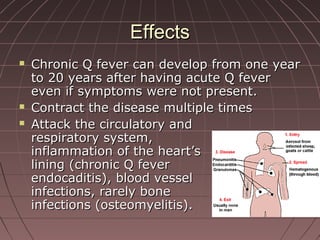
 Attack the circulatory andAttack the circulatory and
respiratory system,respiratory system,
inflammation of the heart’sinflammation of the heart’s
lining (chronic Q feverlining (chronic Q fever
endocaditis), blood vesselendocaditis), blood vessel
infections, rarely boneinfections, rarely bone
infections (osteomyelitis).infections (osteomyelitis).
TreatmentTreatment
 Proper disposal of animal birth products,Proper disposal of animal birth products,
restricted access to barns and labs,restricted access to barns and labs,
quarantine of imported livestock, use ofquarantine of imported livestock, use of
only pasteurized dairy products, andonly pasteurized dairy products, and
vaccination. (not become commerciallyvaccination. (not become commercially
available in the United States)available in the United States)
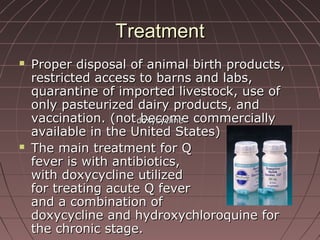
 The main treatment for QThe main treatment for Q
fever is with antibiotics,fever is with antibiotics,
with doxycycline utilizedwith doxycycline utilized
for treating acute Q feverfor treating acute Q fever
and a combination ofand a combination of
doxycycline and hydroxychloroquine fordoxycycline and hydroxychloroquine for
the chronic stage.the chronic stage.
doxycyclinedoxycycline
Final ThoughtsFinal Thoughts
 Coxiella burnetti is considered theCoxiella burnetti is considered the
most infectious organism in themost infectious organism in the
worldworld
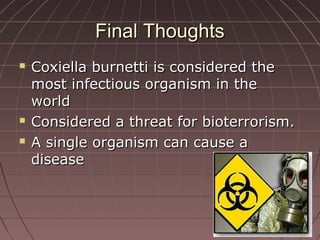
 Considered a threat for bioterrorism.Considered a threat for bioterrorism.
 A single organism can cause aA single organism can cause a
diseasedisease

Q fever

  • 1.
    Q FeverQ Fever StephenFritcheyStephen Fritchey
  • 2.
    Origin and SpreadOriginand Spread  Coxiella burnetii species of bacteriaCoxiella burnetii species of bacteria  zoonotic diseasezoonotic disease  transmitted by livestock, cats, dogs,transmitted by livestock, cats, dogs, birds, rodents, andbirds, rodents, and ticks, and is shedticks, and is shed through birth products,through birth products, feces, urine, and milk.feces, urine, and milk.
  • 3.
    At RiskAt Risk Farmers, dairy workers,Farmers, dairy workers, veterinarians, lab workers,veterinarians, lab workers, and heart valveand heart valve complications or immunecomplications or immune system deficiencies.system deficiencies.
  • 4.
    Incubation and SymptomsIncubationand Symptoms  20 days20 days  Chronic Q fever developing in those whoChronic Q fever developing in those who have gone untreated for six months orhave gone untreated for six months or more.more.  Acute - painful breathing, shortness ofAcute - painful breathing, shortness of breath, cough, headache, fever, musclebreath, cough, headache, fever, muscle pains, jaundice, and clay-colored stoolspains, jaundice, and clay-colored stools  Chronic - chills, night sweats, fatigue, andChronic - chills, night sweats, fatigue, and prolonged feverprolonged fever  A blood antibody test isA blood antibody test is conducted to diagnose theconducted to diagnose the disease.disease.
  • 5.
    EffectsEffects  Chronic Qfever can develop from one yearChronic Q fever can develop from one year to 20 years after having acute Q feverto 20 years after having acute Q fever even if symptoms were not present.even if symptoms were not present.  Contract the disease multiple timesContract the disease multiple times  Attack the circulatory andAttack the circulatory and respiratory system,respiratory system, inflammation of the heart’sinflammation of the heart’s lining (chronic Q feverlining (chronic Q fever endocaditis), blood vesselendocaditis), blood vessel infections, rarely boneinfections, rarely bone infections (osteomyelitis).infections (osteomyelitis).
  • 6.
    TreatmentTreatment  Proper disposalof animal birth products,Proper disposal of animal birth products, restricted access to barns and labs,restricted access to barns and labs, quarantine of imported livestock, use ofquarantine of imported livestock, use of only pasteurized dairy products, andonly pasteurized dairy products, and vaccination. (not become commerciallyvaccination. (not become commercially available in the United States)available in the United States)  The main treatment for QThe main treatment for Q fever is with antibiotics,fever is with antibiotics, with doxycycline utilizedwith doxycycline utilized for treating acute Q feverfor treating acute Q fever and a combination ofand a combination of doxycycline and hydroxychloroquine fordoxycycline and hydroxychloroquine for the chronic stage.the chronic stage. doxycyclinedoxycycline
  • 7.
    Final ThoughtsFinal Thoughts Coxiella burnetti is considered theCoxiella burnetti is considered the most infectious organism in themost infectious organism in the worldworld  Considered a threat for bioterrorism.Considered a threat for bioterrorism.  A single organism can cause aA single organism can cause a diseasedisease