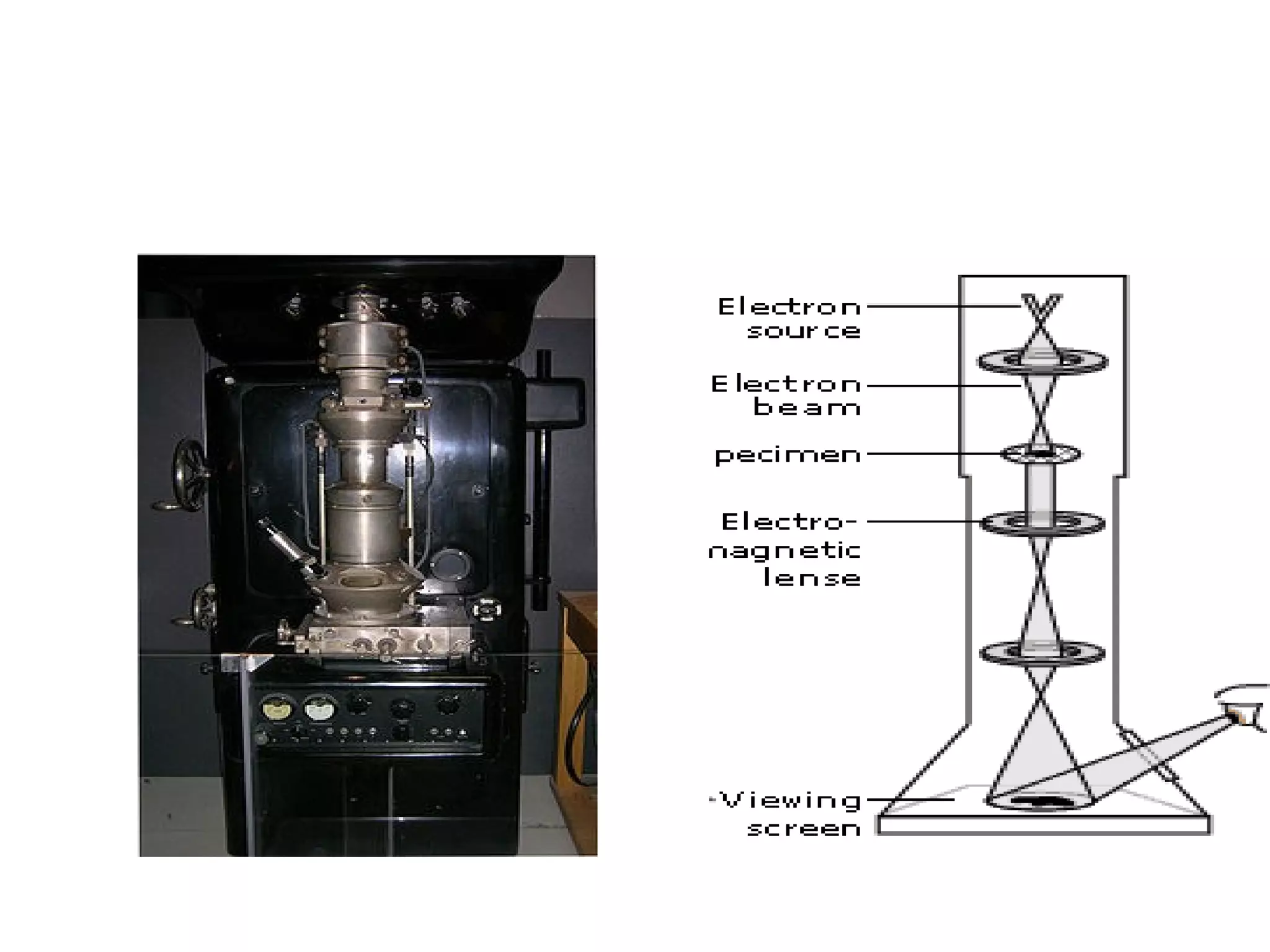
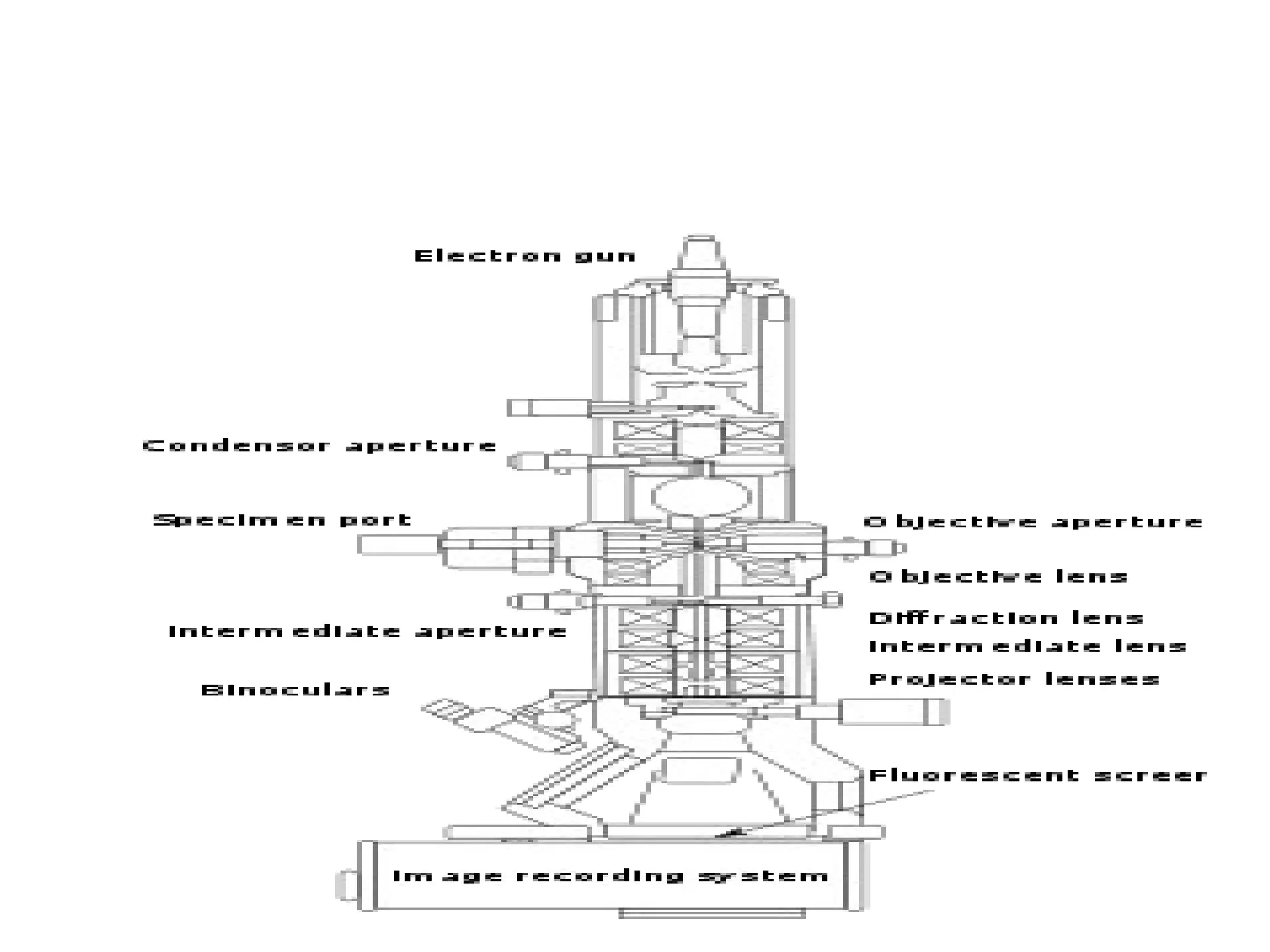
Transmission electron microscopy (TEM) uses a beam of electrons to image the internal structure of ultra-thin specimens. TEMs can achieve significantly higher resolutions than light microscopes due to the much shorter wavelength of electrons. Samples must be carefully prepared to be only a few hundred nanometers thick to be electron transparent. The electron beam is transmitted through the sample, interacting with it, and an image is formed from the transmitted electrons and magnified onto a viewing screen. TEM is widely used across various scientific fields including materials science, biology, and medicine.






![NIDITE-Acuerdos-Acta-29-[04-junio-2015]](https://cdn.slidesharecdn.com/ss_thumbnails/nidite-acuerdosacta2904-junio-2015-160211164111-thumbnail.jpg?width=640&height=640&fit=bounds)


