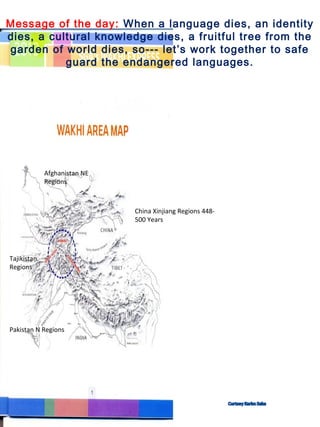
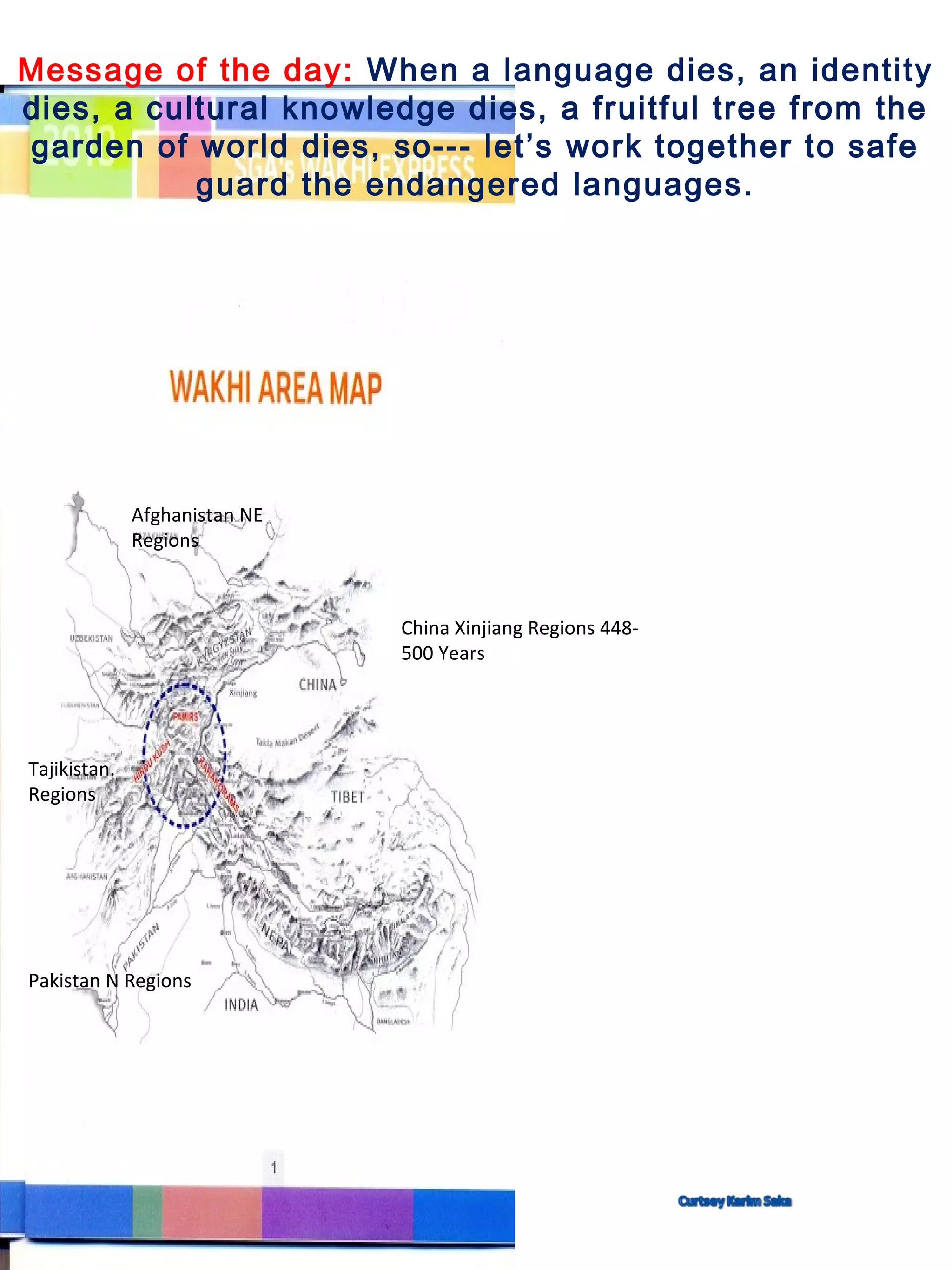
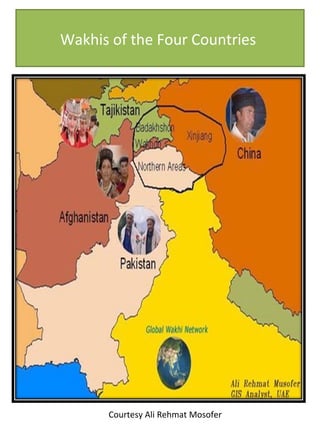
China Xinjiang Regions 448-
500 Years
Afghanistan NE
Regions
Tajikistan.
Regions
Pakistan N Regions
Message of the day: When a language dies, an identity
dies, a cultural knowledge dies, a fruitful tree from the
garden of world dies, so--- let’s work together to safe
guard the endangered languages.
Wakhis of the Four Countries
Courtesy Ali Rehmat Mosofer
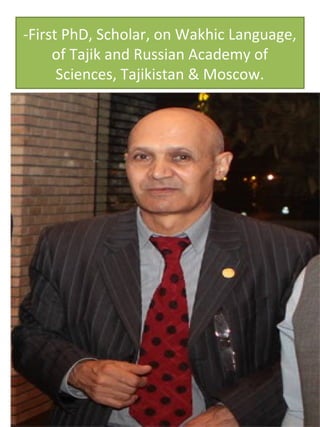
-First PhD, Scholar, on Wakhic Language,
of Tajik and Russian Academy of
Sciences, Tajikistan & Moscow.
HISTORYCAL LEGACY OF
WAKHAN/POMIR
A-First Phase: 386-1295, -Researchers 05
•Fas Yan 386, Chinese
•Sun Yun
•Syan Tazan
•Koy Chao
•Necoal & Marcopolo-1295 etc.
C-Second Phase: 1296-1800, -Researchers 35
•T. Gordon, (Russian, European & Pomiree)
•D.L. Ivanov
•M.S. Andrevee
•N.R. Bogoyavienskyi
•Muborak Wakhanee etc.
B-Third Phase: 1800-2016, -Researchers38
•V.S. SAKOLA , (Russian, European, Pomiree &
Indian)
•I.IZurubin
•MM. StalinKemensiky
•Mowla Shemsher Wakhnee
•Pof. Dr. Boghsho Lashker BekovAl-Beroni & Tusi & Servent of Tusi
Present Native Wakhic
Residents Places-Origion
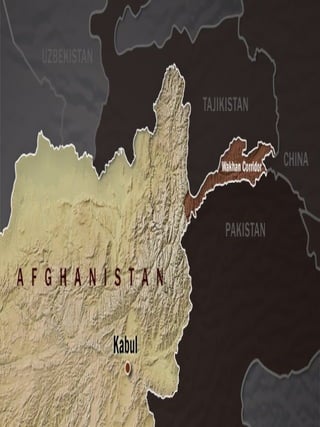
from Wakhan:
•Pakistan Northern -Regions –Time
of Alexander the Great.
•Afghanistan North East Wakhan –
Regions-1895
•Tajikistan South East Wakhan –
Regions-1895
•China xinjiang Pamir -Regions -Time
of Alexander the Great.
PRESENT HISTORYCAL LEGACY OF
WAKHAN
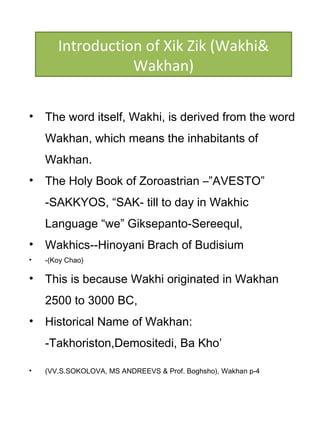
• The word itself, Wakhi, is derived from the word
Wakhan, which means the inhabitants of
Wakhan.
• The Holy Book of Zoroastrian –”AVESTO”
-SAKKYOS, “SAK- till to day in Wakhic
Language “we” Giksepanto-Sereequl,
• Wakhics--Hinoyani Brach of Budisium
• -(Koy Chao)
• This is because Wakhi originated in Wakhan
2500 to 3000 BC,
• Historical Name of Wakhan:
-Takhoriston,Demositedi, Ba Kho’
• (VV.S.SOKOLOVA, MS ANDREEVS & Prof. Boghsho), Wakhan p-4
Introduction of Xik Zik (Wakhi&
Wakhan)
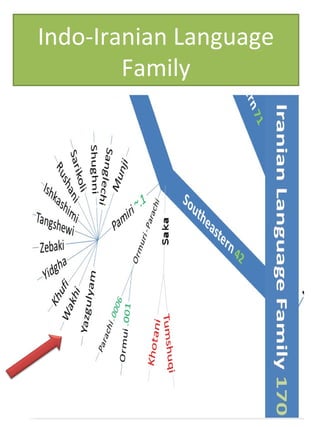
Indo-Iranian Language
Family
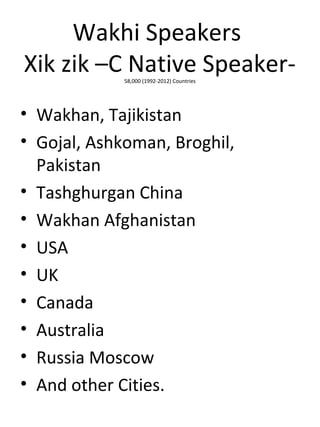
Wakhi Speakers
Xik zik –C Native Speaker-58,000 (1992-2012) Countries
• Wakhan, Tajikistan
• Gojal, Ashkoman, Broghil,
Pakistan
• Tashghurgan China
• Wakhan Afghanistan
• USA
• UK
• Canada
• Australia
• Russia Moscow
• And other Cities.
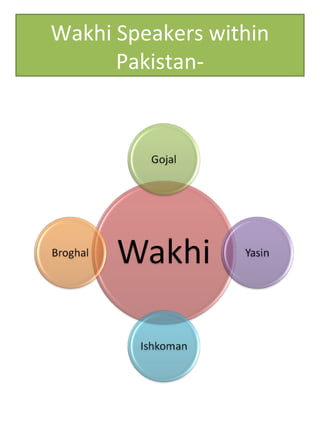
Wakhi Speakers within
Pakistan-
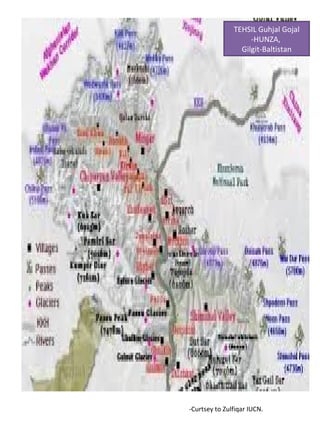
TEHSIL Guhjal Gojal
-HUNZA,
Gilgit-Baltistan
-Curtsey to Zulfiqar IUCN.
Orthography
• Wakhi is now a written language.
• Writing system have been developed
for the language using,
• Arabic script,
• Cyrillic and
• A modified Roman alphabet.
Wakhi Language
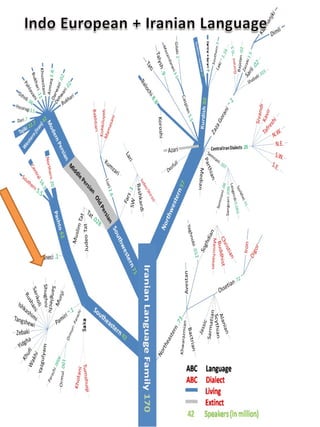
• The Wakhi language is considered to he part
of an ancient Indo-European language in the
Eastern Iranian branch of language family,
although it has been influenced by other
languages.
• Examples of words used in other languages
are - In English leg (leng) arms (Urm);
Persian. Zanakh, Gosh (gesh), Sar and dast,
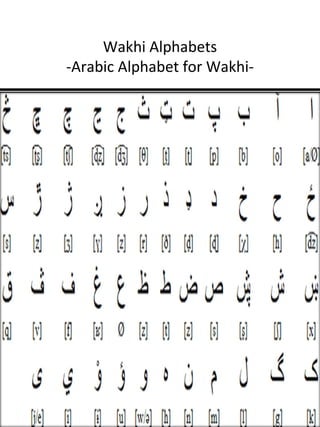
Wakhi Alphabets
-Arabic Alphabet for Wakhi-
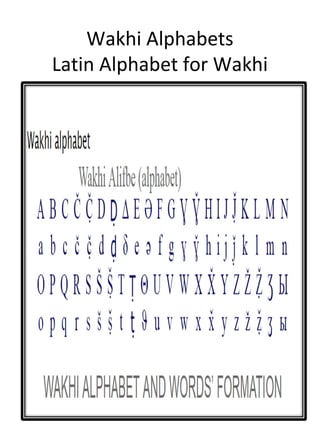
Wakhi Alphabets
Latin Alphabet for Wakhi
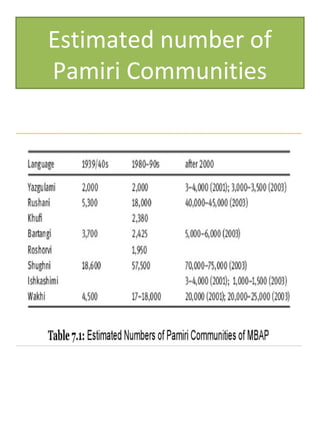
Estimated number of
Pamiri Communities
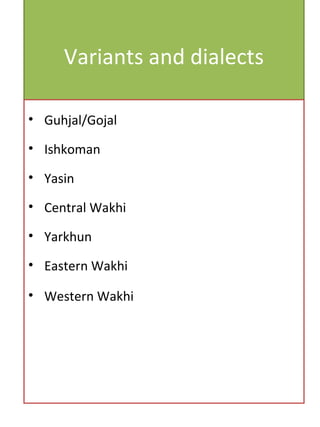
Variants and dialects
• Guhjal/Gojal
• Ishkoman
• Yasin
• Central Wakhi
• Yarkhun
• Eastern Wakhi
• Western Wakhi
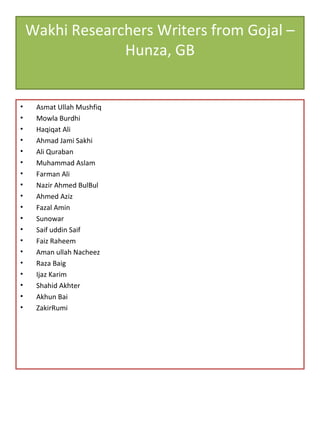
Wakhi Researchers Writers from Gojal –
Hunza, GB
• Asmat Ullah Mushfiq
• Mowla Burdhi
• Haqiqat Ali
• Ahmad Jami Sakhi
• Ali Quraban
• Muhammad Aslam
• Farman Ali
• Nazir Ahmed BulBul
• Ahmed Aziz
• Fazal Amin
• Sunowar
• Saif uddin Saif
• Faiz Raheem
• Aman ullah Nacheez
• Raza Baig
• Ijaz Karim
• Shahid Akhter
• Akhun Bai
• ZakirRumi
Wakhi language presentation

Wakhi language presentation

  • 1.
    China Xinjiang Regions448- 500 Years Afghanistan NE Regions Tajikistan. Regions Pakistan N Regions Message of the day: When a language dies, an identity dies, a cultural knowledge dies, a fruitful tree from the garden of world dies, so--- let’s work together to safe guard the endangered languages.
  • 4.
    Wakhis of theFour Countries Courtesy Ali Rehmat Mosofer
  • 5.
    -First PhD, Scholar,on Wakhic Language, of Tajik and Russian Academy of Sciences, Tajikistan & Moscow.
  • 6.
    HISTORYCAL LEGACY OF WAKHAN/POMIR A-FirstPhase: 386-1295, -Researchers 05 •Fas Yan 386, Chinese •Sun Yun •Syan Tazan •Koy Chao •Necoal & Marcopolo-1295 etc. C-Second Phase: 1296-1800, -Researchers 35 •T. Gordon, (Russian, European & Pomiree) •D.L. Ivanov •M.S. Andrevee •N.R. Bogoyavienskyi •Muborak Wakhanee etc. B-Third Phase: 1800-2016, -Researchers38 •V.S. SAKOLA , (Russian, European, Pomiree & Indian) •I.IZurubin •MM. StalinKemensiky •Mowla Shemsher Wakhnee •Pof. Dr. Boghsho Lashker BekovAl-Beroni & Tusi & Servent of Tusi
  • 7.
    Present Native Wakhic ResidentsPlaces-Origion from Wakhan: •Pakistan Northern -Regions –Time of Alexander the Great. •Afghanistan North East Wakhan – Regions-1895 •Tajikistan South East Wakhan – Regions-1895 •China xinjiang Pamir -Regions -Time of Alexander the Great. PRESENT HISTORYCAL LEGACY OF WAKHAN
  • 8.
    • The worditself, Wakhi, is derived from the word Wakhan, which means the inhabitants of Wakhan. • The Holy Book of Zoroastrian –”AVESTO” -SAKKYOS, “SAK- till to day in Wakhic Language “we” Giksepanto-Sereequl, • Wakhics--Hinoyani Brach of Budisium • -(Koy Chao) • This is because Wakhi originated in Wakhan 2500 to 3000 BC, • Historical Name of Wakhan: -Takhoriston,Demositedi, Ba Kho’ • (VV.S.SOKOLOVA, MS ANDREEVS & Prof. Boghsho), Wakhan p-4 Introduction of Xik Zik (Wakhi& Wakhan)
  • 10.
  • 11.
    Wakhi Speakers Xik zik–C Native Speaker-58,000 (1992-2012) Countries • Wakhan, Tajikistan • Gojal, Ashkoman, Broghil, Pakistan • Tashghurgan China • Wakhan Afghanistan • USA • UK • Canada • Australia • Russia Moscow • And other Cities.
  • 12.
  • 13.
  • 14.
    Orthography • Wakhi isnow a written language. • Writing system have been developed for the language using, • Arabic script, • Cyrillic and • A modified Roman alphabet.
  • 15.
    Wakhi Language • TheWakhi language is considered to he part of an ancient Indo-European language in the Eastern Iranian branch of language family, although it has been influenced by other languages. • Examples of words used in other languages are - In English leg (leng) arms (Urm); Persian. Zanakh, Gosh (gesh), Sar and dast,
  • 16.
  • 17.
  • 18.
  • 19.
    Variants and dialects •Guhjal/Gojal • Ishkoman • Yasin • Central Wakhi • Yarkhun • Eastern Wakhi • Western Wakhi
  • 20.
    Wakhi Researchers Writersfrom Gojal – Hunza, GB • Asmat Ullah Mushfiq • Mowla Burdhi • Haqiqat Ali • Ahmad Jami Sakhi • Ali Quraban • Muhammad Aslam • Farman Ali • Nazir Ahmed BulBul • Ahmed Aziz • Fazal Amin • Sunowar • Saif uddin Saif • Faiz Raheem • Aman ullah Nacheez • Raza Baig • Ijaz Karim • Shahid Akhter • Akhun Bai • ZakirRumi

Editor's Notes

  • #2 Message of the day: When a language dies, an identity dies, a cultural knowledge dies, a fruitful tree from the garden of world dies, so--- let’s work together to safe guard the endangered languages.
  • #3 Message of the day: When a language dies, an identity dies, a cultural knowledge dies, a fruitful tree from the garden of world dies, so--- let’s work together to safe guard the endangered languages.
  • #5 Message of the day: When a language dies, an identity dies, a cultural knowledge dies, a fruitful tree from the garden of world dies, so--- let’s work together to safe guard the endangered languages.
  • #6 Message of the day: When a language dies, an identity dies, a cultural knowledge dies, a fruitful tree from the garden of world dies, so--- let’s work together to safe guard the endangered languages.
  • #10 Message of the day: When a language dies, an identity dies, a cultural knowledge dies, a fruitful tree from the garden of world dies, so--- let’s work together to safe guard the endangered languages.
  • #11 Message of the day: When a language dies, an identity dies, a cultural knowledge dies, a fruitful tree from the garden of world dies, so--- let’s work together to safe guard the endangered languages.
  • #14 Message of the day: When a language dies, an identity dies, a cultural knowledge dies, a fruitful tree from the garden of world dies, so--- let’s work together to safe guard the endangered languages.
  • #15 Message of the day: When a language dies, an identity dies, a cultural knowledge dies, a fruitful tree from the garden of world dies, so--- let’s work together to safe guard the endangered languages.
  • #16 Message of the day: When a language dies, an identity dies, a cultural knowledge dies, a fruitful tree from the garden of world dies, so--- let’s work together to safe guard the endangered languages.
  • #20 Message of the day: When a language dies, an identity dies, a cultural knowledge dies, a fruitful tree from the garden of world dies, so--- let’s work together to safe guard the endangered languages.
  • #21 Message of the day: When a language dies, an identity dies, a cultural knowledge dies, a fruitful tree from the garden of world dies, so--- let’s work together to safe guard the endangered languages.
  • #22 Message of the day: When a language dies, an identity dies, a cultural knowledge dies, a fruitful tree from the garden of world dies, so--- let’s work together to safe guard the endangered languages.