TEM or Transmitted Electron Microscopy
NAME: VIJAYAUMAR.S
ROLL NO:P20BIT1029
1 M.SC BIOTECHNOLOGY
PERIYAR UNIVERSITY
CONTENTS
INTRODUCTION
PRINCIPLE
INSTRUMENT
WORKING PRINCIPLE
APPLICATION
ADVANTAGE
DISADVANTAGE
INTRODUCTION
• In 1931, while conducting research for his
masters at the technical college of Berlin,
Ernst Ruska and Max Knoll designed
first TEM.
• TEM is a microscopy technique in which a
beam of electrons is transmitted through
an ultra thin specimen, interacting with
the specimen.
 Electron microscpy involves the study of
different speciman by using an electron
microscopy
 Electron microscopy are scientific
instruments use a bean of of energetic
electron to exaime obeject on a very fine
scale.
 Through the electron microscope we can
see through that we couldnot see in
normal eye.
It has greater magnification than light
microscope
it has 10000+ magnification which is not
possible in current optical microscope
HISTORY OF TEM
1897-L.J Thomson - Discover the
electron
1924- L Debroglie- Idendified wave length
of electron
1929- E.RusKa- PH.D Thesis on magnetic
lens
1931-Knoll&rusKa- 1st electron microscope
built
1938- von borries& rusKa- electron
microscope speciman resolution =10nm
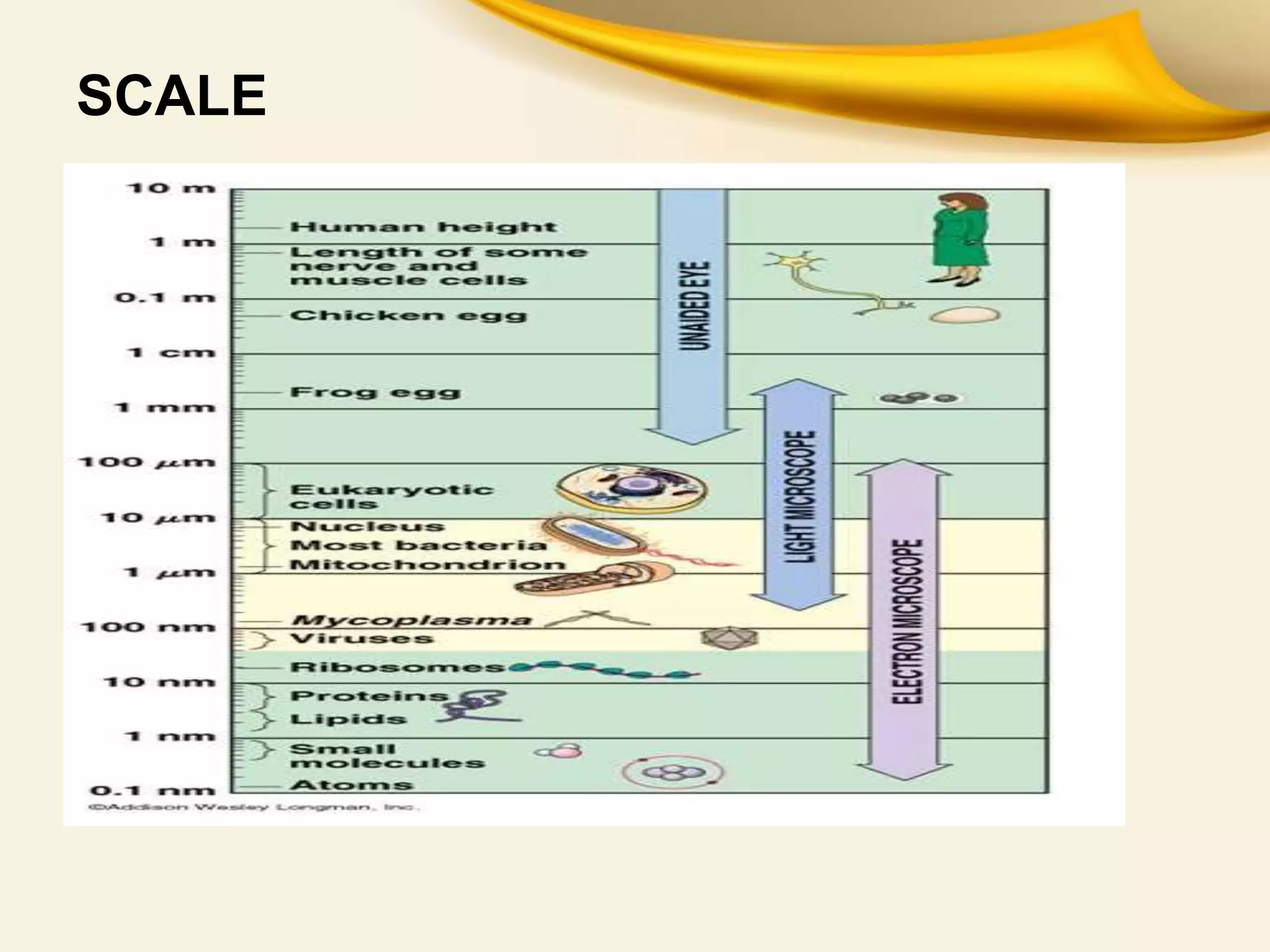
SCALE
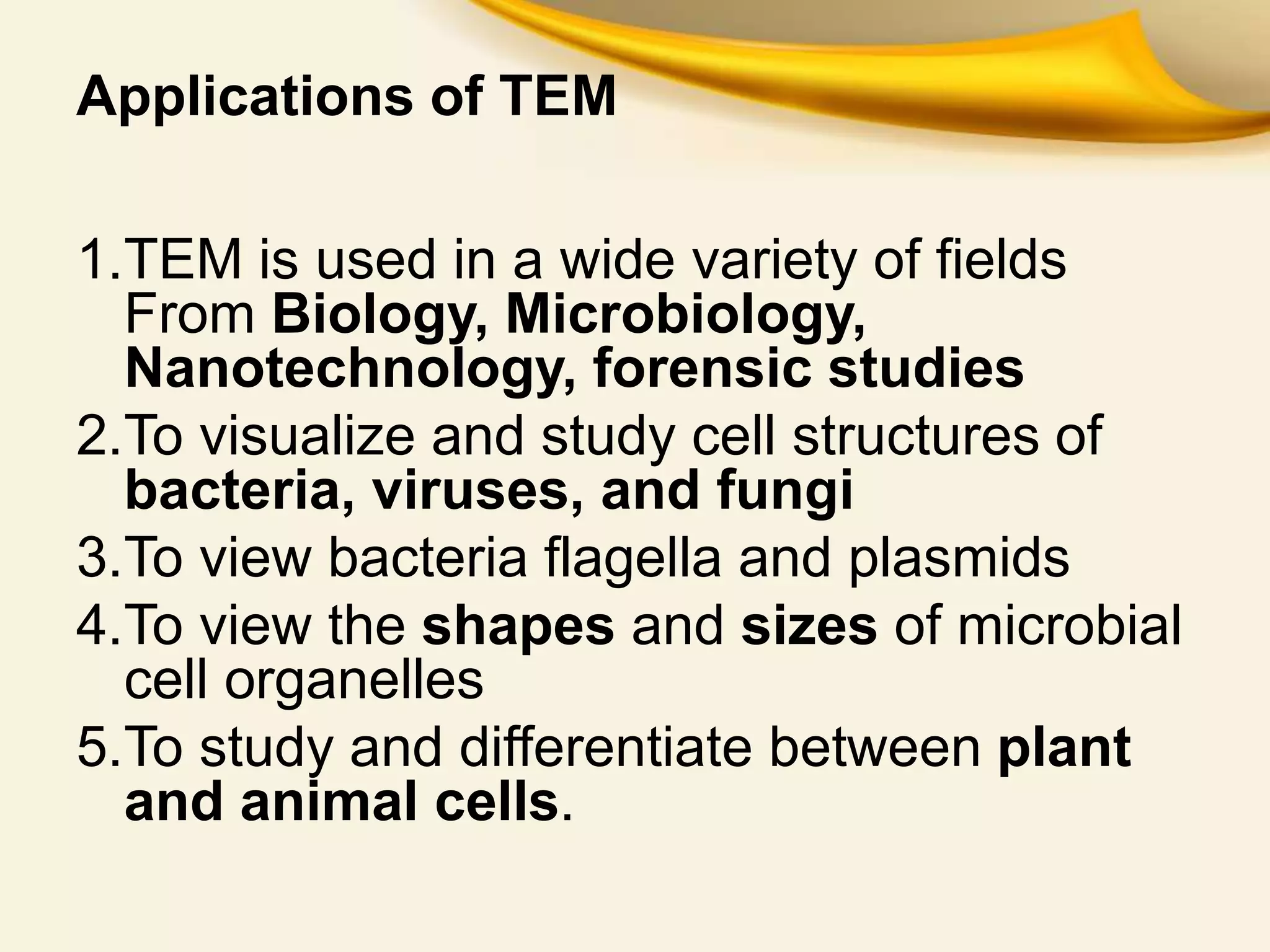
TYPES OF ELECTRON MICROSCOPE
TEM- Transmitted electron microscope;
Form image using electron that are
transmitted through a speciman
SEM- Scanning electron microscope;
Utilize that electron have bounced off the
surface of speciman
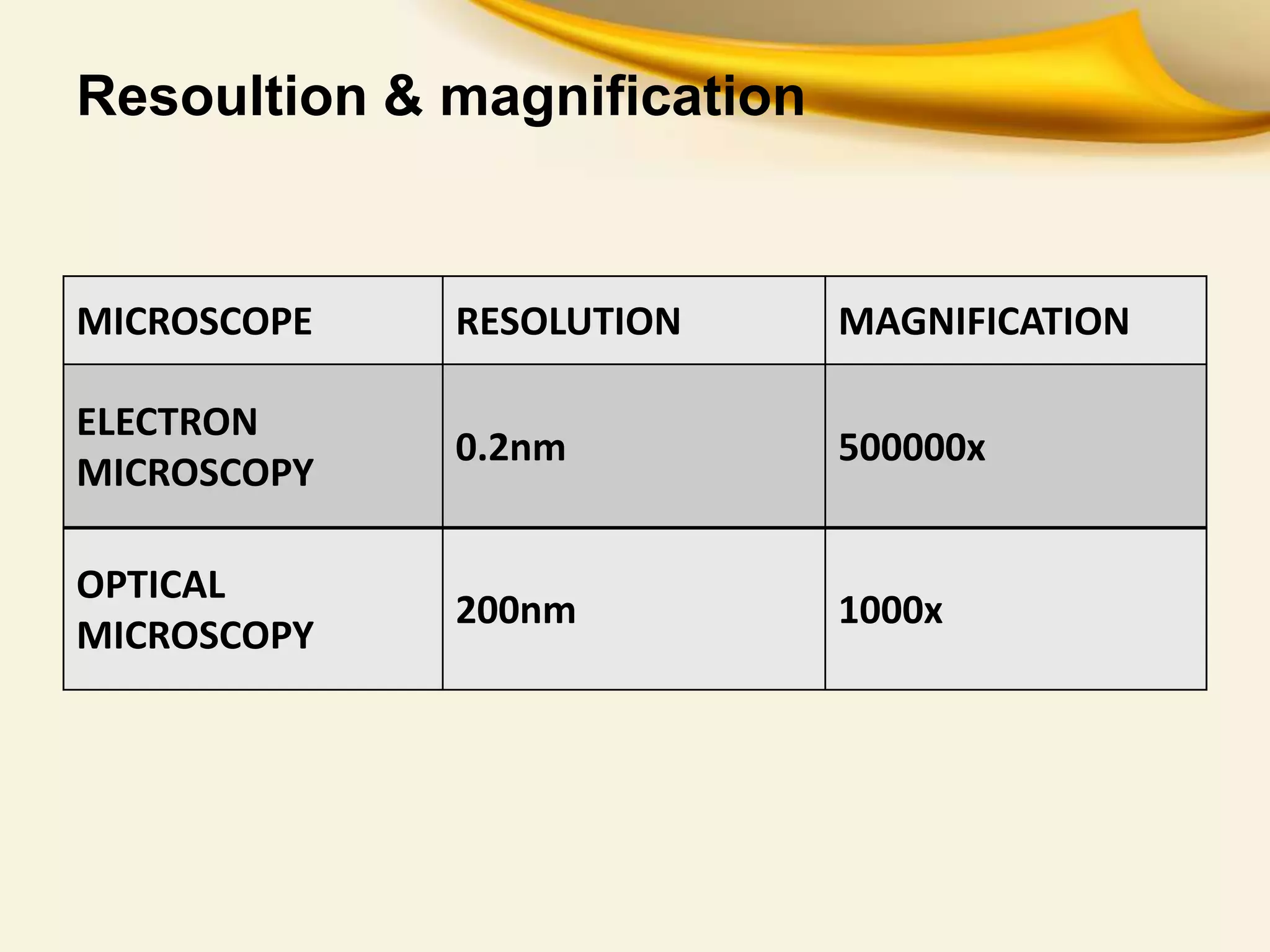
PRINCIPLE OF TEM:
• TEM operates on the same basic
principles as the light microscope but
uses electrons instead of light. Since, light
microscope is limited by the wavelength of
light. TEMs use electrons as a “light
source” and their much lower
wavelength makes it possible to get a
resolution a 1000 times better than with a
light microscope
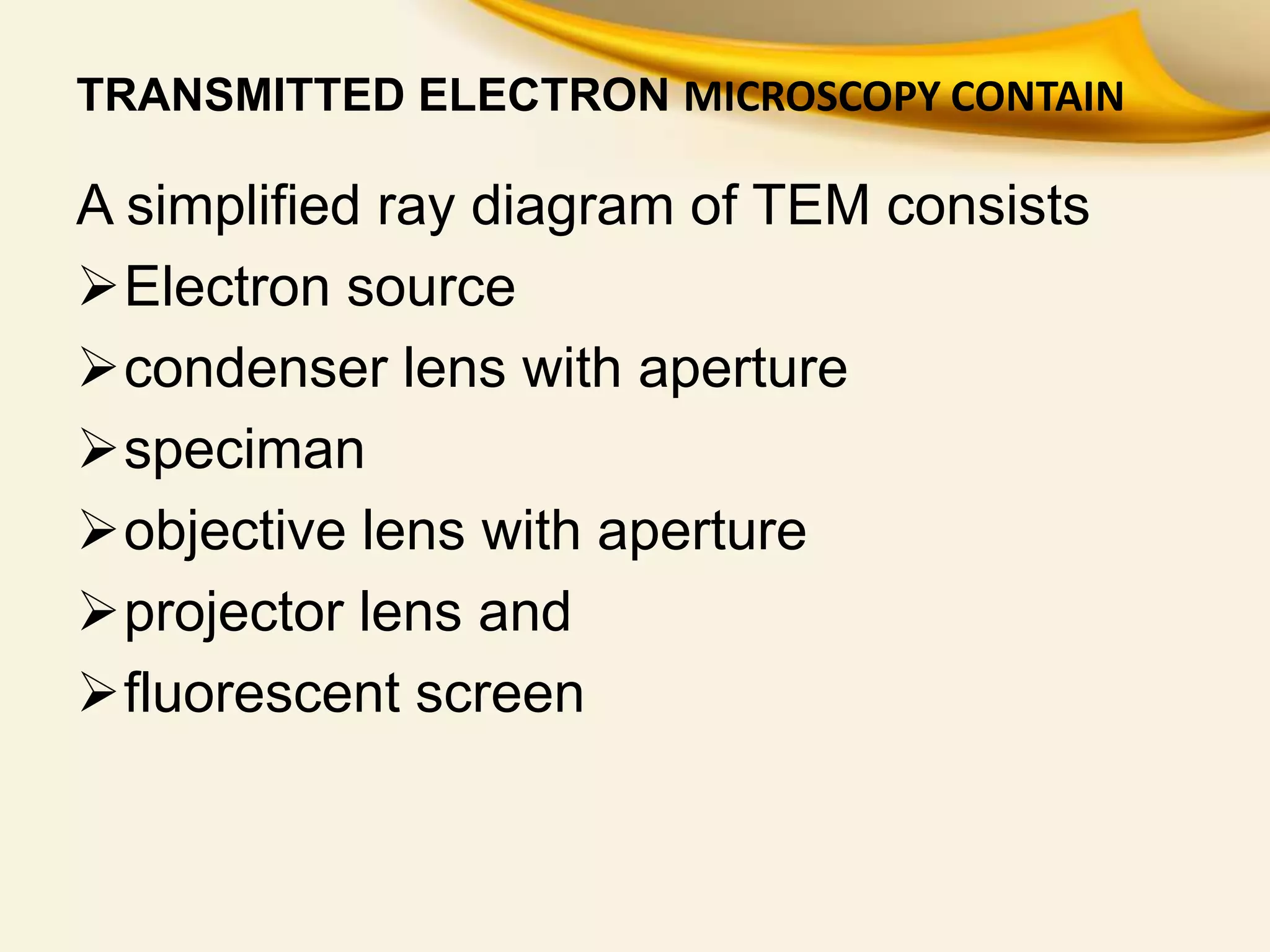
Resoultion & magnification
MICROSCOPE RESOLUTION MAGNIFICATION
ELECTRON
MICROSCOPY
0.2nm 500000x
OPTICAL
MICROSCOPY
200nm 1000x
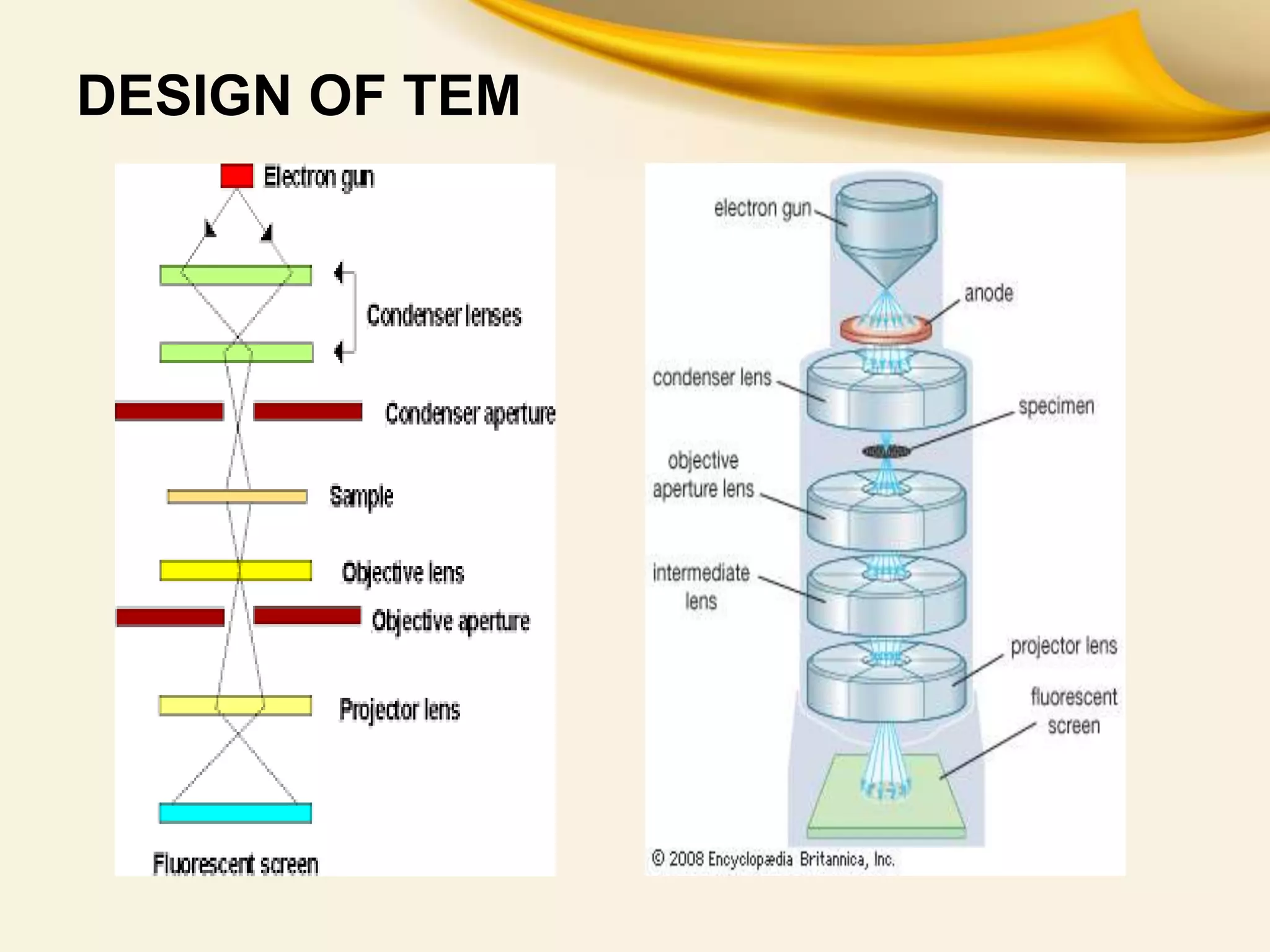
TRANSMITTED ELECTRON MICROSCOPY CONTAIN
A simplified ray diagram of TEM consists
Electron source
condenser lens with aperture
speciman
objective lens with aperture
projector lens and
fluorescent screen
DESIGN OF TEM
ELECTRON GUN
The electron beam is generated in the
electron gun two types of gun are used
 Thermionic gun:
 Tungsten filament
Lanthanum hexaboride
Field emission gun:
Field emitter or schotty emitter
ELECTRON SOURCE
• The electron are form when we are heat
the tungsten filament in electron gun
• The lot of electron are produce from
electron gun
CONDENSER &OBJECTIVE LENS
CONDENSER Lens:
• control spot sizes and illumination area on
sample.
• OBJECTIVE Lens:
• Images sample and is strongest lens in
the system.
• Both lenses are made up of Electro
magnetic lens
PROJECTOR &DECECTORS
projector lenses:
changes modes from diffraction to imaging.
Detectors:
various different configurations designed
to collect secondary signals produced by
the high-energy electron beam.
WORKING PRINCIPLE
• A heated tungsten filament in the
electron gun produces electrons that get
focus on the specimen by the condenser
lenses.
• Magnetic lenses are used to focus the
beam of electrons of the specimen.
• column tube of the condenser lens into the
vacuum creating a clear image, the
vacuum allows electrons to produce a
clear image without collision with any
air molecules which may deflect them.
• On reaching the specimen, the specimen scatters the
electrons focusing them on the magnetic lenses
forming a large clear image, and if it passes through a
fluorescent screen it forms a polychromatic image.
• The denser the specimen, the more the electrons are
scattered forming a darker image because fewer
electron reaches the screen for visualization while
thinner, more transparent specimens appear brighter.
RESULTS
Applications of TEM
1.TEM is used in a wide variety of fields
From Biology, Microbiology,
Nanotechnology, forensic studies
2.To visualize and study cell structures of
bacteria, viruses, and fungi
3.To view bacteria flagella and plasmids
4.To view the shapes and sizes of microbial
cell organelles
5.To study and differentiate between plant
and animal cells.
Application
6.Its also used in nanotechnology to study
nanoparticles such as ZnO nanoparticles
7.It is used to detect and identify fractures,
damaged microparticles which further
enable repair mechanisms of the particles.
Advantage of TEM
1.It has a very powerful magnification of about 2
million times that of the Light microscope.
2.It can be used for a variety of applications
ranging from basic Biology to Nanotechnology,
to education and industrial uses.
3.It can be used to acquire vast information on
compounds and their structures.
4.It produces very efficient, high-quality images
with high clarity.
5.It can produce permanent images.
6.It is easy to train and use the Transmission
Electron Microscope
LIMITATIONS
1. Generally, the TEMs are very expensive to purchase
2. They are very big to handle.
3. The preparation of specimens to be viewed under the
TEM is very tedious.
4. The use of chemical fixations, dehydrators, and
embedments can cause the dangers of artifacts.
5. They are laborious to maintain.
6. It requires a constant inflow of voltage to operate.
7. They are extremely sensitive to vibrations and electro-
magnetic movements hence they are used in isolated
areas, where they are not exposed.
8. It produces monochromatic images, unless they use a
fluorescent screen at the end of visualization.
THANK YOU

Tem or transmitted electron microscopy

  • 1.
    TEM or TransmittedElectron Microscopy NAME: VIJAYAUMAR.S ROLL NO:P20BIT1029 1 M.SC BIOTECHNOLOGY PERIYAR UNIVERSITY
  • 2.
  • 3.
    INTRODUCTION • In 1931,while conducting research for his masters at the technical college of Berlin, Ernst Ruska and Max Knoll designed first TEM. • TEM is a microscopy technique in which a beam of electrons is transmitted through an ultra thin specimen, interacting with the specimen.
  • 4.
     Electron microscpyinvolves the study of different speciman by using an electron microscopy  Electron microscopy are scientific instruments use a bean of of energetic electron to exaime obeject on a very fine scale.
  • 5.
     Through theelectron microscope we can see through that we couldnot see in normal eye. It has greater magnification than light microscope it has 10000+ magnification which is not possible in current optical microscope
  • 6.
    HISTORY OF TEM 1897-L.JThomson - Discover the electron 1924- L Debroglie- Idendified wave length of electron 1929- E.RusKa- PH.D Thesis on magnetic lens 1931-Knoll&rusKa- 1st electron microscope built 1938- von borries& rusKa- electron microscope speciman resolution =10nm
  • 7.
  • 8.
    TYPES OF ELECTRONMICROSCOPE TEM- Transmitted electron microscope; Form image using electron that are transmitted through a speciman SEM- Scanning electron microscope; Utilize that electron have bounced off the surface of speciman
  • 9.
    PRINCIPLE OF TEM: •TEM operates on the same basic principles as the light microscope but uses electrons instead of light. Since, light microscope is limited by the wavelength of light. TEMs use electrons as a “light source” and their much lower wavelength makes it possible to get a resolution a 1000 times better than with a light microscope
  • 10.
    Resoultion & magnification MICROSCOPERESOLUTION MAGNIFICATION ELECTRON MICROSCOPY 0.2nm 500000x OPTICAL MICROSCOPY 200nm 1000x
  • 11.
    TRANSMITTED ELECTRON MICROSCOPYCONTAIN A simplified ray diagram of TEM consists Electron source condenser lens with aperture speciman objective lens with aperture projector lens and fluorescent screen
  • 12.
  • 13.
    ELECTRON GUN The electronbeam is generated in the electron gun two types of gun are used  Thermionic gun:  Tungsten filament Lanthanum hexaboride Field emission gun: Field emitter or schotty emitter
  • 14.
    ELECTRON SOURCE • Theelectron are form when we are heat the tungsten filament in electron gun • The lot of electron are produce from electron gun
  • 15.
    CONDENSER &OBJECTIVE LENS CONDENSERLens: • control spot sizes and illumination area on sample. • OBJECTIVE Lens: • Images sample and is strongest lens in the system. • Both lenses are made up of Electro magnetic lens
  • 16.
    PROJECTOR &DECECTORS projector lenses: changesmodes from diffraction to imaging. Detectors: various different configurations designed to collect secondary signals produced by the high-energy electron beam.
  • 17.
    WORKING PRINCIPLE • Aheated tungsten filament in the electron gun produces electrons that get focus on the specimen by the condenser lenses. • Magnetic lenses are used to focus the beam of electrons of the specimen. • column tube of the condenser lens into the vacuum creating a clear image, the vacuum allows electrons to produce a clear image without collision with any air molecules which may deflect them.
  • 18.
    • On reachingthe specimen, the specimen scatters the electrons focusing them on the magnetic lenses forming a large clear image, and if it passes through a fluorescent screen it forms a polychromatic image. • The denser the specimen, the more the electrons are scattered forming a darker image because fewer electron reaches the screen for visualization while thinner, more transparent specimens appear brighter.
  • 19.
  • 20.
    Applications of TEM 1.TEMis used in a wide variety of fields From Biology, Microbiology, Nanotechnology, forensic studies 2.To visualize and study cell structures of bacteria, viruses, and fungi 3.To view bacteria flagella and plasmids 4.To view the shapes and sizes of microbial cell organelles 5.To study and differentiate between plant and animal cells.
  • 21.
    Application 6.Its also usedin nanotechnology to study nanoparticles such as ZnO nanoparticles 7.It is used to detect and identify fractures, damaged microparticles which further enable repair mechanisms of the particles.
  • 22.
    Advantage of TEM 1.Ithas a very powerful magnification of about 2 million times that of the Light microscope. 2.It can be used for a variety of applications ranging from basic Biology to Nanotechnology, to education and industrial uses. 3.It can be used to acquire vast information on compounds and their structures. 4.It produces very efficient, high-quality images with high clarity. 5.It can produce permanent images. 6.It is easy to train and use the Transmission Electron Microscope
  • 23.
    LIMITATIONS 1. Generally, theTEMs are very expensive to purchase 2. They are very big to handle. 3. The preparation of specimens to be viewed under the TEM is very tedious. 4. The use of chemical fixations, dehydrators, and embedments can cause the dangers of artifacts. 5. They are laborious to maintain. 6. It requires a constant inflow of voltage to operate. 7. They are extremely sensitive to vibrations and electro- magnetic movements hence they are used in isolated areas, where they are not exposed. 8. It produces monochromatic images, unless they use a fluorescent screen at the end of visualization.
  • 24.