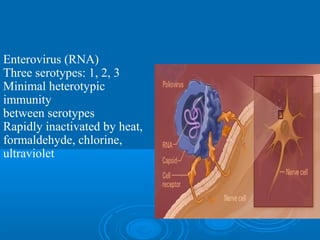
Poliomyelitis, also known as polio, is caused by a virus that attacks the nerve cells of the brain and spinal cord. It was first recorded in the late 1700s and caused epidemics in the late 1800s. While most infections result in no symptoms, it can cause paralysis in rare cases by destroying motor neurons. The poliovirus is transmitted through oral and fecal routes. Symptoms range from fever and vomiting to aseptic meningitis. Paralysis was feared during outbreaks in the early 20th century before vaccinations were developed. The polio vaccine introduced in 1955 eradicated the disease in most developed nations.