Tolerance, autoimmunity
and autoimmune
diseases
Dr. S. Parasuraman, M.Pharm., Ph.D.,
Snr. Associate Professor, Unit of Pharmacology, Toxicology and Basic Health Sciences,
Faculty of Pharmacy, AIMST University, Bedong 08100, Malaysia.
Topic learning outcomes
• Describe the mechanism of immunological
tolerance. (CL01)
• List the factors that can lead to autoimmunity.
(CL01)
• Describe the mechanisms of autoimmunity with
examples. (CL01)
• Classify autoimmune diseases. (CL01)
Immune cells
Immune cells develop from stem cells in the bone
marrow and become different types of white blood
cells. These include neutrophils, eosinophils,
basophils, mast cells, monocytes, macrophages,
dendritic cells, natural killer cells, and
lymphocytes (B cells and T cells).
Image source:
https://sellugsk.live/product_details/28292357.html
Immunological tolerance
• Immunologic tolerance is defined as unresponsiveness to
an antigen that is induced by exposure to that antigen.
• Antigens that induce tolerance are called tolerogens, or
tolerogenic antigens.
• Tolerance to self antigens, also called self-tolerance, is a
fundamental property of the normal immune system, and
failure of self-tolerance results in immune reactions
against self (autologous) antigens. Such reactions are
called autoimmunity, and the diseases they cause are
called autoimmune diseases.
Overview of immunologic tolerance
• Immunological tolerance is broadly categorized as
• T Lymphocyte tolerance
• Central T cell tolerance
• Peripheral T cell tolerance
• B Lymphocyte tolerance
• Central B cell tolerance
• Peripheral B cell tolerance
Central and peripheral tolerance in T cells
Central and peripheral tolerance in B lymphocytes
T Lymphocyte tolerance
•Lymphocytes with receptors specific for self-
antigens are deleted at an early stage in
lymphoid cell development. This process is called
central tolerance and allows self-reactive B and T
cells to be removed.
•T cell-mediated immune tolerance is a state of
unresponsiveness of T cells towards specific self
or non-self antigens.
T Lymphocyte tolerance
Central T Cell Tolerance:
• During cell maturation in the thymus, many immature
T cells that recognize antigens with high avidity die,
and some of the surviving cells in the CD4+ lineage
develop into regulatory T cells (Tregs). Which
suppress the immune response by both direct and
indirect mechanisms.
• Death of immature T cells as a result of recognition of
antigens in the thymus is known as deletion, or
negative selection. This process affects class I and
class II major histocompatibility complex (MHC)-
restricted T cells and is therefore important for
tolerance in both CD8+ and CD4+ lymphocyte
populations.
T Lymphocyte tolerance
Peripheral T Cell Tolerance:
• When self-reactive T cells escape into the periphery,
peripheral tolerance ensures that they are deleted or
become anergic (functionally unresponsive to
antigen)
• The mechanisms of peripheral tolerance are anergy
(functional unresponsiveness), suppression by
Tregs, and deletion (cell death).
T Lymphocyte tolerance
Peripheral T Cell Tolerance:
• Several mechanisms may function to induce and
maintain the anergic state
• T cell receptor (TCR)-induced signal transduction is
blocked in anergic cells
• Induction of anergy (a state of inactivation in which the
lymphocytes remain alive but are unable to respond to
antigen)
• Deletion of autoreactive T cells via apoptosis
• Development of "induced" regulatory T cells (Tregs)
• Self antigen recognition
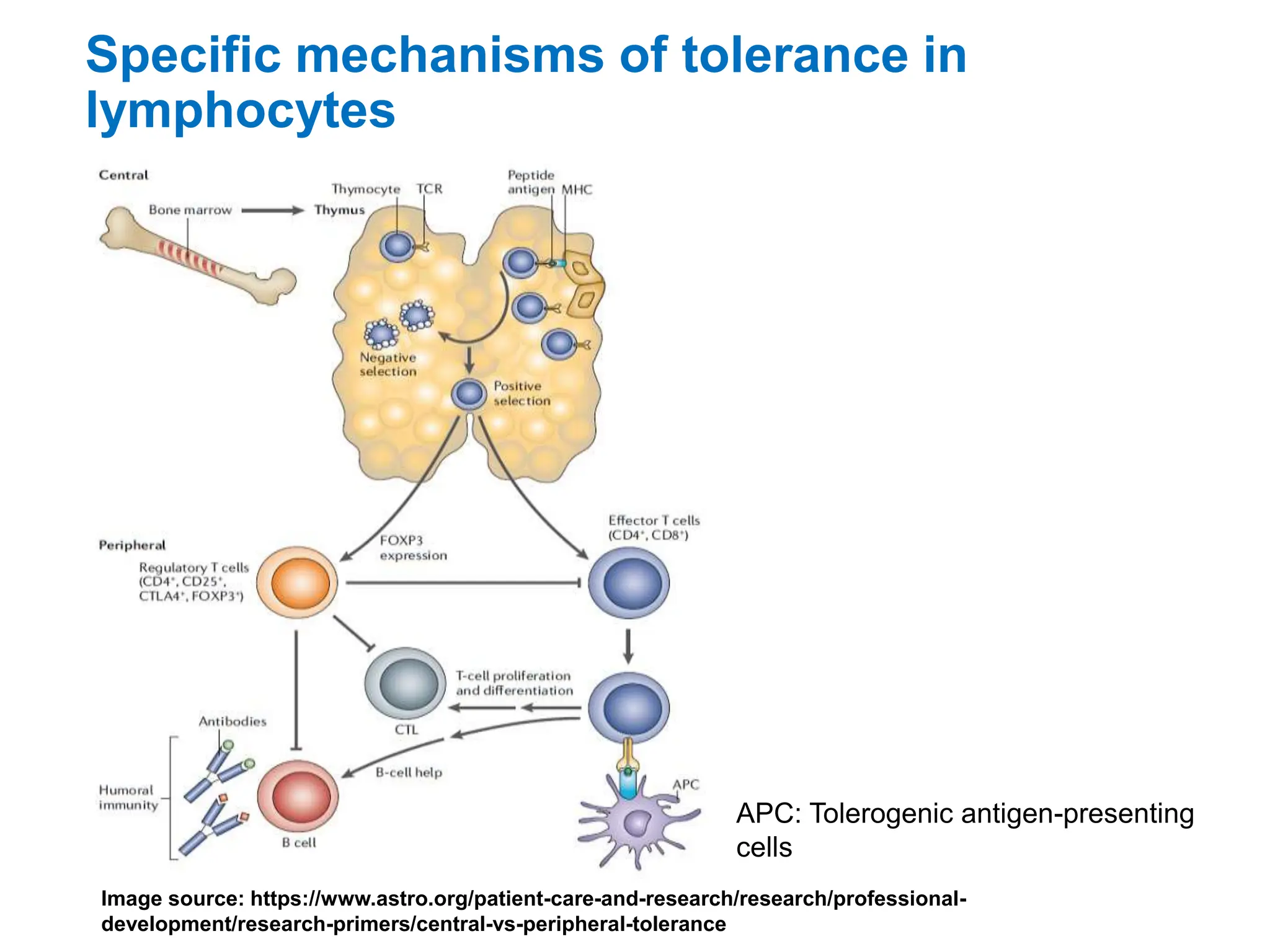
Specific mechanisms of tolerance in
lymphocytes
APC: Tolerogenic antigen-presenting
cells
Image source: https://www.astro.org/patient-care-and-research/research/professional-
development/research-primers/central-vs-peripheral-tolerance
B Lymphocytes tolerance
• Tolerance in B lymphocytes is necessary for
maintaining unresponsiveness to T-independent self
antigens, such as polysaccharides and lipids. B cell
tolerance also plays a role in preventing antibody
responses to protein antigens.
Central B Cell Tolerance
• During cell maturation in the bone marrow, B
lymphocytes first express IgM as their antigen
receptor and are functionally immature at this stage.
If these B lymphocytes recognize self antigens in the
bone marrow with high affinity, they either change
their specificity or are deleted.
B Lymphocytes tolerance
Peripheral B Cell Tolerance
• Mature B lymphocytes that recognize self antigens in
peripheral tissues in the absence of specific helper T
cells may be rendered functionally unresponsive or
die by apoptosis.
Therapeutic tolerance induction
• Is the key to developing antigen-specific tolerance as
a treatment strategy for immunologic diseases.
• Antigen-specific immune tolerance remains an
important unmet clinical need for the management of
autoimmunity, allergy, organ transplantation and
gene therapy.
Autoimmunity
Image source: https://labpedia.net/elementary-immunology/chapter-16-autoimmunity/
Autoimmune diseases
• Autoimmune diseases arise when an individual’s
immune system attacks his or her own tissue and
organs. The etiology behind autoimmune diseases is
multifactorial, with genetic, hormonal, and
environmental factors all playing a role.
• These diseases are found in 5% to 7% of the
population, and the disease incidence is heavily
skewed toward females.
• In women over 65 years of age, autoimmune
diseases are one of the 10 leading causes of death.
The etiology of autoimmune disease in women is
multifactorial. The factors include genetic,
environmental, and hormonal triggers.
Autoimmune diseases
• Individuals expressing certain human leukocyte
antigen (HLA) alleles are at high risk of developing
autoimmune disease. For example, individuals
expressing HLA B8 and DR3 have an increased risk
of developing Graves’ disease.
Risk factors for autoimmune disease
Gender:
• Many autoimmune diseases occur with a higher
frequency in women than men.
• Overall, 78% of people affected by autoimmune
disease are female. Regarding specific conditions, up
to 95% of systemic lupus erythematosus (SLE) and
Sjogren’s syndrome patients are female. Other
conditions like arthritis and multiple sclerosis (MS)
occur in females around 60% more than in males.
Ref: https://www.autoimmuneinstitute.org/articles/about-autoimmune/7-risk-factors-for-autoimmune-
disease/
Risk factors for autoimmune disease
Genetic risk factors:
• Risk is higher due to an inherited genetic variation.
Having an autoimmune disease:
• Exhibit one autoimmune disease, is at risk to develop
more. An accumulation of three or more autoimmune
conditions is called Multiple Autoimmune Syndrome
(MAS), which is seen in roughly 25% of patients.
Obesity:
• Obesity is a risk factor for various autoimmune
diseases, including multiple sclerosis, type 1
diabetes, rheumatoid arthritis and psoriasis.
Ref: https://www.autoimmuneinstitute.org/articles/about-autoimmune/7-risk-factors-for-autoimmune-
disease/
Risk factors for autoimmune disease
Smoking and Exposure to Toxic Agents:
• Smoking as a risk factor for Graves' disease, toxic
nodular goiter, and autoimmune hypothyroidism.
Exposure to other toxins like air pollutants, crystalline
silica, ultraviolet radiation, or organic solvents are
also associated with the development of autoimmune
diseases like multiple sclerosis.
Drugs:
• Drug-induced immune thrombocytopenia.
• E.g.: Chemotherapy drugs, valproic acid, furosemide,
NSAIDs, penicillin, quinidine, quinine, ranitidine,
sulfonamides, linezolid and statins.
Ref: https://www.autoimmuneinstitute.org/articles/about-autoimmune/7-risk-factors-for-autoimmune-
disease/
Risk factors for autoimmune disease
Infections:
• Infections are an important environmental risk factor
for autoimmune disease. SARS-CoV-2 virus is
associated with autoimmune disease (autoimmune
arthritis, psoriasis, pemphigoid, Graves' disease,
anti-phospholipid antibody syndrome, immune
mediated thrombocytopenia, multiple sclerosis, and
vasculitis).
Ref: https://www.autoimmuneinstitute.org/articles/about-autoimmune/7-risk-factors-for-autoimmune-
disease/
Mechanisms of autoimmunity
• The proposed for pathogenesis of autoimmunity is
• Release of sequestrated antigens
• Antigen alteration
• Epitope spreading
• Molecular mimicry
Ref: Parija SC. Microbiology and Immunology Textbook of 2nd Edition
Mechanisms of autoimmunity
• Release of sequestrated antigens:
• DNA, histones, and mitochondrial enzymes are the
intracellular antigens that are normally sequestrated from
the immune system. However, certain viral or bacterial
infections and exposure to radiation and chemicals can
damage these cells and release sequestrated intracellular
antigens into circulation. These antigens then elicit a
strong immune response. The autoantibodies are
produced against these antigens, which combine with
subsequently released sequestrated antigens. This
results in the formation of immune complexes, which
causes damage to tissues.
• Example: Following an infection by mumps, the virus
causes damage to the basement membrane of seminiferous
tubules, thereby eliciting an immune response and resulting
in orchitis.
Ref: Parija SC. Microbiology and Immunology Textbook of 2nd Edition
Mechanisms of autoimmunity
• Antigen alteration:
• Certain physical, chemical, or biological factors may alter
tissue antigens, resulting in formation of new cell surface
antigens called neoantigens. These neoantigens are no
longer recognized as self, therefore, appear foreign to
immune system, thereby eliciting an immune response.
• Example: Procainamide-induced Systemic lupus
erythematosus (SLE).
Ref: Parija SC. Microbiology and Immunology Textbook of 2nd Edition
Mechanisms of autoimmunity
• Epitope spreading:
• Epitope (determinant) spreading is the development of
immune responses to endogenous epitopes secondary to
the release of self antigens during a chronic autoimmune
or inflammatory response.
• Molecular mimicry:
• Molecular mimicry is a process in which infection by
particular microbial pathogen is associated with the
subsequent development of specific autoimmune
diseases.
• Example: M protein of Streptococcus pyogenes that elicits
autoantibodies that cross-react with heart myosin leading to
heart damage.
Ref: Parija SC. Microbiology and Immunology Textbook of 2nd Edition
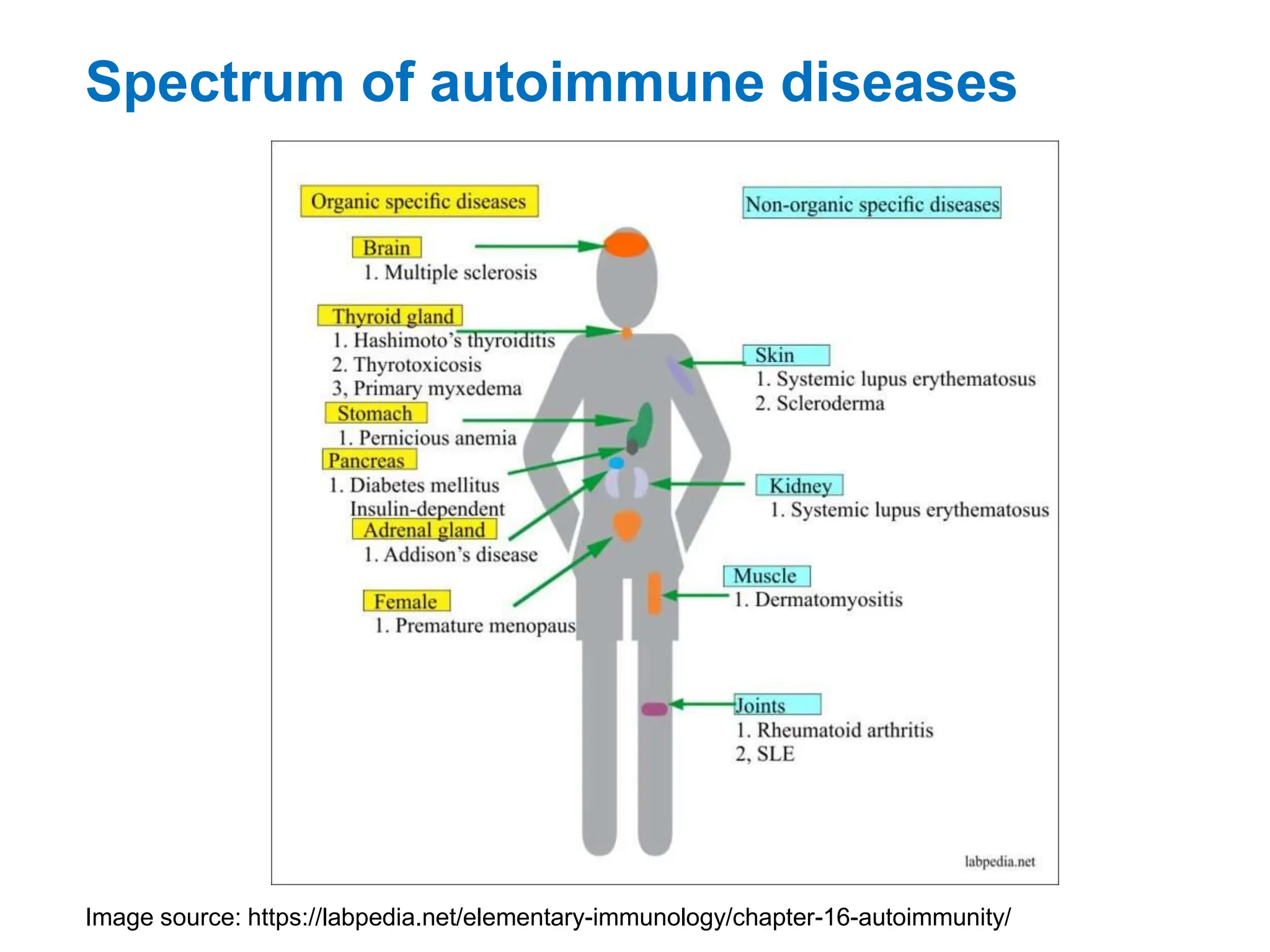
Spectrum of autoimmune diseases
Image source: https://labpedia.net/elementary-immunology/chapter-16-autoimmunity/
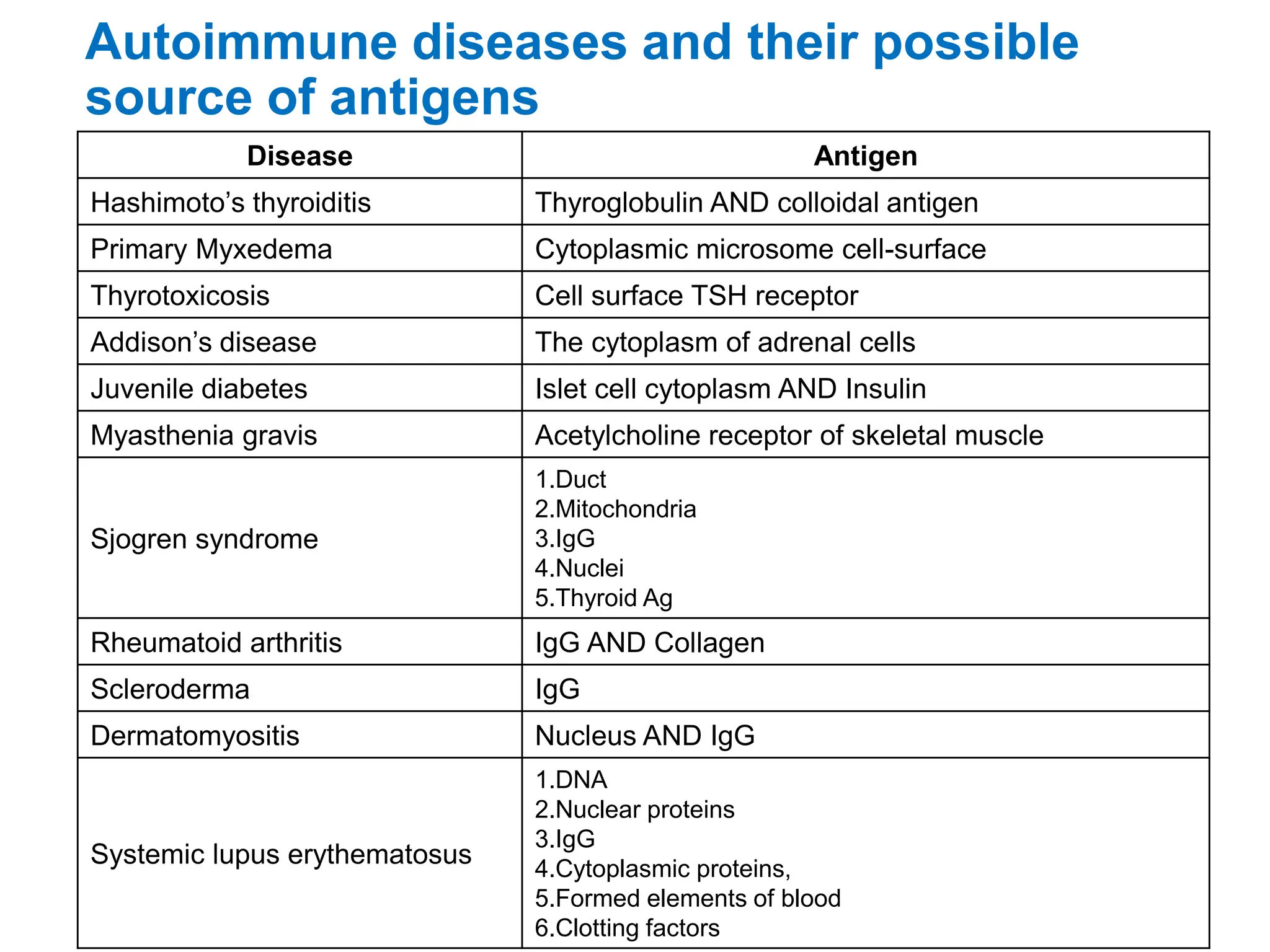
Autoimmune diseases and their possible
source of antigens
Disease Antigen
Hashimoto’s thyroiditis Thyroglobulin AND colloidal antigen
Primary Myxedema Cytoplasmic microsome cell-surface
Thyrotoxicosis Cell surface TSH receptor
Addison’s disease The cytoplasm of adrenal cells
Juvenile diabetes Islet cell cytoplasm AND Insulin
Myasthenia gravis Acetylcholine receptor of skeletal muscle
Sjogren syndrome
1.Duct
2.Mitochondria
3.IgG
4.Nuclei
5.Thyroid Ag
Rheumatoid arthritis IgG AND Collagen
Scleroderma IgG
Dermatomyositis Nucleus AND IgG
Systemic lupus erythematosus
1.DNA
2.Nuclear proteins
3.IgG
4.Cytoplasmic proteins,
5.Formed elements of blood
6.Clotting factors
Classification of autoimmune diseases
• Autoimmune diseases can be classified according to
several criteria. One of them is the location of the
autoimmune attack. Based on this criterion,
autoimmune diseases are distinguished into
systemic or organ-specific.
Systemic autoimmune diseases
• The autoantibodies are produced against a wide
range of host tissues in systemic autoimmune
diseases. These diseases reflect a general defect in
immune regulation that results in hyperactive T cells
and B cells.
• Example:
• Rheumatoid arthritis
• Systemic lupus erythematosus
• Scleroderma
• Dermatomyositis
Organ-specific autoimmune diseases
• These are diseases in which autoantibodies are
produced targeting only the tissue of a single organ,
thus affecting it solely.
• Example:
• Thyroid gland in patients with Graves disease
• Beta cells of the endocrine pancreas in patients with type
1 diabetes
• Skin in patients with vitiligo.
• These diseases can be further sub-grouped on the
basis of tissue damage as: (a) diseases mediated by
the action of cell-mediated immunity and (b) diseases
mediated by the action of autoantibodies.
Thank you

Tolerance, autoimmunity and autoimmune diseases.pptx

  • 1.
    Tolerance, autoimmunity and autoimmune diseases Dr.S. Parasuraman, M.Pharm., Ph.D., Snr. Associate Professor, Unit of Pharmacology, Toxicology and Basic Health Sciences, Faculty of Pharmacy, AIMST University, Bedong 08100, Malaysia.
  • 2.
    Topic learning outcomes •Describe the mechanism of immunological tolerance. (CL01) • List the factors that can lead to autoimmunity. (CL01) • Describe the mechanisms of autoimmunity with examples. (CL01) • Classify autoimmune diseases. (CL01)
  • 3.
    Immune cells Immune cellsdevelop from stem cells in the bone marrow and become different types of white blood cells. These include neutrophils, eosinophils, basophils, mast cells, monocytes, macrophages, dendritic cells, natural killer cells, and lymphocytes (B cells and T cells). Image source: https://sellugsk.live/product_details/28292357.html
  • 4.
    Immunological tolerance • Immunologictolerance is defined as unresponsiveness to an antigen that is induced by exposure to that antigen. • Antigens that induce tolerance are called tolerogens, or tolerogenic antigens. • Tolerance to self antigens, also called self-tolerance, is a fundamental property of the normal immune system, and failure of self-tolerance results in immune reactions against self (autologous) antigens. Such reactions are called autoimmunity, and the diseases they cause are called autoimmune diseases.
  • 5.
    Overview of immunologictolerance • Immunological tolerance is broadly categorized as • T Lymphocyte tolerance • Central T cell tolerance • Peripheral T cell tolerance • B Lymphocyte tolerance • Central B cell tolerance • Peripheral B cell tolerance
  • 6.
    Central and peripheraltolerance in T cells Central and peripheral tolerance in B lymphocytes
  • 7.
    T Lymphocyte tolerance •Lymphocyteswith receptors specific for self- antigens are deleted at an early stage in lymphoid cell development. This process is called central tolerance and allows self-reactive B and T cells to be removed. •T cell-mediated immune tolerance is a state of unresponsiveness of T cells towards specific self or non-self antigens.
  • 8.
    T Lymphocyte tolerance CentralT Cell Tolerance: • During cell maturation in the thymus, many immature T cells that recognize antigens with high avidity die, and some of the surviving cells in the CD4+ lineage develop into regulatory T cells (Tregs). Which suppress the immune response by both direct and indirect mechanisms. • Death of immature T cells as a result of recognition of antigens in the thymus is known as deletion, or negative selection. This process affects class I and class II major histocompatibility complex (MHC)- restricted T cells and is therefore important for tolerance in both CD8+ and CD4+ lymphocyte populations.
  • 9.
    T Lymphocyte tolerance PeripheralT Cell Tolerance: • When self-reactive T cells escape into the periphery, peripheral tolerance ensures that they are deleted or become anergic (functionally unresponsive to antigen) • The mechanisms of peripheral tolerance are anergy (functional unresponsiveness), suppression by Tregs, and deletion (cell death).
  • 10.
    T Lymphocyte tolerance PeripheralT Cell Tolerance: • Several mechanisms may function to induce and maintain the anergic state • T cell receptor (TCR)-induced signal transduction is blocked in anergic cells • Induction of anergy (a state of inactivation in which the lymphocytes remain alive but are unable to respond to antigen) • Deletion of autoreactive T cells via apoptosis • Development of "induced" regulatory T cells (Tregs) • Self antigen recognition
  • 11.
    Specific mechanisms oftolerance in lymphocytes APC: Tolerogenic antigen-presenting cells Image source: https://www.astro.org/patient-care-and-research/research/professional- development/research-primers/central-vs-peripheral-tolerance
  • 12.
    B Lymphocytes tolerance •Tolerance in B lymphocytes is necessary for maintaining unresponsiveness to T-independent self antigens, such as polysaccharides and lipids. B cell tolerance also plays a role in preventing antibody responses to protein antigens. Central B Cell Tolerance • During cell maturation in the bone marrow, B lymphocytes first express IgM as their antigen receptor and are functionally immature at this stage. If these B lymphocytes recognize self antigens in the bone marrow with high affinity, they either change their specificity or are deleted.
  • 13.
    B Lymphocytes tolerance PeripheralB Cell Tolerance • Mature B lymphocytes that recognize self antigens in peripheral tissues in the absence of specific helper T cells may be rendered functionally unresponsive or die by apoptosis.
  • 14.
    Therapeutic tolerance induction •Is the key to developing antigen-specific tolerance as a treatment strategy for immunologic diseases. • Antigen-specific immune tolerance remains an important unmet clinical need for the management of autoimmunity, allergy, organ transplantation and gene therapy.
  • 15.
  • 16.
    Autoimmune diseases • Autoimmunediseases arise when an individual’s immune system attacks his or her own tissue and organs. The etiology behind autoimmune diseases is multifactorial, with genetic, hormonal, and environmental factors all playing a role. • These diseases are found in 5% to 7% of the population, and the disease incidence is heavily skewed toward females. • In women over 65 years of age, autoimmune diseases are one of the 10 leading causes of death. The etiology of autoimmune disease in women is multifactorial. The factors include genetic, environmental, and hormonal triggers.
  • 17.
    Autoimmune diseases • Individualsexpressing certain human leukocyte antigen (HLA) alleles are at high risk of developing autoimmune disease. For example, individuals expressing HLA B8 and DR3 have an increased risk of developing Graves’ disease.
  • 18.
    Risk factors forautoimmune disease Gender: • Many autoimmune diseases occur with a higher frequency in women than men. • Overall, 78% of people affected by autoimmune disease are female. Regarding specific conditions, up to 95% of systemic lupus erythematosus (SLE) and Sjogren’s syndrome patients are female. Other conditions like arthritis and multiple sclerosis (MS) occur in females around 60% more than in males. Ref: https://www.autoimmuneinstitute.org/articles/about-autoimmune/7-risk-factors-for-autoimmune- disease/
  • 19.
    Risk factors forautoimmune disease Genetic risk factors: • Risk is higher due to an inherited genetic variation. Having an autoimmune disease: • Exhibit one autoimmune disease, is at risk to develop more. An accumulation of three or more autoimmune conditions is called Multiple Autoimmune Syndrome (MAS), which is seen in roughly 25% of patients. Obesity: • Obesity is a risk factor for various autoimmune diseases, including multiple sclerosis, type 1 diabetes, rheumatoid arthritis and psoriasis. Ref: https://www.autoimmuneinstitute.org/articles/about-autoimmune/7-risk-factors-for-autoimmune- disease/
  • 20.
    Risk factors forautoimmune disease Smoking and Exposure to Toxic Agents: • Smoking as a risk factor for Graves' disease, toxic nodular goiter, and autoimmune hypothyroidism. Exposure to other toxins like air pollutants, crystalline silica, ultraviolet radiation, or organic solvents are also associated with the development of autoimmune diseases like multiple sclerosis. Drugs: • Drug-induced immune thrombocytopenia. • E.g.: Chemotherapy drugs, valproic acid, furosemide, NSAIDs, penicillin, quinidine, quinine, ranitidine, sulfonamides, linezolid and statins. Ref: https://www.autoimmuneinstitute.org/articles/about-autoimmune/7-risk-factors-for-autoimmune- disease/
  • 21.
    Risk factors forautoimmune disease Infections: • Infections are an important environmental risk factor for autoimmune disease. SARS-CoV-2 virus is associated with autoimmune disease (autoimmune arthritis, psoriasis, pemphigoid, Graves' disease, anti-phospholipid antibody syndrome, immune mediated thrombocytopenia, multiple sclerosis, and vasculitis). Ref: https://www.autoimmuneinstitute.org/articles/about-autoimmune/7-risk-factors-for-autoimmune- disease/
  • 22.
    Mechanisms of autoimmunity •The proposed for pathogenesis of autoimmunity is • Release of sequestrated antigens • Antigen alteration • Epitope spreading • Molecular mimicry Ref: Parija SC. Microbiology and Immunology Textbook of 2nd Edition
  • 23.
    Mechanisms of autoimmunity •Release of sequestrated antigens: • DNA, histones, and mitochondrial enzymes are the intracellular antigens that are normally sequestrated from the immune system. However, certain viral or bacterial infections and exposure to radiation and chemicals can damage these cells and release sequestrated intracellular antigens into circulation. These antigens then elicit a strong immune response. The autoantibodies are produced against these antigens, which combine with subsequently released sequestrated antigens. This results in the formation of immune complexes, which causes damage to tissues. • Example: Following an infection by mumps, the virus causes damage to the basement membrane of seminiferous tubules, thereby eliciting an immune response and resulting in orchitis. Ref: Parija SC. Microbiology and Immunology Textbook of 2nd Edition
  • 24.
    Mechanisms of autoimmunity •Antigen alteration: • Certain physical, chemical, or biological factors may alter tissue antigens, resulting in formation of new cell surface antigens called neoantigens. These neoantigens are no longer recognized as self, therefore, appear foreign to immune system, thereby eliciting an immune response. • Example: Procainamide-induced Systemic lupus erythematosus (SLE). Ref: Parija SC. Microbiology and Immunology Textbook of 2nd Edition
  • 25.
    Mechanisms of autoimmunity •Epitope spreading: • Epitope (determinant) spreading is the development of immune responses to endogenous epitopes secondary to the release of self antigens during a chronic autoimmune or inflammatory response. • Molecular mimicry: • Molecular mimicry is a process in which infection by particular microbial pathogen is associated with the subsequent development of specific autoimmune diseases. • Example: M protein of Streptococcus pyogenes that elicits autoantibodies that cross-react with heart myosin leading to heart damage. Ref: Parija SC. Microbiology and Immunology Textbook of 2nd Edition
  • 26.
    Spectrum of autoimmunediseases Image source: https://labpedia.net/elementary-immunology/chapter-16-autoimmunity/
  • 27.
    Autoimmune diseases andtheir possible source of antigens Disease Antigen Hashimoto’s thyroiditis Thyroglobulin AND colloidal antigen Primary Myxedema Cytoplasmic microsome cell-surface Thyrotoxicosis Cell surface TSH receptor Addison’s disease The cytoplasm of adrenal cells Juvenile diabetes Islet cell cytoplasm AND Insulin Myasthenia gravis Acetylcholine receptor of skeletal muscle Sjogren syndrome 1.Duct 2.Mitochondria 3.IgG 4.Nuclei 5.Thyroid Ag Rheumatoid arthritis IgG AND Collagen Scleroderma IgG Dermatomyositis Nucleus AND IgG Systemic lupus erythematosus 1.DNA 2.Nuclear proteins 3.IgG 4.Cytoplasmic proteins, 5.Formed elements of blood 6.Clotting factors
  • 28.
    Classification of autoimmunediseases • Autoimmune diseases can be classified according to several criteria. One of them is the location of the autoimmune attack. Based on this criterion, autoimmune diseases are distinguished into systemic or organ-specific.
  • 29.
    Systemic autoimmune diseases •The autoantibodies are produced against a wide range of host tissues in systemic autoimmune diseases. These diseases reflect a general defect in immune regulation that results in hyperactive T cells and B cells. • Example: • Rheumatoid arthritis • Systemic lupus erythematosus • Scleroderma • Dermatomyositis
  • 30.
    Organ-specific autoimmune diseases •These are diseases in which autoantibodies are produced targeting only the tissue of a single organ, thus affecting it solely. • Example: • Thyroid gland in patients with Graves disease • Beta cells of the endocrine pancreas in patients with type 1 diabetes • Skin in patients with vitiligo. • These diseases can be further sub-grouped on the basis of tissue damage as: (a) diseases mediated by the action of cell-mediated immunity and (b) diseases mediated by the action of autoantibodies.
  • 31.

Editor's Notes

  • #5 Refer book titled - Cellular and Molecular Immunology
  • #6 Central tolerance occurs when immature lymphocytes encounter self antigens in the primary lymphoid organs, and consequently they die or become unreactive. Peripheral tolerance mechanisms (reactions to environmental agents, including allergens and gut microbiota), such as exhaustion, deletion, anergy, and regulation are mainly relied upon to suppress the activity of self-reactive T cells.
  • #19 Sjögren's syndrome, the immune system attacks the glands that make tears and saliva. Multiple sclerosis (MS) is a condition that can affect the brain and spinal cord, causing a wide range of potential symptoms, including problems with vision, arm or leg movement, sensation or balance
  • #21 Thrombocytopenia is a condition that occurs when the platelet count in your blood is too low.
  • #22 Bullous pemphigoid is a rare skin condition that mainly affects older people.
  • #24 Orchitis is an inflammation of one or both testicles.
  • #28 https://labpedia.net/elementary-immunology/chapter-16-autoimmunity/
  • #30 https://pathology.jhu.edu/autoimmune/classification
  • #31 https://pathology.jhu.edu/autoimmune/classification