Writing Effective Scientific Articles
Dr. S. Parasuraman, M.Pharm., Ph.D.,
Snr. Associate Professor & Unit Head
Pharmacology, Toxicology and Basic Health Sciences [PTBHS] Unit
Faculty of Pharmacy
AIMST University
Bedong 08100, Malaysia
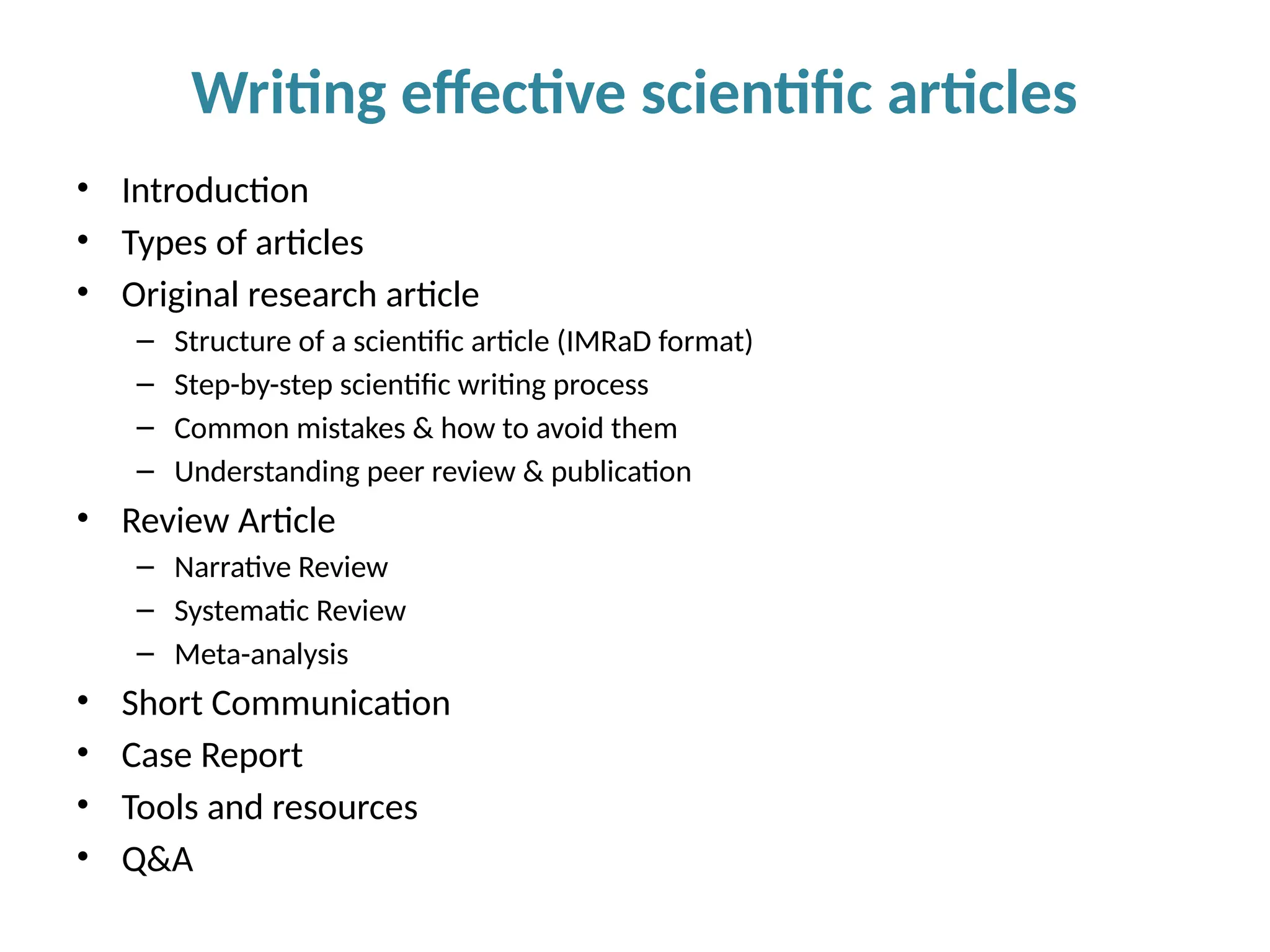
Writing effective scientific articles
• Introduction
• Types of articles
• Original research article
– Structure of a scientific article (IMRaD format)
– Step-by-step scientific writing process
– Common mistakes & how to avoid them
– Understanding peer review & publication
• Review Article
– Narrative Review
– Systematic Review
– Meta-analysis
• Short Communication
• Case Report
• Tools and resources
• Q&A
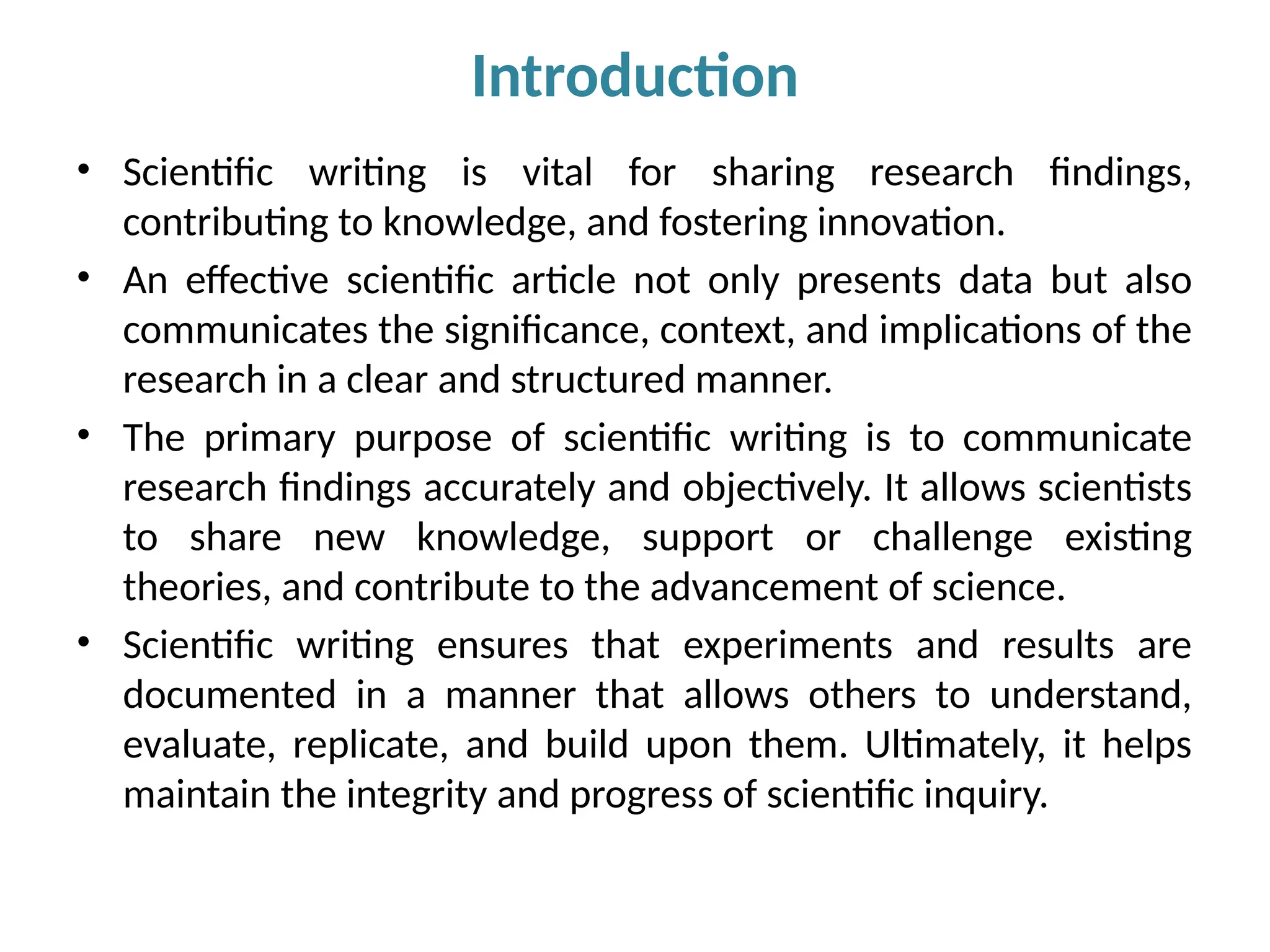
• Scientific writing is vital for sharing research findings,
contributing to knowledge, and fostering innovation.
• An effective scientific article not only presents data but also
communicates the significance, context, and implications of the
research in a clear and structured manner.
• The primary purpose of scientific writing is to communicate
research findings accurately and objectively. It allows scientists
to share new knowledge, support or challenge existing
theories, and contribute to the advancement of science.
• Scientific writing ensures that experiments and results are
documented in a manner that allows others to understand,
evaluate, replicate, and build upon them. Ultimately, it helps
maintain the integrity and progress of scientific inquiry.
Introduction
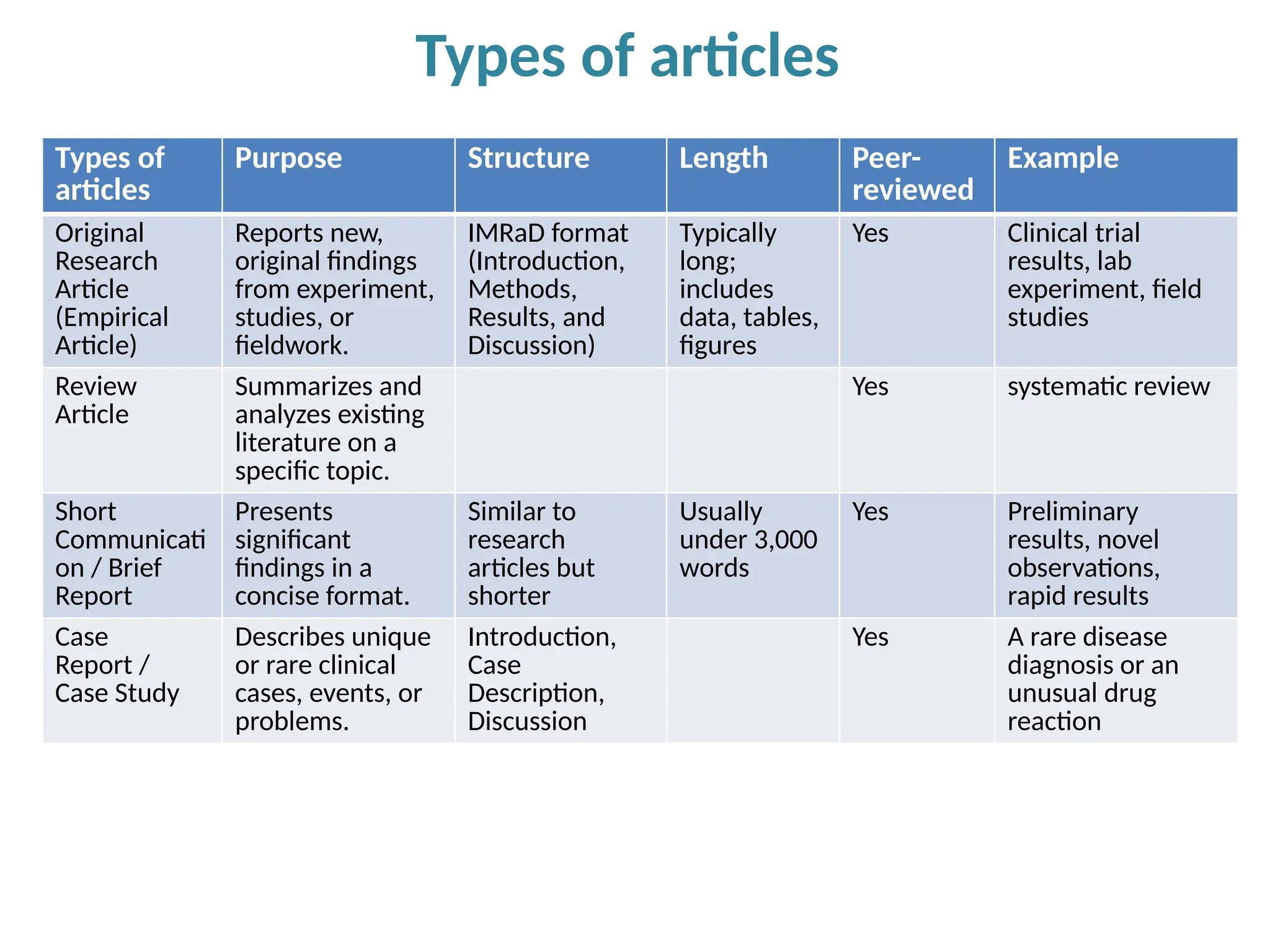
Types of
articles
Purpose Structure Length Peer-
reviewed
Example
Original
Research
Article
(Empirical
Article)
Reports new,
original findings
from experiment,
studies, or
fieldwork.
IMRaD format
(Introduction,
Methods,
Results, and
Discussion)
Typically
long;
includes
data, tables,
figures
Yes Clinical trial
results, lab
experiment, field
studies
Review
Article
Summarizes and
analyzes existing
literature on a
specific topic.
Yes systematic review
Short
Communicati
on / Brief
Report
Presents
significant
findings in a
concise format.
Similar to
research
articles but
shorter
Usually
under 3,000
words
Yes Preliminary
results, novel
observations,
rapid results
Case
Report /
Case Study
Describes unique
or rare clinical
cases, events, or
problems.
Introduction,
Case
Description,
Discussion
Yes A rare disease
diagnosis or an
unusual drug
reaction
Types of articles
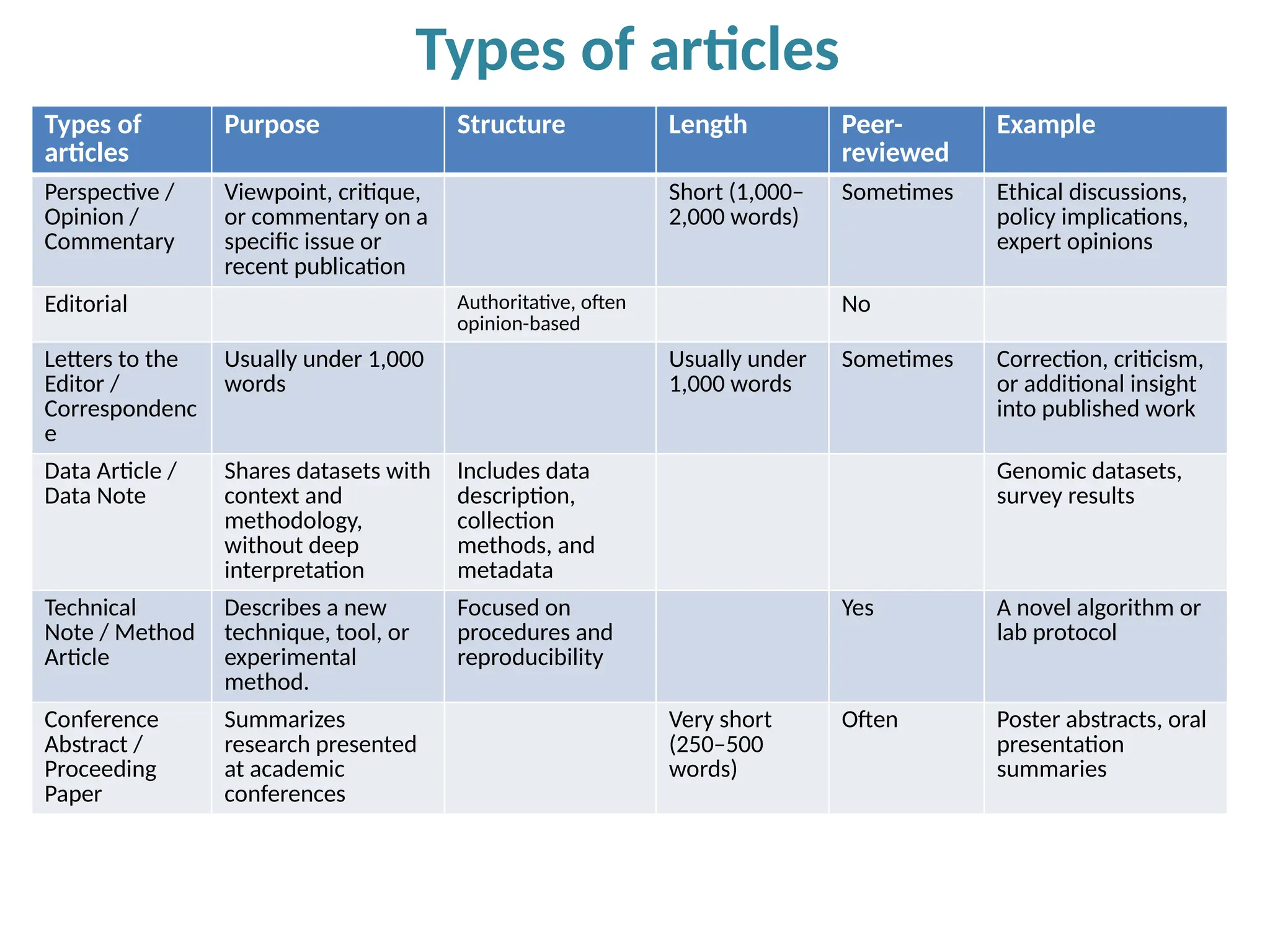
Types of
articles
Purpose Structure Length Peer-
reviewed
Example
Perspective /
Opinion /
Commentary
Viewpoint, critique,
or commentary on a
specific issue or
recent publication
Short (1,000–
2,000 words)
Sometimes Ethical discussions,
policy implications,
expert opinions
Editorial Authoritative, often
opinion-based
No
Letters to the
Editor /
Correspondenc
e
Usually under 1,000
words
Usually under
1,000 words
Sometimes Correction, criticism,
or additional insight
into published work
Data Article /
Data Note
Shares datasets with
context and
methodology,
without deep
interpretation
Includes data
description,
collection
methods, and
metadata
Genomic datasets,
survey results
Technical
Note / Method
Article
Describes a new
technique, tool, or
experimental
method.
Focused on
procedures and
reproducibility
Yes A novel algorithm or
lab protocol
Conference
Abstract /
Proceeding
Paper
Summarizes
research presented
at academic
conferences
Very short
(250–500
words)
Often Poster abstracts, oral
presentation
summaries
Types of articles
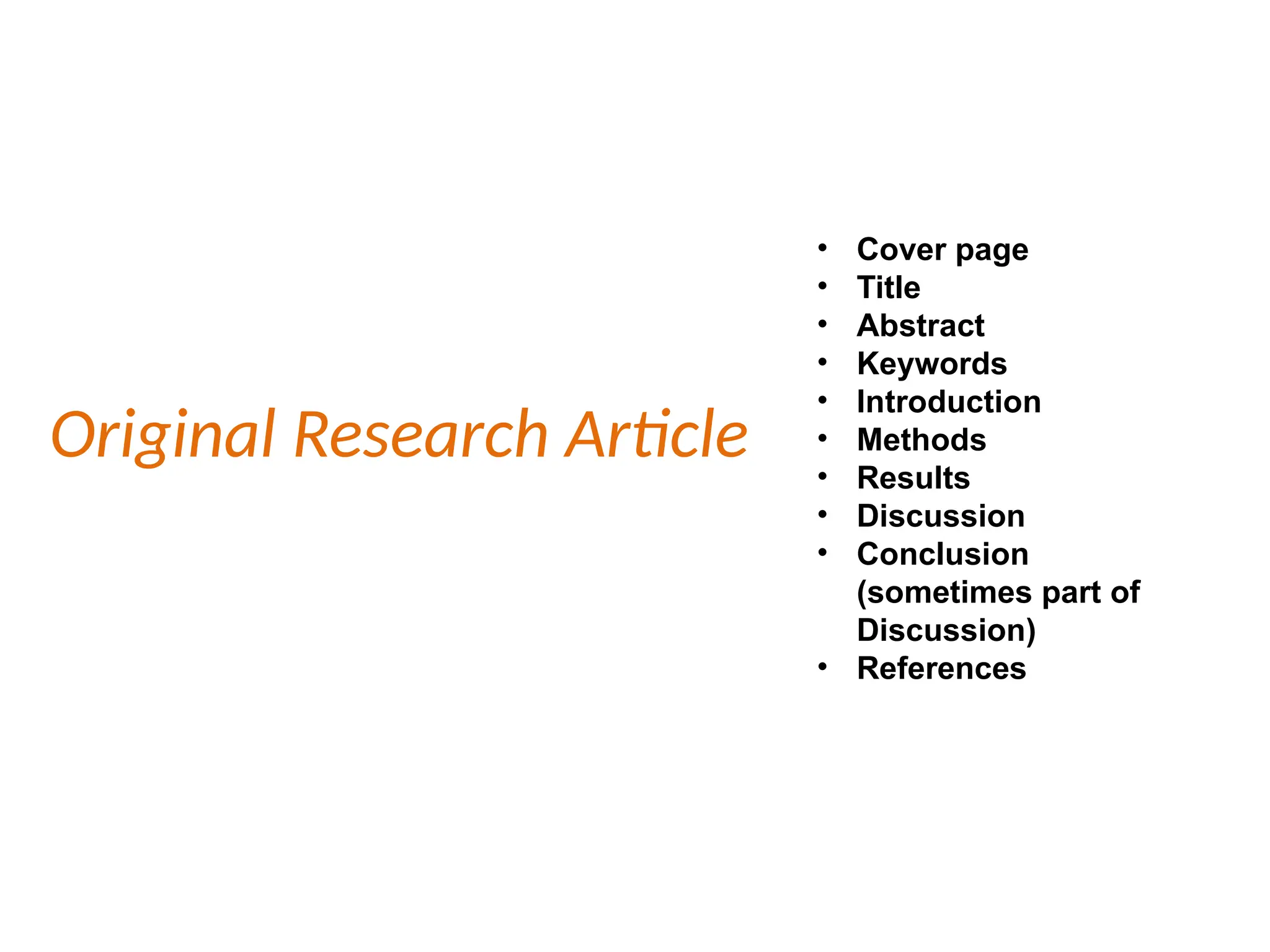
Original Research Article
• Cover page
• Title
• Abstract
• Keywords
• Introduction
• Methods
• Results
• Discussion
• Conclusion
(sometimes part of
Discussion)
• References
Structure of a scientific article (IMRaD format)
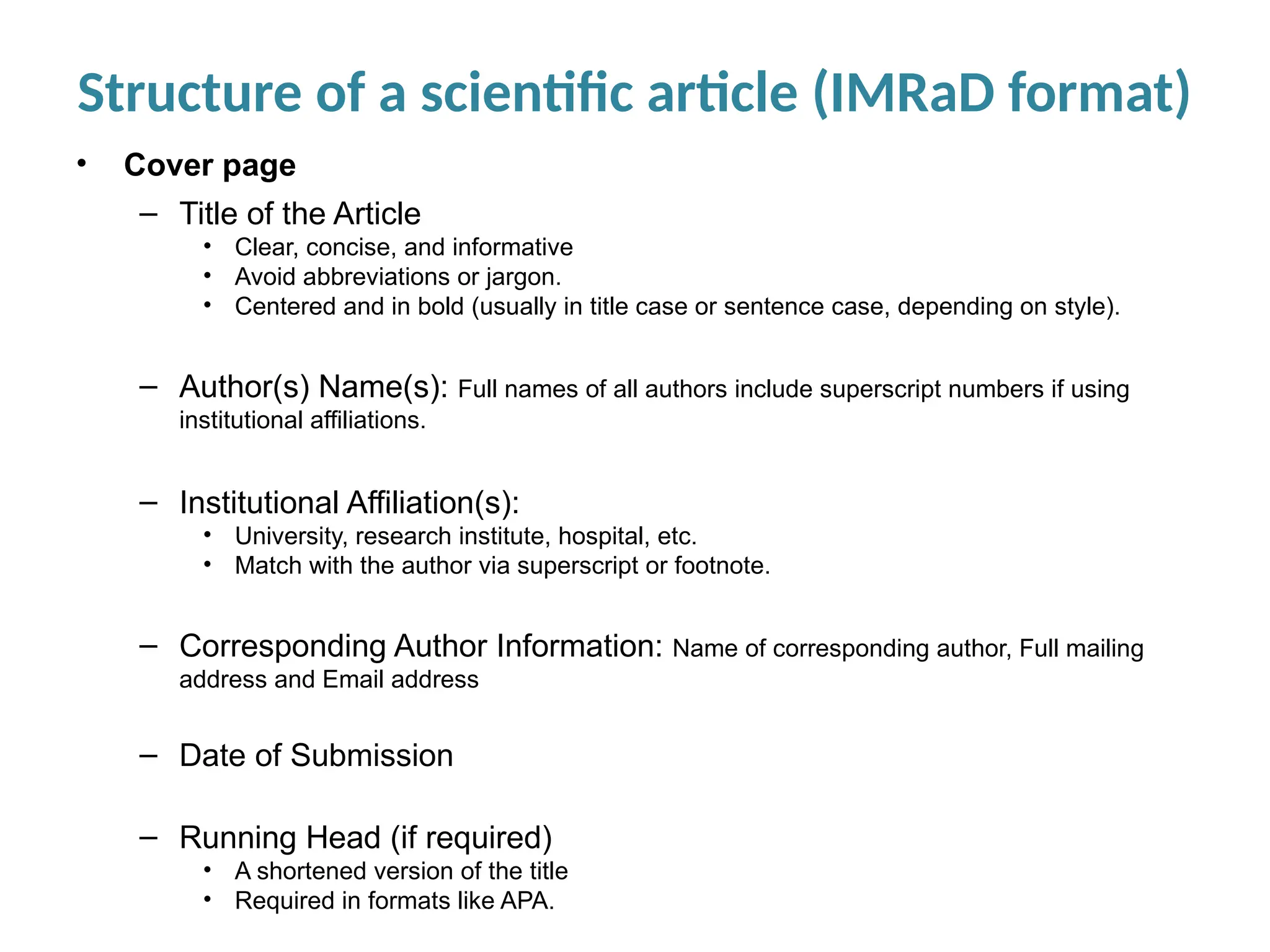
• Cover page
– Title of the Article
• Clear, concise, and informative
• Avoid abbreviations or jargon.
• Centered and in bold (usually in title case or sentence case, depending on style).
– Author(s) Name(s): Full names of all authors include superscript numbers if using
institutional affiliations.
– Institutional Affiliation(s):
• University, research institute, hospital, etc.
• Match with the author via superscript or footnote.
– Corresponding Author Information: Name of corresponding author, Full mailing
address and Email address
– Date of Submission
– Running Head (if required)
• A shortened version of the title
• Required in formats like APA.
Structure of a scientific article (IMRaD format)
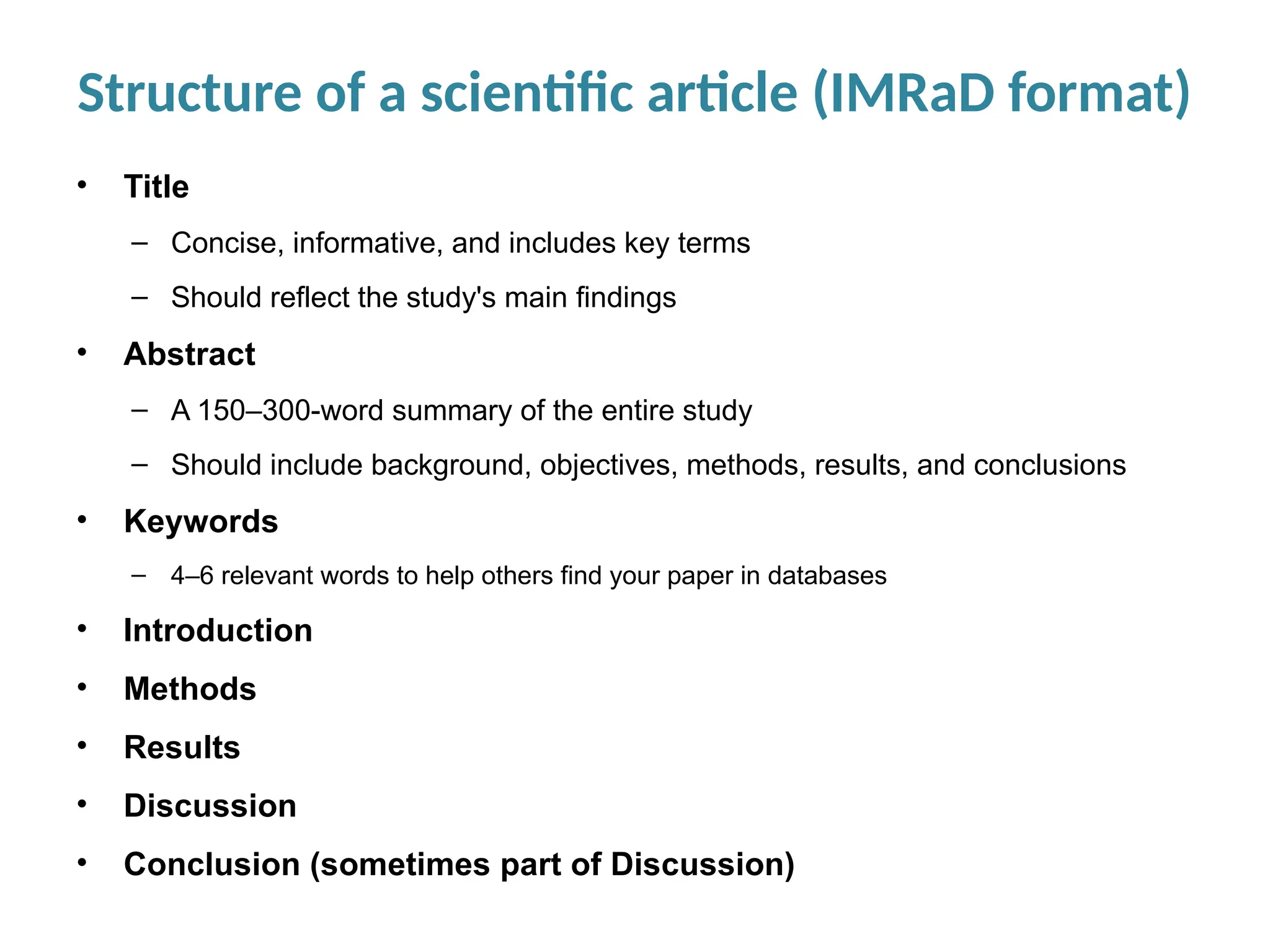
• Title
– Concise, informative, and includes key terms
– Should reflect the study's main findings
• Abstract
– A 150–300-word summary of the entire study
– Should include background, objectives, methods, results, and conclusions
• Keywords
– 4–6 relevant words to help others find your paper in databases
• Introduction
• Methods
• Results
• Discussion
• Conclusion (sometimes part of Discussion)
• Introduction:
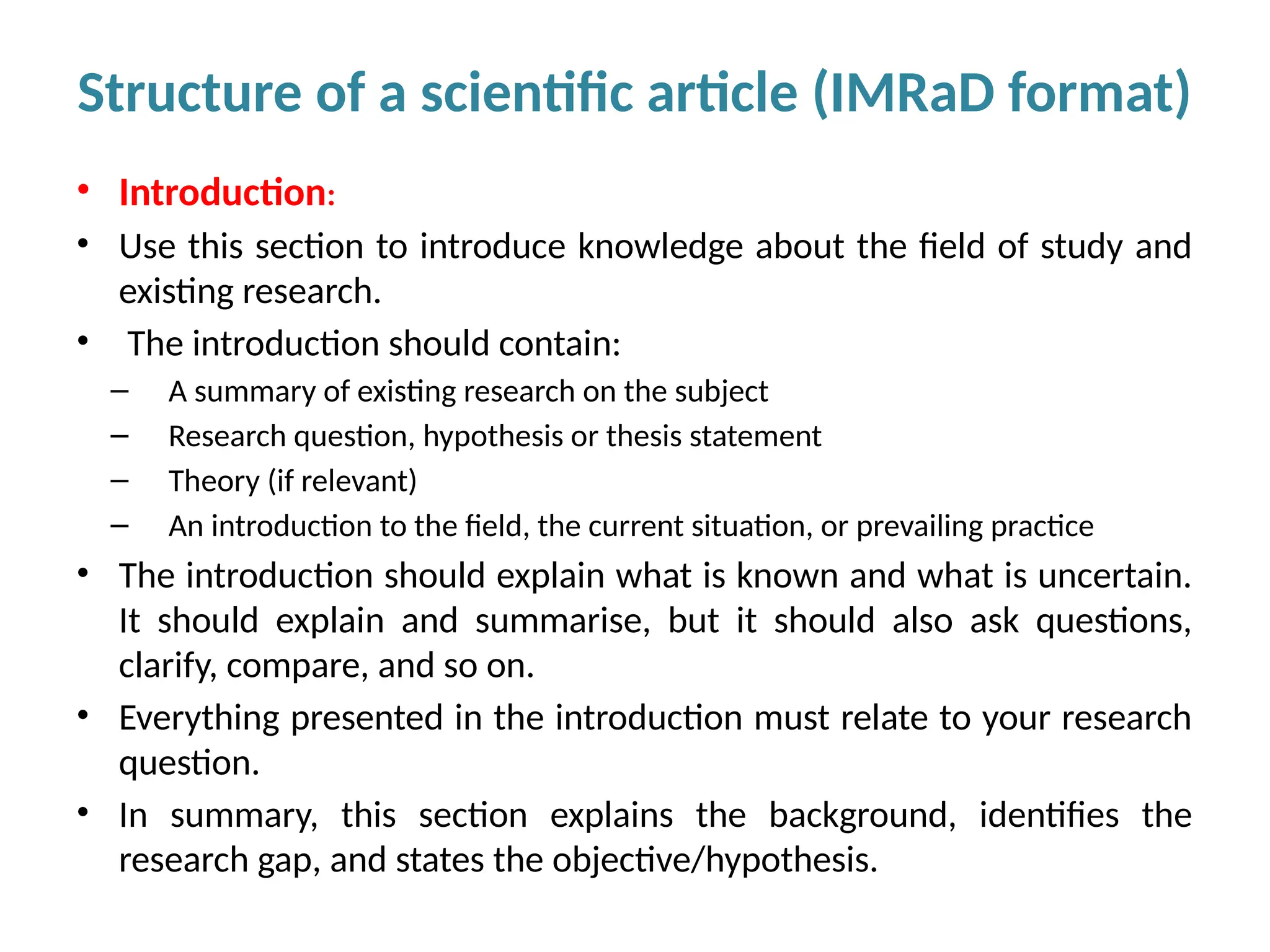
• Use this section to introduce knowledge about the field of study and
existing research.
• The introduction should contain:
– A summary of existing research on the subject
– Research question, hypothesis or thesis statement
– Theory (if relevant)
– An introduction to the field, the current situation, or prevailing practice
• The introduction should explain what is known and what is uncertain.
It should explain and summarise, but it should also ask questions,
clarify, compare, and so on.
• Everything presented in the introduction must relate to your research
question.
• In summary, this section explains the background, identifies the
research gap, and states the objective/hypothesis.
Structure of a scientific article (IMRaD format)
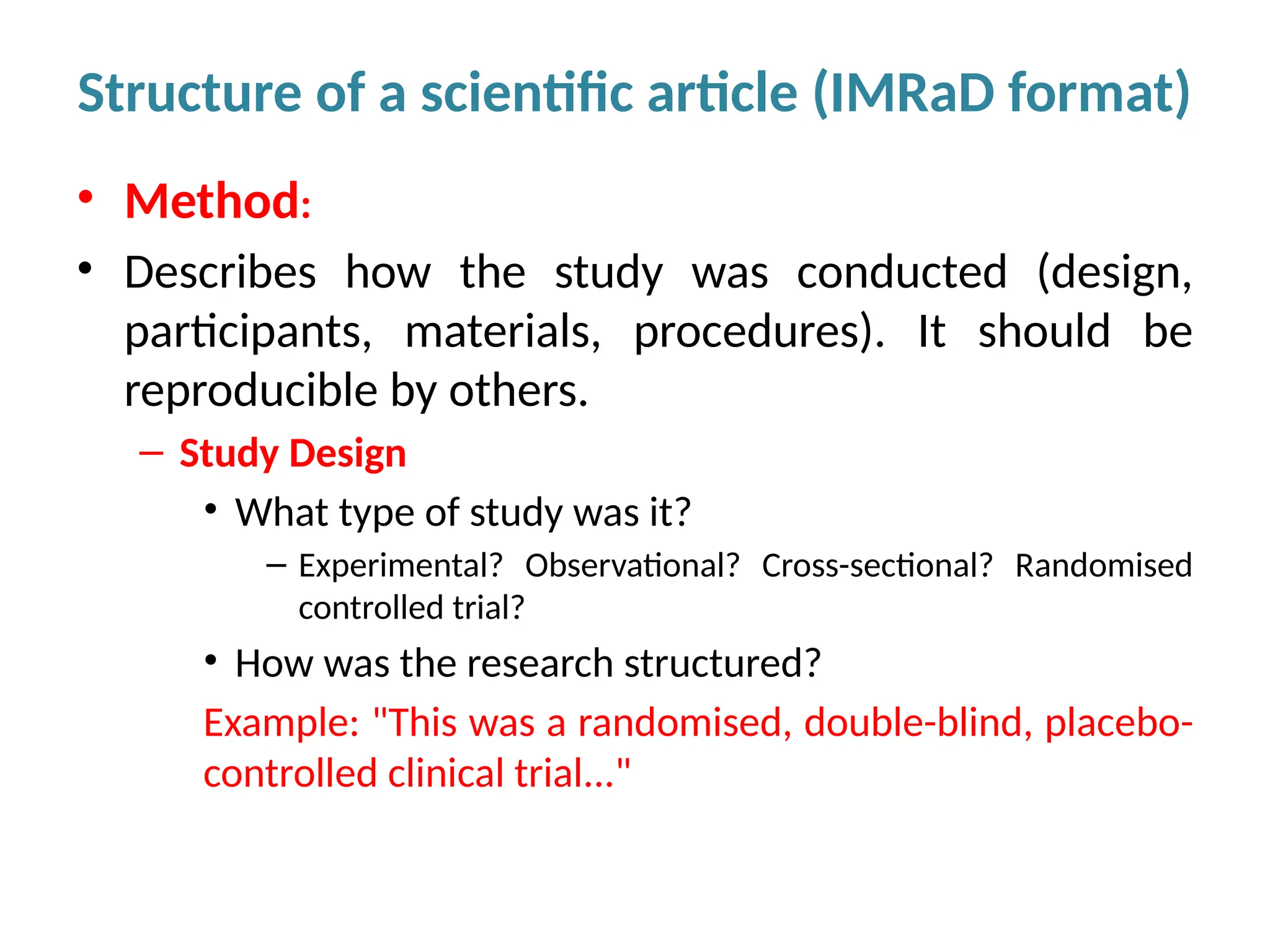
• Method:
• Describes how the study was conducted (design,
participants, materials, procedures). It should be
reproducible by others.
– Study Design
• What type of study was it?
– Experimental? Observational? Cross-sectional? Randomised
controlled trial?
• How was the research structured?
Example: "This was a randomised, double-blind, placebo-
controlled clinical trial..."
Structure of a scientific article (IMRaD format)
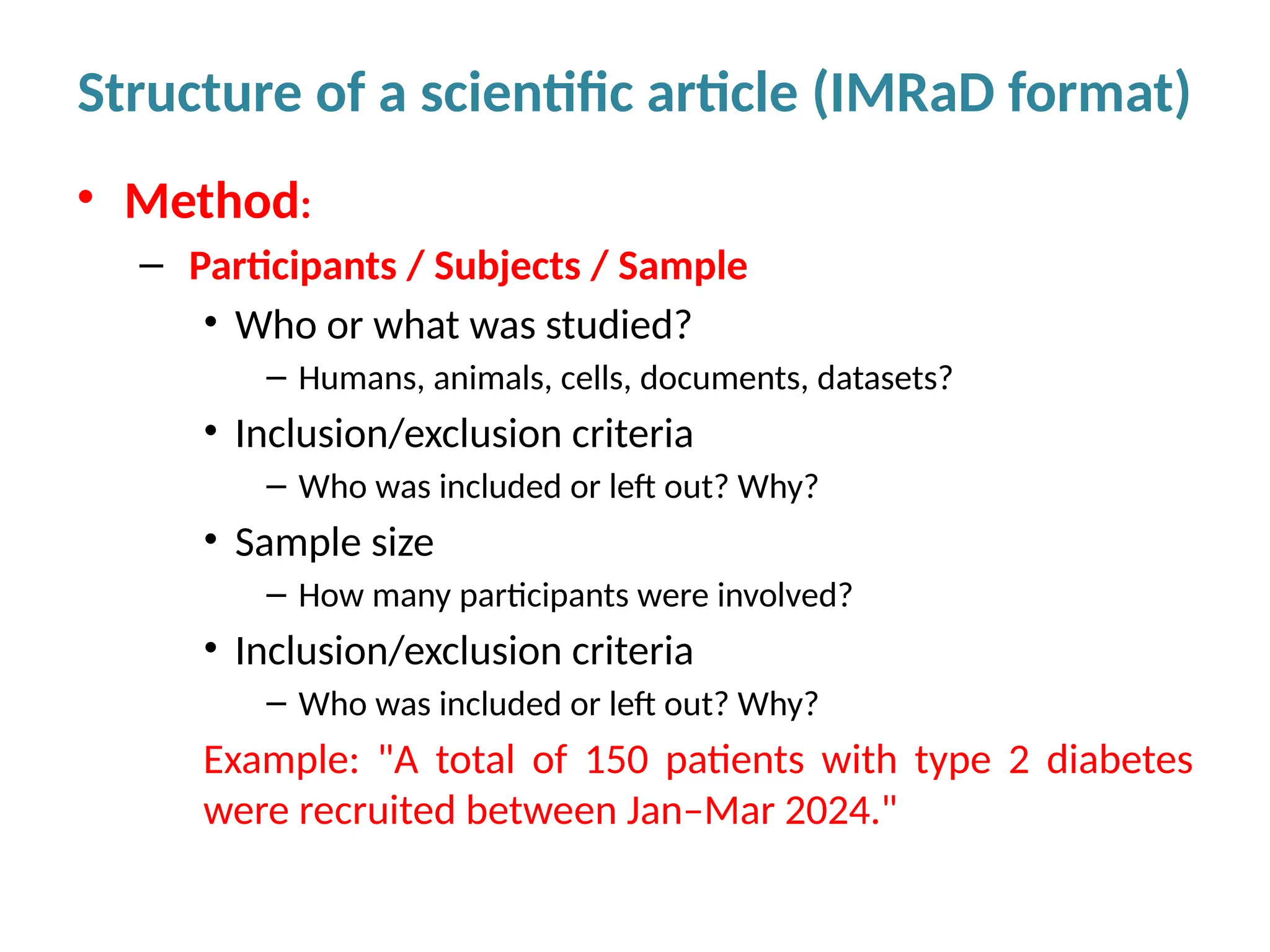
• Method:
– Participants / Subjects / Sample
• Who or what was studied?
– Humans, animals, cells, documents, datasets?
• Inclusion/exclusion criteria
– Who was included or left out? Why?
• Sample size
– How many participants were involved?
• Inclusion/exclusion criteria
– Who was included or left out? Why?
Example: "A total of 150 patients with type 2 diabetes
were recruited between Jan–Mar 2024."
Structure of a scientific article (IMRaD format)
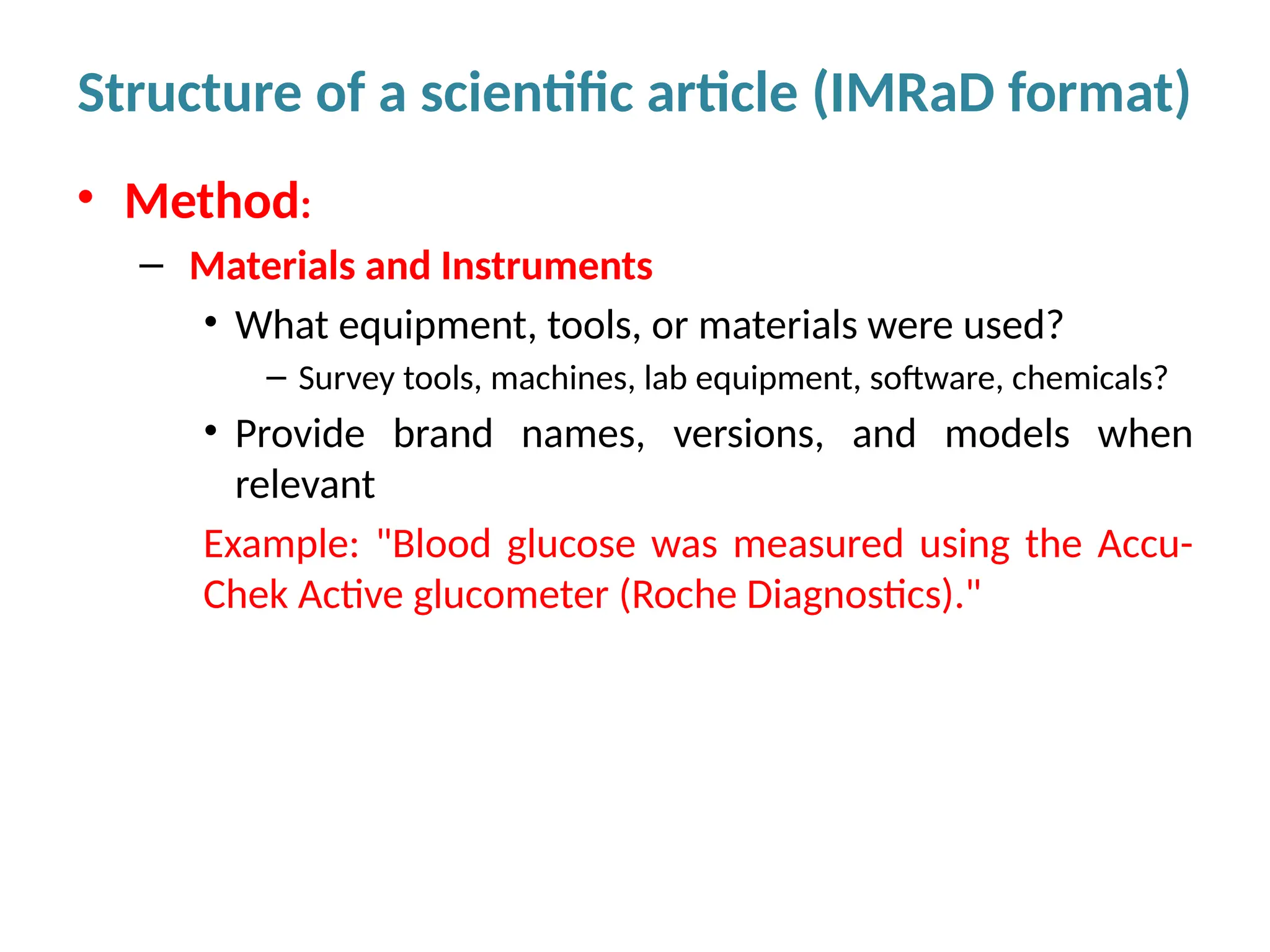
• Method:
– Materials and Instruments
• What equipment, tools, or materials were used?
– Survey tools, machines, lab equipment, software, chemicals?
• Provide brand names, versions, and models when
relevant
Example: "Blood glucose was measured using the Accu-
Chek Active glucometer (Roche Diagnostics)."
Structure of a scientific article (IMRaD format)
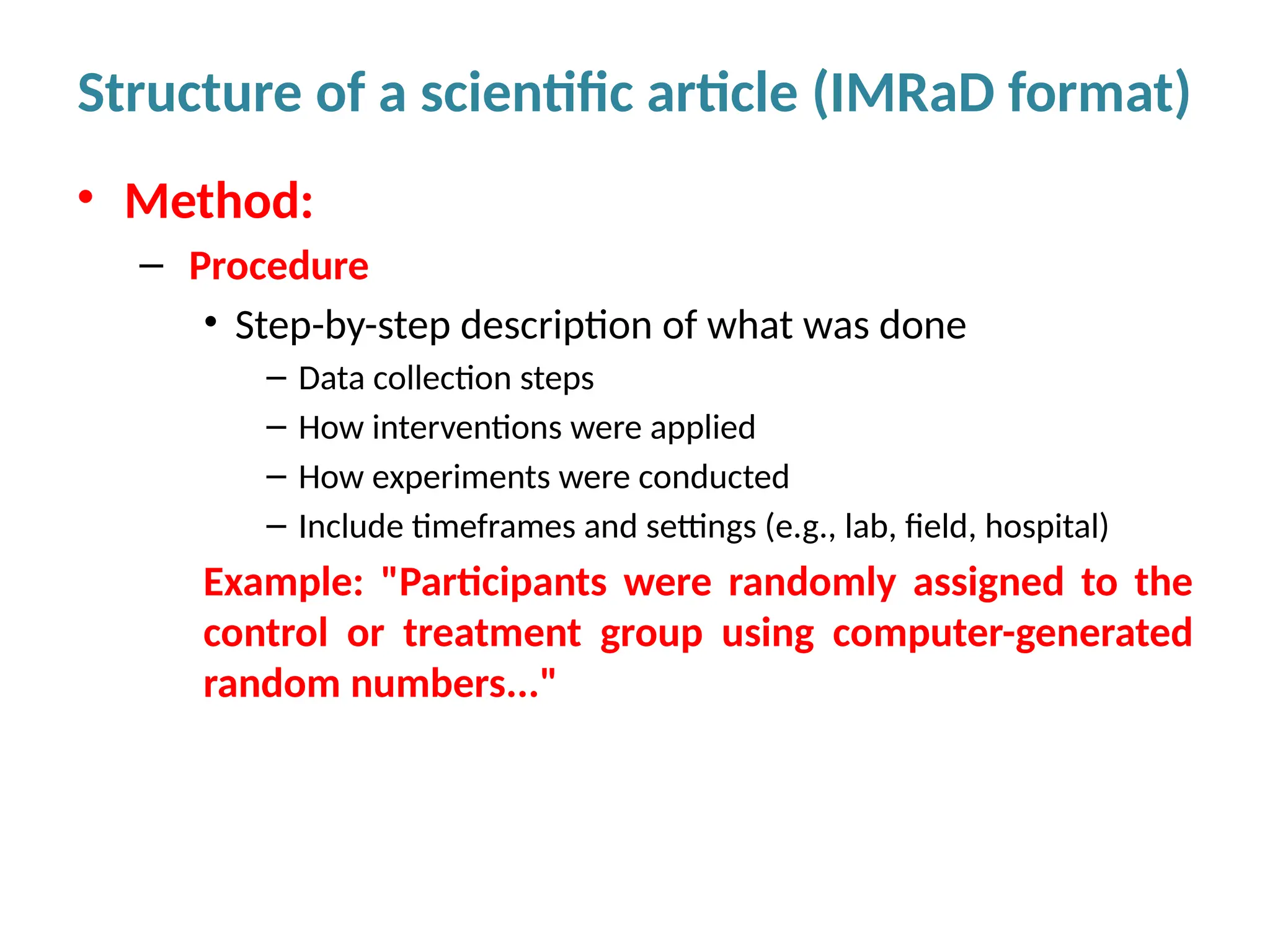
• Method:
– Procedure
• Step-by-step description of what was done
– Data collection steps
– How interventions were applied
– How experiments were conducted
– Include timeframes and settings (e.g., lab, field, hospital)
Example: "Participants were randomly assigned to the
control or treatment group using computer-generated
random numbers..."
Structure of a scientific article (IMRaD format)
• Procedure:
– Materials and Instruments
• Step-by-step description of what was done
– Data collection steps
– How interventions were applied
– How experiments were conducted
– Include timeframes and settings (e.g., lab, field, hospital)
Example: "Participants were randomly assigned to the
control or treatment group using computer-generated
random numbers..."
Structure of a scientific article (IMRaD format)
Preclinical studies : Animal Research: Reporting of In Vivo Experiments (ARRIVE)
guidelines
Clinical studies: CONSORT 2025 Statement - Reporting guideline
Structure of a scientific article (IMRaD format)
• Procedure:
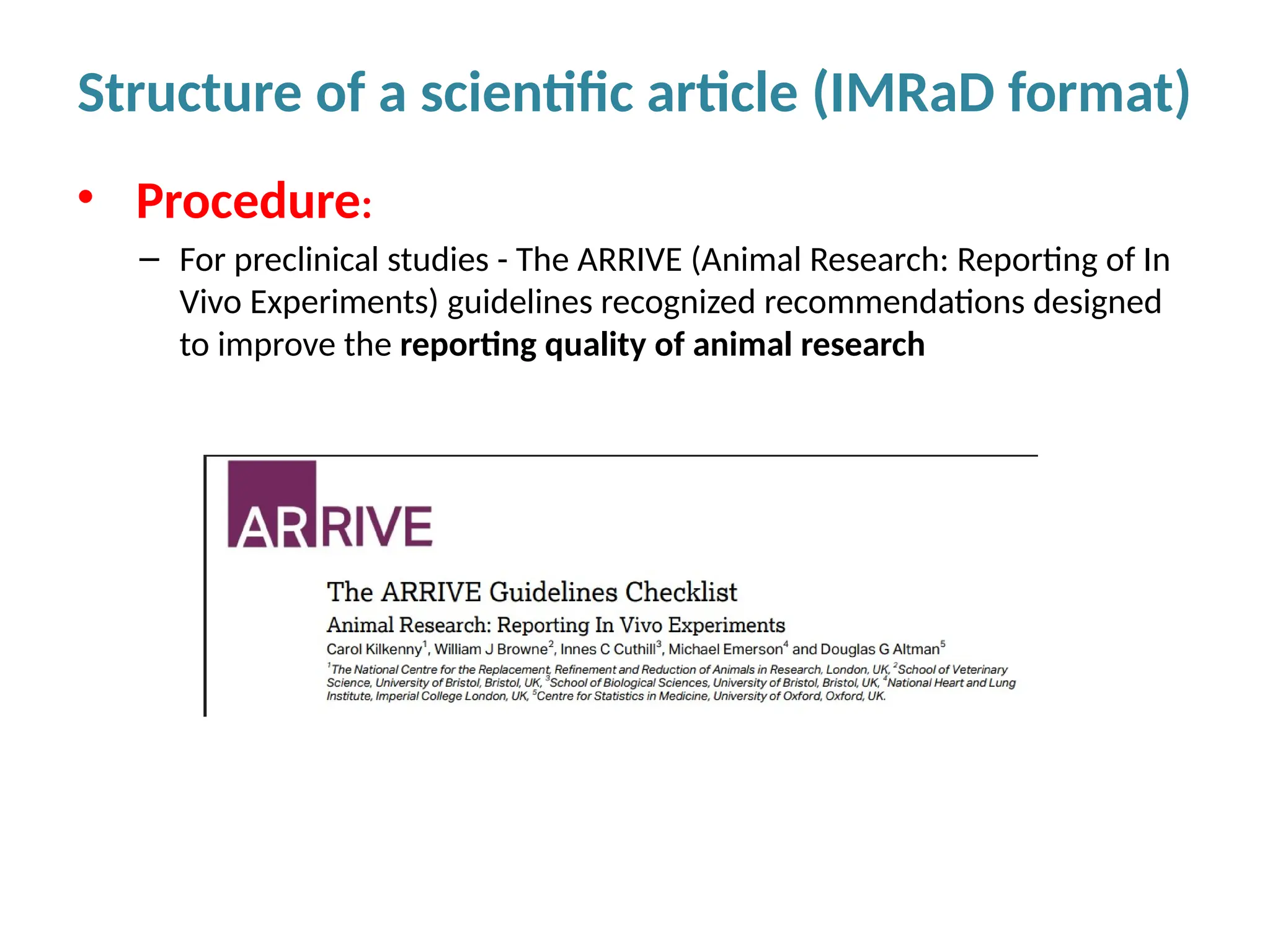
– For preclinical studies - The ARRIVE (Animal Research: Reporting of In
Vivo Experiments) guidelines recognized recommendations designed
to improve the reporting quality of animal research
Structure of a scientific article (IMRaD format)
• Procedure:
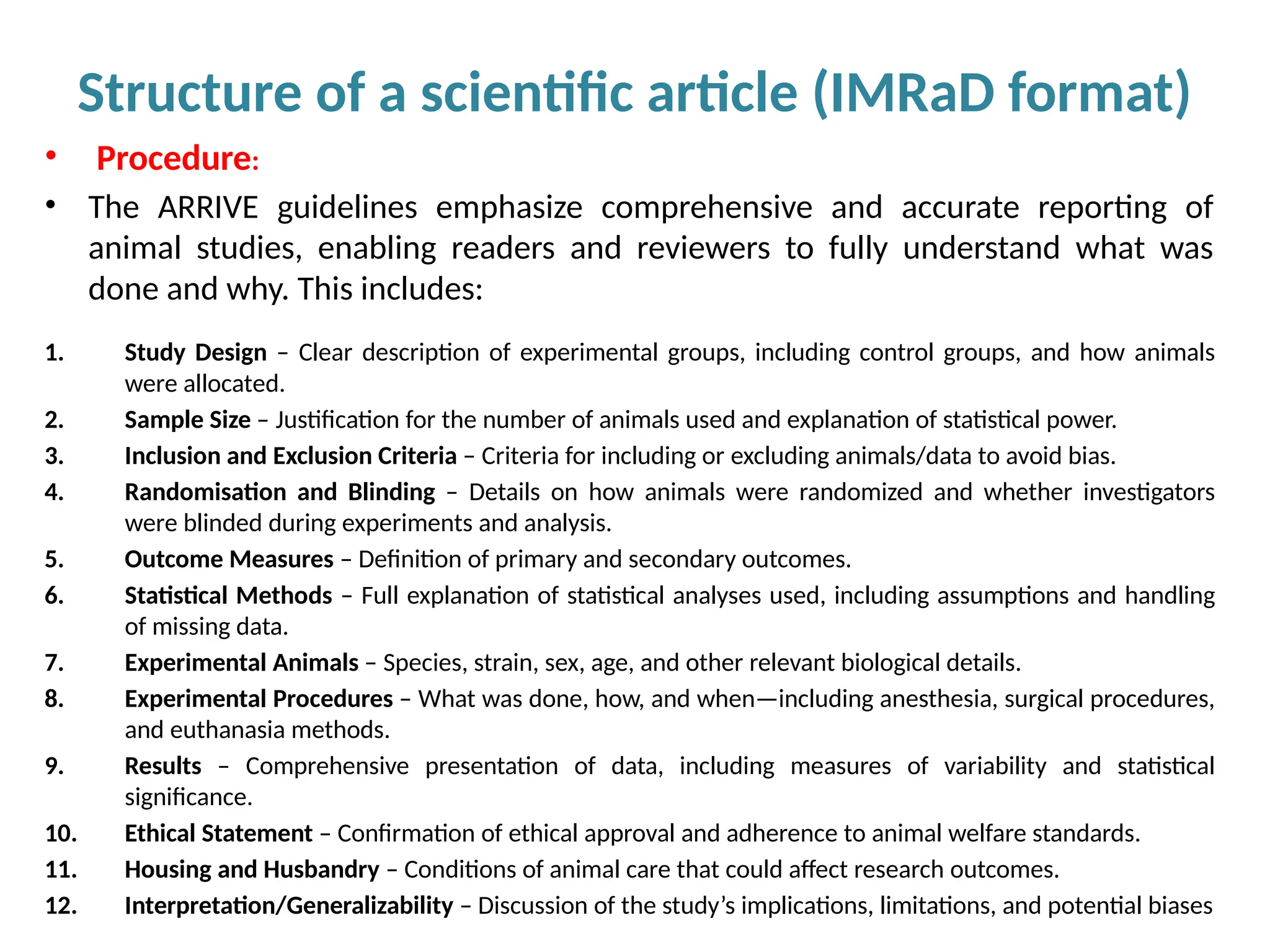
• The ARRIVE guidelines emphasize comprehensive and accurate reporting of
animal studies, enabling readers and reviewers to fully understand what was
done and why. This includes:
1. Study Design – Clear description of experimental groups, including control groups, and how animals
were allocated.
2. Sample Size – Justification for the number of animals used and explanation of statistical power.
3. Inclusion and Exclusion Criteria – Criteria for including or excluding animals/data to avoid bias.
4. Randomisation and Blinding – Details on how animals were randomized and whether investigators
were blinded during experiments and analysis.
5. Outcome Measures – Definition of primary and secondary outcomes.
6. Statistical Methods – Full explanation of statistical analyses used, including assumptions and handling
of missing data.
7. Experimental Animals – Species, strain, sex, age, and other relevant biological details.
8. Experimental Procedures – What was done, how, and when—including anesthesia, surgical procedures,
and euthanasia methods.
9. Results – Comprehensive presentation of data, including measures of variability and statistical
significance.
10. Ethical Statement – Confirmation of ethical approval and adherence to animal welfare standards.
11. Housing and Husbandry – Conditions of animal care that could affect research outcomes.
12. Interpretation/Generalizability – Discussion of the study’s implications, limitations, and potential biases
Structure of a scientific article (IMRaD format)
• Procedure:
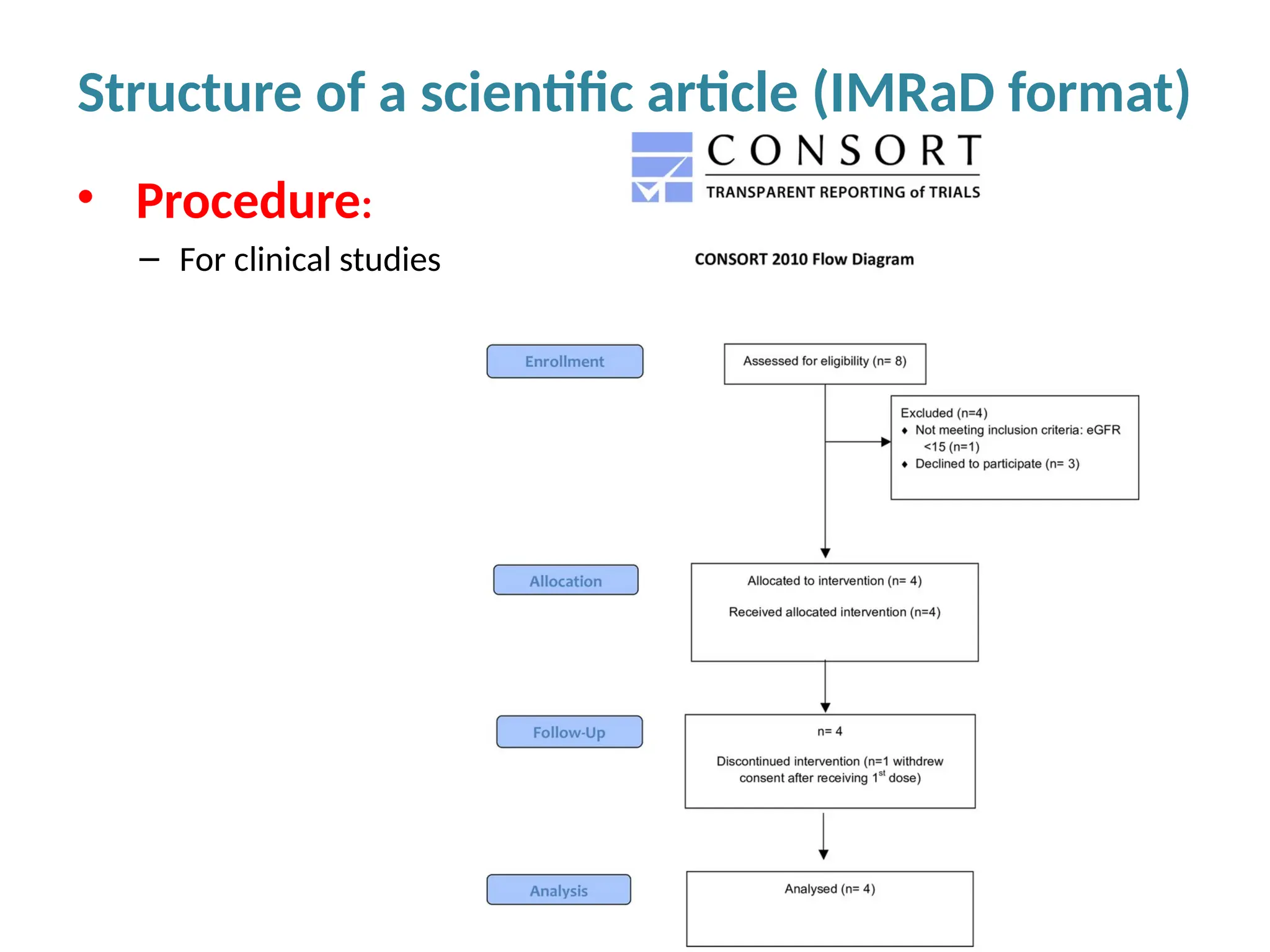
– For clinical studies
• Ethical Considerations:
• For studies involving humans or animals:
– Was ethical approval obtained?
– Was informed consent collected?
Example: "Ethical approval was obtained from the XYZ
Institutional Review Board (Approval No:
2025/ETH/112)."
Structure of a scientific article (IMRaD format)
• Data Analysis / Statistical Methods:
• Which statistical tools or tests were used?
– SPSS, R, Excel, STATA, GraphPad?
• What statistical tests were applied?
– t-test, ANOVA, regression, chi-square, etc.
• Mention any significance thresholds (e.g., p < 0.05)
Example: "Statistical analysis was performed using SPSS
v25.0. Independent t-tests were used to compare group
means."
Structure of a scientific article (IMRaD format)
• Tips for Writing the Methods Section:
• Be specific: Include precise details so others can repeat the
study.
• Use past tense: Since the actions have already been
completed.
• Avoid unnecessary detail: Don’t include textbook
explanations of common methods.
• Use subheadings: Helps with organization and readability.
• Stay objective: Focus on what was done, not why — save
explanations for the Discussion.
Structure of a scientific article (IMRaD format)
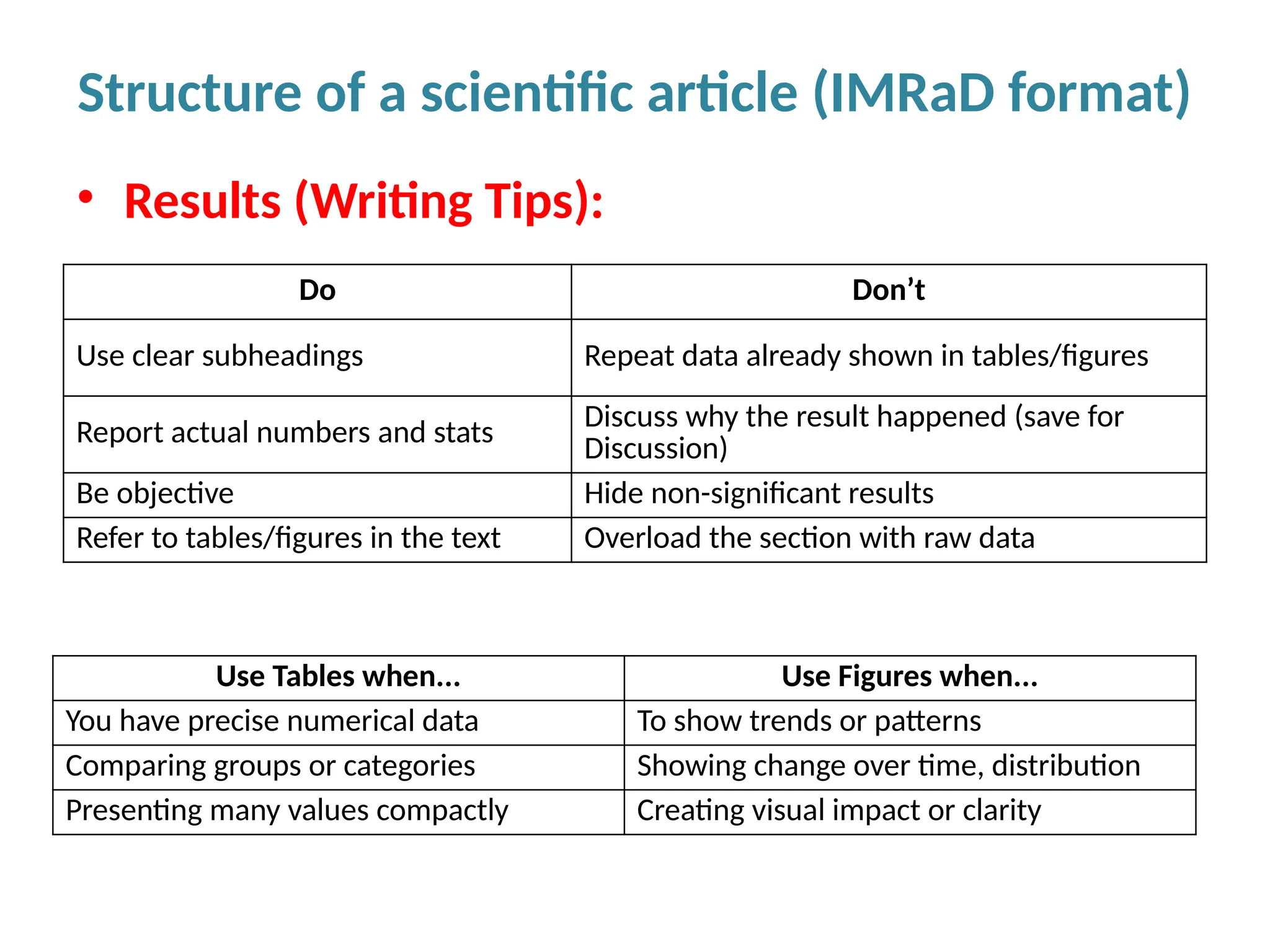
• Results:
• The Results Section is a crucial part of a study, presenting the
collected data and highlighting what was found. It should be
organized by research questions or hypotheses, ensuring the reader
can follow the logical flow.
• Key findings should be summarized in text, starting with a brief
narrative. Tables and figures are used for details, with clear titles,
numbered captions, legends, and references in the main text.
• Statistical significance should be reported, including p-values,
confidence intervals, and effect sizes. It is important to be precise
and avoid interpreting the meaning of the results, instead stating
the result. This helps the reader follow the logical flow of the study.
No interpretation—only what was observed
Structure of a scientific article (IMRaD format)
• Results (Writing Tips):
Structure of a scientific article (IMRaD format)
Do Don’t
Use clear subheadings Repeat data already shown in tables/figures
Report actual numbers and stats Discuss why the result happened (save for
Discussion)
Be objective Hide non-significant results
Refer to tables/figures in the text Overload the section with raw data
Use Tables when... Use Figures when...
You have precise numerical data To show trends or patterns
Comparing groups or categories Showing change over time, distribution
Presenting many values compactly Creating visual impact or clarity
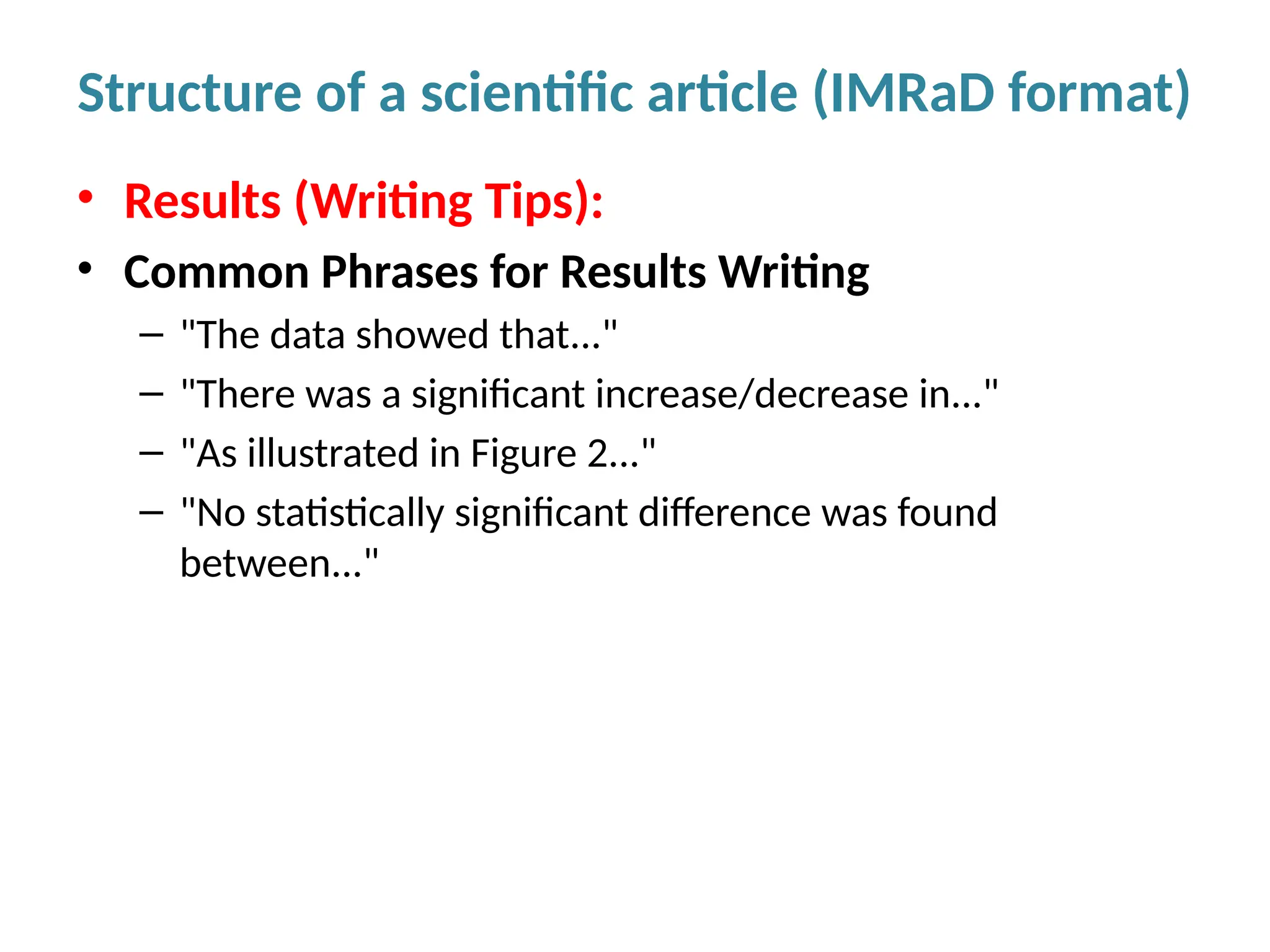
• Results (Writing Tips):
• Common Phrases for Results Writing
– "The data showed that..."
– "There was a significant increase/decrease in..."
– "As illustrated in Figure 2..."
– "No statistically significant difference was found
between..."
Structure of a scientific article (IMRaD format)
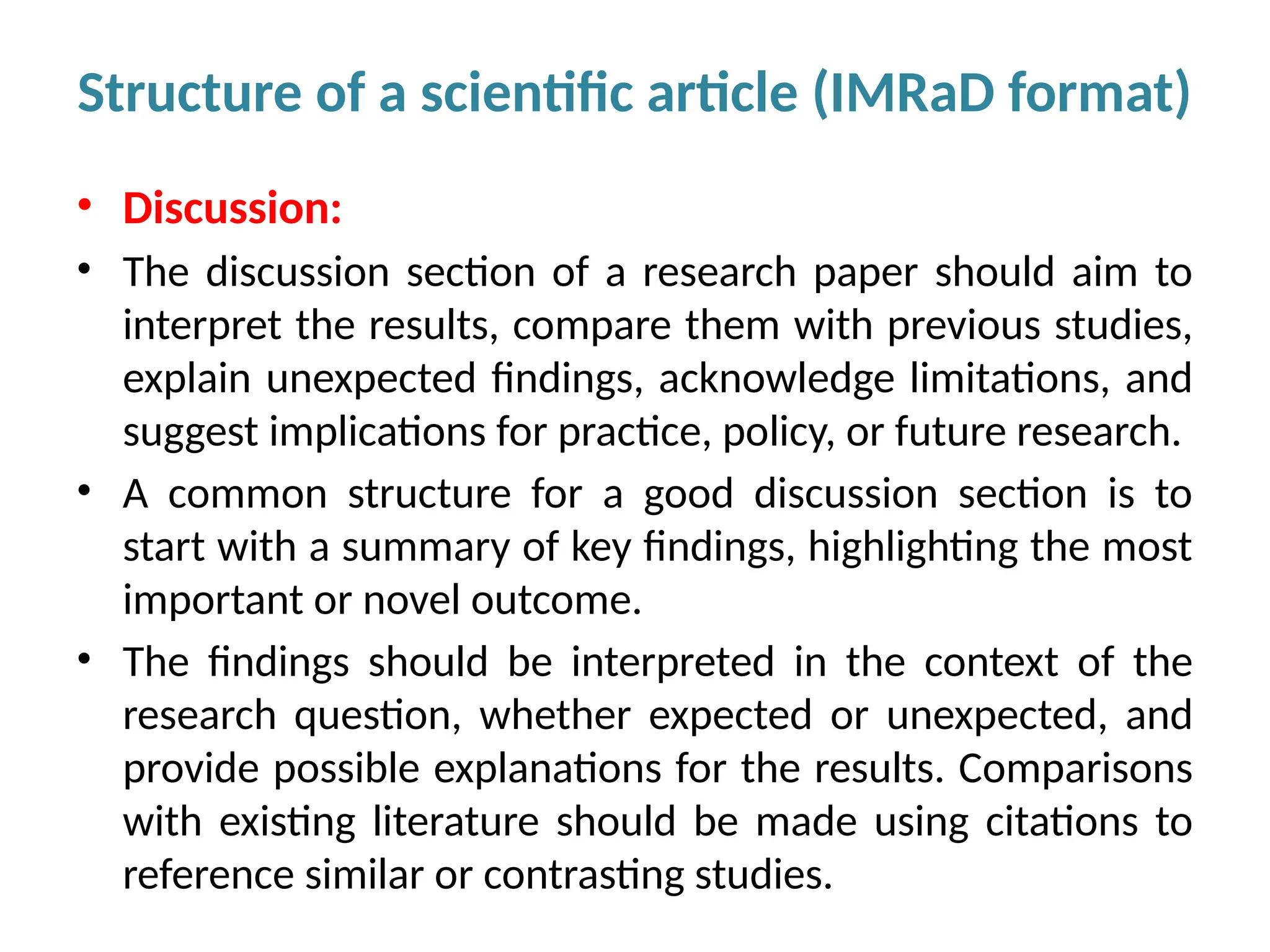
• Discussion:
• The discussion section of a research paper should aim to
interpret the results, compare them with previous studies,
explain unexpected findings, acknowledge limitations, and
suggest implications for practice, policy, or future research.
• A common structure for a good discussion section is to
start with a summary of key findings, highlighting the most
important or novel outcome.
• The findings should be interpreted in the context of the
research question, whether expected or unexpected, and
provide possible explanations for the results. Comparisons
with existing literature should be made using citations to
reference similar or contrasting studies.
Structure of a scientific article (IMRaD format)
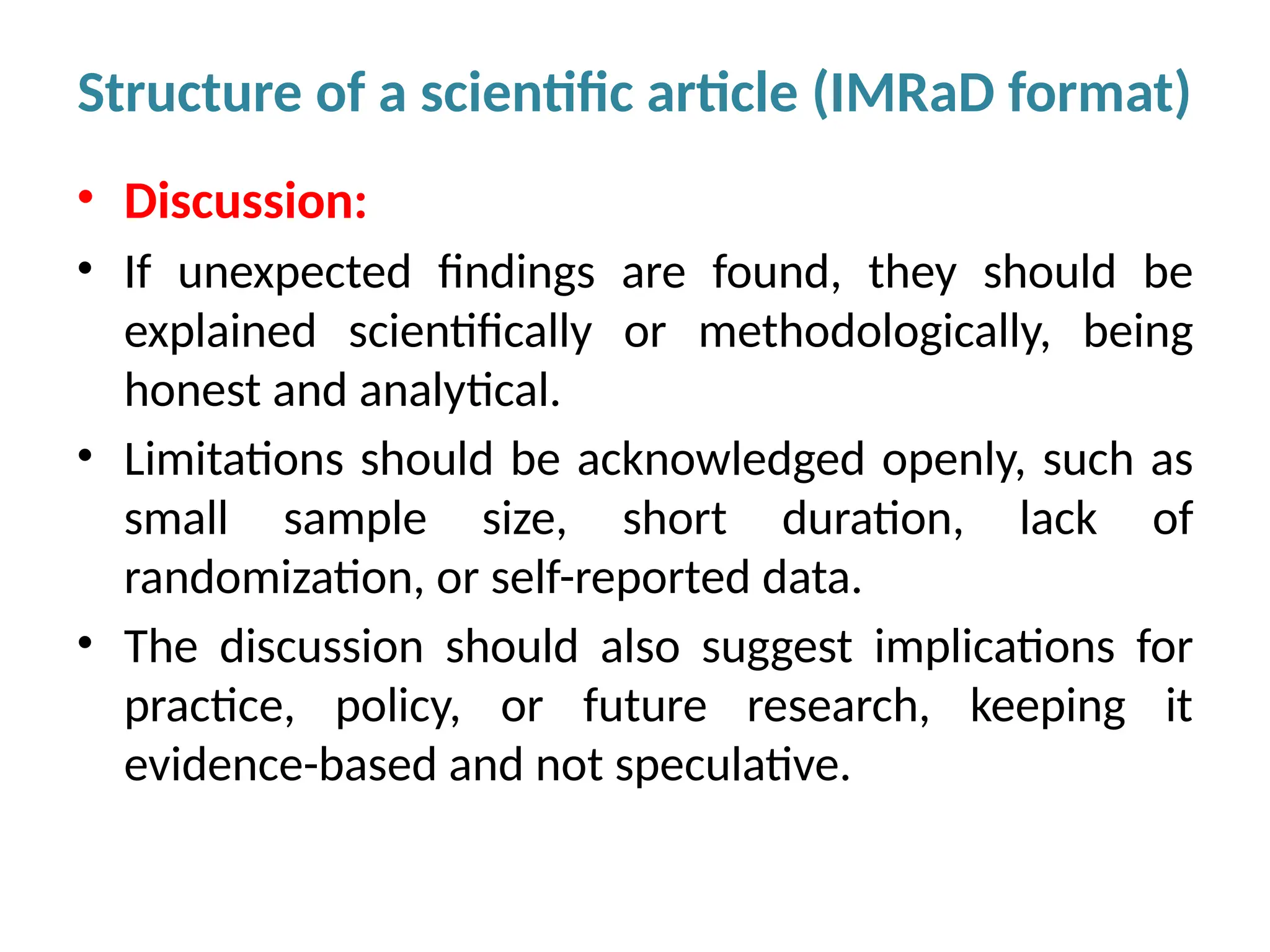
• Discussion:
• If unexpected findings are found, they should be
explained scientifically or methodologically, being
honest and analytical.
• Limitations should be acknowledged openly, such as
small sample size, short duration, lack of
randomization, or self-reported data.
• The discussion should also suggest implications for
practice, policy, or future research, keeping it
evidence-based and not speculative.
Structure of a scientific article (IMRaD format)
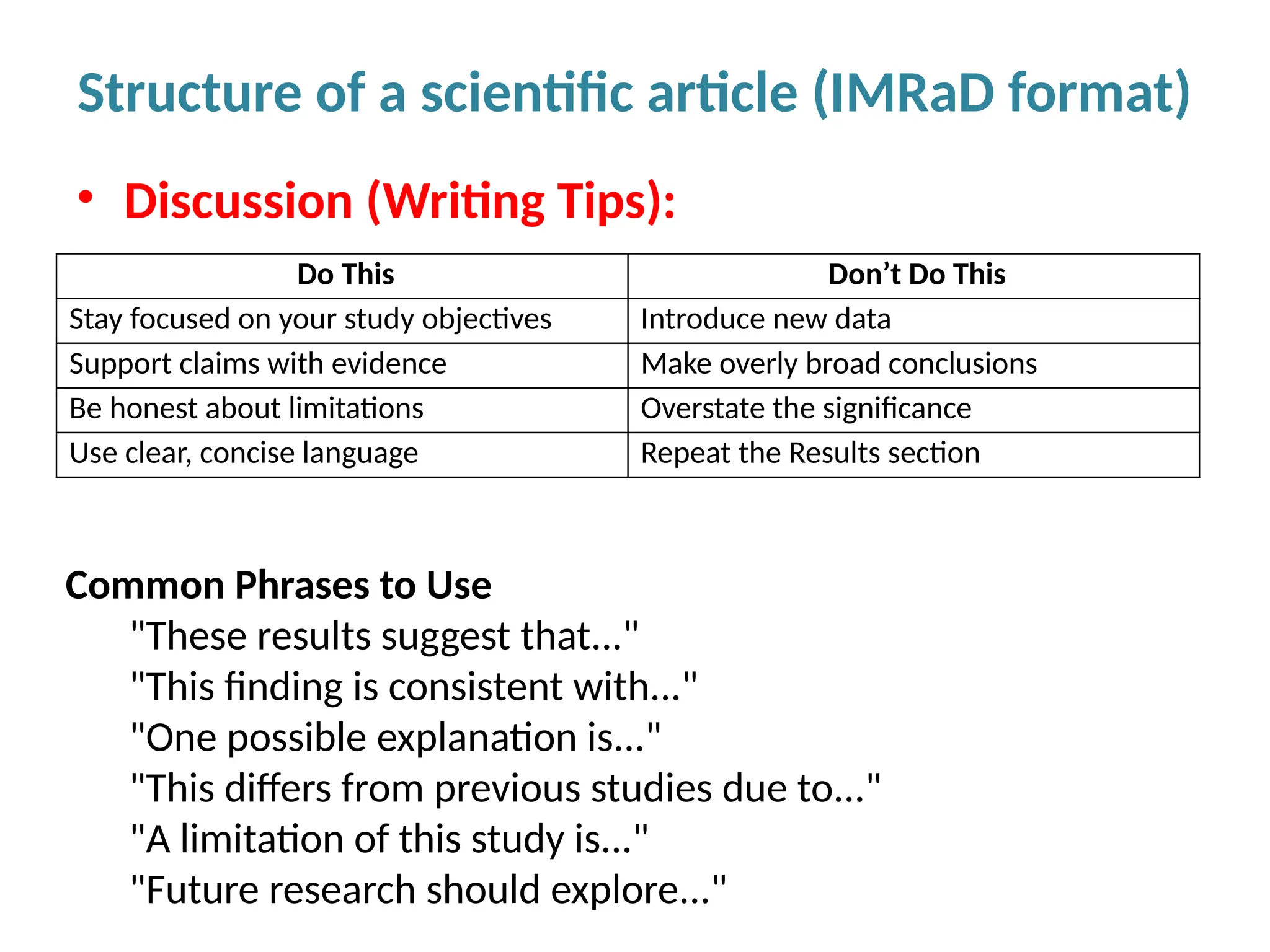
• Discussion (Writing Tips):
Structure of a scientific article (IMRaD format)
Do This Don’t Do This
Stay focused on your study objectives Introduce new data
Support claims with evidence Make overly broad conclusions
Be honest about limitations Overstate the significance
Use clear, concise language Repeat the Results section
Common Phrases to Use
"These results suggest that..."
"This finding is consistent with..."
"One possible explanation is..."
"This differs from previous studies due to..."
"A limitation of this study is..."
"Future research should explore..."
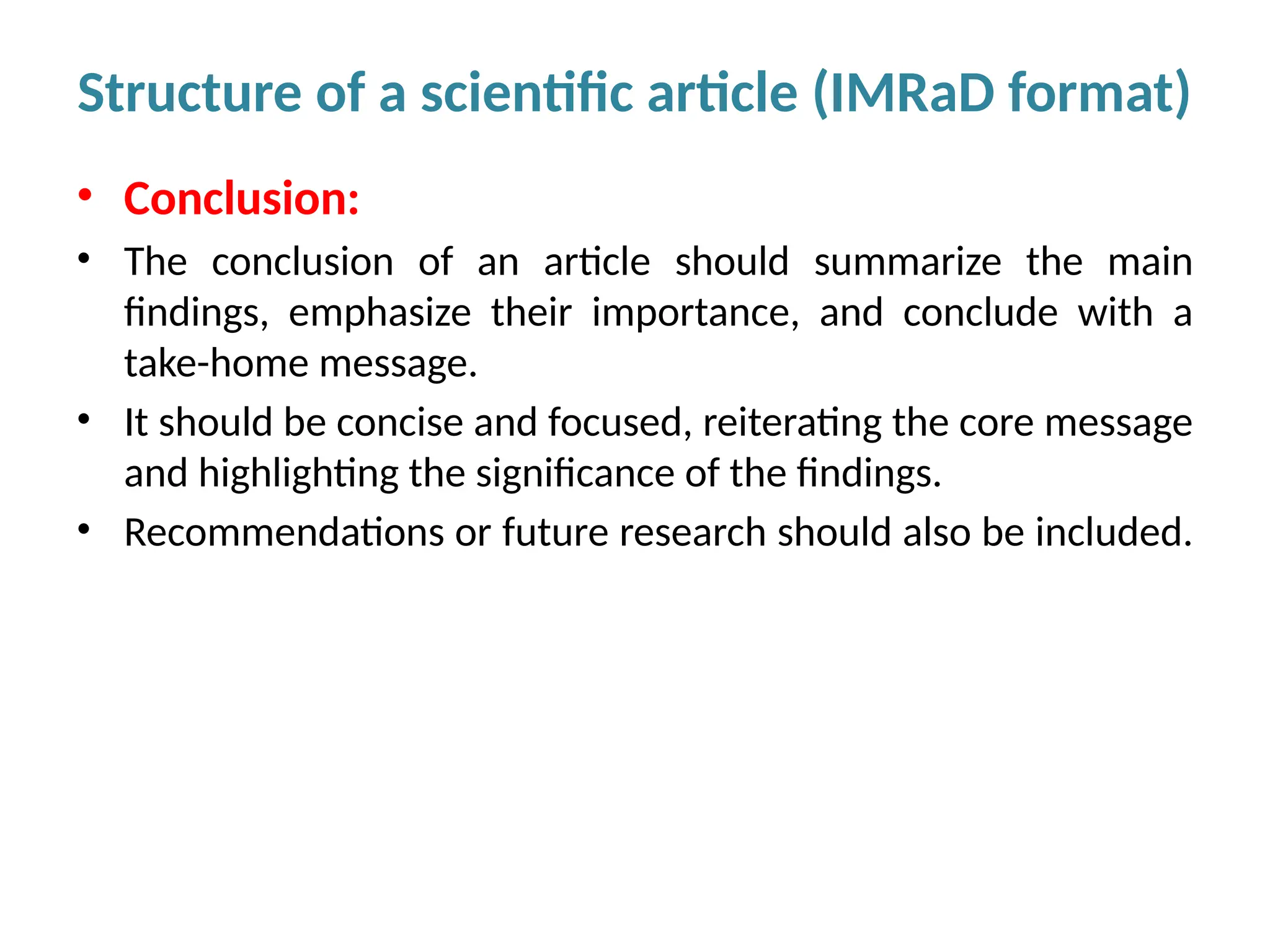
• Conclusion:
• The conclusion of an article should summarize the main
findings, emphasize their importance, and conclude with a
take-home message.
• It should be concise and focused, reiterating the core message
and highlighting the significance of the findings.
• Recommendations or future research should also be included.
Structure of a scientific article (IMRaD format)
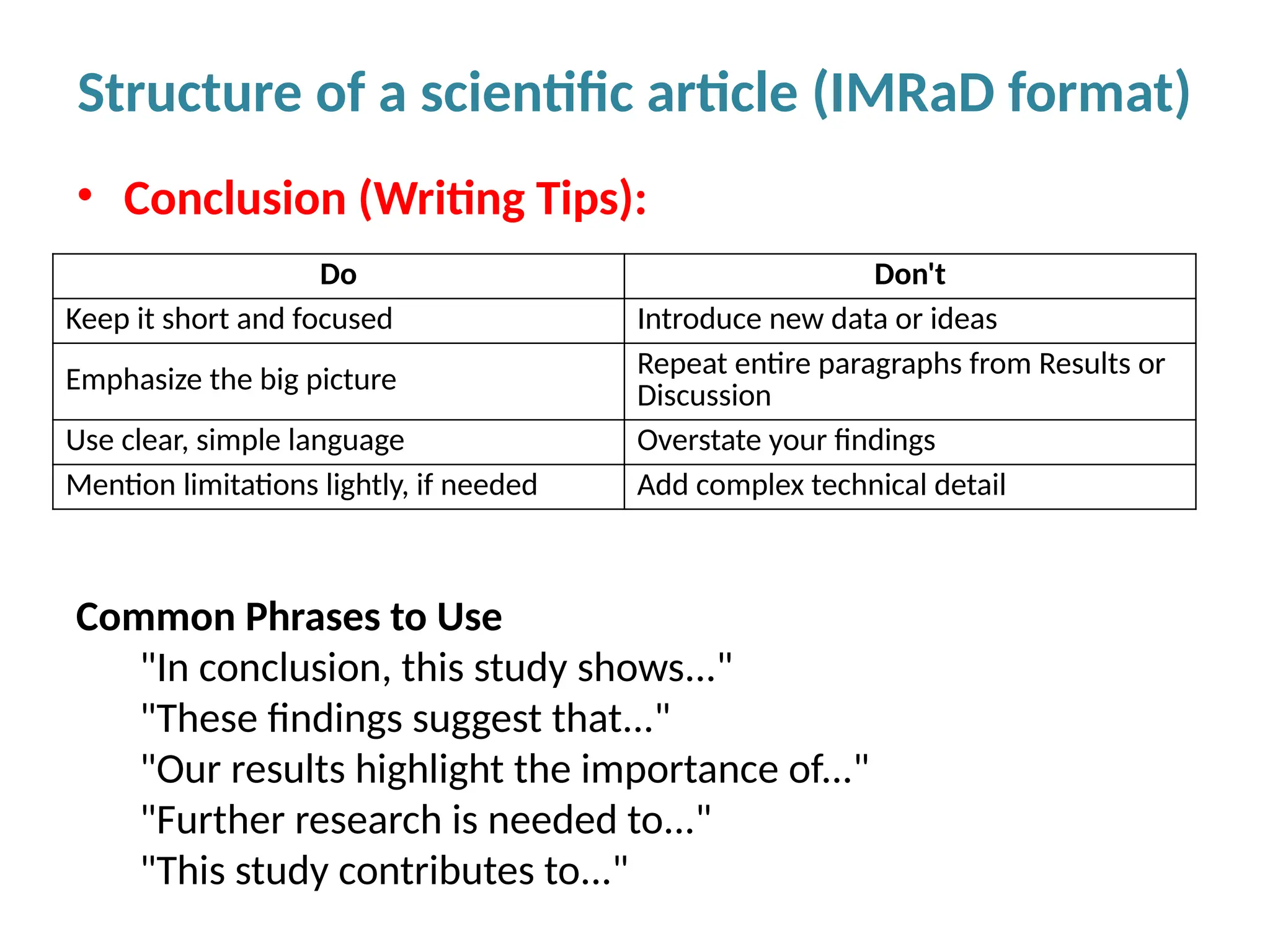
• Conclusion (Writing Tips):
Structure of a scientific article (IMRaD format)
Do Don't
Keep it short and focused Introduce new data or ideas
Emphasize the big picture
Repeat entire paragraphs from Results or
Discussion
Use clear, simple language Overstate your findings
Mention limitations lightly, if needed Add complex technical detail
Common Phrases to Use
"In conclusion, this study shows..."
"These findings suggest that..."
"Our results highlight the importance of..."
"Further research is needed to..."
"This study contributes to..."
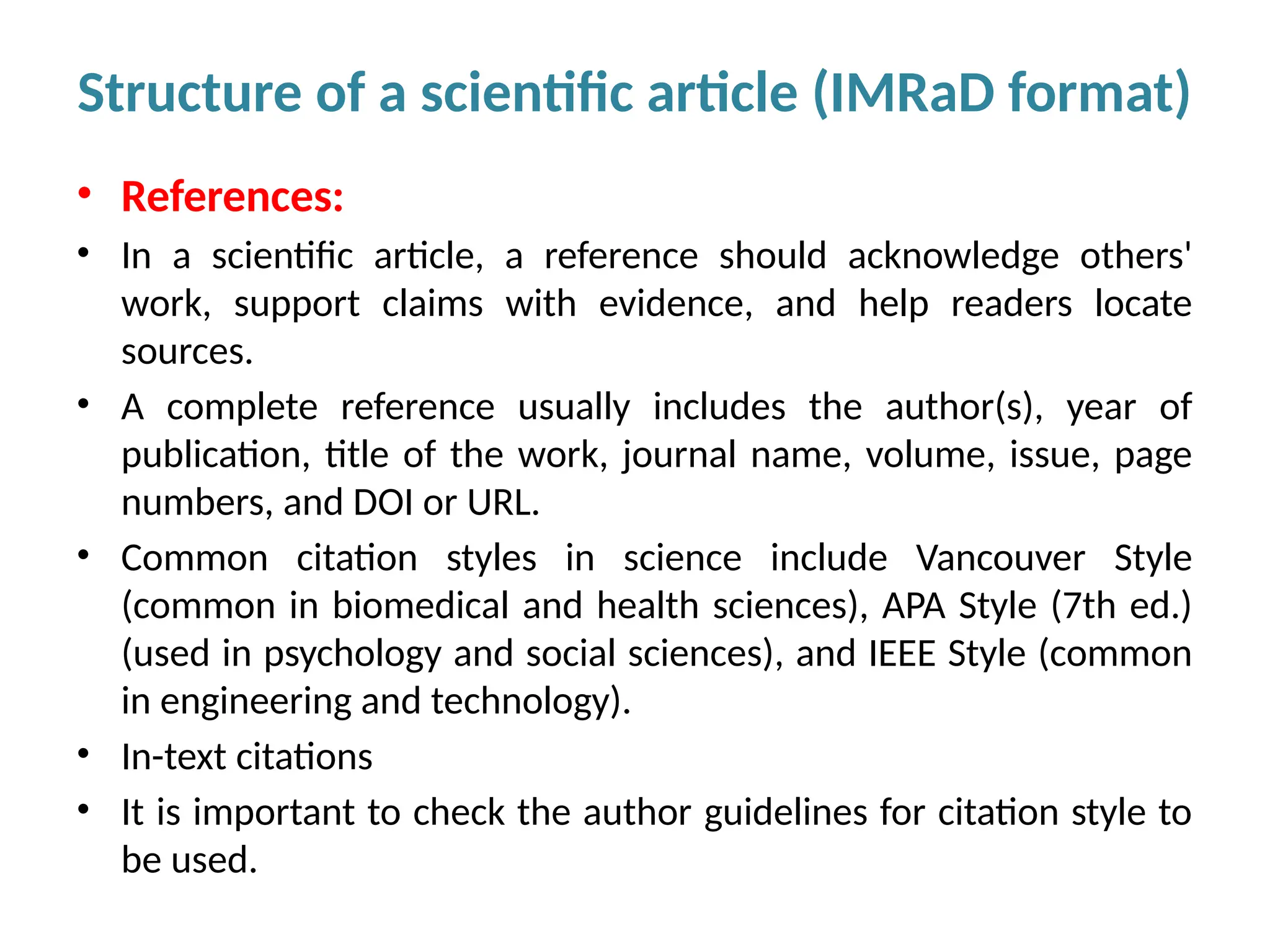
• References:
• In a scientific article, a reference should acknowledge others'
work, support claims with evidence, and help readers locate
sources.
• A complete reference usually includes the author(s), year of
publication, title of the work, journal name, volume, issue, page
numbers, and DOI or URL.
• Common citation styles in science include Vancouver Style
(common in biomedical and health sciences), APA Style (7th ed.)
(used in psychology and social sciences), and IEEE Style (common
in engineering and technology).
• In-text citations
• It is important to check the author guidelines for citation style to
be used.
Structure of a scientific article (IMRaD format)
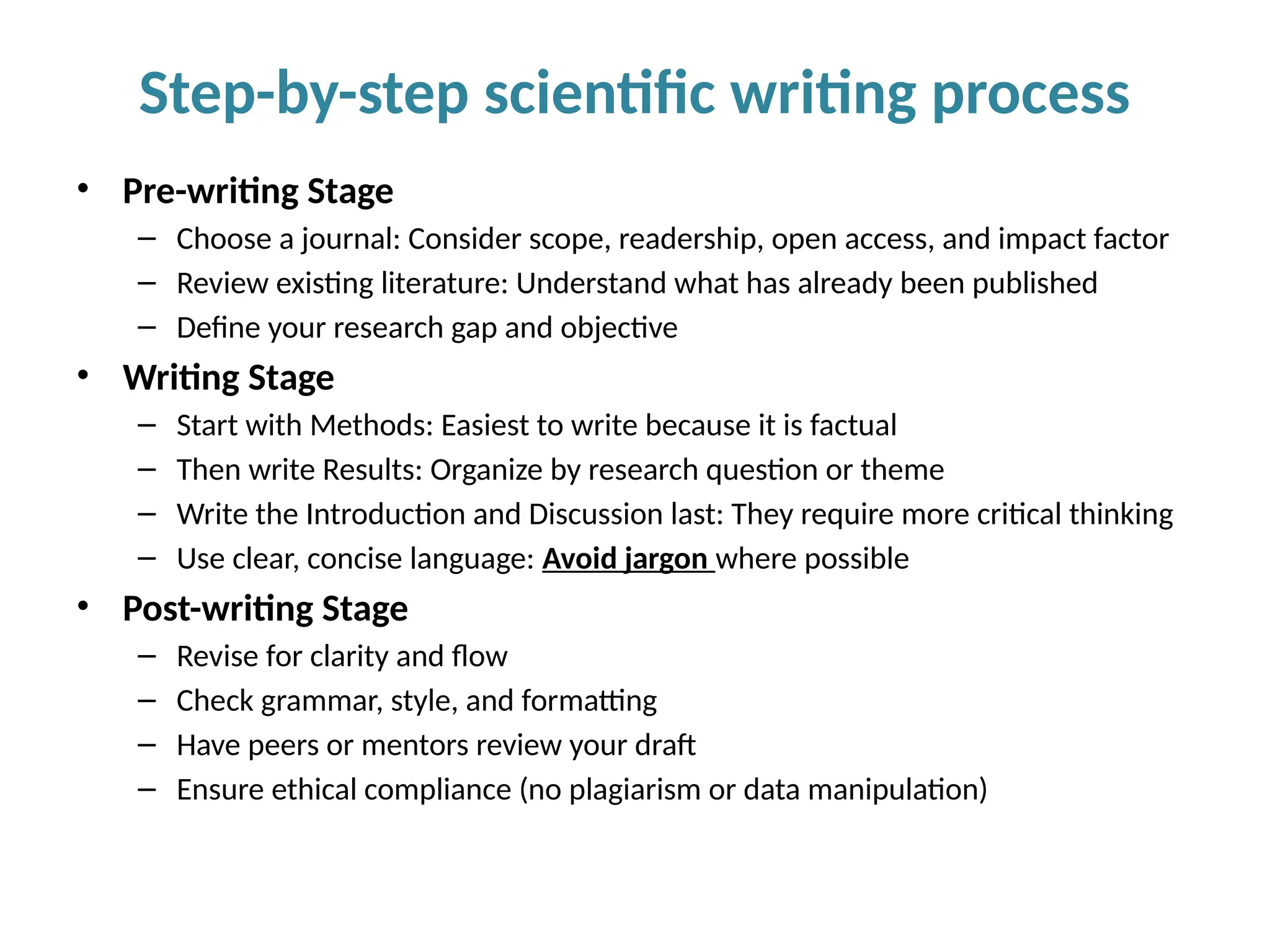
• Pre-writing Stage
– Choose a journal: Consider scope, readership, open access, and impact factor
– Review existing literature: Understand what has already been published
– Define your research gap and objective
• Writing Stage
– Start with Methods: Easiest to write because it is factual
– Then write Results: Organize by research question or theme
– Write the Introduction and Discussion last: They require more critical thinking
– Use clear, concise language: Avoid jargon where possible
• Post-writing Stage
– Revise for clarity and flow
– Check grammar, style, and formatting
– Have peers or mentors review your draft
– Ensure ethical compliance (no plagiarism or data manipulation)
Step-by-step scientific writing process
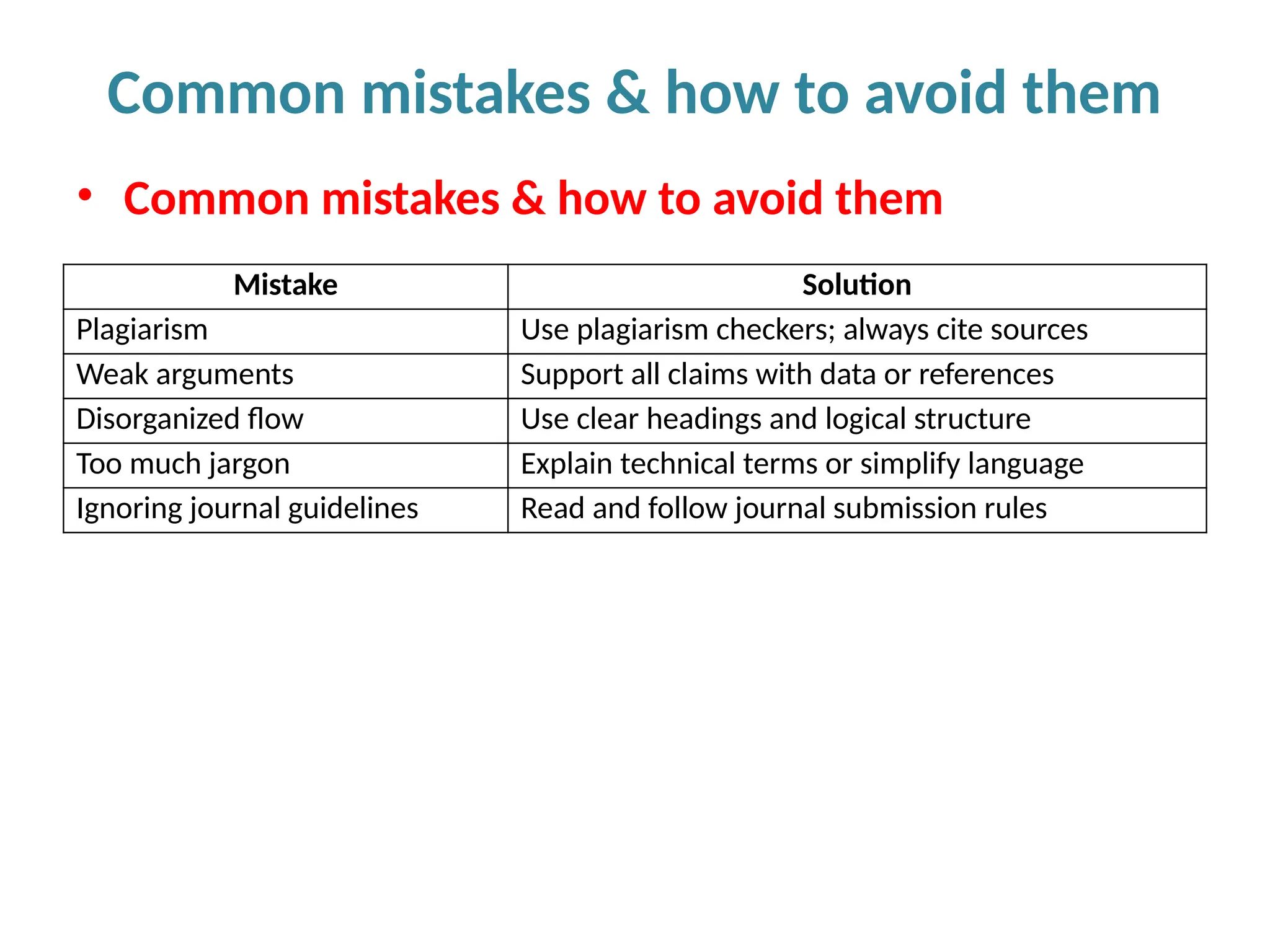
• Common mistakes & how to avoid them
Common mistakes & how to avoid them
Mistake Solution
Plagiarism Use plagiarism checkers; always cite sources
Weak arguments Support all claims with data or references
Disorganized flow Use clear headings and logical structure
Too much jargon Explain technical terms or simplify language
Ignoring journal guidelines Read and follow journal submission rules
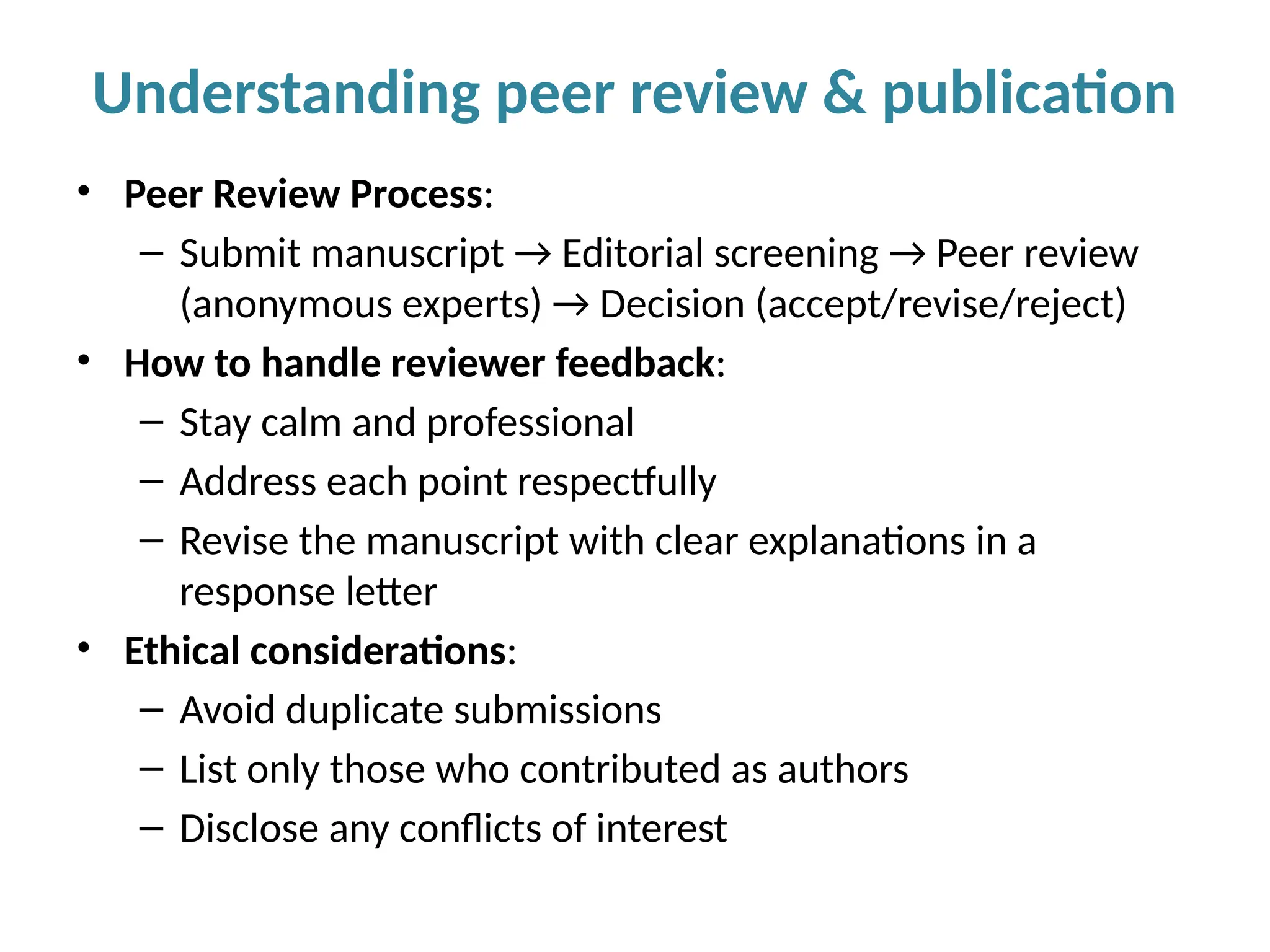
• Peer Review Process:
– Submit manuscript → Editorial screening → Peer review
(anonymous experts) → Decision (accept/revise/reject)
• How to handle reviewer feedback:
– Stay calm and professional
– Address each point respectfully
– Revise the manuscript with clear explanations in a
response letter
• Ethical considerations:
– Avoid duplicate submissions
– List only those who contributed as authors
– Disclose any conflicts of interest
Understanding peer review & publication
Review Article
Short Communication
Case Report
Tools and resources
• Review articles provide a critical summary of the existing literature
to explain the current state of scientific evidence on a particular
topic. A well-written review article must summarize key research
findings, reference must-read articles, describe current areas of
agreement as well as controversies and debates, point out gaps in
current knowledge, depict unanswered questions, and suggest
directions for future research.
• International guidelines such as PRISMA, Cochrane, and JBI (Joanna
Briggs Institute) provide detailed information about how to conduct
reviews starting from the planning and protocol writing phases.
• The purpose of these international guidelines is to ensure
transparent, unbiased, and complete reporting.
• PRISMA encourages journal editors and reviewers to use the
guideline for evaluation of review papers.
Review Article
Review Article
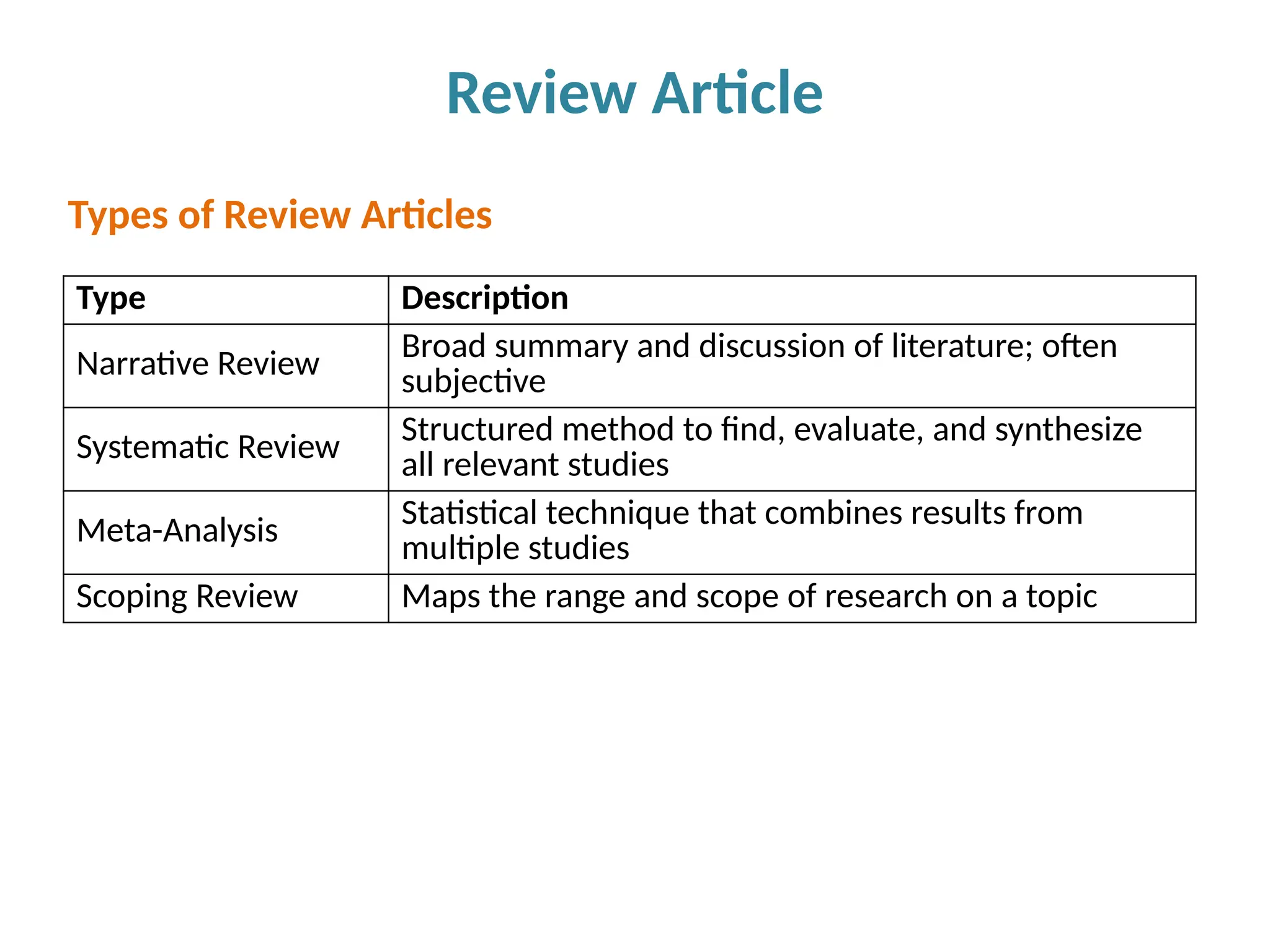
Type Description
Narrative Review Broad summary and discussion of literature; often
subjective
Systematic Review Structured method to find, evaluate, and synthesize
all relevant studies
Meta-Analysis
Statistical technique that combines results from
multiple studies
Scoping Review Maps the range and scope of research on a topic
Types of Review Articles
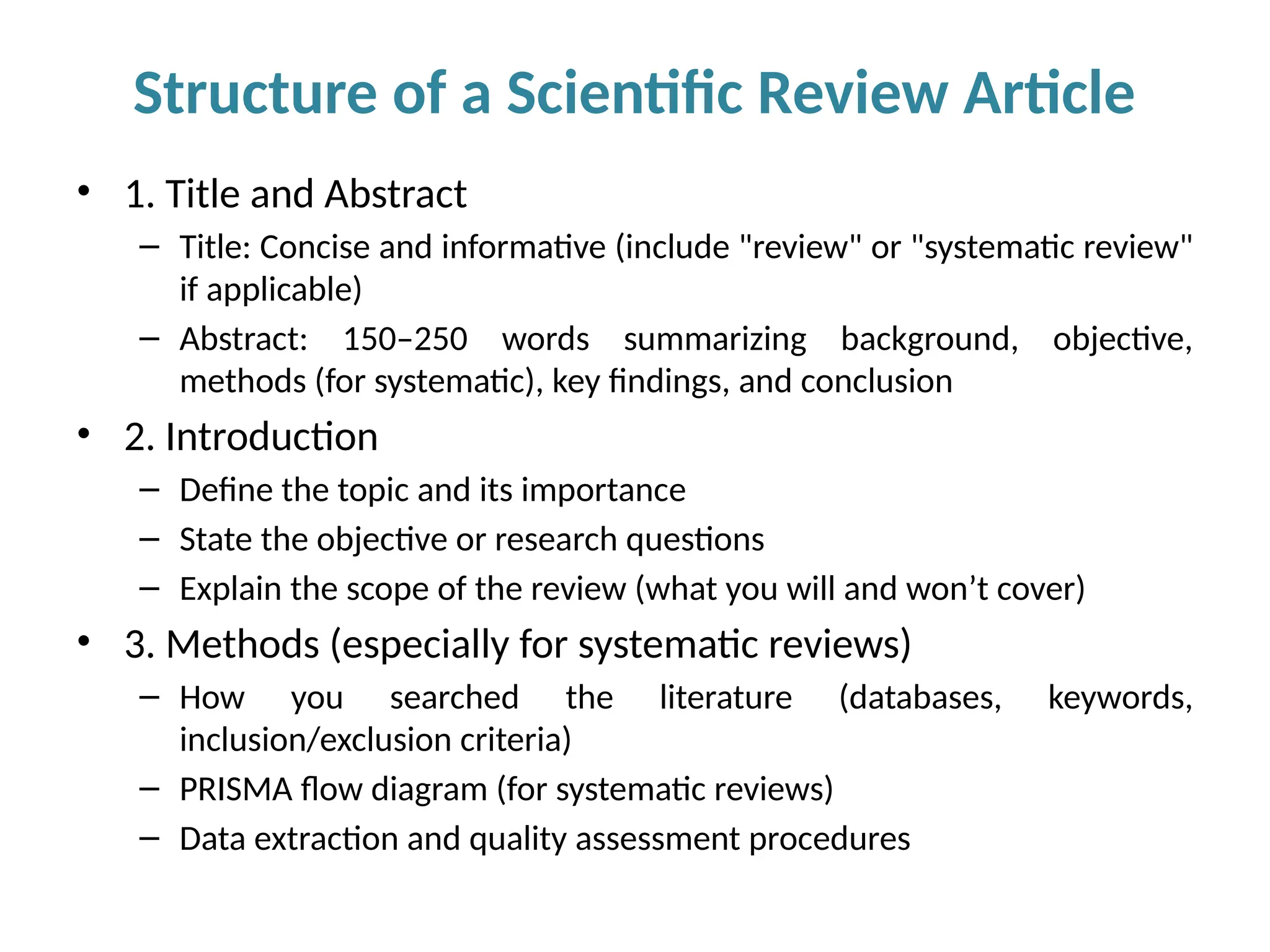
• 1. Title and Abstract
– Title: Concise and informative (include "review" or "systematic review"
if applicable)
– Abstract: 150–250 words summarizing background, objective,
methods (for systematic), key findings, and conclusion
• 2. Introduction
– Define the topic and its importance
– State the objective or research questions
– Explain the scope of the review (what you will and won’t cover)
• 3. Methods (especially for systematic reviews)
– How you searched the literature (databases, keywords,
inclusion/exclusion criteria)
– PRISMA flow diagram (for systematic reviews)
– Data extraction and quality assessment procedures
Structure of a Scientific Review Article
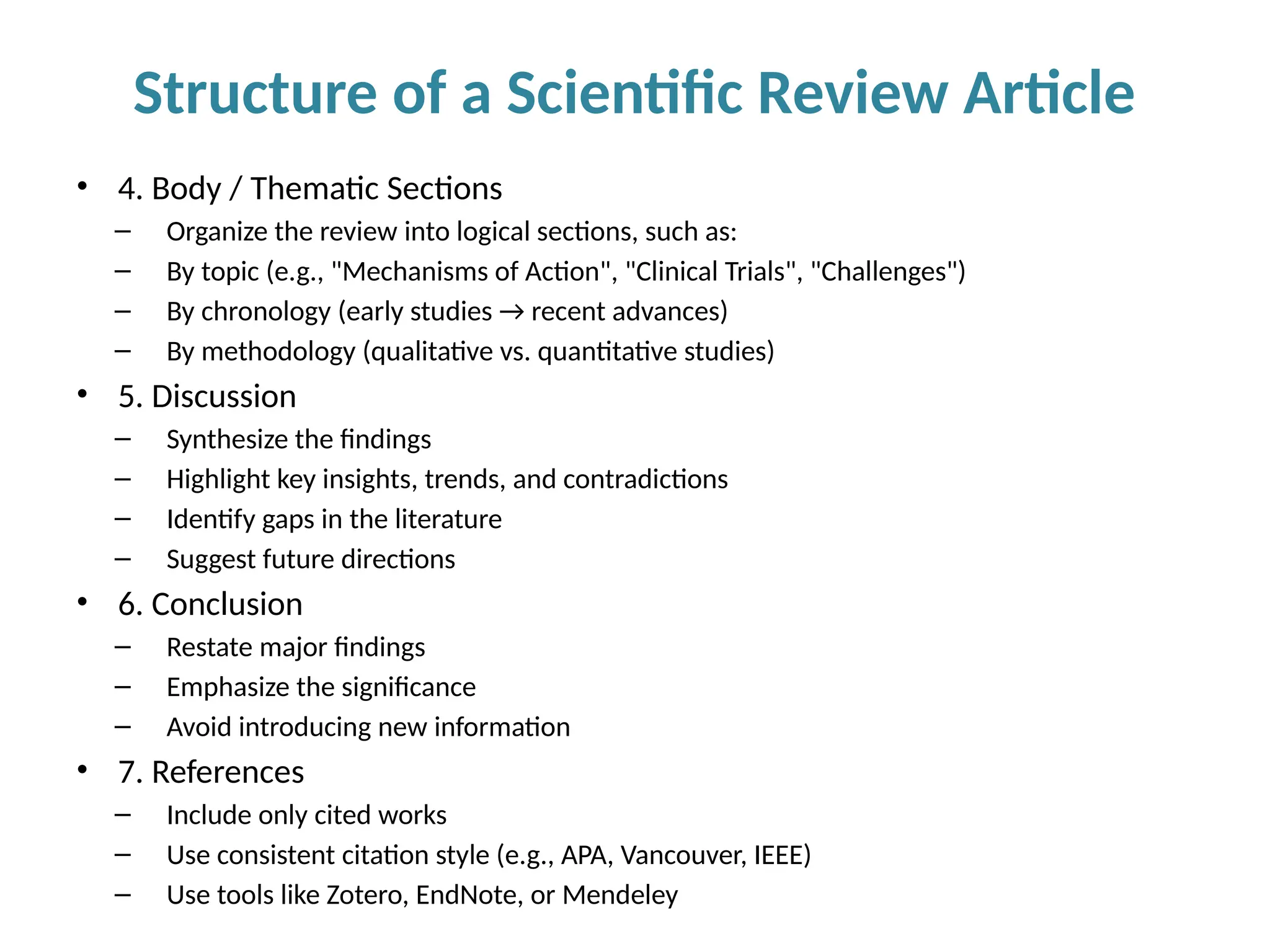
• 4. Body / Thematic Sections
– Organize the review into logical sections, such as:
– By topic (e.g., "Mechanisms of Action", "Clinical Trials", "Challenges")
– By chronology (early studies → recent advances)
– By methodology (qualitative vs. quantitative studies)
• 5. Discussion
– Synthesize the findings
– Highlight key insights, trends, and contradictions
– Identify gaps in the literature
– Suggest future directions
• 6. Conclusion
– Restate major findings
– Emphasize the significance
– Avoid introducing new information
• 7. References
– Include only cited works
– Use consistent citation style (e.g., APA, Vancouver, IEEE)
– Use tools like Zotero, EndNote, or Mendeley
Structure of a Scientific Review Article
Review Article
• Tips for Writing a High-Quality Review Article
• Be critical, not just descriptive – Go beyond listing studies;
evaluate their quality and significance
• Stay objective – Avoid personal opinions unless clearly
justified
• Use recent and relevant literature – Prioritize the most
current, peer-reviewed sources
• Avoid plagiarism – Summarize in your own words and cite
properly
• Use visuals – Tables, diagrams, and flowcharts make complex
topics easier to understand
• Follow journal guidelines – Each journal has specific
formatting and structural requirements
• A Short Communication is a brief scientific article that
presents:
– Preliminary results or partial findings
– Novel techniques, observations, or concepts
– Time-sensitive research (e.g., outbreak data, new discovery)
• Most short communications are 1,500–2,500 words (including
references)
Most short communications follow a condensed IMRaD format.
Short Communication
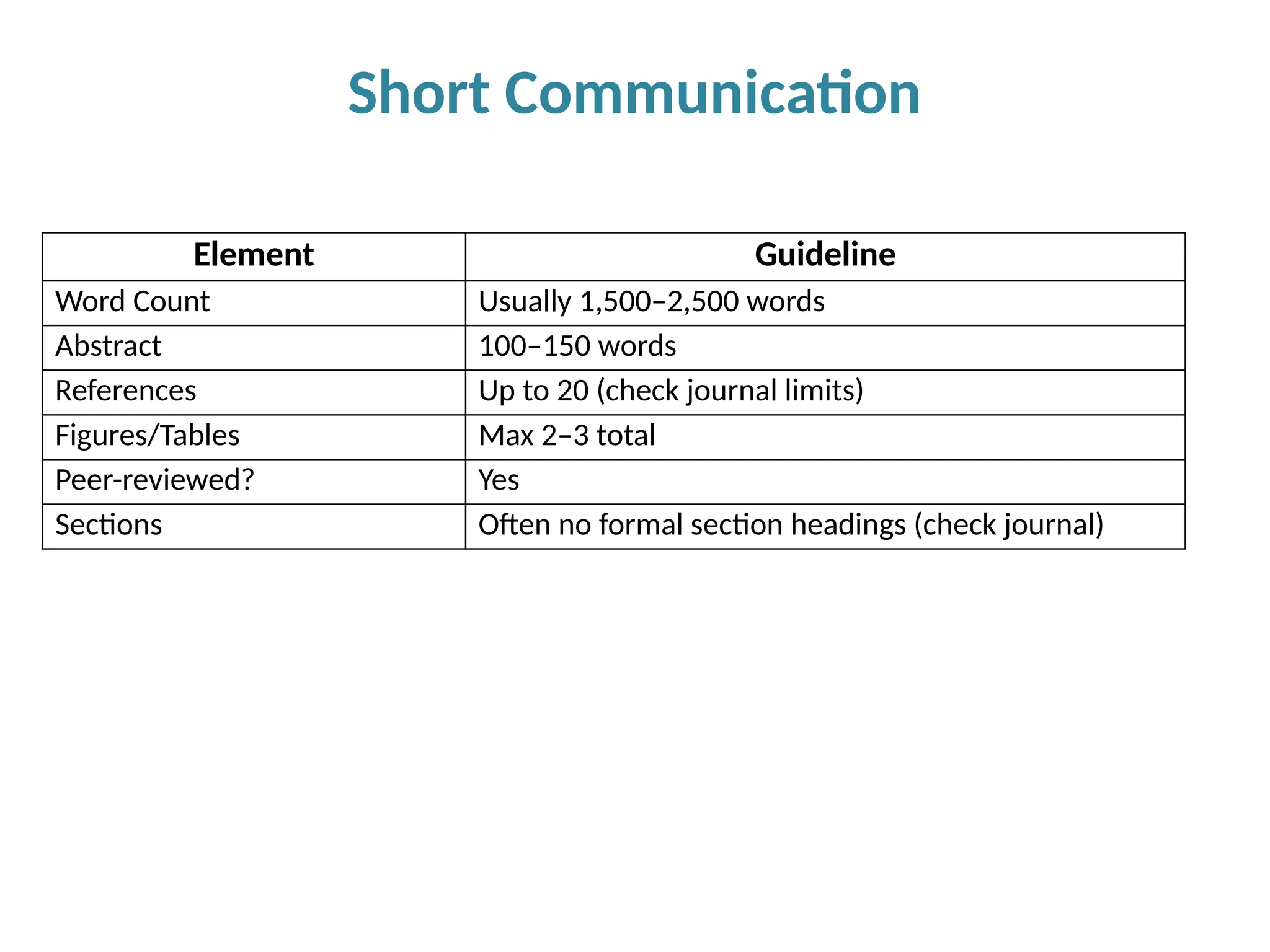
Short Communication
Element Guideline
Word Count Usually 1,500–2,500 words
Abstract 100–150 words
References Up to 20 (check journal limits)
Figures/Tables Max 2–3 total
Peer-reviewed? Yes
Sections Often no formal section headings (check journal)
• A case report is a detailed description of a unique or rare
clinical case, often involving an unusual disease, novel
treatment, unexpected clinical presentation, or diagnostic or
therapeutic challenge.
• It typically does not test a hypothesis but generates new ideas
for further research or practice, rather than testing a
hypothesis.
• Most case reports follow a standardized format, such as CARE
(CAse REport) guidelines.
Case Report
Case Report
1. Title
• Should include the phrase "Case Report"
• Concise, descriptive, and informative
2. Abstract (150–250 words)
• Brief summary of the case
• Usually structured as:
• Background (why this case is noteworthy)
• Case presentation (key clinical info)
• Conclusion (implications or message)
3. Keywords
• 3–6 terms relevant to the condition or findings
4. Introduction
• Background on the condition or problem
• Why this case is unique or important (1–2 short paragraphs)
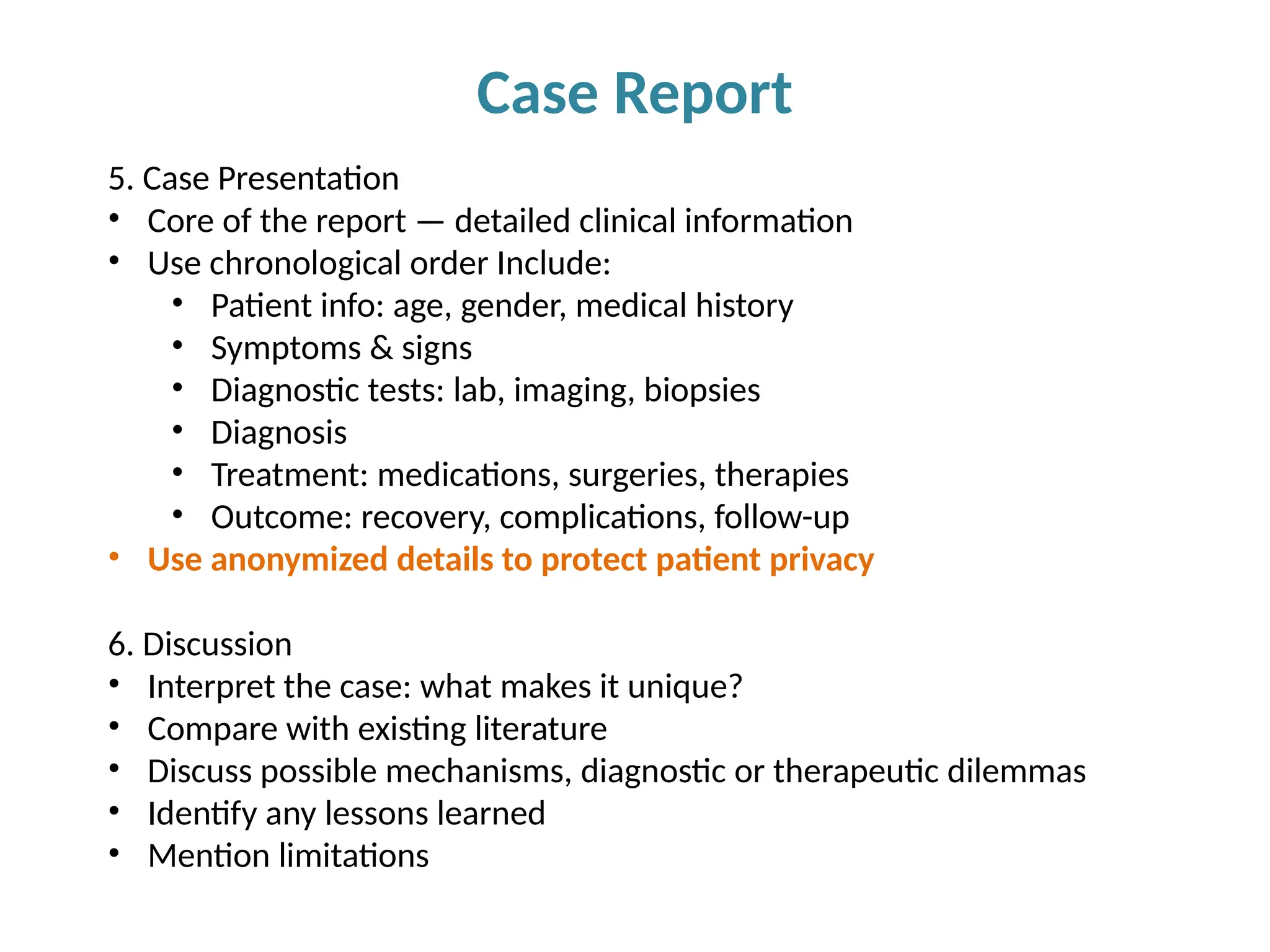
Case Report
5. Case Presentation
• Core of the report — detailed clinical information
• Use chronological order Include:
• Patient info: age, gender, medical history
• Symptoms & signs
• Diagnostic tests: lab, imaging, biopsies
• Diagnosis
• Treatment: medications, surgeries, therapies
• Outcome: recovery, complications, follow-up
• Use anonymized details to protect patient privacy
6. Discussion
• Interpret the case: what makes it unique?
• Compare with existing literature
• Discuss possible mechanisms, diagnostic or therapeutic dilemmas
• Identify any lessons learned
• Mention limitations
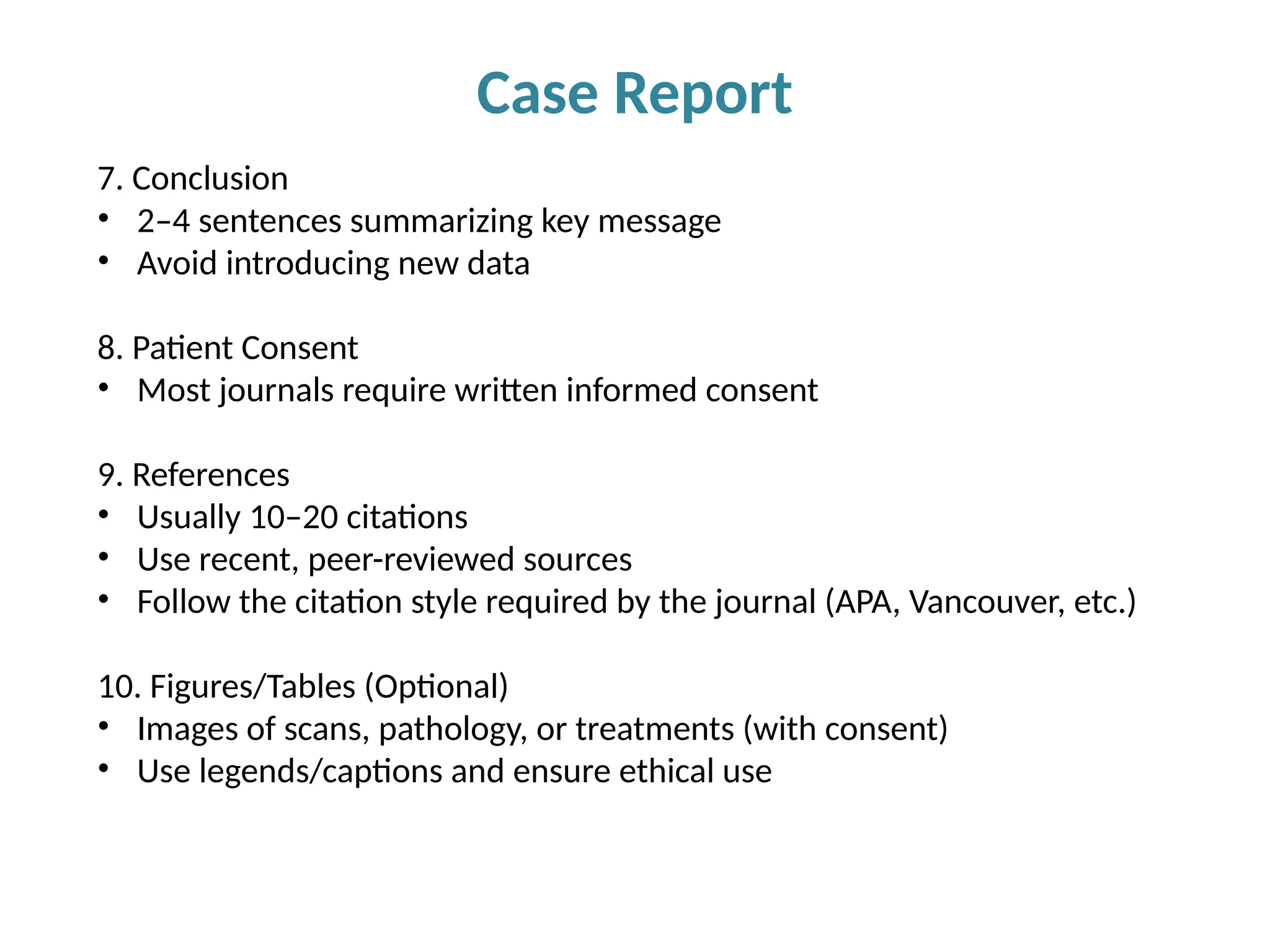
Case Report
7. Conclusion
• 2–4 sentences summarizing key message
• Avoid introducing new data
8. Patient Consent
• Most journals require written informed consent
9. References
• Usually 10–20 citations
• Use recent, peer-reviewed sources
• Follow the citation style required by the journal (APA, Vancouver, etc.)
10. Figures/Tables (Optional)
• Images of scans, pathology, or treatments (with consent)
• Use legends/captions and ensure ethical use
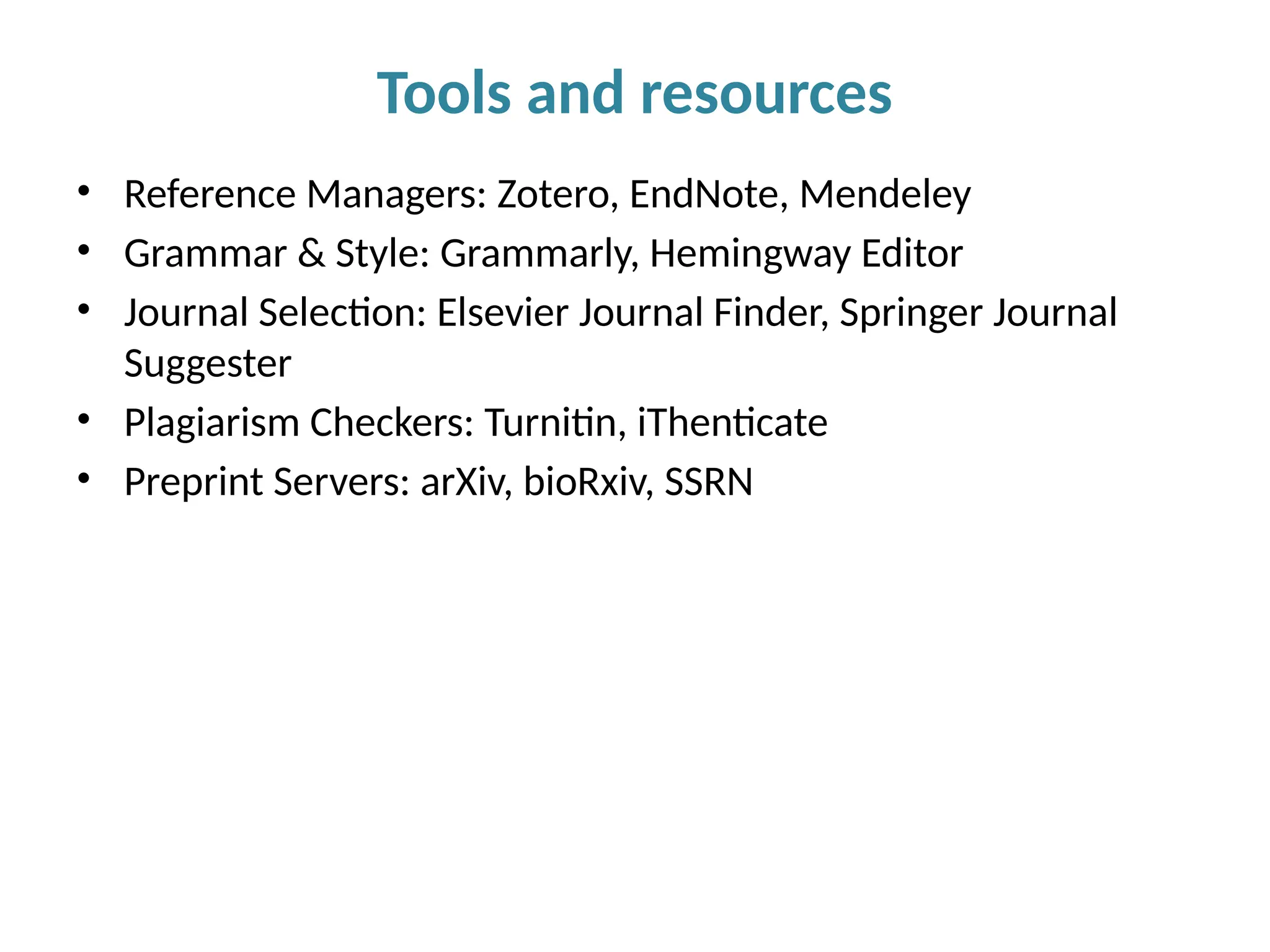
• Reference Managers: Zotero, EndNote, Mendeley
• Grammar & Style: Grammarly, Hemingway Editor
• Journal Selection: Elsevier Journal Finder, Springer Journal
Suggester
• Plagiarism Checkers: Turnitin, iThenticate
• Preprint Servers: arXiv, bioRxiv, SSRN
Tools and resources
Q&A
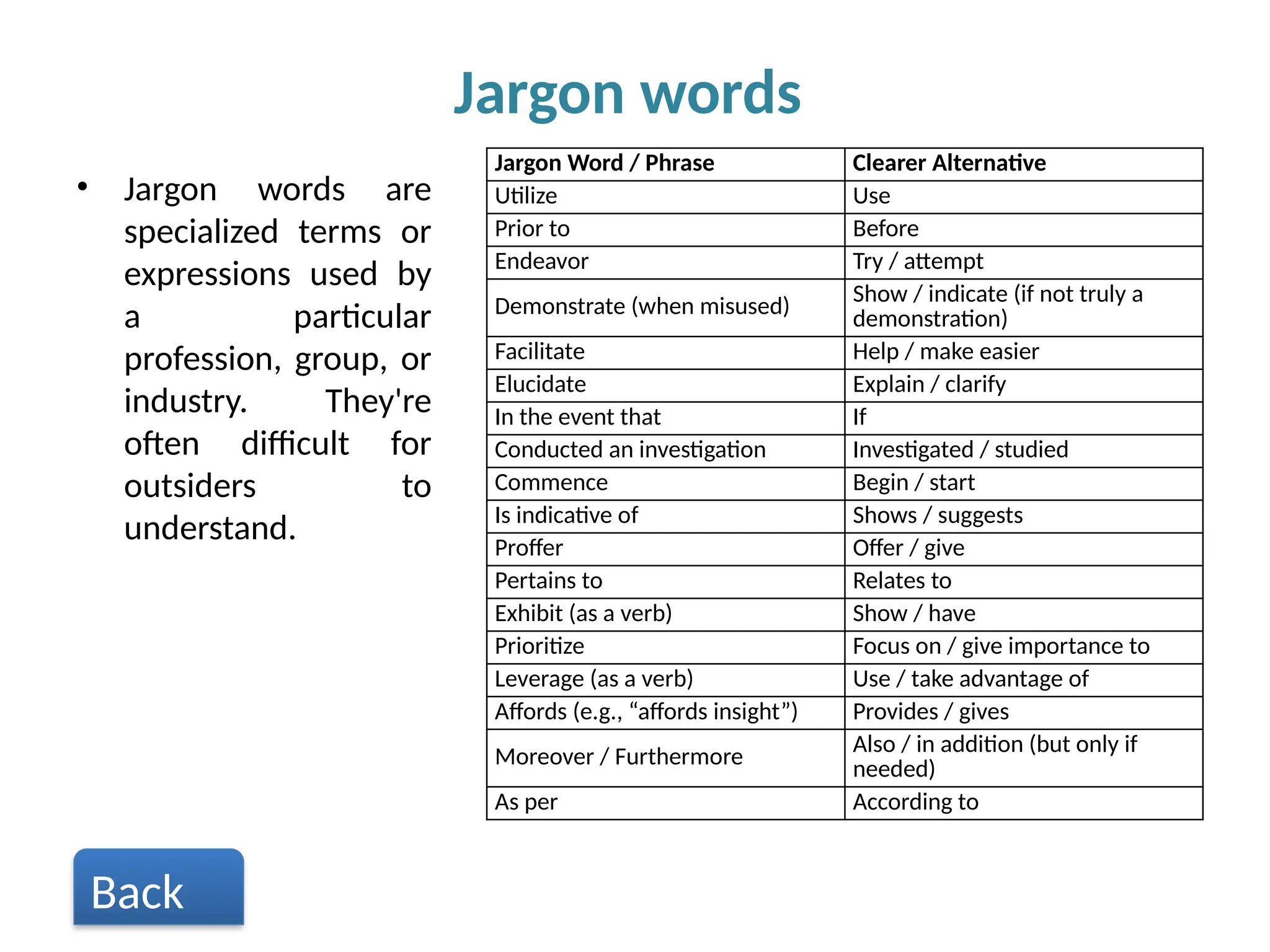
• Jargon words are
specialized terms or
expressions used by
a particular
profession, group, or
industry. They're
often difficult for
outsiders to
understand.
Jargon words
Jargon Word / Phrase Clearer Alternative
Utilize Use
Prior to Before
Endeavor Try / attempt
Demonstrate (when misused)
Show / indicate (if not truly a
demonstration)
Facilitate Help / make easier
Elucidate Explain / clarify
In the event that If
Conducted an investigation Investigated / studied
Commence Begin / start
Is indicative of Shows / suggests
Proffer Offer / give
Pertains to Relates to
Exhibit (as a verb) Show / have
Prioritize Focus on / give importance to
Leverage (as a verb) Use / take advantage of
Affords (e.g., “affords insight”) Provides / gives
Moreover / Furthermore
Also / in addition (but only if
needed)
As per According to
Back

Writing Effective Scientific Articles---

  • 1.
    Writing Effective ScientificArticles Dr. S. Parasuraman, M.Pharm., Ph.D., Snr. Associate Professor & Unit Head Pharmacology, Toxicology and Basic Health Sciences [PTBHS] Unit Faculty of Pharmacy AIMST University Bedong 08100, Malaysia
  • 2.
    Writing effective scientificarticles • Introduction • Types of articles • Original research article – Structure of a scientific article (IMRaD format) – Step-by-step scientific writing process – Common mistakes & how to avoid them – Understanding peer review & publication • Review Article – Narrative Review – Systematic Review – Meta-analysis • Short Communication • Case Report • Tools and resources • Q&A
  • 3.
    • Scientific writingis vital for sharing research findings, contributing to knowledge, and fostering innovation. • An effective scientific article not only presents data but also communicates the significance, context, and implications of the research in a clear and structured manner. • The primary purpose of scientific writing is to communicate research findings accurately and objectively. It allows scientists to share new knowledge, support or challenge existing theories, and contribute to the advancement of science. • Scientific writing ensures that experiments and results are documented in a manner that allows others to understand, evaluate, replicate, and build upon them. Ultimately, it helps maintain the integrity and progress of scientific inquiry. Introduction
  • 4.
    Types of articles Purpose StructureLength Peer- reviewed Example Original Research Article (Empirical Article) Reports new, original findings from experiment, studies, or fieldwork. IMRaD format (Introduction, Methods, Results, and Discussion) Typically long; includes data, tables, figures Yes Clinical trial results, lab experiment, field studies Review Article Summarizes and analyzes existing literature on a specific topic. Yes systematic review Short Communicati on / Brief Report Presents significant findings in a concise format. Similar to research articles but shorter Usually under 3,000 words Yes Preliminary results, novel observations, rapid results Case Report / Case Study Describes unique or rare clinical cases, events, or problems. Introduction, Case Description, Discussion Yes A rare disease diagnosis or an unusual drug reaction Types of articles
  • 5.
    Types of articles Purpose StructureLength Peer- reviewed Example Perspective / Opinion / Commentary Viewpoint, critique, or commentary on a specific issue or recent publication Short (1,000– 2,000 words) Sometimes Ethical discussions, policy implications, expert opinions Editorial Authoritative, often opinion-based No Letters to the Editor / Correspondenc e Usually under 1,000 words Usually under 1,000 words Sometimes Correction, criticism, or additional insight into published work Data Article / Data Note Shares datasets with context and methodology, without deep interpretation Includes data description, collection methods, and metadata Genomic datasets, survey results Technical Note / Method Article Describes a new technique, tool, or experimental method. Focused on procedures and reproducibility Yes A novel algorithm or lab protocol Conference Abstract / Proceeding Paper Summarizes research presented at academic conferences Very short (250–500 words) Often Poster abstracts, oral presentation summaries Types of articles
  • 6.
    Original Research Article •Cover page • Title • Abstract • Keywords • Introduction • Methods • Results • Discussion • Conclusion (sometimes part of Discussion) • References
  • 7.
    Structure of ascientific article (IMRaD format) • Cover page – Title of the Article • Clear, concise, and informative • Avoid abbreviations or jargon. • Centered and in bold (usually in title case or sentence case, depending on style). – Author(s) Name(s): Full names of all authors include superscript numbers if using institutional affiliations. – Institutional Affiliation(s): • University, research institute, hospital, etc. • Match with the author via superscript or footnote. – Corresponding Author Information: Name of corresponding author, Full mailing address and Email address – Date of Submission – Running Head (if required) • A shortened version of the title • Required in formats like APA.
  • 8.
    Structure of ascientific article (IMRaD format) • Title – Concise, informative, and includes key terms – Should reflect the study's main findings • Abstract – A 150–300-word summary of the entire study – Should include background, objectives, methods, results, and conclusions • Keywords – 4–6 relevant words to help others find your paper in databases • Introduction • Methods • Results • Discussion • Conclusion (sometimes part of Discussion)
  • 9.
    • Introduction: • Usethis section to introduce knowledge about the field of study and existing research. • The introduction should contain: – A summary of existing research on the subject – Research question, hypothesis or thesis statement – Theory (if relevant) – An introduction to the field, the current situation, or prevailing practice • The introduction should explain what is known and what is uncertain. It should explain and summarise, but it should also ask questions, clarify, compare, and so on. • Everything presented in the introduction must relate to your research question. • In summary, this section explains the background, identifies the research gap, and states the objective/hypothesis. Structure of a scientific article (IMRaD format)
  • 10.
    • Method: • Describeshow the study was conducted (design, participants, materials, procedures). It should be reproducible by others. – Study Design • What type of study was it? – Experimental? Observational? Cross-sectional? Randomised controlled trial? • How was the research structured? Example: "This was a randomised, double-blind, placebo- controlled clinical trial..." Structure of a scientific article (IMRaD format)
  • 11.
    • Method: – Participants/ Subjects / Sample • Who or what was studied? – Humans, animals, cells, documents, datasets? • Inclusion/exclusion criteria – Who was included or left out? Why? • Sample size – How many participants were involved? • Inclusion/exclusion criteria – Who was included or left out? Why? Example: "A total of 150 patients with type 2 diabetes were recruited between Jan–Mar 2024." Structure of a scientific article (IMRaD format)
  • 12.
    • Method: – Materialsand Instruments • What equipment, tools, or materials were used? – Survey tools, machines, lab equipment, software, chemicals? • Provide brand names, versions, and models when relevant Example: "Blood glucose was measured using the Accu- Chek Active glucometer (Roche Diagnostics)." Structure of a scientific article (IMRaD format)
  • 13.
    • Method: – Procedure •Step-by-step description of what was done – Data collection steps – How interventions were applied – How experiments were conducted – Include timeframes and settings (e.g., lab, field, hospital) Example: "Participants were randomly assigned to the control or treatment group using computer-generated random numbers..." Structure of a scientific article (IMRaD format)
  • 14.
    • Procedure: – Materialsand Instruments • Step-by-step description of what was done – Data collection steps – How interventions were applied – How experiments were conducted – Include timeframes and settings (e.g., lab, field, hospital) Example: "Participants were randomly assigned to the control or treatment group using computer-generated random numbers..." Structure of a scientific article (IMRaD format) Preclinical studies : Animal Research: Reporting of In Vivo Experiments (ARRIVE) guidelines Clinical studies: CONSORT 2025 Statement - Reporting guideline
  • 15.
    Structure of ascientific article (IMRaD format) • Procedure: – For preclinical studies - The ARRIVE (Animal Research: Reporting of In Vivo Experiments) guidelines recognized recommendations designed to improve the reporting quality of animal research
  • 16.
    Structure of ascientific article (IMRaD format) • Procedure: • The ARRIVE guidelines emphasize comprehensive and accurate reporting of animal studies, enabling readers and reviewers to fully understand what was done and why. This includes: 1. Study Design – Clear description of experimental groups, including control groups, and how animals were allocated. 2. Sample Size – Justification for the number of animals used and explanation of statistical power. 3. Inclusion and Exclusion Criteria – Criteria for including or excluding animals/data to avoid bias. 4. Randomisation and Blinding – Details on how animals were randomized and whether investigators were blinded during experiments and analysis. 5. Outcome Measures – Definition of primary and secondary outcomes. 6. Statistical Methods – Full explanation of statistical analyses used, including assumptions and handling of missing data. 7. Experimental Animals – Species, strain, sex, age, and other relevant biological details. 8. Experimental Procedures – What was done, how, and when—including anesthesia, surgical procedures, and euthanasia methods. 9. Results – Comprehensive presentation of data, including measures of variability and statistical significance. 10. Ethical Statement – Confirmation of ethical approval and adherence to animal welfare standards. 11. Housing and Husbandry – Conditions of animal care that could affect research outcomes. 12. Interpretation/Generalizability – Discussion of the study’s implications, limitations, and potential biases
  • 17.
    Structure of ascientific article (IMRaD format) • Procedure: – For clinical studies
  • 18.
    • Ethical Considerations: •For studies involving humans or animals: – Was ethical approval obtained? – Was informed consent collected? Example: "Ethical approval was obtained from the XYZ Institutional Review Board (Approval No: 2025/ETH/112)." Structure of a scientific article (IMRaD format)
  • 19.
    • Data Analysis/ Statistical Methods: • Which statistical tools or tests were used? – SPSS, R, Excel, STATA, GraphPad? • What statistical tests were applied? – t-test, ANOVA, regression, chi-square, etc. • Mention any significance thresholds (e.g., p < 0.05) Example: "Statistical analysis was performed using SPSS v25.0. Independent t-tests were used to compare group means." Structure of a scientific article (IMRaD format)
  • 20.
    • Tips forWriting the Methods Section: • Be specific: Include precise details so others can repeat the study. • Use past tense: Since the actions have already been completed. • Avoid unnecessary detail: Don’t include textbook explanations of common methods. • Use subheadings: Helps with organization and readability. • Stay objective: Focus on what was done, not why — save explanations for the Discussion. Structure of a scientific article (IMRaD format)
  • 21.
    • Results: • TheResults Section is a crucial part of a study, presenting the collected data and highlighting what was found. It should be organized by research questions or hypotheses, ensuring the reader can follow the logical flow. • Key findings should be summarized in text, starting with a brief narrative. Tables and figures are used for details, with clear titles, numbered captions, legends, and references in the main text. • Statistical significance should be reported, including p-values, confidence intervals, and effect sizes. It is important to be precise and avoid interpreting the meaning of the results, instead stating the result. This helps the reader follow the logical flow of the study. No interpretation—only what was observed Structure of a scientific article (IMRaD format)
  • 22.
    • Results (WritingTips): Structure of a scientific article (IMRaD format) Do Don’t Use clear subheadings Repeat data already shown in tables/figures Report actual numbers and stats Discuss why the result happened (save for Discussion) Be objective Hide non-significant results Refer to tables/figures in the text Overload the section with raw data Use Tables when... Use Figures when... You have precise numerical data To show trends or patterns Comparing groups or categories Showing change over time, distribution Presenting many values compactly Creating visual impact or clarity
  • 23.
    • Results (WritingTips): • Common Phrases for Results Writing – "The data showed that..." – "There was a significant increase/decrease in..." – "As illustrated in Figure 2..." – "No statistically significant difference was found between..." Structure of a scientific article (IMRaD format)
  • 24.
    • Discussion: • Thediscussion section of a research paper should aim to interpret the results, compare them with previous studies, explain unexpected findings, acknowledge limitations, and suggest implications for practice, policy, or future research. • A common structure for a good discussion section is to start with a summary of key findings, highlighting the most important or novel outcome. • The findings should be interpreted in the context of the research question, whether expected or unexpected, and provide possible explanations for the results. Comparisons with existing literature should be made using citations to reference similar or contrasting studies. Structure of a scientific article (IMRaD format)
  • 25.
    • Discussion: • Ifunexpected findings are found, they should be explained scientifically or methodologically, being honest and analytical. • Limitations should be acknowledged openly, such as small sample size, short duration, lack of randomization, or self-reported data. • The discussion should also suggest implications for practice, policy, or future research, keeping it evidence-based and not speculative. Structure of a scientific article (IMRaD format)
  • 26.
    • Discussion (WritingTips): Structure of a scientific article (IMRaD format) Do This Don’t Do This Stay focused on your study objectives Introduce new data Support claims with evidence Make overly broad conclusions Be honest about limitations Overstate the significance Use clear, concise language Repeat the Results section Common Phrases to Use "These results suggest that..." "This finding is consistent with..." "One possible explanation is..." "This differs from previous studies due to..." "A limitation of this study is..." "Future research should explore..."
  • 27.
    • Conclusion: • Theconclusion of an article should summarize the main findings, emphasize their importance, and conclude with a take-home message. • It should be concise and focused, reiterating the core message and highlighting the significance of the findings. • Recommendations or future research should also be included. Structure of a scientific article (IMRaD format)
  • 28.
    • Conclusion (WritingTips): Structure of a scientific article (IMRaD format) Do Don't Keep it short and focused Introduce new data or ideas Emphasize the big picture Repeat entire paragraphs from Results or Discussion Use clear, simple language Overstate your findings Mention limitations lightly, if needed Add complex technical detail Common Phrases to Use "In conclusion, this study shows..." "These findings suggest that..." "Our results highlight the importance of..." "Further research is needed to..." "This study contributes to..."
  • 29.
    • References: • Ina scientific article, a reference should acknowledge others' work, support claims with evidence, and help readers locate sources. • A complete reference usually includes the author(s), year of publication, title of the work, journal name, volume, issue, page numbers, and DOI or URL. • Common citation styles in science include Vancouver Style (common in biomedical and health sciences), APA Style (7th ed.) (used in psychology and social sciences), and IEEE Style (common in engineering and technology). • In-text citations • It is important to check the author guidelines for citation style to be used. Structure of a scientific article (IMRaD format)
  • 30.
    • Pre-writing Stage –Choose a journal: Consider scope, readership, open access, and impact factor – Review existing literature: Understand what has already been published – Define your research gap and objective • Writing Stage – Start with Methods: Easiest to write because it is factual – Then write Results: Organize by research question or theme – Write the Introduction and Discussion last: They require more critical thinking – Use clear, concise language: Avoid jargon where possible • Post-writing Stage – Revise for clarity and flow – Check grammar, style, and formatting – Have peers or mentors review your draft – Ensure ethical compliance (no plagiarism or data manipulation) Step-by-step scientific writing process
  • 31.
    • Common mistakes& how to avoid them Common mistakes & how to avoid them Mistake Solution Plagiarism Use plagiarism checkers; always cite sources Weak arguments Support all claims with data or references Disorganized flow Use clear headings and logical structure Too much jargon Explain technical terms or simplify language Ignoring journal guidelines Read and follow journal submission rules
  • 32.
    • Peer ReviewProcess: – Submit manuscript → Editorial screening → Peer review (anonymous experts) → Decision (accept/revise/reject) • How to handle reviewer feedback: – Stay calm and professional – Address each point respectfully – Revise the manuscript with clear explanations in a response letter • Ethical considerations: – Avoid duplicate submissions – List only those who contributed as authors – Disclose any conflicts of interest Understanding peer review & publication
  • 33.
    Review Article Short Communication CaseReport Tools and resources
  • 34.
    • Review articlesprovide a critical summary of the existing literature to explain the current state of scientific evidence on a particular topic. A well-written review article must summarize key research findings, reference must-read articles, describe current areas of agreement as well as controversies and debates, point out gaps in current knowledge, depict unanswered questions, and suggest directions for future research. • International guidelines such as PRISMA, Cochrane, and JBI (Joanna Briggs Institute) provide detailed information about how to conduct reviews starting from the planning and protocol writing phases. • The purpose of these international guidelines is to ensure transparent, unbiased, and complete reporting. • PRISMA encourages journal editors and reviewers to use the guideline for evaluation of review papers. Review Article
  • 35.
    Review Article Type Description NarrativeReview Broad summary and discussion of literature; often subjective Systematic Review Structured method to find, evaluate, and synthesize all relevant studies Meta-Analysis Statistical technique that combines results from multiple studies Scoping Review Maps the range and scope of research on a topic Types of Review Articles
  • 36.
    • 1. Titleand Abstract – Title: Concise and informative (include "review" or "systematic review" if applicable) – Abstract: 150–250 words summarizing background, objective, methods (for systematic), key findings, and conclusion • 2. Introduction – Define the topic and its importance – State the objective or research questions – Explain the scope of the review (what you will and won’t cover) • 3. Methods (especially for systematic reviews) – How you searched the literature (databases, keywords, inclusion/exclusion criteria) – PRISMA flow diagram (for systematic reviews) – Data extraction and quality assessment procedures Structure of a Scientific Review Article
  • 37.
    • 4. Body/ Thematic Sections – Organize the review into logical sections, such as: – By topic (e.g., "Mechanisms of Action", "Clinical Trials", "Challenges") – By chronology (early studies → recent advances) – By methodology (qualitative vs. quantitative studies) • 5. Discussion – Synthesize the findings – Highlight key insights, trends, and contradictions – Identify gaps in the literature – Suggest future directions • 6. Conclusion – Restate major findings – Emphasize the significance – Avoid introducing new information • 7. References – Include only cited works – Use consistent citation style (e.g., APA, Vancouver, IEEE) – Use tools like Zotero, EndNote, or Mendeley Structure of a Scientific Review Article
  • 38.
    Review Article • Tipsfor Writing a High-Quality Review Article • Be critical, not just descriptive – Go beyond listing studies; evaluate their quality and significance • Stay objective – Avoid personal opinions unless clearly justified • Use recent and relevant literature – Prioritize the most current, peer-reviewed sources • Avoid plagiarism – Summarize in your own words and cite properly • Use visuals – Tables, diagrams, and flowcharts make complex topics easier to understand • Follow journal guidelines – Each journal has specific formatting and structural requirements
  • 39.
    • A ShortCommunication is a brief scientific article that presents: – Preliminary results or partial findings – Novel techniques, observations, or concepts – Time-sensitive research (e.g., outbreak data, new discovery) • Most short communications are 1,500–2,500 words (including references) Most short communications follow a condensed IMRaD format. Short Communication
  • 40.
    Short Communication Element Guideline WordCount Usually 1,500–2,500 words Abstract 100–150 words References Up to 20 (check journal limits) Figures/Tables Max 2–3 total Peer-reviewed? Yes Sections Often no formal section headings (check journal)
  • 41.
    • A casereport is a detailed description of a unique or rare clinical case, often involving an unusual disease, novel treatment, unexpected clinical presentation, or diagnostic or therapeutic challenge. • It typically does not test a hypothesis but generates new ideas for further research or practice, rather than testing a hypothesis. • Most case reports follow a standardized format, such as CARE (CAse REport) guidelines. Case Report
  • 42.
    Case Report 1. Title •Should include the phrase "Case Report" • Concise, descriptive, and informative 2. Abstract (150–250 words) • Brief summary of the case • Usually structured as: • Background (why this case is noteworthy) • Case presentation (key clinical info) • Conclusion (implications or message) 3. Keywords • 3–6 terms relevant to the condition or findings 4. Introduction • Background on the condition or problem • Why this case is unique or important (1–2 short paragraphs)
  • 43.
    Case Report 5. CasePresentation • Core of the report — detailed clinical information • Use chronological order Include: • Patient info: age, gender, medical history • Symptoms & signs • Diagnostic tests: lab, imaging, biopsies • Diagnosis • Treatment: medications, surgeries, therapies • Outcome: recovery, complications, follow-up • Use anonymized details to protect patient privacy 6. Discussion • Interpret the case: what makes it unique? • Compare with existing literature • Discuss possible mechanisms, diagnostic or therapeutic dilemmas • Identify any lessons learned • Mention limitations
  • 44.
    Case Report 7. Conclusion •2–4 sentences summarizing key message • Avoid introducing new data 8. Patient Consent • Most journals require written informed consent 9. References • Usually 10–20 citations • Use recent, peer-reviewed sources • Follow the citation style required by the journal (APA, Vancouver, etc.) 10. Figures/Tables (Optional) • Images of scans, pathology, or treatments (with consent) • Use legends/captions and ensure ethical use
  • 45.
    • Reference Managers:Zotero, EndNote, Mendeley • Grammar & Style: Grammarly, Hemingway Editor • Journal Selection: Elsevier Journal Finder, Springer Journal Suggester • Plagiarism Checkers: Turnitin, iThenticate • Preprint Servers: arXiv, bioRxiv, SSRN Tools and resources
  • 46.
  • 47.
    • Jargon wordsare specialized terms or expressions used by a particular profession, group, or industry. They're often difficult for outsiders to understand. Jargon words Jargon Word / Phrase Clearer Alternative Utilize Use Prior to Before Endeavor Try / attempt Demonstrate (when misused) Show / indicate (if not truly a demonstration) Facilitate Help / make easier Elucidate Explain / clarify In the event that If Conducted an investigation Investigated / studied Commence Begin / start Is indicative of Shows / suggests Proffer Offer / give Pertains to Relates to Exhibit (as a verb) Show / have Prioritize Focus on / give importance to Leverage (as a verb) Use / take advantage of Affords (e.g., “affords insight”) Provides / gives Moreover / Furthermore Also / in addition (but only if needed) As per According to Back