TACHYARRHYTHMIA  Dr Syed Raza
Initial Evaluation Hemodynamic stability History of CAD or previous MI History of syncope Depressed LV function Baseline ECG Characteristics of the tachycardia Narrow complex Wide complex Other morphologic clues
Should you use electrical therapy? Acute hemodynamic collapse Acute cardiac ischemia or infarction Tachycardia induced congestive heart failure Follow ACLS protocols in most cases
What’s the rhythm? To treat effectively means knowing the differential diagnoses Use patient clues ALWAYS obtain a proper 12-lead ECG ECG “quick look” Narrow or wide complex? Regularity? Possible preexcitation? Ischemic changes?
Narrow Complex Tachycardia Differential diagnoses Sinus tachycardia Atrial tachycardia Atrial fibrillation/flutter AV nodal reentrant tachycardia AV reentrant tachycardia  Unusual VTs
Looking at the PR-RP intervals Long RP tachycardia Sinus tachycardia Atrial tachycardia Aytypical AVNRT Some AVRTs Short RP tachycardia Typical AVNRT Most AVRTs RP PR RP PR RP<PR  (Short RP) RP>PR  (Long RP)
 
 
Atrial tachycardia Can be an incessant rhythm Rate: usually <220 bpm Does not need the AV node for perpetuation Adenosine response: Transient AV block WITHOUT termination Transient AV block WITH termination (40%) Use your knowledge of the AV node to make the diagnosis
 
ATRIAL FLUTTER


ATRIAL FIBRILLATION WITH RAPID VENTRICULAR RESPONSE


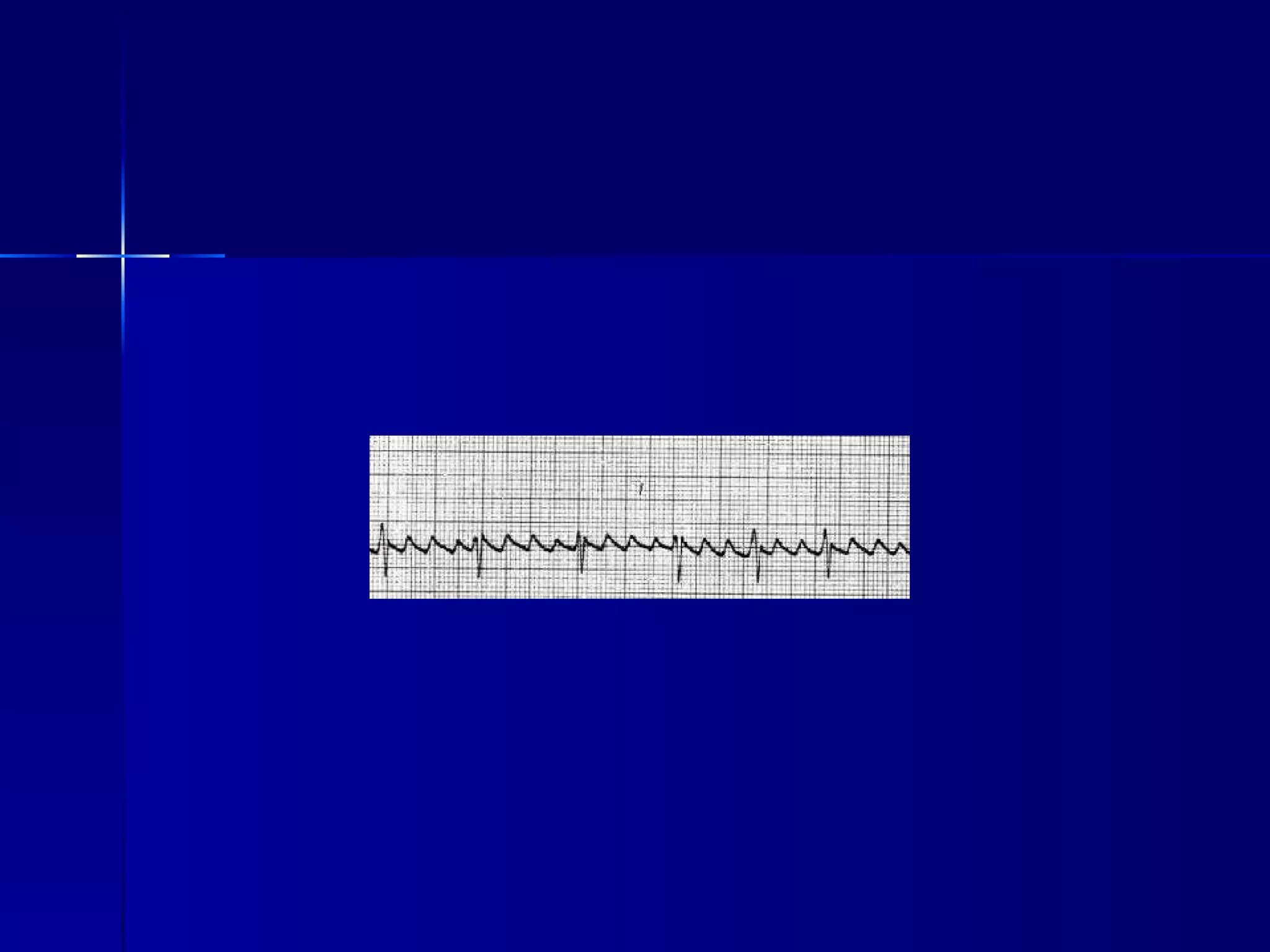
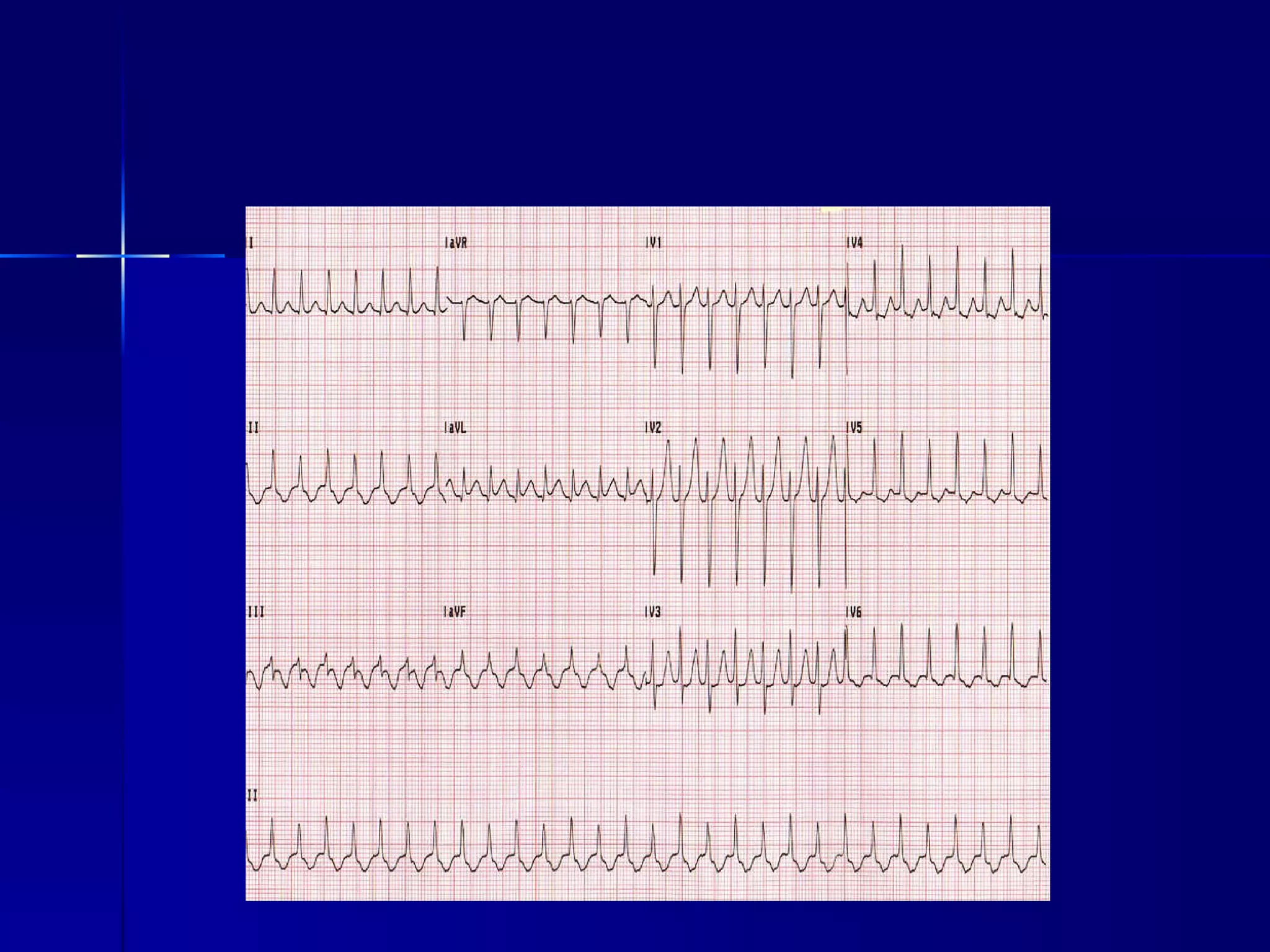
ATRIO-VENTRICULAR NODAL RE ENTERANT TACHYCARDIA  ( AVNRT)
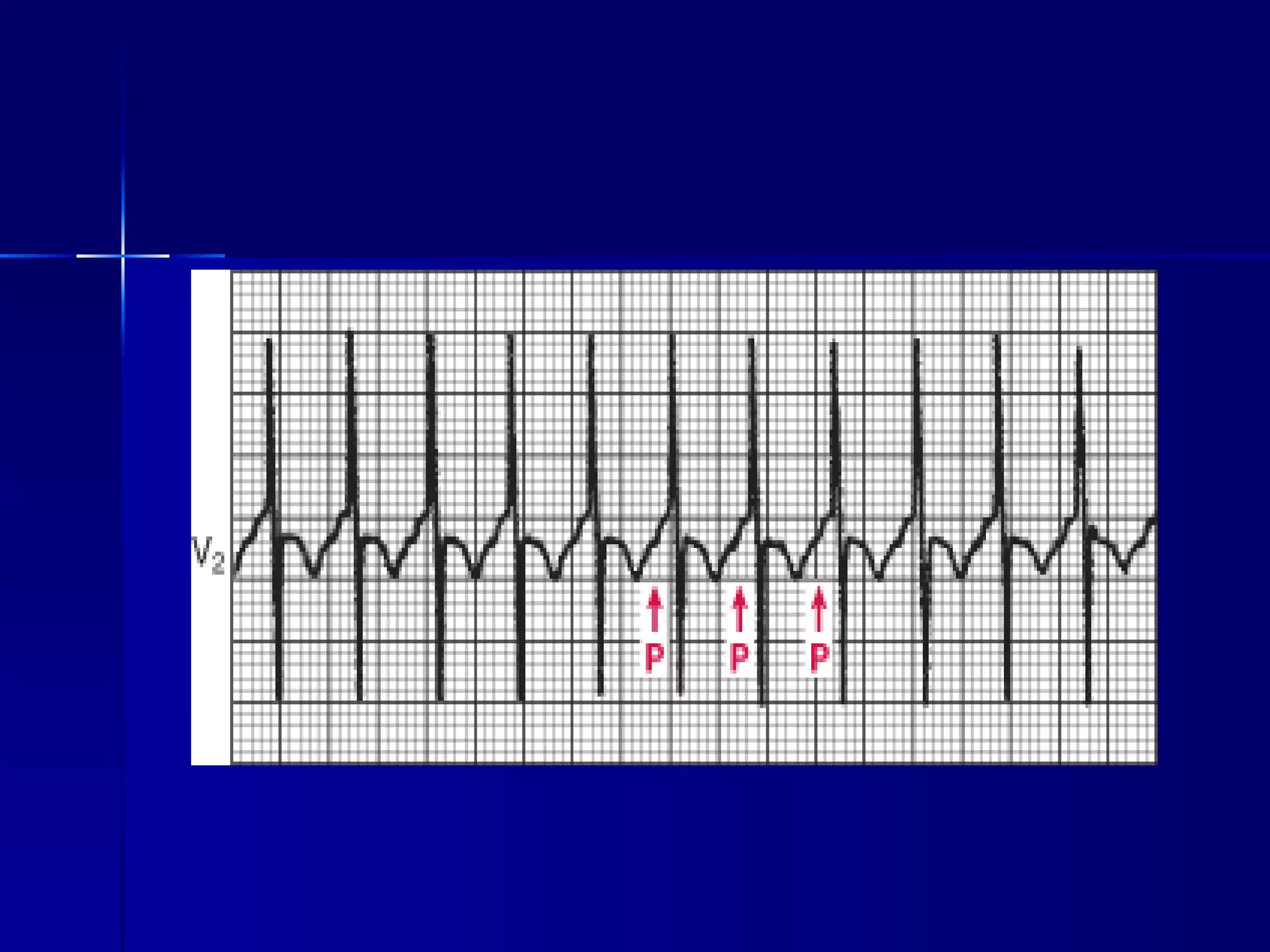
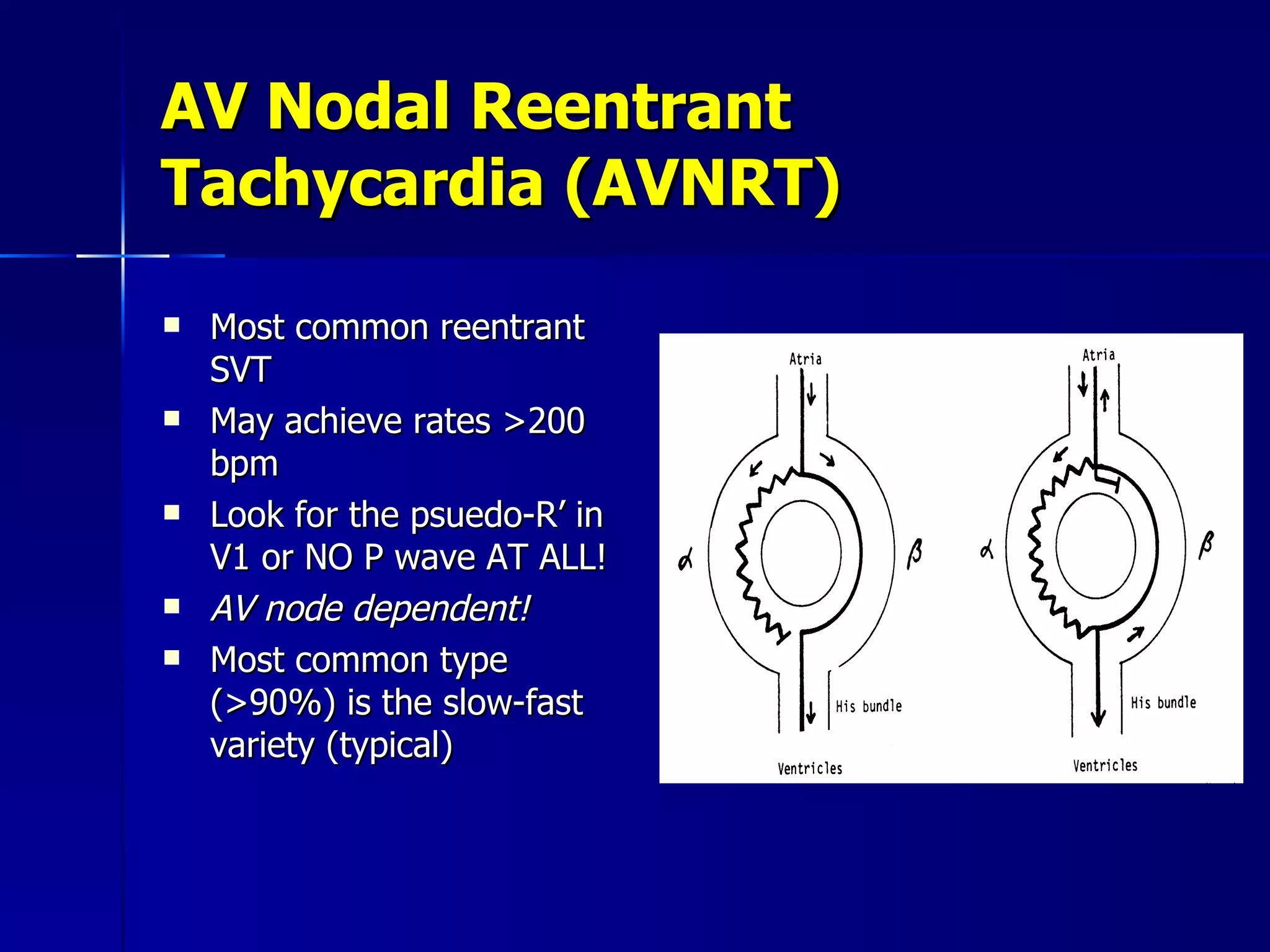
AV Nodal Reentrant Tachycardia (AVNRT) Most common reentrant SVT May achieve rates >200 bpm Look for the psuedo-R’ in V1 or NO P wave AT ALL! AV node dependent! Most common type (>90%) is the slow-fast variety (typical)
“ pseudo-R’”
 
 
ATRIOVENTRICULAR RE ENTERANT TACHYCARDIA (AVRT)
 
 
Atrioventricular Reciprocating Tachycardia (AVRT) Can be orthodromic (most common) or antidromic (very uncommon) Needs AV node to perpetuate rhythm Always associated with an AV bypass tract May mimic AVNRT and atrial tachycardia Can be short or long RP
 
Therapies  Some atrial tachycardias (about 40%) can be terminated with adenosine Atrial flutter and fibrillation are not terminated by changing AV nodal conduction Consider rate control Electrical or chemical cardioverision RF ablation
Acute therapies for SVT Many SVTs depend on the AV node for conduction (e.g. AVNRT, AVRT, etc) Try affecting AV nodal conduction to terminate the tachycardia Valsalva CSM Adenosine Beta-blockers, Ca channel antagonists ELECTRO-PHYSIOLOGY AND RADIO FREQUENCY ABLATION
WIDE  COMLEX  TACHYCARDIA
Definition Wide QRS complex tachycardia is a rhythm with a rate of more than 100 b/m and QRS duration of more than 120 ms VT (80%) SVT (20%) Stewart RB. Ann Intern Med 1986
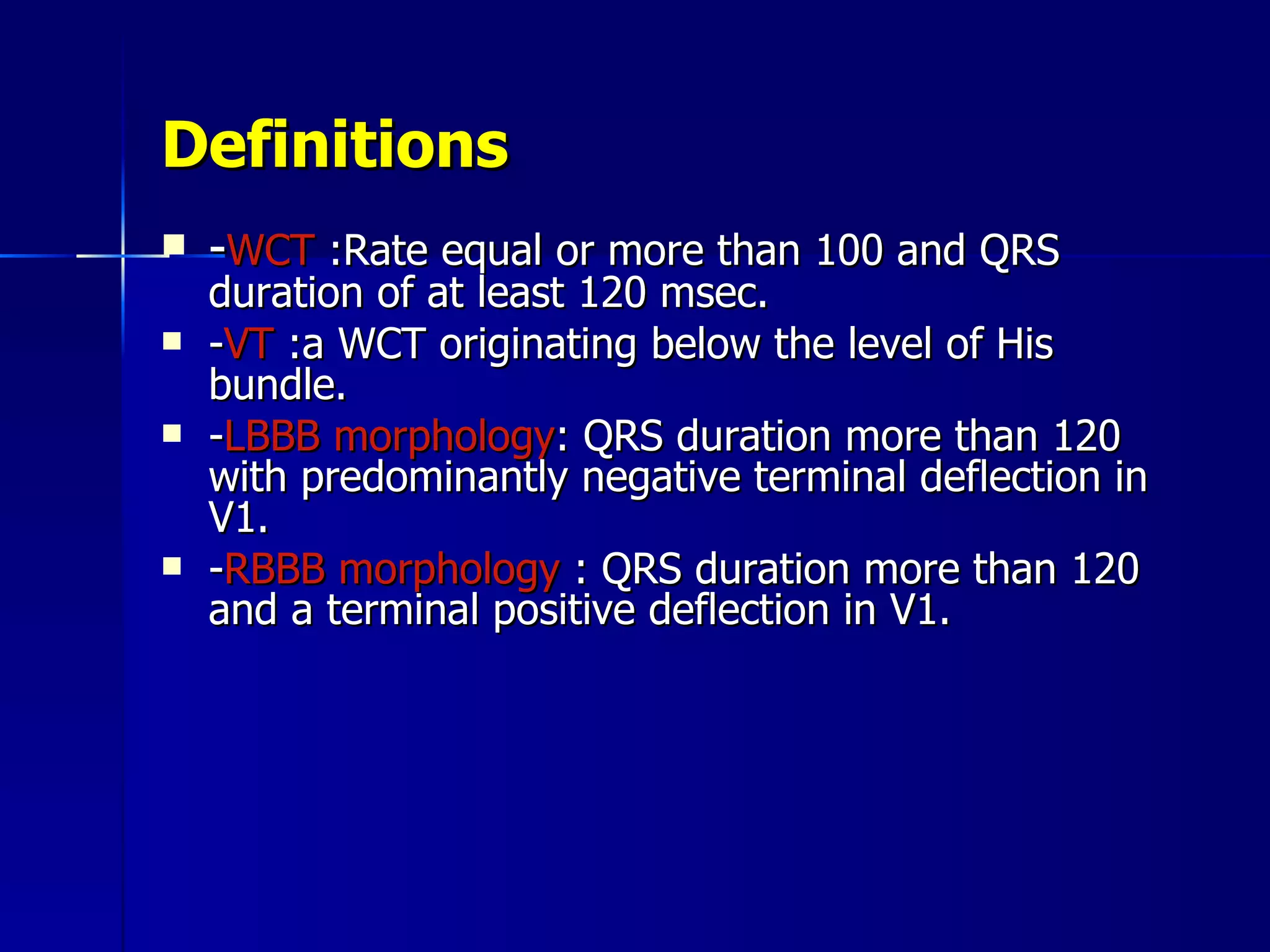
Definitions - WCT  :Rate equal or more than 100 and QRS duration of at least 120 msec. - VT  :a WCT originating below the level of His bundle. - LBBB morphology : QRS duration more than 120 with predominantly negative terminal deflection in V1. - RBBB morphology  : QRS duration more than 120 and a terminal positive deflection in V1.
Importance of diagnosis of WCT Correct diagnosis is important both for acute management and also subsequent management. -If we inject verapamil to a patient with VT and low EF , prolonged hypotension and hemodynamic deterioration happens. -Non of the criteria is perfect but they can be helpful.
Differential Diagnosis of WCT - Ventricular tachycardia (about 80% of cases ). -SVT with abnormal interventricular conduction (15-30 %): * SVT with BBB aberration (fixed or functional). * Pre-excited SVT (SVT with ventricular activation occurring over an anomalous AV connection ).Their ECG can be indistinguishable from VT originating at the base of ventricle.(1-5 % of all) * SVT with wide QRS due to abnormal muscle-muscle spread of impulse.( surgery, DCM) * SVT with wide complex due to drug or electrolyte-induced changes. (hyperkalemia. Class Ia ,Ic drugs or Amiodarone) -Ventricular paced rhythms .(small but growing percentage )
Distinguishing VT from SVT with aberrancy  SVT can occasionally present as an unknown wide-complex tachycardia if if occurs in the presence of: Preexisting bundle branch block Rate related bundle branch block An accessory pathway
Distinguishing VT from SVT with aberrancy VT accounts for ~80% of all cases of regular wide-complex tachycardias, and ~95% of all cases of regular wide-complex tachycardias which occur in patients with a history of MI. One of the most common lethal errors made in arrhythmia diagnosis is to mistake VT for SVT and treat with verapamil, diltiazem, and adenosine, all of which can precipitate ventricular fibrillation in patients in VT, even if initially stable.
Distinguishing VT from SVT with aberrancy Therefore, all wide-complex tachycardias should be assumed to be VT until proven otherwise.
EKG features highly suggestive  of VT: Fusion beats Capture beats  Dissociated P waves (AV dissociation)
EKG features moderately suggestive of VT: QRS duration > 160ms An extreme QRS axis (-90 to -180 degrees) Precordial QRS concordance Variations in the QRS and ST-T morphologies Slight irregularity at the onset of the arrhythmia
Physical findings highly suggestive of VT: Signs of AV dissociation, including: Canon A waves in the jugular venous pulsations Varying BP measurement from beat to beat Varying intensity of S 1
SVT vs VT   Clinical history Medication Drug-induced tachycardia  -> Torsade de pointes Diuretics Digoxin-induced arrhythmia -> [digoxin] ≥2ng/l or normal if hypokalemia Age  -  ≥ 35 ys -> VT (positive predictive value of 85%) Underlying heart disease Previous MI  -> 98% VT Pacemakers or ICD Increased risk of ventricular tachyarrhythmia
WIDE  QRS
 
Step 4: LBBB - type wide QRS complex SVT VT small R wave notching of S wave R wave >40ms fast downslope of S wave no Q wave Q wave > 70ms V1 V6
 
Fusion beat and capture beat
Concordance and Northwest Axis
MIMICS  OF  VT Tachycardia with previous Q wave MI Tachycardia with previous BBB SVT with aberrant conduction
Previous MI
Previous RBBB
Wide complex SVT from bypass tract
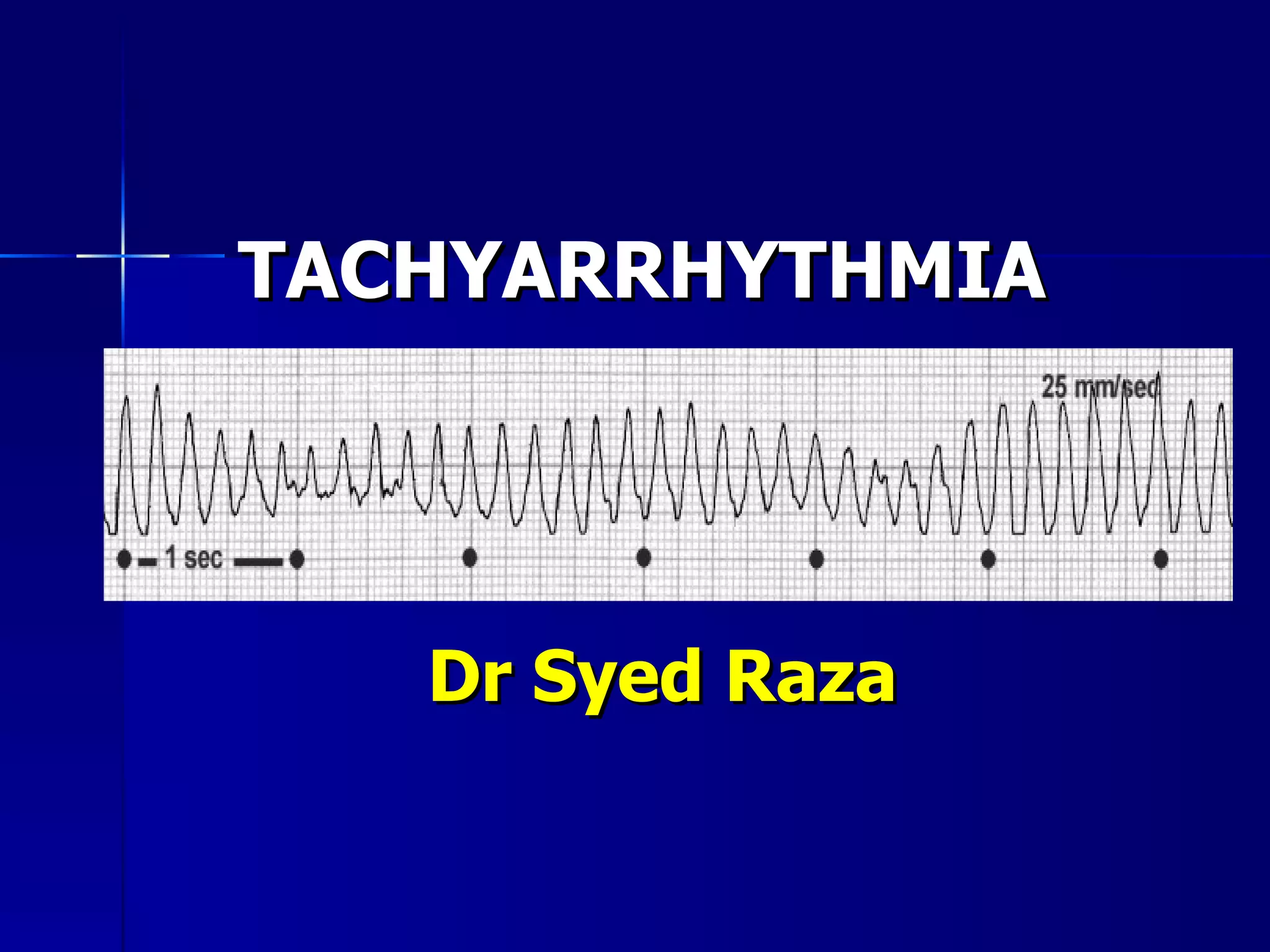
Torsade de Pointes Torsade de pointes means “twisting of the points”  It is most commonly seen in the setting of a prolonged QT interval (either congenital or acquired), and is caused by early after depolarizations.  This rhythm is usually short lived, and resolves spontaneously within seconds, but can progress to ventricular fibrillation if prolonged.
Torsade de Pointes EKG Characteristics: Irregular wide-complex  tachycardia The morphology, amplitude, and  axis of the QRS complexes cycle  through a sinusoidal pattern No discernable P waves
 
 
Tachycardia algorithm AHA Guidelines for Cardiopulmonary Resuscitation and Emergency Cardiovascular Care. Ciurculation 2005
Tachycardia algorithm

Tachyarrhythmia

  • 1.
  • 2.
    Initial Evaluation Hemodynamicstability History of CAD or previous MI History of syncope Depressed LV function Baseline ECG Characteristics of the tachycardia Narrow complex Wide complex Other morphologic clues
  • 3.
    Should you useelectrical therapy? Acute hemodynamic collapse Acute cardiac ischemia or infarction Tachycardia induced congestive heart failure Follow ACLS protocols in most cases
  • 4.
    What’s the rhythm?To treat effectively means knowing the differential diagnoses Use patient clues ALWAYS obtain a proper 12-lead ECG ECG “quick look” Narrow or wide complex? Regularity? Possible preexcitation? Ischemic changes?
  • 5.
    Narrow Complex TachycardiaDifferential diagnoses Sinus tachycardia Atrial tachycardia Atrial fibrillation/flutter AV nodal reentrant tachycardia AV reentrant tachycardia Unusual VTs
  • 6.
    Looking at thePR-RP intervals Long RP tachycardia Sinus tachycardia Atrial tachycardia Aytypical AVNRT Some AVRTs Short RP tachycardia Typical AVNRT Most AVRTs RP PR RP PR RP<PR (Short RP) RP>PR (Long RP)
  • 7.
  • 8.
  • 9.
    Atrial tachycardia Canbe an incessant rhythm Rate: usually <220 bpm Does not need the AV node for perpetuation Adenosine response: Transient AV block WITHOUT termination Transient AV block WITH termination (40%) Use your knowledge of the AV node to make the diagnosis
  • 10.
  • 11.
  • 12.
  • 13.
  • 14.
  • 15.
  • 16.
  • 17.
    ATRIAL FIBRILLATION WITHRAPID VENTRICULAR RESPONSE
  • 18.
  • 19.
  • 20.
  • 21.
    ATRIO-VENTRICULAR NODAL REENTERANT TACHYCARDIA ( AVNRT)
  • 22.
    AV Nodal ReentrantTachycardia (AVNRT) Most common reentrant SVT May achieve rates >200 bpm Look for the psuedo-R’ in V1 or NO P wave AT ALL! AV node dependent! Most common type (>90%) is the slow-fast variety (typical)
  • 23.
  • 24.
  • 25.
  • 26.
    ATRIOVENTRICULAR RE ENTERANTTACHYCARDIA (AVRT)
  • 27.
  • 28.
  • 29.
    Atrioventricular Reciprocating Tachycardia(AVRT) Can be orthodromic (most common) or antidromic (very uncommon) Needs AV node to perpetuate rhythm Always associated with an AV bypass tract May mimic AVNRT and atrial tachycardia Can be short or long RP
  • 30.
  • 31.
    Therapies Someatrial tachycardias (about 40%) can be terminated with adenosine Atrial flutter and fibrillation are not terminated by changing AV nodal conduction Consider rate control Electrical or chemical cardioverision RF ablation
  • 32.
    Acute therapies forSVT Many SVTs depend on the AV node for conduction (e.g. AVNRT, AVRT, etc) Try affecting AV nodal conduction to terminate the tachycardia Valsalva CSM Adenosine Beta-blockers, Ca channel antagonists ELECTRO-PHYSIOLOGY AND RADIO FREQUENCY ABLATION
  • 33.
    WIDE COMLEX TACHYCARDIA
  • 34.
    Definition Wide QRScomplex tachycardia is a rhythm with a rate of more than 100 b/m and QRS duration of more than 120 ms VT (80%) SVT (20%) Stewart RB. Ann Intern Med 1986
  • 35.
    Definitions - WCT :Rate equal or more than 100 and QRS duration of at least 120 msec. - VT :a WCT originating below the level of His bundle. - LBBB morphology : QRS duration more than 120 with predominantly negative terminal deflection in V1. - RBBB morphology : QRS duration more than 120 and a terminal positive deflection in V1.
  • 36.
    Importance of diagnosisof WCT Correct diagnosis is important both for acute management and also subsequent management. -If we inject verapamil to a patient with VT and low EF , prolonged hypotension and hemodynamic deterioration happens. -Non of the criteria is perfect but they can be helpful.
  • 37.
    Differential Diagnosis ofWCT - Ventricular tachycardia (about 80% of cases ). -SVT with abnormal interventricular conduction (15-30 %): * SVT with BBB aberration (fixed or functional). * Pre-excited SVT (SVT with ventricular activation occurring over an anomalous AV connection ).Their ECG can be indistinguishable from VT originating at the base of ventricle.(1-5 % of all) * SVT with wide QRS due to abnormal muscle-muscle spread of impulse.( surgery, DCM) * SVT with wide complex due to drug or electrolyte-induced changes. (hyperkalemia. Class Ia ,Ic drugs or Amiodarone) -Ventricular paced rhythms .(small but growing percentage )
  • 38.
    Distinguishing VT fromSVT with aberrancy SVT can occasionally present as an unknown wide-complex tachycardia if if occurs in the presence of: Preexisting bundle branch block Rate related bundle branch block An accessory pathway
  • 39.
    Distinguishing VT fromSVT with aberrancy VT accounts for ~80% of all cases of regular wide-complex tachycardias, and ~95% of all cases of regular wide-complex tachycardias which occur in patients with a history of MI. One of the most common lethal errors made in arrhythmia diagnosis is to mistake VT for SVT and treat with verapamil, diltiazem, and adenosine, all of which can precipitate ventricular fibrillation in patients in VT, even if initially stable.
  • 40.
    Distinguishing VT fromSVT with aberrancy Therefore, all wide-complex tachycardias should be assumed to be VT until proven otherwise.
  • 41.
    EKG features highlysuggestive of VT: Fusion beats Capture beats Dissociated P waves (AV dissociation)
  • 42.
    EKG features moderatelysuggestive of VT: QRS duration > 160ms An extreme QRS axis (-90 to -180 degrees) Precordial QRS concordance Variations in the QRS and ST-T morphologies Slight irregularity at the onset of the arrhythmia
  • 43.
    Physical findings highlysuggestive of VT: Signs of AV dissociation, including: Canon A waves in the jugular venous pulsations Varying BP measurement from beat to beat Varying intensity of S 1
  • 44.
    SVT vs VT Clinical history Medication Drug-induced tachycardia -> Torsade de pointes Diuretics Digoxin-induced arrhythmia -> [digoxin] ≥2ng/l or normal if hypokalemia Age - ≥ 35 ys -> VT (positive predictive value of 85%) Underlying heart disease Previous MI -> 98% VT Pacemakers or ICD Increased risk of ventricular tachyarrhythmia
  • 45.
  • 46.
  • 47.
    Step 4: LBBB- type wide QRS complex SVT VT small R wave notching of S wave R wave >40ms fast downslope of S wave no Q wave Q wave > 70ms V1 V6
  • 48.
  • 49.
    Fusion beat andcapture beat
  • 50.
  • 51.
    MIMICS OF VT Tachycardia with previous Q wave MI Tachycardia with previous BBB SVT with aberrant conduction
  • 52.
  • 53.
  • 54.
    Wide complex SVTfrom bypass tract
  • 55.
    Torsade de PointesTorsade de pointes means “twisting of the points” It is most commonly seen in the setting of a prolonged QT interval (either congenital or acquired), and is caused by early after depolarizations. This rhythm is usually short lived, and resolves spontaneously within seconds, but can progress to ventricular fibrillation if prolonged.
  • 56.
    Torsade de PointesEKG Characteristics: Irregular wide-complex tachycardia The morphology, amplitude, and axis of the QRS complexes cycle through a sinusoidal pattern No discernable P waves
  • 57.
  • 58.
  • 59.
    Tachycardia algorithm AHAGuidelines for Cardiopulmonary Resuscitation and Emergency Cardiovascular Care. Ciurculation 2005
  • 60.