HEAT AND YOUR HEART
Dr Syed Raza
BAPCO WELL BEING PROJECT 2020
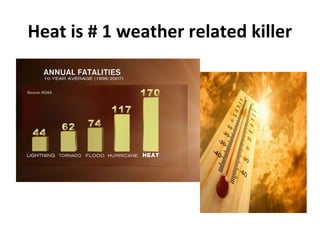
Heat is # 1 weather related killer
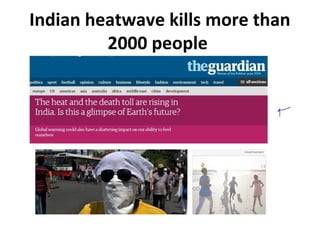
Indian heatwave kills more than
2000 people
Objectives
Effect of heat on cardiovascular system
Dehydration and how it affects heart and
circulation.
Precautions and prevention
Effect of heat
• Dehydration
• Direct damage of cells of heart muscles and
blood vessels.
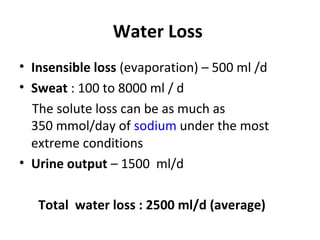
Water Loss
• Insensible loss (evaporation) – 500 ml /d
• Sweat : 100 to 8000 ml / d
The solute loss can be as much as
350 mmol/day of sodium under the most
extreme conditions
• Urine output – 1500 ml/d
Total water loss : 2500 ml/d (average)
Effects of dehydration
Fatigue
Lack of energy
Dizziness
Poor concentration /confusion
Irritability
Headache
Dry and wrinkled skin
Effect of dehydration on
cardiovascular System
• Hypotension /Postural Hypotension
• Tachycardia
• Arrhythmia – Electrolyte Imbalance
• Hyper coagulated (Thicker blood ) with
decreased flow in coronary vessels, increasing
chances of heart attacks.
Vulnerable groups for dehydration
What is the normal requirement
of water intake ?
• A – 1 Liter per day
• B – 1.5 Liters per day
• C- 2 Liters per day
• D – 3 Liters per day
Water requirement
• Water in your body makes up about 60
percent of your body weight. Every system in
your body depends on water.
• Men : 3 liters (12 glasses)
• Women : 2.2 liters (9 glasses).
How Heat Affects Blood Pressure
• Heat causes loss of fluid and dehydration.
• Loss of fluid leads to me low intravascular
volume and cardiac output.
• The above eventually lead to low blood
pressure.
• Blood pressure will increase after exposure to
cold temperatures and decrease after a time
of exposure to hot temperatures.
• Van Voorhees, Benjamin W. “Blood Pressure.” Medline Plus.
21 Jul 2006. U.S. National Institute of Medicine and the
National Institutes of Health. 10 Nov 2007
Summer Heat Can Affect Blood
Pressure
• The American Heart Association recently
published the results of a European study
regarding hot weather and blood pressure.
• Hot weather may affect a drop in blood
pressure during the day - and an increase at
night.
• CHECKING BLOOD PRESSURE DAILY CAN HELP
AVERT PROBLEMS.
Cardiac Drugs and Heat
• Diuretics cause fluid loss through excessive
urination and precipitate dehydration.
• Certain blood pressure tablets like calcium
channel blockers and ACE Inhibitors cause
further dilatation of blood vessels causing
more significant fall in blood pressure.
Effect of heat on heart and blood
vessels
• High temperatures increase heat stress in the
heart and the blood vessels.
• The stress lead to inflammation and cell injury
of heart and vessel muscles.
• These responses increase the chances of heart
attack and heart failure .
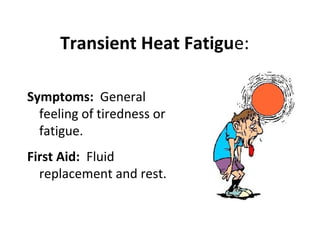
Symptoms: General
feeling of tiredness or
fatigue.
First Aid: Fluid
replacement and rest.
Transient Heat Fatigue:
Symptoms of heat exhaustion
• headaches
• heavy sweating
• dizziness or fainting (syncope)
• a weak and rapid pulse
• muscle cramps
• nausea, vomiting or both
Symptoms of heat stroke:
• warm, dry skin with no sweating
• strong and rapid pulse
• confusion and/or unconsciousness
• high fever
• throbbing headaches
• nausea, vomiting or both
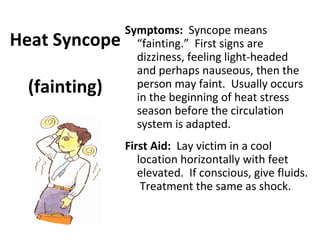
Symptoms: Syncope means
“fainting.” First signs are
dizziness, feeling light-headed
and perhaps nauseous, then the
person may faint. Usually occurs
in the beginning of heat stress
season before the circulation
system is adapted.
First Aid: Lay victim in a cool
location horizontally with feet
elevated. If conscious, give fluids.
Treatment the same as shock.
Heat Syncope
(fainting)
Predisposing
Factors:
 very small body size
 overweight
 over 40 years old (the older
the more sensitive)
 previous heat illness
 heart disease
 high blood pressure
 diabetes
 inactivity
 physical activity
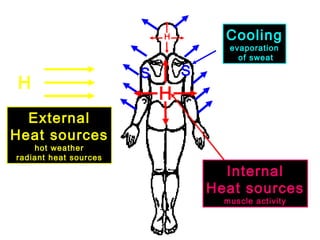
S S
Cooling
evaporation
of sweat
Heat
Balance
H
H
Internal
Heat sources
muscle activity
H
External
Heat sources
hot weather
radiant heat sources
Prevention and precautions
• Wear light and comfortable clothing and foot
wear.
• Stay in cool environment.
• Use cooling fans or air conditioners.
• Avoid excessive activity that increases heat
production, sweating and dehydration.
• Drink plenty of fluids (water) regularly.
• Add pinch of salt if you sweat excessively.
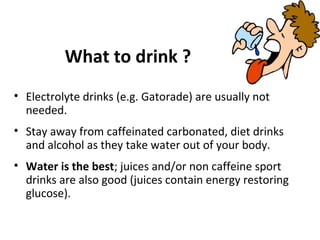
What to drink ?
• Electrolyte drinks (e.g. Gatorade) are usually not
needed.
• Stay away from caffeinated carbonated, diet drinks
and alcohol as they take water out of your body.
• Water is the best; juices and/or non caffeine sport
drinks are also good (juices contain energy restoring
glucose).
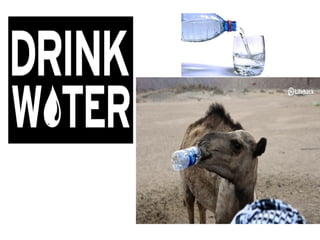
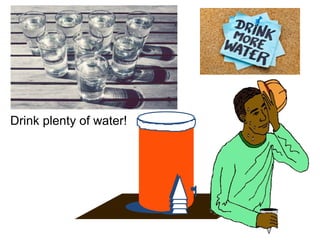
Drink plenty of water!
Remember, when it’s hot:
Heed your body! watch for symptoms!
Ensure you’re drinking enough!
Adjust your activity level – slow down!
Take clothing/PPE into account!
Stay Cool and Hydrated

Heat and heart

  • 1.
    HEAT AND YOURHEART Dr Syed Raza BAPCO WELL BEING PROJECT 2020
  • 2.
    Heat is #1 weather related killer
  • 3.
    Indian heatwave killsmore than 2000 people
  • 4.
    Objectives Effect of heaton cardiovascular system Dehydration and how it affects heart and circulation. Precautions and prevention
  • 6.
    Effect of heat •Dehydration • Direct damage of cells of heart muscles and blood vessels.
  • 7.
    Water Loss • Insensibleloss (evaporation) – 500 ml /d • Sweat : 100 to 8000 ml / d The solute loss can be as much as 350 mmol/day of sodium under the most extreme conditions • Urine output – 1500 ml/d Total water loss : 2500 ml/d (average)
  • 8.
    Effects of dehydration Fatigue Lackof energy Dizziness Poor concentration /confusion Irritability Headache Dry and wrinkled skin
  • 9.
    Effect of dehydrationon cardiovascular System • Hypotension /Postural Hypotension • Tachycardia • Arrhythmia – Electrolyte Imbalance • Hyper coagulated (Thicker blood ) with decreased flow in coronary vessels, increasing chances of heart attacks.
  • 10.
  • 12.
    What is thenormal requirement of water intake ? • A – 1 Liter per day • B – 1.5 Liters per day • C- 2 Liters per day • D – 3 Liters per day
  • 13.
    Water requirement • Waterin your body makes up about 60 percent of your body weight. Every system in your body depends on water. • Men : 3 liters (12 glasses) • Women : 2.2 liters (9 glasses).
  • 14.
    How Heat AffectsBlood Pressure • Heat causes loss of fluid and dehydration. • Loss of fluid leads to me low intravascular volume and cardiac output. • The above eventually lead to low blood pressure.
  • 15.
    • Blood pressurewill increase after exposure to cold temperatures and decrease after a time of exposure to hot temperatures. • Van Voorhees, Benjamin W. “Blood Pressure.” Medline Plus. 21 Jul 2006. U.S. National Institute of Medicine and the National Institutes of Health. 10 Nov 2007
  • 16.
    Summer Heat CanAffect Blood Pressure • The American Heart Association recently published the results of a European study regarding hot weather and blood pressure. • Hot weather may affect a drop in blood pressure during the day - and an increase at night. • CHECKING BLOOD PRESSURE DAILY CAN HELP AVERT PROBLEMS.
  • 17.
    Cardiac Drugs andHeat • Diuretics cause fluid loss through excessive urination and precipitate dehydration. • Certain blood pressure tablets like calcium channel blockers and ACE Inhibitors cause further dilatation of blood vessels causing more significant fall in blood pressure.
  • 18.
    Effect of heaton heart and blood vessels • High temperatures increase heat stress in the heart and the blood vessels. • The stress lead to inflammation and cell injury of heart and vessel muscles. • These responses increase the chances of heart attack and heart failure .
  • 19.
    Symptoms: General feeling oftiredness or fatigue. First Aid: Fluid replacement and rest. Transient Heat Fatigue:
  • 20.
    Symptoms of heatexhaustion • headaches • heavy sweating • dizziness or fainting (syncope) • a weak and rapid pulse • muscle cramps • nausea, vomiting or both
  • 21.
    Symptoms of heatstroke: • warm, dry skin with no sweating • strong and rapid pulse • confusion and/or unconsciousness • high fever • throbbing headaches • nausea, vomiting or both
  • 22.
    Symptoms: Syncope means “fainting.”First signs are dizziness, feeling light-headed and perhaps nauseous, then the person may faint. Usually occurs in the beginning of heat stress season before the circulation system is adapted. First Aid: Lay victim in a cool location horizontally with feet elevated. If conscious, give fluids. Treatment the same as shock. Heat Syncope (fainting)
  • 23.
    Predisposing Factors:  very smallbody size  overweight  over 40 years old (the older the more sensitive)  previous heat illness  heart disease  high blood pressure  diabetes  inactivity  physical activity
  • 24.
    S S Cooling evaporation of sweat Heat Balance H H Internal Heatsources muscle activity H External Heat sources hot weather radiant heat sources
  • 25.
    Prevention and precautions •Wear light and comfortable clothing and foot wear. • Stay in cool environment. • Use cooling fans or air conditioners. • Avoid excessive activity that increases heat production, sweating and dehydration. • Drink plenty of fluids (water) regularly. • Add pinch of salt if you sweat excessively.
  • 26.
    What to drink? • Electrolyte drinks (e.g. Gatorade) are usually not needed. • Stay away from caffeinated carbonated, diet drinks and alcohol as they take water out of your body. • Water is the best; juices and/or non caffeine sport drinks are also good (juices contain energy restoring glucose).
  • 27.
  • 28.
    Remember, when it’shot: Heed your body! watch for symptoms! Ensure you’re drinking enough! Adjust your activity level – slow down! Take clothing/PPE into account!
  • 29.
    Stay Cool andHydrated

Editor's Notes

  • #28 Acclimatization does not decrease your body’s need for water! You must continue to take scheduled water breaks to replace the fluids your body has lost through sweating. Also, remember that acclimatization is lost after 7 to 10 days away from the job, in periods of cool weather or by working in air–conditioning.