Resident of surgery
Dr SNMC,JODHPUR
---Dr sumer 2013
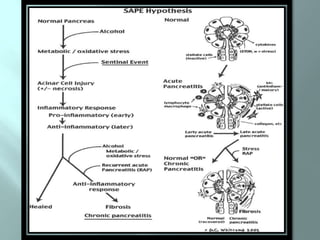
 Continuous inflammatory disease of pancreas
characterised by irreversible morphologic
changes [[irregular fibrosis, acinar and islet
cells loss,inflammatory infiltrates,stone
formation]]of both the parenchyma and
ducts;typically coupled with permanent loss of
function +/-pain
1. 10-15/100000 population in western countries
2. 114-200/100000 in southern india
3. Typical age 35-55
 Alcohol;60-70% of all cases in developed
countries {6-12 yr history of 150-175 g/day}
 Obstruction of pancratic duct;pancreas
divisum,post traumatic stricture,tumours
 Cystic fibrosis[CFTR mutation]
 Tropical pancreatitis
 Autoimmune
 Hypercalcemia
 Hyperlipidemia
 idiopathic
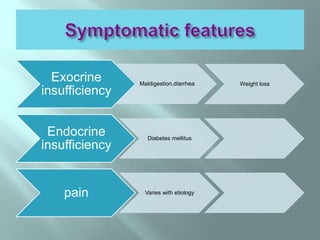
Exocrine
insufficiency
Maldigestion,diarrhea Weight loss
Endocrine
insufficiency
Diabetes mellitus
pain Varies with etiology
 TESTS OF
STRUCTURE
 1.ERCP
 2.EUS
 3.MRI AND MRCP
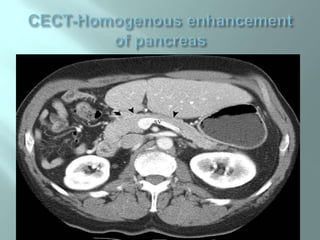
 4.CT scan
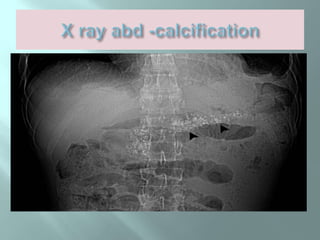
 5.X ray abdomen
 6.USG abdomen
 TESTS OF
FUNCTION
 1.S. Glucose
 2.S.Trypsinogen
 3.Fecal elastase
 4.Fecal chymotrypsin
 5.Fecal fat[72 hr
collection]
 6.Secretin pancreatic
stimulation test with
duodenal intubation
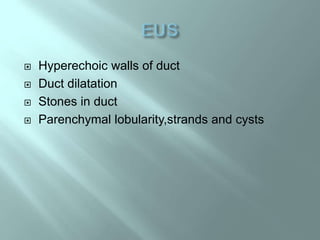
 Hyperechoic walls of duct
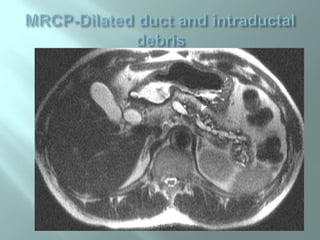
 Duct dilatation
 Stones in duct
 Parenchymal lobularity,strands and cysts
 Medical therapy
 Endoscopic therapy
 Surgical options
 Nerve blocks
 Pain –commonest indication[[[70-90%]]]
 Mass/suspicion of malignancy
 Biliary obstuction
 Duodenal stenosis
 Pseudocysts
 Internal pancreatic fistulae
 Vascular problems
 Pain relief
 Control of complications
 Preservation of exocrine and endocrine
functions
 Social and occupational rehabilitation
 Improvement of quality of life
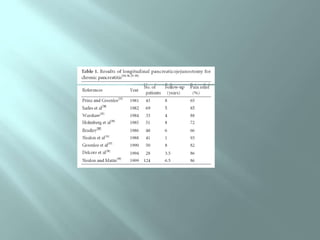
 Large prospective surgical series;75-90%
success in pain relief and improvement in QOL
 Pain relief with surgery vs medical Rx
:63vs43% at 10 yr
 ‘……..seems unreasonable to adopt a
conservative approach in the hope that pain
relief will be obtained sometime in the future,at
which stage risk of narcotic addiction increses
and results of surgery are invarably poor.’
 Patients presented with complications;early
surgery
 For pain relief
.early surgery [<4 yrs ]may delay progress
of exocrine/endocrine insufficiency[alc CP]
Ann surg 1999
.early surgery in NACP/trop CP improves
nutitrional status,weight gain,decrased insulin
requirement.
 Controversies:how early what surgery:drainage or
resection?
 Indicated for failure of medical management
 Suspicion of malignancy
 Drainage procedure
indicated in large duct disease
 Resection-drainage procedure
indicated when there is inflammatory
mass
procedure of choice dictated by surgeon
experience and individualized to pt
 1954 Duval
distal pancreatectomy,spleenectomy,end to
end roux en Y pancreaticojejnostomy
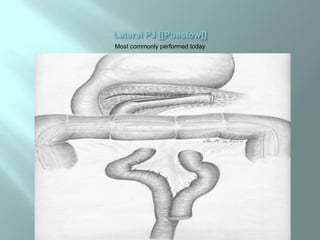
 1958 Puestow and Gillesby
longitudinal incision and invagination into
jejunal roux
 1960 Partington and Rochelle
side to side longitudinal
anastomosis;preserve distal pancreas and
spleen;need dilated duct >6mm
 Inflamed and enlarged pancreatic head
 Requires resection
1.Whipple
2.Beger[duodenum preserving pancreatic
head resection]
3.Frey
Most commonly performed today
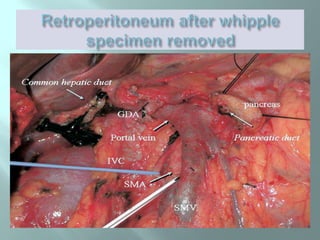
 Was developed for periampullary malignancy
 More popular in the past 2 decades for CP also
due to advances in op technique,anesthesia and
perioprative mx
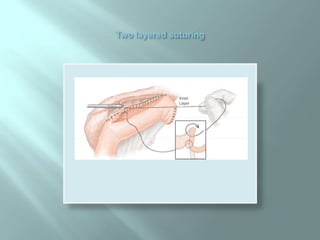
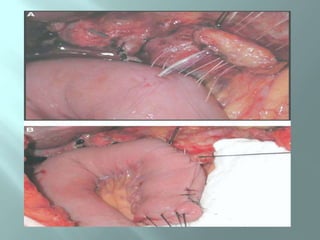
 End to side PJ using 2 layer tech {vicryl/silk} duct-
to-full-thickness bowel
 5 Fr pediatric feeding tube is used as a pancretic
stent
 End to side choledochojejunostomy
 2 layer GJ/DJ
 Feeding jejunostomy
 Duodenum-sparing pancreatic head resection
 C/I in suspected pancretic cancer
 Portal vein freed,neck divided
 Longitudinal pancreaticojejunostomy
 Frozen section to rule out malignancy[5%]
 Coring of head of pancreas
 Duodenum-sparing pancreatic head resection
and lateral pancreaticojejunostomy
 Indicated for small duct disease
 Technically easier then beger.
 Local resection of pancreatic head relieves
CBD obustruction in 70% of cases
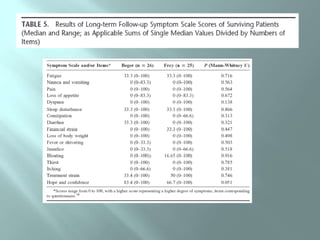
Beger vs Freys
Other
procedures
 1998,longitudinal V shaped excision of ventral
pancreas
 Indicated for small duct pancreatitis
 Author described 95% pain relief
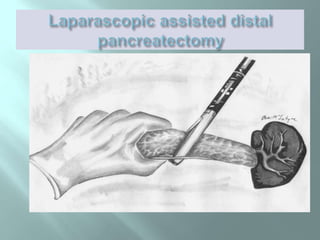
 Pathology predominantly limited to distal
portion of gland
 Distal psedocyst,mass, SVT
 Cut edge of gland oversewn
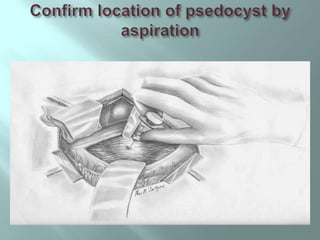
 Psedocyst complicates CP in 30% to 40% of
pts
 Surgery indicated for pts with symtomatic
pseudocysts who are either not candidate or
have failed an initial attempt at
transampullary,transgastric,or transcutaneous
drainage
 septated cyst with elevated fluid CEA and CA
15-3 levels treated by resection.[? Neoplasm]

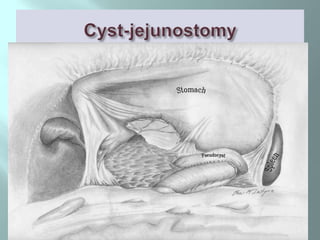
 Cyst-gastrostomy/duodenostomy
 Roux-en-Y cyst-jejunostomy [simpler]
 For small multiple cysts of pancreatic head-
Whipple proc
 For cyst of pancreatic tail – distal
pancreatectomy
 Surgical cyst-enterostomy is associated with
90-100% success
 Success rates from cyst-duodenostomy-
100%,cyst-gastrostomy-90% and cyst-
jejunostomy-92%
 Morbidity 9%-36%
 Mortality 0%-1%
 Last resort for pts with persistent or recurrent
pain following lesser proc
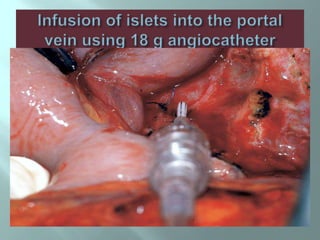
 Requires autologous islet cell
autotransplantation
 extended hospitalisation due to Poor diabetes
control
 Indicated in intractable pain abdomen due to
pancreatic and gastric carcinoma
 Celiac ganglion block have transient effects,but
this neural ablation offers higher success rates
 Thoracotomy is more invasive,VATS is less
invasive and offers more rapid recovery
 All pts with recurrent pain abdomen
reevaluated with CTscan MRCP/ERCP,UGI
endoscopy.
 For diffuse parenchymal disease-completion
pancreatectomy with or without islet cell
autotransplantation
 For dilated duct-decmpressive surgery
 For stricture-subtotal resection
 1995-2009 [[n=170]]
 Pain is the main indication 90%
pain duration 1-30 yrs
 Biliary obstruction alone 10%
 NACP: 95 ; Alc CP ;75
 DRAINAGE PROCEDURE …………….115
LPJ ………………………………….62
LPJ+BILIARY BYPASS …………….30
CYST-ENTEROSTOMIES …………23
 RESECTIONS…………………………….19
WHIPPLES ………………………….11
WHIPPLES+LPJ …………………….3
DISTAL PANCREATECTOMY …….5
 Pain relief and quality of life issues are the
main concern in pts of chronic pancreatitis
undergoing treatment
 Surgery is indicated for relief of intractable pain
and complications associated with CP
 Failure of nonsurgical treatment and presence
of complications influence timing and need for
surgical intervention[[jury is still out:early surgery for
mild to moderate pain]]
 Pain relief is sustained in NACP->85%
 Duration of pain does not necessarily correlate
with surgical outcome
 No consistent documentation of recovery of
pancreatic function following ductal drainage
 Need for biliary bypass: frequent
 Associted SVT/PHT makes surgery difficult
 Late deaths occurs due to malignancy or
continued alcoholism
THANKS

Surgery in chronic pancreatitis

  • 1.
    Resident of surgery DrSNMC,JODHPUR ---Dr sumer 2013
  • 2.
     Continuous inflammatorydisease of pancreas characterised by irreversible morphologic changes [[irregular fibrosis, acinar and islet cells loss,inflammatory infiltrates,stone formation]]of both the parenchyma and ducts;typically coupled with permanent loss of function +/-pain
  • 3.
    1. 10-15/100000 populationin western countries 2. 114-200/100000 in southern india 3. Typical age 35-55
  • 4.
     Alcohol;60-70% ofall cases in developed countries {6-12 yr history of 150-175 g/day}  Obstruction of pancratic duct;pancreas divisum,post traumatic stricture,tumours  Cystic fibrosis[CFTR mutation]  Tropical pancreatitis  Autoimmune  Hypercalcemia  Hyperlipidemia  idiopathic
  • 6.
  • 7.
     TESTS OF STRUCTURE 1.ERCP  2.EUS  3.MRI AND MRCP  4.CT scan  5.X ray abdomen  6.USG abdomen  TESTS OF FUNCTION  1.S. Glucose  2.S.Trypsinogen  3.Fecal elastase  4.Fecal chymotrypsin  5.Fecal fat[72 hr collection]  6.Secretin pancreatic stimulation test with duodenal intubation
  • 9.
     Hyperechoic wallsof duct  Duct dilatation  Stones in duct  Parenchymal lobularity,strands and cysts
  • 12.
     Medical therapy Endoscopic therapy  Surgical options  Nerve blocks
  • 13.
     Pain –commonestindication[[[70-90%]]]  Mass/suspicion of malignancy  Biliary obstuction  Duodenal stenosis  Pseudocysts  Internal pancreatic fistulae  Vascular problems
  • 14.
     Pain relief Control of complications  Preservation of exocrine and endocrine functions  Social and occupational rehabilitation  Improvement of quality of life
  • 18.
     Large prospectivesurgical series;75-90% success in pain relief and improvement in QOL  Pain relief with surgery vs medical Rx :63vs43% at 10 yr
  • 19.
     ‘……..seems unreasonableto adopt a conservative approach in the hope that pain relief will be obtained sometime in the future,at which stage risk of narcotic addiction increses and results of surgery are invarably poor.’
  • 21.
     Patients presentedwith complications;early surgery  For pain relief .early surgery [<4 yrs ]may delay progress of exocrine/endocrine insufficiency[alc CP] Ann surg 1999 .early surgery in NACP/trop CP improves nutitrional status,weight gain,decrased insulin requirement.  Controversies:how early what surgery:drainage or resection?
  • 22.
     Indicated forfailure of medical management  Suspicion of malignancy  Drainage procedure indicated in large duct disease  Resection-drainage procedure indicated when there is inflammatory mass procedure of choice dictated by surgeon experience and individualized to pt
  • 23.
     1954 Duval distalpancreatectomy,spleenectomy,end to end roux en Y pancreaticojejnostomy  1958 Puestow and Gillesby longitudinal incision and invagination into jejunal roux  1960 Partington and Rochelle side to side longitudinal anastomosis;preserve distal pancreas and spleen;need dilated duct >6mm
  • 24.
     Inflamed andenlarged pancreatic head  Requires resection 1.Whipple 2.Beger[duodenum preserving pancreatic head resection] 3.Frey
  • 25.
  • 31.
     Was developedfor periampullary malignancy  More popular in the past 2 decades for CP also due to advances in op technique,anesthesia and perioprative mx  End to side PJ using 2 layer tech {vicryl/silk} duct- to-full-thickness bowel  5 Fr pediatric feeding tube is used as a pancretic stent  End to side choledochojejunostomy  2 layer GJ/DJ  Feeding jejunostomy
  • 33.
     Duodenum-sparing pancreatichead resection  C/I in suspected pancretic cancer  Portal vein freed,neck divided  Longitudinal pancreaticojejunostomy  Frozen section to rule out malignancy[5%]
  • 35.
     Coring ofhead of pancreas  Duodenum-sparing pancreatic head resection and lateral pancreaticojejunostomy  Indicated for small duct disease  Technically easier then beger.  Local resection of pancreatic head relieves CBD obustruction in 70% of cases
  • 36.
  • 38.
  • 39.
     1998,longitudinal Vshaped excision of ventral pancreas  Indicated for small duct pancreatitis  Author described 95% pain relief
  • 40.
     Pathology predominantlylimited to distal portion of gland  Distal psedocyst,mass, SVT  Cut edge of gland oversewn
  • 42.
     Psedocyst complicatesCP in 30% to 40% of pts  Surgery indicated for pts with symtomatic pseudocysts who are either not candidate or have failed an initial attempt at transampullary,transgastric,or transcutaneous drainage  septated cyst with elevated fluid CEA and CA 15-3 levels treated by resection.[? Neoplasm] 
  • 43.
     Cyst-gastrostomy/duodenostomy  Roux-en-Ycyst-jejunostomy [simpler]  For small multiple cysts of pancreatic head- Whipple proc  For cyst of pancreatic tail – distal pancreatectomy
  • 44.
     Surgical cyst-enterostomyis associated with 90-100% success  Success rates from cyst-duodenostomy- 100%,cyst-gastrostomy-90% and cyst- jejunostomy-92%  Morbidity 9%-36%  Mortality 0%-1%
  • 47.
     Last resortfor pts with persistent or recurrent pain following lesser proc  Requires autologous islet cell autotransplantation  extended hospitalisation due to Poor diabetes control
  • 49.
     Indicated inintractable pain abdomen due to pancreatic and gastric carcinoma  Celiac ganglion block have transient effects,but this neural ablation offers higher success rates  Thoracotomy is more invasive,VATS is less invasive and offers more rapid recovery
  • 50.
     All ptswith recurrent pain abdomen reevaluated with CTscan MRCP/ERCP,UGI endoscopy.  For diffuse parenchymal disease-completion pancreatectomy with or without islet cell autotransplantation  For dilated duct-decmpressive surgery  For stricture-subtotal resection
  • 51.
     1995-2009 [[n=170]] Pain is the main indication 90% pain duration 1-30 yrs  Biliary obstruction alone 10%  NACP: 95 ; Alc CP ;75  DRAINAGE PROCEDURE …………….115 LPJ ………………………………….62 LPJ+BILIARY BYPASS …………….30 CYST-ENTEROSTOMIES …………23  RESECTIONS…………………………….19 WHIPPLES ………………………….11 WHIPPLES+LPJ …………………….3 DISTAL PANCREATECTOMY …….5
  • 52.
     Pain reliefand quality of life issues are the main concern in pts of chronic pancreatitis undergoing treatment  Surgery is indicated for relief of intractable pain and complications associated with CP  Failure of nonsurgical treatment and presence of complications influence timing and need for surgical intervention[[jury is still out:early surgery for mild to moderate pain]]
  • 53.
     Pain reliefis sustained in NACP->85%  Duration of pain does not necessarily correlate with surgical outcome  No consistent documentation of recovery of pancreatic function following ductal drainage  Need for biliary bypass: frequent  Associted SVT/PHT makes surgery difficult  Late deaths occurs due to malignancy or continued alcoholism
  • 54.

Editor's Notes

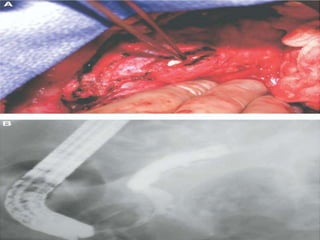
  • #27 Lpj id calculi.ERCP dilated duct cut off due to caluli
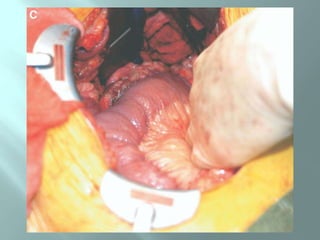
  • #30 Completed lpj
  • #35 Two layered end to side PJ,5 fr stent,complete.