Scar Management
non surgical approach
Dr sumer yadav
Mch plastic surgery
sumeryadav2004@gmail.com
Overview: Hypertrophic Scar
• Excessive scar formation after wound re-
epithelialization
• Occurs in more than 50% of patients with deep
second to third degree burns (dermis involved)
• Higher incidence in children/young adults and
dark skinned population
• More prevalent in chest, neck, lower face burns
and near joints, where tension on skin is greater.
sumeryadav2004@gmail.com
Hypertrophic Scar Relative to Healing
time-frame/Re-epithelialization
• Healing in 2 weeks = minimal to no scar
• Healing in 3 weeks = minimal to no scar
except in higher risk populaiton
• Healing in > 3 weeks = over 50% risk of
hypertrophic scar formation
sumeryadav2004@gmail.com
H.S. Characteristics
• Red/Hypererythema
• Raised above level of normal skin surface,
sometimes significantly
• Rigid, non-pliable
• Painful
• Severe Itching
sumeryadav2004@gmail.com
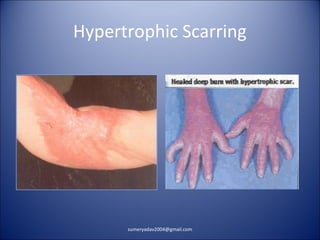
Hypertrophic Scarring
sumeryadav2004@gmail.com
Scar maturation
• 4-8 weeks to full scar maturation with non-
hypertrophic healing ( first degree, superficial
second degree)
• Hypertrophic scars begin to appear 6 weeks –
3 months post-burn
• Peak between 3-6 months post-burn
• Partially resolve between 12-18 months:
softer, flatter, paling
• May take up to 2 years to completely mature
sumeryadav2004@gmail.com
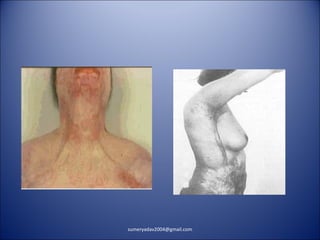
Associated problems with H.S.
• Contracture formation
• Loss of ROM
• Poor cosmesis
• Hinders ability to return to normal activities
sumeryadav2004@gmail.com
What can be done??
Scar Management Goal: Control scar
hypertrophy and hasten scar maturation by
althering the physical and mechanical
properties of scar tissue
sumeryadav2004@gmail.com
How?
• Scar Massage
• Compression garments
• Silicone products
• Postioning and Splinting
• Exercise, stretching
sumeryadav2004@gmail.com
Scar Massage
Benefits:
• Softens scar tissue by
increasing circulation and
freeing restrictive fibrous
bands
• Desensitizes tissue
Technique:
• In combination with
lubrication (moisturizing
cream)
• During prolongued stretch
• Hard enough to cause
blanching
• 3-6 times / day for 5-10
minute sessions
(*Patient/family education
important)
sumeryadav2004@gmail.com
Compression Therapy
• Elastic garments with ~25mmHg capillary
pressure
• Should begin within 2 weeks of skin grafting or
wound closure, ideally
• Should be worn 22-23 hrs/ day (removed only
for personal hygiene, stretching, scar
massage, and moisturizing)
• Should continue until scar matures (pale, flat,
pliable)
sumeryadav2004@gmail.com
Types of Compression
• Ace wraps
• Tubigrip
• Self-adherent elastic wrap (Coban)
• Spandex/ Underarmor
• Custom-fit garments
sumeryadav2004@gmail.com
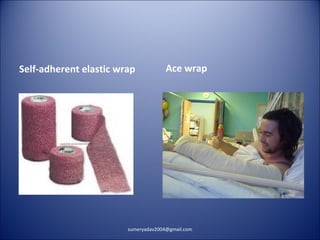
Self-adherent elastic wrap Ace wrap
sumeryadav2004@gmail.com
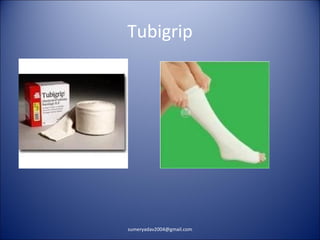
Tubigrip
sumeryadav2004@gmail.com
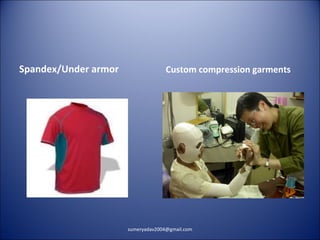
Spandex/Under armor Custom compression garments
sumeryadav2004@gmail.com
Topical Silicone
Known benefits:
• Minimizes pain
• Prevents shrinkage of grafts
• Minimizes hypertrophic
scarring
• Softens and smooths scar
tissue
• Most effective when
combined with compression
therapy
Silicone products:
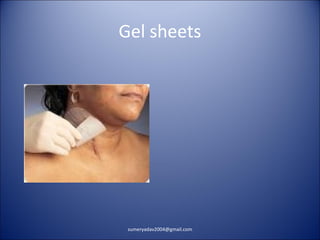
• Gel sheeting (thin to thick,
adhesive and non-adhesive)
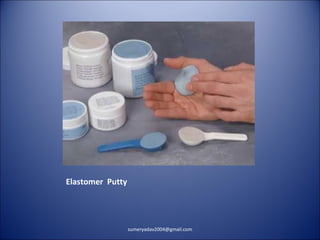
• Custom fabricated
elastomer molds
sumeryadav2004@gmail.com
Gel sheets
sumeryadav2004@gmail.com
Elastomer Putty
sumeryadav2004@gmail.com

scar management - nonsurgical

  • 1.
    Scar Management non surgicalapproach Dr sumer yadav Mch plastic surgery sumeryadav2004@gmail.com
  • 2.
    Overview: Hypertrophic Scar •Excessive scar formation after wound re- epithelialization • Occurs in more than 50% of patients with deep second to third degree burns (dermis involved) • Higher incidence in children/young adults and dark skinned population • More prevalent in chest, neck, lower face burns and near joints, where tension on skin is greater. sumeryadav2004@gmail.com
  • 3.
    Hypertrophic Scar Relativeto Healing time-frame/Re-epithelialization • Healing in 2 weeks = minimal to no scar • Healing in 3 weeks = minimal to no scar except in higher risk populaiton • Healing in > 3 weeks = over 50% risk of hypertrophic scar formation sumeryadav2004@gmail.com
  • 4.
    H.S. Characteristics • Red/Hypererythema •Raised above level of normal skin surface, sometimes significantly • Rigid, non-pliable • Painful • Severe Itching sumeryadav2004@gmail.com
  • 5.
  • 6.
    Scar maturation • 4-8weeks to full scar maturation with non- hypertrophic healing ( first degree, superficial second degree) • Hypertrophic scars begin to appear 6 weeks – 3 months post-burn • Peak between 3-6 months post-burn • Partially resolve between 12-18 months: softer, flatter, paling • May take up to 2 years to completely mature sumeryadav2004@gmail.com
  • 7.
    Associated problems withH.S. • Contracture formation • Loss of ROM • Poor cosmesis • Hinders ability to return to normal activities sumeryadav2004@gmail.com
  • 8.
  • 9.
    What can bedone?? Scar Management Goal: Control scar hypertrophy and hasten scar maturation by althering the physical and mechanical properties of scar tissue sumeryadav2004@gmail.com
  • 10.
    How? • Scar Massage •Compression garments • Silicone products • Postioning and Splinting • Exercise, stretching sumeryadav2004@gmail.com
  • 11.
    Scar Massage Benefits: • Softensscar tissue by increasing circulation and freeing restrictive fibrous bands • Desensitizes tissue Technique: • In combination with lubrication (moisturizing cream) • During prolongued stretch • Hard enough to cause blanching • 3-6 times / day for 5-10 minute sessions (*Patient/family education important) sumeryadav2004@gmail.com
  • 12.
    Compression Therapy • Elasticgarments with ~25mmHg capillary pressure • Should begin within 2 weeks of skin grafting or wound closure, ideally • Should be worn 22-23 hrs/ day (removed only for personal hygiene, stretching, scar massage, and moisturizing) • Should continue until scar matures (pale, flat, pliable) sumeryadav2004@gmail.com
  • 13.
    Types of Compression •Ace wraps • Tubigrip • Self-adherent elastic wrap (Coban) • Spandex/ Underarmor • Custom-fit garments sumeryadav2004@gmail.com
  • 14.
    Self-adherent elastic wrapAce wrap sumeryadav2004@gmail.com
  • 15.
  • 16.
    Spandex/Under armor Customcompression garments sumeryadav2004@gmail.com
  • 17.
    Topical Silicone Known benefits: •Minimizes pain • Prevents shrinkage of grafts • Minimizes hypertrophic scarring • Softens and smooths scar tissue • Most effective when combined with compression therapy Silicone products: • Gel sheeting (thin to thick, adhesive and non-adhesive) • Custom fabricated elastomer molds sumeryadav2004@gmail.com
  • 18.
  • 19.