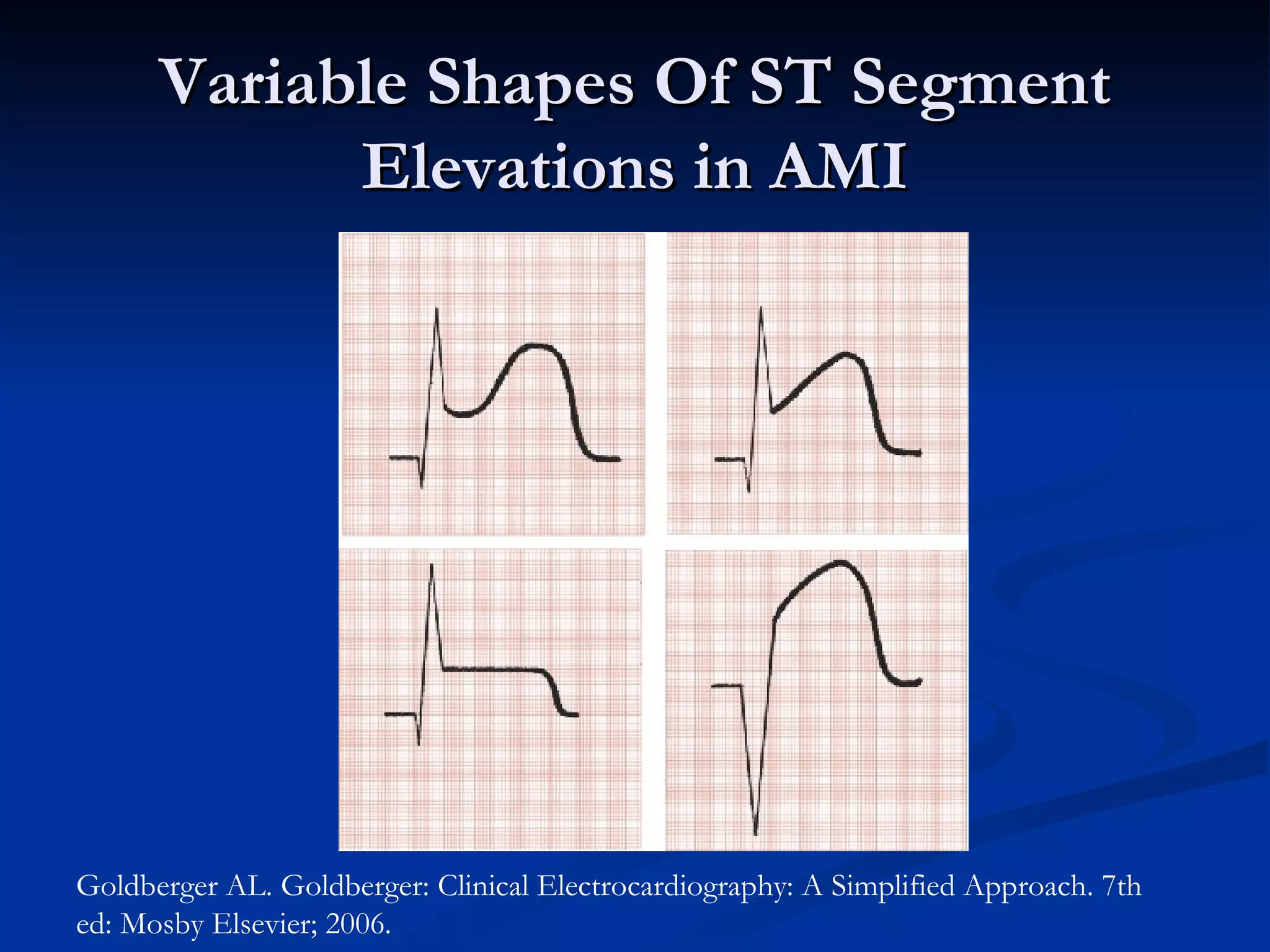
ST segment elevations can be seen in acute myocardial infarction (AMI) but also have other causes. Non-AMI causes of ST elevation include left bundle branch block, left ventricular hypertrophy, pericarditis, Brugada syndrome, and early repolarization. The morphology, distribution, and magnitude of ST elevations, as well as other ECG features, can help differentiate AMI from other causes of ST elevation. It can be challenging to diagnose AMI using ECG criteria alone, as around half of AMI cases present without typical ST elevation patterns.

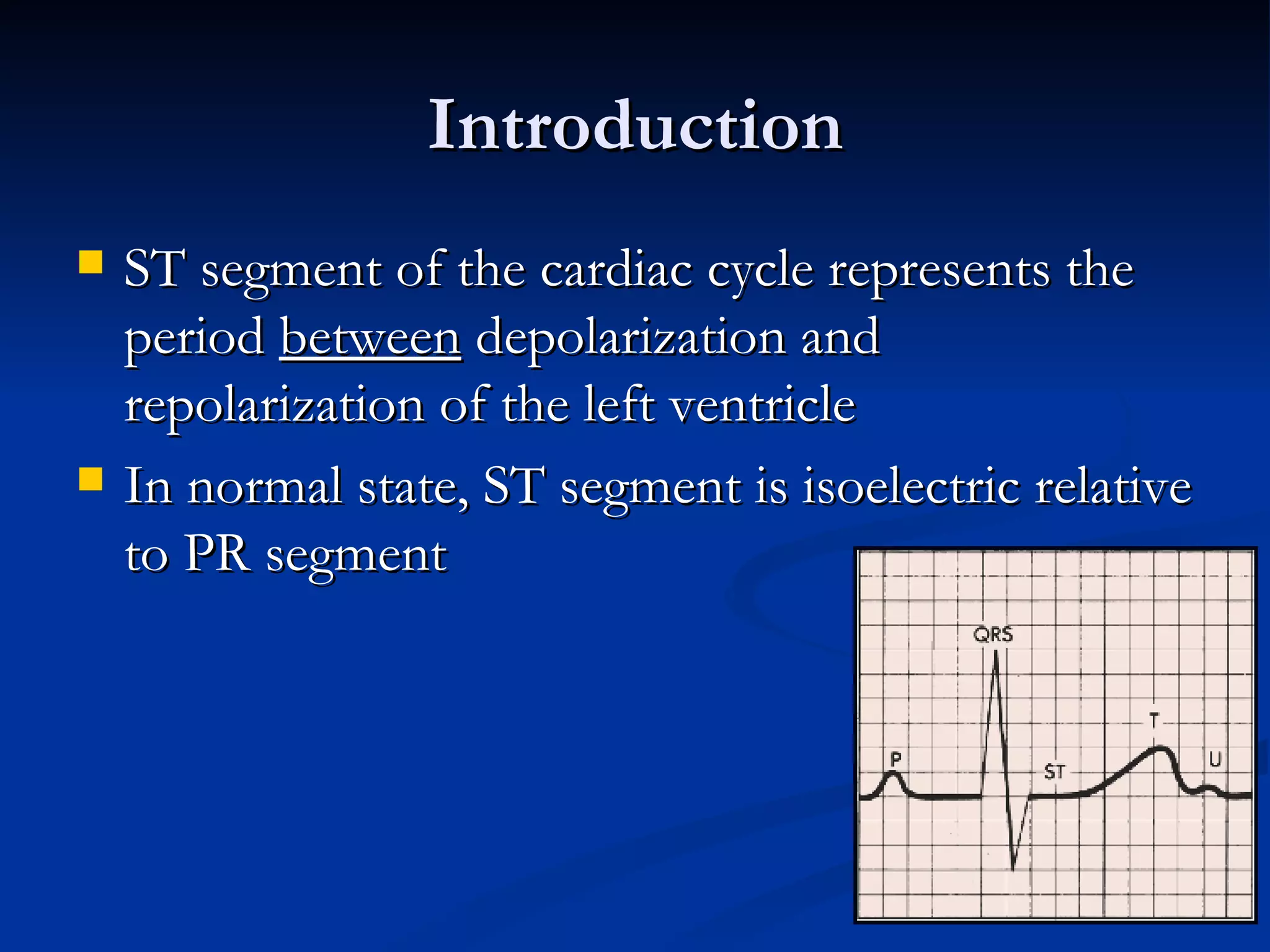
Introduction to ST segment elevation in ECG depicting its relevance in diagnosing heart conditions.
The ST segment interval signifies left ventricle activities. Notably, many elevations aren't due to myocardial infarctions; e.g., in a study, 51% had non-MI causes.
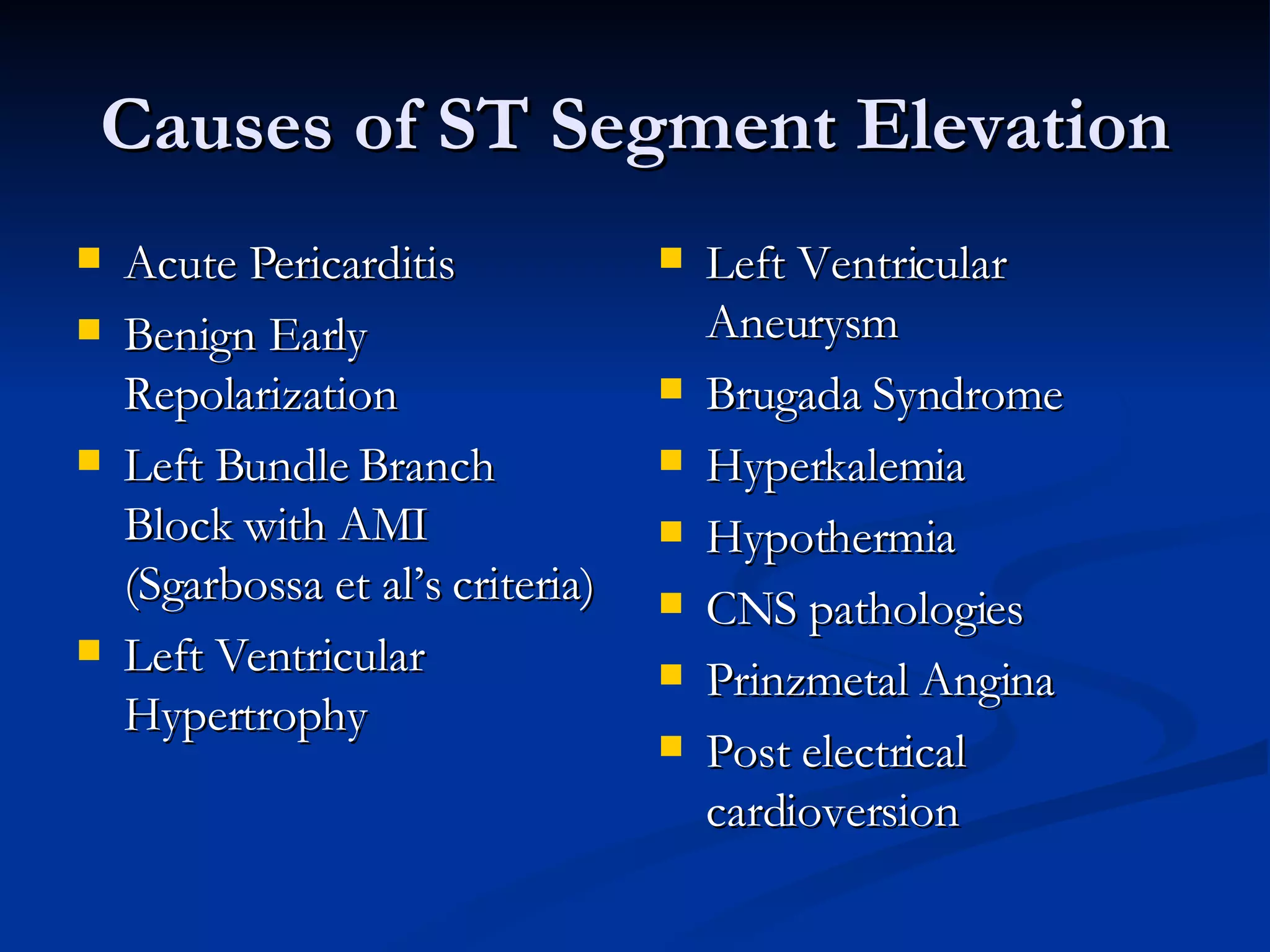
Lists various causes of ST segment elevation including pericarditis, AMI, and others, emphasizing its differential diagnosis.
Historic context and physiological mechanisms behind ST segment elevation during AMI are discussed, detailing measurement techniques.
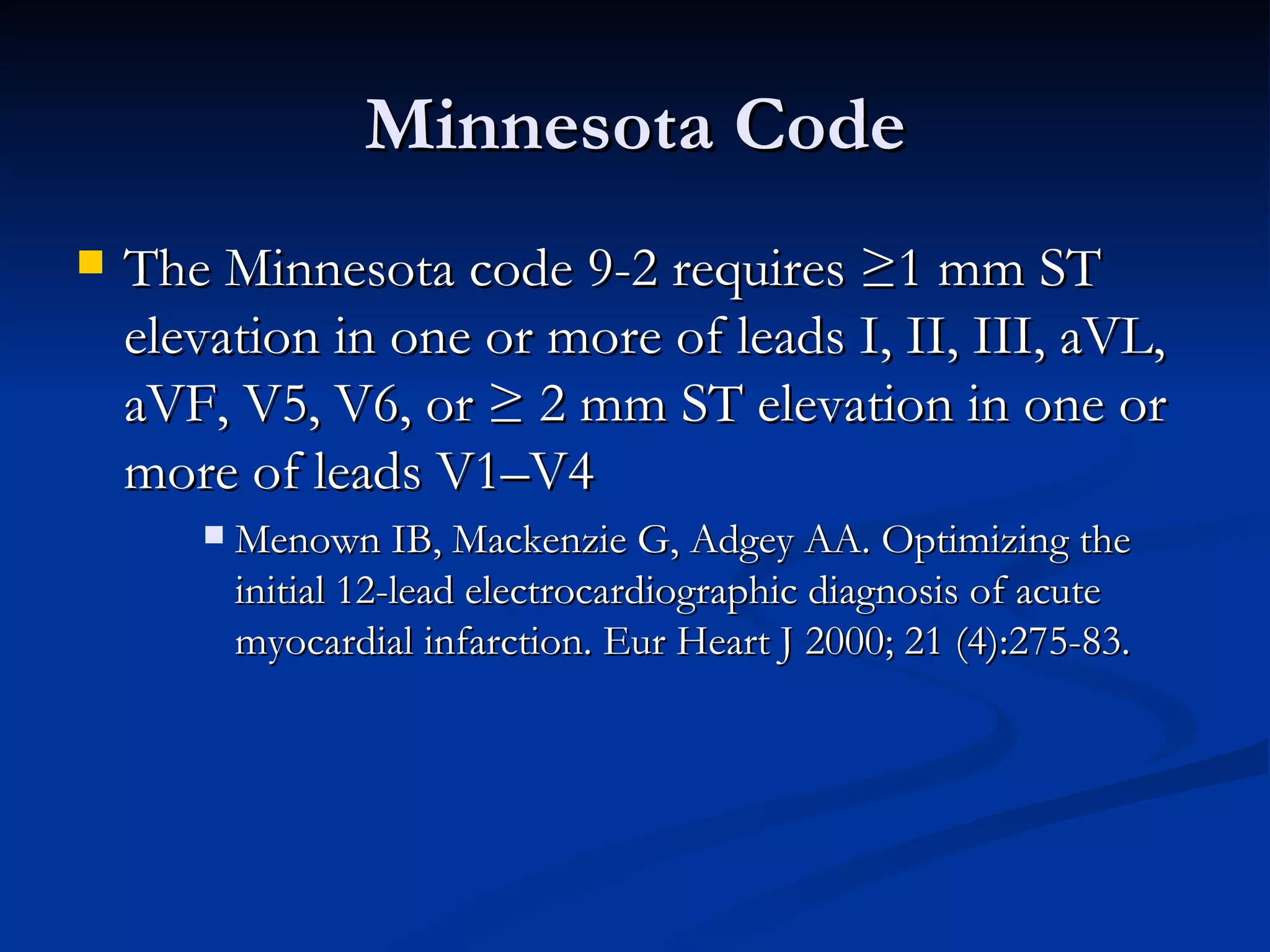
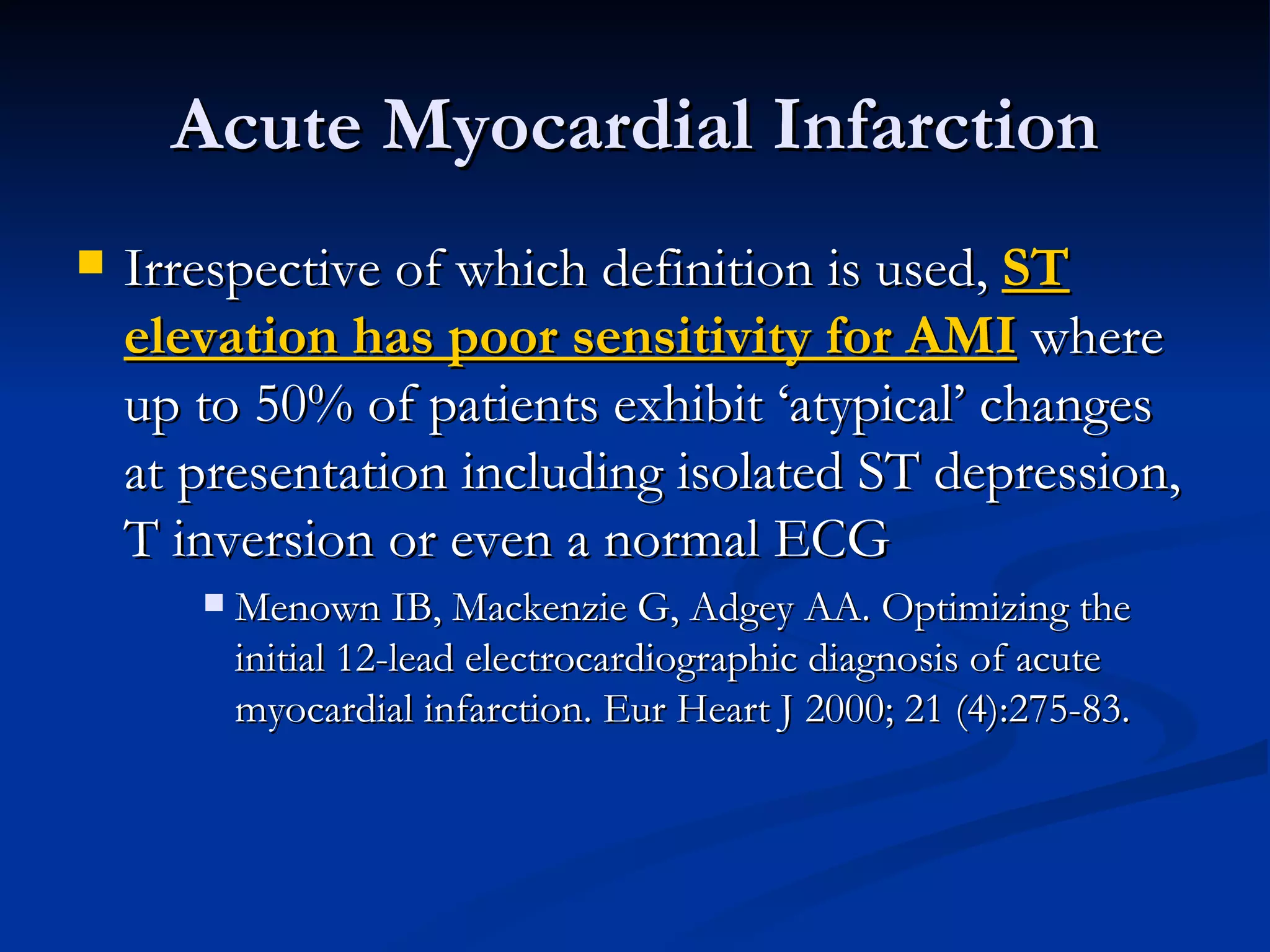
Requirements for ST segment elevation delineated through various criteria (e.g. Minnesota code), noting low sensitivity for acute myocardial infarction.
Methods to distinguish between AMI and other conditions like pericarditis, focusing on changes in morphology and wave patterns.
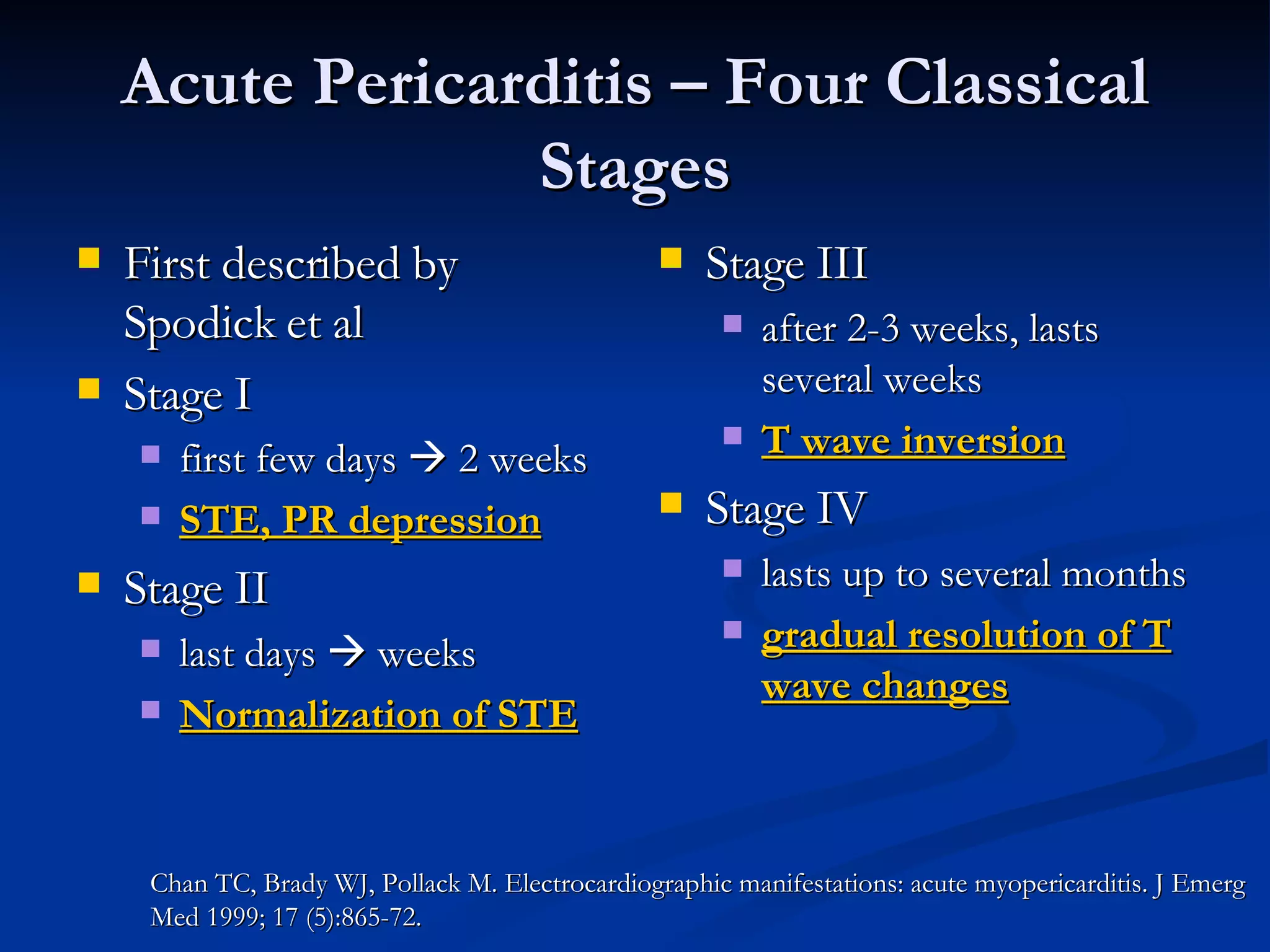
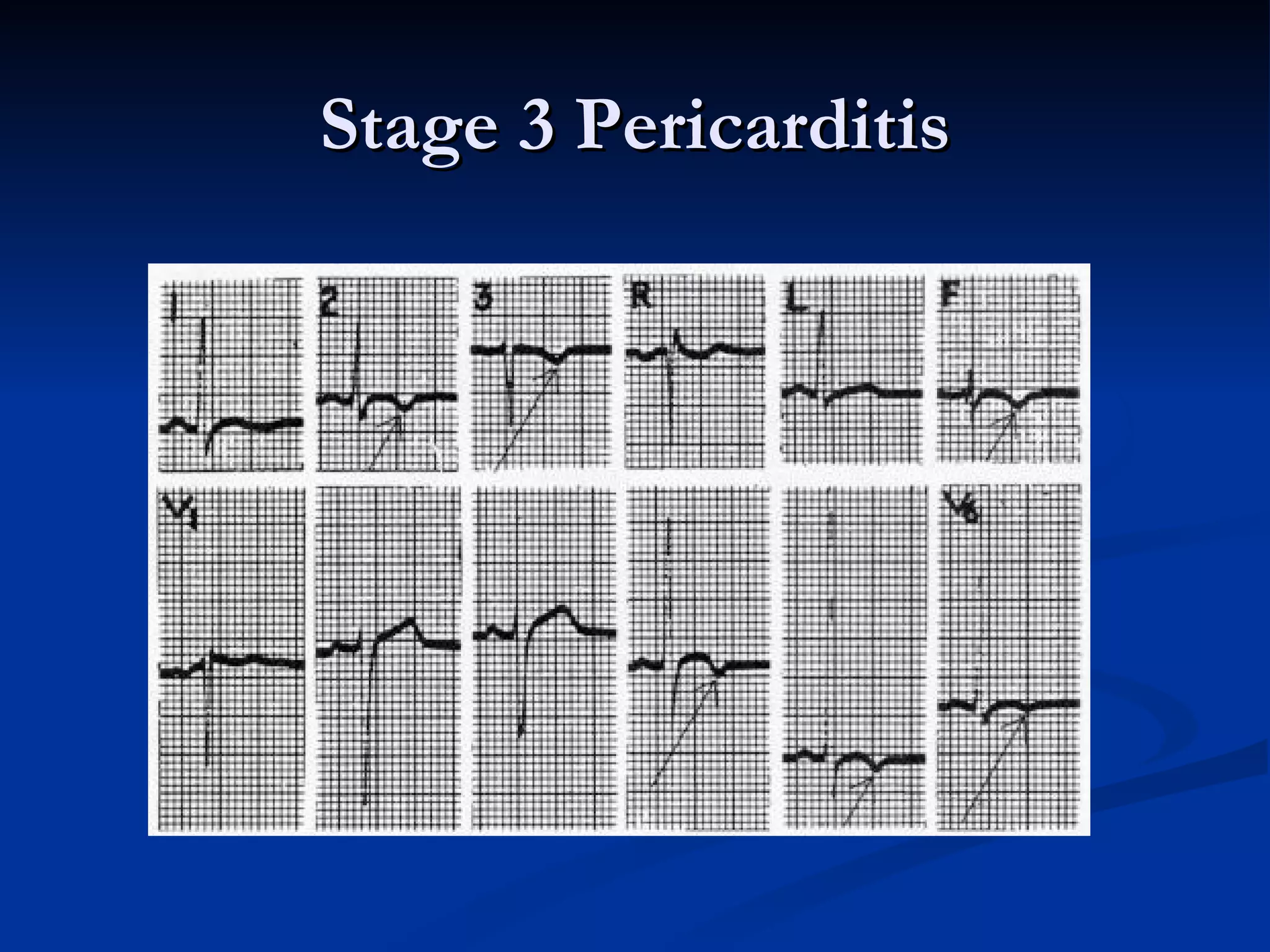
Insights on how to identify pericarditis stage changes, correlating specific ECG characteristics with clinical stages.
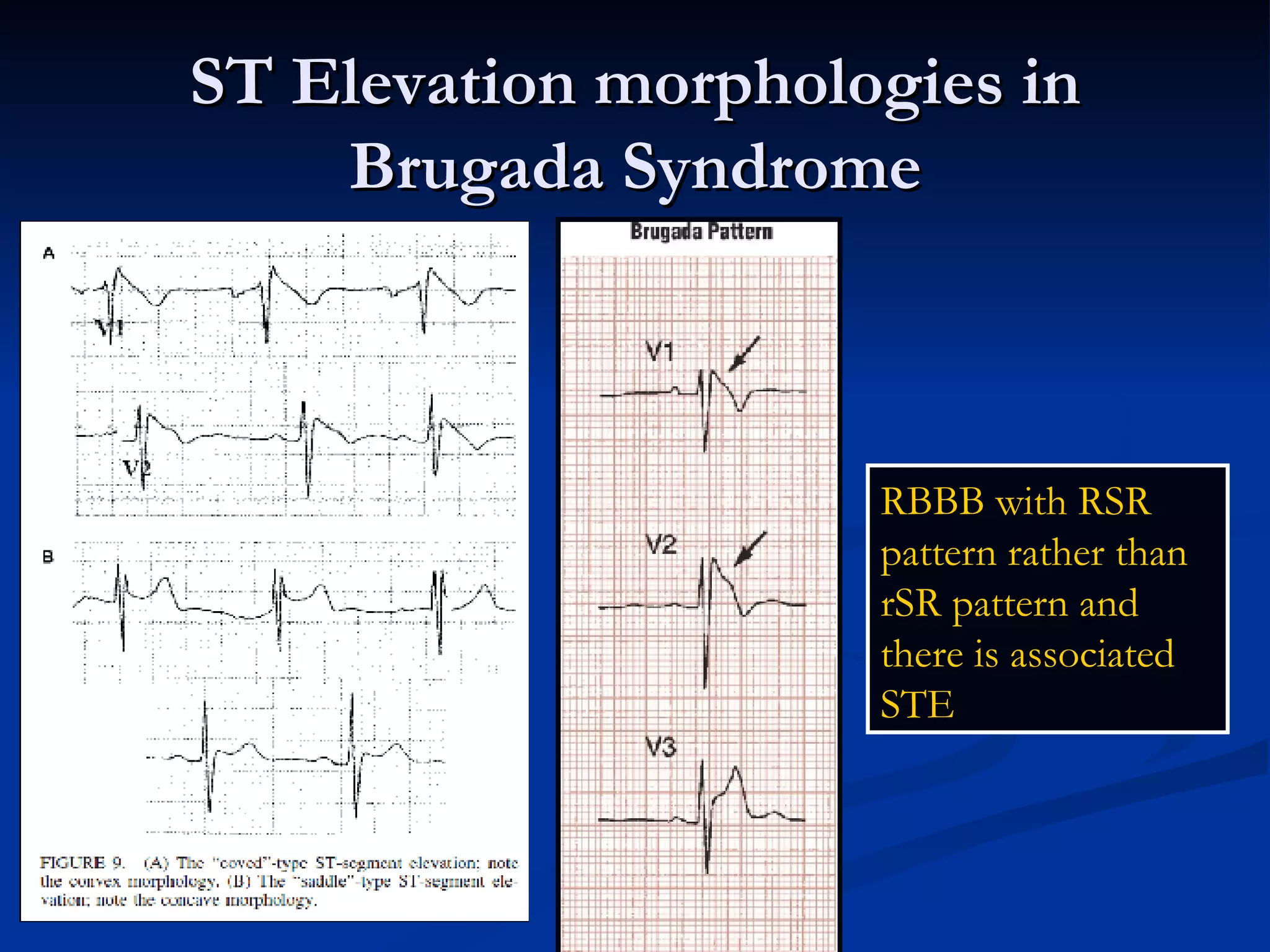
Introduction and identification of ECG patterns in Brugada Syndrome, identifiable by specific elevations and shapes.
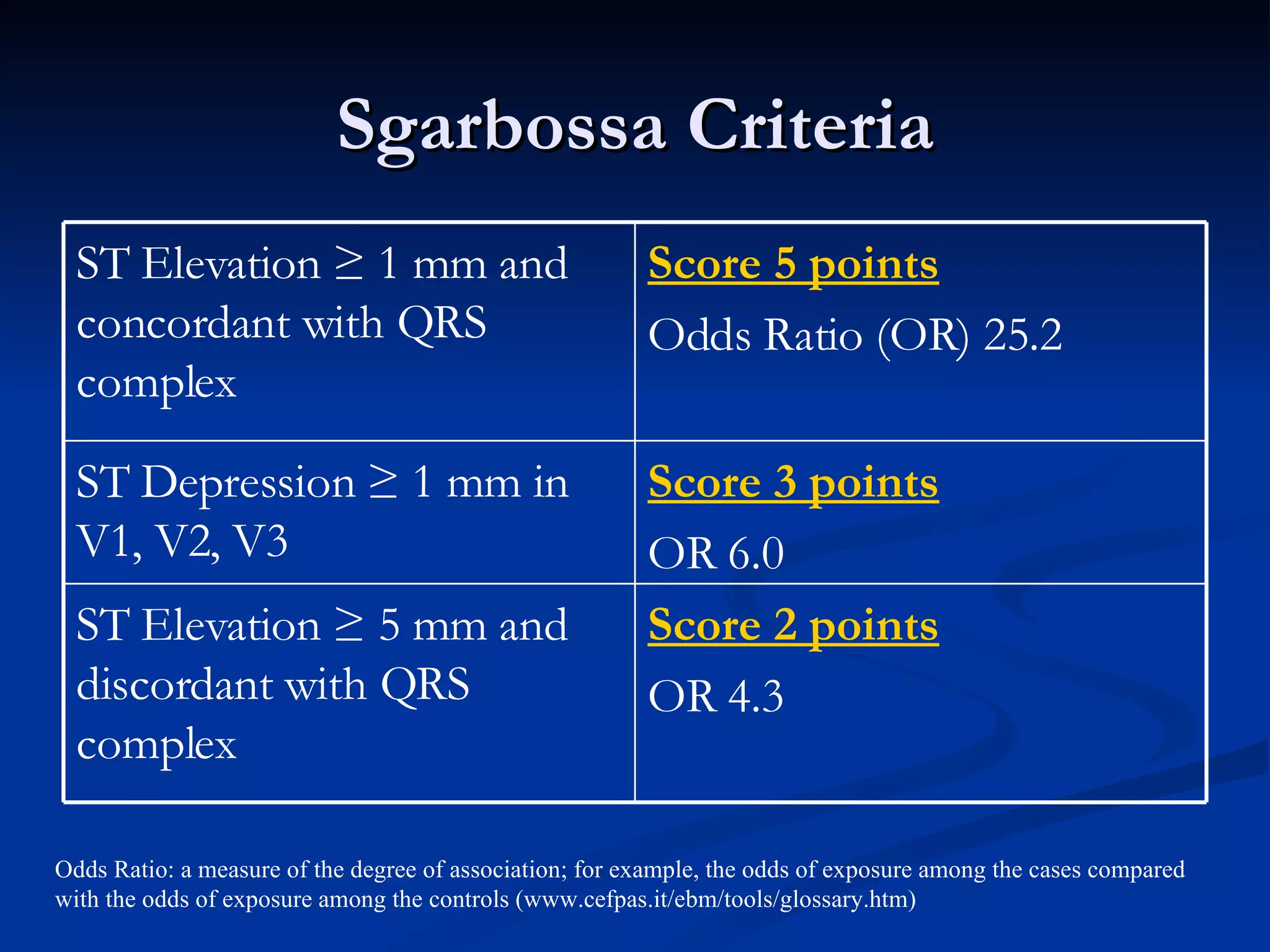
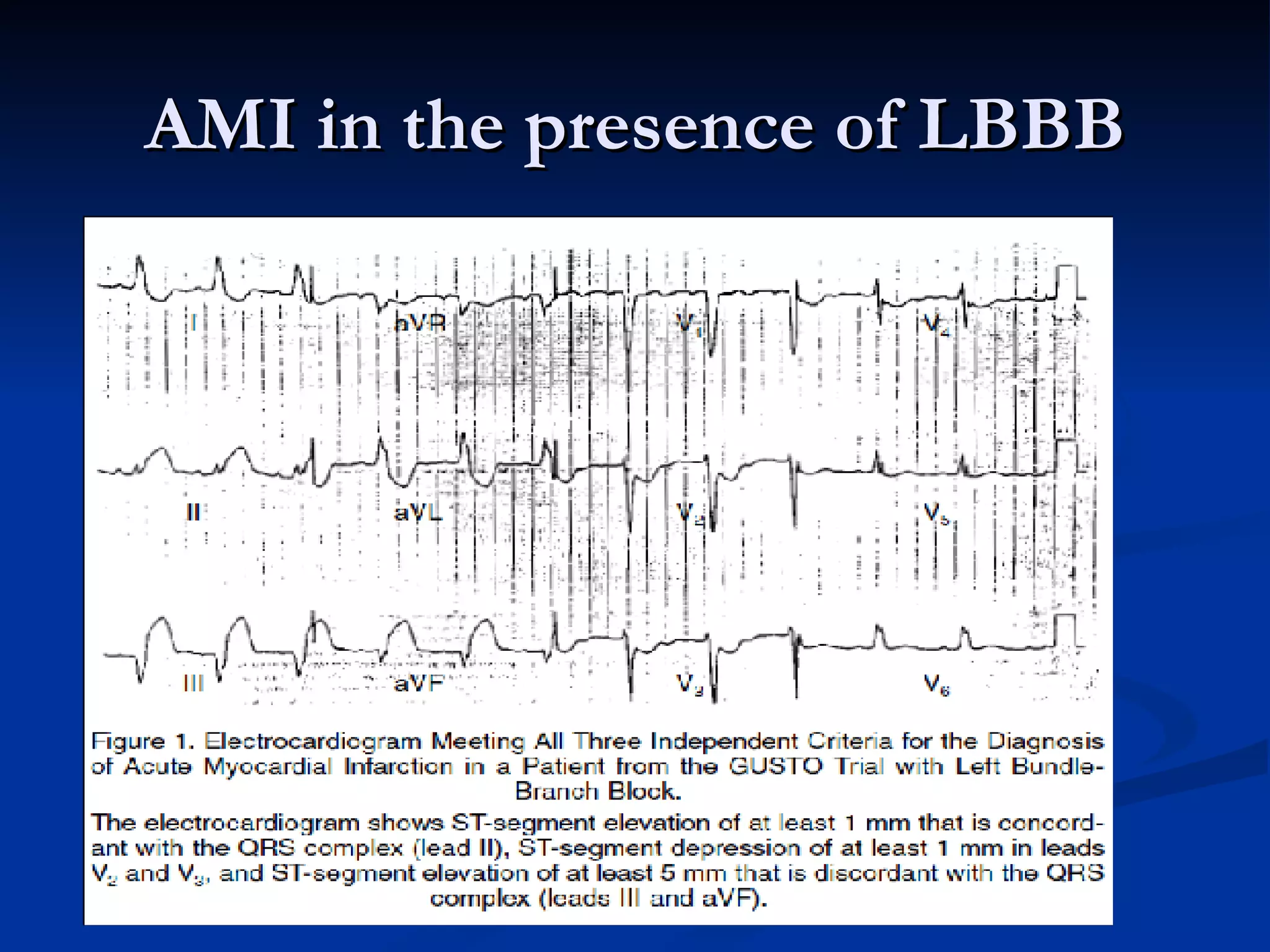
Discussion on diagnosing AMI in presence of LBBB using Sgarbossa criteria, which provides clinical evaluation metrics.
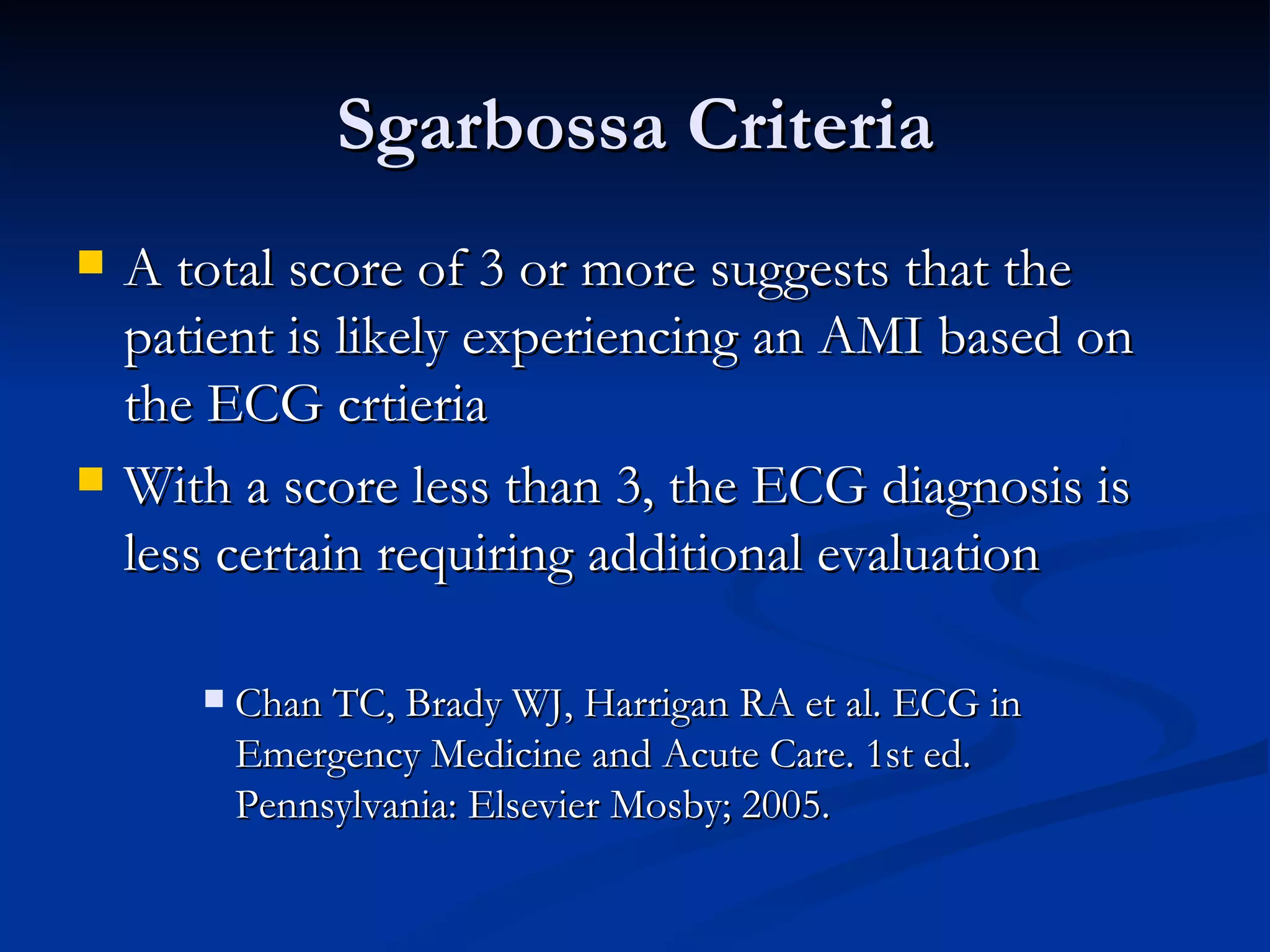
Evaluation of Sgarbossa's criteria in assessing AMI likelihood amidst LBBB, highlighting scoring significance and reliability concerns.
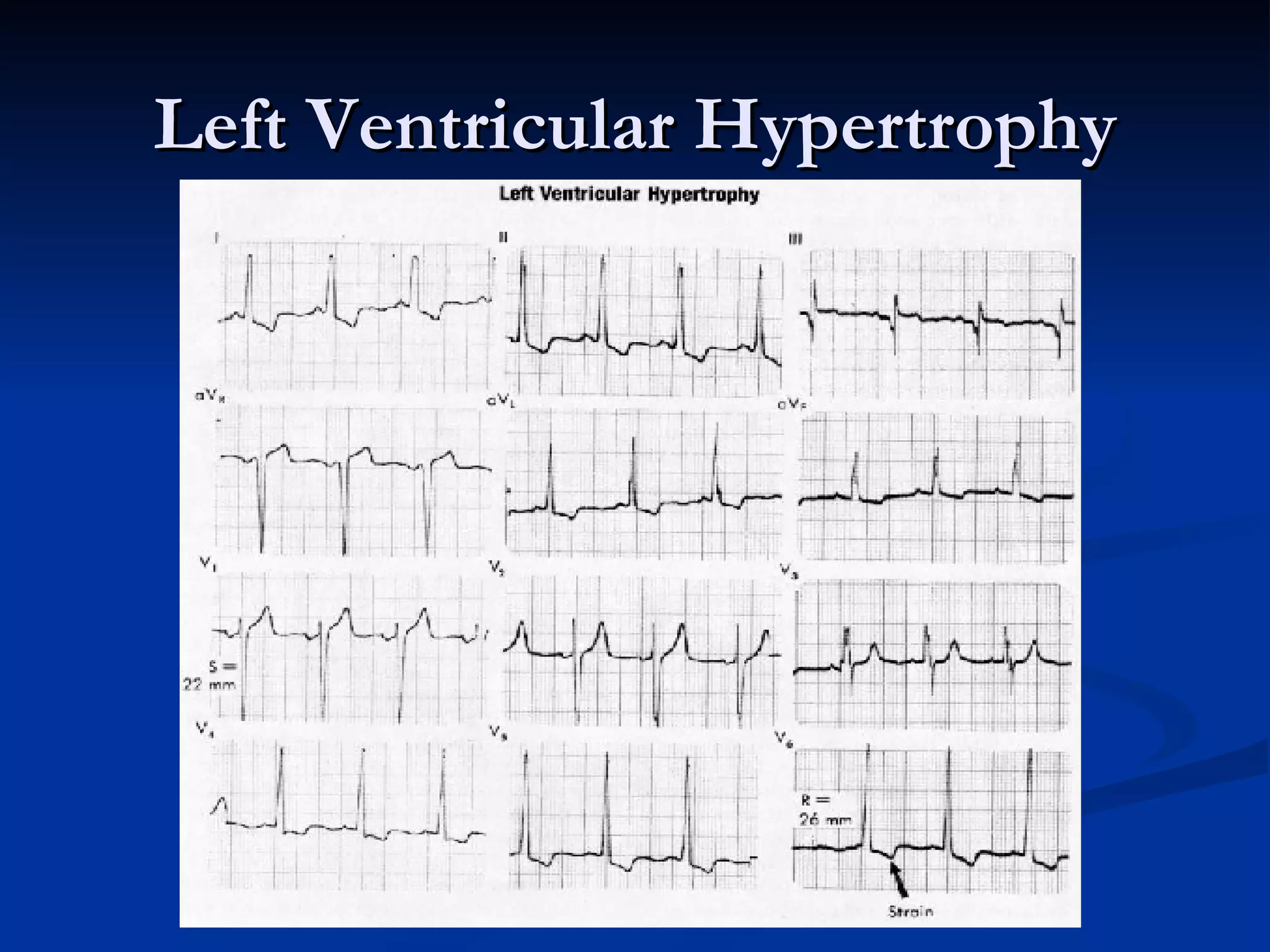
Emphasizes electrical forces in ECG and diagnostics in Left Ventricular Hypertrophy, contrasting with acute coronary syndromes.
Acknowledges that not all ST segment elevations indicate STEMI, promoting comprehensive evaluation of ECG alongside clinical examination.
Provides references to support the studies, guidelines, and criteria discussed throughout the presentation.
ST Segment Elevationsin ECG K.S. Chew School of Medical Sciences Universiti Sains Malaysia
2.
Introduction ST segmentof the cardiac cycle represents the period between depolarization and repolarization of the left ventricle In normal state, ST segment is isoelectric relative to PR segment
3.
Introduction Most STsegment elevation is a result of non-AMI causes Otto LA, Aufderheide TP. Evaluation of ST segment elevation criteria for the prehospital electrocardiographic diagnosis fo acute myocardial infarction. Ann Emerg Med 1994; 23 (1):17-24. Chan TC, Brady WJ, Harrigan RA et al. ECG in Emergency Medicine and Acute Care. 1st ed. Pennsylvania: Elsevier Mosby; 2005.
4.
Introduction Of 123adult chest pain patients with ST segment elevation ≥ 1mm, 63 patients (51%) did not have myocardial infarctions. These non-MI were mainly LBBB (21%) and LVH (33%). Otto LA, Aufderheide TP. Evaluation of ST segment elevation criteria for the prehospital electrocardiographic diagnosis fo acute myocardial infarction. Ann Emerg Med 1994; 23 (1):17-24.
5.
Causes of STSegment Elevation Acute Pericarditis Benign Early Repolarization Left Bundle Branch Block with AMI (Sgarbossa et al’s criteria) Left Ventricular Hypertrophy Left Ventricular Aneurysm Brugada Syndrome Hyperkalemia Hypothermia CNS pathologies Prinzmetal Angina Post electrical cardioversion
6.
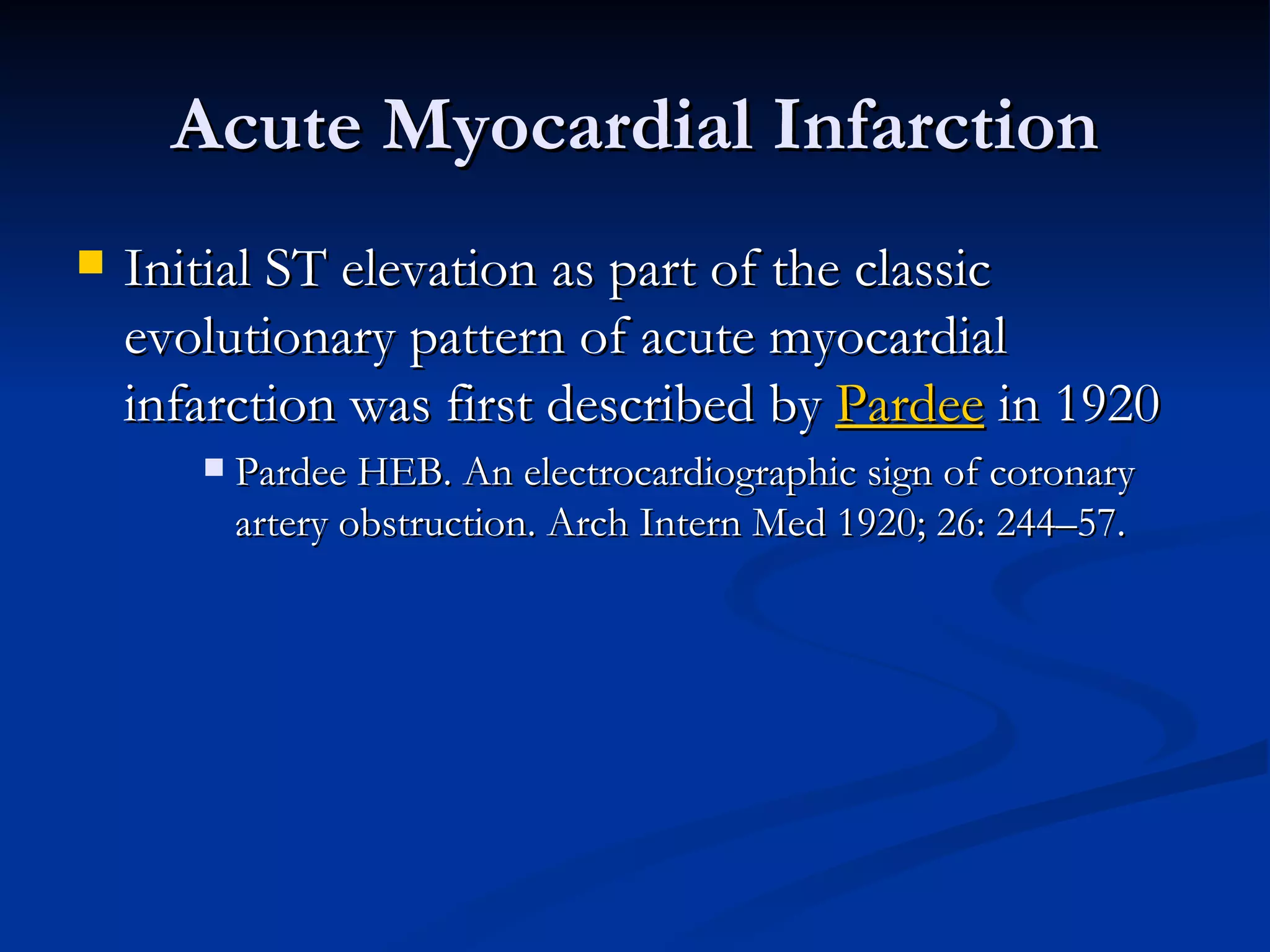
Acute Myocardial InfarctionInitial ST elevation as part of the classic evolutionary pattern of acute myocardial infarction was first described by Pardee in 1920 Pardee HEB. An electrocardiographic sign of coronary artery obstruction. Arch Intern Med 1920; 26: 244–57.
7.
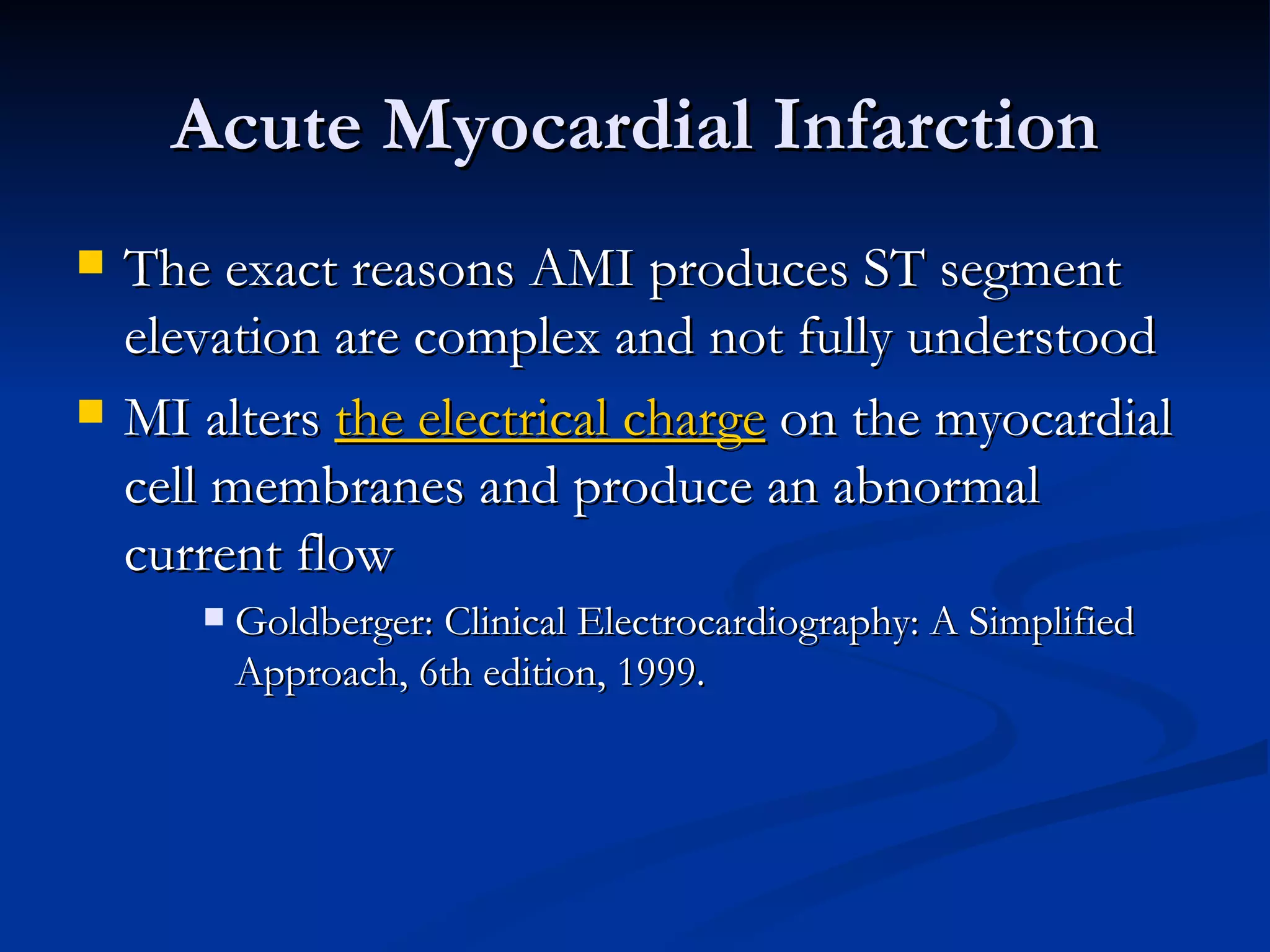
Acute Myocardial InfarctionThe exact reasons AMI produces ST segment elevation are complex and not fully understood MI alters the electrical charge on the myocardial cell membranes and produce an abnormal current flow Goldberger: Clinical Electrocardiography: A Simplified Approach, 6th edition, 1999.
8.
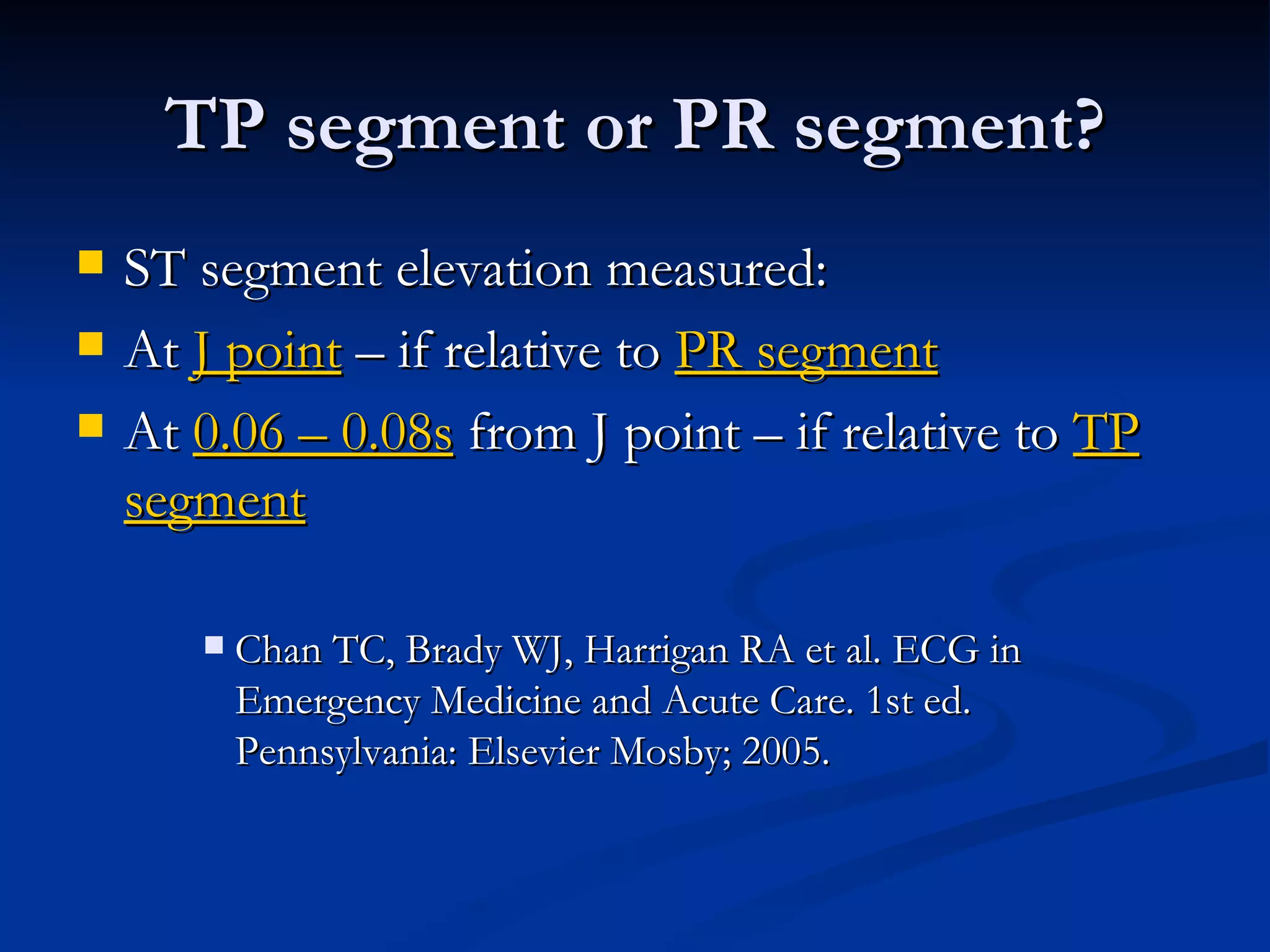
ST segment elevationmeasured: At J point – if relative to PR segment At 0.06 – 0.08s from J point – if relative to TP segment Chan TC, Brady WJ, Harrigan RA et al. ECG in Emergency Medicine and Acute Care. 1st ed. Pennsylvania: Elsevier Mosby; 2005. TP segment or PR segment?
9.
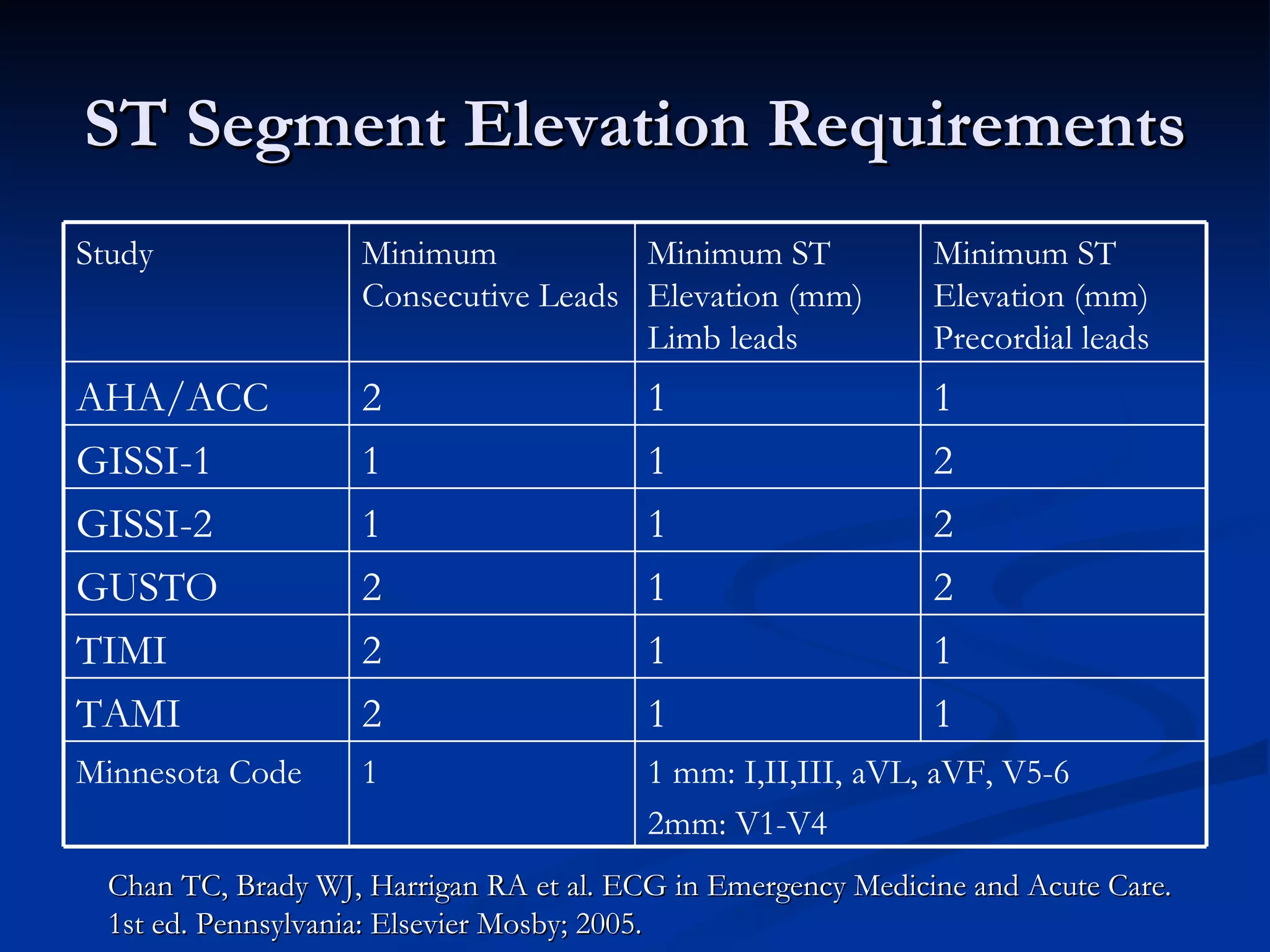
ST Segment ElevationRequirements Chan TC, Brady WJ, Harrigan RA et al. ECG in Emergency Medicine and Acute Care. 1st ed. Pennsylvania: Elsevier Mosby; 2005. 1 mm: I,II,III, aVL, aVF, V5-6 2mm: V1-V4 1 Minnesota Code 1 1 2 TAMI 1 1 2 TIMI 2 1 2 GUSTO 2 1 1 GISSI-2 2 1 1 GISSI-1 1 1 2 AHA/ACC Minimum ST Elevation (mm) Precordial leads Minimum ST Elevation (mm) Limb leads Minimum Consecutive Leads Study
10.
Minnesota Code TheMinnesota code 9-2 requires ≥1 mm ST elevation in one or more of leads I, II, III, aVL, aVF, V5, V6, or ≥ 2 mm ST elevation in one or more of leads V1–V4 Menown IB, Mackenzie G, Adgey AA. Optimizing the initial 12-lead electrocardiographic diagnosis of acute myocardial infarction. Eur Heart J 2000; 21 (4):275-83.
11.
Irrespective of whichdefinition is used, ST elevation has poor sensitivity for AMI where up to 50% of patients exhibit ‘atypical’ changes at presentation including isolated ST depression, T inversion or even a normal ECG Menown IB, Mackenzie G, Adgey AA. Optimizing the initial 12-lead electrocardiographic diagnosis of acute myocardial infarction. Eur Heart J 2000; 21 (4):275-83. Acute Myocardial Infarction
12.
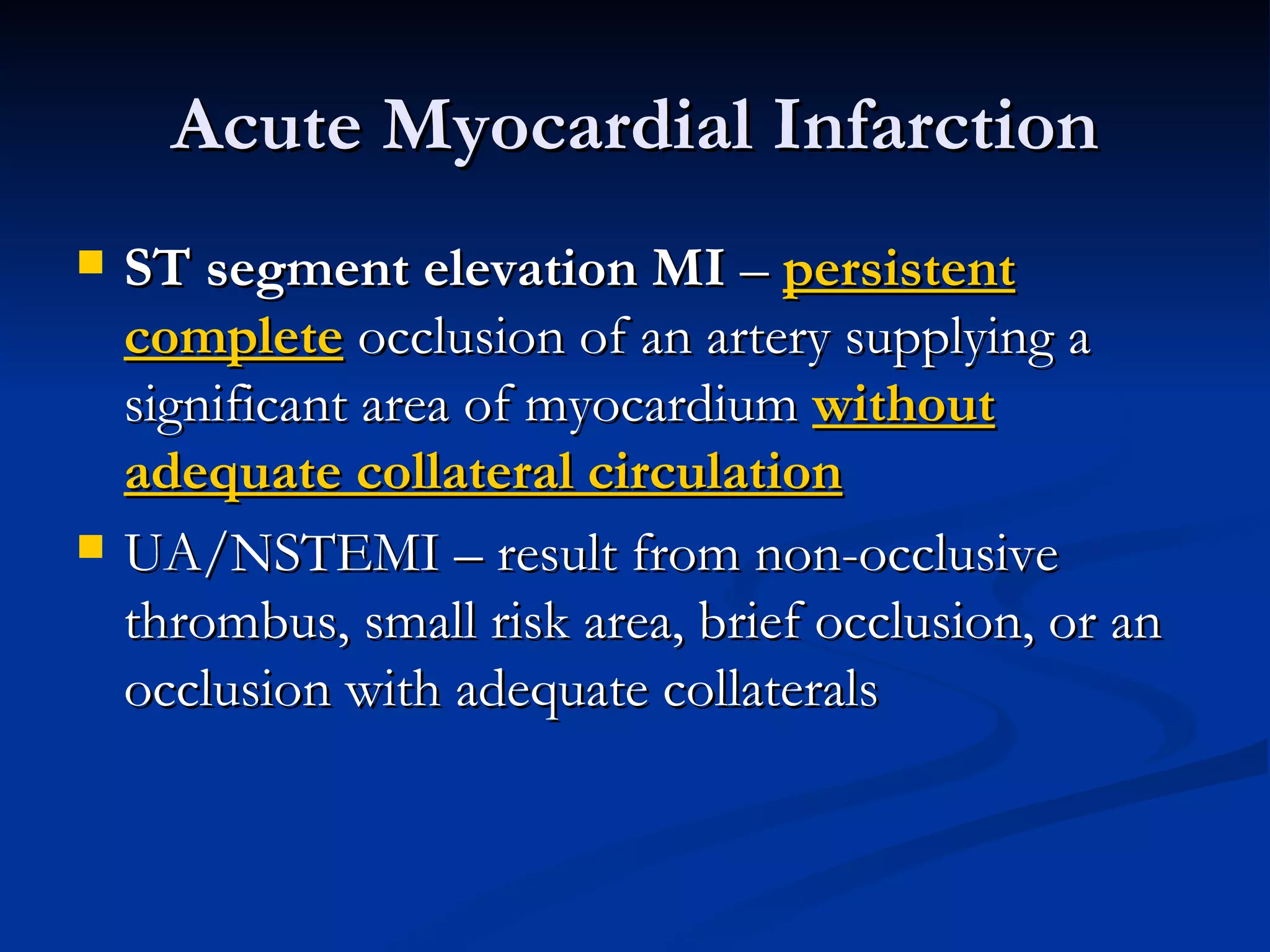
Acute Myocardial InfarctionST segment elevation MI – persistent complete occlusion of an artery supplying a significant area of myocardium without adequate collateral circulation UA/NSTEMI – result from non-occlusive thrombus, small risk area, brief occlusion, or an occlusion with adequate collaterals
13.
How To DifferentiateSTE due to AMI from Other Causes? Magnitude of the elevation Morphology Distribution Prominent Electrical Forces (Voltage Amplitude) QRS width Other Features
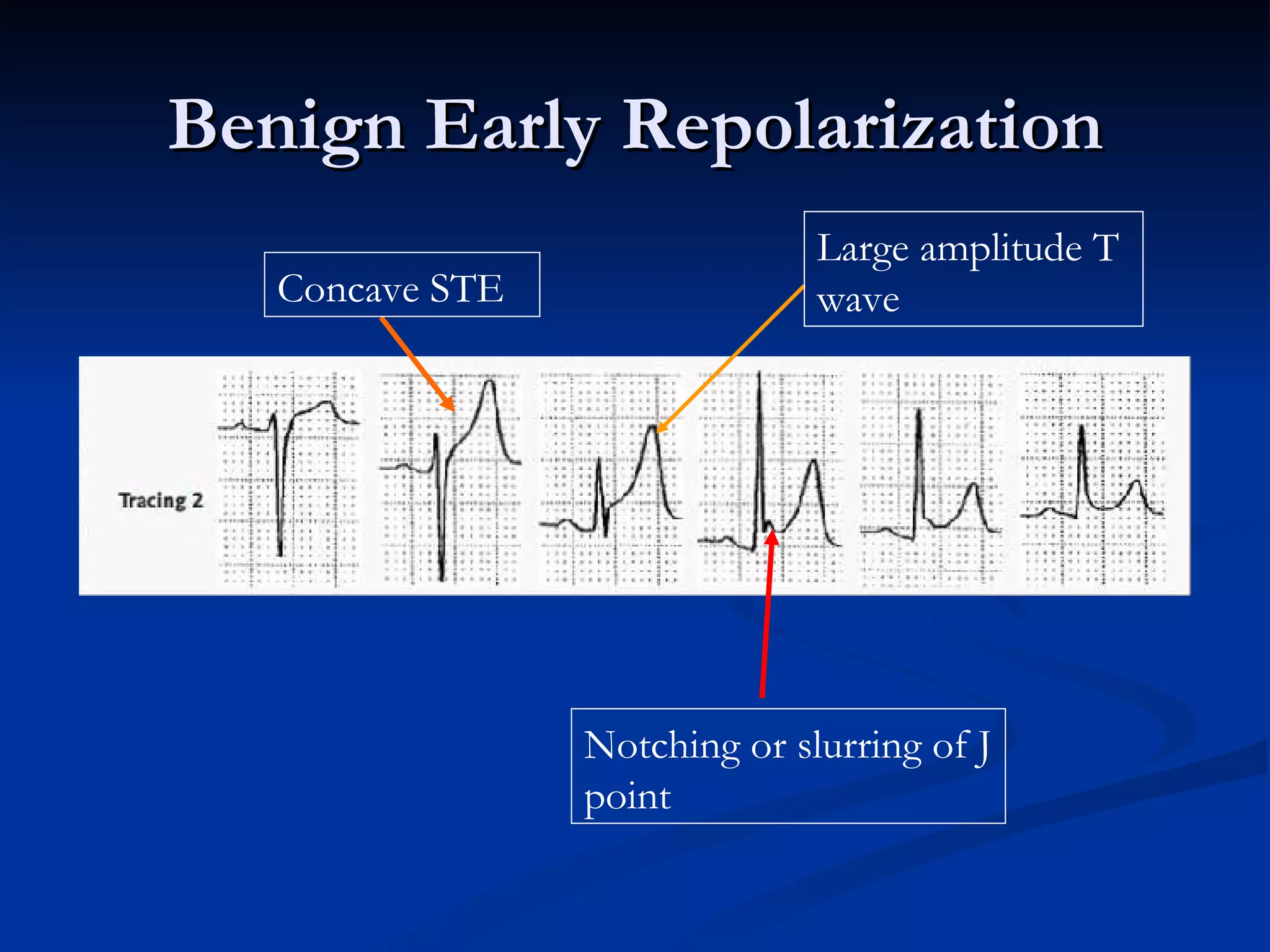
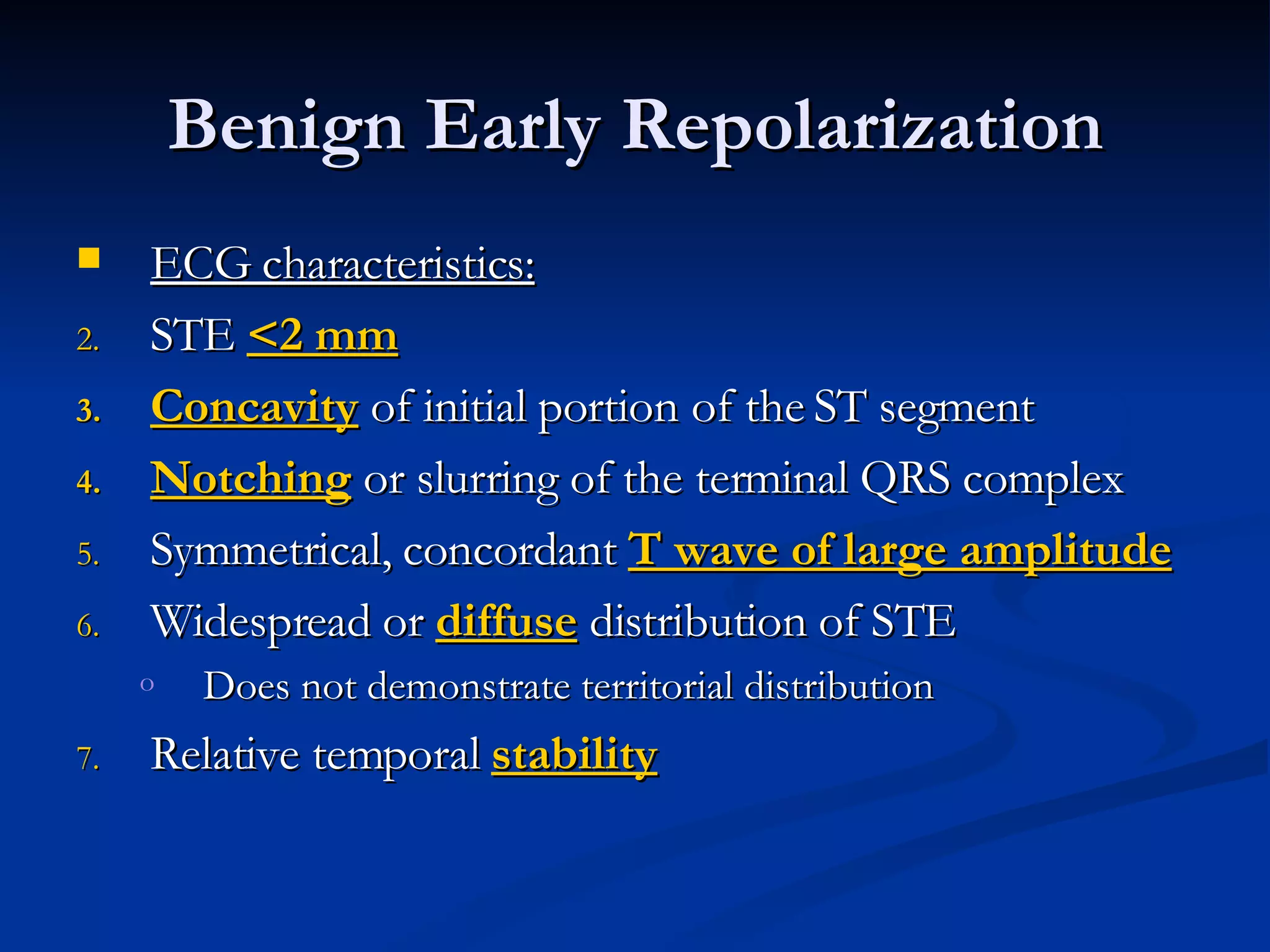
ECG characteristics: STE <2 mm Concavity of initial portion of the ST segment Notching or slurring of the terminal QRS complex Symmetrical, concordant T wave of large amplitude Widespread or diffuse distribution of STE Does not demonstrate territorial distribution Relative temporal stability Benign Early Repolarization
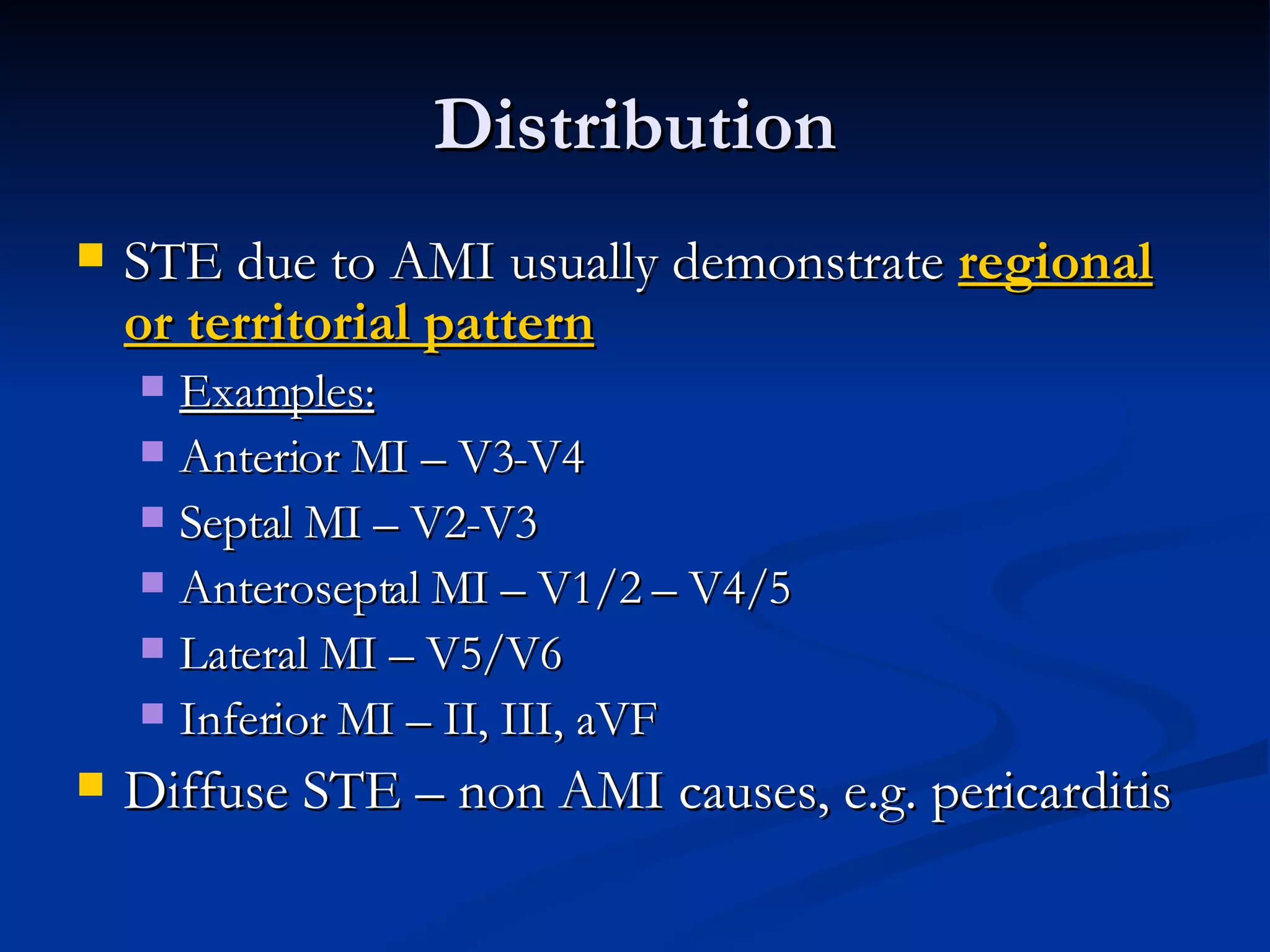
Distribution STE dueto AMI usually demonstrate regional or territorial pattern Examples: Anterior MI – V3-V4 Septal MI – V2-V3 Anteroseptal MI – V1/2 – V4/5 Lateral MI – V5/V6 Inferior MI – II, III, aVF Diffuse STE – non AMI causes, e.g. pericarditis
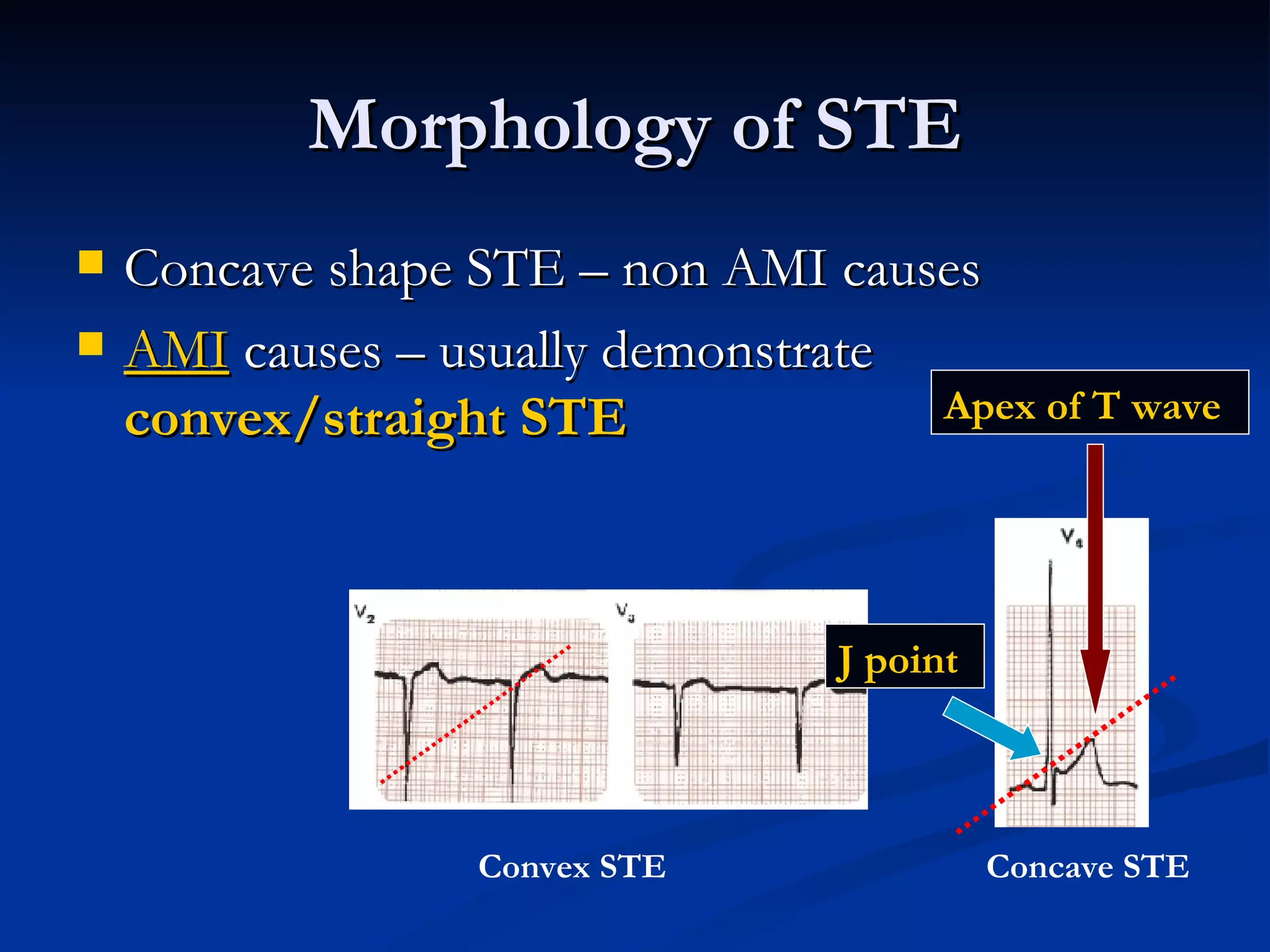
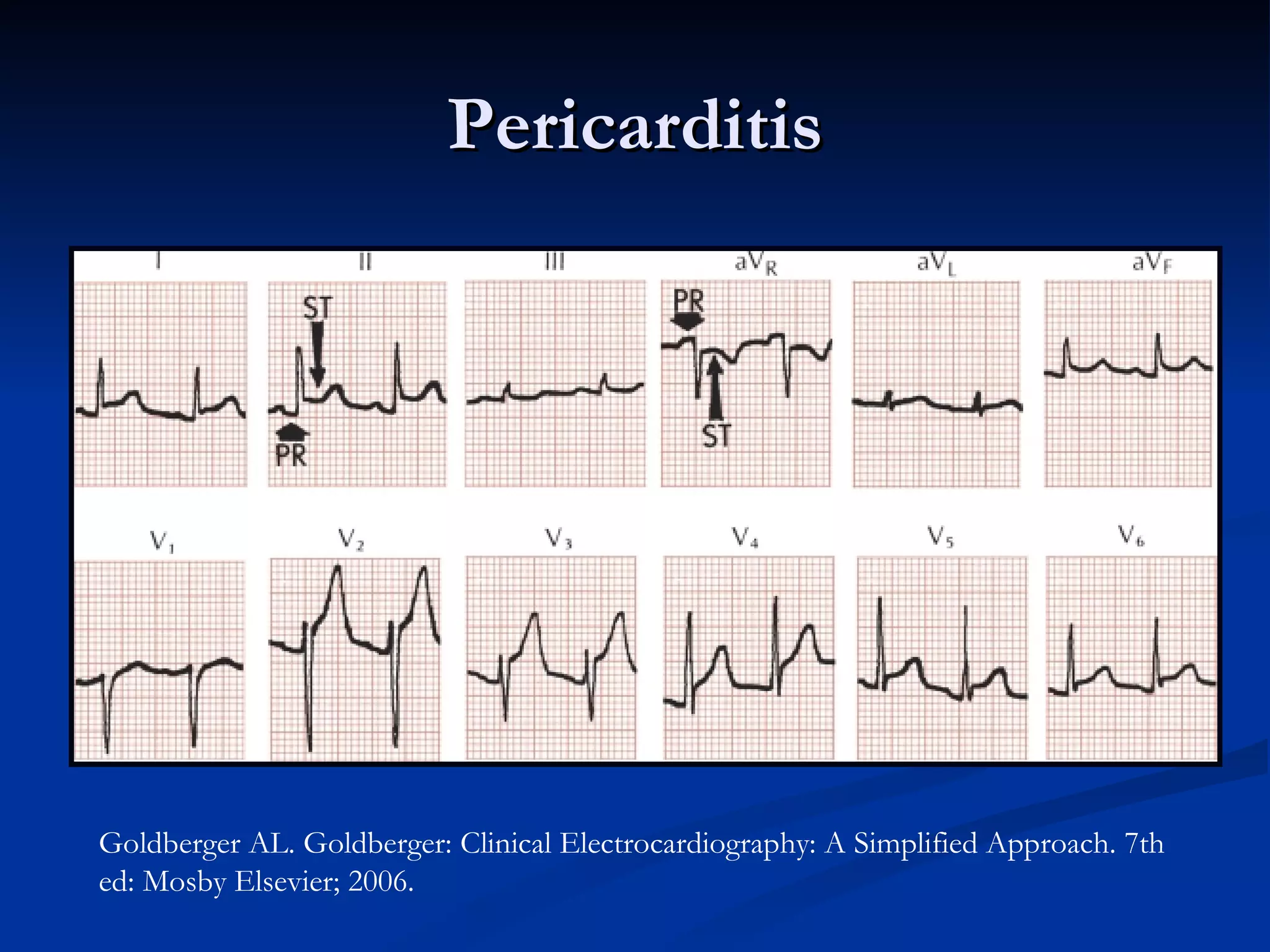
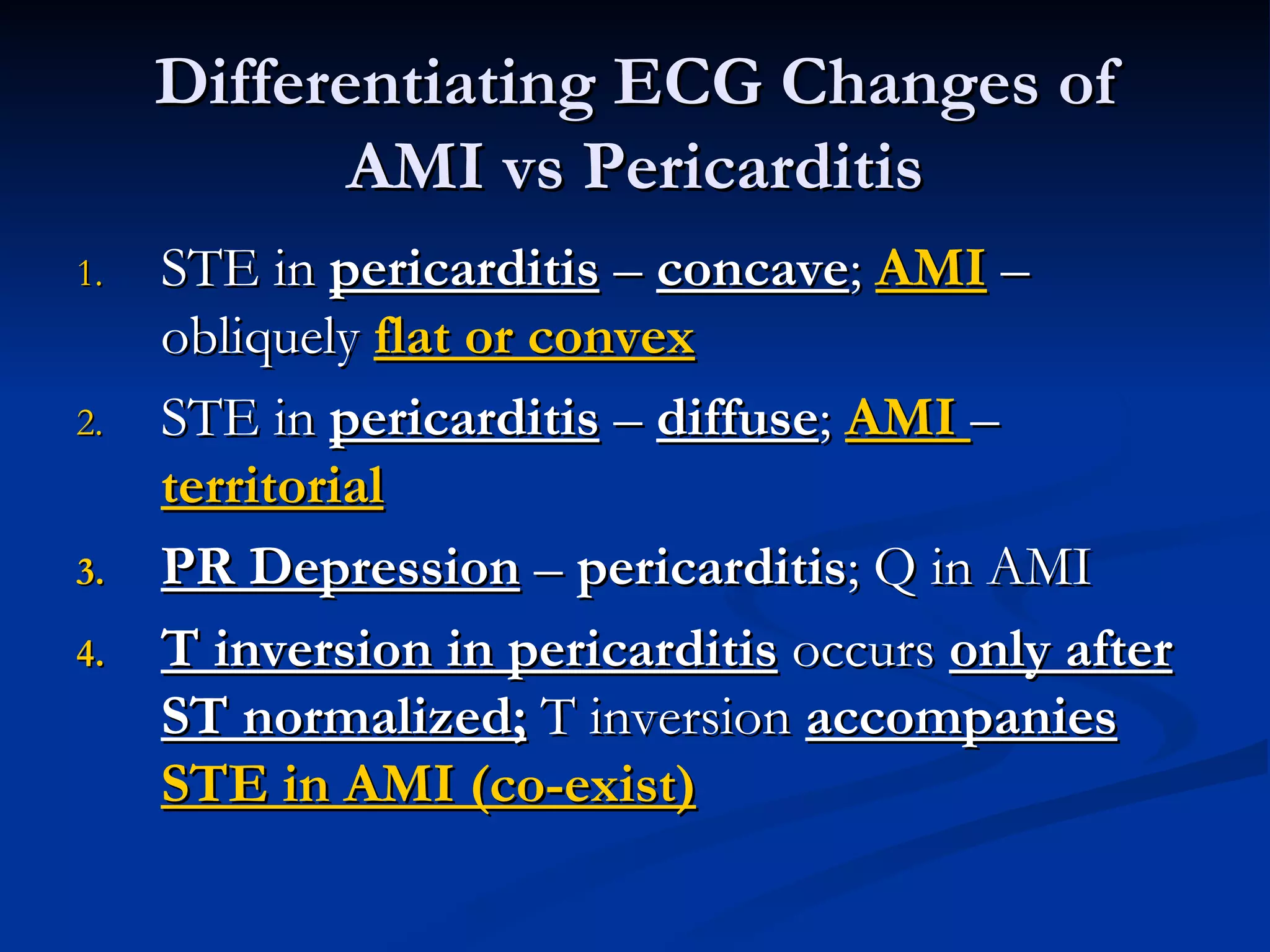
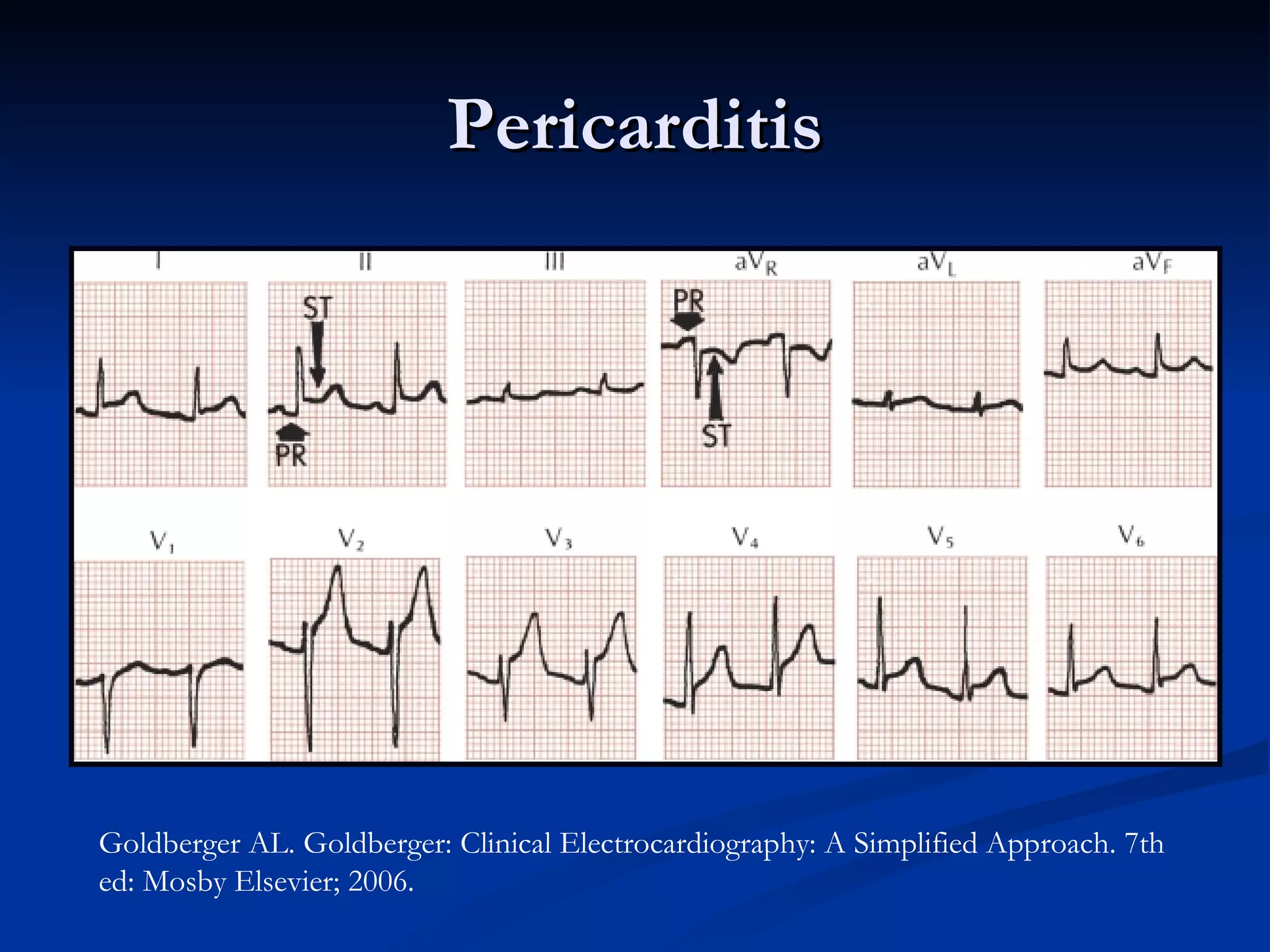
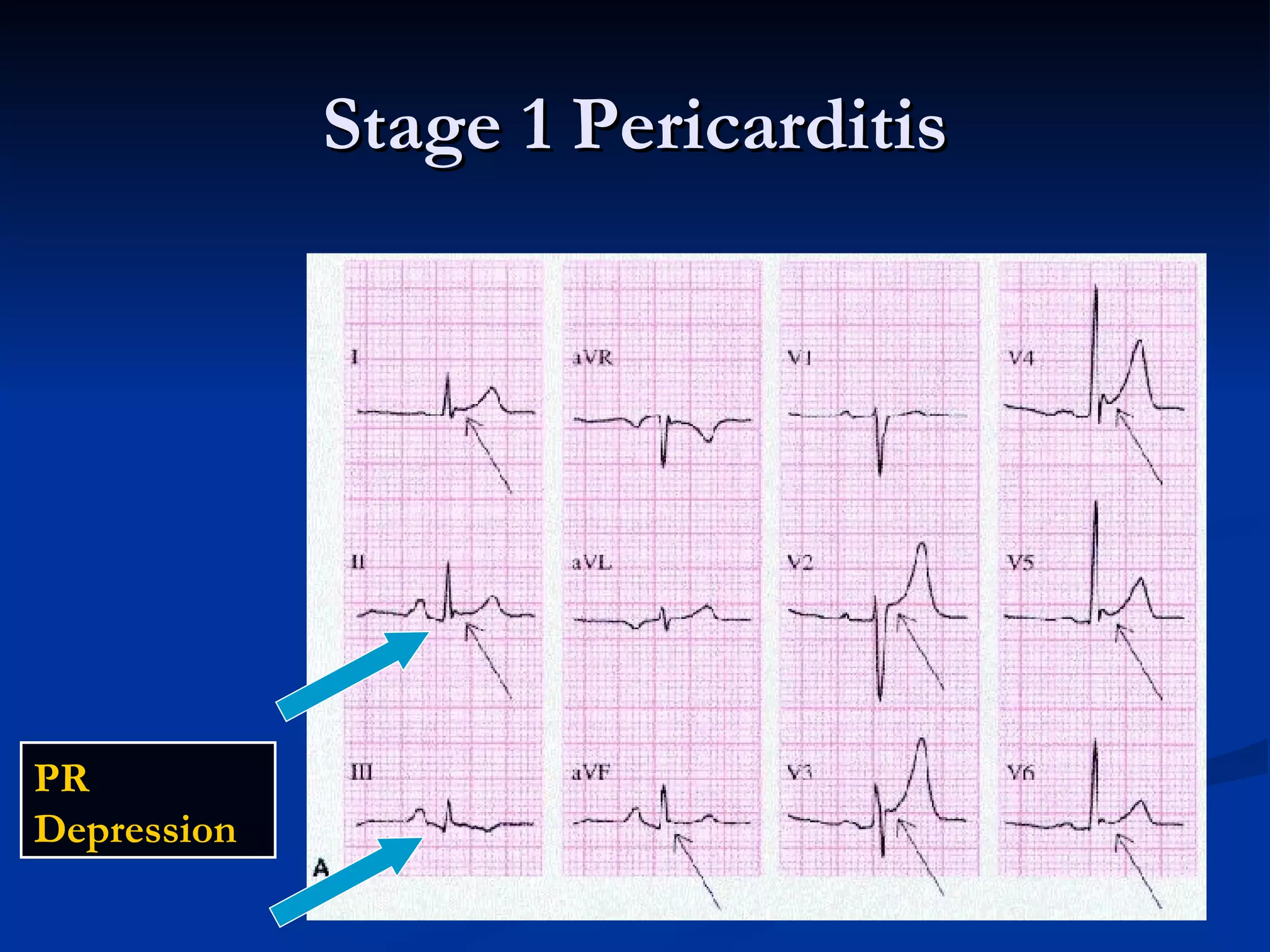
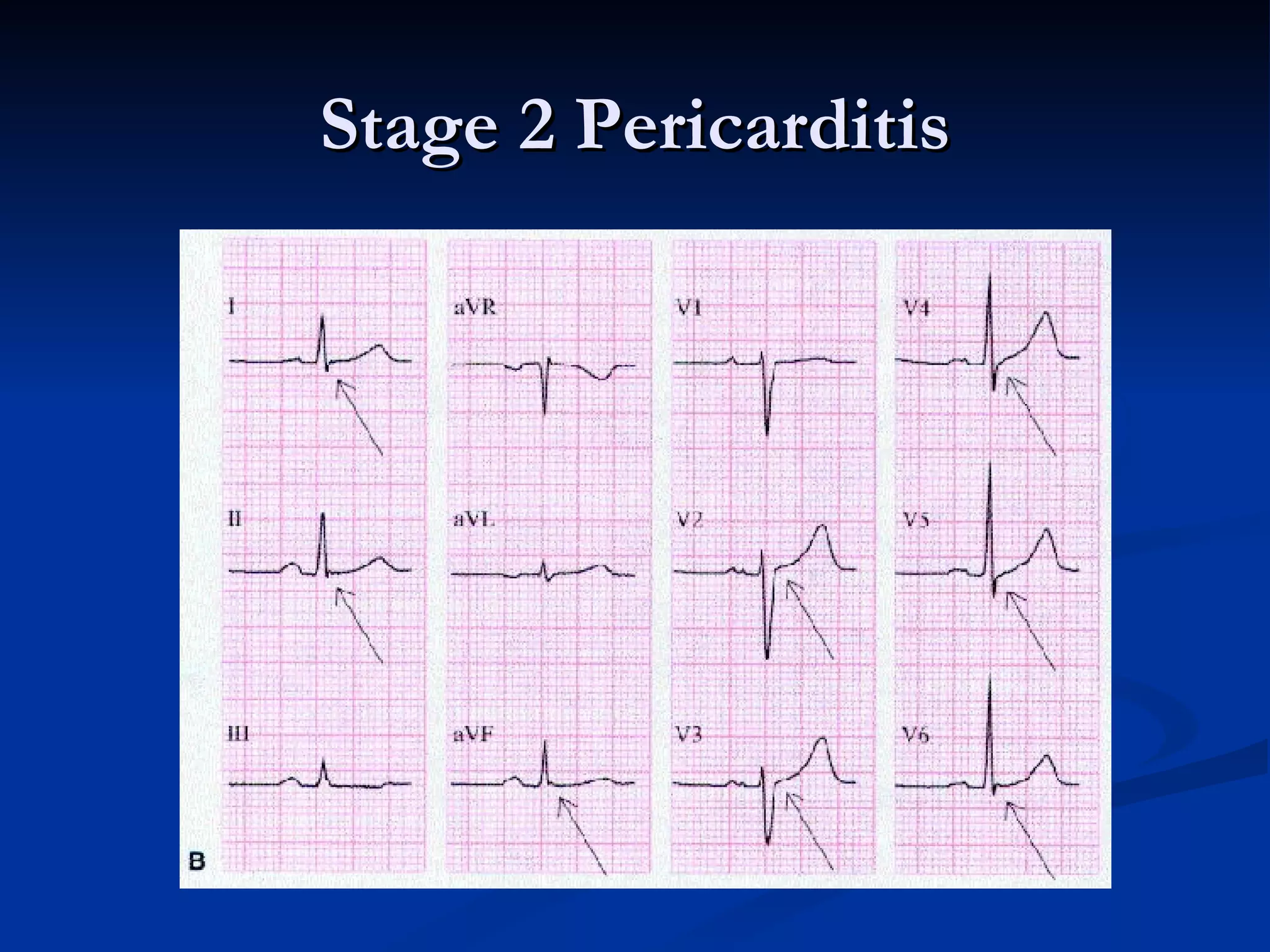
STE in pericarditis – concave ; AMI – obliquely flat or convex STE in pericarditis – diffuse ; AMI – territorial PR Depression – pericarditis ; Q in AMI T inversion in pericarditis occurs only after ST normalized; T inversion accompanies STE in AMI (co-exist) Differentiating ECG Changes of AMI vs Pericarditis
PR segment depressionis usually transient but may be the earliest and most specific sign of acute myopericarditis Baljepally R, Spodick DH. PR-segment deviation as the initial electrocardiographic response in acute pericarditis. Am J Cardiol 1998; 81 (12):1505-6. Pericarditis
25.
Acute Pericarditis –Four Classical Stages First described by Spodick et al Stage I first few days 2 weeks STE, PR depression Stage II last days weeks Normalization of STE Stage III after 2-3 weeks, lasts several weeks T wave inversion Stage IV lasts up to several months gradual resolution of T wave changes Chan TC, Brady WJ, Pollack M. Electrocardiographic manifestations: acute myopericarditis. J Emerg Med 1999; 17 (5):865-72.
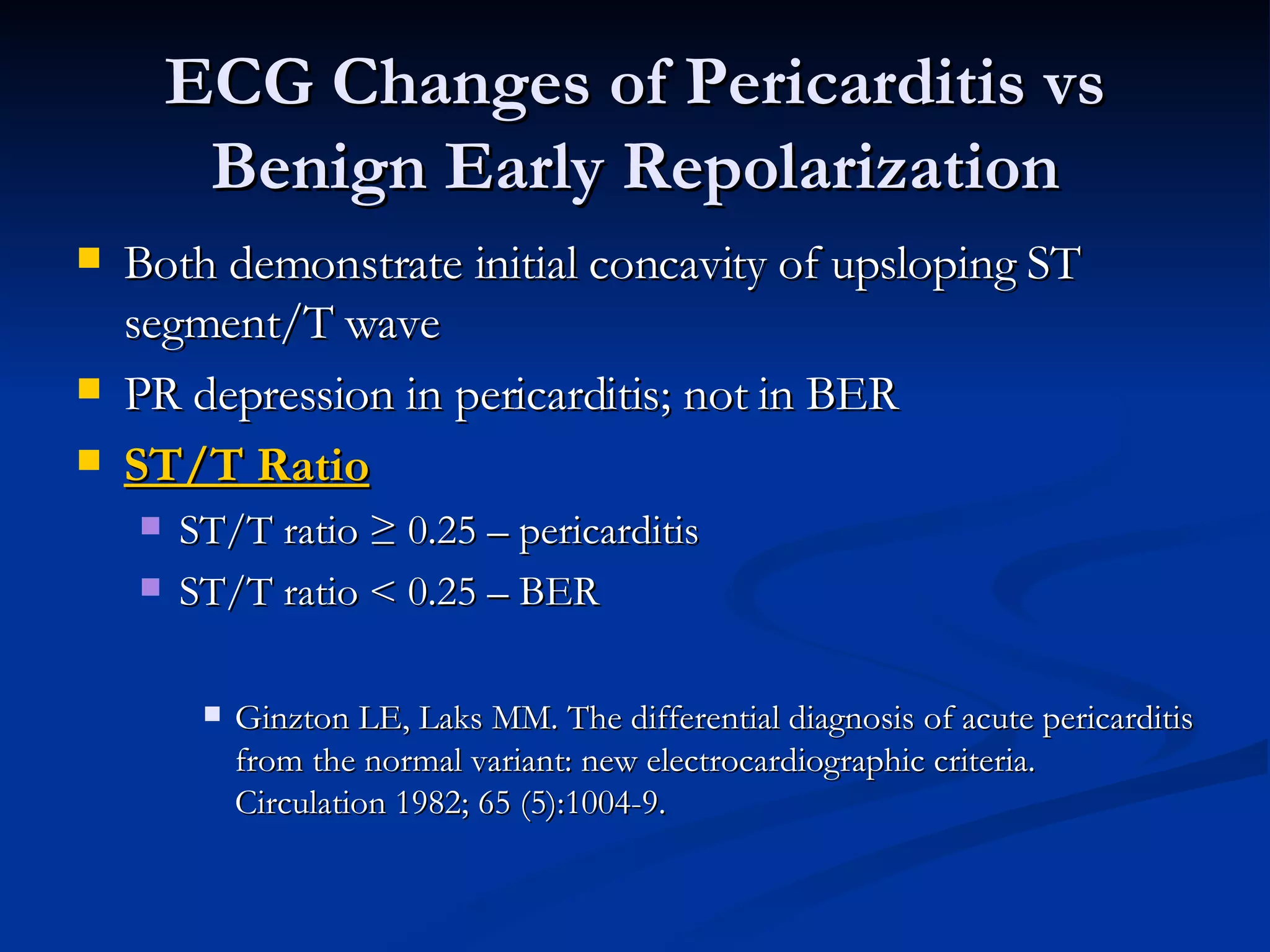
Both demonstrate initialconcavity of upsloping ST segment/T wave PR depression in pericarditis; not in BER ST/T Ratio ST/T ratio ≥ 0.25 – pericarditis ST/T ratio < 0.25 – BER Ginzton LE, Laks MM. The differential diagnosis of acute pericarditis from the normal variant: new electrocardiographic criteria. Circulation 1982; 65 (5):1004-9. ECG Changes of Pericarditis vs Benign Early Repolarization
30.
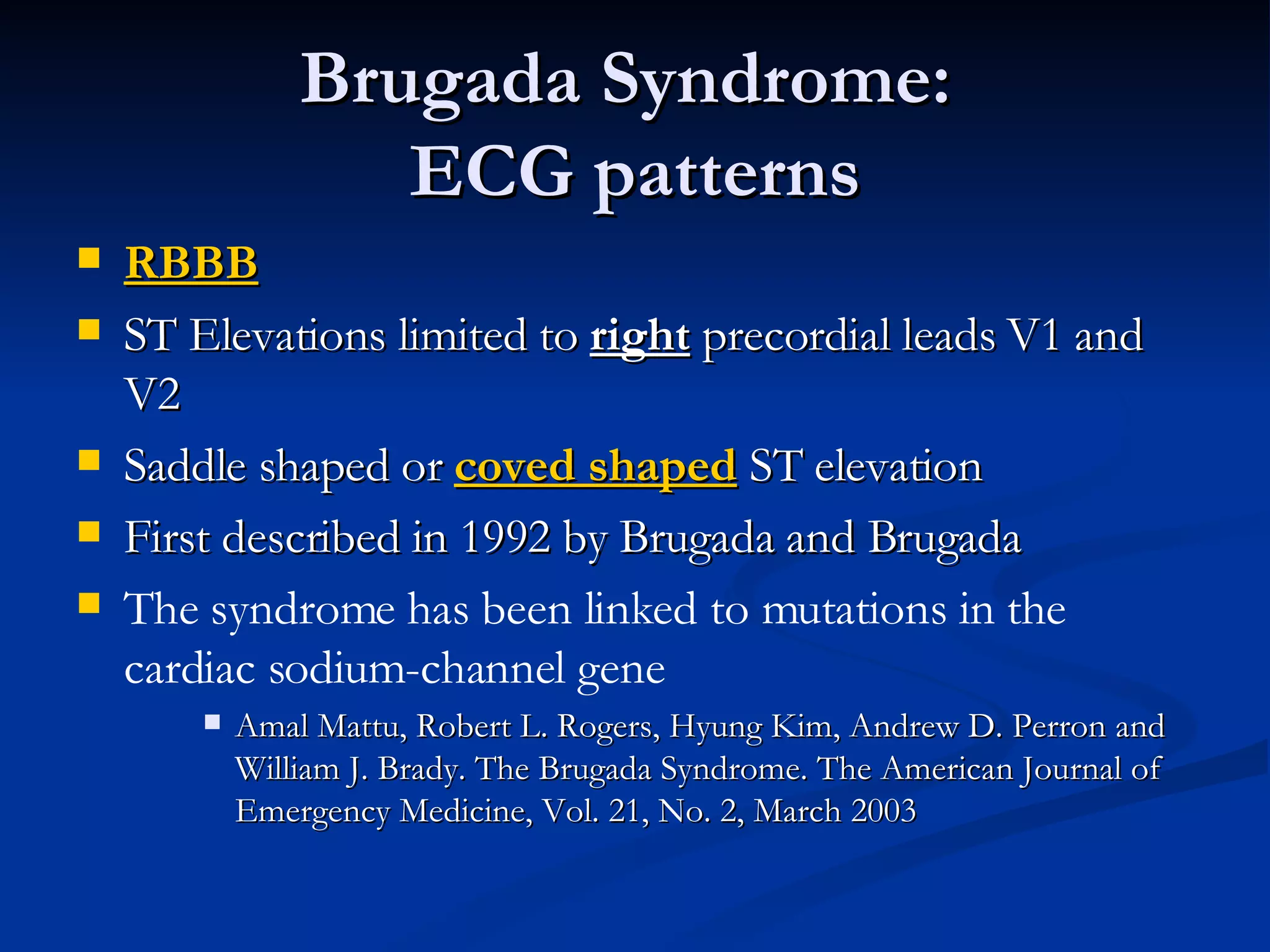
Brugada Syndrome: ECG patterns RBBB ST Elevations limited to right precordial leads V1 and V2 Saddle shaped or coved shaped ST elevation First described in 1992 by Brugada and Brugada The syndrome has been linked to mutations in the cardiac sodium-channel gene Amal Mattu, Robert L. Rogers, Hyung Kim, Andrew D. Perron and William J. Brady. The Brugada Syndrome. The American Journal of Emergency Medicine, Vol. 21, No. 2, March 2003
31.
ST Elevation morphologiesin Brugada Syndrome RBBB with RSR pattern rather than rSR pattern and there is associated STE
Left Bundle BranchBlock In LBBB, the QRS complex is broad with negative QS or rS complex in lead V1, and may demonstrate STE What if, LBBB co-exist with STEMI? Chan TC, Brady WJ, Harrigan RA et al. ECG in Emergency Medicine and Acute Care. 1st ed. Pennsylvania: Elsevier Mosby; 2005.
34.
Sgarbossa Criteria Sgarbossaet al. have developed a clinical prediction rule to assist in the ECG diagnosis of AMI in the setting of LBBB using three specific ECG findings Sgarbossa EB, Pinski SL, Barbagelata A, et al. Electrocardiographic diagnosis of evolving acute myocardial infarction in the presence of left bundle-branch block. N Engl J Med 1996; 334:481-7.
35.
Sgarbossa Criteria OddsRatio: a measure of the degree of association; for example, the odds of exposure among the cases compared with the odds of exposure among the controls (www.cefpas.it/ebm/tools/glossary.htm) Score 2 points OR 4.3 ST Elevation ≥ 5 mm and discordant with QRS complex Score 3 points OR 6.0 ST Depression ≥ 1 mm in V1, V2, V3 Score 5 points Odds Ratio (OR) 25.2 ST Elevation ≥ 1 mm and concordant with QRS complex
A total scoreof 3 or more suggests that the patient is likely experiencing an AMI based on the ECG crtieria With a score less than 3, the ECG diagnosis is less certain requiring additional evaluation Chan TC, Brady WJ, Harrigan RA et al. ECG in Emergency Medicine and Acute Care. 1st ed. Pennsylvania: Elsevier Mosby; 2005. Sgarbossa Criteria
38.
Subsequent publications havesuggested that Sgarbossa’s criteria is less useful than reported, with studies demonstrating decreased sensitivity and inter-rater reliability Shlipak MG, Lyons WL, Go AS et al. Should the electrocardiogram be used to guide therapy for patients with left bundle-branch block and suspected myocardial infarction? Jama 1999; 281 (8):714-9. Edhouse JA, Sakr M, Angus J et al. Suspected myocardial infarction and left bundle branch block: electrocardiographic indicators of acute ischaemia. J Accid Emerg Med 1999; 16 (5):331-5. Sgarbossa Criteria
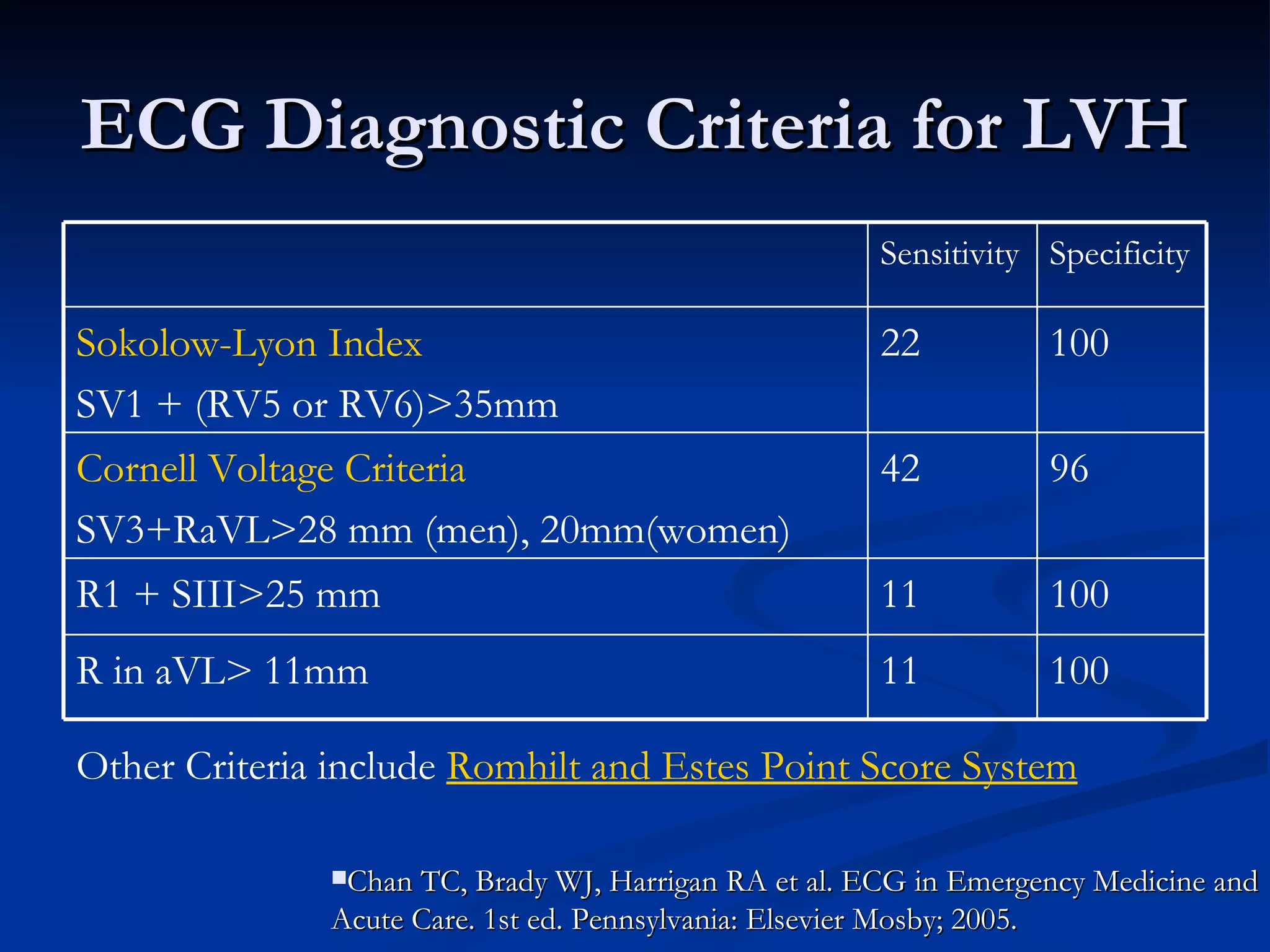
ECG Diagnostic Criteriafor LVH Other Criteria include Romhilt and Estes Point Score System Chan TC, Brady WJ, Harrigan RA et al. ECG in Emergency Medicine and Acute Care. 1st ed. Pennsylvania: Elsevier Mosby; 2005. 100 11 R in aVL> 11mm 100 11 R1 + SIII>25 mm 96 42 Cornell Voltage Criteria SV3+RaVL>28 mm (men), 20mm(women) 100 22 Sokolow-Lyon Index SV1 + (RV5 or RV6)>35mm Specificity Sensitivity
42.
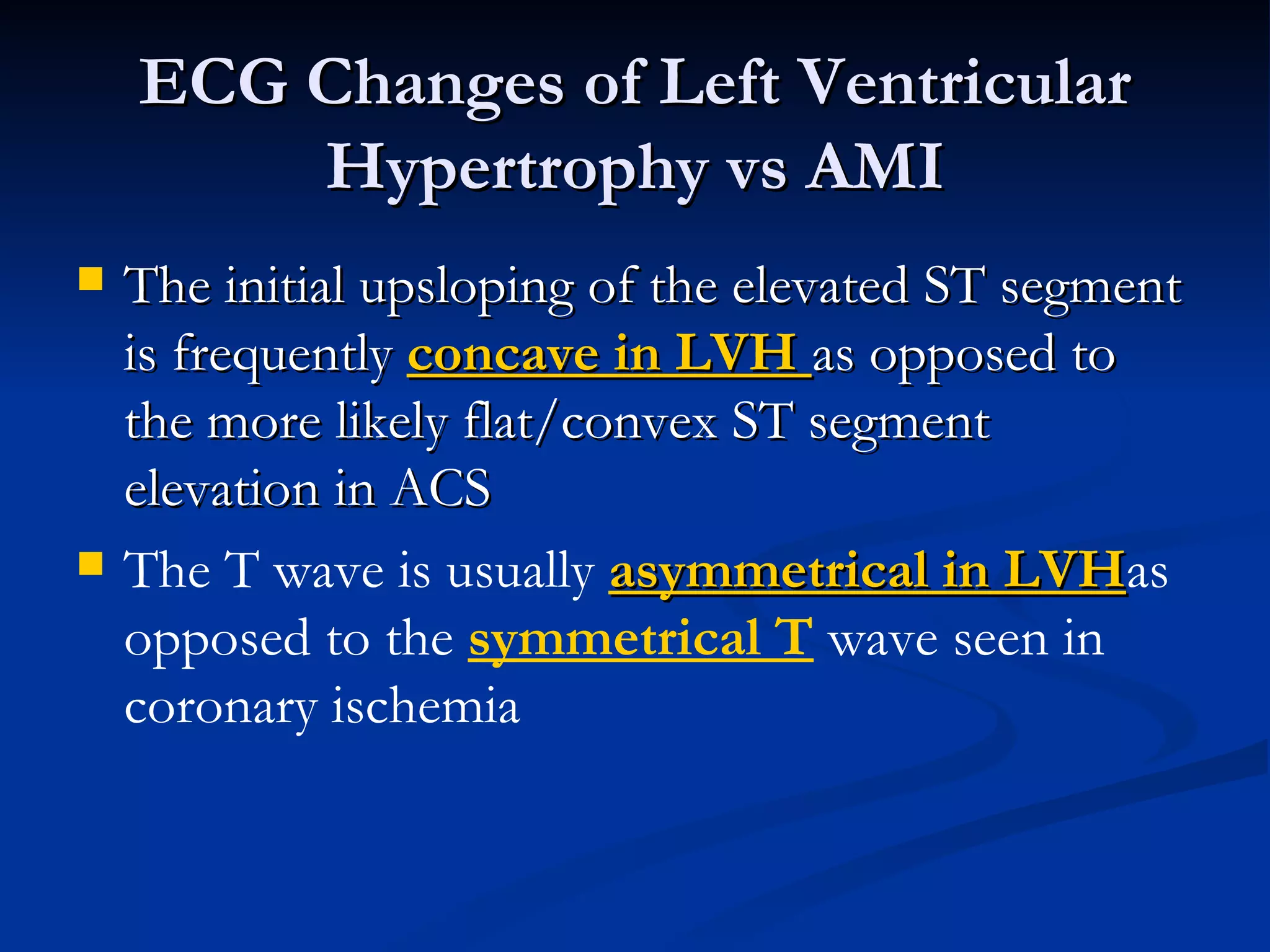
The initial upslopingof the elevated ST segment is frequently concave in LVH as opposed to the more likely flat/convex ST segment elevation in ACS The T wave is usually asymmetrical in LVH as opposed to the symmetrical T wave seen in coronary ischemia ECG Changes of Left Ventricular Hypertrophy vs AMI
43.
Conclusion Not allSTE are due to STEMI ECG remains a good diagnostic tool, but must be correlated with clinical history and physical examination Certain characteristics of the ECG changes may aid in the correct diagnosis: morphology, distribution, associated QRS complexes, voltage forces, etc.
44.
References Wang K,Asinger RW, Marriott HJ. ST-segment elevation in conditions other than acute myocardial infarction. N Engl J Med 2003; 349 (22):2128-35. Chan TC, Brady WJ, Harrigan RA et al. ECG in Emergency Medicine and Acute Care. 1st ed. Pennsylvania: Elsevier Mosby; 2005.
45.
References Goldberger: ClinicalElectrocardiography: A Simplified Approach, 6th edition, 1999. William J. Brady, Theodore C. Chan. Electrocardiographic Manifestations: Benign Early Repolarization. The Journal of Emergency Medicine, Vol. 17, No. 3, pp. 473–478, 1999 Sgarbossa EB, Pinski SL, Barbagelata A, et al. Electrocardiographic diagnosis of evolv-ing acute myocardial infarction in the presence of left bundle-branch block. N Engl J Med 1996; 334:481-7.