Doctor-Patient
Communication
Prof Dr. Chew Keng Sheng
Faculty of medicine and health sciences,
UNIVERSITI MALAYSIA SARAWAK
Think!
Avoid jargons
1.
Always keep the
patient/family members
informed
“Ignorance breeds fear.
Fear breeds hate.
Hate breeds violence.”
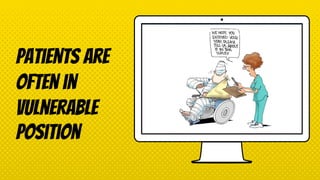
Patients are
often in
vulnerable
position
80%Of medical students failed to
introduce themselves adequately
and explain their intentions in a
study involving 50 students
(Maguire & Rutter, 1976)
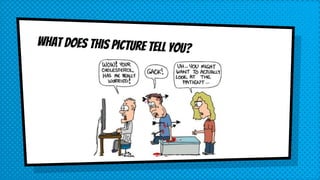
Do we see our patients as
numbers or “A CASE of..”?
Do we label patients and
put them as in “box”?
2. Listen to the
patient
“The biggest problem in
communication is we do not listen
to understand.
We listen to reply”
- Stephen R. Covey
Patients often have more
than one complaint.
The mean number of
concerns patients have
range from 1.2 – 3.9 in both
new and return visits.
×Levinson et al (2000) - patients often
gave verbal and non-verbal cues
throughout the interview but physicians
only responded positively to the cues in
38% of surgery and 21% in primary care
×Rogers and Todd (2000) – cancer
specialists preferentially listened for and
responded to certain disease cues over
others
18 secIs all it takes on average before a doctor interrupt the
patient (Beckman & Frankel, 1984)
54%Of patients’ complaints were not addressed in clinical
encounters (Stewart et al, 1979)
6 minIs all it takes on average to reach a diagnosis (Norman
2009)
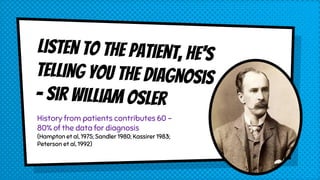
History from patients contributes 60 –
80% of the data for diagnosis
(Hampton et al, 1975; Sandler 1980; Kassirer 1983;
Peterson et al, 1992)
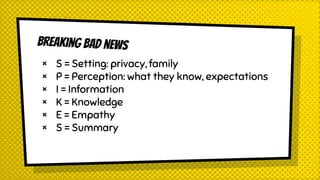
× S = Setting: privacy, family
× P = Perception: what they know, expectations
× I = Information
× K = Knowledge
× E = Empathy
× S = Summary
Big
Summary: What have you learned
today?
THANKS!An y quest i on s?
You can find me at kschew@unimas.my

Doctor-Patient Communication Skill

  • 1.
    Doctor-Patient Communication Prof Dr. ChewKeng Sheng Faculty of medicine and health sciences, UNIVERSITI MALAYSIA SARAWAK
  • 2.
  • 4.
  • 5.
    1. Always keep the patient/familymembers informed “Ignorance breeds fear. Fear breeds hate. Hate breeds violence.”
  • 6.
  • 7.
    80%Of medical studentsfailed to introduce themselves adequately and explain their intentions in a study involving 50 students (Maguire & Rutter, 1976)
  • 8.
    Do we seeour patients as numbers or “A CASE of..”? Do we label patients and put them as in “box”?
  • 9.
    2. Listen tothe patient “The biggest problem in communication is we do not listen to understand. We listen to reply” - Stephen R. Covey
  • 11.
    Patients often havemore than one complaint. The mean number of concerns patients have range from 1.2 – 3.9 in both new and return visits.
  • 12.
    ×Levinson et al(2000) - patients often gave verbal and non-verbal cues throughout the interview but physicians only responded positively to the cues in 38% of surgery and 21% in primary care
  • 13.
    ×Rogers and Todd(2000) – cancer specialists preferentially listened for and responded to certain disease cues over others
  • 14.
    18 secIs allit takes on average before a doctor interrupt the patient (Beckman & Frankel, 1984) 54%Of patients’ complaints were not addressed in clinical encounters (Stewart et al, 1979) 6 minIs all it takes on average to reach a diagnosis (Norman 2009)
  • 15.
    History from patientscontributes 60 – 80% of the data for diagnosis (Hampton et al, 1975; Sandler 1980; Kassirer 1983; Peterson et al, 1992)
  • 16.
    × S =Setting: privacy, family × P = Perception: what they know, expectations × I = Information × K = Knowledge × E = Empathy × S = Summary
  • 17.
    Big Summary: What haveyou learned today?
  • 18.
    THANKS!An y questi on s? You can find me at kschew@unimas.my