Downloaded 139 times
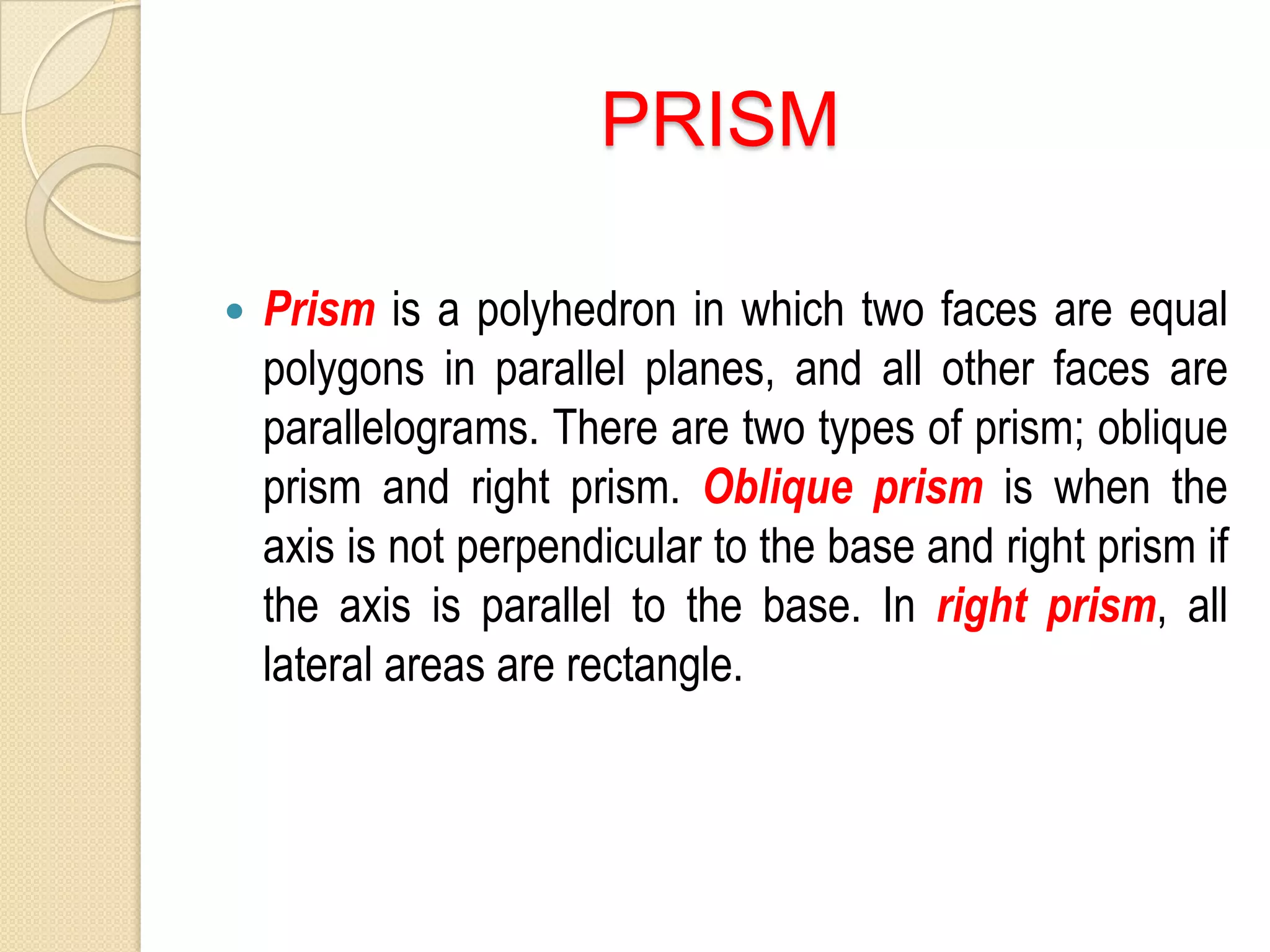
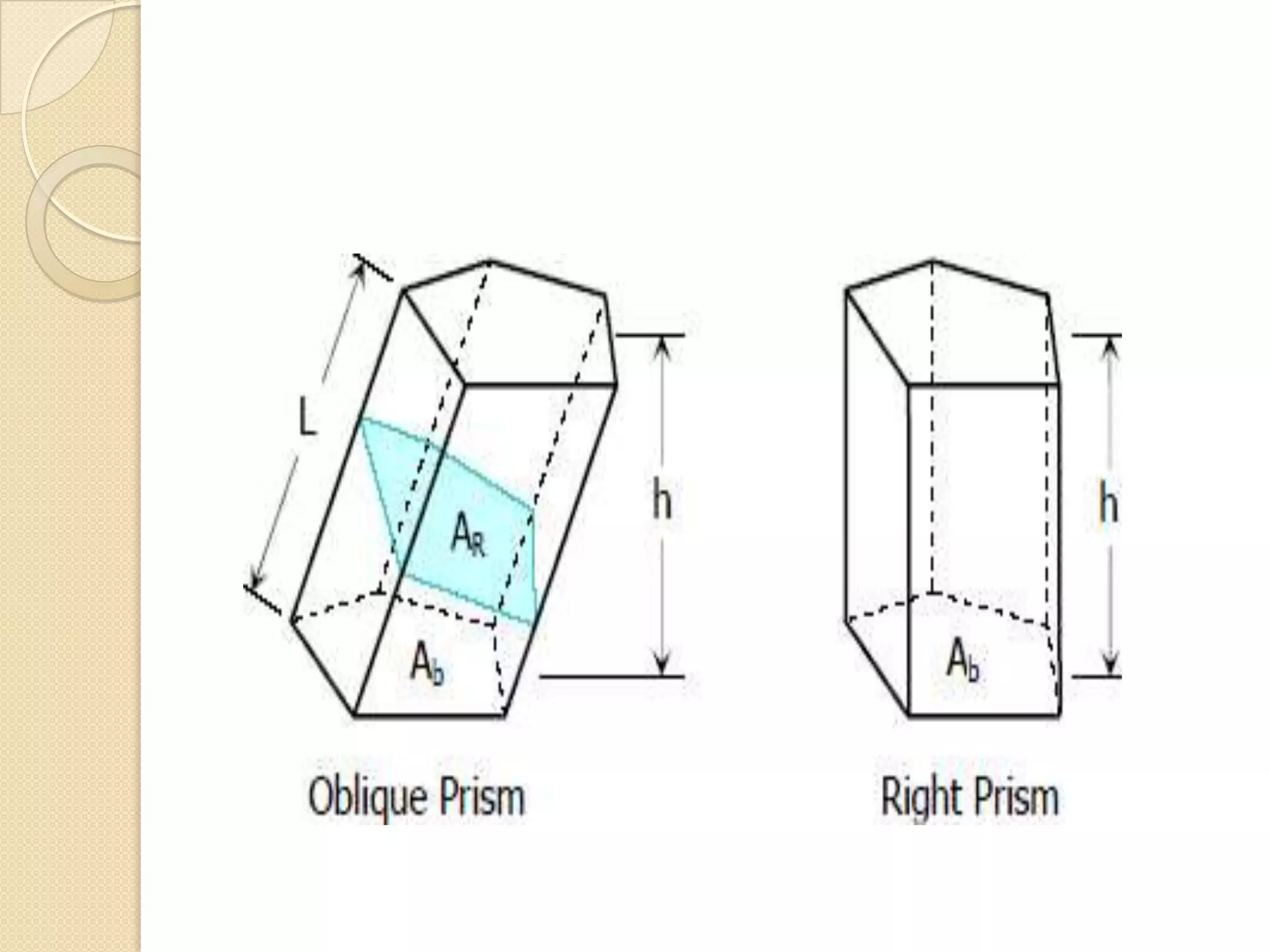
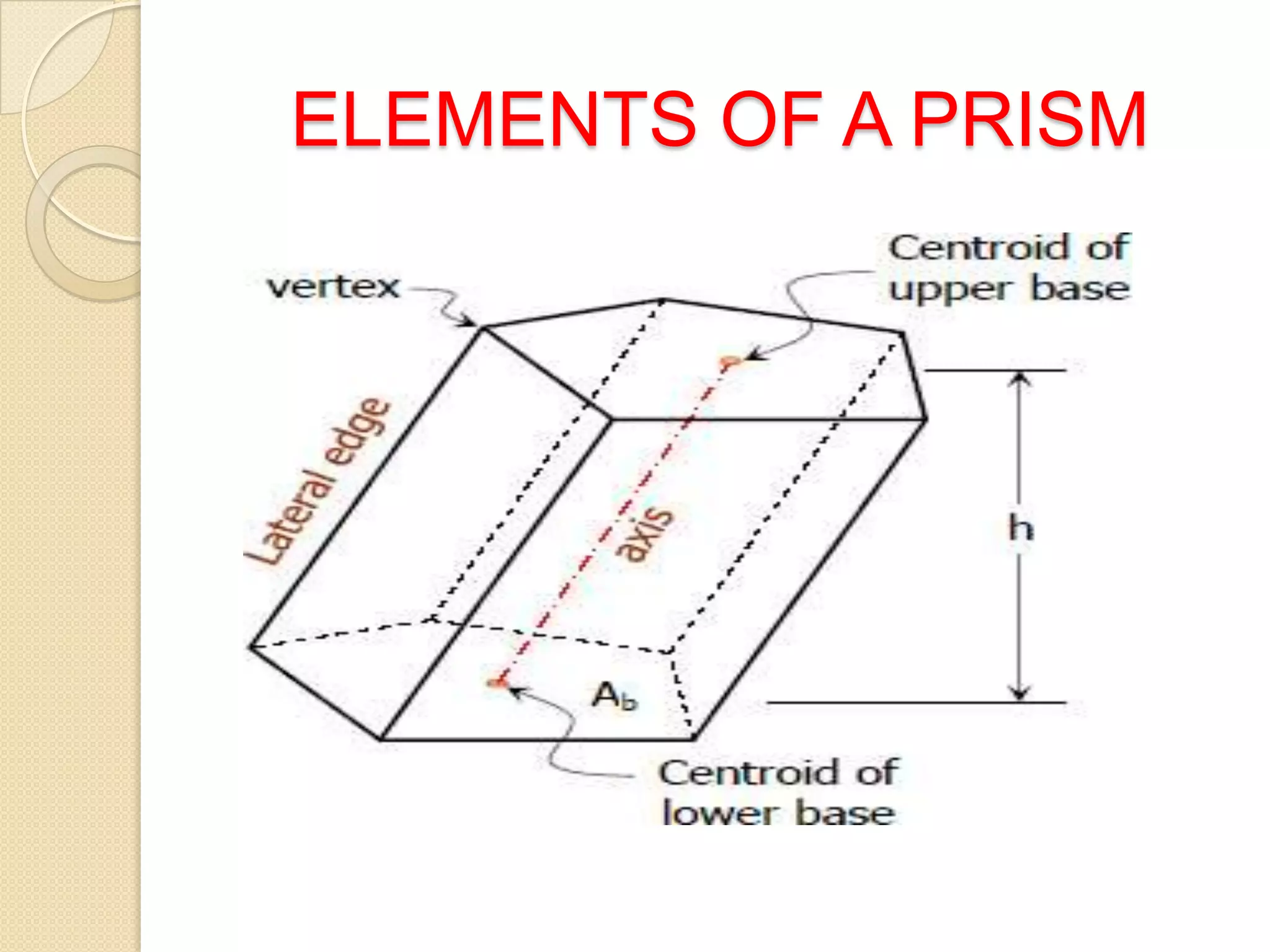
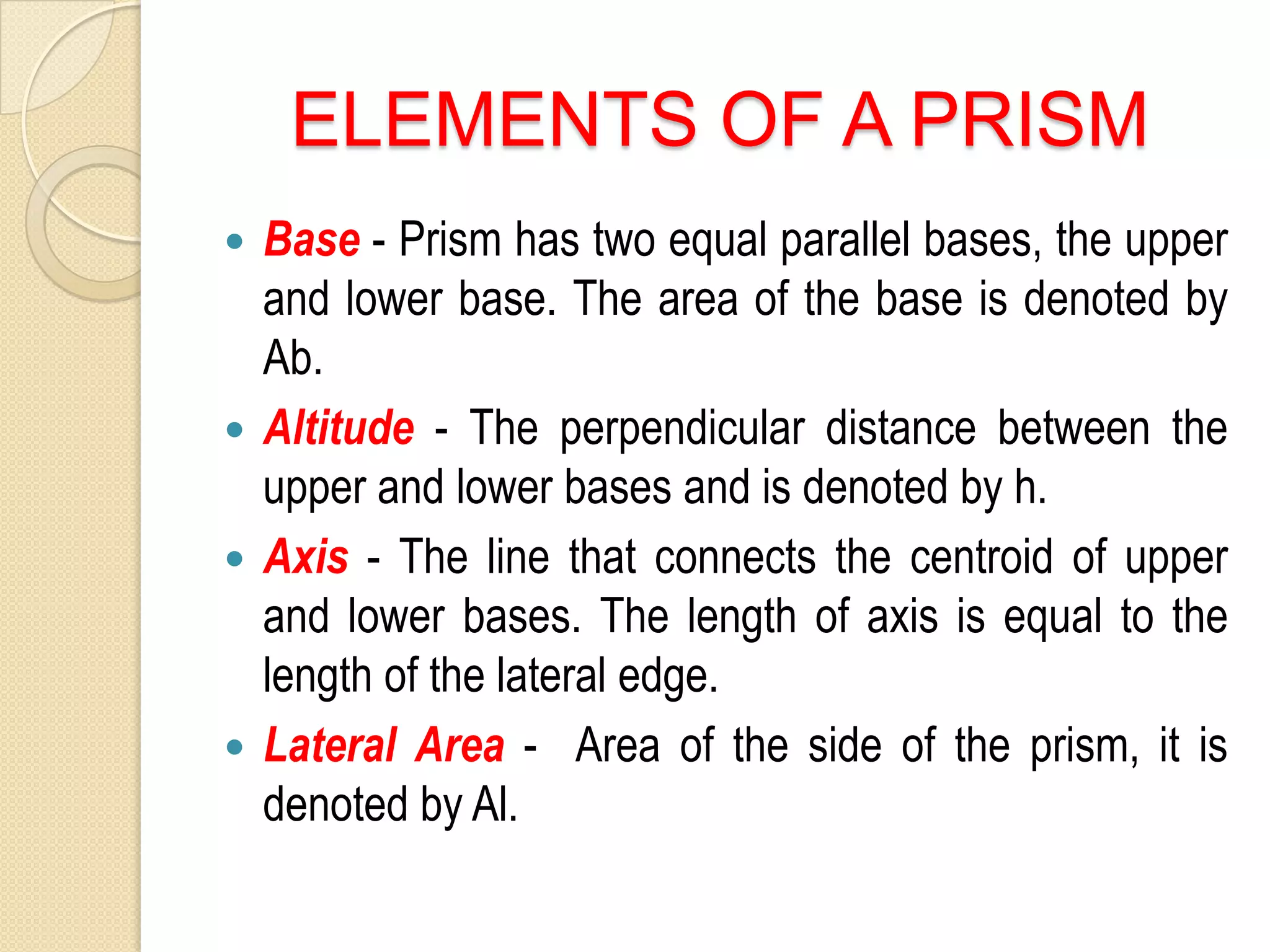
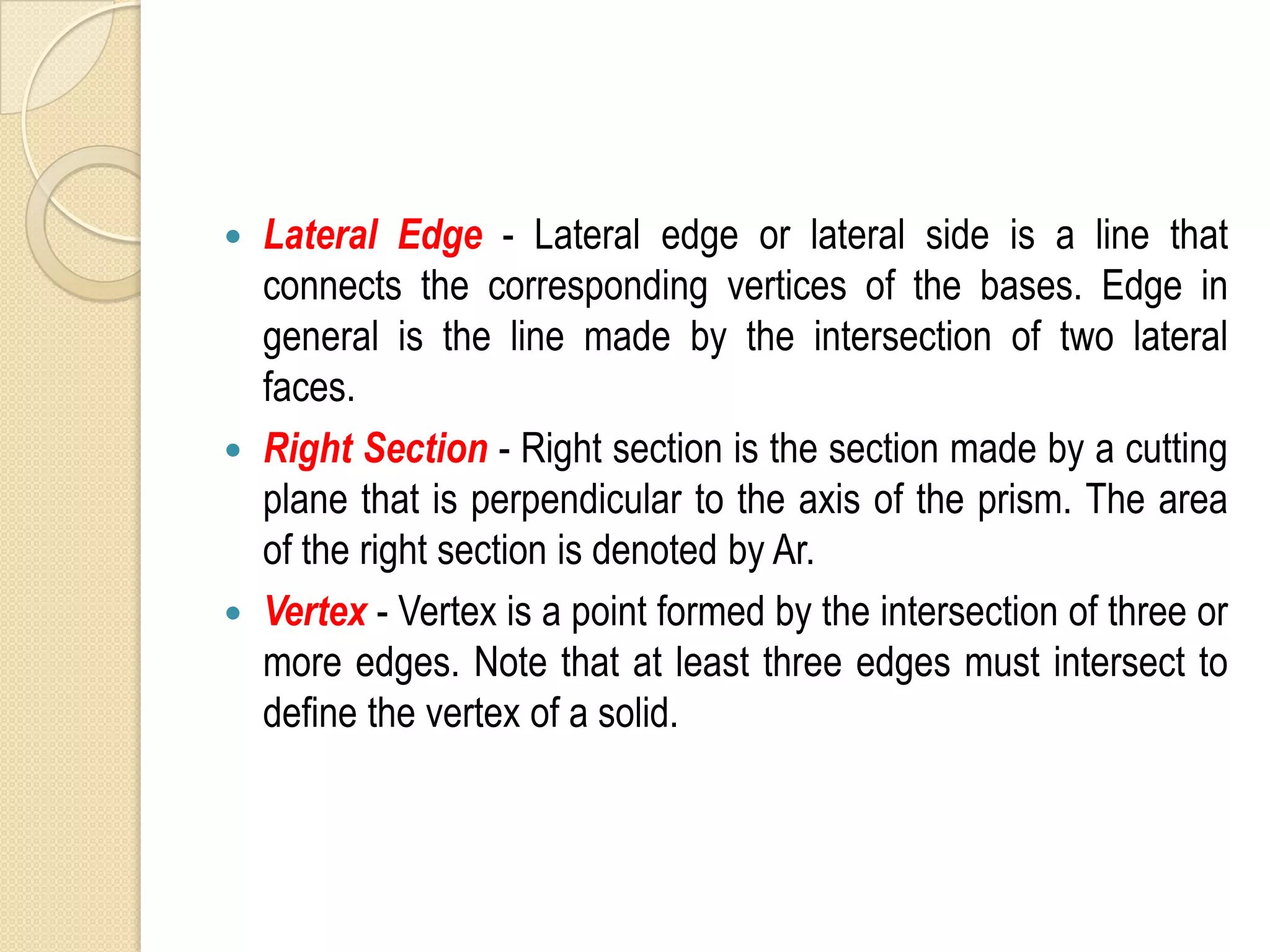
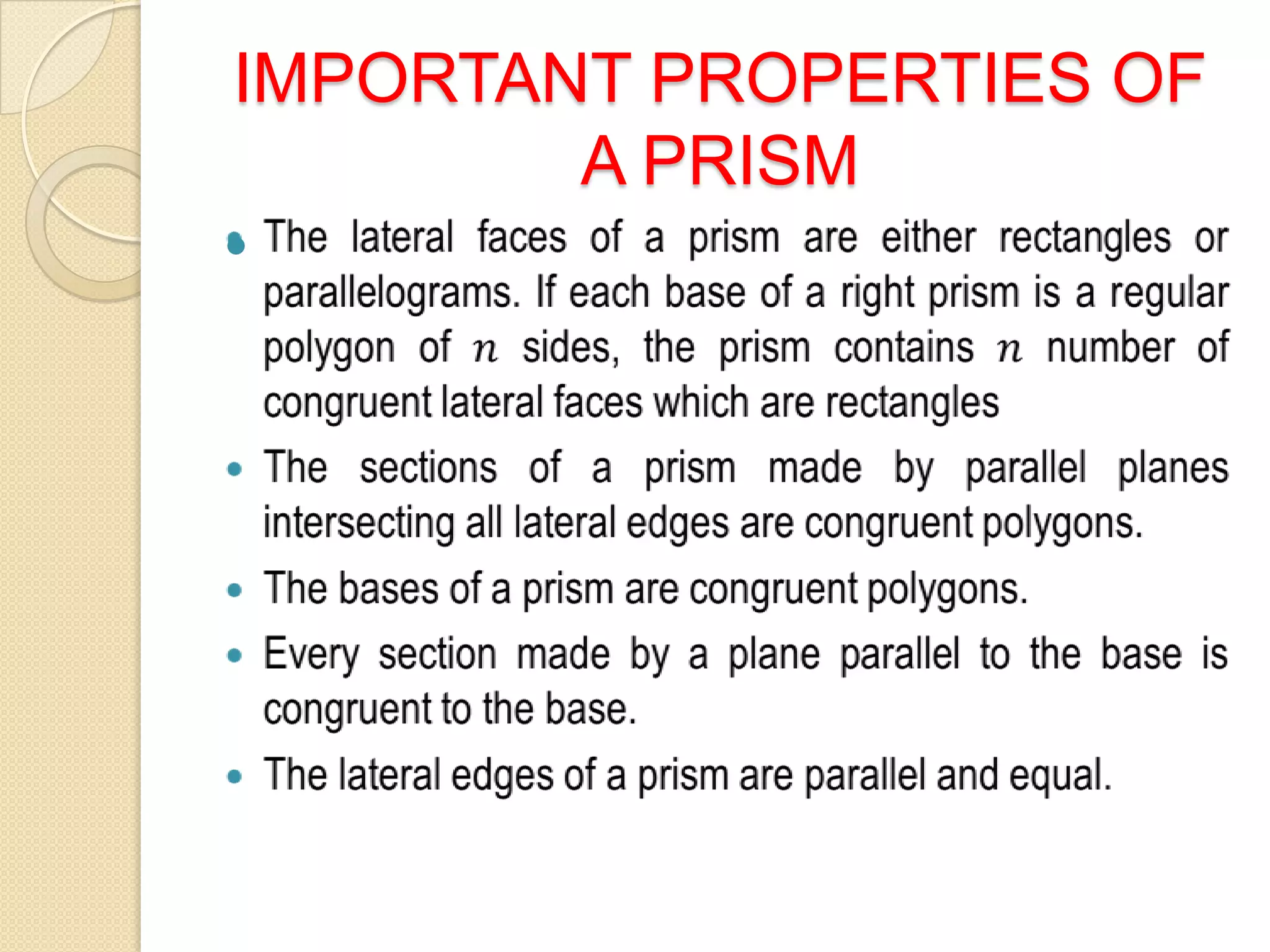
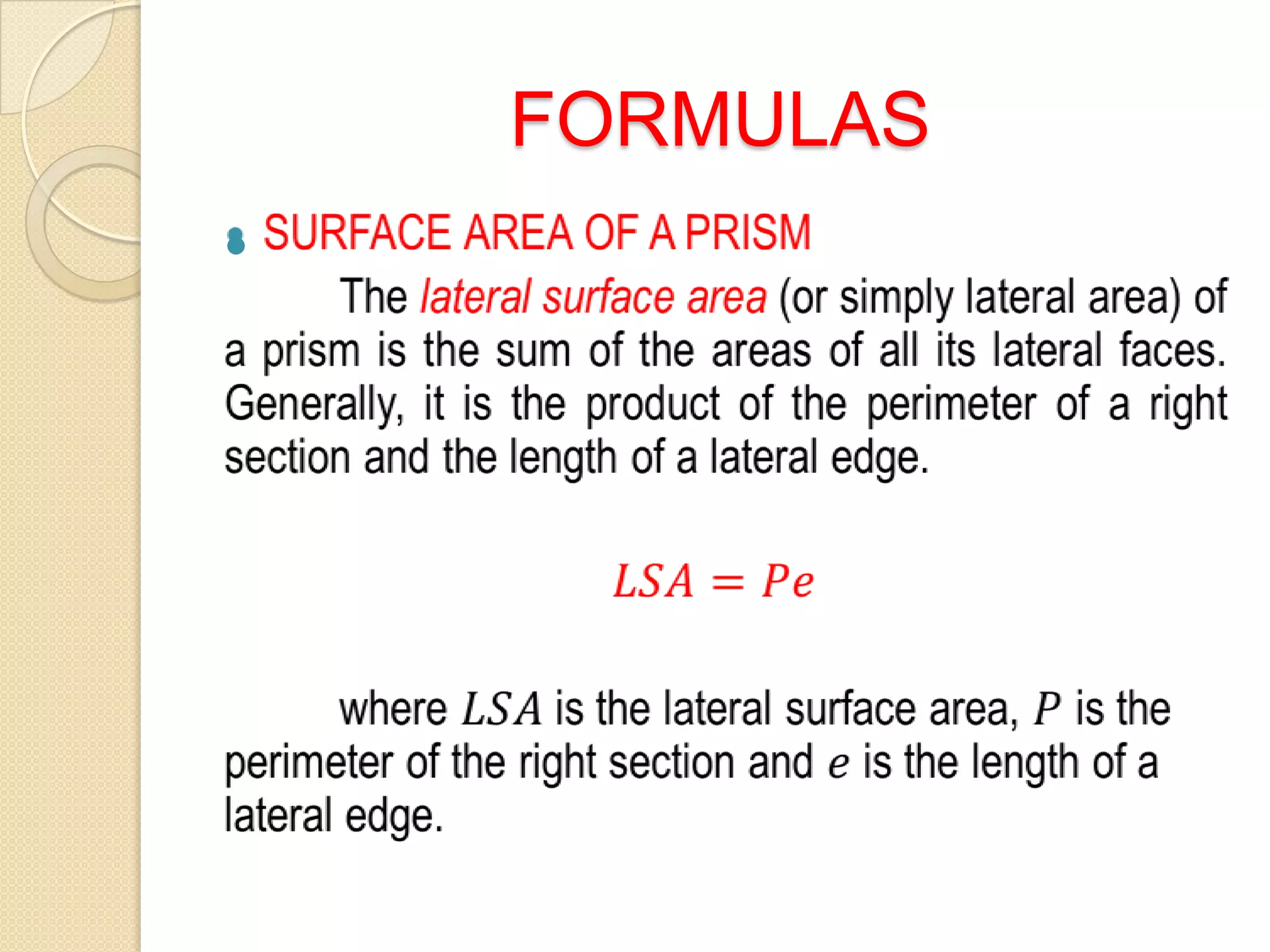
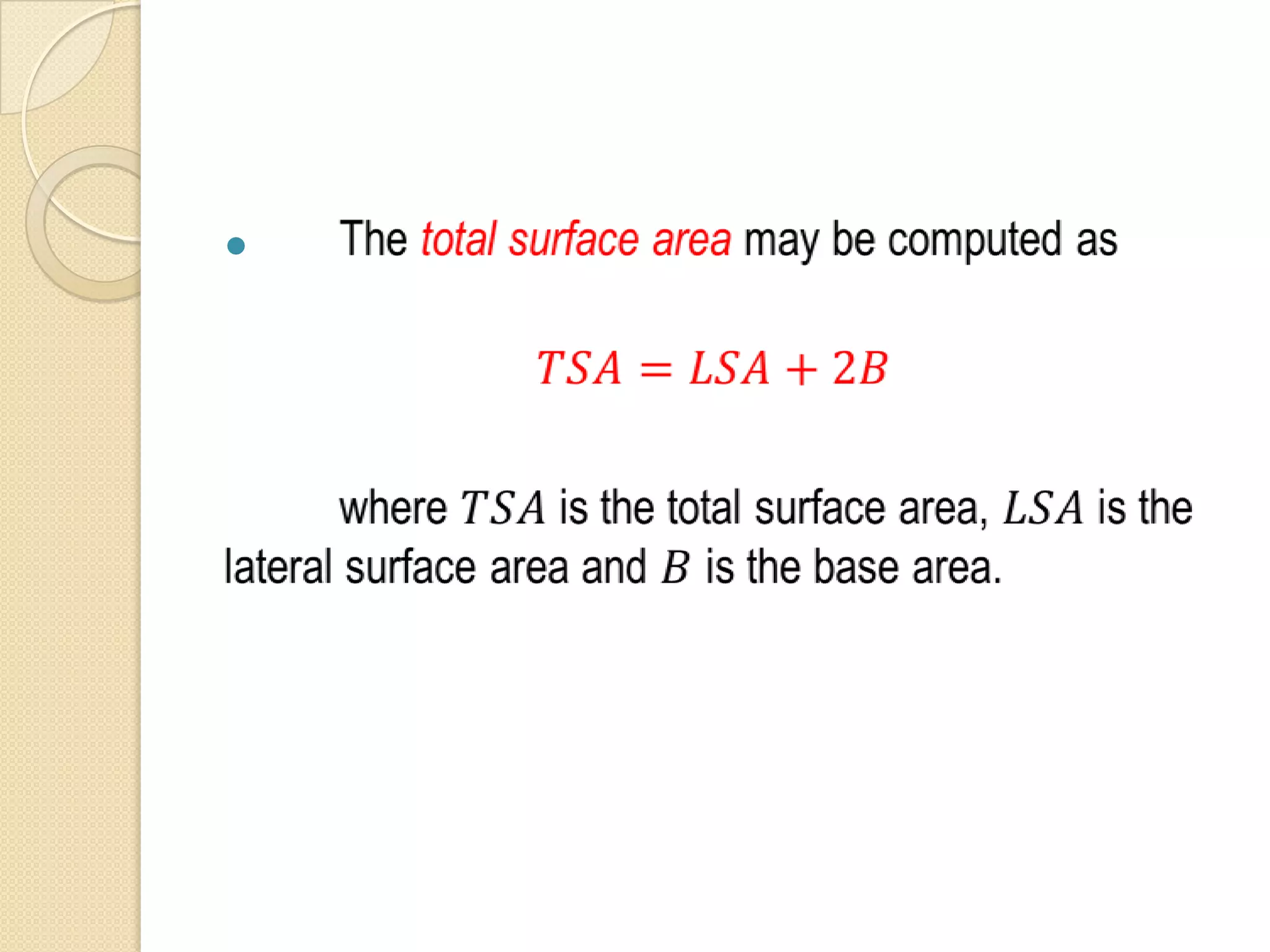
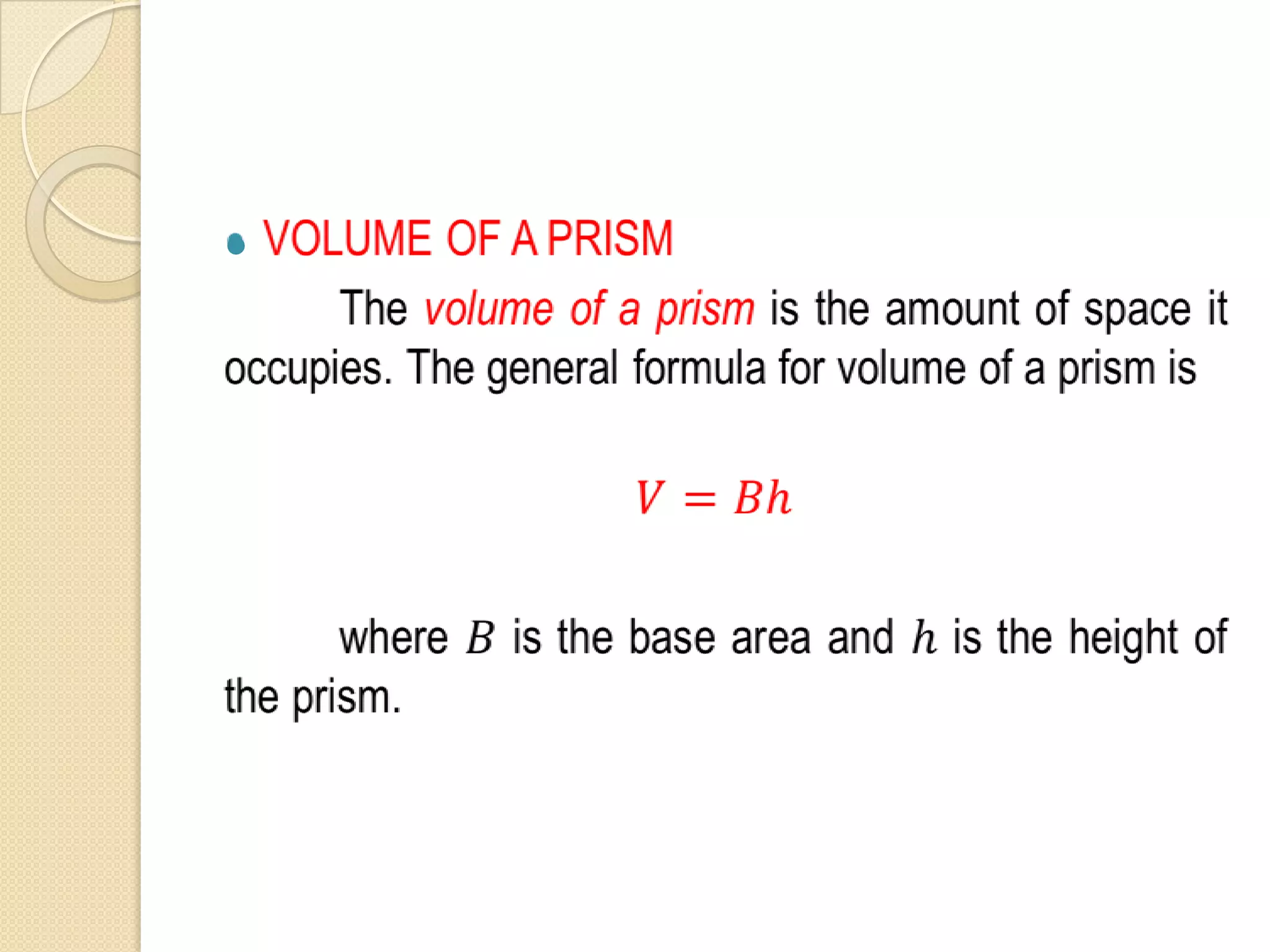
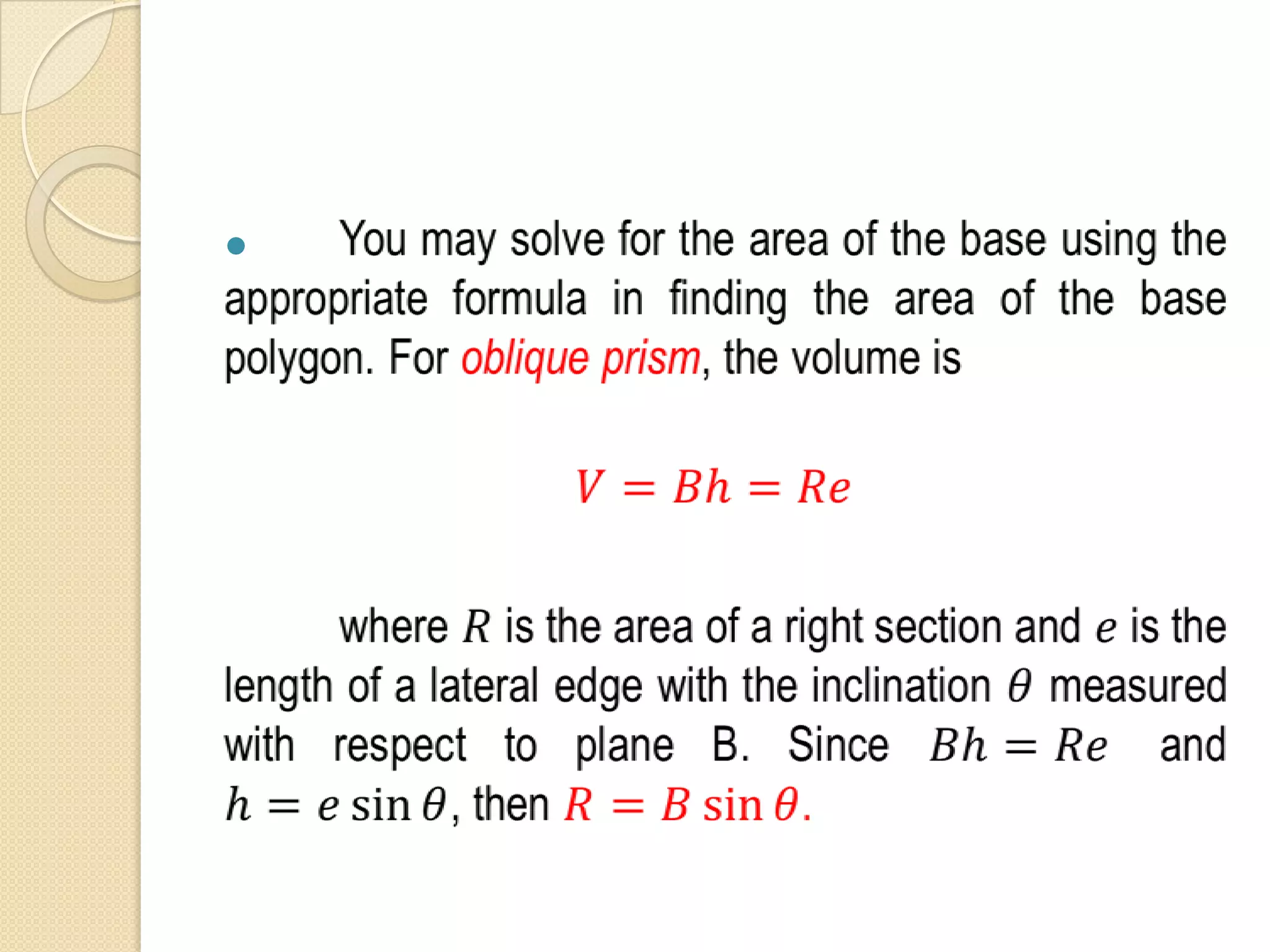

A prism is a polyhedron with two parallel, congruent bases. There are two types of prisms: oblique and right. An oblique prism has a non-perpendicular axis, while a right prism has an axis perpendicular to its bases. A prism has elements including bases, an altitude, an axis, lateral areas, lateral edges, right sections, and vertices. Formulas can be used to calculate a prism's properties like its total surface area, lateral area, volume, and more.


![[Fletcher] history of architecture](https://cdn.slidesharecdn.com/ss_thumbnails/fletcherhistoryofarchitectureonthecomparativemethod-140629155020-phpapp02-thumbnail.jpg?width=640&height=640&fit=bounds)


![Vibe Coding vs. Spec-Driven Development [Free Meetup]](https://cdn.slidesharecdn.com/ss_thumbnails/vibecodingvsspecdrivendevelopment-251209105622-43f455e7-thumbnail.jpg?width=640&height=640&fit=bounds)


