A
Seminar
On
Smart Irrigation System
Using IoT
Submitted By: Submitted To :
Kritika Jain Department of ECE
(15EEAEC045) Govt. Engineering College, Ajmer
CONTENT
• ISRO
• Objectives
• System Hardware Design
• Layout
• Coding used
• Advantages
• Conclusion
ISRO: Indian Space Research Organization
ISRO was formed on Independence Day, 1969.
SLV-3 was India’s first indigenous satellite.
ISRO developed BHUVAN, web based 3D satellite
imagery tool-Indian Incarnation of Google Earth.
ISRO has 13 Centers all across India.
ISRO’s Mars mission is the cheapest so far.
Objectives
To save water and reduce human
intervention in the agriculture field.
Continuously monitoring the status of soil
through sensors and provide signal for
taking necessary action.
To get the output of the sensor and provide
water to crop.
To observe parameters for better yield.
System Hardware Design
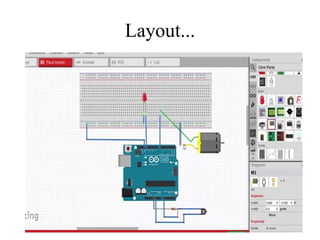
The hardware system consists of:
1. Arduino Uno
2. Soil moisture sensor
3. Extension board
4. LED
5. 10k resistor
6.Water Pump
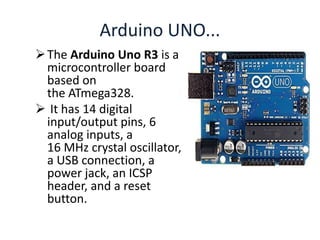
Arduino UNO...
The Arduino Uno R3 is a
microcontroller board
based on
the ATmega328.
 It has 14 digital
input/output pins, 6
analog inputs, a
16 MHz crystal oscillator,
a USB connection, a
power jack, an ICSP
header, and a reset
button.
Soil Moisture Sensor...
The sensor includes a
potentiometer to set
the desired moisture
threshold.
If measured moisture
value>threshold,
output is high and LED
blinks and vice versa.
The output is
connected to a
microcontroller.
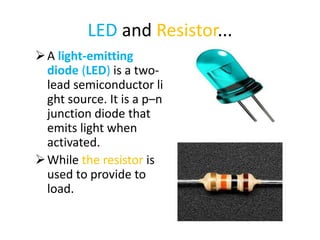
LED and Resistor...
A light-emitting
diode (LED) is a two-
lead semiconductor li
ght source. It is a p–n
junction diode that
emits light when
activated.
While the resistor is
used to provide to
load.
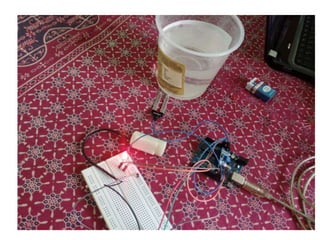
Layout...
CODING USED
• const int VAL_PROBE = 0;
• const int MOISTURE_LEVEL = 700;
•
•
• void setup() {
• Serial.begin(9600);
• pinMode(13,OUTPUT);
• pinMode(7,OUTPUT);
•
• // put your setup code here, to run once:
•
• }
• void LedState(int state)
• {
• digitalWrite(7,state);
•
• }
• void loop() {
• int moisture = analogRead(VAL_PROBE);
• Serial.print("Moisture = ");
• Serial.println(moisture);
• if(moisture>MOISTURE_LEVEL)
• {
• LedState(HIGH);
• digitalWrite(13,LOW);
• }
• else
• {
• LedState(LOW);
• digitalWrite(13,HIGH);
• }
• delay(500);
• }
System uses sensors to measure the
moisture parameter of the soil.
Outputs of the sensors measured are
analog in nature so the system makes use
of ADC which is inbuilt in microcontroller.
The measured value from the sensor is
compared with the threshold value we
have provided.
According to the value the water is
provided to the plant, if needed.
Advantages
• Increase in productivity
• Reduced water consumption
• Safe
• No manpower required
• Reduce soil erosion and nutrient leaching
• Require smaller water source
Conclusion
The smart irrigation system is feasible and cost
effective.
The irrigation system allows cultivation in
places with water security thereby improving
sustainability.
It proves that the use of water can be
diminished.
References
• Neonil123-gist.github.com
• Tope G. Patel 2014 Journal of Current
engineering and research.

Smart Irrigation System Using IoT

  • 1.
    A Seminar On Smart Irrigation System UsingIoT Submitted By: Submitted To : Kritika Jain Department of ECE (15EEAEC045) Govt. Engineering College, Ajmer
  • 2.
    CONTENT • ISRO • Objectives •System Hardware Design • Layout • Coding used • Advantages • Conclusion
  • 3.
    ISRO: Indian SpaceResearch Organization ISRO was formed on Independence Day, 1969. SLV-3 was India’s first indigenous satellite. ISRO developed BHUVAN, web based 3D satellite imagery tool-Indian Incarnation of Google Earth. ISRO has 13 Centers all across India. ISRO’s Mars mission is the cheapest so far.
  • 5.
    Objectives To save waterand reduce human intervention in the agriculture field. Continuously monitoring the status of soil through sensors and provide signal for taking necessary action. To get the output of the sensor and provide water to crop. To observe parameters for better yield.
  • 6.
  • 7.
    The hardware systemconsists of: 1. Arduino Uno 2. Soil moisture sensor 3. Extension board 4. LED 5. 10k resistor 6.Water Pump
  • 8.
    Arduino UNO... The ArduinoUno R3 is a microcontroller board based on the ATmega328.  It has 14 digital input/output pins, 6 analog inputs, a 16 MHz crystal oscillator, a USB connection, a power jack, an ICSP header, and a reset button.
  • 9.
    Soil Moisture Sensor... Thesensor includes a potentiometer to set the desired moisture threshold. If measured moisture value>threshold, output is high and LED blinks and vice versa. The output is connected to a microcontroller.
  • 10.
    LED and Resistor... Alight-emitting diode (LED) is a two- lead semiconductor li ght source. It is a p–n junction diode that emits light when activated. While the resistor is used to provide to load.
  • 11.
  • 12.
    CODING USED • constint VAL_PROBE = 0; • const int MOISTURE_LEVEL = 700; • • • void setup() { • Serial.begin(9600); • pinMode(13,OUTPUT); • pinMode(7,OUTPUT); • • // put your setup code here, to run once: • • } • void LedState(int state) • { • digitalWrite(7,state); • • } • void loop() { • int moisture = analogRead(VAL_PROBE);
  • 13.
    • Serial.print("Moisture ="); • Serial.println(moisture); • if(moisture>MOISTURE_LEVEL) • { • LedState(HIGH); • digitalWrite(13,LOW); • } • else • { • LedState(LOW); • digitalWrite(13,HIGH); • } • delay(500); • }
  • 15.
    System uses sensorsto measure the moisture parameter of the soil. Outputs of the sensors measured are analog in nature so the system makes use of ADC which is inbuilt in microcontroller. The measured value from the sensor is compared with the threshold value we have provided. According to the value the water is provided to the plant, if needed.
  • 16.
    Advantages • Increase inproductivity • Reduced water consumption • Safe • No manpower required • Reduce soil erosion and nutrient leaching • Require smaller water source
  • 17.
    Conclusion The smart irrigationsystem is feasible and cost effective. The irrigation system allows cultivation in places with water security thereby improving sustainability. It proves that the use of water can be diminished.
  • 18.
    References • Neonil123-gist.github.com • TopeG. Patel 2014 Journal of Current engineering and research.