Resolving Workplace Conflicts
                      Effectively

                   Claudette Rowley
                       December 7, 2011


A Service
   Of:                                Sponsored by:
INTEGRATED PLANNING
 Advising nonprofits in:        www.synthesispartnership.com
 • Strategy
 • Planning                                    (617) 969-1881
 • Organizational Development   info@synthesispartnership.com


A Service
   Of:                                                          Sponsored by:
Affordable collaborative data
             management in the cloud.

A Service
   Of:                        Sponsored by:
Today’s Speaker


                                     Claudette Rowley
                                    Coach, Consultant, Author
                                 Metavoice Coaching & Consulting

Assisting with chat questions:                                                             Hosting:
April Hunt, Nonprofit Webinars                                     Sam Frank, Synthesis Partnership

A Service
   Of:                                                  Sponsored by:
Resolving Workplace Conflicts
         Effectively

        NONPROFIT WEBINARS
          DECEMBER 7, 2011
             1-2PM EST
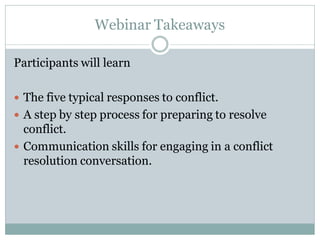
Webinar Takeaways

Participants will learn

 The five typical responses to conflict.
 A step by step process for preparing to resolve
  conflict.
 Communication skills for engaging in a conflict
  resolution conversation.
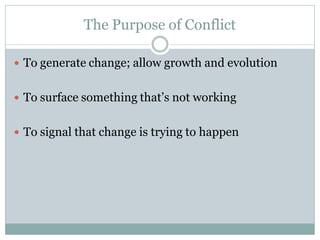
The Purpose of Conflict

 To generate change; allow growth and evolution


 To surface something that’s not working


 To signal that change is trying to happen
Why do we resist/avoid/confront conflict?

 Brain chemistry


 Influence of past experiences


 Feels bad; feels vulnerable


 Not having the skill set


 Not feeling confident
Thomas-Kilmann Conflict Modes (TKI)

1. Competing
2. Collaborating
3. Compromising
4. Avoiding
5. Accommodation
TKI - Competing

Competing is assertive and uncooperative, a power-
 oriented mode. When competing, an individual
 pursues his or her own concerns at the other
 person’s expense, using whatever power seems
 appropriate to win his or her position. Competing
 might mean standing up for your rights, defending a
 position you believe is correct, or simply trying to
 win.
TKI - Collaborating

Collaborating is both assertive and cooperative. When
 collaborating, an individual attempts to work with
 the other person to find a solution that fully satisfies
 the concerns of both. It involves digging into an issue
 to identify the underlying concerns of the two
 individuals and to find an alternative that meets both
 sets of concerns. Collaborating between two persons
 might take the form of exploring a disagreement to
 learn from each other’s insights, resolving some
 condition that would otherwise have them
 competing for resources, or confronting and trying to
 find a creative solution to an interpersonal problem.
TKI - Compromising

Compromising is intermediate in both assertiveness
 and cooperativeness. When compromising, an
 individual has the objective of finding an expedient,
 mutually acceptable solution that partially satisfies
 both parties. Compromising falls on middle ground
 between competing and accommodating, giving up
 more than competing but less than accommodating.
 Likewise, it addresses an issue more directly than
 avoiding but doesn’t explore it in as much as depth
 as collaborating. Compromising might mean
 splitting the difference, exchanging concessions, or
 seeking a quick middle-ground position.
TKI - Avoiding

Avoiding is unassertive and uncooperative. When
 avoiding, an individual does not immediately pursue
 his or her own concerns or those of the other person.
 He or she does not address the conflict. Avoiding
 might take the form of diplomatically sidestepping
 an issue, postponing an issue until a better time, or
 simply withdrawing from a threatening situation.
TKI - Accommodating

Accommodating is unassertive and cooperative – the
 opposite of competing. When accommodating, an
 individual neglects his or her own concerns to satisfy
 the concerns of the other person; there is an element
 of self-sacrifice in this mode. Accommodating might
 take the form of selfless generosity or charity,
 obeying another person’s order when you would
 prefer not to, or yielding to another’s point of view.
Needs


Whose needs are being met in a given situation?
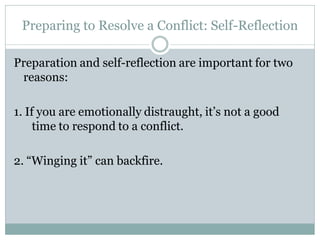
Preparing to Resolve a Conflict: Self-Reflection

Preparation and self-reflection are important for two
 reasons:

1. If you are emotionally distraught, it’s not a good
     time to respond to a conflict.

2. “Winging it” can backfire.
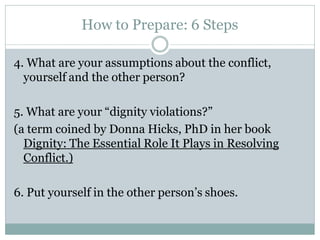
How to Prepare: 6 Steps

4. What are your assumptions about the conflict,
  yourself and the other person?

5. What are your “dignity violations?”
(a term coined by Donna Hicks, PhD in her book
  Dignity: The Essential Role It Plays in Resolving
  Conflict.)

6. Put yourself in the other person’s shoes.
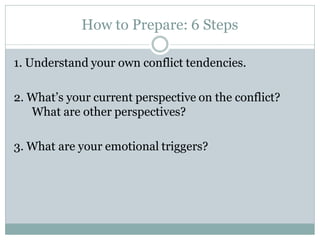
How to Prepare: 6 Steps

1. Understand your own conflict tendencies.

2. What’s your current perspective on the conflict?
   What are other perspectives?

3. What are your emotional triggers?
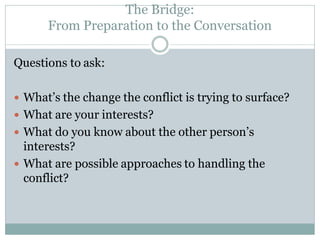
The Bridge:
      From Preparation to the Conversation

Questions to ask:

 What’s the change the conflict is trying to surface?
 What are your interests?
 What do you know about the other person’s
  interests?
 What are possible approaches to handling the
  conflict?
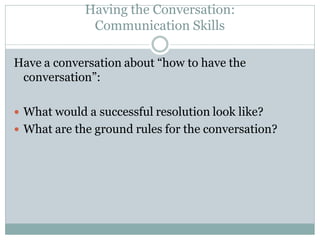
Having the Conversation:
              Communication Skills

Have a conversation about “how to have the
 conversation”:

 What would a successful resolution look like?
 What are the ground rules for the conversation?
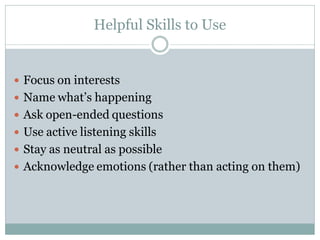
Helpful Skills to Use


 Focus on interests
 Name what’s happening
 Ask open-ended questions
 Use active listening skills
 Stay as neutral as possible
 Acknowledge emotions (rather than acting on them)
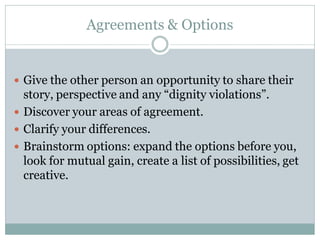
Agreements & Options


 Give the other person an opportunity to share their
  story, perspective and any “dignity violations”.
 Discover your areas of agreement.
 Clarify your differences.
 Brainstorm options: expand the options before you,
  look for mutual gain, create a list of possibilities, get
  creative.
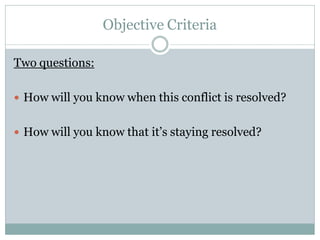
Objective Criteria

Two questions:

 How will you know when this conflict is resolved?


 How will you know that it’s staying resolved?
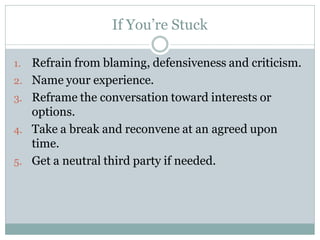
If You’re Stuck

1.   Refrain from blaming, defensiveness and criticism.
2.   Name your experience.
3.   Reframe the conversation toward interests or
     options.
4.   Take a break and reconvene at an agreed upon
     time.
5.   Get a neutral third party if needed.
Find listings for our current season
          of webinars and register at:

            NonprofitWebinars.com


A Service
   Of:                     Sponsored by:

Resolving Workplace Conflicts Effectively

  • 1.
    Resolving Workplace Conflicts Effectively Claudette Rowley December 7, 2011 A Service Of: Sponsored by:
  • 2.
    INTEGRATED PLANNING Advisingnonprofits in: www.synthesispartnership.com • Strategy • Planning (617) 969-1881 • Organizational Development info@synthesispartnership.com A Service Of: Sponsored by:
  • 3.
    Affordable collaborative data management in the cloud. A Service Of: Sponsored by:
  • 4.
    Today’s Speaker Claudette Rowley Coach, Consultant, Author Metavoice Coaching & Consulting Assisting with chat questions: Hosting: April Hunt, Nonprofit Webinars Sam Frank, Synthesis Partnership A Service Of: Sponsored by:
  • 5.
    Resolving Workplace Conflicts Effectively NONPROFIT WEBINARS DECEMBER 7, 2011 1-2PM EST
  • 6.
    Webinar Takeaways Participants willlearn  The five typical responses to conflict.  A step by step process for preparing to resolve conflict.  Communication skills for engaging in a conflict resolution conversation.
  • 7.
    The Purpose ofConflict  To generate change; allow growth and evolution  To surface something that’s not working  To signal that change is trying to happen
  • 8.
    Why do weresist/avoid/confront conflict?  Brain chemistry  Influence of past experiences  Feels bad; feels vulnerable  Not having the skill set  Not feeling confident
  • 9.
    Thomas-Kilmann Conflict Modes(TKI) 1. Competing 2. Collaborating 3. Compromising 4. Avoiding 5. Accommodation
  • 10.
    TKI - Competing Competingis assertive and uncooperative, a power- oriented mode. When competing, an individual pursues his or her own concerns at the other person’s expense, using whatever power seems appropriate to win his or her position. Competing might mean standing up for your rights, defending a position you believe is correct, or simply trying to win.
  • 11.
    TKI - Collaborating Collaboratingis both assertive and cooperative. When collaborating, an individual attempts to work with the other person to find a solution that fully satisfies the concerns of both. It involves digging into an issue to identify the underlying concerns of the two individuals and to find an alternative that meets both sets of concerns. Collaborating between two persons might take the form of exploring a disagreement to learn from each other’s insights, resolving some condition that would otherwise have them competing for resources, or confronting and trying to find a creative solution to an interpersonal problem.
  • 12.
    TKI - Compromising Compromisingis intermediate in both assertiveness and cooperativeness. When compromising, an individual has the objective of finding an expedient, mutually acceptable solution that partially satisfies both parties. Compromising falls on middle ground between competing and accommodating, giving up more than competing but less than accommodating. Likewise, it addresses an issue more directly than avoiding but doesn’t explore it in as much as depth as collaborating. Compromising might mean splitting the difference, exchanging concessions, or seeking a quick middle-ground position.
  • 13.
    TKI - Avoiding Avoidingis unassertive and uncooperative. When avoiding, an individual does not immediately pursue his or her own concerns or those of the other person. He or she does not address the conflict. Avoiding might take the form of diplomatically sidestepping an issue, postponing an issue until a better time, or simply withdrawing from a threatening situation.
  • 14.
    TKI - Accommodating Accommodatingis unassertive and cooperative – the opposite of competing. When accommodating, an individual neglects his or her own concerns to satisfy the concerns of the other person; there is an element of self-sacrifice in this mode. Accommodating might take the form of selfless generosity or charity, obeying another person’s order when you would prefer not to, or yielding to another’s point of view.
  • 15.
    Needs Whose needs arebeing met in a given situation?
  • 16.
    Preparing to Resolvea Conflict: Self-Reflection Preparation and self-reflection are important for two reasons: 1. If you are emotionally distraught, it’s not a good time to respond to a conflict. 2. “Winging it” can backfire.
  • 17.
    How to Prepare:6 Steps 4. What are your assumptions about the conflict, yourself and the other person? 5. What are your “dignity violations?” (a term coined by Donna Hicks, PhD in her book Dignity: The Essential Role It Plays in Resolving Conflict.) 6. Put yourself in the other person’s shoes.
  • 18.
    How to Prepare:6 Steps 1. Understand your own conflict tendencies. 2. What’s your current perspective on the conflict? What are other perspectives? 3. What are your emotional triggers?
  • 19.
    The Bridge: From Preparation to the Conversation Questions to ask:  What’s the change the conflict is trying to surface?  What are your interests?  What do you know about the other person’s interests?  What are possible approaches to handling the conflict?
  • 20.
    Having the Conversation: Communication Skills Have a conversation about “how to have the conversation”:  What would a successful resolution look like?  What are the ground rules for the conversation?
  • 21.
    Helpful Skills toUse  Focus on interests  Name what’s happening  Ask open-ended questions  Use active listening skills  Stay as neutral as possible  Acknowledge emotions (rather than acting on them)
  • 22.
    Agreements & Options Give the other person an opportunity to share their story, perspective and any “dignity violations”.  Discover your areas of agreement.  Clarify your differences.  Brainstorm options: expand the options before you, look for mutual gain, create a list of possibilities, get creative.
  • 23.
    Objective Criteria Two questions: How will you know when this conflict is resolved?  How will you know that it’s staying resolved?
  • 24.
    If You’re Stuck 1. Refrain from blaming, defensiveness and criticism. 2. Name your experience. 3. Reframe the conversation toward interests or options. 4. Take a break and reconvene at an agreed upon time. 5. Get a neutral third party if needed.
  • 25.
    Find listings forour current season of webinars and register at: NonprofitWebinars.com A Service Of: Sponsored by: