Building Interpersonal Relationship
             &Conflict Managemnt
             How to have a healthy work enviroment through
              avoiding conflicts and building Interpersonal
                               relationship


By Ashraf M. Diaa
Member of the australian Institute of Training & Development
Before we start
• Empty your cup ...We will refill
  together

• We will Work in Teams

• Kindly have your Communicators on
  silent mode

• Choose a name for your team
Corporate life
• What is the price we pay from living in a corporate life

• Are we living it , suffering in it , or enjoying it

• Are we ready to apply what we will go through today
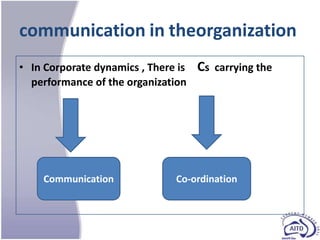
communication in theorganization
• In Corporate dynamics , There is   Cs carrying the
  performance of the organization


    Communication              Co-ordination
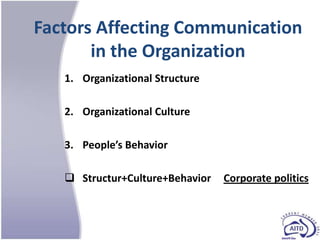
Factors Affecting Communication
       in the Organization
   1. Organizational Structure

   2. Organizational Culture

   3. People’s Behavior

    Structur+Culture+Behavior   Corporate politics
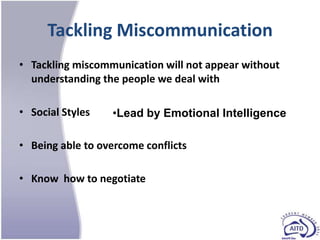
Tackling Miscommunication
• Tackling miscommunication will not appear without
  understanding the people we deal with

• Social Styles   •Lead by Emotional Intelligence

• Being able to overcome conflicts

• Know how to negotiate
How does the society see us
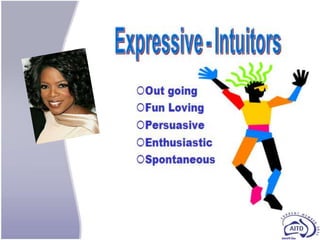
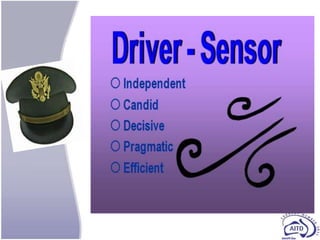
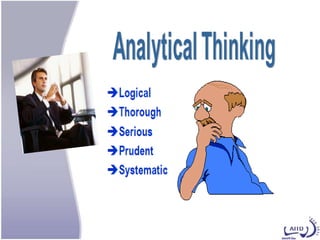
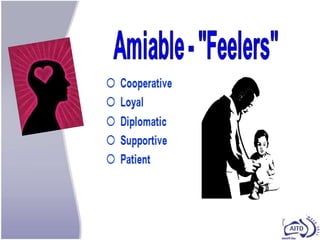
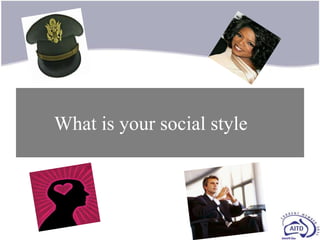
What is your social style
What is a Conflict
Every Team will come out with a definition
for the word ”conflict


---------------------------------
---------------------------------
---------------------------------
---------------------------------
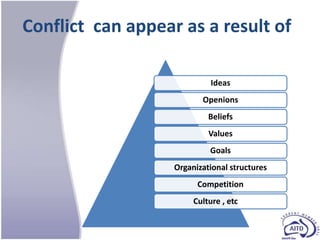
Conflict can appear as a result of

                             Ideas
                          Openions
                            Beliefs
                            Values
                            Goals
                   Organizational structures
                         Competition
                        Culture , etc
Sources of Conflict
Ambiguous Authority

”Who’s going to run for the next promotion

Example

Conflict of interest

Asses your son and his competitor for a post

Example

Communication barriers

Language , Education , Culture or Lack of communication skills

Example
Sources of Conflict
Economic Conflict

Wars in times of Arabia for water sources

Example

Over dependency of one party

All activities are frozen until finance approves the budget

Example
Misconceptions about Conflict
         Harmony is normal and conflict is not


        Conflict and Disagreement are the same


       Conflict is a result of ”Personality Problem


            Conflict and anger are the same
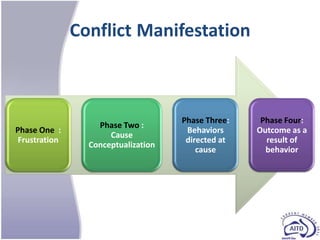
Conflict Manifestation


                                     Phase Three:    Phase Four:
                   Phase Two :
Phase One :                           Behaviors     Outcome as a
                      Cause
 Frustration                          directed at     result of
                 Conceptualization
                                         cause        behavior
Activity
1. Identify a conflict situation that you have faced
   recently

2. Write down what frustrated you

3. Make a note on what may have caused the conflict
Strategies to manage conflict
       •   Avoidance
       •   Competition (A)
       •   Accommodation (B)
       •   Compromise (C)
       •   Collaboration (D)


20
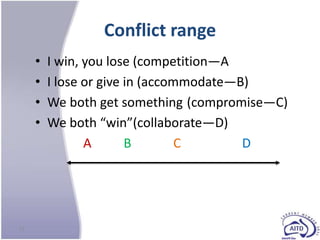
Conflict range
     •   I win, you lose (competition—A
     •   I lose or give in (accommodate—B)
     •   We both get something (compromise—C)
     •   We both “win”(collaborate—D)
                A       B        C       D


21
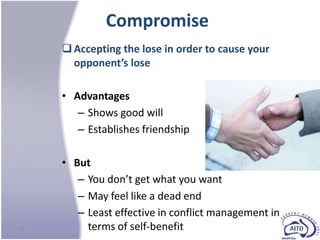
Compromise
      Accepting the lose in order to cause your
       opponent’s lose

     • Advantages
        – Shows good will
        – Establishes friendship

     • But
        – You don’t get what you want
        – May feel like a dead end
        – Least effective in conflict management in
22        terms of self-benefit
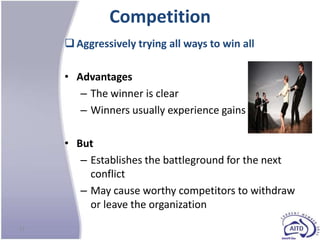
Competition
      Aggressively trying all ways to win all

     • Advantages
        – The winner is clear
        – Winners usually experience gains

     • But
        – Establishes the battleground for the next
          conflict
        – May cause worthy competitors to withdraw
          or leave the organization
23
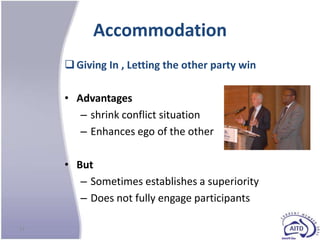
Accommodation
      Giving In , Letting the other party win

     • Advantages
        – shrink conflict situation
        – Enhances ego of the other

     • But
        – Sometimes establishes a superiority
        – Does not fully engage participants

24
Avoidance
 Denying existence of conflict

• Advantages
- If it ‘s not broken...No need to fix it
- Gives a space for more important issues &
  Priorities

• But
- Status quo does not stay for much time
- When conflict is back,it is stronger and
  cumulative
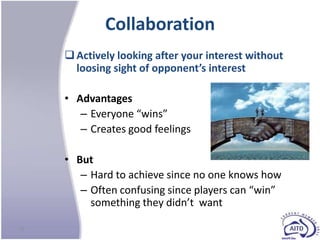
Collaboration
      Actively looking after your interest without
       loosing sight of opponent’s interest

     • Advantages
        – Everyone “wins”
        – Creates good feelings

     • But
        – Hard to achieve since no one knows how
        – Often confusing since players can “win”
          something they didn’t want

26
Activity
1. Look back in the same conflict situation

2. Which way did you use

3. What is your comment about your
   communication skills
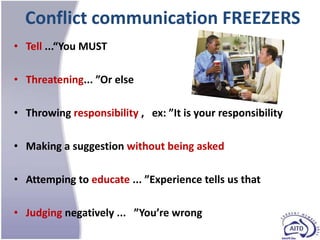
Conflict communication FREEZERS
• Tell ...”You MUST

• Threatening... ”Or else

• Throwing responsibility , ex: ”It is your responsibility

• Making a suggestion without being asked

• Attemping to educate ... ”Experience tells us that

• Judging negatively ... ”You’re wrong
Conflict communication FREEZERS

• Psychoanalysing people ... ”You have a problem with
  communication

• Giving the third degree, ”Why a person like you would do
  that

• Respond to the problem by kidding.. ”You think you’ve got a
  problem
Going Beyond freezing Behaviors
• Begin With Communication
Active listening
Ask Open–ended questions

• Separate the problem from the person
Redefine the conflict
Find a common ground
Going Beyond freezing Behaviors
• Use ”I” for example not ”you
Dont Say: A cardiologist is the doctor you visit
  when you get heart diease

Say: A cardiologist is a doctor i may visit if I
 got heart disease

Best: A cardiologist is a doctor people visit if
 someone got heart disease
Going Beyond freezing Behaviors
• Partial Negotiation
 Negotiate positively (Integrational Negotiation
 Avoid Distributive Bargening

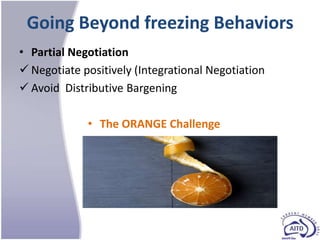
             • The ORANGE Challenge
Activity
1. Using the same conflict ,Was your behavior
   constructive or Destructive

2. ROLEPLAYS : Which department will have the biggest
   share of the extra budget
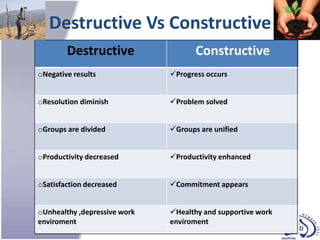
Destructive Vs Constructive
        Destructive                  Constructive
oNegative results             Progress occurs


oResolution diminish          Problem solved


oGroups are divided           Groups are unified


oProductivity decreased       Productivity enhanced


oSatisfaction decreased       Commitment appears


oUnhealthy ,depressive work   Healthy and supportive work
enviroment                    enviroment
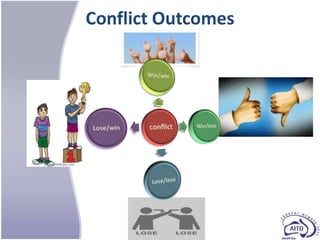
Conflict Outcomes
Activity
1. How did the conflict end
 Win/Win
 Win/Lose
 Lose/Win
 Lose/Lose

2. What could be the other process
Thank you for participation
,                             w
                Ashraf Diaa
aiting for your feedback

Conflict mgmt workshop

  • 1.
    Building Interpersonal Relationship &Conflict Managemnt How to have a healthy work enviroment through avoiding conflicts and building Interpersonal relationship By Ashraf M. Diaa Member of the australian Institute of Training & Development
  • 2.
    Before we start •Empty your cup ...We will refill together • We will Work in Teams • Kindly have your Communicators on silent mode • Choose a name for your team
  • 3.
    Corporate life • Whatis the price we pay from living in a corporate life • Are we living it , suffering in it , or enjoying it • Are we ready to apply what we will go through today
  • 4.
    communication in theorganization •In Corporate dynamics , There is Cs carrying the performance of the organization Communication Co-ordination
  • 5.
    Factors Affecting Communication in the Organization 1. Organizational Structure 2. Organizational Culture 3. People’s Behavior  Structur+Culture+Behavior Corporate politics
  • 6.
    Tackling Miscommunication • Tacklingmiscommunication will not appear without understanding the people we deal with • Social Styles •Lead by Emotional Intelligence • Being able to overcome conflicts • Know how to negotiate
  • 7.
    How does thesociety see us
  • 12.
    What is yoursocial style
  • 13.
    What is aConflict Every Team will come out with a definition for the word ”conflict --------------------------------- --------------------------------- --------------------------------- ---------------------------------
  • 14.
    Conflict can appearas a result of Ideas Openions Beliefs Values Goals Organizational structures Competition Culture , etc
  • 15.
    Sources of Conflict AmbiguousAuthority ”Who’s going to run for the next promotion Example Conflict of interest Asses your son and his competitor for a post Example Communication barriers Language , Education , Culture or Lack of communication skills Example
  • 16.
    Sources of Conflict EconomicConflict Wars in times of Arabia for water sources Example Over dependency of one party All activities are frozen until finance approves the budget Example
  • 17.
    Misconceptions about Conflict Harmony is normal and conflict is not Conflict and Disagreement are the same Conflict is a result of ”Personality Problem Conflict and anger are the same
  • 18.
    Conflict Manifestation Phase Three: Phase Four: Phase Two : Phase One : Behaviors Outcome as a Cause Frustration directed at result of Conceptualization cause behavior
  • 19.
    Activity 1. Identify aconflict situation that you have faced recently 2. Write down what frustrated you 3. Make a note on what may have caused the conflict
  • 20.
    Strategies to manageconflict • Avoidance • Competition (A) • Accommodation (B) • Compromise (C) • Collaboration (D) 20
  • 21.
    Conflict range • I win, you lose (competition—A • I lose or give in (accommodate—B) • We both get something (compromise—C) • We both “win”(collaborate—D) A B C D 21
  • 22.
    Compromise  Accepting the lose in order to cause your opponent’s lose • Advantages – Shows good will – Establishes friendship • But – You don’t get what you want – May feel like a dead end – Least effective in conflict management in 22 terms of self-benefit
  • 23.
    Competition  Aggressively trying all ways to win all • Advantages – The winner is clear – Winners usually experience gains • But – Establishes the battleground for the next conflict – May cause worthy competitors to withdraw or leave the organization 23
  • 24.
    Accommodation  Giving In , Letting the other party win • Advantages – shrink conflict situation – Enhances ego of the other • But – Sometimes establishes a superiority – Does not fully engage participants 24
  • 25.
    Avoidance  Denying existenceof conflict • Advantages - If it ‘s not broken...No need to fix it - Gives a space for more important issues & Priorities • But - Status quo does not stay for much time - When conflict is back,it is stronger and cumulative
  • 26.
    Collaboration  Actively looking after your interest without loosing sight of opponent’s interest • Advantages – Everyone “wins” – Creates good feelings • But – Hard to achieve since no one knows how – Often confusing since players can “win” something they didn’t want 26
  • 27.
    Activity 1. Look backin the same conflict situation 2. Which way did you use 3. What is your comment about your communication skills
  • 28.
    Conflict communication FREEZERS •Tell ...”You MUST • Threatening... ”Or else • Throwing responsibility , ex: ”It is your responsibility • Making a suggestion without being asked • Attemping to educate ... ”Experience tells us that • Judging negatively ... ”You’re wrong
  • 29.
    Conflict communication FREEZERS •Psychoanalysing people ... ”You have a problem with communication • Giving the third degree, ”Why a person like you would do that • Respond to the problem by kidding.. ”You think you’ve got a problem
  • 30.
    Going Beyond freezingBehaviors • Begin With Communication Active listening Ask Open–ended questions • Separate the problem from the person Redefine the conflict Find a common ground
  • 31.
    Going Beyond freezingBehaviors • Use ”I” for example not ”you Dont Say: A cardiologist is the doctor you visit when you get heart diease Say: A cardiologist is a doctor i may visit if I got heart disease Best: A cardiologist is a doctor people visit if someone got heart disease
  • 32.
    Going Beyond freezingBehaviors • Partial Negotiation  Negotiate positively (Integrational Negotiation  Avoid Distributive Bargening • The ORANGE Challenge
  • 33.
    Activity 1. Using thesame conflict ,Was your behavior constructive or Destructive 2. ROLEPLAYS : Which department will have the biggest share of the extra budget
  • 34.
    Destructive Vs Constructive Destructive Constructive oNegative results Progress occurs oResolution diminish Problem solved oGroups are divided Groups are unified oProductivity decreased Productivity enhanced oSatisfaction decreased Commitment appears oUnhealthy ,depressive work Healthy and supportive work enviroment enviroment
  • 35.
  • 36.
    Activity 1. How didthe conflict end  Win/Win  Win/Lose  Lose/Win  Lose/Lose 2. What could be the other process
  • 37.
    Thank you forparticipation , w Ashraf Diaa aiting for your feedback