Downloaded 54 times


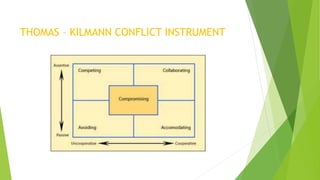
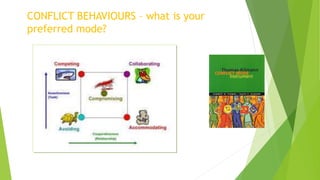
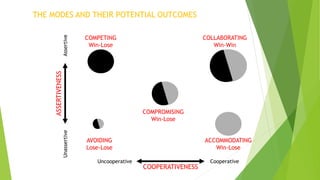
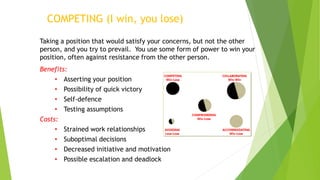


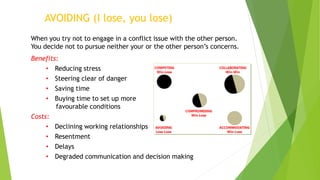
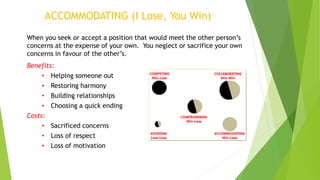

The document discusses conflict resolution and the Thomas-Kilmann Conflict Mode Instrument. It describes conflict as the result of differences in needs, values, and motivations. There are two views of conflict - the traditional view that sees it as something to avoid, and the alternative view that sees it as inevitable and sometimes necessary for change. The document outlines five conflict modes or behaviors assessed by the Thomas-Kilmann instrument: competing, collaborating, compromising, avoiding, and accommodating. Each mode has potential benefits and costs described in the document.


