Conflict Management and 
Peace Building 
Presenter: Lamin K. Sonko 
松明愷
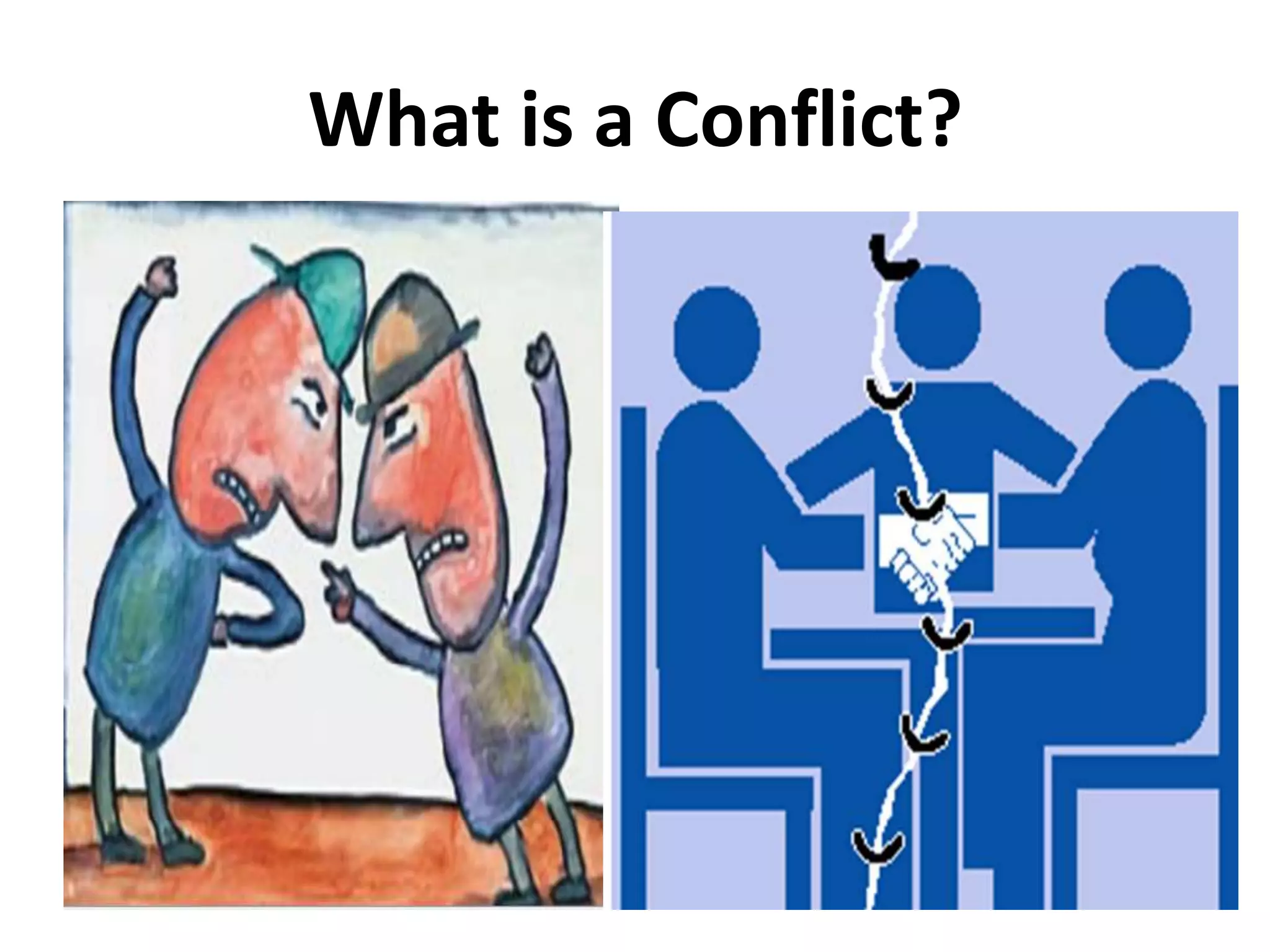
What is a Conflict?
Definition 
• Two people disagree about something 
• Natural part of life 
• Problem is inevitable 
• Can be positive and healthy 
• Can be negative in terms of disagreement, hurt 
feelings and fracture relationships
The Conflict web 
• Stagnation in groups 
• Problems aired & resolved 
• New learning & awareness 
• Personal & social change
Causes of Conflict 
• Conflict over resources 
• Conflicts over psychological needs 
• Conflicts involving values 
Escalation 
 Lack of necessary peacemaking skills 
 De-escalation 
 Use of conflict resolution skills
Conflict Handling Modes 
• Competing 
• Accommodating 
• Avoiding 
• Collaborating 
• Compromising
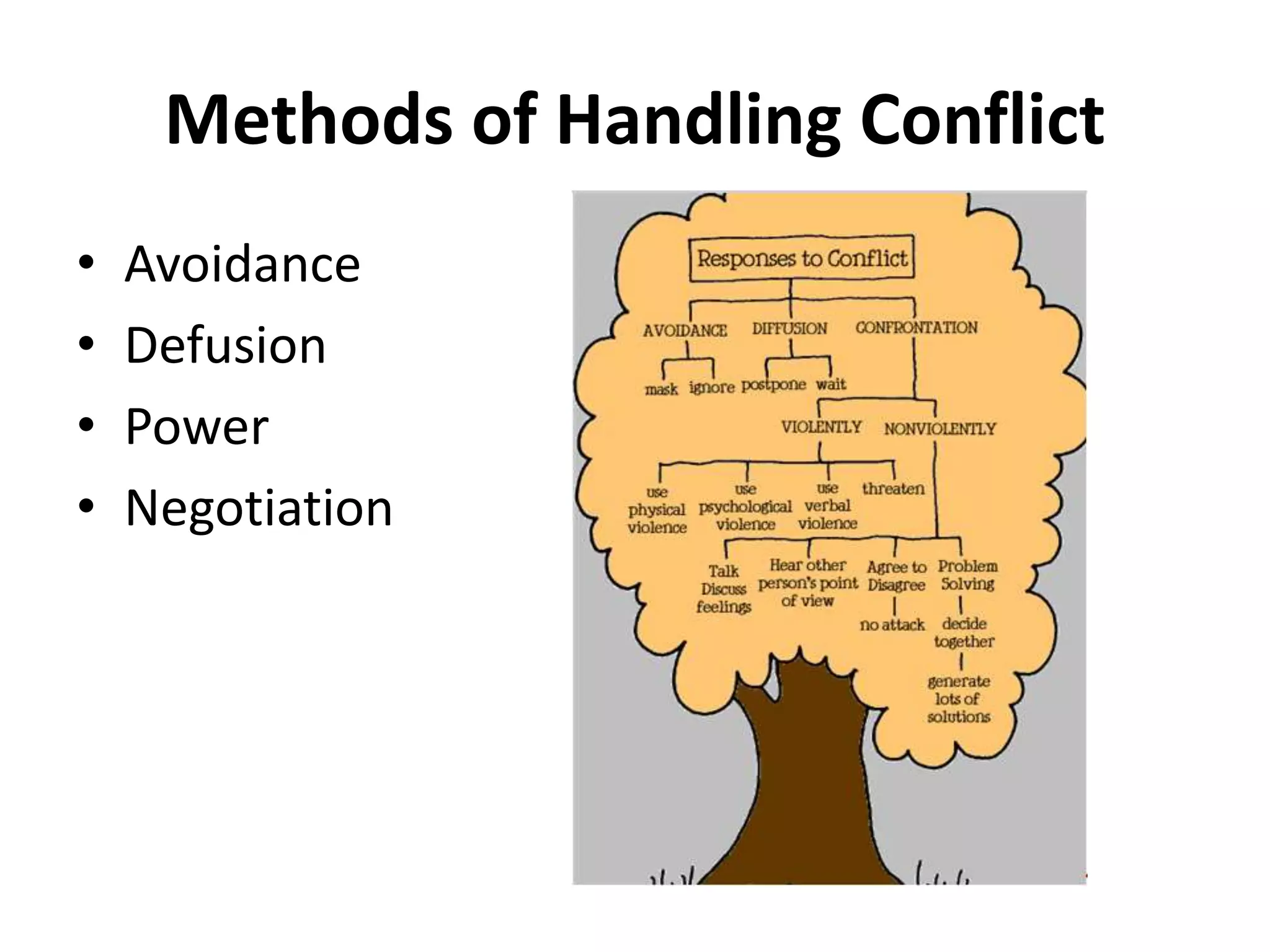
Methods of Handling Conflict 
• Avoidance 
• Defusion 
• Power 
• Negotiation
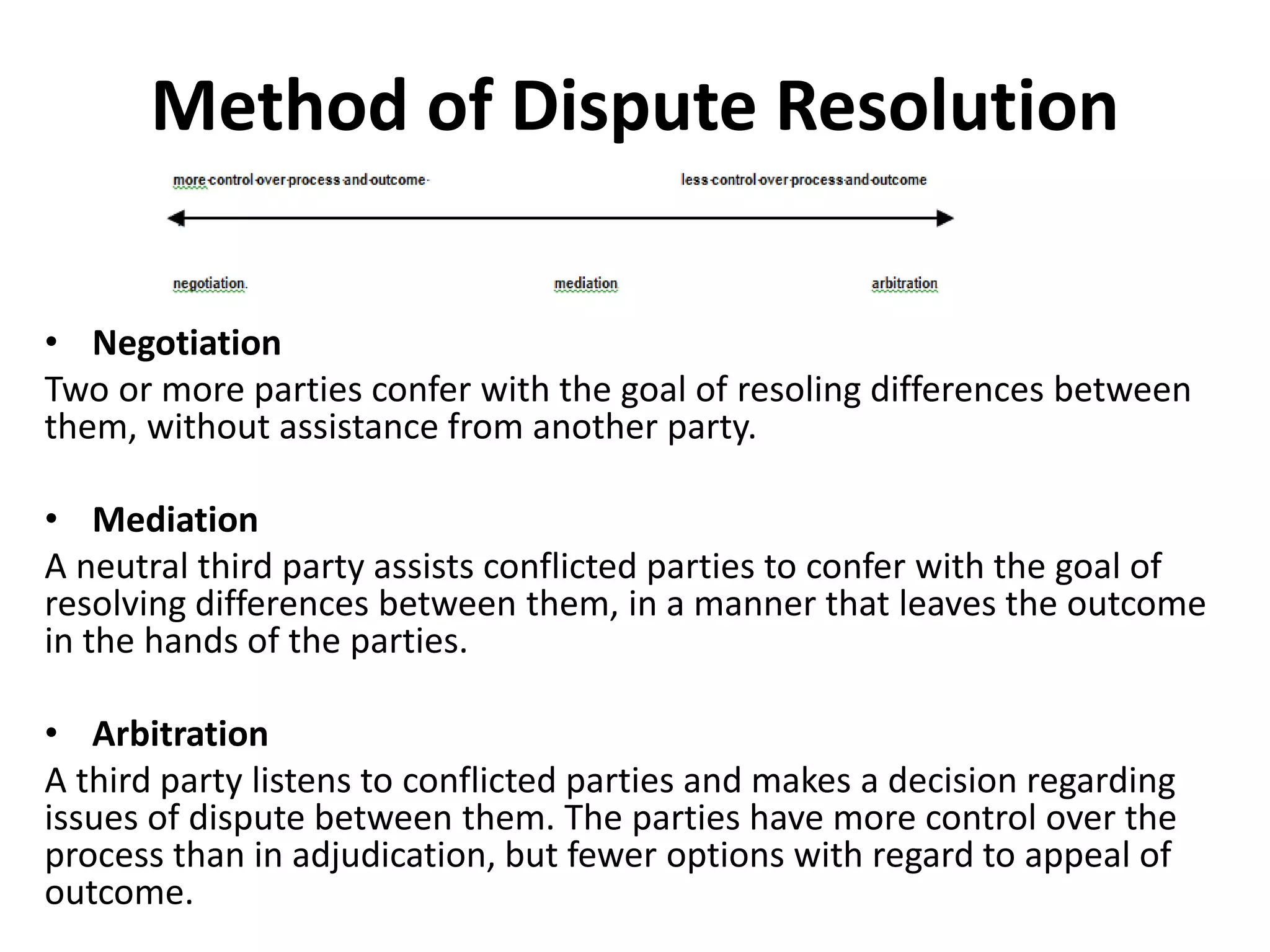
Method of Dispute Resolution 
• Negotiation 
Two or more parties confer with the goal of resoling differences between 
them, without assistance from another party. 
• Mediation 
A neutral third party assists conflicted parties to confer with the goal of 
resolving differences between them, in a manner that leaves the outcome 
in the hands of the parties. 
• Arbitration 
A third party listens to conflicted parties and makes a decision regarding 
issues of dispute between them. The parties have more control over the 
process than in adjudication, but fewer options with regard to appeal of 
outcome.
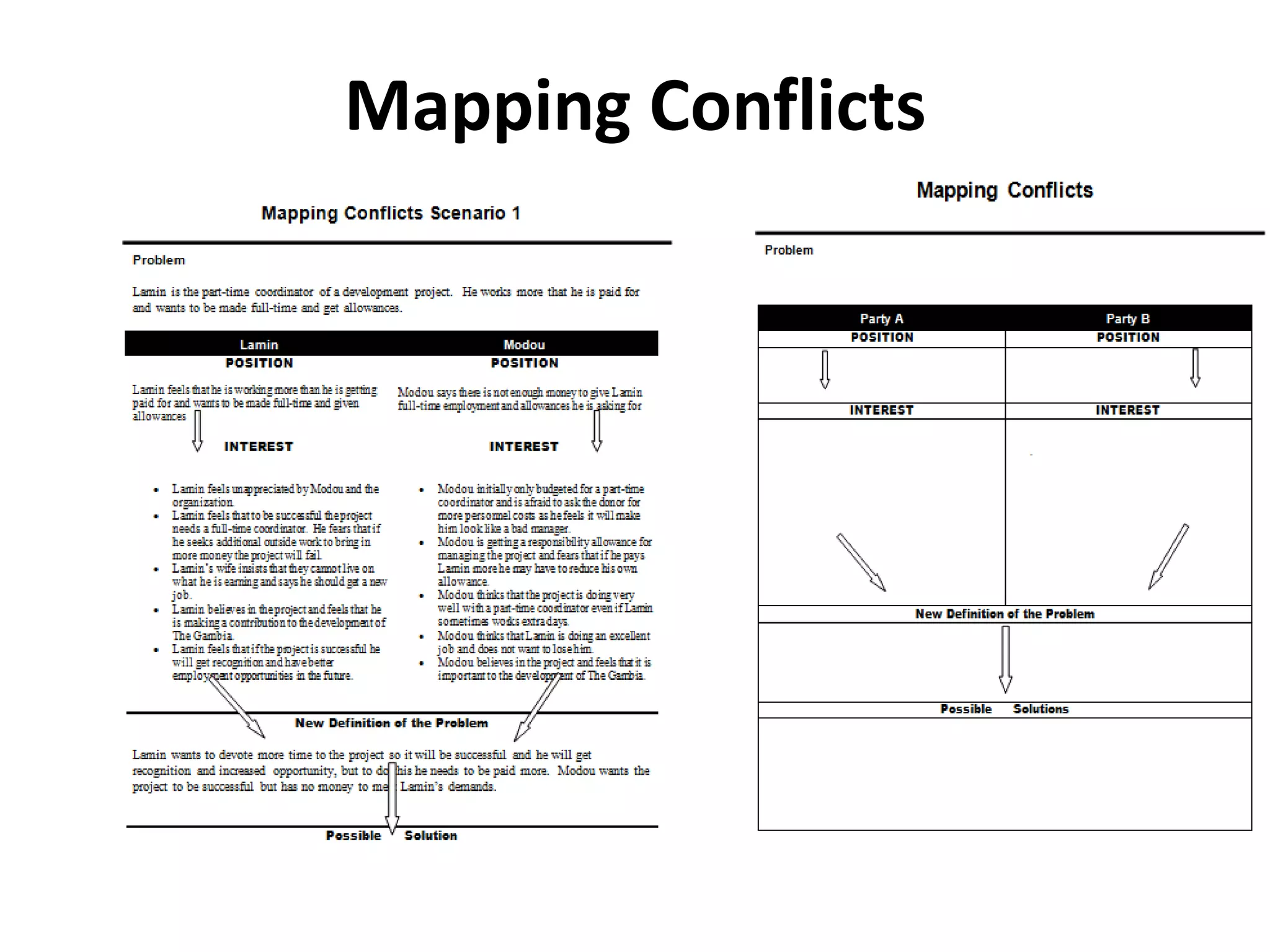
Mapping Conflicts
Characteristics of Effective Negotiators 
1. Effective negotiators are well prepared 
2. Effective negotiators avoid ultimatums, strong opinions and defensiveness 
3. Effective negotiators are creative problem solvers 
4. Effective negotiators make trade-offs rather than concessions. 
5. Effective negotiators give validity to the views of others. 
6. Effective negotiators give attention to areas of common ground. 
7. Effective negotiators take more time before offering counter proposals. 
8. Effective negotiators are clear communicators. 
9. Effective negotiators give reasons when they disagree. 
10. Effective negotiators summarize and test for understanding 
11. Effective negotiators ask more questions than average negotiators 
12. Effective negotiators give information about their internal thoughts and 
feelings 
13. Effective negotiators use appropriate dress, language and customs depending 
on the situation.
Condition for Mediation
Interest Based Problem Solving 
• Use Conflict as a Natural Resource 
• Respect people; Attack problem 
• Interest based solving problem 
Raise the issue clearly & with respect 
Explore issues to discover underlying interests 
Invent Options for Mutual Gains 
Develop Agreements Based on Objective 
Standards
Role Play Scenario 
• Think of a problem and use one 
of the dispute method skills to 
solved: 
• Negotiation, Mediation or 
Arbitration 
• Define the cause of the conflict
謝謝Thank you

Conflict management and peacebuilding

  • 1.
    Conflict Management and Peace Building Presenter: Lamin K. Sonko 松明愷
  • 2.
    What is aConflict?
  • 3.
    Definition • Twopeople disagree about something • Natural part of life • Problem is inevitable • Can be positive and healthy • Can be negative in terms of disagreement, hurt feelings and fracture relationships
  • 4.
    The Conflict web • Stagnation in groups • Problems aired & resolved • New learning & awareness • Personal & social change
  • 5.
    Causes of Conflict • Conflict over resources • Conflicts over psychological needs • Conflicts involving values Escalation  Lack of necessary peacemaking skills  De-escalation  Use of conflict resolution skills
  • 6.
    Conflict Handling Modes • Competing • Accommodating • Avoiding • Collaborating • Compromising
  • 7.
    Methods of HandlingConflict • Avoidance • Defusion • Power • Negotiation
  • 8.
    Method of DisputeResolution • Negotiation Two or more parties confer with the goal of resoling differences between them, without assistance from another party. • Mediation A neutral third party assists conflicted parties to confer with the goal of resolving differences between them, in a manner that leaves the outcome in the hands of the parties. • Arbitration A third party listens to conflicted parties and makes a decision regarding issues of dispute between them. The parties have more control over the process than in adjudication, but fewer options with regard to appeal of outcome.
  • 9.
  • 10.
    Characteristics of EffectiveNegotiators 1. Effective negotiators are well prepared 2. Effective negotiators avoid ultimatums, strong opinions and defensiveness 3. Effective negotiators are creative problem solvers 4. Effective negotiators make trade-offs rather than concessions. 5. Effective negotiators give validity to the views of others. 6. Effective negotiators give attention to areas of common ground. 7. Effective negotiators take more time before offering counter proposals. 8. Effective negotiators are clear communicators. 9. Effective negotiators give reasons when they disagree. 10. Effective negotiators summarize and test for understanding 11. Effective negotiators ask more questions than average negotiators 12. Effective negotiators give information about their internal thoughts and feelings 13. Effective negotiators use appropriate dress, language and customs depending on the situation.
  • 11.
  • 12.
    Interest Based ProblemSolving • Use Conflict as a Natural Resource • Respect people; Attack problem • Interest based solving problem Raise the issue clearly & with respect Explore issues to discover underlying interests Invent Options for Mutual Gains Develop Agreements Based on Objective Standards
  • 13.
    Role Play Scenario • Think of a problem and use one of the dispute method skills to solved: • Negotiation, Mediation or Arbitration • Define the cause of the conflict
  • 14.