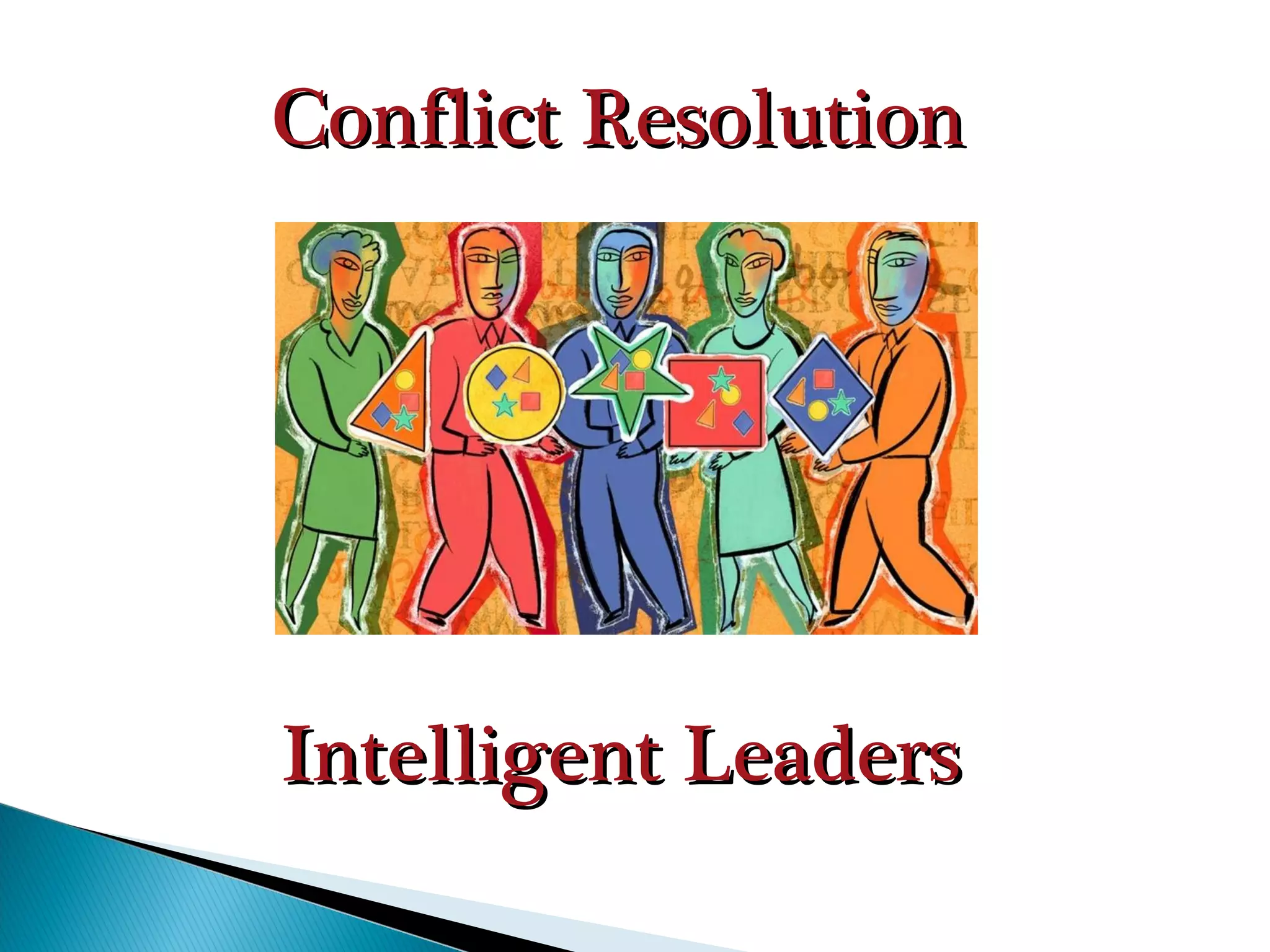
Conflict Resolution Intelligent Leaders
Understand what conflict is Develop a conflict vocabulary Become aware of your preferred conflict modes Practise using different conflict modes Recognize the conflict styles of others Assess and resolve conflict situations Putting it into practice Resolve conflicts appropriately Session Objectives …
Any transaction between two or more people where the same desire is not shared … CONFLICT is …
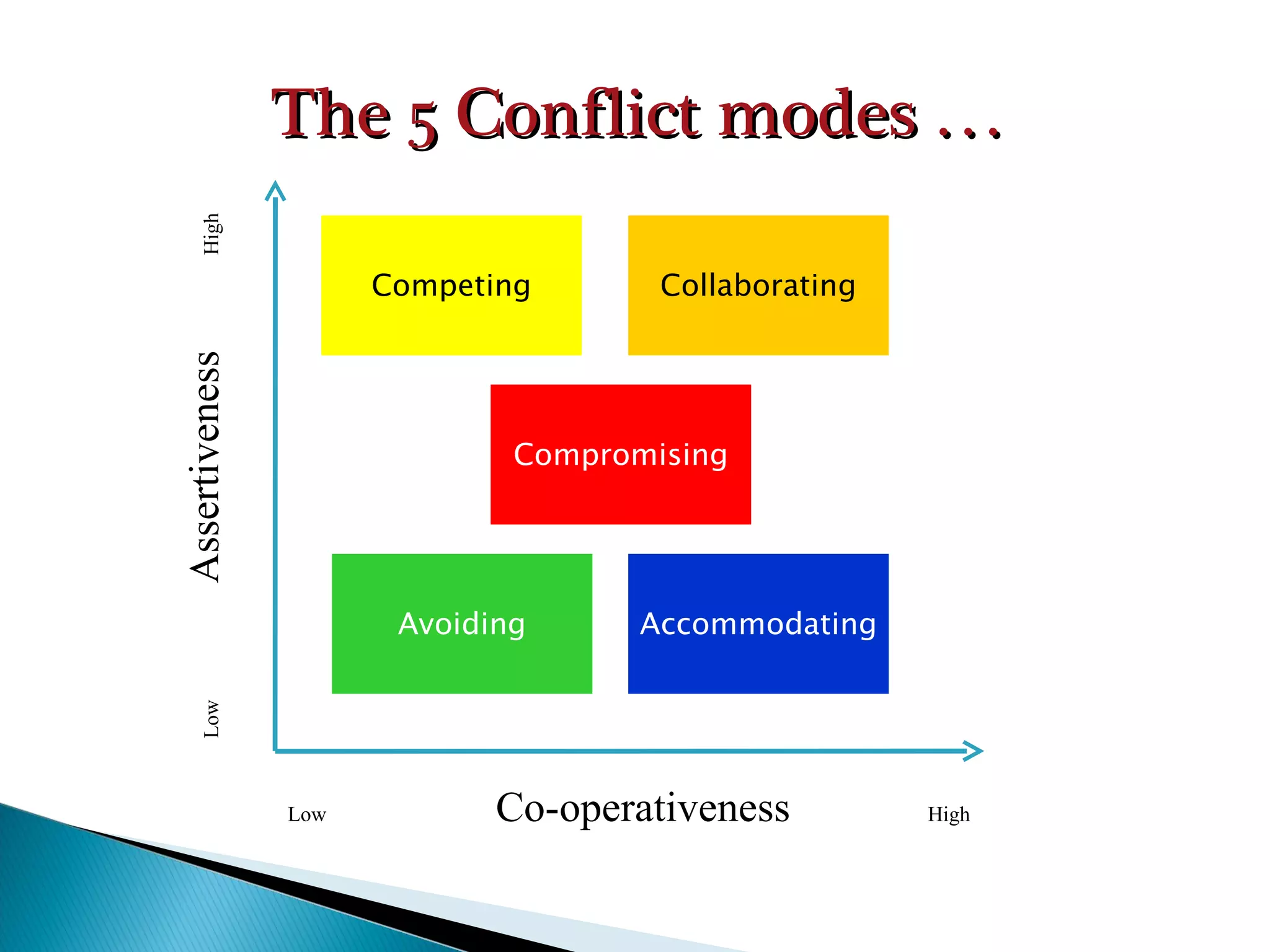
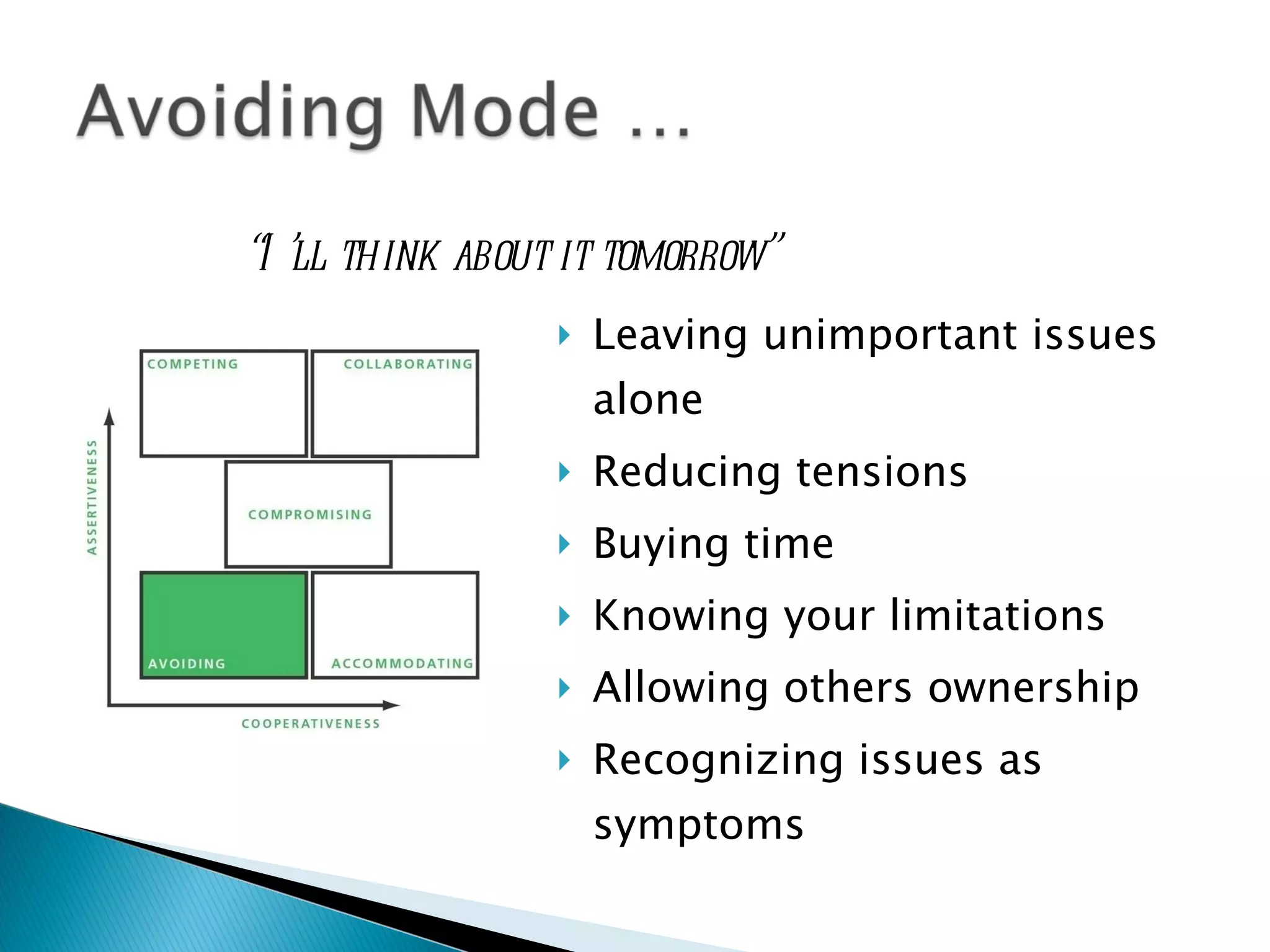
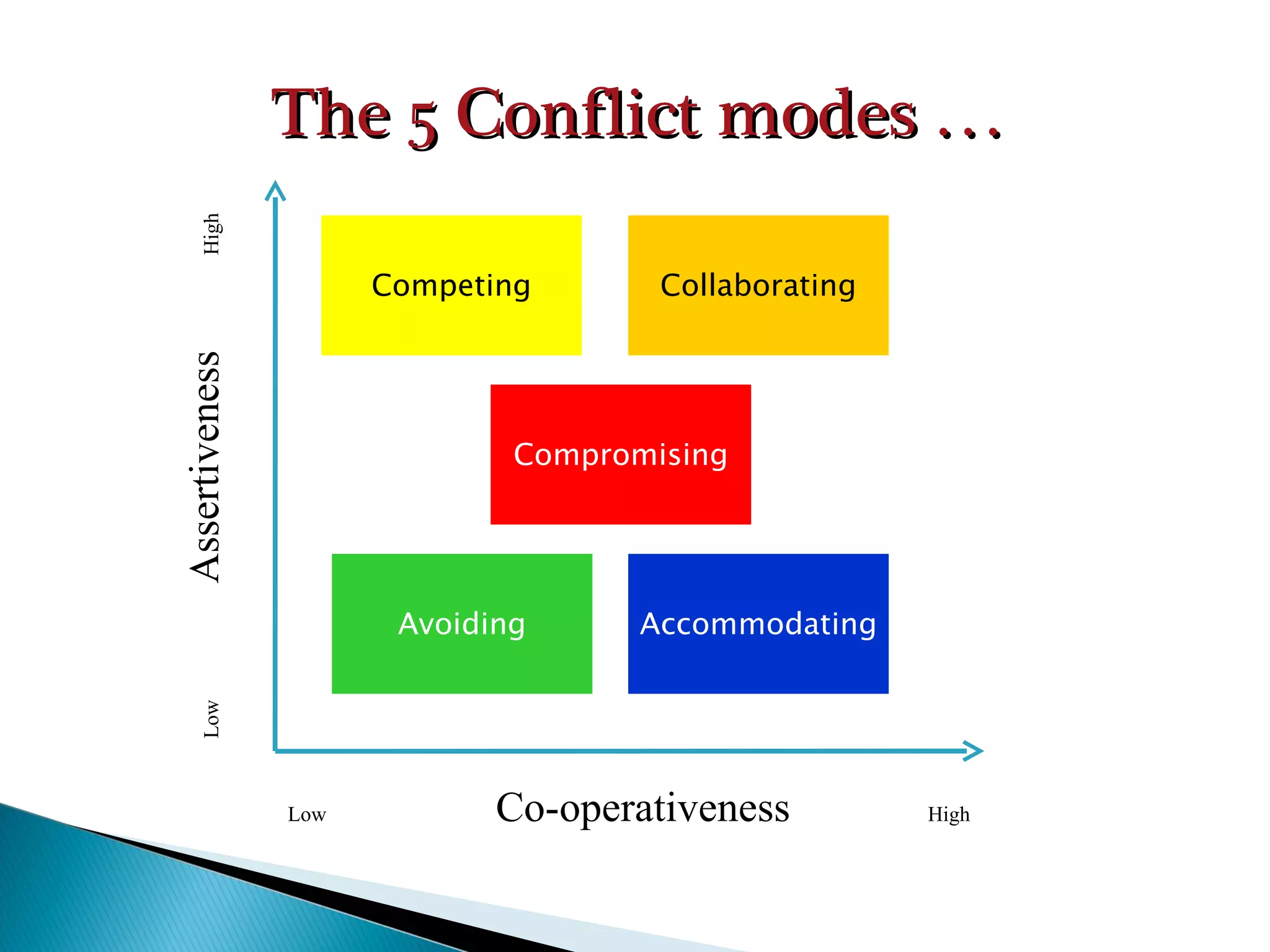
Low   Co-operativeness  High Low   Assertiveness  High The 5 Conflict modes … Competing Compromising Accommodating Avoiding Collaborating
It’s 9:55am, and you’ve just gone into a ‘Big Burger’. You are ordering a ‘Big Breakfast’ (available, it says, until 10:00am). You: “A Big Breakfast – no egg, and tea, not coffee”. CSA: “We’ve stopped serving Big Breakfasts”. Fast Food Conflict …
The head is out and you are running the school. A teacher bursts into your office with a child. Teacher: “I’m not prepared to have this child in my class a moment longer! You deal with him!” You: “I’m too busy for this – take him to  Mrs Bates’ class”. Teacher Conflict …
It’s 5:30pm. You’ve been working flat out for two weeks, and it’s your daughter’s concert tonight. You need to be home by 6:30! Head: “Oh hi. Listen, I really need to go through the AFL stuff with you. I have a meeting now but it should be over by 6:00. Can we hook up then? Should only take an hour or so”. You: “Yes”. Work-Life Conflict …
It’s 10:00pm and you’ve just finished dinner with a group of friends at someone’s house. Hostesses’ partner: “Look, I’m really tired. Can you all go please? Sorry. I’m just exhausted”. You: “You are so rude! No wonder no-one really wanted to come! And just so you know, your fish was overcooked!” Dinner Party Conflict …
Assess the importance of the conflict Assess the importance of your position Consider the background De-personalise [adopt 3 rd  position] Choose an apropriate mode … [ … later, we’ll consider how to implement it …] Choosing to use a Conflict mode…
Leaving unimportant issues  alone Reducing tensions Buying time Knowing your limitations Allowing others ownership Recognizing issues as  symptoms “ I’ll think about it tomorrow”
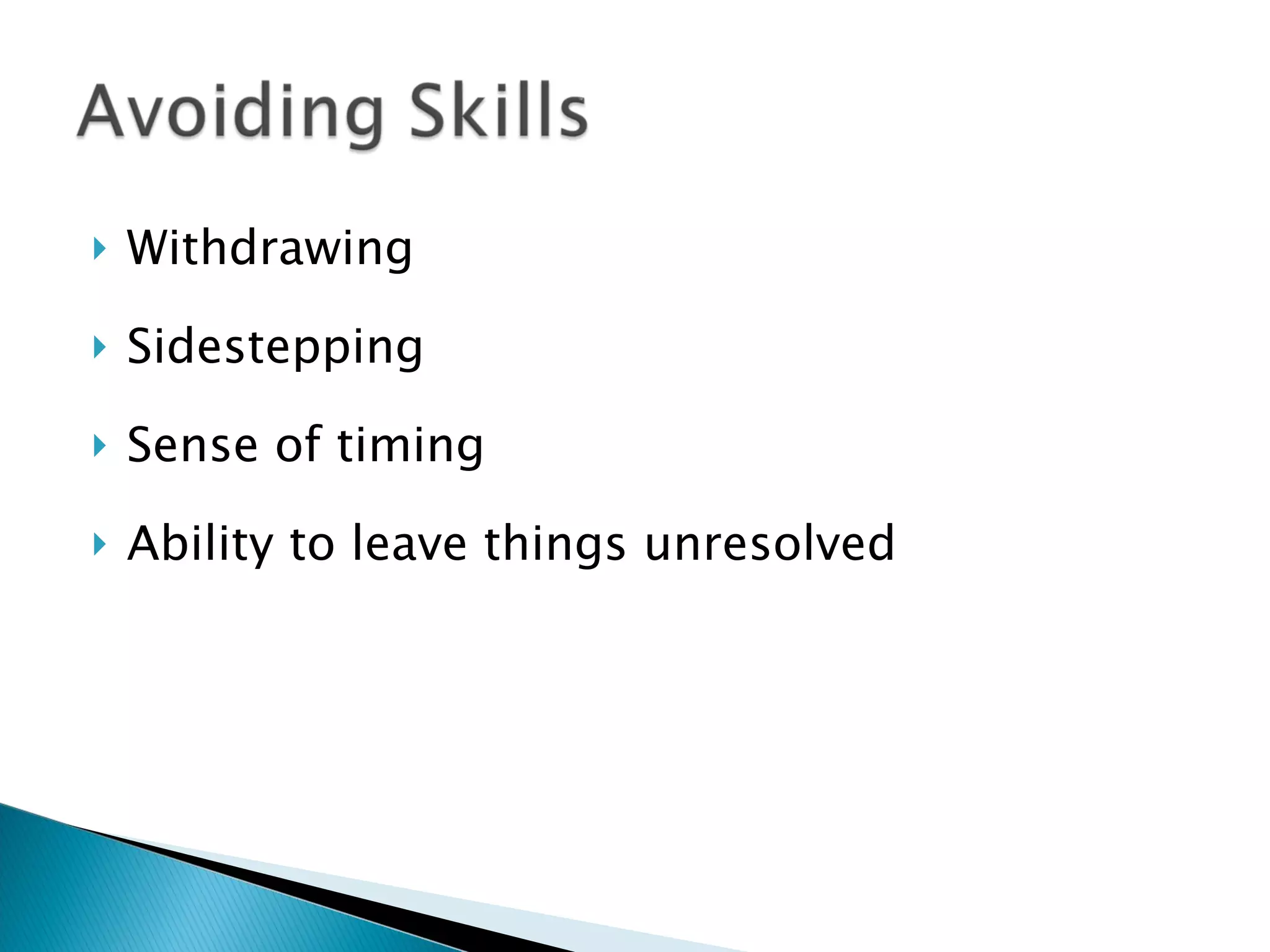
Withdrawing Sidestepping Sense of timing Ability to leave things unresolved
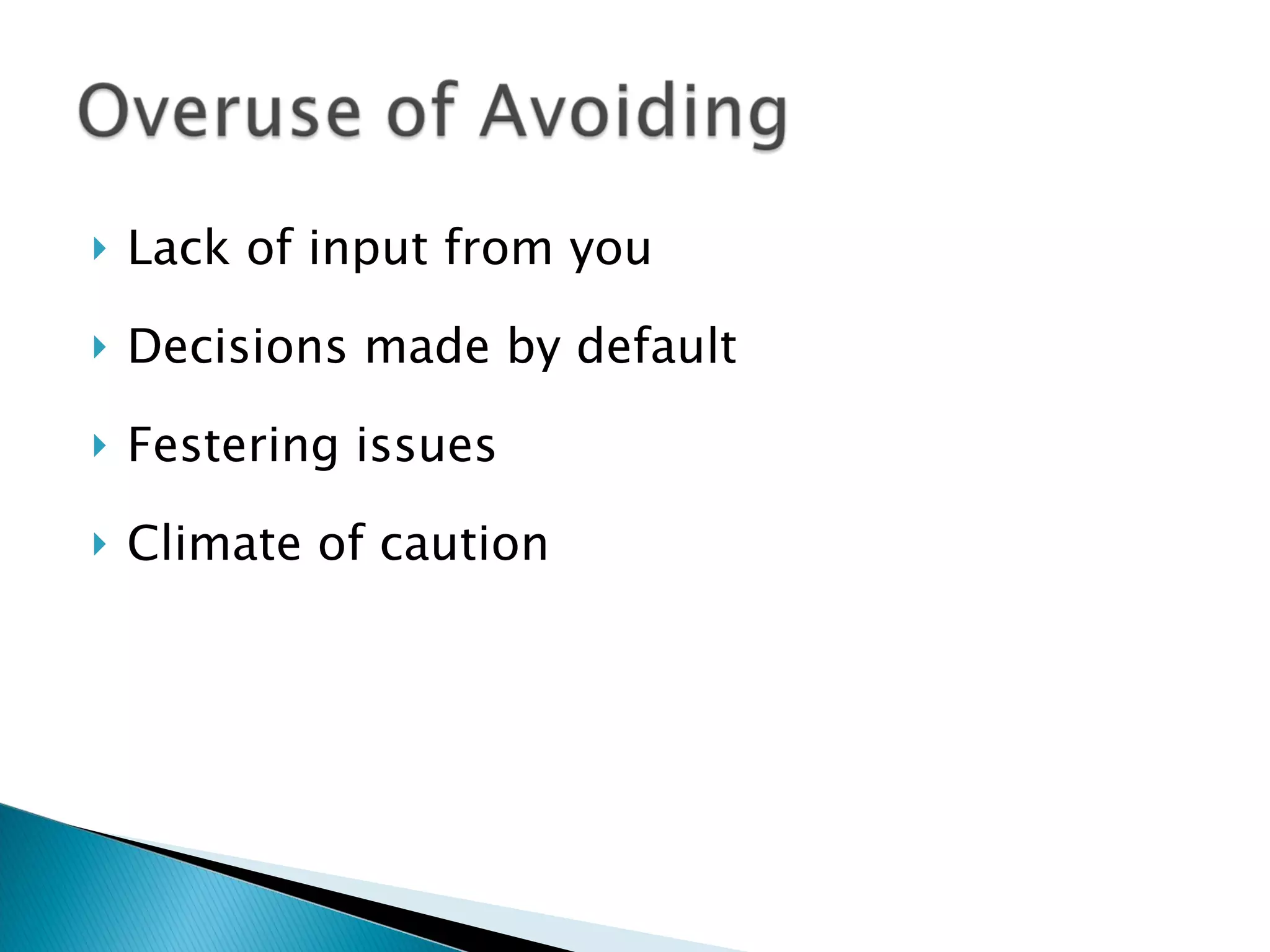
Lack of input from you Decisions made by default Festering issues Climate of caution
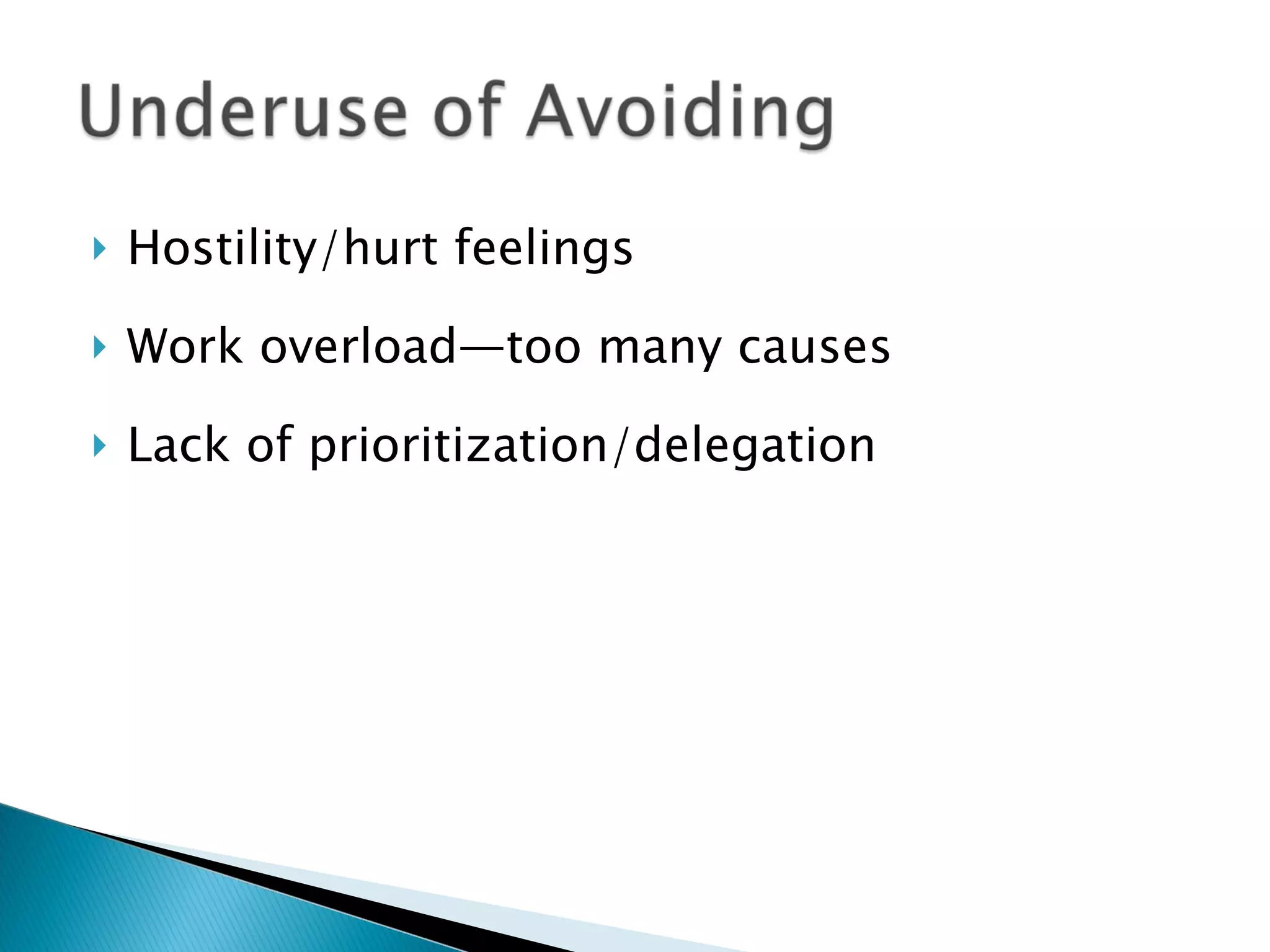
Hostility/hurt feelings Work overload—too many causes Lack of prioritization/delegation
Low   Co-operativeness  High Low   Assertiveness  High The 5 Conflict modes … Competing Compromising Accommodating Avoiding Collaborating
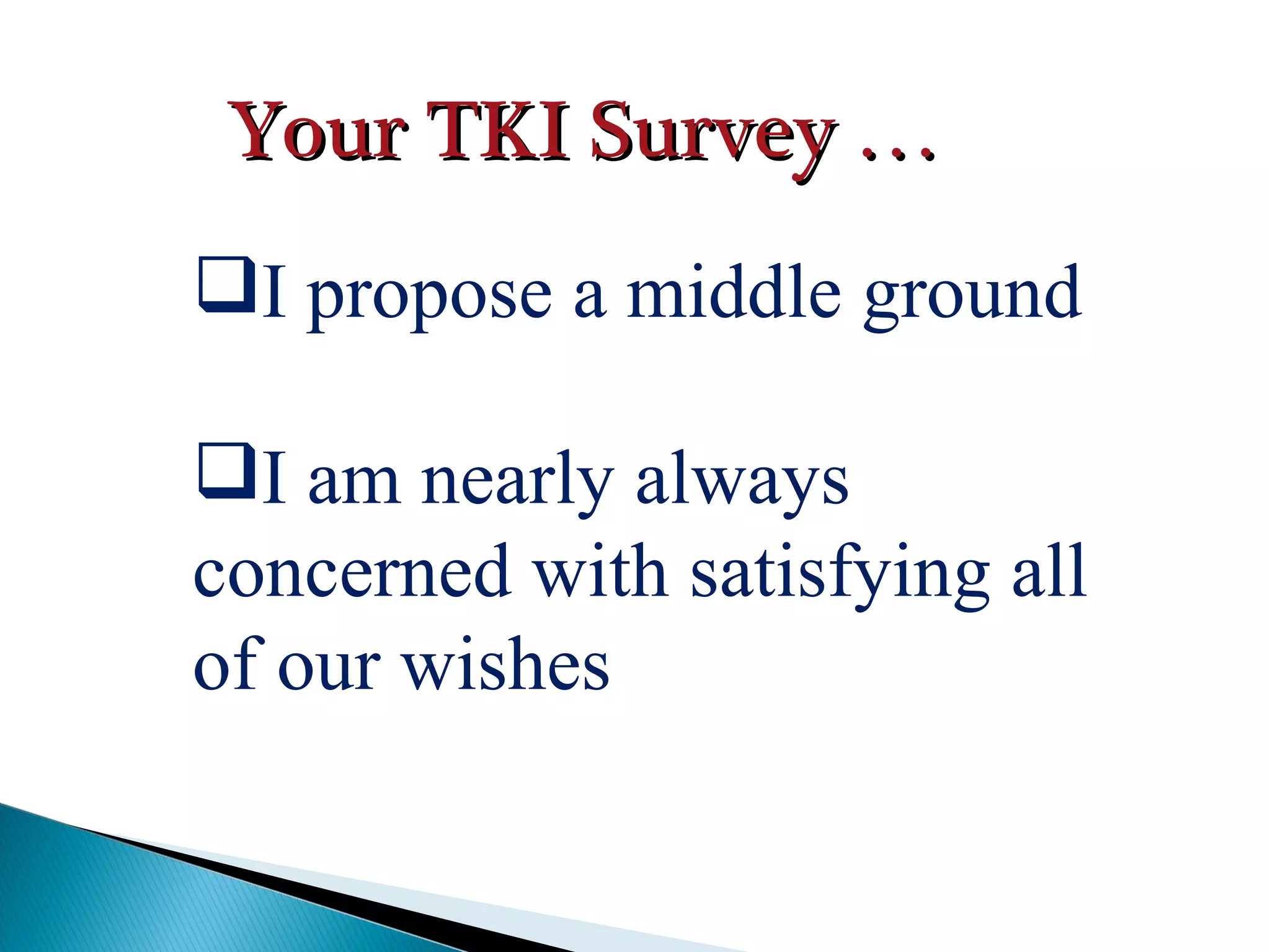
Your TKI Survey … I propose a middle ground I am nearly always concerned with satisfying all of our wishes
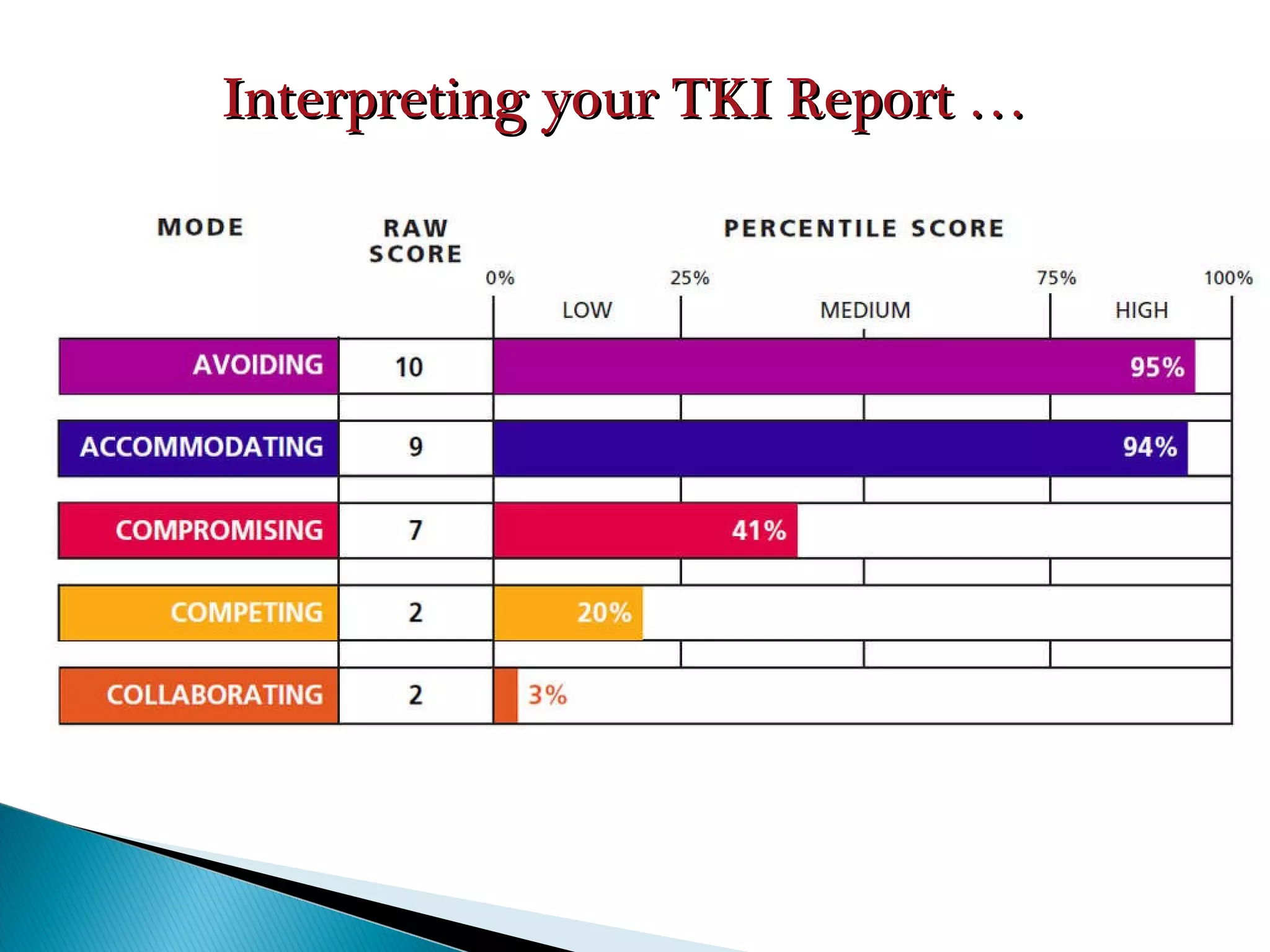
Interpreting your TKI Report …

Conflict Resolution

  • 1.
  • 2.
    Understand what conflictis Develop a conflict vocabulary Become aware of your preferred conflict modes Practise using different conflict modes Recognize the conflict styles of others Assess and resolve conflict situations Putting it into practice Resolve conflicts appropriately Session Objectives …
  • 3.
    Any transaction betweentwo or more people where the same desire is not shared … CONFLICT is …
  • 4.
    Low Co-operativeness High Low Assertiveness High The 5 Conflict modes … Competing Compromising Accommodating Avoiding Collaborating
  • 5.
    It’s 9:55am, andyou’ve just gone into a ‘Big Burger’. You are ordering a ‘Big Breakfast’ (available, it says, until 10:00am). You: “A Big Breakfast – no egg, and tea, not coffee”. CSA: “We’ve stopped serving Big Breakfasts”. Fast Food Conflict …
  • 6.
    The head isout and you are running the school. A teacher bursts into your office with a child. Teacher: “I’m not prepared to have this child in my class a moment longer! You deal with him!” You: “I’m too busy for this – take him to Mrs Bates’ class”. Teacher Conflict …
  • 7.
    It’s 5:30pm. You’vebeen working flat out for two weeks, and it’s your daughter’s concert tonight. You need to be home by 6:30! Head: “Oh hi. Listen, I really need to go through the AFL stuff with you. I have a meeting now but it should be over by 6:00. Can we hook up then? Should only take an hour or so”. You: “Yes”. Work-Life Conflict …
  • 8.
    It’s 10:00pm andyou’ve just finished dinner with a group of friends at someone’s house. Hostesses’ partner: “Look, I’m really tired. Can you all go please? Sorry. I’m just exhausted”. You: “You are so rude! No wonder no-one really wanted to come! And just so you know, your fish was overcooked!” Dinner Party Conflict …
  • 9.
    Assess the importanceof the conflict Assess the importance of your position Consider the background De-personalise [adopt 3 rd position] Choose an apropriate mode … [ … later, we’ll consider how to implement it …] Choosing to use a Conflict mode…
  • 10.
    Leaving unimportant issues alone Reducing tensions Buying time Knowing your limitations Allowing others ownership Recognizing issues as symptoms “ I’ll think about it tomorrow”
  • 11.
    Withdrawing Sidestepping Senseof timing Ability to leave things unresolved
  • 12.
    Lack of inputfrom you Decisions made by default Festering issues Climate of caution
  • 13.
    Hostility/hurt feelings Workoverload—too many causes Lack of prioritization/delegation
  • 14.
    Low Co-operativeness High Low Assertiveness High The 5 Conflict modes … Competing Compromising Accommodating Avoiding Collaborating
  • 15.
    Your TKI Survey… I propose a middle ground I am nearly always concerned with satisfying all of our wishes
  • 16.

Editor's Notes