1
Content: 
1. DEFINITION 
2. CAUSES OF CONFLICT 
3. TYPES OF CONFLICT 
4.CONFLICT: CONSTRUCTIVE VS DESTRUCTIVE 
5. CONFLICT MANAGEMENT 
6.EFFECT OF CONFLICT ON BUSINESS 
7. SOME TIPS FOR MANAGING WORK PLACE CONFLICT 
2
1. Definition of Conflict.. 
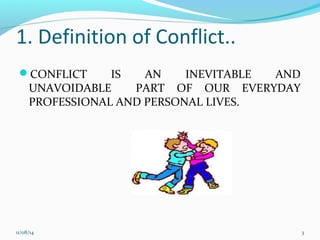
CONFLICT IS AN INEVITABLE AND 
UNAVOIDABLE PART OF OUR EVERYDAY 
PROFESSIONAL AND PERSONAL LIVES. 
11/08/14 3
4
REALITY OF CONFLICT & EFFECTIVE 
COMMUNICATION
Causes of conflict 
• Misunderstanding 
• Personality clashes 
• Competition for resources 
• Authority issues 
• Lack of cooperation 
• Differences over methods or style 
• Low performance 
• Value or goal differences
Assumptions about, Causes of and Value 
of Conflict
Type of Conflict Sources of Conflict Management Strategy 
1. Intra individual Conflicting goals, needs, 
motives 
Role Definition 
2. Interpersonal Disagreements 
antagonism 
IPC Skills,TA, Johari- 
Window, Creative P S, 
Assertive Behaviour 
3. Inter-group Power, Authority Status Participative Mgt. 
Team Bldg.Training 
4. Organizational Hierarchical Conflict 
Functional conflict 
Institutional Goal setting 
5. Client Hospital Quality of patient care 
and communication 
Community Goal Setting, 
Public Relations 
Types of Conflict 
Model for diagnosis and management of conflict
CONFLICT: CONSTRUCTIVE VS DESTRUCTIVE 
The Value of Conflict 
Conflict is destructive when it: 
Diverts energy from more important issues and tasks. 
Deepens differences in values. 
Polarizes groups so that cooperation is reduced. 
Destroys the morale of people or reinforces poor self-concepts.
The Value of Conflict 
Conflict is constructive when it: 
Opens up issues of importance, resulting in issue 
clarification. 
Helps build cohesiveness as people learn more about each 
other. 
Causes reassessment by allowing for examination of 
procedures or actions. 
Increases individual involvement.
Conflict Management 
Conflict management is defined as “the opportunity to 
improve situations and strengthen relationships” 
(BCS, 2004). 
–proactive conflict management 
–collaborative conflict management
13 
Conflict Management Styles 
Forcing conflict style: user attempts to resolve conflict by using 
aggressive behavior. 
Avoiding conflict style: user attempts to passively ignore the 
conflict rather than resolve it. 
Accommodating conflict style: user attempts to resolve the conflict 
by passively giving in to the other party. 
Compromising conflict style: user attempts to resolve the conflict 
through assertive give-and-take concessions. 
Collaborating conflict style: user assertively attempts to jointly 
resolve the conflict with the best solution agreeable to all parties.
Competition 
Plus 
14 
The winner is clear 
Winners usually experience gains 
Minus 
Establishes the battleground for the next conflict 
May cause worthy competitors to withdraw or leave the 
organization
Accommodation 
Plus 
15 
Curtails conflict situation 
Enhances ego of the other 
Minus 
Sometimes establishes a precedence 
Does not fully engage participants
Compromise 
Plus 
16 
Shows good will 
Establishes friendship 
Minus 
No one gets what they want 
May feel like a dead end
Collaboration 
Plus 
17 
Everyone “wins” 
Creates good feelings 
Minus 
Hard to achieve since no one knows how 
Often confusing since players can “win” something they 
didn’t know they wanted
Conflict Continuum 
18 
I win, you lose (competition—A) 
I lose or give in (accommodate—B) 
We both get something (compromise—C) 
We both “win”(collaborate—D) 
A B C D
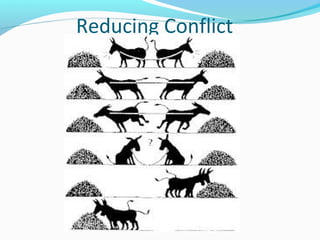
Reducing Conflict
Some Tips for Managing Workplace Conflict
WWee mmaaddee 
iitt!!
THANK YOU 
11/08/14 22

Conflict management

  • 1.
  • 2.
    Content: 1. DEFINITION 2. CAUSES OF CONFLICT 3. TYPES OF CONFLICT 4.CONFLICT: CONSTRUCTIVE VS DESTRUCTIVE 5. CONFLICT MANAGEMENT 6.EFFECT OF CONFLICT ON BUSINESS 7. SOME TIPS FOR MANAGING WORK PLACE CONFLICT 2
  • 3.
    1. Definition ofConflict.. CONFLICT IS AN INEVITABLE AND UNAVOIDABLE PART OF OUR EVERYDAY PROFESSIONAL AND PERSONAL LIVES. 11/08/14 3
  • 4.
  • 6.
    REALITY OF CONFLICT& EFFECTIVE COMMUNICATION
  • 7.
    Causes of conflict • Misunderstanding • Personality clashes • Competition for resources • Authority issues • Lack of cooperation • Differences over methods or style • Low performance • Value or goal differences
  • 8.
    Assumptions about, Causesof and Value of Conflict
  • 9.
    Type of ConflictSources of Conflict Management Strategy 1. Intra individual Conflicting goals, needs, motives Role Definition 2. Interpersonal Disagreements antagonism IPC Skills,TA, Johari- Window, Creative P S, Assertive Behaviour 3. Inter-group Power, Authority Status Participative Mgt. Team Bldg.Training 4. Organizational Hierarchical Conflict Functional conflict Institutional Goal setting 5. Client Hospital Quality of patient care and communication Community Goal Setting, Public Relations Types of Conflict Model for diagnosis and management of conflict
  • 10.
    CONFLICT: CONSTRUCTIVE VSDESTRUCTIVE The Value of Conflict Conflict is destructive when it: Diverts energy from more important issues and tasks. Deepens differences in values. Polarizes groups so that cooperation is reduced. Destroys the morale of people or reinforces poor self-concepts.
  • 11.
    The Value ofConflict Conflict is constructive when it: Opens up issues of importance, resulting in issue clarification. Helps build cohesiveness as people learn more about each other. Causes reassessment by allowing for examination of procedures or actions. Increases individual involvement.
  • 12.
    Conflict Management Conflictmanagement is defined as “the opportunity to improve situations and strengthen relationships” (BCS, 2004). –proactive conflict management –collaborative conflict management
  • 13.
    13 Conflict ManagementStyles Forcing conflict style: user attempts to resolve conflict by using aggressive behavior. Avoiding conflict style: user attempts to passively ignore the conflict rather than resolve it. Accommodating conflict style: user attempts to resolve the conflict by passively giving in to the other party. Compromising conflict style: user attempts to resolve the conflict through assertive give-and-take concessions. Collaborating conflict style: user assertively attempts to jointly resolve the conflict with the best solution agreeable to all parties.
  • 14.
    Competition Plus 14 The winner is clear Winners usually experience gains Minus Establishes the battleground for the next conflict May cause worthy competitors to withdraw or leave the organization
  • 15.
    Accommodation Plus 15 Curtails conflict situation Enhances ego of the other Minus Sometimes establishes a precedence Does not fully engage participants
  • 16.
    Compromise Plus 16 Shows good will Establishes friendship Minus No one gets what they want May feel like a dead end
  • 17.
    Collaboration Plus 17 Everyone “wins” Creates good feelings Minus Hard to achieve since no one knows how Often confusing since players can “win” something they didn’t know they wanted
  • 18.
    Conflict Continuum 18 I win, you lose (competition—A) I lose or give in (accommodate—B) We both get something (compromise—C) We both “win”(collaborate—D) A B C D
  • 19.
  • 20.
    Some Tips forManaging Workplace Conflict
  • 21.
  • 22.

Editor's Notes

  • #15 Ask students to volunteer examples here.
  • #16 Ask students to volunteer examples here.
  • #17 Ask students to volunteer examples here.
  • #18 Ask students to volunteer examples here.
  • #19 First, let’s think about conflict as it unfolds for you. Think about one example (personal or professional) of when you used a particular style and tell us how that position worked for you. Here are pluses and minuses for each style:
  • #21 Adapted from Dispute Resolution Center of Snohomish and Island Counties (2004). 1801 Lomard Ave, Everett, WA 98206; 425-339-1335.