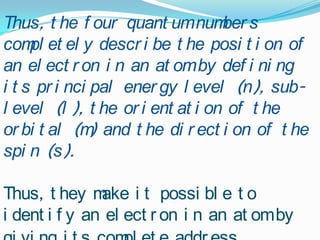
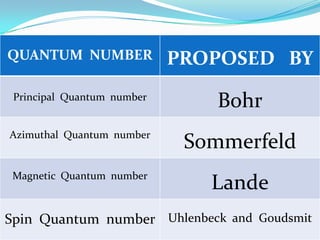
QUANTUM    NUMBERS  The  numbers  used  for  completely  characterizing  each  electron  of  atom  are  known  as  “quantum  numbers”. Four  such  quantum  numbers  are  found  to  be  necessary  for  describing  an  electron  completely.Principal  quantum  numberAzimuthal  quantum  numberMagnetic  quantum  numberSpin  quantum  number
1. PRINCIPAL  QUANTUM  NUMBER (n):It was proposed by Bohr.
This  number  gives  the  average  distance  of  the  electron  from  the  nucleus  and  corresponds  to  the  principal  energy  level  to  which  the  electron  belongs.Thus  it  gives  an  idea  of  the  position  of  the  electron  around  the  nucleus.The  energy  of  electron  and  volume  of  electron  cloud  are  dependent  upon  this  number.
Higher  the  principal  quantum  number, greater  is  its  distance  from  the  nucleus, greater  is  its  size  and  also  higher  is  its  energy.
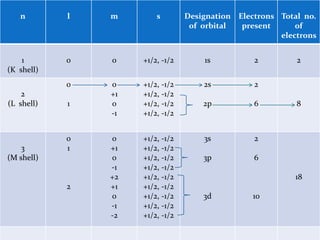
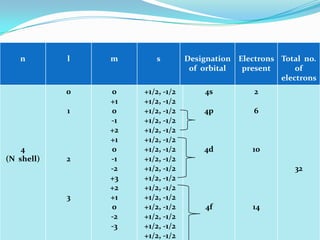
Although  theoretically  its  value  may  be  from  1  to ∞, only  values  from  1  to  7  have  so  far  been  established  for  atoms  of  the  known  elements.These  are  designated  either  as  1,2,3,4,5,6 and 7  or  as  K,L,M,N,O,P and  Q  respectively.The  maximum  number  of  electrons  in  n  principal  quantum  number  is  given  by  2n22. AZIMUTHAL   QUANTUM   NUMBER (l):It was proposed by Sommerfeld.
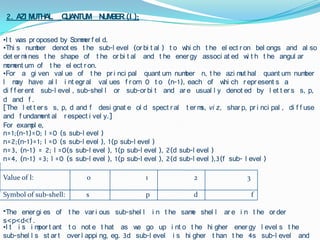
This  number  denotes  the  sub-level (orbital)  to  which  the  electron  belongs  and  also  determines  the  shape  of  the  orbital  and  the  energy  associated  with  the  angular  momentum  of  the  electron.
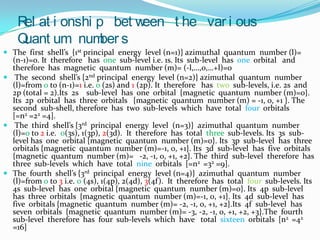
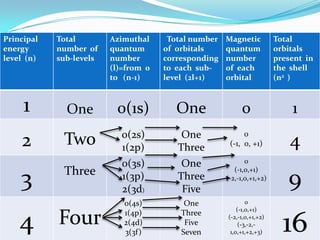
For  a  given  value  of  the  principal  quantum  number  n, the  azimuthal  quantum  number  l  may  have  all  integral  values  from  0  to  (n-1), each  of  which  represents  a  different  sub-level, sub-shell  or  sub-orbit  and  are  usually  denoted  by  letters  s, p, d  and  f.[The  letters  s, p, d and f  designate  old  spectral  terms, viz,  sharp, principal,  diffuse  and  fundamental  respectively.]For example, n=1;(n-1)=0; l=0 (s sub-level)n=2;(n-1)=1; l=0 (s sub-level), 1(p sub-level) n=3, (n-1) = 2; l=0(s sub-level), 1(p sub-level), 2(d sub-level)n=4, (n-1) =3; l=0 (s sub-level), 1(p sub-level), 2(d sub-level),3(f sub- level)Value of l:                              0                               1                          2                            3 Symbol of sub-shell:            s                                p                         d                              fThe  energies  of  the  various  sub-shell  in  the  same  shell  are  in  the  order  s<p<d<f.
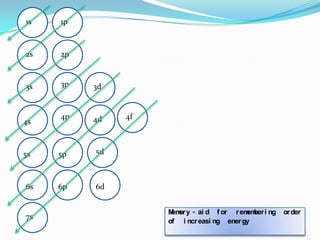
It  is  important  to  note  that  as  we  go  up  into  the  higher  energy  levels  the  sub-shells  start  overlapping, eg. 3d  sub-level  is  higher  than  the  4s  sub-level  and  thus  the  energy  of  3d  sub-level  is  higher  than  the  4s  sub-level.1s1p2s2p3p3s3d4p4f4d4s5d5s5p6s6p6dMemory - aid   for   remembering   order   of   increasing   energy7s
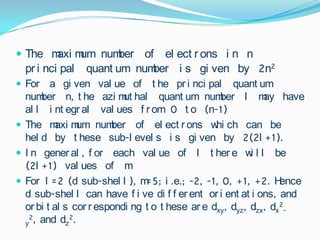
AZIMUTHAL   QUANTUM   NUMBER  (CONTINUED)The  maximum  number  of  electrons  which  can  be  held  by  these  sub-levels  is  given  by  2(2l+1).
Thus  sub-level  (where l=0)  can  have  2  electrons, p  can  have  6, d  can  have  10  and  f  can  have  14  electrons.3. MAGNETIC QUANTUM NUMBER (m or ml):It  was  proposed  by  Lande  to  explain  Zeeman  and  Stark  effects.
This  quantum  number  determines  the  preferred  orientations  of  orbitals  in  space.
This number gives number of orbitals in sub-orbit.
The  value  of  m  is  dependent  upon  the  value  of  l  and  can  take  only  integral  value  from  +l  to  -l  through  zero.
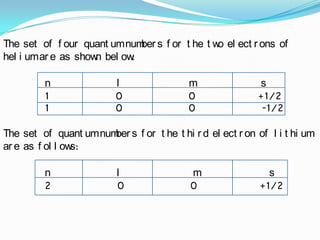
In  general, for  each  value  of  l  there  will  be  (2l+1)  values  of  m.For l=0 (s sub-shell), m=1; i.e., 0. Hence  there  is  only  one  orientation  for  the  s  sub-shell.For l=1 (p sub-shell), m=3; i.e.; -1, 0, +1. Hence three orientations are possible for the p sub-shell. The three corresponding orbitals are written as px, py and pz.For l=2 (d sub-shell), m=5; i.e.; -2, -1, 0, +1, +2. Hence d sub-shell can have five different orientations, and orbitals corresponding to these are dxy, dyz, dzx, dx2-y2, and dz2. For l=3 (f sub-shell), m=7; i.e.; -3, -2, -1, 0, 1, 2, 3. Hence seven f orbitals are possible.
4. SPIN QUANTUM NUMBER (s or ms):It was proposed by Uhlenbeck and Goudsmit.
This quantum arises due to the spinning of the electron about its own axis.

Quantum numbers

  • 1.
    QUANTUM NUMBERS The numbers used for completely characterizing each electron of atom are known as “quantum numbers”. Four such quantum numbers are found to be necessary for describing an electron completely.Principal quantum numberAzimuthal quantum numberMagnetic quantum numberSpin quantum number
  • 2.
    1. PRINCIPAL QUANTUM NUMBER (n):It was proposed by Bohr.
  • 3.
    This number gives the average distance of the electron from the nucleus and corresponds to the principal energy level to which the electron belongs.Thus it gives an idea of the position of the electron around the nucleus.The energy of electron and volume of electron cloud are dependent upon this number.
  • 4.
    Higher the principal quantum number, greater is its distance from the nucleus, greater is its size and also higher is its energy.
  • 5.
    Although theoretically its value may be from 1 to ∞, only values from 1 to 7 have so far been established for atoms of the known elements.These are designated either as 1,2,3,4,5,6 and 7 or as K,L,M,N,O,P and Q respectively.The maximum number of electrons in n principal quantum number is given by 2n22. AZIMUTHAL QUANTUM NUMBER (l):It was proposed by Sommerfeld.
  • 6.
    This number denotes the sub-level (orbital) to which the electron belongs and also determines the shape of the orbital and the energy associated with the angular momentum of the electron.
  • 7.
    For a given value of the principal quantum number n, the azimuthal quantum number l may have all integral values from 0 to (n-1), each of which represents a different sub-level, sub-shell or sub-orbit and are usually denoted by letters s, p, d and f.[The letters s, p, d and f designate old spectral terms, viz, sharp, principal, diffuse and fundamental respectively.]For example, n=1;(n-1)=0; l=0 (s sub-level)n=2;(n-1)=1; l=0 (s sub-level), 1(p sub-level) n=3, (n-1) = 2; l=0(s sub-level), 1(p sub-level), 2(d sub-level)n=4, (n-1) =3; l=0 (s sub-level), 1(p sub-level), 2(d sub-level),3(f sub- level)Value of l: 0 1 2 3 Symbol of sub-shell: s p d fThe energies of the various sub-shell in the same shell are in the order s<p<d<f.
  • 8.
    It is important to note that as we go up into the higher energy levels the sub-shells start overlapping, eg. 3d sub-level is higher than the 4s sub-level and thus the energy of 3d sub-level is higher than the 4s sub-level.1s1p2s2p3p3s3d4p4f4d4s5d5s5p6s6p6dMemory - aid for remembering order of increasing energy7s
  • 9.
    AZIMUTHAL QUANTUM NUMBER (CONTINUED)The maximum number of electrons which can be held by these sub-levels is given by 2(2l+1).
  • 10.
    Thus sub-level (where l=0) can have 2 electrons, p can have 6, d can have 10 and f can have 14 electrons.3. MAGNETIC QUANTUM NUMBER (m or ml):It was proposed by Lande to explain Zeeman and Stark effects.
  • 11.
    This quantum number determines the preferred orientations of orbitals in space.
  • 12.
    This number givesnumber of orbitals in sub-orbit.
  • 13.
    The value of m is dependent upon the value of l and can take only integral value from +l to -l through zero.
  • 14.
    In general,for each value of l there will be (2l+1) values of m.For l=0 (s sub-shell), m=1; i.e., 0. Hence there is only one orientation for the s sub-shell.For l=1 (p sub-shell), m=3; i.e.; -1, 0, +1. Hence three orientations are possible for the p sub-shell. The three corresponding orbitals are written as px, py and pz.For l=2 (d sub-shell), m=5; i.e.; -2, -1, 0, +1, +2. Hence d sub-shell can have five different orientations, and orbitals corresponding to these are dxy, dyz, dzx, dx2-y2, and dz2. For l=3 (f sub-shell), m=7; i.e.; -3, -2, -1, 0, 1, 2, 3. Hence seven f orbitals are possible.
  • 15.
    4. SPIN QUANTUMNUMBER (s or ms):It was proposed by Uhlenbeck and Goudsmit.
  • 16.
    This quantum arisesdue to the spinning of the electron about its own axis.