scienceisbeauty.tumblr.com 
Electromagnetic Radiation 
Sarah Jones
Light 
• Light is a form of energy known as 
electromagnetic radiation. 
• Light travels as an electromagnetic wave. 
• Light travels through the vacuum of space – 
unlike sound. 
• It travels at 
300 000 km/s 
thejetlife.com
Wave Motion 
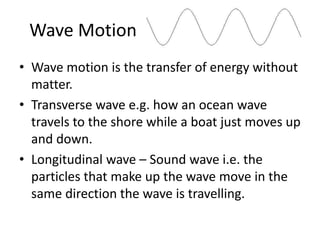
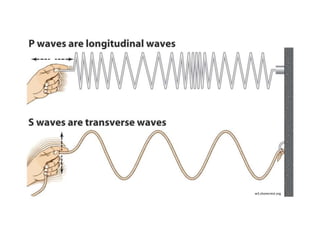
• Wave motion is the transfer of energy without 
matter. 
• Transverse wave e.g. how an ocean wave 
travels to the shore while a boat just moves up 
and down. 
• Longitudinal wave – Sound wave i.e. the 
particles that make up the wave move in the 
same direction the wave is travelling.
http://fabianoefner.com
maxresdefault.jpg
w3.shorecrest.org
Wave Properties 
www.schoolphysics.co.uk 
www.genesis.net.au
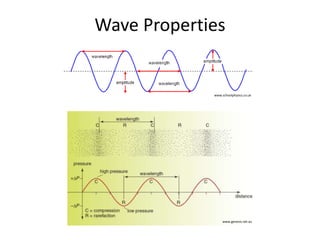
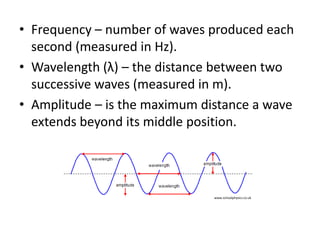
• Frequency – number of waves produced each 
second (measured in Hz). 
• Wavelength (λ) – the distance between two 
successive waves (measured in m). 
• Amplitude – is the maximum distance a wave 
extends beyond its middle position. 
www.schoolphysics.co.uk
Electromagnetic Radiation 
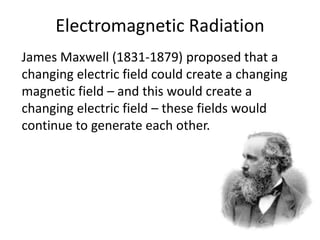
James Maxwell (1831-1879) proposed that a 
changing electric field could create a changing 
magnetic field – and this would create a 
changing electric field – these fields would 
continue to generate each other.
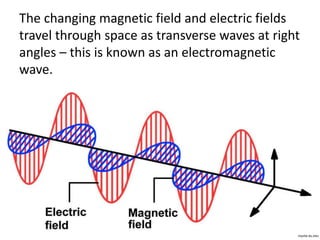
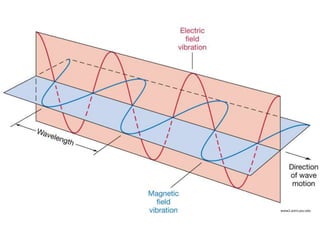
The changing magnetic field and electric fields 
travel through space as transverse waves at right 
angles – this is known as an electromagnetic 
wave. 
mysite.du.edu
www2.astro.psu.edu
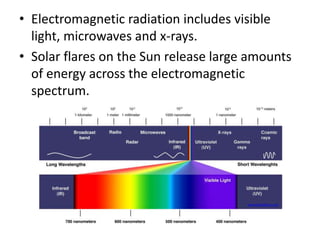
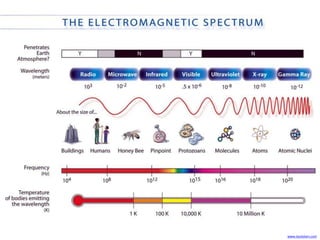
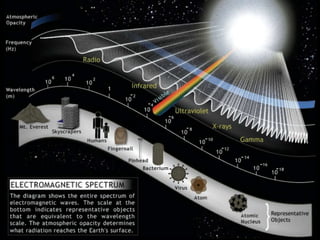
• Electromagnetic radiation includes visible 
light, microwaves and x-rays. 
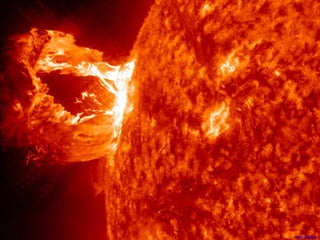
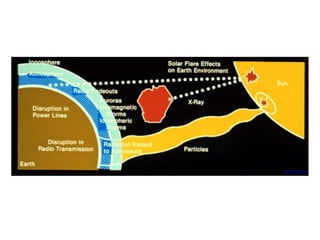
• Solar flares on the Sun release large amounts 
of energy across the electromagnetic 
spectrum. 
www.globalspec.com
www.nasa.gov
www.noaa.gov
www.ducksters.com
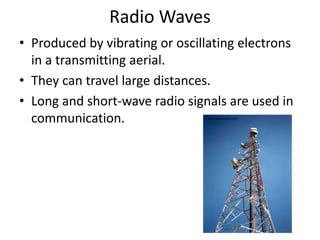
Radio Waves 
• Produced by vibrating or oscillating electrons 
in a transmitting aerial. 
• They can travel large distances. 
• Long and short-wave radio signals are used in 
communication. www.arairwaves.com
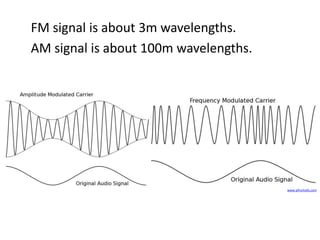
FM signal is about 3m wavelengths. 
AM signal is about 100m wavelengths. 
www.pfnicholls.com
• Short-wave radio signals can be transmitted 
long distances. The waves are beamed 
upwards and are reflected back to earth by 
the ionosphere. 
• AM radio waves can travel around large 
obstacles and travel further than FM, 
however, they are lower quality and often 
suffer from interference.
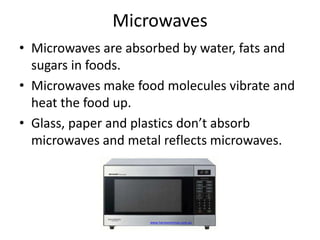
Microwaves 
• Microwaves are absorbed by water, fats and 
sugars in foods. 
• Microwaves make food molecules vibrate and 
heat the food up. 
• Glass, paper and plastics don’t absorb 
microwaves and metal reflects microwaves. 
www.harveynorman.com.au
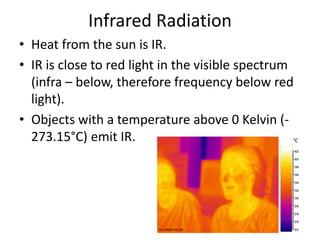
Infrared Radiation 
• Heat from the sun is IR. 
• IR is close to red light in the visible spectrum 
(infra – below, therefore frequency below red 
light). 
• Objects with a temperature above 0 Kelvin (- 
273.15°C) emit IR. 
en.wikipedia.org
Visible Light 
• Light from the Sun is essential for life on Earth. 
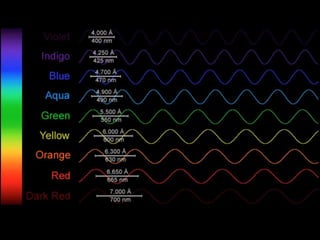
• Visible light (white light) consists of different 
colours – each has a different wavelength and 
frequency. 
ROY – G – BIV 
• Most humans can see all of these wavelengths 
(colours) but have the greatest sensitivity to the 
green range of the spectrum
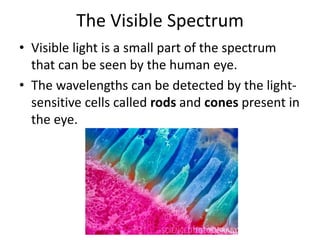
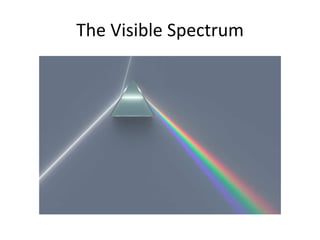
The Visible Spectrum 
• Visible light is a small part of the spectrum 
that can be seen by the human eye. 
• The wavelengths can be detected by the light-sensitive 
cells called rods and cones present in 
the eye.
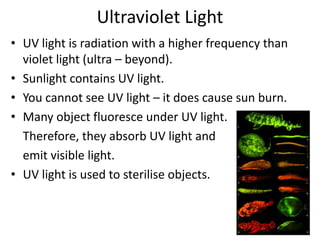
Ultraviolet Light 
• UV light is radiation with a higher frequency than 
violet light (ultra – beyond). 
• Sunlight contains UV light. 
• You cannot see UV light – it does cause sun burn. 
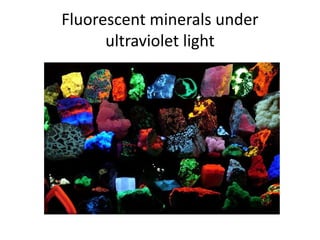
• Many object fluoresce under UV light. 
Therefore, they absorb UV light and 
emit visible light. 
• UV light is used to sterilise objects.
Fluorescent minerals under 
ultraviolet light
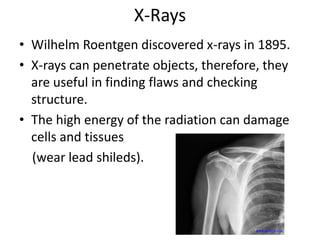
X-Rays 
• Wilhelm Roentgen discovered x-rays in 1895. 
• X-rays can penetrate objects, therefore, they 
are useful in finding flaws and checking 
structure. 
• The high energy of the radiation can damage 
cells and tissues 
(wear lead shileds). 
www.sentara.com
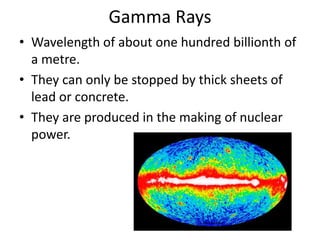
Gamma Rays 
• Wavelength of about one hundred billionth of 
a metre. 
• They can only be stopped by thick sheets of 
lead or concrete. 
• They are produced in the making of nuclear 
power. 
apod.nasa.gov
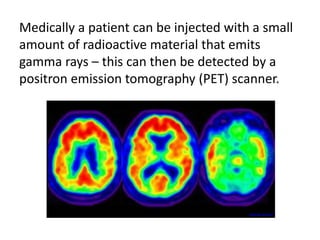
Medically a patient can be injected with a small 
amount of radioactive material that emits 
gamma rays – this can then be detected by a 
positron emission tomography (PET) scanner. 
www.geripal.org
The Visible Spectrum
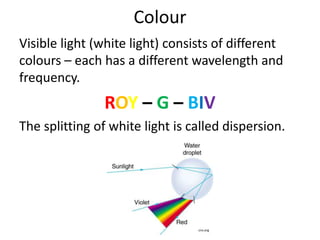
Colour 
Visible light (white light) consists of different 
colours – each has a different wavelength and 
frequency. 
ROY – G – BIV 
The splitting of white light is called dispersion. 
cnx.org
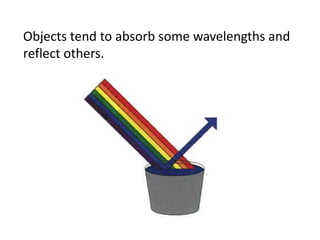
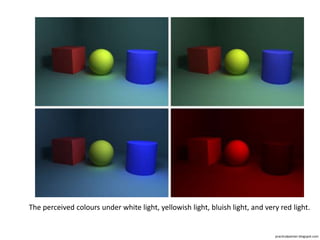
Objects tend to absorb some wavelengths and 
reflect others.
The perceived colours under white light, yellowish light, bluish light, and very red light. 
practicalpainter.blogspot.com
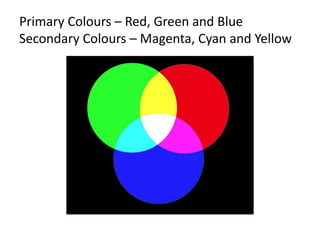
Primary Colours – Red, Green and Blue 
Secondary Colours – Magenta, Cyan and Yellow
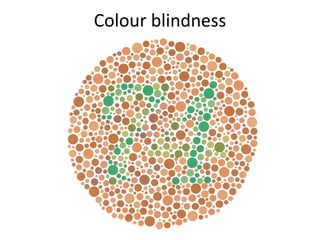
Colour blindness
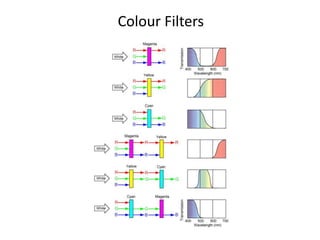
Colour Filters
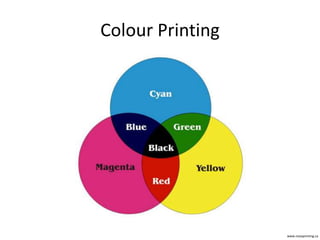
Colour Printing 
www.novaprinting.ca
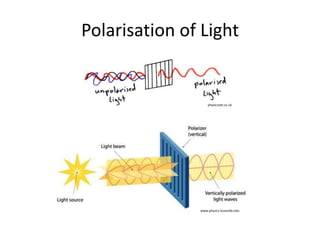
Polarisation of Light 
physicsnet.co.uk 
www.physics.louisville.edu
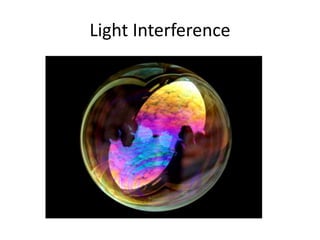
Light Interference

Electromagnetic Radiation

  • 1.
  • 2.
    Light • Lightis a form of energy known as electromagnetic radiation. • Light travels as an electromagnetic wave. • Light travels through the vacuum of space – unlike sound. • It travels at 300 000 km/s thejetlife.com
  • 3.
    Wave Motion •Wave motion is the transfer of energy without matter. • Transverse wave e.g. how an ocean wave travels to the shore while a boat just moves up and down. • Longitudinal wave – Sound wave i.e. the particles that make up the wave move in the same direction the wave is travelling.
  • 4.
  • 5.
  • 6.
  • 7.
  • 8.
    • Frequency –number of waves produced each second (measured in Hz). • Wavelength (λ) – the distance between two successive waves (measured in m). • Amplitude – is the maximum distance a wave extends beyond its middle position. www.schoolphysics.co.uk
  • 9.
    Electromagnetic Radiation JamesMaxwell (1831-1879) proposed that a changing electric field could create a changing magnetic field – and this would create a changing electric field – these fields would continue to generate each other.
  • 10.
    The changing magneticfield and electric fields travel through space as transverse waves at right angles – this is known as an electromagnetic wave. mysite.du.edu
  • 11.
  • 12.
    • Electromagnetic radiationincludes visible light, microwaves and x-rays. • Solar flares on the Sun release large amounts of energy across the electromagnetic spectrum. www.globalspec.com
  • 13.
  • 14.
  • 15.
  • 17.
    Radio Waves •Produced by vibrating or oscillating electrons in a transmitting aerial. • They can travel large distances. • Long and short-wave radio signals are used in communication. www.arairwaves.com
  • 18.
    FM signal isabout 3m wavelengths. AM signal is about 100m wavelengths. www.pfnicholls.com
  • 19.
    • Short-wave radiosignals can be transmitted long distances. The waves are beamed upwards and are reflected back to earth by the ionosphere. • AM radio waves can travel around large obstacles and travel further than FM, however, they are lower quality and often suffer from interference.
  • 20.
    Microwaves • Microwavesare absorbed by water, fats and sugars in foods. • Microwaves make food molecules vibrate and heat the food up. • Glass, paper and plastics don’t absorb microwaves and metal reflects microwaves. www.harveynorman.com.au
  • 21.
    Infrared Radiation •Heat from the sun is IR. • IR is close to red light in the visible spectrum (infra – below, therefore frequency below red light). • Objects with a temperature above 0 Kelvin (- 273.15°C) emit IR. en.wikipedia.org
  • 22.
    Visible Light •Light from the Sun is essential for life on Earth. • Visible light (white light) consists of different colours – each has a different wavelength and frequency. ROY – G – BIV • Most humans can see all of these wavelengths (colours) but have the greatest sensitivity to the green range of the spectrum
  • 24.
    The Visible Spectrum • Visible light is a small part of the spectrum that can be seen by the human eye. • The wavelengths can be detected by the light-sensitive cells called rods and cones present in the eye.
  • 25.
    Ultraviolet Light •UV light is radiation with a higher frequency than violet light (ultra – beyond). • Sunlight contains UV light. • You cannot see UV light – it does cause sun burn. • Many object fluoresce under UV light. Therefore, they absorb UV light and emit visible light. • UV light is used to sterilise objects.
  • 26.
    Fluorescent minerals under ultraviolet light
  • 27.
    X-Rays • WilhelmRoentgen discovered x-rays in 1895. • X-rays can penetrate objects, therefore, they are useful in finding flaws and checking structure. • The high energy of the radiation can damage cells and tissues (wear lead shileds). www.sentara.com
  • 28.
    Gamma Rays •Wavelength of about one hundred billionth of a metre. • They can only be stopped by thick sheets of lead or concrete. • They are produced in the making of nuclear power. apod.nasa.gov
  • 29.
    Medically a patientcan be injected with a small amount of radioactive material that emits gamma rays – this can then be detected by a positron emission tomography (PET) scanner. www.geripal.org
  • 30.
  • 31.
    Colour Visible light(white light) consists of different colours – each has a different wavelength and frequency. ROY – G – BIV The splitting of white light is called dispersion. cnx.org
  • 32.
    Objects tend toabsorb some wavelengths and reflect others.
  • 33.
    The perceived coloursunder white light, yellowish light, bluish light, and very red light. practicalpainter.blogspot.com
  • 34.
    Primary Colours –Red, Green and Blue Secondary Colours – Magenta, Cyan and Yellow
  • 35.
  • 36.
  • 37.
  • 38.
    Polarisation of Light physicsnet.co.uk www.physics.louisville.edu
  • 39.