TUBERCULOUS MENINGITS
Dr. C. Kannan
Post Graduate
Department of Pediatrics
MGMCRI
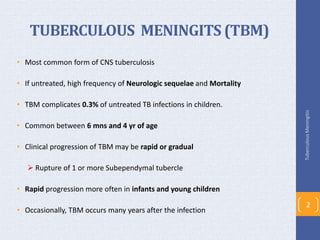
TUBERCULOUS MENINGITS (TBM)
• Most common form of CNS tuberculosis
• If untreated, high frequency of Neurologic sequelae and Mortality
• TBM complicates 0.3% of untreated TB infections in children.
• Common between 6 mns and 4 yr of age
• Clinical progression of TBM may be rapid or gradual
 Rupture of 1 or more Subependymal tubercle
• Rapid progression more often in infants and young children
• Occasionally, TBM occurs many years after the infection
TuberculousMeningitis
2
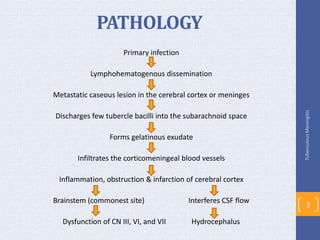
PATHOLOGY
Primary infection
Lymphohematogenous dissemination
Metastatic caseous lesion in the cerebral cortex or meninges
Discharges few tubercle bacilli into the subarachnoid space
Forms gelatinous exudate
Infiltrates the corticomeningeal blood vessels
Inflammation, obstruction & infarction of cerebral cortex
Brainstem (commonest site) Interferes CSF flow
Dysfunction of CN III, VI, and VII Hydrocephalus
TuberculousMeningitis
3
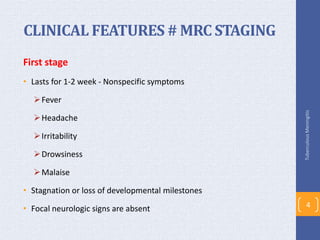
CLINICAL FEATURES # MRC STAGING
First stage
• Lasts for 1-2 week - Nonspecific symptoms
Fever
Headache
Irritability
Drowsiness
Malaise
• Stagnation or loss of developmental milestones
• Focal neurologic signs are absent
TuberculousMeningitis
4
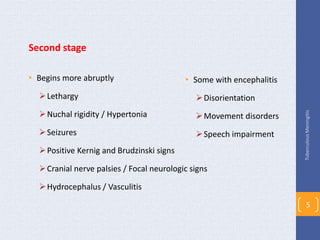
Second stage
• Begins more abruptly
Lethargy
Nuchal rigidity / Hypertonia
Seizures
Positive Kernig and Brudzinski signs
Cranial nerve palsies / Focal neurologic signs
Hydrocephalus / Vasculitis
• Some with encephalitis
Disorientation
Movement disorders
Speech impairment
TuberculousMeningitis
5
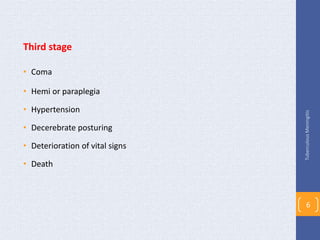
Third stage
• Coma
• Hemi or paraplegia
• Hypertension
• Decerebrate posturing
• Deterioration of vital signs
• Death
TuberculousMeningitis
6
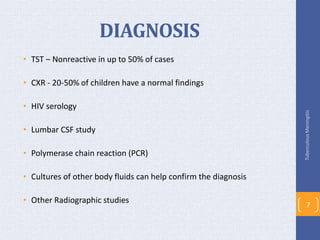
DIAGNOSIS
• TST – Nonreactive in up to 50% of cases
• CXR - 20-50% of children have a normal findings
• HIV serology
• Lumbar CSF study
• Polymerase chain reaction (PCR)
• Cultures of other body fluids can help confirm the diagnosis
• Other Radiographic studies
TuberculousMeningitis
7
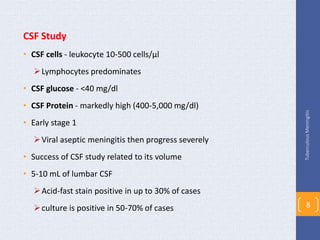
CSF Study
• CSF cells - leukocyte 10-500 cells/µl
Lymphocytes predominates
• CSF glucose - <40 mg/dl
• CSF Protein - markedly high (400-5,000 mg/dl)
• Early stage 1
Viral aseptic meningitis then progress severely
• Success of CSF study related to its volume
• 5-10 mL of lumbar CSF
Acid-fast stain positive in up to 30% of cases
culture is positive in 50-70% of cases
TuberculousMeningitis
8
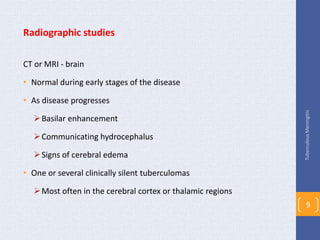
Radiographic studies
CT or MRI - brain
• Normal during early stages of the disease
• As disease progresses
Basilar enhancement
Communicating hydrocephalus
Signs of cerebral edema
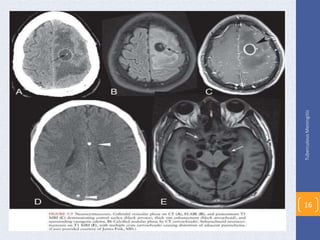
• One or several clinically silent tuberculomas
Most often in the cerebral cortex or thalamic regions
TuberculousMeningitis
9
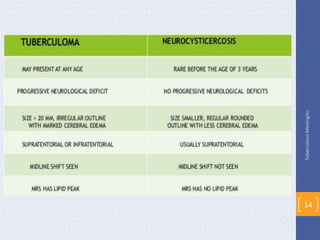
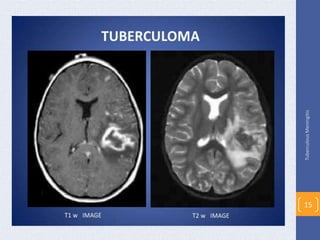
TUBERCULOMA
• Another manifestation of CNS tuberculosis
• Tumor-like mass
• Formed by aggregation of caseous tubercles
• Singular / multiple
• Clinically manifests as a brain tumor
• Account for up to 30% of brain tumors
TuberculousMeningitis
10
Location
• Supratentorial in adult
• Infratentorial in children
• At the base of the brain near the cerebellum
Clinical features
• Headache
• Vomiting
• Fever
• Focal neurologic findings
• Convulsions
TuberculousMeningitis
11
Diagnosis
• TST is usually reactive
• Chest radiograph is usually normal
• CT or MRI – brain
Discrete lesions with surrounding edema
Contrast medium enhancement shows ring-like lesion
• Surgical excision
To distinguish tuberculoma from other causes of brain tumor
TuberculousMeningitis
12
Treatment
• Corticosteroids
Alleviates severe clinical signs and symptoms
Used during 1st few weeks of treatment or
In immediate post - op period to decrease cerebral edema
• Surgical removal is not necessary
Most tuberculomas resolve with medical management (Later)
TuberculousMeningitis
13
TuberculousMeningitis
14
TuberculousMeningitis
15
TuberculousMeningitis
16
COMPLICATIONS
• Hydrocephalus
• Stroke
• Opticochiasmatic – Arachnoiditis
 Visual loss – During treatment with ATT / Withdrawal of steroids
• Seizures
TuberculousMeningitis
17
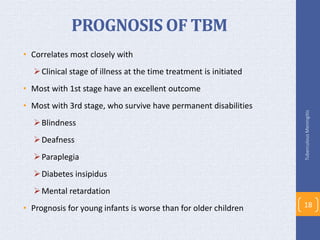
PROGNOSIS OF TBM
• Correlates most closely with
Clinical stage of illness at the time treatment is initiated
• Most with 1st stage have an excellent outcome
• Most with 3rd stage, who survive have permanent disabilities
Blindness
Deafness
Paraplegia
Diabetes insipidus
Mental retardation
• Prognosis for young infants is worse than for older children
TuberculousMeningitis
18
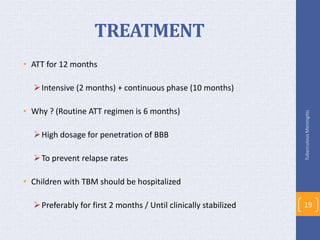
TREATMENT
• ATT for 12 months
Intensive (2 months) + continuous phase (10 months)
• Why ? (Routine ATT regimen is 6 months)
High dosage for penetration of BBB
To prevent relapse rates
• Children with TBM should be hospitalized
Preferably for first 2 months / Until clinically stabilized
TuberculousMeningitis
19
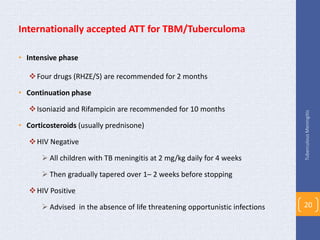
Internationally accepted ATT for TBM/Tuberculoma
• Intensive phase
Four drugs (RHZE/S) are recommended for 2 months
• Continuation phase
Isoniazid and Rifampicin are recommended for 10 months
• Corticosteroids (usually prednisone)
HIV Negative
 All children with TB meningitis at 2 mg/kg daily for 4 weeks
 Then gradually tapered over 1– 2 weeks before stopping
HIV Positive
 Advised in the absence of life threatening opportunistic infections
TuberculousMeningitis
20
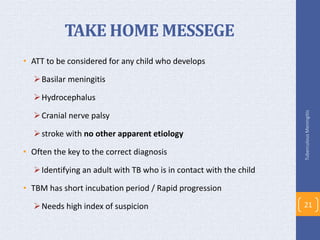
TAKE HOME MESSEGE
• ATT to be considered for any child who develops
Basilar meningitis
Hydrocephalus
Cranial nerve palsy
stroke with no other apparent etiology
• Often the key to the correct diagnosis
Identifying an adult with TB who is in contact with the child
• TBM has short incubation period / Rapid progression
Needs high index of suspicion
TuberculousMeningitis
21
REFERENCES
• Nelson textbook of pediatrics
• National guidelines for Extra pulmonary TB
Index TB guidelines
• Google images
TuberculousMeningitis
22
THANK YOU
TuberculousMeningitis
23
TuberculousMeningitis
24
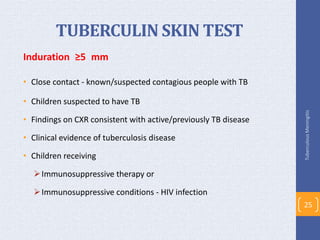
TUBERCULIN SKIN TEST
Induration ≥5 mm
• Close contact - known/suspected contagious people with TB
• Children suspected to have TB
• Findings on CXR consistent with active/previously TB disease
• Clinical evidence of tuberculosis disease
• Children receiving
Immunosuppressive therapy or
Immunosuppressive conditions - HIV infection
TuberculousMeningitis
25
Induration ≥10 mm
• Children at increased risk of disseminated TB
• Children younger than 4 yr of age
• Children - Hodgkin disease/Lymphoma/DM/CRF/Malnutrition
• Children with increased exposure to tuberculosis disease
• Children often exposed to adults who are
HIV infected / homeless / Users of illicit drugs
Residents of nursing homes / Migrant farm workers
• Children who travel to high-prevalence regions of the world
TuberculousMeningitis
26
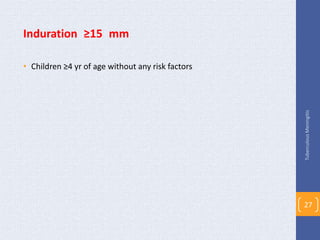
Induration ≥15 mm
• Children ≥4 yr of age without any risk factors
TuberculousMeningitis
27

TB Meningitis

  • 1.
    TUBERCULOUS MENINGITS Dr. C.Kannan Post Graduate Department of Pediatrics MGMCRI
  • 2.
    TUBERCULOUS MENINGITS (TBM) •Most common form of CNS tuberculosis • If untreated, high frequency of Neurologic sequelae and Mortality • TBM complicates 0.3% of untreated TB infections in children. • Common between 6 mns and 4 yr of age • Clinical progression of TBM may be rapid or gradual  Rupture of 1 or more Subependymal tubercle • Rapid progression more often in infants and young children • Occasionally, TBM occurs many years after the infection TuberculousMeningitis 2
  • 3.
    PATHOLOGY Primary infection Lymphohematogenous dissemination Metastaticcaseous lesion in the cerebral cortex or meninges Discharges few tubercle bacilli into the subarachnoid space Forms gelatinous exudate Infiltrates the corticomeningeal blood vessels Inflammation, obstruction & infarction of cerebral cortex Brainstem (commonest site) Interferes CSF flow Dysfunction of CN III, VI, and VII Hydrocephalus TuberculousMeningitis 3
  • 4.
    CLINICAL FEATURES #MRC STAGING First stage • Lasts for 1-2 week - Nonspecific symptoms Fever Headache Irritability Drowsiness Malaise • Stagnation or loss of developmental milestones • Focal neurologic signs are absent TuberculousMeningitis 4
  • 5.
    Second stage • Beginsmore abruptly Lethargy Nuchal rigidity / Hypertonia Seizures Positive Kernig and Brudzinski signs Cranial nerve palsies / Focal neurologic signs Hydrocephalus / Vasculitis • Some with encephalitis Disorientation Movement disorders Speech impairment TuberculousMeningitis 5
  • 6.
    Third stage • Coma •Hemi or paraplegia • Hypertension • Decerebrate posturing • Deterioration of vital signs • Death TuberculousMeningitis 6
  • 7.
    DIAGNOSIS • TST –Nonreactive in up to 50% of cases • CXR - 20-50% of children have a normal findings • HIV serology • Lumbar CSF study • Polymerase chain reaction (PCR) • Cultures of other body fluids can help confirm the diagnosis • Other Radiographic studies TuberculousMeningitis 7
  • 8.
    CSF Study • CSFcells - leukocyte 10-500 cells/µl Lymphocytes predominates • CSF glucose - <40 mg/dl • CSF Protein - markedly high (400-5,000 mg/dl) • Early stage 1 Viral aseptic meningitis then progress severely • Success of CSF study related to its volume • 5-10 mL of lumbar CSF Acid-fast stain positive in up to 30% of cases culture is positive in 50-70% of cases TuberculousMeningitis 8
  • 9.
    Radiographic studies CT orMRI - brain • Normal during early stages of the disease • As disease progresses Basilar enhancement Communicating hydrocephalus Signs of cerebral edema • One or several clinically silent tuberculomas Most often in the cerebral cortex or thalamic regions TuberculousMeningitis 9
  • 10.
    TUBERCULOMA • Another manifestationof CNS tuberculosis • Tumor-like mass • Formed by aggregation of caseous tubercles • Singular / multiple • Clinically manifests as a brain tumor • Account for up to 30% of brain tumors TuberculousMeningitis 10
  • 11.
    Location • Supratentorial inadult • Infratentorial in children • At the base of the brain near the cerebellum Clinical features • Headache • Vomiting • Fever • Focal neurologic findings • Convulsions TuberculousMeningitis 11
  • 12.
    Diagnosis • TST isusually reactive • Chest radiograph is usually normal • CT or MRI – brain Discrete lesions with surrounding edema Contrast medium enhancement shows ring-like lesion • Surgical excision To distinguish tuberculoma from other causes of brain tumor TuberculousMeningitis 12
  • 13.
    Treatment • Corticosteroids Alleviates severeclinical signs and symptoms Used during 1st few weeks of treatment or In immediate post - op period to decrease cerebral edema • Surgical removal is not necessary Most tuberculomas resolve with medical management (Later) TuberculousMeningitis 13
  • 14.
  • 15.
  • 16.
  • 17.
    COMPLICATIONS • Hydrocephalus • Stroke •Opticochiasmatic – Arachnoiditis  Visual loss – During treatment with ATT / Withdrawal of steroids • Seizures TuberculousMeningitis 17
  • 18.
    PROGNOSIS OF TBM •Correlates most closely with Clinical stage of illness at the time treatment is initiated • Most with 1st stage have an excellent outcome • Most with 3rd stage, who survive have permanent disabilities Blindness Deafness Paraplegia Diabetes insipidus Mental retardation • Prognosis for young infants is worse than for older children TuberculousMeningitis 18
  • 19.
    TREATMENT • ATT for12 months Intensive (2 months) + continuous phase (10 months) • Why ? (Routine ATT regimen is 6 months) High dosage for penetration of BBB To prevent relapse rates • Children with TBM should be hospitalized Preferably for first 2 months / Until clinically stabilized TuberculousMeningitis 19
  • 20.
    Internationally accepted ATTfor TBM/Tuberculoma • Intensive phase Four drugs (RHZE/S) are recommended for 2 months • Continuation phase Isoniazid and Rifampicin are recommended for 10 months • Corticosteroids (usually prednisone) HIV Negative  All children with TB meningitis at 2 mg/kg daily for 4 weeks  Then gradually tapered over 1– 2 weeks before stopping HIV Positive  Advised in the absence of life threatening opportunistic infections TuberculousMeningitis 20
  • 21.
    TAKE HOME MESSEGE •ATT to be considered for any child who develops Basilar meningitis Hydrocephalus Cranial nerve palsy stroke with no other apparent etiology • Often the key to the correct diagnosis Identifying an adult with TB who is in contact with the child • TBM has short incubation period / Rapid progression Needs high index of suspicion TuberculousMeningitis 21
  • 22.
    REFERENCES • Nelson textbookof pediatrics • National guidelines for Extra pulmonary TB Index TB guidelines • Google images TuberculousMeningitis 22
  • 23.
  • 24.
  • 25.
    TUBERCULIN SKIN TEST Induration≥5 mm • Close contact - known/suspected contagious people with TB • Children suspected to have TB • Findings on CXR consistent with active/previously TB disease • Clinical evidence of tuberculosis disease • Children receiving Immunosuppressive therapy or Immunosuppressive conditions - HIV infection TuberculousMeningitis 25
  • 26.
    Induration ≥10 mm •Children at increased risk of disseminated TB • Children younger than 4 yr of age • Children - Hodgkin disease/Lymphoma/DM/CRF/Malnutrition • Children with increased exposure to tuberculosis disease • Children often exposed to adults who are HIV infected / homeless / Users of illicit drugs Residents of nursing homes / Migrant farm workers • Children who travel to high-prevalence regions of the world TuberculousMeningitis 26
  • 27.
    Induration ≥15 mm •Children ≥4 yr of age without any risk factors TuberculousMeningitis 27