



BIOFUEL
GENERATION
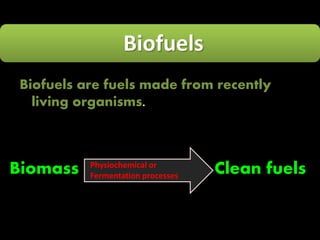
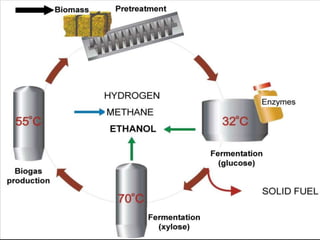
Biomass Clean fuelsPhysiochemical or
Fermentation processes
Biofuels
Biofuels are fuels made from recently
living organisms.
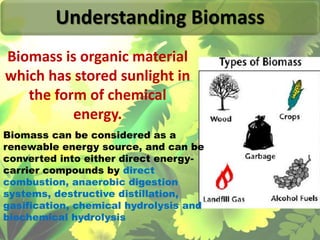
Biomass is organic material
which has stored sunlight in
the form of chemical
energy.
Understanding Biomass
Biomass can be considered as a
renewable energy source, and can be
converted into either direct energy-
carrier compounds by direct
combustion, anaerobic digestion
systems, destructive distillation,
gasification, chemical hydrolysis and
biochemical hydrolysis
Biofuel generation resources
Some of the namely biofuel preparation
resources
Agriculture crops
Vegetables oils
Animal fats
Sugars
Algae
Plants remains
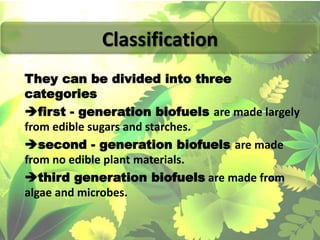
They can be divided into three
categories
first - generation biofuels are made largely
from edible sugars and starches.
second - generation biofuels are made
from no edible plant materials.
third generation biofuels are made from
algae and microbes.
Classification
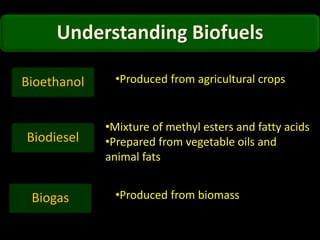
Understanding Biofuels
Biodiesel
•Mixture of methyl esters and fatty acids
•Prepared from vegetable oils and
animal fats
Biogas
Bioethanol •Produced from agricultural crops
•Produced from biomass
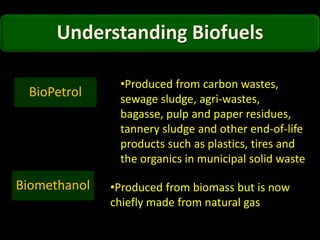
Understanding Biofuels
BioPetrol
•Produced from carbon wastes,
sewage sludge, agri-wastes,
bagasse, pulp and paper residues,
tannery sludge and other end-of-life
products such as plastics, tires and
the organics in municipal solid waste
Biomethanol •Produced from biomass but is now
chiefly made from natural gas
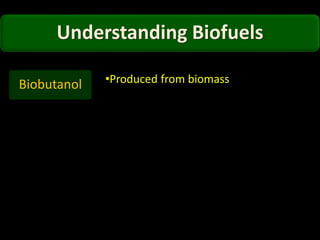
Understanding Biofuels
Biobutanol •Produced from biomass
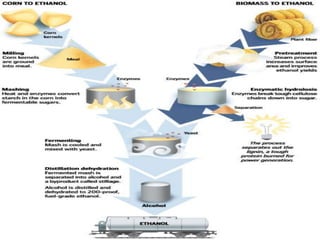
Bioethanol Generation
Ethanol is another name for ethyl alcohol, or “grain alcohol”
(CH3CH2OH).
Ethanol can be made from
1. Cellulose (recent developments)
2. Sugarcane
3. Potato
4. Corn
A successful trial has been conducted to run the Shatabdi Express running
between Delhi and Chandigarh by mixing 20% Jatropha oil with diesel.
Biodiesel
Biodiesel is an ecofriendly clean alternative biodegradable, low
cost, renewable, nontoxic fuel produced from the plant Jatropha
curcas. It contains more oxygen, no petroleum, essentially free of
sulphur & aromatics, cleaner burn at higher temperature and
will reduce green house gas emission. It can be used directly or
blended with petroleum diesel to run the machinery.
Resources for Biodiesel
Virgin oil feedstock; rapeseed and soybean oils are
most commonly used, soybean oil alone accounting for
about ninety percent of all fuel stocks; It also can be
obtained from field pennycress and Jatropha other
crops such as mustard, flax, sunflower, canola, palm oil,
hemp, and even algae show promise
Waste vegetable oil (WVO);
Animal fats including tallow, lard, yellow grease,
chicken fat, and the by-products of the production of
Omega-3 fatty acids from fish oil.
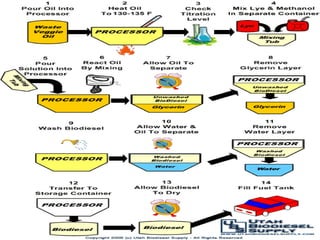
Biodiesel Generation
Biodiesel is made by chemically altering an organic oil
(typically vegetable oil) through a process called
"transesterification". Essentially, the process thins down
the oil to allow it to run in an unmodified diesel engine.
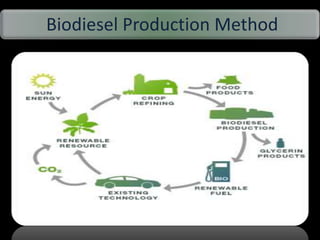
Biodiesel Production Method
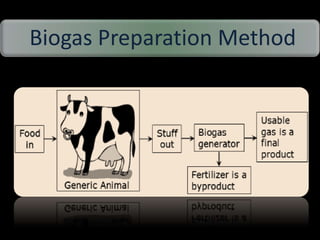
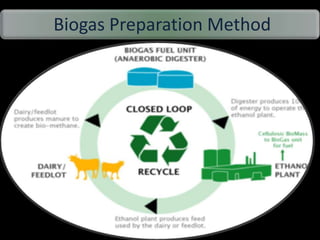
Biogas
Biogas Preparation Method
Biopetrol
Involves liquefying carbon-rich solid fuels
Converting Sewage sludge into synthetic oils
1. Pyrolysis : Thermal breakdown of the molecular structure
to create radical fractions different in size.
2. Stabilization of the radicals by recombining themselves or
by redistribution of hydrogen from the raw material itself or by
hydrogen that is introduced from outside (molecular
hydrogen or from hydrogen-donor matter).
Other Alcohols and Ethers
Biobutanol
Biobutanol – butanol made from biomass – can be produced with the
same feedstocks as ethanol but with a modified fermentation and
distillation process. Butanol can be used in standard vehicles in
gasoline blends.
Biomethanol
Methanol is commonly called “wood alcohol.” It can be made from
biomass but is now chiefly made from natural gas. Production of
methanol is one way to make use of remote natural gas that might
not otherwise be brought to market. It has about half the energy
content of gasoline.
Benefits of biofuels
Save carbon emission up to 80%
The energy relase per unit mass of biofuels is greater than
that of fossil fuels.
reduce greenhouse gases.
 high crop yields and lower costs for land and labor provide
an economic advantage
Disadvantages of Biofuels
Generation
1. More energy is used to make biofuels, than is contained in
the biofuel.
2. Greenhouse gases produced by burning
3. Extra costs of installing technology to process and recycle
wastes.
4. Biodiversity -sacrifice their rainforests to build more oil
plantations
5. first generation biofuels are not sustainable
6. Farmers may move towards biofuel production reducing
food production.
Conclusion
• Biodiesel gave the opportunity to give back to the
environment by allowing us to pursue an alternative fuel.
• Biofuel production technology is still very much in the first
generation and has disadvantages.
• Need to evolve revolution in technology to improve
production technology.
• Need to change lifstyles to increase use of biofuels.
THANK YOU
This presentation was designed keeping in mind
its advantages in BT-101
BUT Stay tuned for clip on
Biodiesel Production
Developed by
Mitul
Rawat
Mohit
Rajput
Nikhil
Singla
S.Avinash
Deepak

Presentation - Bio-fuels Generation

  • 1.
  • 2.
    Biomass Clean fuelsPhysiochemicalor Fermentation processes Biofuels Biofuels are fuels made from recently living organisms.
  • 3.
    Biomass is organicmaterial which has stored sunlight in the form of chemical energy. Understanding Biomass Biomass can be considered as a renewable energy source, and can be converted into either direct energy- carrier compounds by direct combustion, anaerobic digestion systems, destructive distillation, gasification, chemical hydrolysis and biochemical hydrolysis
  • 4.
    Biofuel generation resources Someof the namely biofuel preparation resources Agriculture crops Vegetables oils Animal fats Sugars Algae Plants remains
  • 5.
    They can bedivided into three categories first - generation biofuels are made largely from edible sugars and starches. second - generation biofuels are made from no edible plant materials. third generation biofuels are made from algae and microbes. Classification
  • 6.
    Understanding Biofuels Biodiesel •Mixture ofmethyl esters and fatty acids •Prepared from vegetable oils and animal fats Biogas Bioethanol •Produced from agricultural crops •Produced from biomass
  • 7.
    Understanding Biofuels BioPetrol •Produced fromcarbon wastes, sewage sludge, agri-wastes, bagasse, pulp and paper residues, tannery sludge and other end-of-life products such as plastics, tires and the organics in municipal solid waste Biomethanol •Produced from biomass but is now chiefly made from natural gas
  • 8.
  • 9.
    Bioethanol Generation Ethanol isanother name for ethyl alcohol, or “grain alcohol” (CH3CH2OH). Ethanol can be made from 1. Cellulose (recent developments) 2. Sugarcane 3. Potato 4. Corn
  • 11.
    A successful trialhas been conducted to run the Shatabdi Express running between Delhi and Chandigarh by mixing 20% Jatropha oil with diesel. Biodiesel Biodiesel is an ecofriendly clean alternative biodegradable, low cost, renewable, nontoxic fuel produced from the plant Jatropha curcas. It contains more oxygen, no petroleum, essentially free of sulphur & aromatics, cleaner burn at higher temperature and will reduce green house gas emission. It can be used directly or blended with petroleum diesel to run the machinery.
  • 12.
    Resources for Biodiesel Virginoil feedstock; rapeseed and soybean oils are most commonly used, soybean oil alone accounting for about ninety percent of all fuel stocks; It also can be obtained from field pennycress and Jatropha other crops such as mustard, flax, sunflower, canola, palm oil, hemp, and even algae show promise Waste vegetable oil (WVO); Animal fats including tallow, lard, yellow grease, chicken fat, and the by-products of the production of Omega-3 fatty acids from fish oil.
  • 13.
    Biodiesel Generation Biodiesel ismade by chemically altering an organic oil (typically vegetable oil) through a process called "transesterification". Essentially, the process thins down the oil to allow it to run in an unmodified diesel engine.
  • 15.
  • 16.
  • 17.
  • 18.
  • 19.
    Biopetrol Involves liquefying carbon-richsolid fuels Converting Sewage sludge into synthetic oils 1. Pyrolysis : Thermal breakdown of the molecular structure to create radical fractions different in size. 2. Stabilization of the radicals by recombining themselves or by redistribution of hydrogen from the raw material itself or by hydrogen that is introduced from outside (molecular hydrogen or from hydrogen-donor matter).
  • 20.
    Other Alcohols andEthers Biobutanol Biobutanol – butanol made from biomass – can be produced with the same feedstocks as ethanol but with a modified fermentation and distillation process. Butanol can be used in standard vehicles in gasoline blends. Biomethanol Methanol is commonly called “wood alcohol.” It can be made from biomass but is now chiefly made from natural gas. Production of methanol is one way to make use of remote natural gas that might not otherwise be brought to market. It has about half the energy content of gasoline.
  • 21.
    Benefits of biofuels Savecarbon emission up to 80% The energy relase per unit mass of biofuels is greater than that of fossil fuels. reduce greenhouse gases.  high crop yields and lower costs for land and labor provide an economic advantage
  • 22.
    Disadvantages of Biofuels Generation 1.More energy is used to make biofuels, than is contained in the biofuel. 2. Greenhouse gases produced by burning 3. Extra costs of installing technology to process and recycle wastes. 4. Biodiversity -sacrifice their rainforests to build more oil plantations 5. first generation biofuels are not sustainable 6. Farmers may move towards biofuel production reducing food production.
  • 23.
    Conclusion • Biodiesel gavethe opportunity to give back to the environment by allowing us to pursue an alternative fuel. • Biofuel production technology is still very much in the first generation and has disadvantages. • Need to evolve revolution in technology to improve production technology. • Need to change lifstyles to increase use of biofuels.
  • 26.
    THANK YOU This presentationwas designed keeping in mind its advantages in BT-101
  • 27.
    BUT Stay tunedfor clip on Biodiesel Production
  • 28.