


BIOFUELS
A BIOFUEL IS A TYPE OF FUEL
WHOSE ENERGY IS DERIVED
FROM BIOLOGICAL CARBON
FIXATION.
IN OTHER WORDS, FUEL WHICH
PRODUCED FROM RENEWABLE
BIOLOGICAL RESOURCES SUCH AS
PLANT BIO MASS AND TREATED
MUNICIPAL AND INDUSTRIAL
WASTE.
WHAT IS BIO FUEL?
WHY BIOFUELS?
Therefore, there are many reasons why we
are interested in biofuels:
 To reduce our dependence on fossil fuels
 To reduce reliance on foreign oil
 To lower emission of green house gases
 To bring business to rural economics
ADVANTAGES OF BIO FUELS
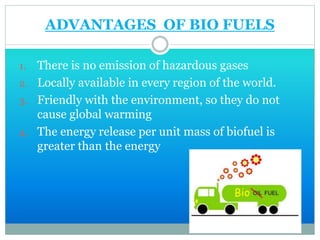
1. There is no emission of hazardous gases
2. Locally available in every region of the world.
3. Friendly with the environment, so they do not
cause global warming
4. The energy release per unit mass of biofuel is
greater than the energy
TWO METHODS TO FORM BIOFUEL;
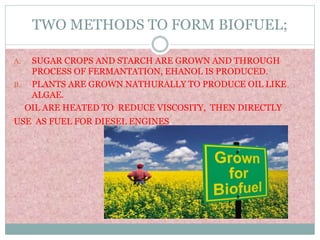
A. SUGAR CROPS AND STARCH ARE GROWN AND THROUGH
PROCESS OF FERMANTATION, EHANOL IS PRODUCED.
B. PLANTS ARE GROWN NATHURALLY TO PRODUCE OIL LIKE
ALGAE.
OIL ARE HEATED TO REDUCE VISCOSITY, THEN DIRECTLY
USE AS FUEL FOR DIESEL ENGINES.
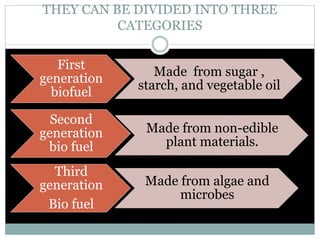
THEY CAN BE DIVIDED INTO THREE
CATEGORIES
First
generation
biofuel
Made from sugar ,
starch, and vegetable oil
Second
generation
bio fuel
Made from non-edible
plant materials.
Third
generation
Bio fuel
Made from algae and
microbes
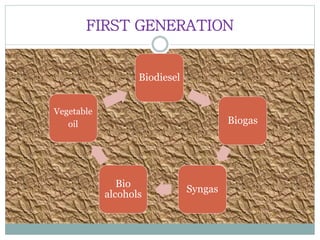
FIRST GENERATION
Biodiesel
Biogas
Syngas
Bio
alcohols
Vegetable
oil
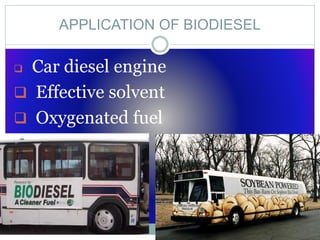
APPLICATION OF BIODIESEL
 Car diesel engine
 Effective solvent
 Oxygenated fuel
ADVANTAGE OF BIODIESEL
Biodiesel can be termed clean fuel as it does not
contain carcinogens and its sulphur content is also
lesser than the mineral diesel.
It possesses high biodegradability and lubricating
property.
Improves engine efficiency and operating life cycle.
Domestic resource
Greatly reduces particulate matter and carbon
monoxide emission
DISADVANTAGES OF BIODIESEL
Higher production cost.
Biodiesel is more likely than
petroleum diesel to attract
moisture.
Poor low temperature.
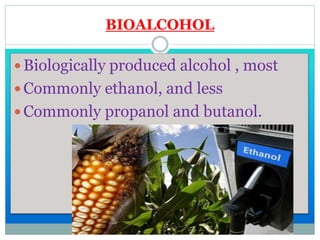
BIOALCOHOL
 Biologically produced alcohol , most
 Commonly ethanol, and less
 Commonly propanol and butanol.
APPLICATION OF BIO-ETHANOL
Petrol engine as a replacement for
gasoline
Fire places
Fuel for vehicles
Ethanol fuel is the most commonly
used bio-fuel in the world.
VEGETABLE OIL
Generally used for cooking
purpose.
It is used in several old diesel
engine that have indirect injection
system.
Vegetable oil is mainly used for the
production of biodiesel.
BIO GAS
Biogas is mainly produced after
the anaerobic digestion of the
organic materials.
Biogas produced is very rich in
methane.
APPLICATION OF BIOGAS
 To produce electricity
 Cooking purpose
 To heat the digester
 Space heating
 Water heating
 Process heating
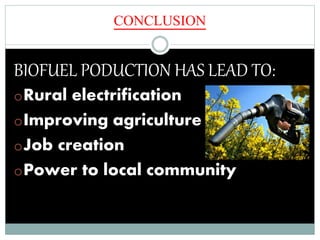
CONCLUSION
BIOFUEL PODUCTION HAS LEAD TO:
oRural electrification
oImproving agriculture
oJob creation
oPower to local community
GO GREEN
Biofuels

Biofuels

  • 1.
  • 2.
    A BIOFUEL ISA TYPE OF FUEL WHOSE ENERGY IS DERIVED FROM BIOLOGICAL CARBON FIXATION. IN OTHER WORDS, FUEL WHICH PRODUCED FROM RENEWABLE BIOLOGICAL RESOURCES SUCH AS PLANT BIO MASS AND TREATED MUNICIPAL AND INDUSTRIAL WASTE. WHAT IS BIO FUEL?
  • 3.
    WHY BIOFUELS? Therefore, thereare many reasons why we are interested in biofuels:  To reduce our dependence on fossil fuels  To reduce reliance on foreign oil  To lower emission of green house gases  To bring business to rural economics
  • 4.
    ADVANTAGES OF BIOFUELS 1. There is no emission of hazardous gases 2. Locally available in every region of the world. 3. Friendly with the environment, so they do not cause global warming 4. The energy release per unit mass of biofuel is greater than the energy
  • 5.
    TWO METHODS TOFORM BIOFUEL; A. SUGAR CROPS AND STARCH ARE GROWN AND THROUGH PROCESS OF FERMANTATION, EHANOL IS PRODUCED. B. PLANTS ARE GROWN NATHURALLY TO PRODUCE OIL LIKE ALGAE. OIL ARE HEATED TO REDUCE VISCOSITY, THEN DIRECTLY USE AS FUEL FOR DIESEL ENGINES.
  • 6.
    THEY CAN BEDIVIDED INTO THREE CATEGORIES First generation biofuel Made from sugar , starch, and vegetable oil Second generation bio fuel Made from non-edible plant materials. Third generation Bio fuel Made from algae and microbes
  • 7.
  • 8.
    APPLICATION OF BIODIESEL Car diesel engine  Effective solvent  Oxygenated fuel
  • 9.
    ADVANTAGE OF BIODIESEL Biodieselcan be termed clean fuel as it does not contain carcinogens and its sulphur content is also lesser than the mineral diesel. It possesses high biodegradability and lubricating property. Improves engine efficiency and operating life cycle. Domestic resource Greatly reduces particulate matter and carbon monoxide emission
  • 10.
    DISADVANTAGES OF BIODIESEL Higherproduction cost. Biodiesel is more likely than petroleum diesel to attract moisture. Poor low temperature.
  • 11.
    BIOALCOHOL  Biologically producedalcohol , most  Commonly ethanol, and less  Commonly propanol and butanol.
  • 12.
    APPLICATION OF BIO-ETHANOL Petrolengine as a replacement for gasoline Fire places Fuel for vehicles Ethanol fuel is the most commonly used bio-fuel in the world.
  • 13.
    VEGETABLE OIL Generally usedfor cooking purpose. It is used in several old diesel engine that have indirect injection system. Vegetable oil is mainly used for the production of biodiesel.
  • 14.
    BIO GAS Biogas ismainly produced after the anaerobic digestion of the organic materials. Biogas produced is very rich in methane.
  • 15.
    APPLICATION OF BIOGAS To produce electricity  Cooking purpose  To heat the digester  Space heating  Water heating  Process heating
  • 16.
    CONCLUSION BIOFUEL PODUCTION HASLEAD TO: oRural electrification oImproving agriculture oJob creation oPower to local community
  • 17.