By –
Mr. ASHOK BISHNOI
Lecturer, JINR
ANATOMY AND
PHYSIOLOGY OF THE
EAR
Divided into “3” parts:-
1. Outer Ear
2. Middle Ear (Tympanic cavity)
3. Inner Ear
Major Divisions of the Ear
Peripheral Mechanism Central Mechanism
Outer
Ear
Middle
Ear
Inner
Ear
VIII
Cranial
Nerve
Brain
 It consist of the auricle (Pinna) & External
acoustic meatus ( Auditory canal)
Pinna Landmarks
 Helix
 Antihelix
 Concha
 Tragus
 Intertragal Notch
 Antitragus
Auricle (Pinna):-
 It is visible part of ear
 It composed of fibro elastic cartilage
convered with skin.
 Helix- it is outer ridge part
 Lobule (Ear lobe) –Soft pliable part
External acoustic meatus ( Auditory
canal)
 Slightly “S” Shaped tube
 About 2.5 cm long ( 1 inch )
 External from auricle to tympanic
membrane
 There numerous ceruminous gland &
hair follicles
 Numerous gland are modified sweat
gland that secret cerumen (Earwax)
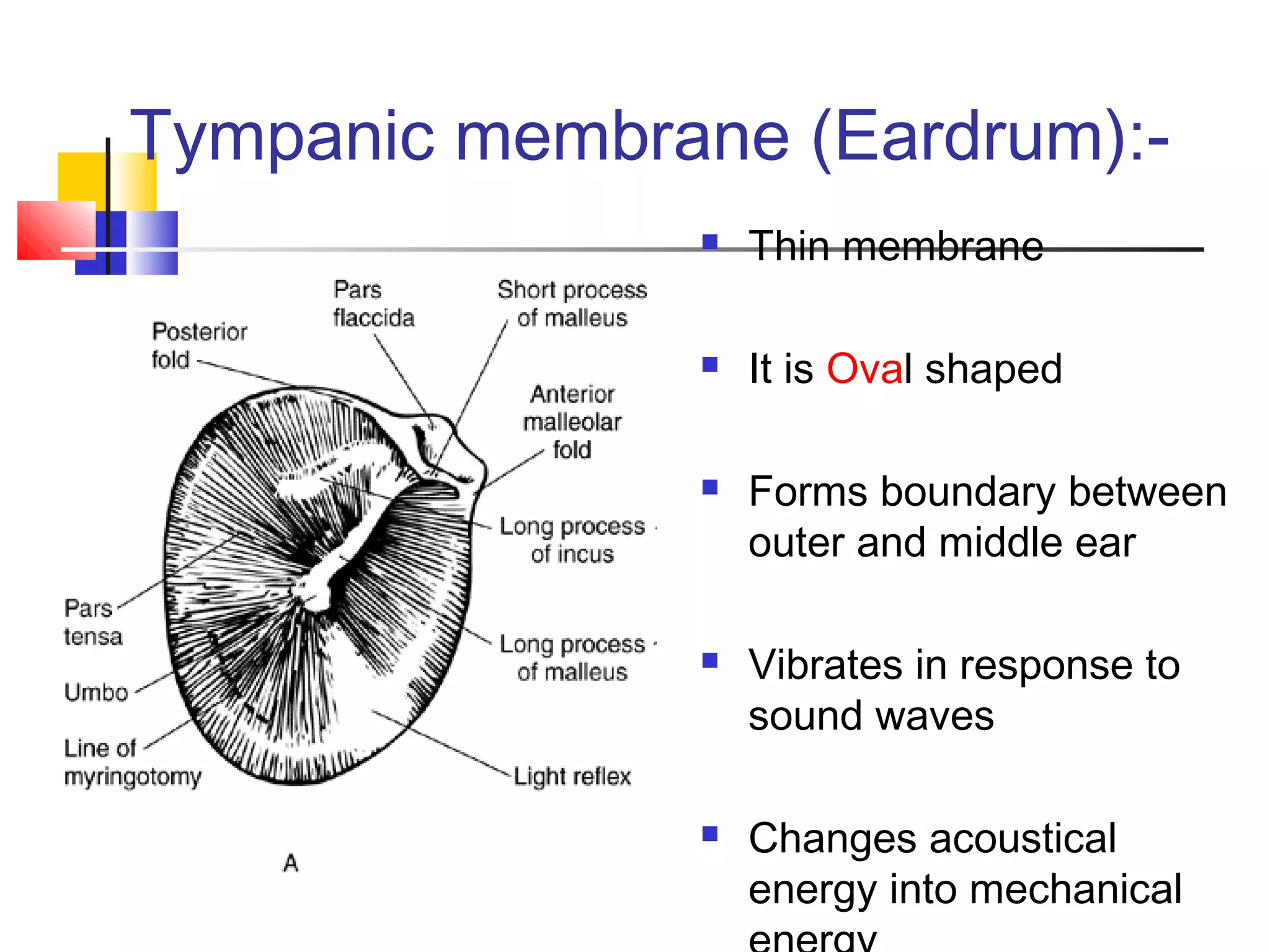
Tympanic membrane (Eardrum):-
 Thin membrane
 It is Oval shaped
 Forms boundary between
outer and middle ear
 Vibrates in response to
sound waves
 Changes acoustical
energy into mechanical
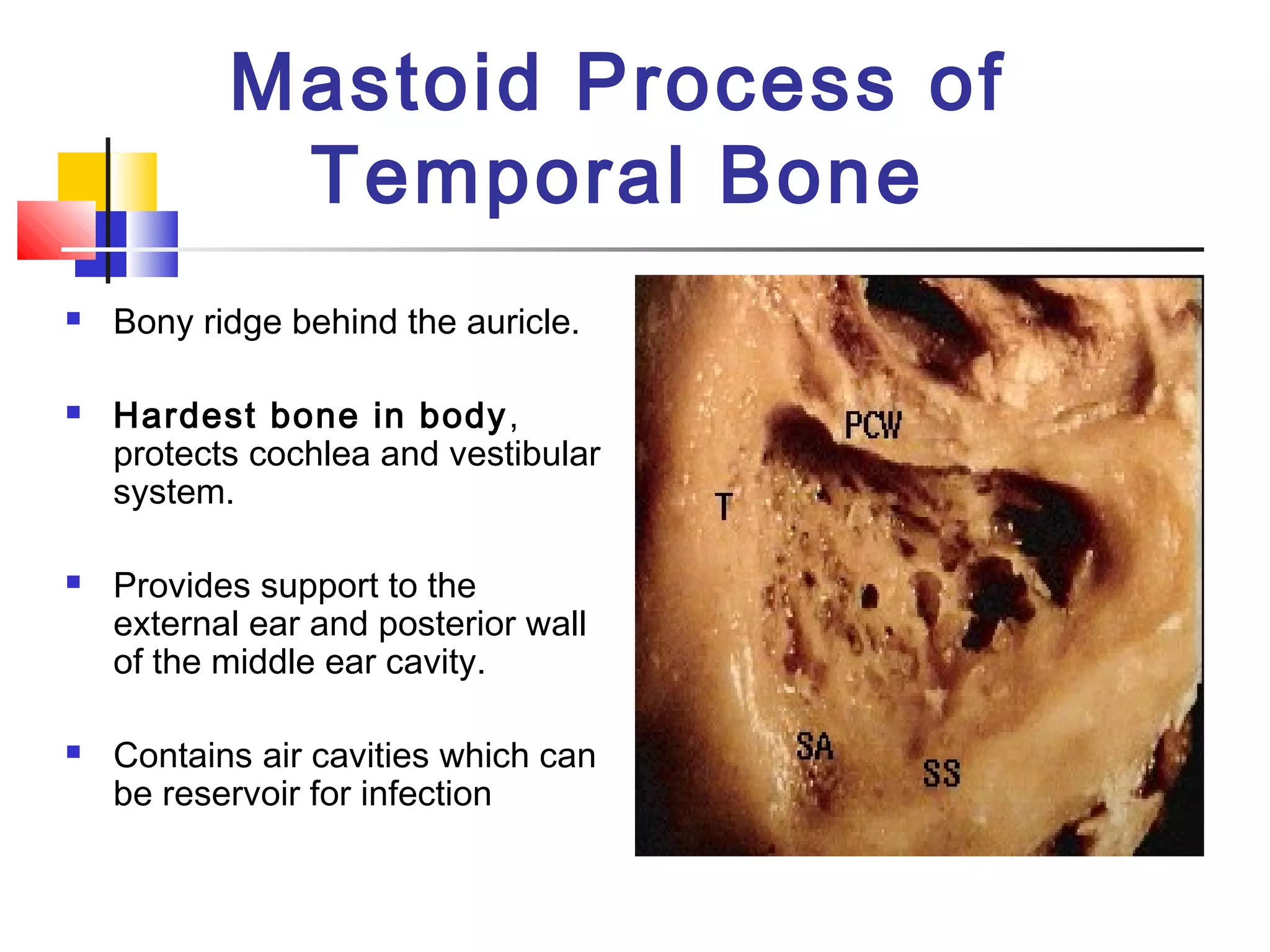
Mastoid Process of
Temporal Bone
 Bony ridge behind the auricle.
 Hardest bone in body,
protects cochlea and vestibular
system.
 Provides support to the
external ear and posterior wall
of the middle ear cavity.
 Contains air cavities which can
be reservoir for infection
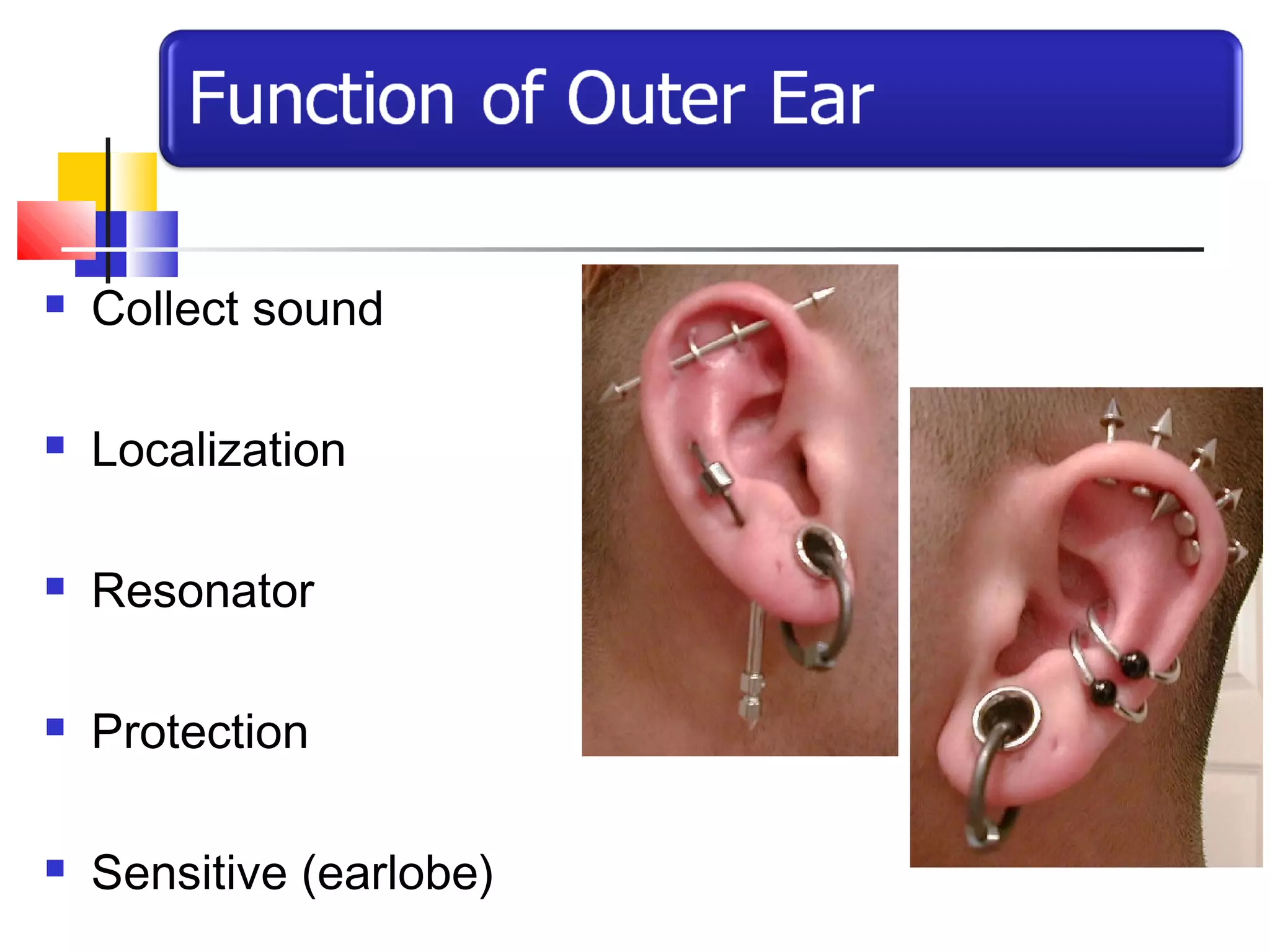
 Collect sound
 Localization
 Resonator
 Protection
 Sensitive (earlobe)
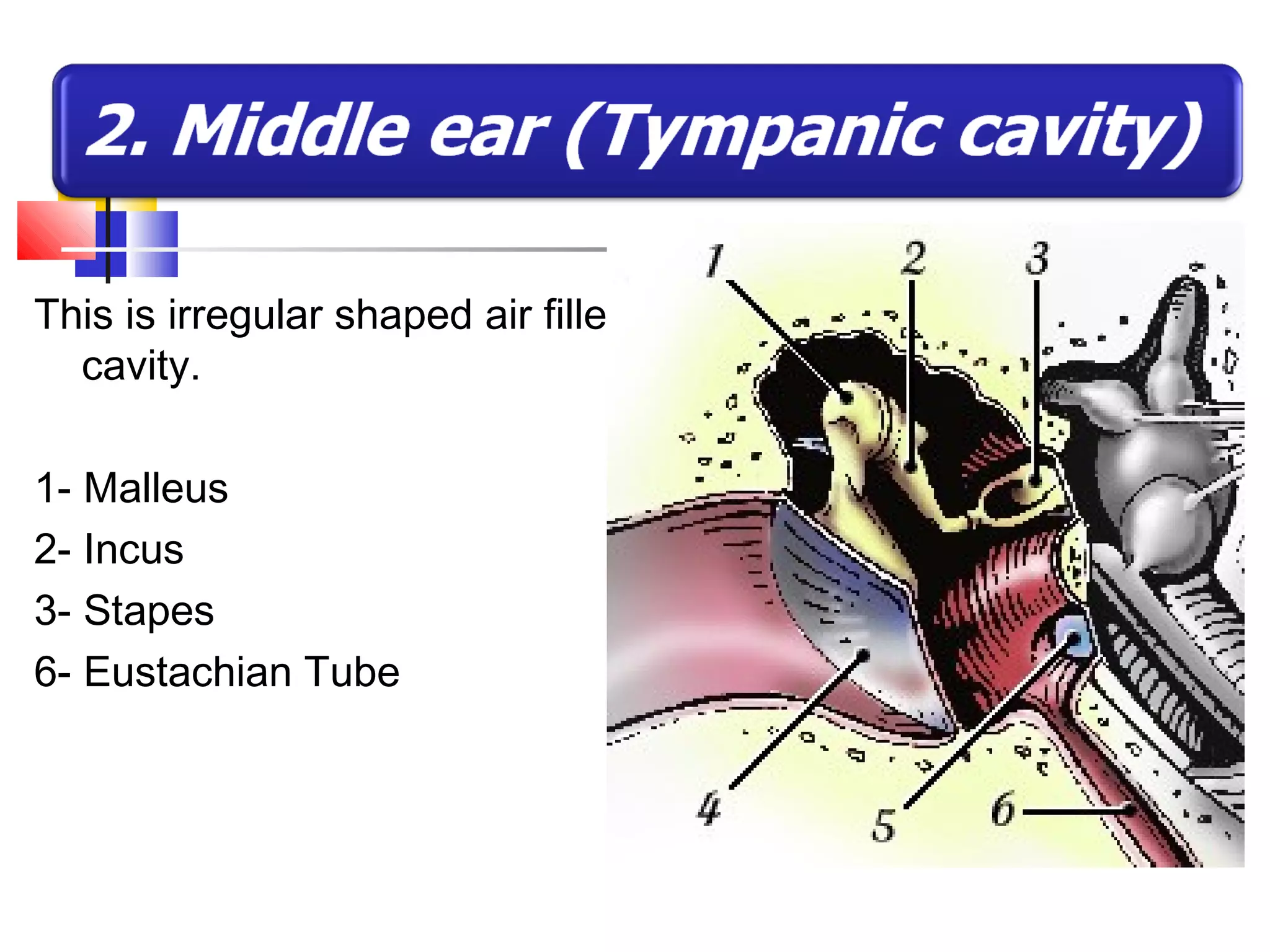
This is irregular shaped air filled
cavity.
1- Malleus
2- Incus
3- Stapes
6- Eustachian Tube
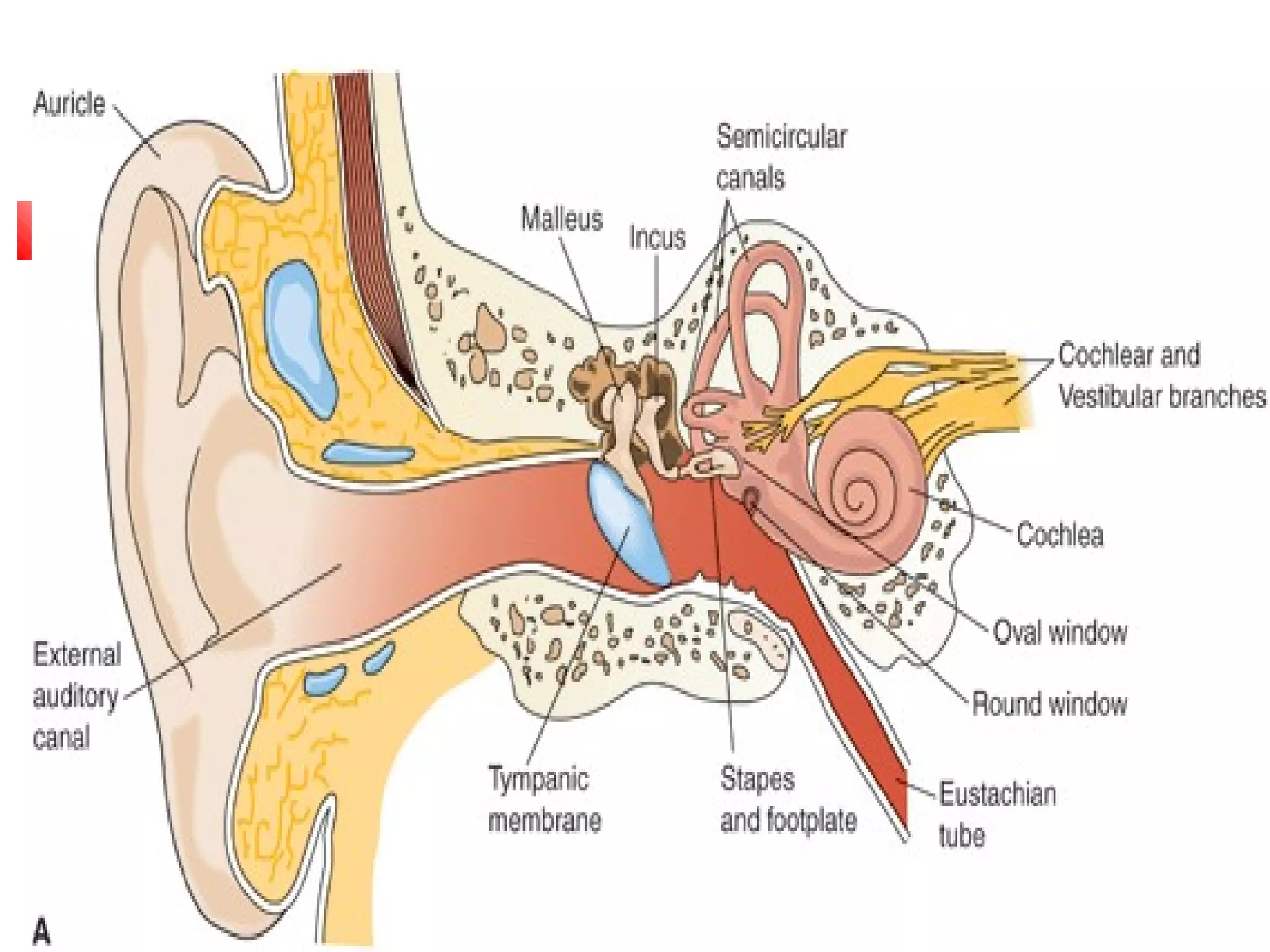
The Ossicles
 Ossicular chain = malleus, incus &
stapes
 Malleus (It is Hammer shaped bone)
 TM attaches
 Incus (It is Anvil shaped bone)
 Connector function
 Stapes ( It is a Stirrup shaped bone)
 Smallest bone in the body
 Footplate inserts in oval window on
medial wall
Focus/amplify vibration of TM to smaller
area, enables vibration of cochlear
fluids
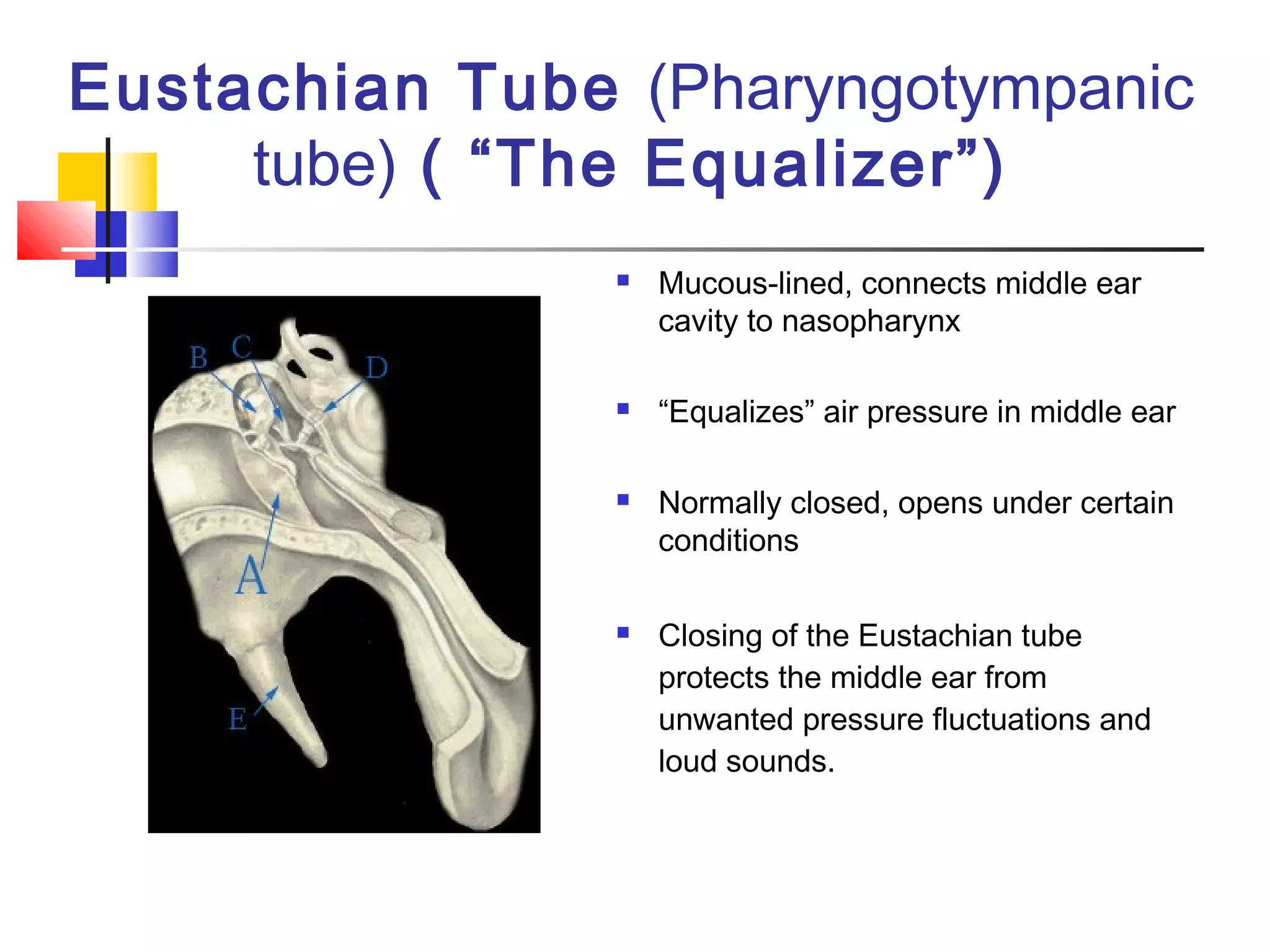
Eustachian Tube (Pharyngotympanic
tube) ( “The Equalizer”)
 Mucous-lined, connects middle ear
cavity to nasopharynx
 “Equalizes” air pressure in middle ear
 Normally closed, opens under certain
conditions
 Closing of the Eustachian tube
protects the middle ear from
unwanted pressure fluctuations and
loud sounds.
 Conduction
 Conduct sound from the outer ear to the inner ear
 Protection
 Creates a barrier that protects the middle and inner areas
from foreign objects
 Transducer
 Converts acoustic energy to mechanical energy
 Converts mechanical energy to hydraulic energy
 Amplifier
 Transformer action of the middle ear
 The inner ear contain the organ of hearing &
balance
 It consist of –
 Vestibule (Balance)
 Cochlea
 Semicircular canal
Cochlea - Snail-shaped organ with a series of fluid-filled
tunnels; converts mechanical energy into
electrical energy
22
Oval Window – located at the footplate
of the stapes; when the footplate vibrates,
the cochlear fluid is set into motion
Round Window – functions as the pressure
relief port for the fluid set into motion initially by
the movement of the stapes in the oval window
23
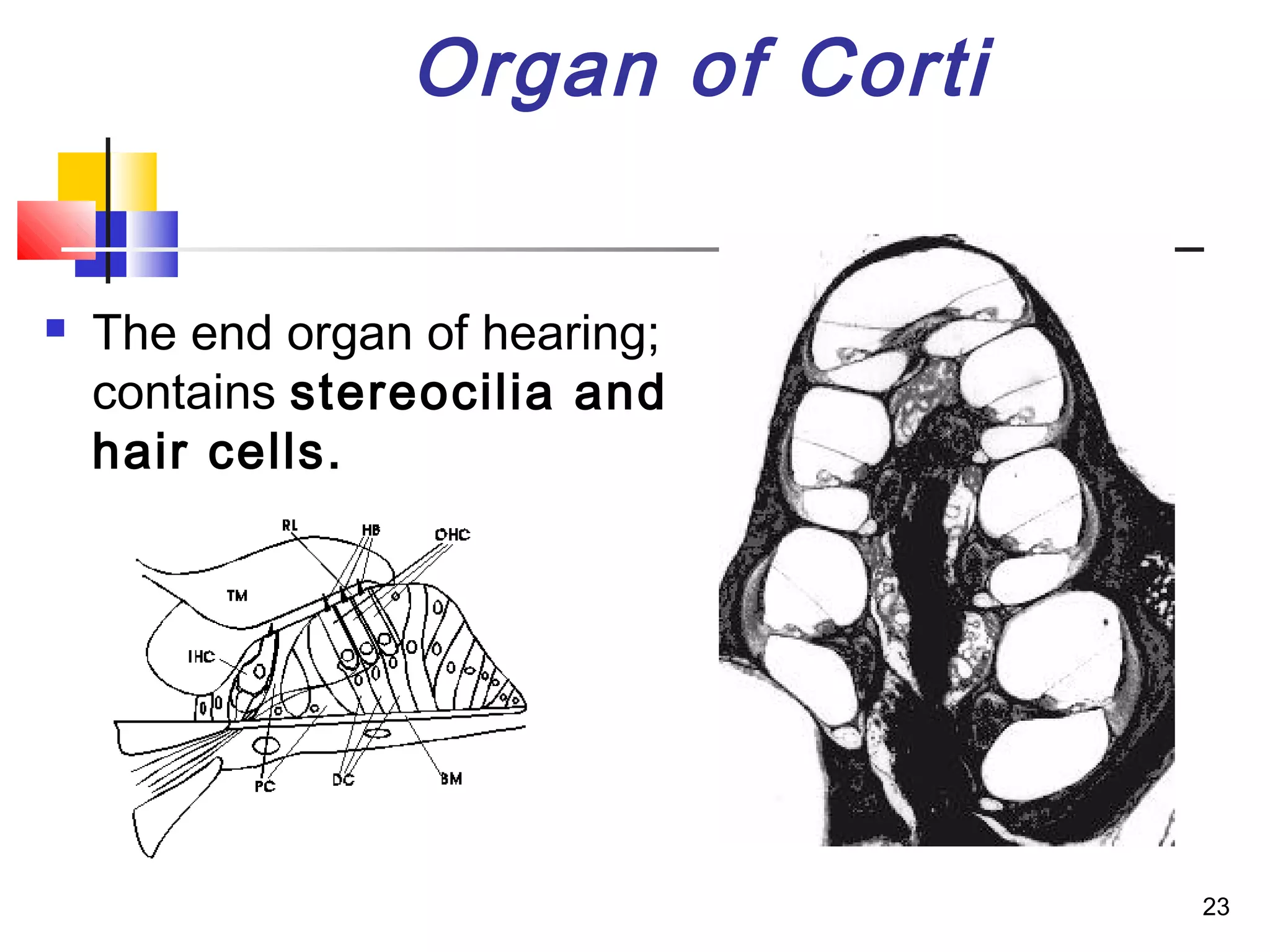
Organ of Corti
 The end organ of hearing;
contains stereocilia and
hair cells.
 Convert mechanical sound
waves to neural impulses that
can be recognized by the
brain for:
 Hearing
 Balance
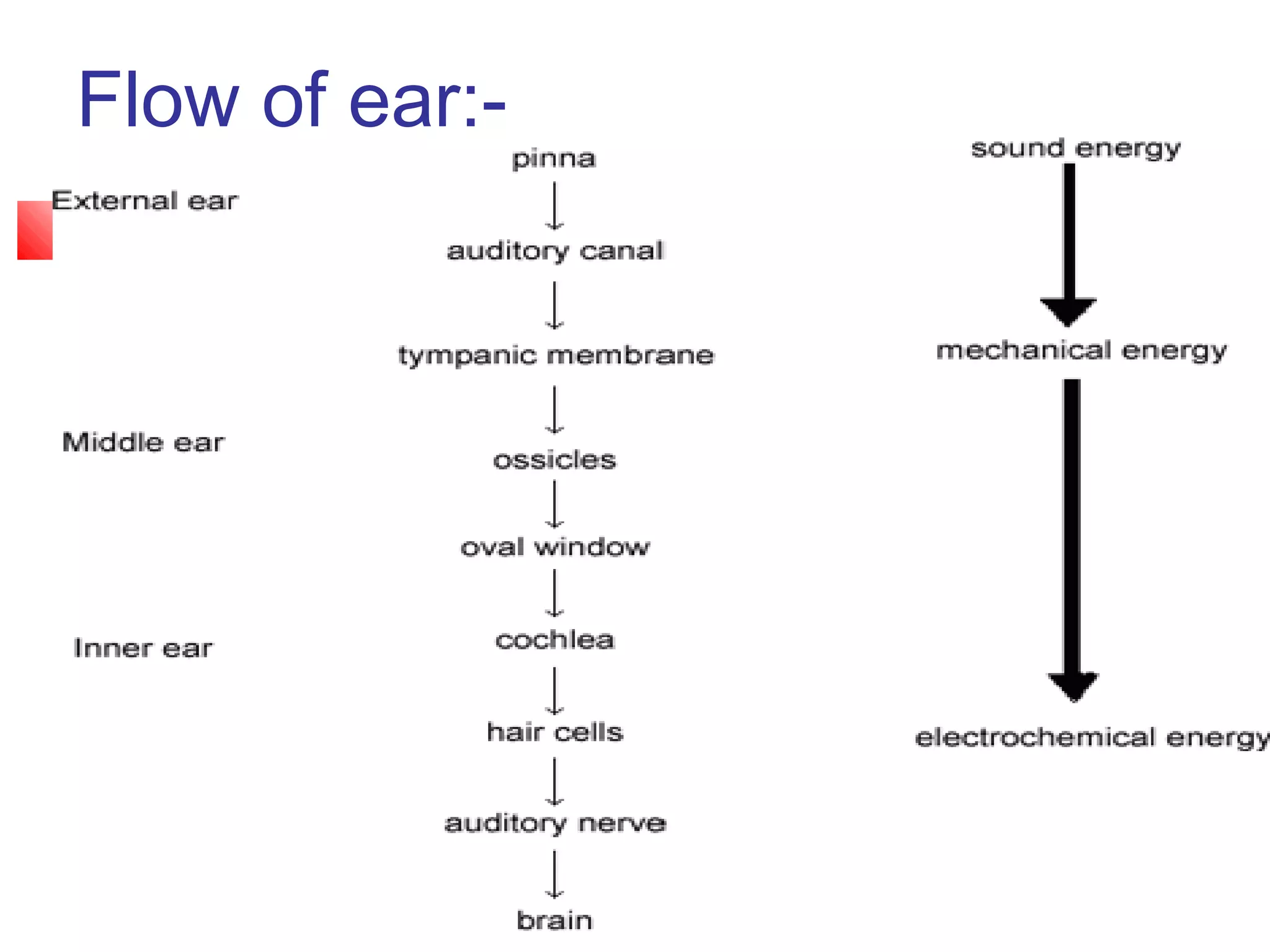
Pathway of Sound:-
 Sound waves enter pinna travel through auditory canal
 Sound waves strike tympanic membrane causing vibrations
(mechanical energy)
 Vibrating TM causes ossicles to vibrate
 Vibrating stapes bone at oval window generates movement of
cochlear fluid (Hydralics)
 Fluid movement stimulates cilia- lined cochlea
 Cilia sends electrical impulses along auditory nerve to brain
for interpretation
Flow of ear:-
 Hearing
 Sound Conduction and Transmission
 Balance and Equilibrium

ppt of Sensory organ

  • 1.
    By – Mr. ASHOKBISHNOI Lecturer, JINR
  • 3.
  • 4.
    Divided into “3”parts:- 1. Outer Ear 2. Middle Ear (Tympanic cavity) 3. Inner Ear
  • 5.
    Major Divisions ofthe Ear Peripheral Mechanism Central Mechanism Outer Ear Middle Ear Inner Ear VIII Cranial Nerve Brain
  • 8.
     It consistof the auricle (Pinna) & External acoustic meatus ( Auditory canal)
  • 9.
    Pinna Landmarks  Helix Antihelix  Concha  Tragus  Intertragal Notch  Antitragus
  • 10.
    Auricle (Pinna):-  Itis visible part of ear  It composed of fibro elastic cartilage convered with skin.  Helix- it is outer ridge part  Lobule (Ear lobe) –Soft pliable part
  • 11.
    External acoustic meatus( Auditory canal)  Slightly “S” Shaped tube  About 2.5 cm long ( 1 inch )  External from auricle to tympanic membrane  There numerous ceruminous gland & hair follicles  Numerous gland are modified sweat gland that secret cerumen (Earwax)
  • 12.
    Tympanic membrane (Eardrum):- Thin membrane  It is Oval shaped  Forms boundary between outer and middle ear  Vibrates in response to sound waves  Changes acoustical energy into mechanical
  • 13.
    Mastoid Process of TemporalBone  Bony ridge behind the auricle.  Hardest bone in body, protects cochlea and vestibular system.  Provides support to the external ear and posterior wall of the middle ear cavity.  Contains air cavities which can be reservoir for infection
  • 14.
     Collect sound Localization  Resonator  Protection  Sensitive (earlobe)
  • 15.
    This is irregularshaped air filled cavity. 1- Malleus 2- Incus 3- Stapes 6- Eustachian Tube
  • 16.
    The Ossicles  Ossicularchain = malleus, incus & stapes  Malleus (It is Hammer shaped bone)  TM attaches  Incus (It is Anvil shaped bone)  Connector function  Stapes ( It is a Stirrup shaped bone)  Smallest bone in the body  Footplate inserts in oval window on medial wall Focus/amplify vibration of TM to smaller area, enables vibration of cochlear fluids
  • 17.
    Eustachian Tube (Pharyngotympanic tube)( “The Equalizer”)  Mucous-lined, connects middle ear cavity to nasopharynx  “Equalizes” air pressure in middle ear  Normally closed, opens under certain conditions  Closing of the Eustachian tube protects the middle ear from unwanted pressure fluctuations and loud sounds.
  • 19.
     Conduction  Conductsound from the outer ear to the inner ear  Protection  Creates a barrier that protects the middle and inner areas from foreign objects  Transducer  Converts acoustic energy to mechanical energy  Converts mechanical energy to hydraulic energy  Amplifier  Transformer action of the middle ear
  • 20.
     The innerear contain the organ of hearing & balance  It consist of –  Vestibule (Balance)  Cochlea  Semicircular canal Cochlea - Snail-shaped organ with a series of fluid-filled tunnels; converts mechanical energy into electrical energy
  • 22.
    22 Oval Window –located at the footplate of the stapes; when the footplate vibrates, the cochlear fluid is set into motion Round Window – functions as the pressure relief port for the fluid set into motion initially by the movement of the stapes in the oval window
  • 23.
    23 Organ of Corti The end organ of hearing; contains stereocilia and hair cells.
  • 24.
     Convert mechanicalsound waves to neural impulses that can be recognized by the brain for:  Hearing  Balance
  • 25.
    Pathway of Sound:- Sound waves enter pinna travel through auditory canal  Sound waves strike tympanic membrane causing vibrations (mechanical energy)  Vibrating TM causes ossicles to vibrate  Vibrating stapes bone at oval window generates movement of cochlear fluid (Hydralics)  Fluid movement stimulates cilia- lined cochlea  Cilia sends electrical impulses along auditory nerve to brain for interpretation
  • 26.
  • 27.
     Hearing  SoundConduction and Transmission  Balance and Equilibrium