By-
Mr. ASHOK BISHNOI
Assist. Professor , JINR
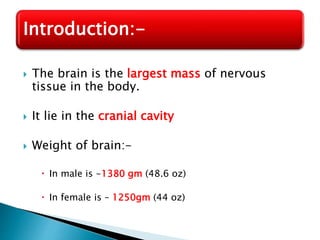
 The brain is the largest mass of nervous
tissue in the body.
 It lie in the cranial cavity
 Weight of brain:-
 In male is -1380 gm (48.6 oz)
 In female is – 1250gm (44 oz)
Introduction:-
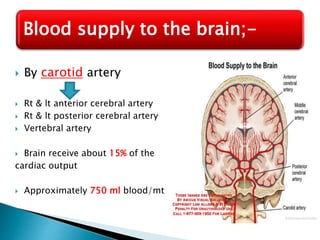
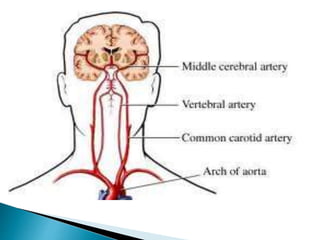
 By carotid artery
 Rt & lt anterior cerebral artery
 Rt & lt posterior cerebral artery
 Vertebral artery
 Brain receive about 15% of the
cardiac output
 Approximately 750 ml blood/mt
Blood supply to the brain;-
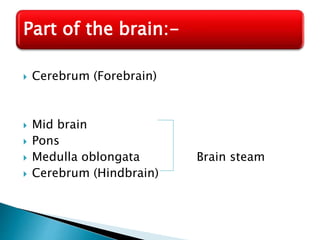
 Cerebrum (Forebrain)
 Mid brain
 Pons
 Medulla oblongata Brain steam
 Cerebrum (Hindbrain)
Part of the brain:-
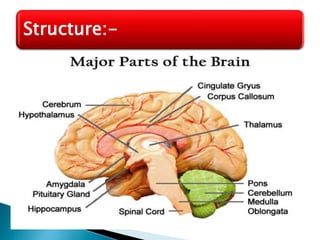
Structure:-
 This is largest part of the brain
 It is egg shaped organ.
 It occupies the anterior & middle cranial
faossa
Cerebrum (forebrain):-
Layers of the Cerebrum
 Gray matter
 Outer layer
 Composed mostly of neuron cell bodies
 White matter
 Fiber tracts inside the gray matter
 Example: corpus callosum connects hemispheres
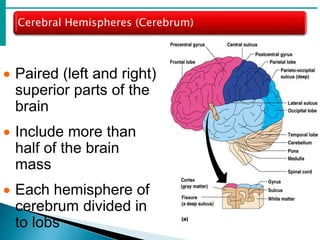
Cerebral Hemispheres (Cerebrum)
 Paired (left and right)
superior parts of the
brain
 Include more than
half of the brain
mass
 Each hemisphere of
cerebrum divided in
to lobs
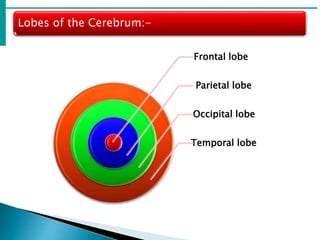
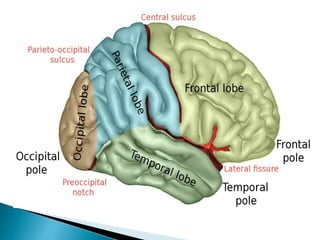
Lobes of the Cerebrum:-
Frontal lobe
Parietal lobe
Occipital lobe
Temporal lobe
Frontal lobe:-Center of reasoning, Planning, Emotion, Speech,
Problem solving.
Parietal lobe:-Receive sensory input from Skin (touch, pain,
perception etc.)
Occipital lobe:- Receive input from eye.
Temporal lobe:- Hearing, Memory, Speech .
The boundaries of lobes are marked by deep sulci
These are Central, Lateral, Parietal , Occipital sulci
Functional Areas of the Cerebrum:-
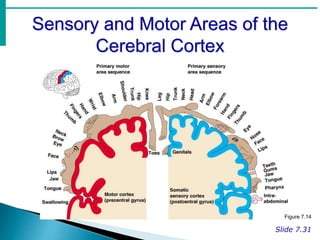
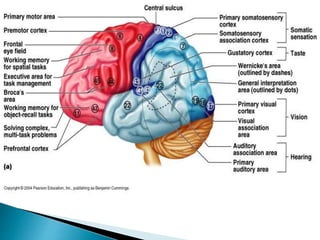
 Motor area ( Lie in frontal lobe)– sends impulses to
skeletal muscles.
 Broca’s area (motor speech) – Situated in
frontal lobe (Control muscle movement necessary for speech)
 Sensory area – receives impulses from the body’s
sensory receptors
Sensory and Motor Areas of the
Cerebral Cortex
Slide 7.31
Figure 7.14
Sensory area:-
Slide
 Cerebral areas involved in special senses
Gustatory area (taste)
Visual area
Auditory area
Olfactory area
 Gustatory area (taste):- Situated above the lateral sulcus
impulses from sensory receptor in taste buds are receive &
perceive taste.
 Visual area:- Situated in occipital lobe (optic nerve pass from
the eye to this area.
 Auditory area (Hearinf0:- Situated below the lateral
sulcus in temporal bone. ( receive & interrupt impulse transmit from
inner ear to auditory part)
 Olfactory area (smell):-Situated in temporal lobe were
impulse from nose transited through olfactory nerve are receive &
interrupt.
Other areas:-
Thalamus:- Sensory input from skin or special sense.
Hypothalamus:- It is compose of number of nerve cell
It is situated front & below the thalamus.
Function:-
1. Appetite & satiety
2. Thirst & water balance
3. Regulate body temperature
4. Emotional reaction
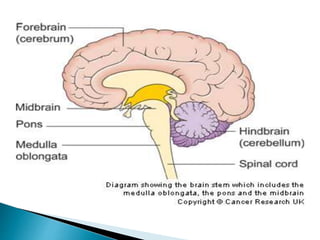
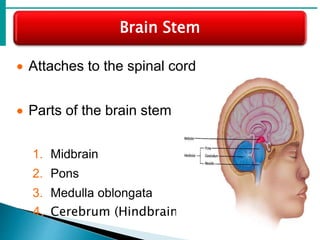
Brain Stem
 Attaches to the spinal cord
 Parts of the brain stem
1. Midbrain
2. Pons
3. Medulla oblongata
4. Cerebrum (Hindbrain)
1. Mid brain:-
• It is the area of brain situated around the
cerebral aqueducts between cerebrum &
pons.
• It connect the cerebrum with lower part of
brain & spinal cord
2. Pons:-
• I t is situated in front of the cerebellum.
• It consist of nerve fiber(white matter).
• Passing fiber from higher level of brain to
spinal cord .
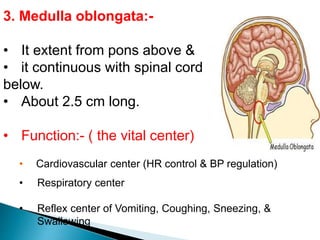
3. Medulla oblongata:-
• It extent from pons above &
• it continuous with spinal cord
below.
• About 2.5 cm long.
• Function:- ( the vital center)
• Cardiovascular center (HR control & BP regulation)
• Respiratory center
• Reflex center of Vomiting, Coughing, Sneezing, &
Swallowing
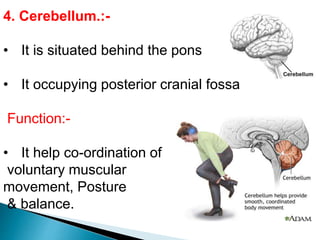
4. Cerebellum.:-
• It is situated behind the pons
• It occupying posterior cranial fossa
Function:-
• It help co-ordination of
voluntary muscular
movement, Posture
& balance.

ppt on Brain

  • 1.
  • 2.
     The brainis the largest mass of nervous tissue in the body.  It lie in the cranial cavity  Weight of brain:-  In male is -1380 gm (48.6 oz)  In female is – 1250gm (44 oz) Introduction:-
  • 3.
     By carotidartery  Rt & lt anterior cerebral artery  Rt & lt posterior cerebral artery  Vertebral artery  Brain receive about 15% of the cardiac output  Approximately 750 ml blood/mt Blood supply to the brain;-
  • 5.
     Cerebrum (Forebrain) Mid brain  Pons  Medulla oblongata Brain steam  Cerebrum (Hindbrain) Part of the brain:-
  • 6.
  • 8.
     This islargest part of the brain  It is egg shaped organ.  It occupies the anterior & middle cranial faossa Cerebrum (forebrain):-
  • 9.
    Layers of theCerebrum  Gray matter  Outer layer  Composed mostly of neuron cell bodies  White matter  Fiber tracts inside the gray matter  Example: corpus callosum connects hemispheres
  • 10.
    Cerebral Hemispheres (Cerebrum) Paired (left and right) superior parts of the brain  Include more than half of the brain mass  Each hemisphere of cerebrum divided in to lobs
  • 11.
    Lobes of theCerebrum:- Frontal lobe Parietal lobe Occipital lobe Temporal lobe
  • 13.
    Frontal lobe:-Center ofreasoning, Planning, Emotion, Speech, Problem solving. Parietal lobe:-Receive sensory input from Skin (touch, pain, perception etc.) Occipital lobe:- Receive input from eye. Temporal lobe:- Hearing, Memory, Speech . The boundaries of lobes are marked by deep sulci These are Central, Lateral, Parietal , Occipital sulci
  • 15.
    Functional Areas ofthe Cerebrum:-  Motor area ( Lie in frontal lobe)– sends impulses to skeletal muscles.  Broca’s area (motor speech) – Situated in frontal lobe (Control muscle movement necessary for speech)  Sensory area – receives impulses from the body’s sensory receptors
  • 16.
    Sensory and MotorAreas of the Cerebral Cortex Slide 7.31 Figure 7.14
  • 17.
    Sensory area:- Slide  Cerebralareas involved in special senses Gustatory area (taste) Visual area Auditory area Olfactory area
  • 19.
     Gustatory area(taste):- Situated above the lateral sulcus impulses from sensory receptor in taste buds are receive & perceive taste.  Visual area:- Situated in occipital lobe (optic nerve pass from the eye to this area.  Auditory area (Hearinf0:- Situated below the lateral sulcus in temporal bone. ( receive & interrupt impulse transmit from inner ear to auditory part)  Olfactory area (smell):-Situated in temporal lobe were impulse from nose transited through olfactory nerve are receive & interrupt.
  • 20.
    Other areas:- Thalamus:- Sensoryinput from skin or special sense. Hypothalamus:- It is compose of number of nerve cell It is situated front & below the thalamus. Function:- 1. Appetite & satiety 2. Thirst & water balance 3. Regulate body temperature 4. Emotional reaction
  • 21.
    Brain Stem  Attachesto the spinal cord  Parts of the brain stem 1. Midbrain 2. Pons 3. Medulla oblongata 4. Cerebrum (Hindbrain)
  • 22.
    1. Mid brain:- •It is the area of brain situated around the cerebral aqueducts between cerebrum & pons. • It connect the cerebrum with lower part of brain & spinal cord
  • 23.
    2. Pons:- • It is situated in front of the cerebellum. • It consist of nerve fiber(white matter). • Passing fiber from higher level of brain to spinal cord .
  • 24.
    3. Medulla oblongata:- •It extent from pons above & • it continuous with spinal cord below. • About 2.5 cm long. • Function:- ( the vital center) • Cardiovascular center (HR control & BP regulation) • Respiratory center • Reflex center of Vomiting, Coughing, Sneezing, & Swallowing
  • 25.
    4. Cerebellum.:- • Itis situated behind the pons • It occupying posterior cranial fossa Function:- • It help co-ordination of voluntary muscular movement, Posture & balance.