D.PHARM-1
HAP
PKS
[STRUCTURES AND
FUNCTIONS OF EAR]
Defination Of Ear, Structure Of Ear, Internal Parts Of Ear,Physiology Of Hearing/Mechanism
Of Hearing ,ETC.
EAR
 Serves as an organ having both hearing and equilibrium function.
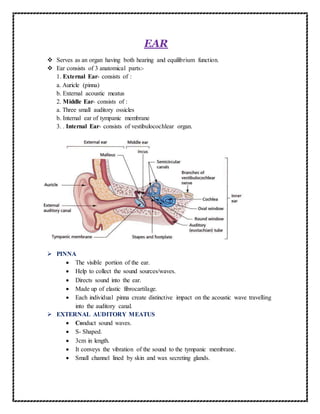
 Ear consists of 3 anatomical parts:-
1. External Ear- consists of :
a. Auricle (pinna)
b. External acoustic meatus
2. Middle Ear- consists of :
a. Three small auditory ossicles
b. Internal ear of tympanic membrane
3. . Internal Ear- consists of vestibulocochlear organ.
 PINNA
 The visible portion of the ear.
 Help to collect the sound sources/waves.
 Directs sound into the ear.
 Made up of elastic fibrocartilage.
 Each individual pinna create distinctive impact on the acoustic wave travelling
into the auditory canal.
 EXTERNAL AUDITORY MEATUS
 Conduct sound waves.
 S- Shaped.
 3cm in length.
 It conveys the vibration of the sound to the tympanic membrane.
 Small channel lined by skin and wax secreting glands.
 THE MIDDLE EAR
 Middle ear or Tympanic cavity is about 15 mm in anteroposterior and vertical
diameter.
 Shape of a biconcave lens.
 The lateral wall: Is largely occupied by the tympanic membrane .
 It is small cavity in the temporal bone.
 THE TYMPANIC MEMBRANE
 Thin fibrous structure.
 Circular & 1 cm in diameter.
 Covered externally: By thin layer of stratified squamous epithelium
(consists of collagen fibers).
 Lies obliquely at 55 degrees with the external acoustic meatus .
 CONTENTS OF MIDDLE EAR CAVITY
1. Ossicles – malleus, incus, stapes.
2. Muscles – tensor tympani, stapedius .
3. 3 Vessels and nerves – chorda tympani and tympanic plexus of ear.
 FUNCTIONS OF MIDDLE EAR CAVITY
 Narrow, oblique, slit like, air containing cavity in the petrous part of
temporal bone.
 Transmit the vibrations of the tympanic membrane to the perilymph of
the internal ear.
1. MALLEUS
a. The malleus is a hammer-shaped bone
b. Connected with the incus and is attached to the inner surface of the tympanic
membrane
c. It transmits the sound vibrations from the eardrum to the incus.
2. INCUS
a.The incus is the anvil-shaped small bone.
b. It connects the malleus to the stapes.
c. The incus transmits sound vibrations from the malleus to the stapes.
3. STAPES
a.The stapes is the stirrup-shaped small bone.
b. Attached to the incus laterally and to the fenestra ovalis, the "oval window", medially.
c. The oval window is adjacent to the vestibule of the inner ear.
d. The stapes is the smallest and lightest bone in the human body.
e. The stapes transmits the sound vibrations from the incus to the membrane of the inner ear
inside the fenestra ovalis.
 INTERNAL EAR
 The structures in the internal ear convey information to the brain about balance and
hearing.
 Cochlear duct is the organ of hearing.
 Semicircular ducts, utricle, and saccule are the organs of balance .
 The nerve responsible for these functions is the vestibulocochlear nerve [VIII], which
divides into vestibular (balance) and cochlear (hearing) parts after entering the
internal acoustic meatus.
 Cochlea – a tube shaped like a shell of a snail which consists of coiled, liquid-filled
tubes that are separated from one another by membranes. The lining of the
membranes is specialized hair cells that are sensitive to vibration. It contains the
actual organ of hearing called the organ of corti. That receives the sound waves and
transmits them to the brain.
 semi-circular ducts – enable the body to maintain balance, consists of three
interconnected loop-shaped tubes at right angles to one another, these canals contain
fluid and hairlike projections that detect changes in body positions.
 FUNCTION OF INTERNAL EAR
 The internal ear converts the mechanical signals received from the middle ear,
 which start as sound captured by the external ear, into electrical signals to transfer
information to the brain.
 The internal ear also contains receptors that detect motion and position.
 PHYSIOLOGY OF HEARING/MECHANISM OF HEARING
 The external ear receives sound waves and directs them to the ear drum.
 The ear drum vibrates in response to the sound waves and these vibrations
are transmitted through the ear ossicles (malleus, incus and stapes) to the oval
window.
 The vibrations pass through the oval window on to the fluid of the cochlea,
where they generate waves in the lymphs.
 The waves in the lymphs include a ripple in the basilar membrane.
 These movements of the basilar movements bind the hair cells,passing
them against the tectorial membrane.
 As a result, nerve impulses are generated in the aasociated afferent neurons.
 These impulses are transmitted by the afferent fibres via auditory nerves to
the auditory cortex of the brain,
 where the impulses are analyzed and the sound is recognized.
THE END
Human Ear

Human Ear

  • 1.
    D.PHARM-1 HAP PKS [STRUCTURES AND FUNCTIONS OFEAR] Defination Of Ear, Structure Of Ear, Internal Parts Of Ear,Physiology Of Hearing/Mechanism Of Hearing ,ETC.
  • 2.
    EAR  Serves asan organ having both hearing and equilibrium function.  Ear consists of 3 anatomical parts:- 1. External Ear- consists of : a. Auricle (pinna) b. External acoustic meatus 2. Middle Ear- consists of : a. Three small auditory ossicles b. Internal ear of tympanic membrane 3. . Internal Ear- consists of vestibulocochlear organ.  PINNA  The visible portion of the ear.  Help to collect the sound sources/waves.  Directs sound into the ear.  Made up of elastic fibrocartilage.  Each individual pinna create distinctive impact on the acoustic wave travelling into the auditory canal.  EXTERNAL AUDITORY MEATUS  Conduct sound waves.  S- Shaped.  3cm in length.  It conveys the vibration of the sound to the tympanic membrane.  Small channel lined by skin and wax secreting glands.
  • 3.
     THE MIDDLEEAR  Middle ear or Tympanic cavity is about 15 mm in anteroposterior and vertical diameter.  Shape of a biconcave lens.  The lateral wall: Is largely occupied by the tympanic membrane .  It is small cavity in the temporal bone.  THE TYMPANIC MEMBRANE  Thin fibrous structure.  Circular & 1 cm in diameter.  Covered externally: By thin layer of stratified squamous epithelium (consists of collagen fibers).  Lies obliquely at 55 degrees with the external acoustic meatus .  CONTENTS OF MIDDLE EAR CAVITY 1. Ossicles – malleus, incus, stapes. 2. Muscles – tensor tympani, stapedius . 3. 3 Vessels and nerves – chorda tympani and tympanic plexus of ear.  FUNCTIONS OF MIDDLE EAR CAVITY  Narrow, oblique, slit like, air containing cavity in the petrous part of temporal bone.  Transmit the vibrations of the tympanic membrane to the perilymph of the internal ear. 1. MALLEUS a. The malleus is a hammer-shaped bone b. Connected with the incus and is attached to the inner surface of the tympanic membrane c. It transmits the sound vibrations from the eardrum to the incus. 2. INCUS a.The incus is the anvil-shaped small bone. b. It connects the malleus to the stapes. c. The incus transmits sound vibrations from the malleus to the stapes. 3. STAPES
  • 4.
    a.The stapes isthe stirrup-shaped small bone. b. Attached to the incus laterally and to the fenestra ovalis, the "oval window", medially. c. The oval window is adjacent to the vestibule of the inner ear. d. The stapes is the smallest and lightest bone in the human body. e. The stapes transmits the sound vibrations from the incus to the membrane of the inner ear inside the fenestra ovalis.  INTERNAL EAR  The structures in the internal ear convey information to the brain about balance and hearing.  Cochlear duct is the organ of hearing.  Semicircular ducts, utricle, and saccule are the organs of balance .  The nerve responsible for these functions is the vestibulocochlear nerve [VIII], which divides into vestibular (balance) and cochlear (hearing) parts after entering the internal acoustic meatus.  Cochlea – a tube shaped like a shell of a snail which consists of coiled, liquid-filled tubes that are separated from one another by membranes. The lining of the membranes is specialized hair cells that are sensitive to vibration. It contains the actual organ of hearing called the organ of corti. That receives the sound waves and transmits them to the brain.  semi-circular ducts – enable the body to maintain balance, consists of three interconnected loop-shaped tubes at right angles to one another, these canals contain fluid and hairlike projections that detect changes in body positions.  FUNCTION OF INTERNAL EAR  The internal ear converts the mechanical signals received from the middle ear,  which start as sound captured by the external ear, into electrical signals to transfer information to the brain.  The internal ear also contains receptors that detect motion and position.  PHYSIOLOGY OF HEARING/MECHANISM OF HEARING  The external ear receives sound waves and directs them to the ear drum.  The ear drum vibrates in response to the sound waves and these vibrations are transmitted through the ear ossicles (malleus, incus and stapes) to the oval window.  The vibrations pass through the oval window on to the fluid of the cochlea, where they generate waves in the lymphs.  The waves in the lymphs include a ripple in the basilar membrane.  These movements of the basilar movements bind the hair cells,passing them against the tectorial membrane.  As a result, nerve impulses are generated in the aasociated afferent neurons.  These impulses are transmitted by the afferent fibres via auditory nerves to the auditory cortex of the brain,  where the impulses are analyzed and the sound is recognized. THE END