By: Ramez Maqsood
Student GDC Srinagar
 Skull is the bony
framework, that
gives the head, its
characteristic shape.
The function of the
skull is to protect
the soft and the
vital tissues of
the head,
particularly the
brain.
The Skull
consists of the
Cranium (the
bony box
housing the
brain) and the
face.
The skull is
composed of
22 bones, 8 in
the cranium
and 14 in the
face.
The Eight bones of the Cranium are :-
(1) Frontal
(2) Occipital
(3) Sphenoid
(4) Ethmoid
(5) Two Parietal bones
(6) Two Temporal bones
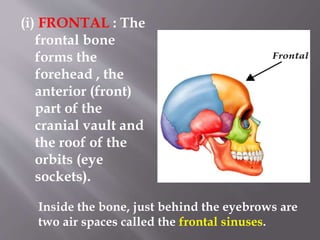
(i) FRONTAL : The
frontal bone
forms the
forehead , the
anterior (front)
part of the
cranial vault and
the roof of the
orbits (eye
sockets).
Inside the bone, just behind the eyebrows are
two air spaces called the frontal sinuses.
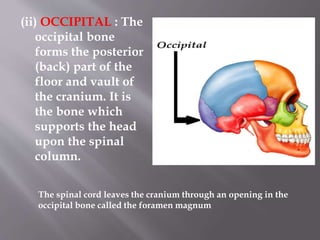
(ii) OCCIPITAL : The
occipital bone
forms the posterior
(back) part of the
floor and vault of
the cranium. It is
the bone which
supports the head
upon the spinal
column.
The spinal cord leaves the cranium through an opening in the
occipital bone called the foramen magnum
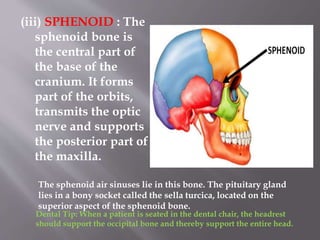
(iii) SPHENOID : The
sphenoid bone is
the central part of
the base of the
cranium. It forms
part of the orbits,
transmits the optic
nerve and supports
the posterior part of
the maxilla.
The sphenoid air sinuses lie in this bone. The pituitary gland
lies in a bony socket called the sella turcica, located on the
superior aspect of the sphenoid bone.
Dental Tip: When a patient is seated in the dental chair, the headrest
should support the occipital bone and thereby support the entire head.
(iv) ETMOID : The
Ethmoid bone lies
between the eyes and
extends from the
frontal bone to the
sphenoid bone. It
forms the anterior
part of the skull, the
medial wall of each
orbit, part of the nasal
septum and the roof
of the nose.
It transmits the olfactory nerve (nerve of
smell)
(v) PARIETAL : The
Parietal bones forms a
large part of the
cranial vault and
extend from the
frontal bone to the
occipital bone. The
two bones join at the
midline on the top of
the cranium and form
the saggital suture.
From this suture, these bones extend down and
out to about the level of the top of the external ear
where they meet the temporal bones.
(vi) TEMPORAL :
Temporal bones
complete the sides
and part of the base
of the cranium.
These bones contain
organs of hearing
and equilibrium.
The external acoustic meatus in the side of each bone
forms a passage from the external ear to the middle ear
which lies within each bone.
There are 14 bones in the face.
(i) Mandible (1)
(ii) Maxillae (2)
(iii) Zygomatic Bones (2)
(iv) Lacrimal Bones (2)
(v) Nasal Bones (2)
(vi) Inferior conchae (2)
(vii) Palatine Bones (2)
(viii) Vomer (1)
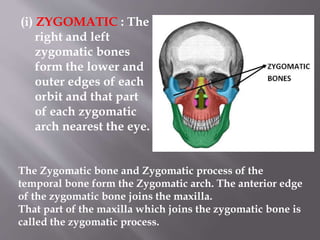
(i) ZYGOMATIC : The
right and left
zygomatic bones
form the lower and
outer edges of each
orbit and that part
of each zygomatic
arch nearest the eye.
The Zygomatic bone and Zygomatic process of the
temporal bone form the Zygomatic arch. The anterior edge
of the zygomatic bone joins the maxilla.
That part of the maxilla which joins the zygomatic bone is
called the zygomatic process.
(ii) LACRIMAL :
The paired
(right and left)
Lacrimal bones
form small
parts of the
medial walls of
the orbits.
The lacrimal bones transmits the naso-lacrimal duct from
the eye to the nose or nasal fossa.
(iii) NASAL : The
nasal bones
(right and left)
are long, thin
pieces of bone
that form the
upper part of
the bridge of
the nose.
The anterior lower part of the nasal septum is composed of
cartilage
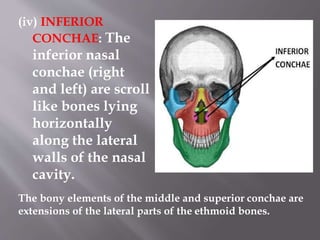
(iv) INFERIOR
CONCHAE: The
inferior nasal
conchae (right
and left) are scroll
like bones lying
horizontally
along the lateral
walls of the nasal
cavity.
The bony elements of the middle and superior conchae are
extensions of the lateral parts of the ethmoid bones.
(v) PALATINE: The
palatine bones
(right and left)
join in the
midline to form
the posterior
part of the hard
palate .
Palatine bones also form part of the floor and lateral walls
of the nasal cavity and part of the floor of the orbits.
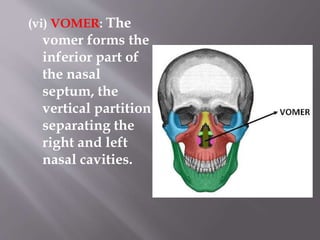
(vi) VOMER: The
vomer forms the
inferior part of
the nasal
septum, the
vertical partition
separating the
right and left
nasal cavities.
(vii) MAXILLA: The
right and left
maxillary bones
forms the upper
jaw and palate
of the mouth.
The two halves are fused at the intermaxillary suture to
form the upper jaw.
(viii) MANDIBLE:
The horse shoe-
shaped bone
forming the
lower jaw,
articulating with
the skull at the
temporomandi -
-bular joint.
Mandible is the largest, strongest and lowest bone in the
face.

Skull

  • 1.
  • 2.
     Skull isthe bony framework, that gives the head, its characteristic shape.
  • 3.
    The function ofthe skull is to protect the soft and the vital tissues of the head, particularly the brain.
  • 4.
    The Skull consists ofthe Cranium (the bony box housing the brain) and the face.
  • 5.
    The skull is composedof 22 bones, 8 in the cranium and 14 in the face.
  • 6.
    The Eight bonesof the Cranium are :- (1) Frontal (2) Occipital (3) Sphenoid (4) Ethmoid (5) Two Parietal bones (6) Two Temporal bones
  • 8.
    (i) FRONTAL :The frontal bone forms the forehead , the anterior (front) part of the cranial vault and the roof of the orbits (eye sockets). Inside the bone, just behind the eyebrows are two air spaces called the frontal sinuses.
  • 9.
    (ii) OCCIPITAL :The occipital bone forms the posterior (back) part of the floor and vault of the cranium. It is the bone which supports the head upon the spinal column. The spinal cord leaves the cranium through an opening in the occipital bone called the foramen magnum
  • 10.
    (iii) SPHENOID :The sphenoid bone is the central part of the base of the cranium. It forms part of the orbits, transmits the optic nerve and supports the posterior part of the maxilla. The sphenoid air sinuses lie in this bone. The pituitary gland lies in a bony socket called the sella turcica, located on the superior aspect of the sphenoid bone. Dental Tip: When a patient is seated in the dental chair, the headrest should support the occipital bone and thereby support the entire head.
  • 11.
    (iv) ETMOID :The Ethmoid bone lies between the eyes and extends from the frontal bone to the sphenoid bone. It forms the anterior part of the skull, the medial wall of each orbit, part of the nasal septum and the roof of the nose. It transmits the olfactory nerve (nerve of smell)
  • 12.
    (v) PARIETAL :The Parietal bones forms a large part of the cranial vault and extend from the frontal bone to the occipital bone. The two bones join at the midline on the top of the cranium and form the saggital suture. From this suture, these bones extend down and out to about the level of the top of the external ear where they meet the temporal bones.
  • 13.
    (vi) TEMPORAL : Temporalbones complete the sides and part of the base of the cranium. These bones contain organs of hearing and equilibrium. The external acoustic meatus in the side of each bone forms a passage from the external ear to the middle ear which lies within each bone.
  • 14.
    There are 14bones in the face. (i) Mandible (1) (ii) Maxillae (2) (iii) Zygomatic Bones (2) (iv) Lacrimal Bones (2) (v) Nasal Bones (2) (vi) Inferior conchae (2) (vii) Palatine Bones (2) (viii) Vomer (1)
  • 16.
    (i) ZYGOMATIC :The right and left zygomatic bones form the lower and outer edges of each orbit and that part of each zygomatic arch nearest the eye. The Zygomatic bone and Zygomatic process of the temporal bone form the Zygomatic arch. The anterior edge of the zygomatic bone joins the maxilla. That part of the maxilla which joins the zygomatic bone is called the zygomatic process.
  • 17.
    (ii) LACRIMAL : Thepaired (right and left) Lacrimal bones form small parts of the medial walls of the orbits. The lacrimal bones transmits the naso-lacrimal duct from the eye to the nose or nasal fossa.
  • 18.
    (iii) NASAL :The nasal bones (right and left) are long, thin pieces of bone that form the upper part of the bridge of the nose. The anterior lower part of the nasal septum is composed of cartilage
  • 19.
    (iv) INFERIOR CONCHAE: The inferiornasal conchae (right and left) are scroll like bones lying horizontally along the lateral walls of the nasal cavity. The bony elements of the middle and superior conchae are extensions of the lateral parts of the ethmoid bones.
  • 20.
    (v) PALATINE: The palatinebones (right and left) join in the midline to form the posterior part of the hard palate . Palatine bones also form part of the floor and lateral walls of the nasal cavity and part of the floor of the orbits.
  • 21.
    (vi) VOMER: The vomerforms the inferior part of the nasal septum, the vertical partition separating the right and left nasal cavities.
  • 22.
    (vii) MAXILLA: The rightand left maxillary bones forms the upper jaw and palate of the mouth. The two halves are fused at the intermaxillary suture to form the upper jaw.
  • 23.
    (viii) MANDIBLE: The horseshoe- shaped bone forming the lower jaw, articulating with the skull at the temporomandi - -bular joint. Mandible is the largest, strongest and lowest bone in the face.