MS. NEETU DHAMI
MENTAL HEALTH NURSING
ASSISTANT PROFESSOR
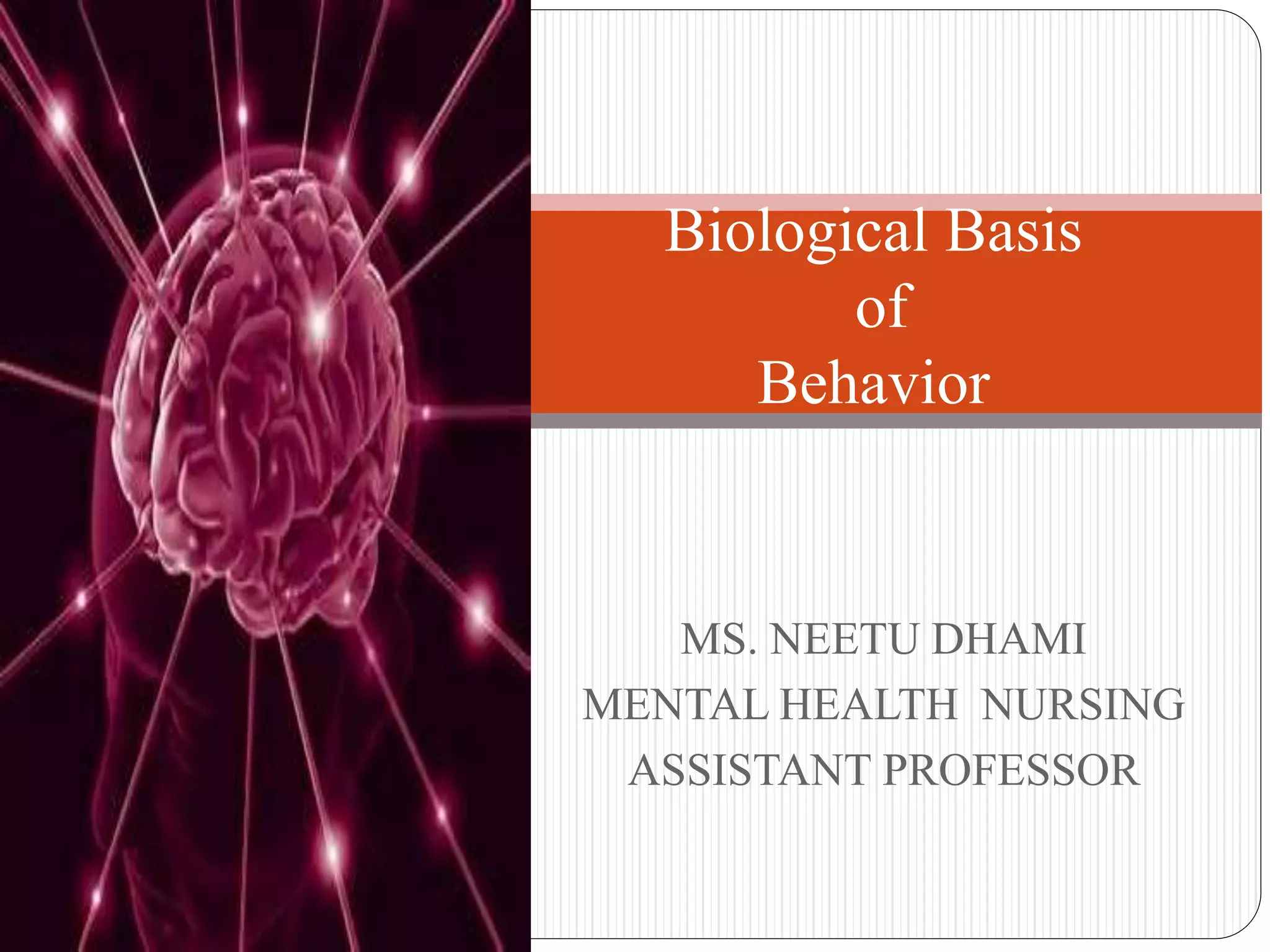
Biological Basis
of
Behavior
CONTENT
 INTRODUCTION
 BODY MIND RELATIONSHIP
 GENETIC AND BEHAVIOR
 INHERITANCE OF BEHAVIOR
 BRAIN AND BEHAVIOR
 PSYCHOLOGY AND SENSATION
-SENSORY PROCESS
- NORMAL AND ABNORMAL
INTRODUCATION
 The biology of behavior is the study of behavior
functions of the nervous system particularly the brain.
 Physiological psychology is that branch of psychology
which seeks to determine how activity in the nervous
system is related to both the behavior and the mind.
 Our perception of events depends on how our sense
organs detect stimuli and how our brain interprets
information originating from the senses.
Body mind relationship:
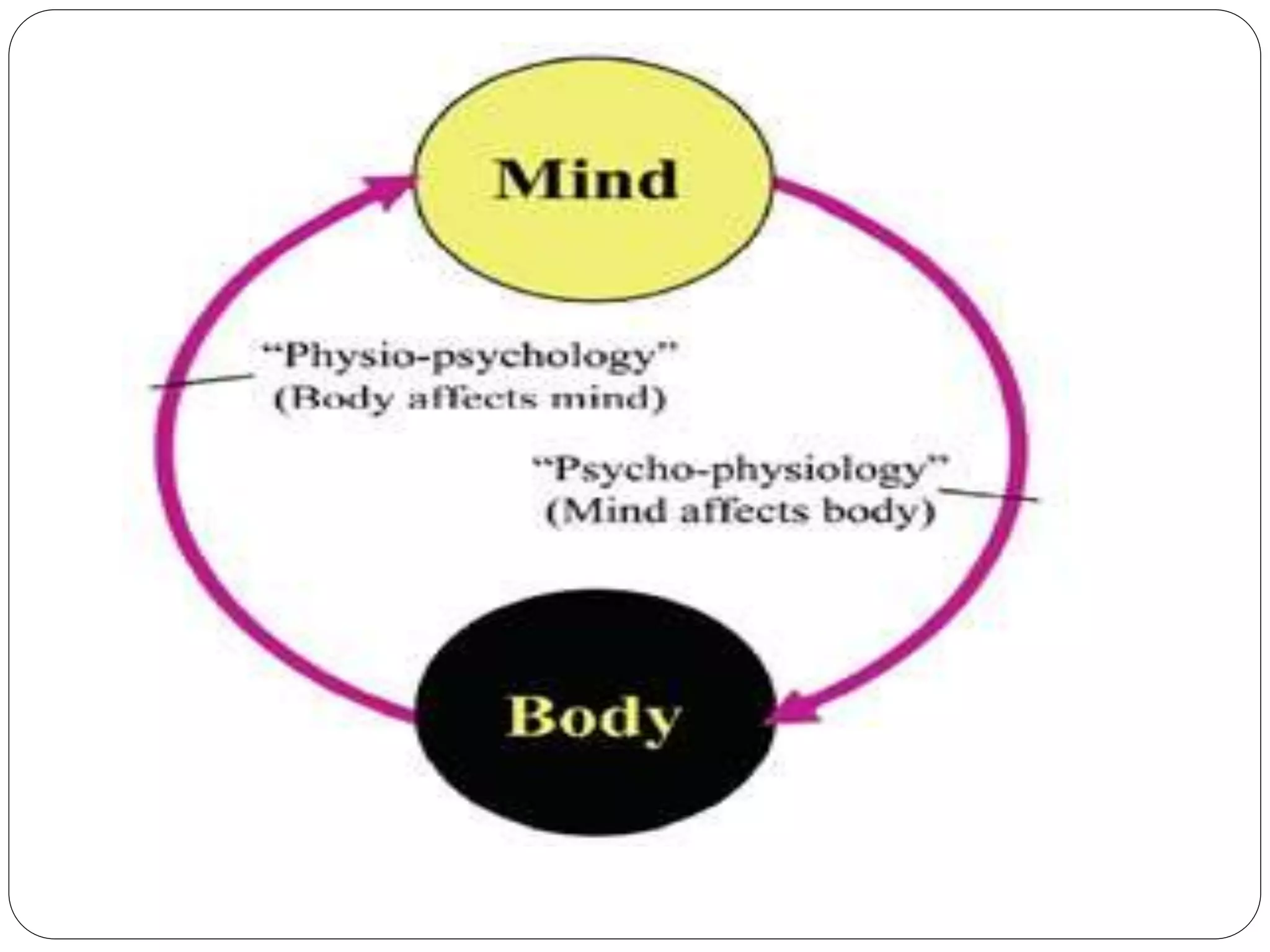
 Psychology studies human behavior involving
both the body and the mind. They are
interrelated and interact upon each other.
Mental function and physical states affect each
other.
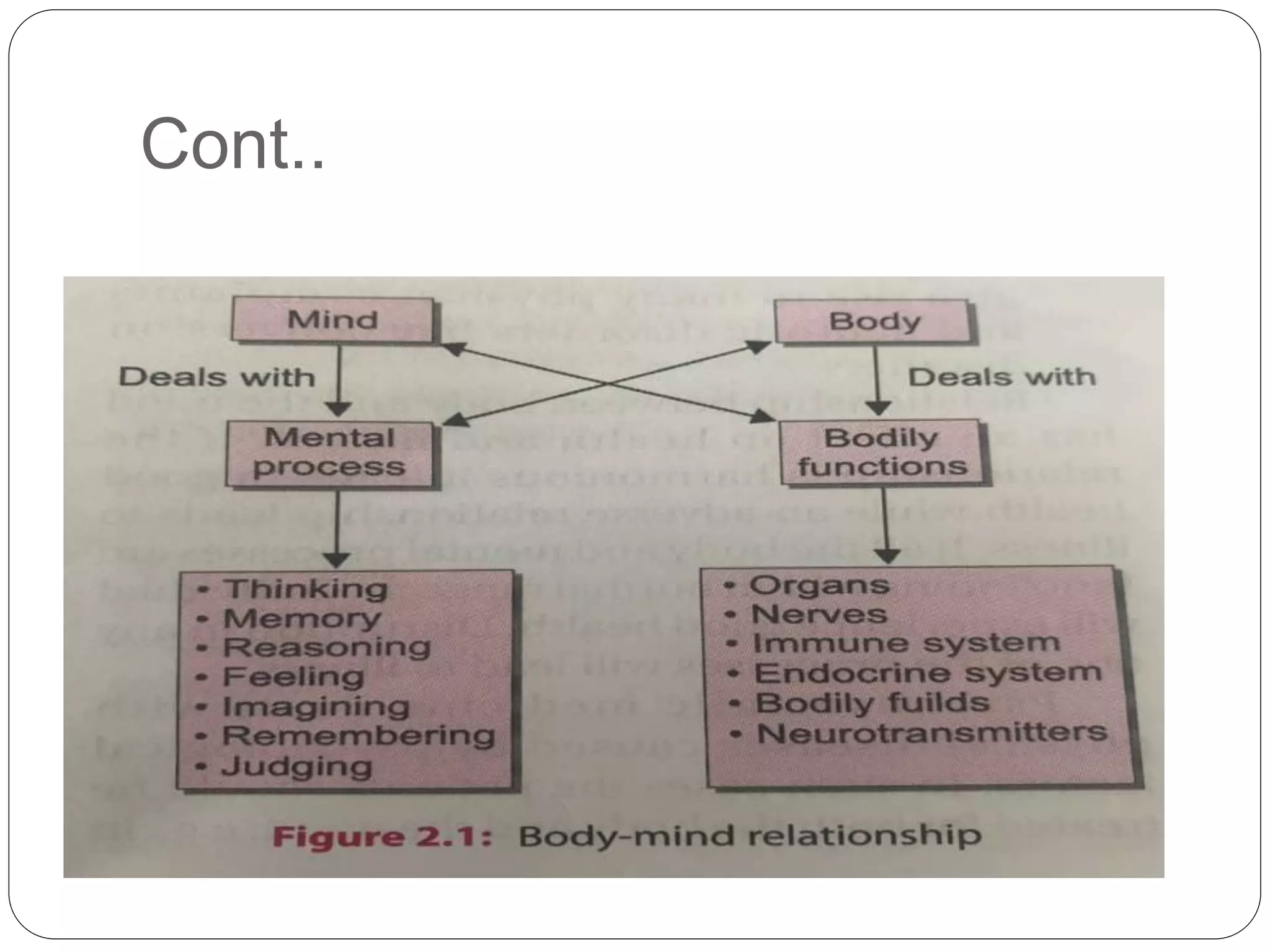
 Body and mind are two aspects of the living,
dynamic and adjusting personality. It is the sum
total of various mental process such as
observing, knowing, thinking , reasoning ,
feeling , imagining, remembering, jugging, etc.
mind also grows just as the body grows.
Cont..
 Body is represented by physical states and bodily
functions.
 Nervous system and glands are an important part
of our body. They are also responsible for ways of
thinking , feeling and doing.
MIND : is the some total of various mental process like
thinking, knowing, feeling, reasoning, remembering
etc.
Level of mind –
 Conscious ( smallest part)
 Preconscious/ subconscious mind ( forget temporary)
 Unconscious ( largest part)
Effects of bodily conditions on mental
functioning
 Increased blood pressure causes mental excitement.
 Severe pain reduces the ability to concentrate.
 Chronic illness causes depression.
 Malfunctioning of the endocrine glands many exert full
influence on one’s personality resulting in lethargy,
nervousness, tension, etc.
 Physical fatigue affects our mood and reduces our
motivation, interest and concentration.
 Brain injury affects many psychological functions. At the
same time well developed brain leads to the development
of better intellectual functioning.
Cont..
 Mental processes are intimately connected to the brain
and cortical processes. For example, unpleased
emotions like fear, anger and worry cause
irritability, insomnia, headache, etc similarity
depression affects thinking and memory.
 Emotional conflicts are responsible for peptic ulcer,
ulcerative colitis, etc.
 Deep thinking and concentration can cause physical
strain.
Cont..
Genetics and behavior
 Behavior genetics also know as
psychogenetic, is the study of influence of
genetic composition of an individual on their
behavior and the interaction of heredity and
environment of behavior.
 According to Conkun, E.G., developmental of
human beings is the most important aspect of
the world, which is a fact.
 Man has evolved from a microscopic thread like
structure, which further divides into billions of
cells, resulting in the growth of a human being
with infinite physical and psychological potential.
Cont..
 Threads of life: two germ cells i.e. one sperm
cell from the male testes and the other egg cell
or ovum from the female ovary fertilize
together to produce new individual cell termed as
gametes. This gamete further matures to form
zygote. 23 pair of chromosomes ( genetic
material) is present in both the male and female
germ cell.
 As a result, there are 46 no or 23 pair of
chromosomes that fertilize to produce a new
individual. Therefore, these chromosomes are
referred to as the “ threads of life”.
Inheritance of behavior
 The process by which organisms inherit characteristics
from their parents is known as heredity. These
characteristics are termed as traits. Every person is distinct
because they possess a distinct set of traits. Inherited traits
are those that a parent transmits to its progeny during the
fertilization process.
 Certain heredity rules regulation how this inheritance is
passed down. Inherited traits for example, eye color, height,
complexion, hair color, etc are encoded in the DNA and can
be passed on to the future generations.
 If the copies are not identical, the trait that is expressed
phenotypically will refer to as the dominant trait, and another
one will be referred to as the recessive trait.
Cont…
 Inherited behaviors are those that are passes
down through the generations. The genes
determine the type and color of the hair, the color
of eyes, and height as well, but very rarely people
consider these characteristics to influence their
behavior. This is partly due to the fact that most of
the behavior are acquired rather than inherited.
Brain and Behavior
 Biopsychology is a branch of psychology that studies
how the brain, neurotransmitters, and other biological
factor influence the behavior, thoughts, and feelings.
 Biopsychology, physiological psychology, behavior
neuroscience, and psychobiology are the terms used to
describe this branch of psychology.
 Biopsychologists observe the interaction between
biological process and emotions, cognitions and other
mental process. Biopsychology is associated with
many other areas, including comparative psychology
and evolutionary psychology.
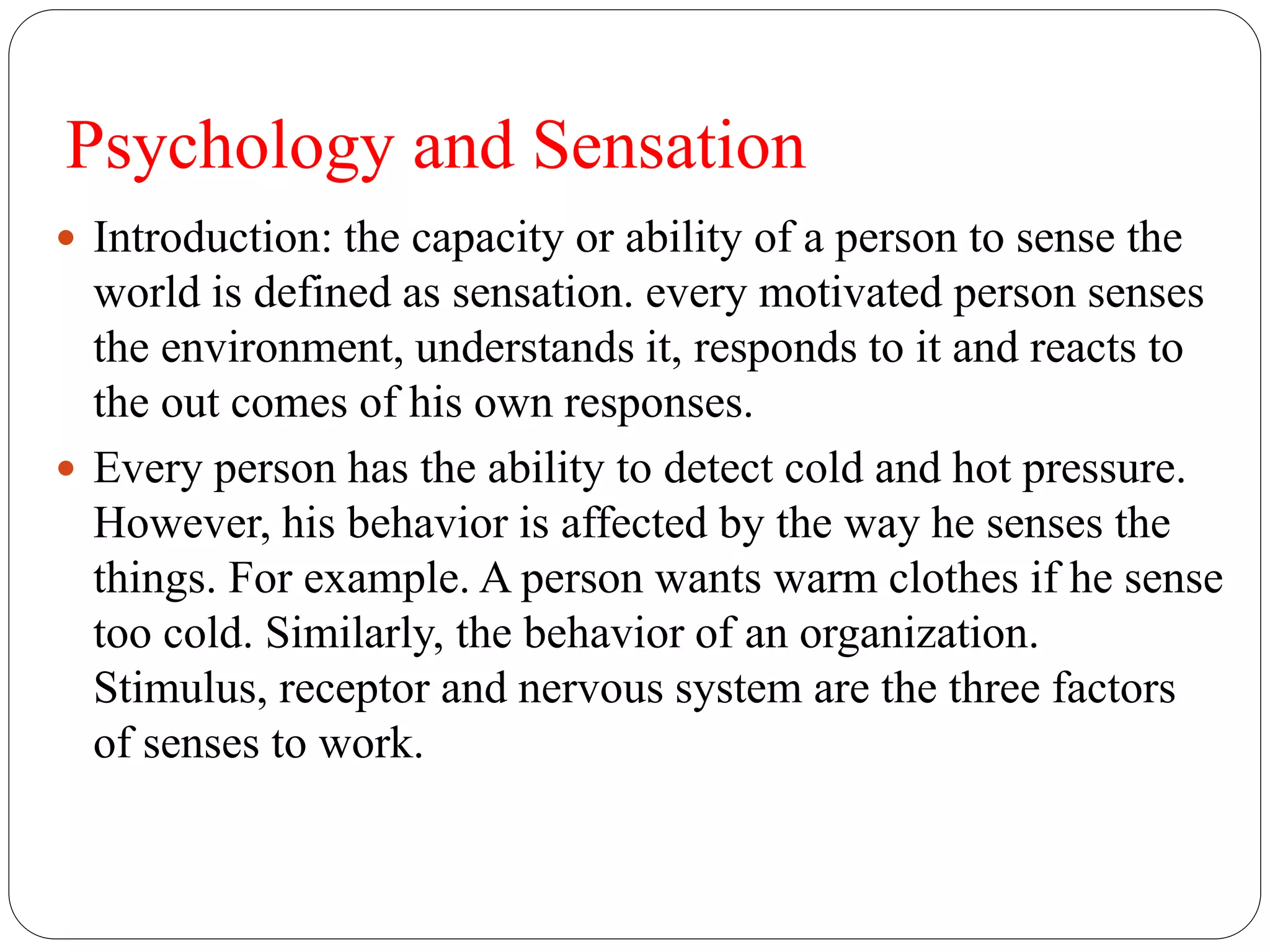
Psychology and Sensation
 Introduction: the capacity or ability of a person to sense the
world is defined as sensation. every motivated person senses
the environment, understands it, responds to it and reacts to
the out comes of his own responses.
 Every person has the ability to detect cold and hot pressure.
However, his behavior is affected by the way he senses the
things. For example. A person wants warm clothes if he sense
too cold. Similarly, the behavior of an organization.
Stimulus, receptor and nervous system are the three factors
of senses to work.
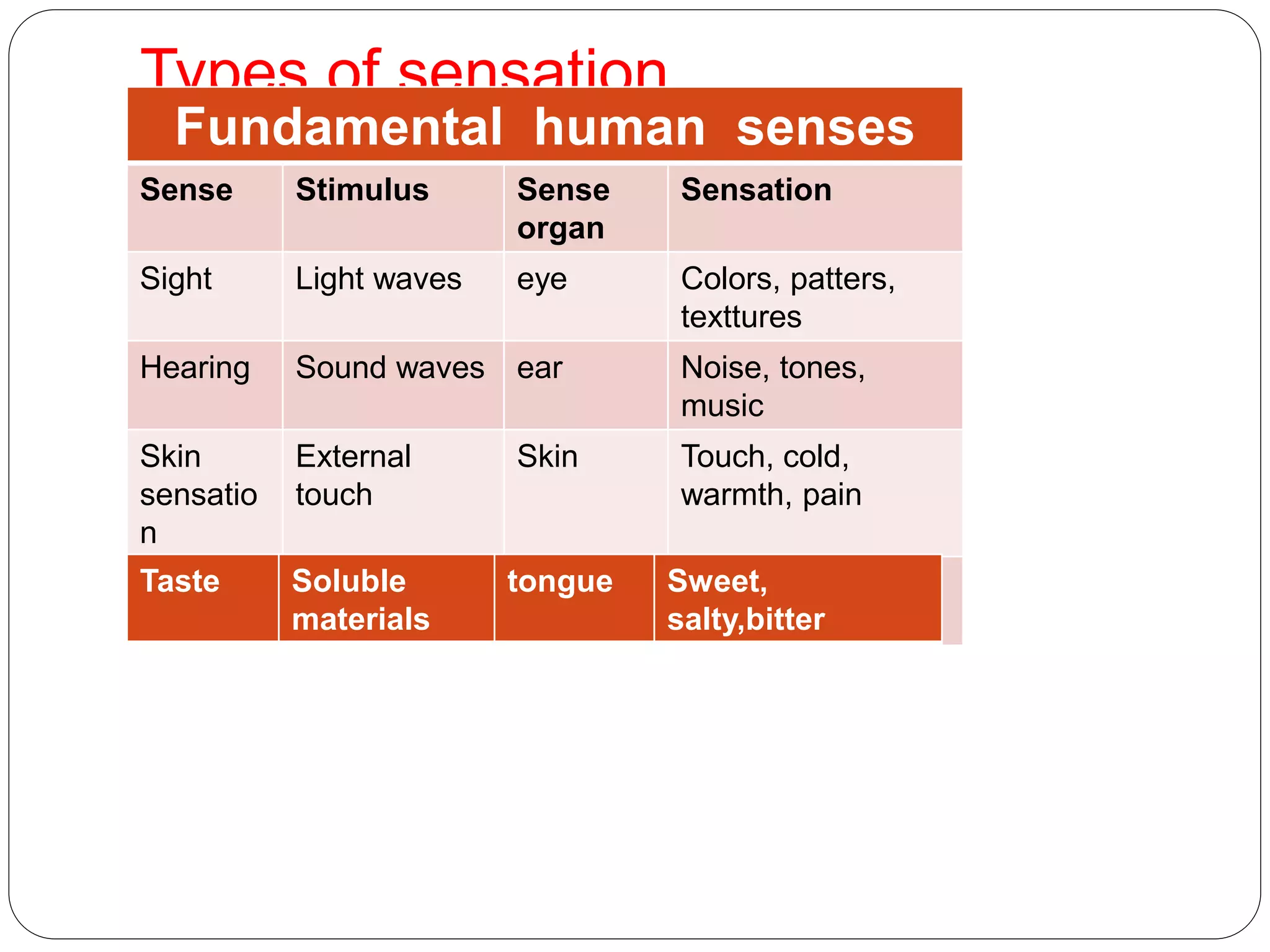
Types of sensation
Fundamental human senses
Sense Stimulus Sense
organ
Sensation
Sight Light waves eye Colors, patters,
texttures
Hearing Sound waves ear Noise, tones,
music
Skin
sensatio
n
External
touch
Skin Touch, cold,
warmth, pain
smell Volatile
materials
Nose odors
Taste Soluble
materials
tongue Sweet,
salty,bitter
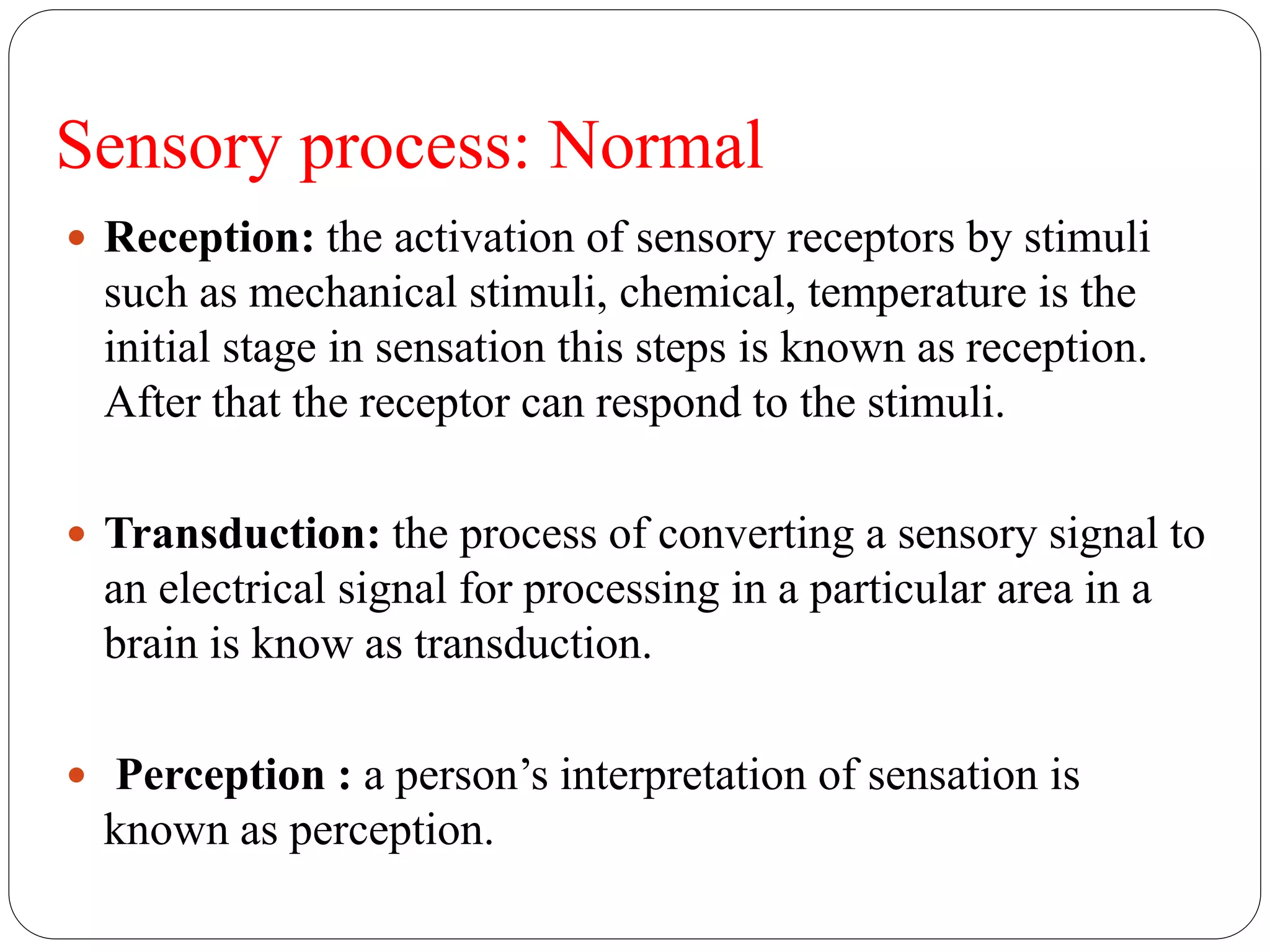
Sensory process: Normal
 Reception: the activation of sensory receptors by stimuli
such as mechanical stimuli, chemical, temperature is the
initial stage in sensation this steps is known as reception.
After that the receptor can respond to the stimuli.
 Transduction: the process of converting a sensory signal to
an electrical signal for processing in a particular area in a
brain is know as transduction.
 Perception : a person’s interpretation of sensation is
known as perception.
Sensory processing disorder: Abnormal
 The condition in which the brain has difficulty in
receiving and responding to sensory input is known as
sensory processing disorder.
1. The term…......describes the nature of
psychology.
a. Bio-social
b. Physiological psychology
c. Biological
d. None of the above
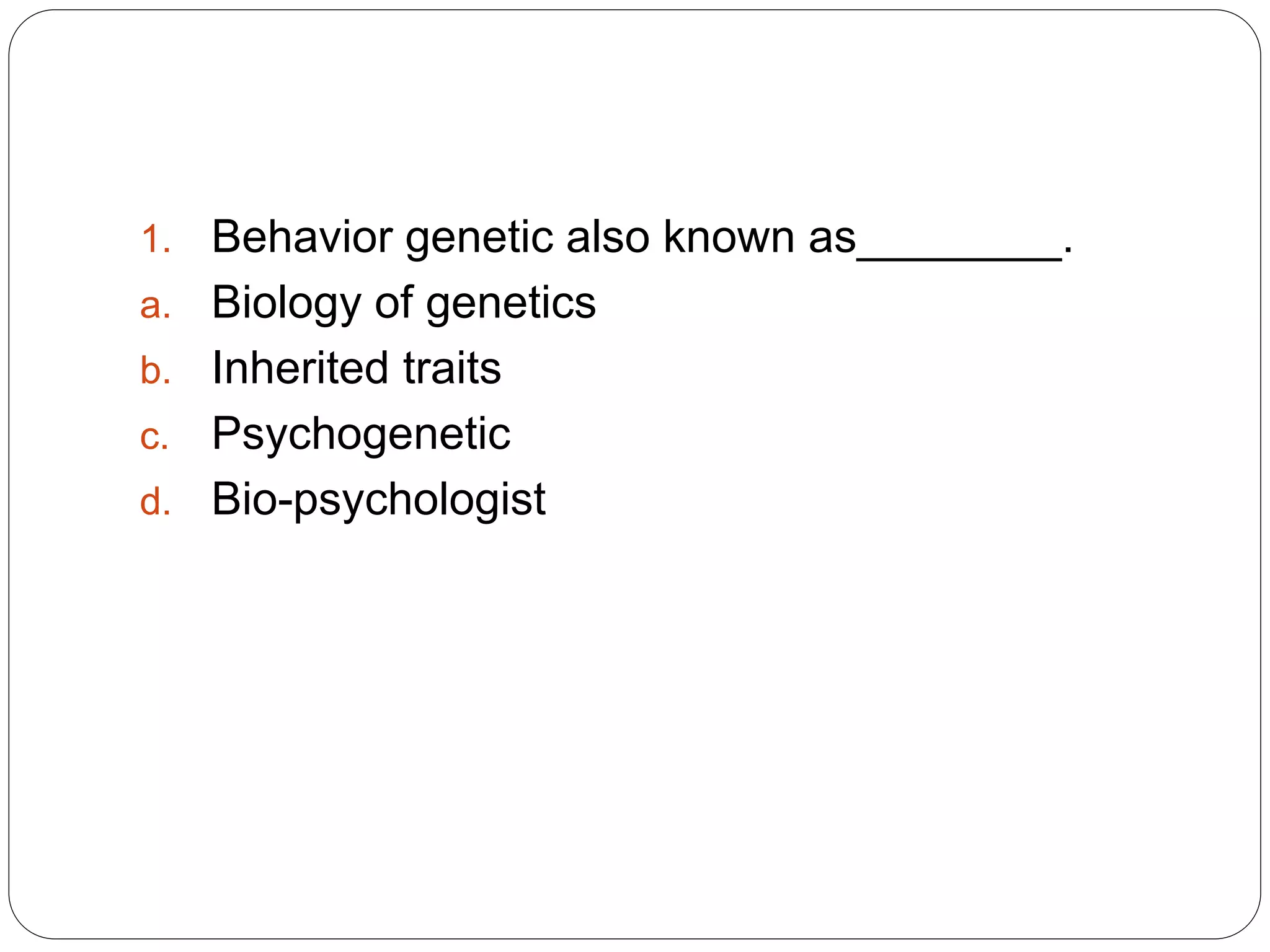
1. Behavior genetic also known as________.
a. Biology of genetics
b. Inherited traits
c. Psychogenetic
d. Bio-psychologist
1. The capacity or ability of a person to sense the
world is defined as______.
a. Perception
b. Socialization
c. Inherited traits
d. Sensation
1. There are______ types of sense organs that
give sensations/feeling.
a. 2
b. 4
c. 5
d. 6
Your future is created by
what you do today
not
tomorrow
Biological Basis of Behavior unit 2.pptx

Biological Basis of Behavior unit 2.pptx

  • 1.
    MS. NEETU DHAMI MENTALHEALTH NURSING ASSISTANT PROFESSOR Biological Basis of Behavior
  • 2.
    CONTENT  INTRODUCTION  BODYMIND RELATIONSHIP  GENETIC AND BEHAVIOR  INHERITANCE OF BEHAVIOR  BRAIN AND BEHAVIOR  PSYCHOLOGY AND SENSATION -SENSORY PROCESS - NORMAL AND ABNORMAL
  • 3.
    INTRODUCATION  The biologyof behavior is the study of behavior functions of the nervous system particularly the brain.  Physiological psychology is that branch of psychology which seeks to determine how activity in the nervous system is related to both the behavior and the mind.  Our perception of events depends on how our sense organs detect stimuli and how our brain interprets information originating from the senses.
  • 4.
    Body mind relationship: Psychology studies human behavior involving both the body and the mind. They are interrelated and interact upon each other. Mental function and physical states affect each other.  Body and mind are two aspects of the living, dynamic and adjusting personality. It is the sum total of various mental process such as observing, knowing, thinking , reasoning , feeling , imagining, remembering, jugging, etc. mind also grows just as the body grows.
  • 5.
    Cont..  Body isrepresented by physical states and bodily functions.  Nervous system and glands are an important part of our body. They are also responsible for ways of thinking , feeling and doing.
  • 6.
    MIND : isthe some total of various mental process like thinking, knowing, feeling, reasoning, remembering etc. Level of mind –  Conscious ( smallest part)  Preconscious/ subconscious mind ( forget temporary)  Unconscious ( largest part)
  • 8.
    Effects of bodilyconditions on mental functioning  Increased blood pressure causes mental excitement.  Severe pain reduces the ability to concentrate.  Chronic illness causes depression.  Malfunctioning of the endocrine glands many exert full influence on one’s personality resulting in lethargy, nervousness, tension, etc.  Physical fatigue affects our mood and reduces our motivation, interest and concentration.  Brain injury affects many psychological functions. At the same time well developed brain leads to the development of better intellectual functioning.
  • 9.
    Cont..  Mental processesare intimately connected to the brain and cortical processes. For example, unpleased emotions like fear, anger and worry cause irritability, insomnia, headache, etc similarity depression affects thinking and memory.  Emotional conflicts are responsible for peptic ulcer, ulcerative colitis, etc.  Deep thinking and concentration can cause physical strain.
  • 10.
  • 11.
    Genetics and behavior Behavior genetics also know as psychogenetic, is the study of influence of genetic composition of an individual on their behavior and the interaction of heredity and environment of behavior.  According to Conkun, E.G., developmental of human beings is the most important aspect of the world, which is a fact.  Man has evolved from a microscopic thread like structure, which further divides into billions of cells, resulting in the growth of a human being with infinite physical and psychological potential.
  • 12.
    Cont..  Threads oflife: two germ cells i.e. one sperm cell from the male testes and the other egg cell or ovum from the female ovary fertilize together to produce new individual cell termed as gametes. This gamete further matures to form zygote. 23 pair of chromosomes ( genetic material) is present in both the male and female germ cell.  As a result, there are 46 no or 23 pair of chromosomes that fertilize to produce a new individual. Therefore, these chromosomes are referred to as the “ threads of life”.
  • 13.
    Inheritance of behavior The process by which organisms inherit characteristics from their parents is known as heredity. These characteristics are termed as traits. Every person is distinct because they possess a distinct set of traits. Inherited traits are those that a parent transmits to its progeny during the fertilization process.  Certain heredity rules regulation how this inheritance is passed down. Inherited traits for example, eye color, height, complexion, hair color, etc are encoded in the DNA and can be passed on to the future generations.  If the copies are not identical, the trait that is expressed phenotypically will refer to as the dominant trait, and another one will be referred to as the recessive trait.
  • 14.
    Cont…  Inherited behaviorsare those that are passes down through the generations. The genes determine the type and color of the hair, the color of eyes, and height as well, but very rarely people consider these characteristics to influence their behavior. This is partly due to the fact that most of the behavior are acquired rather than inherited.
  • 15.
    Brain and Behavior Biopsychology is a branch of psychology that studies how the brain, neurotransmitters, and other biological factor influence the behavior, thoughts, and feelings.  Biopsychology, physiological psychology, behavior neuroscience, and psychobiology are the terms used to describe this branch of psychology.  Biopsychologists observe the interaction between biological process and emotions, cognitions and other mental process. Biopsychology is associated with many other areas, including comparative psychology and evolutionary psychology.
  • 16.
    Psychology and Sensation Introduction: the capacity or ability of a person to sense the world is defined as sensation. every motivated person senses the environment, understands it, responds to it and reacts to the out comes of his own responses.  Every person has the ability to detect cold and hot pressure. However, his behavior is affected by the way he senses the things. For example. A person wants warm clothes if he sense too cold. Similarly, the behavior of an organization. Stimulus, receptor and nervous system are the three factors of senses to work.
  • 17.
    Types of sensation Fundamentalhuman senses Sense Stimulus Sense organ Sensation Sight Light waves eye Colors, patters, texttures Hearing Sound waves ear Noise, tones, music Skin sensatio n External touch Skin Touch, cold, warmth, pain smell Volatile materials Nose odors Taste Soluble materials tongue Sweet, salty,bitter
  • 18.
    Sensory process: Normal Reception: the activation of sensory receptors by stimuli such as mechanical stimuli, chemical, temperature is the initial stage in sensation this steps is known as reception. After that the receptor can respond to the stimuli.  Transduction: the process of converting a sensory signal to an electrical signal for processing in a particular area in a brain is know as transduction.  Perception : a person’s interpretation of sensation is known as perception.
  • 19.
    Sensory processing disorder:Abnormal  The condition in which the brain has difficulty in receiving and responding to sensory input is known as sensory processing disorder.
  • 21.
    1. The term…......describesthe nature of psychology. a. Bio-social b. Physiological psychology c. Biological d. None of the above
  • 22.
    1. Behavior geneticalso known as________. a. Biology of genetics b. Inherited traits c. Psychogenetic d. Bio-psychologist
  • 23.
    1. The capacityor ability of a person to sense the world is defined as______. a. Perception b. Socialization c. Inherited traits d. Sensation
  • 24.
    1. There are______types of sense organs that give sensations/feeling. a. 2 b. 4 c. 5 d. 6
  • 25.
    Your future iscreated by what you do today not tomorrow

Editor's Notes

  • #6 Covert -emotioal
  • #14 Phenotypic-out side, genotype-inside ,