 Gift of the Creator
 Gives us the sense of sight
 70% of all sensory receptors are in the eye
 Spheroid structure, about 2/3 the size of a
ping-pong ball
 Functions: distinguishes light and dark,
shape, colour, brightness & distance of
objects.
 Includes : bony orbit, eyelids, eyelashes,
tears and fat glands, extra ocular
muscles, conjunctiva
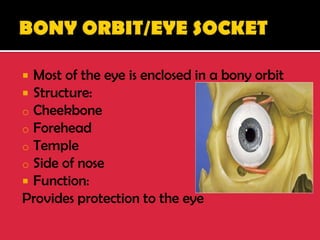
 Most of the eye is enclosed in a bony orbit
 Structure:
o Cheekbone
o Forehead
o Temple
o Side of nose
 Function:
Provides protection to the eye
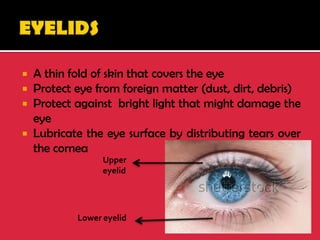
 A thin fold of skin that covers the eye
 Protect eye from foreign matter (dust, dirt, debris)
 Protect against bright light that might damage the
eye
 Lubricate the eye surface by distributing tears over
the cornea
Upper
eyelid
Lower eyelid
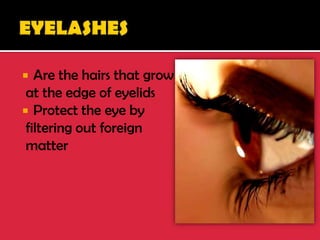
 Are the hairs that grow
at the edge of eyelids
 Protect the eye by
filtering out foreign
matter
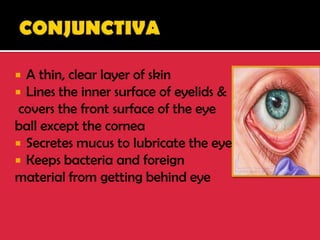
 A thin, clear layer of skin
 Lines the inner surface of eyelids &
covers the front surface of the eye
ball except the cornea
 Secretes mucus to lubricate the eye
 Keeps bacteria and foreign
material from getting behind eye
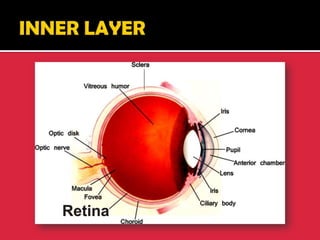
 Innermost, sensitive layer of the eye
 A delicate membrane containing
photoreceptors & associated
neurons
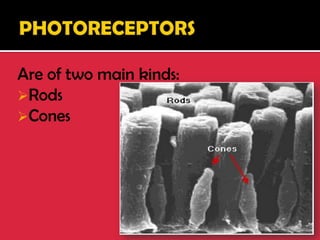
Are of two main kinds:
Rods
Cones
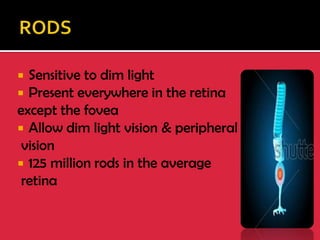
 Sensitive to dim light
 Present everywhere in the retina
except the fovea
 Allow dim light vision & peripheral
vision
 125 million rods in the average
retina
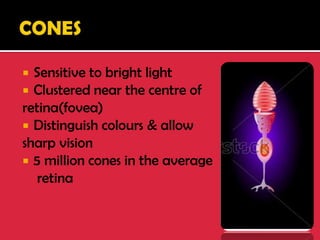
 Sensitive to bright light
 Clustered near the centre of
retina(fovea)
 Distinguish colours & allow
sharp vision
 5 million cones in the average
retina
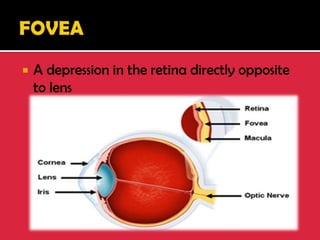
 A depression in the retina directly opposite
to lens
 Contains only cones & no rods
 Function: to form an extremely clear
image
 Is directed towards whatever object
you are studying most closely
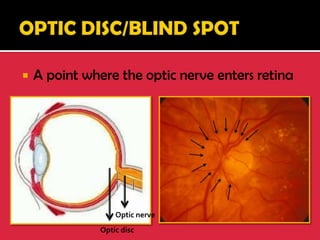
 A point where the optic nerve enters retina
Optic disc
Optic nerve
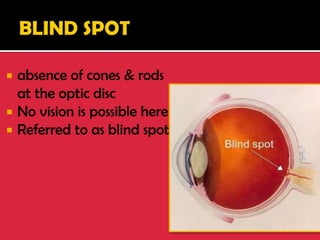
 absence of cones & rods
at the optic disc
 No vision is possible here
 Referred to as blind spot
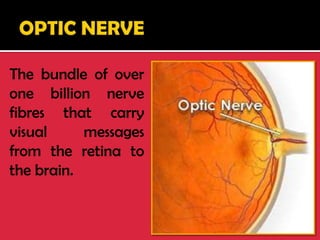
The bundle of over
one billion nerve
fibres that carry
visual messages
from the retina to
the brain.
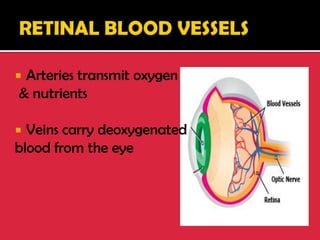
 Arteries transmit oxygen
& nutrients
 Veins carry deoxygenated
blood from the eye
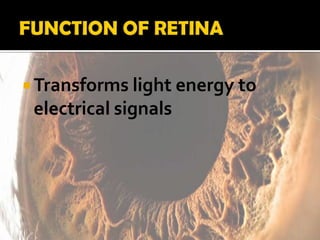
 Transforms light energy to
electrical signals
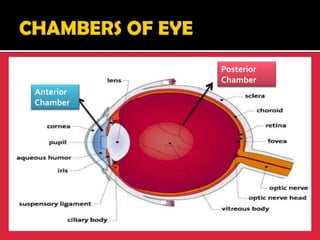
Anterior
Chamber
Posterior
Chamber
 A clear, watery fluid in the anterior
chamber
 Nourishes the lens & cornea and helps
refract light onto the retina
 A clear, gel-like fluid in the posterior
chamber
 Supports the lens & retina and keeps
the eye from collapsing
 Aids the magnifying power of the eye
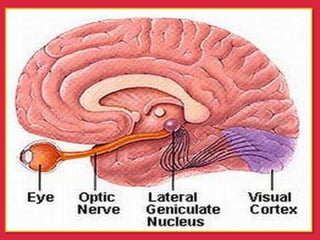
 Light rays coming from object enter
through the cornea, progress through
pupil & fall on eye lens which converts
light rays & produces a real & inverted
image of object on retina. The image
thus formed is conveyed to brain by optic
nerve in the form of electrical signals
which are seen by the brain as a visual
image.

Structure and function of eye

  • 2.
     Gift ofthe Creator  Gives us the sense of sight  70% of all sensory receptors are in the eye  Spheroid structure, about 2/3 the size of a ping-pong ball  Functions: distinguishes light and dark, shape, colour, brightness & distance of objects.
  • 3.
     Includes :bony orbit, eyelids, eyelashes, tears and fat glands, extra ocular muscles, conjunctiva
  • 4.
     Most ofthe eye is enclosed in a bony orbit  Structure: o Cheekbone o Forehead o Temple o Side of nose  Function: Provides protection to the eye
  • 5.
     A thinfold of skin that covers the eye  Protect eye from foreign matter (dust, dirt, debris)  Protect against bright light that might damage the eye  Lubricate the eye surface by distributing tears over the cornea Upper eyelid Lower eyelid
  • 6.
     Are thehairs that grow at the edge of eyelids  Protect the eye by filtering out foreign matter
  • 7.
     A thin,clear layer of skin  Lines the inner surface of eyelids & covers the front surface of the eye ball except the cornea  Secretes mucus to lubricate the eye  Keeps bacteria and foreign material from getting behind eye
  • 9.
     Innermost, sensitivelayer of the eye  A delicate membrane containing photoreceptors & associated neurons
  • 10.
    Are of twomain kinds: Rods Cones
  • 11.
     Sensitive todim light  Present everywhere in the retina except the fovea  Allow dim light vision & peripheral vision  125 million rods in the average retina
  • 12.
     Sensitive tobright light  Clustered near the centre of retina(fovea)  Distinguish colours & allow sharp vision  5 million cones in the average retina
  • 13.
     A depressionin the retina directly opposite to lens
  • 14.
     Contains onlycones & no rods  Function: to form an extremely clear image  Is directed towards whatever object you are studying most closely
  • 15.
     A pointwhere the optic nerve enters retina Optic disc Optic nerve
  • 16.
     absence ofcones & rods at the optic disc  No vision is possible here  Referred to as blind spot
  • 17.
    The bundle ofover one billion nerve fibres that carry visual messages from the retina to the brain.
  • 19.
     Arteries transmitoxygen & nutrients  Veins carry deoxygenated blood from the eye
  • 20.
     Transforms lightenergy to electrical signals
  • 21.
  • 22.
     A clear,watery fluid in the anterior chamber  Nourishes the lens & cornea and helps refract light onto the retina
  • 23.
     A clear,gel-like fluid in the posterior chamber  Supports the lens & retina and keeps the eye from collapsing  Aids the magnifying power of the eye
  • 24.
     Light rayscoming from object enter through the cornea, progress through pupil & fall on eye lens which converts light rays & produces a real & inverted image of object on retina. The image thus formed is conveyed to brain by optic nerve in the form of electrical signals which are seen by the brain as a visual image.