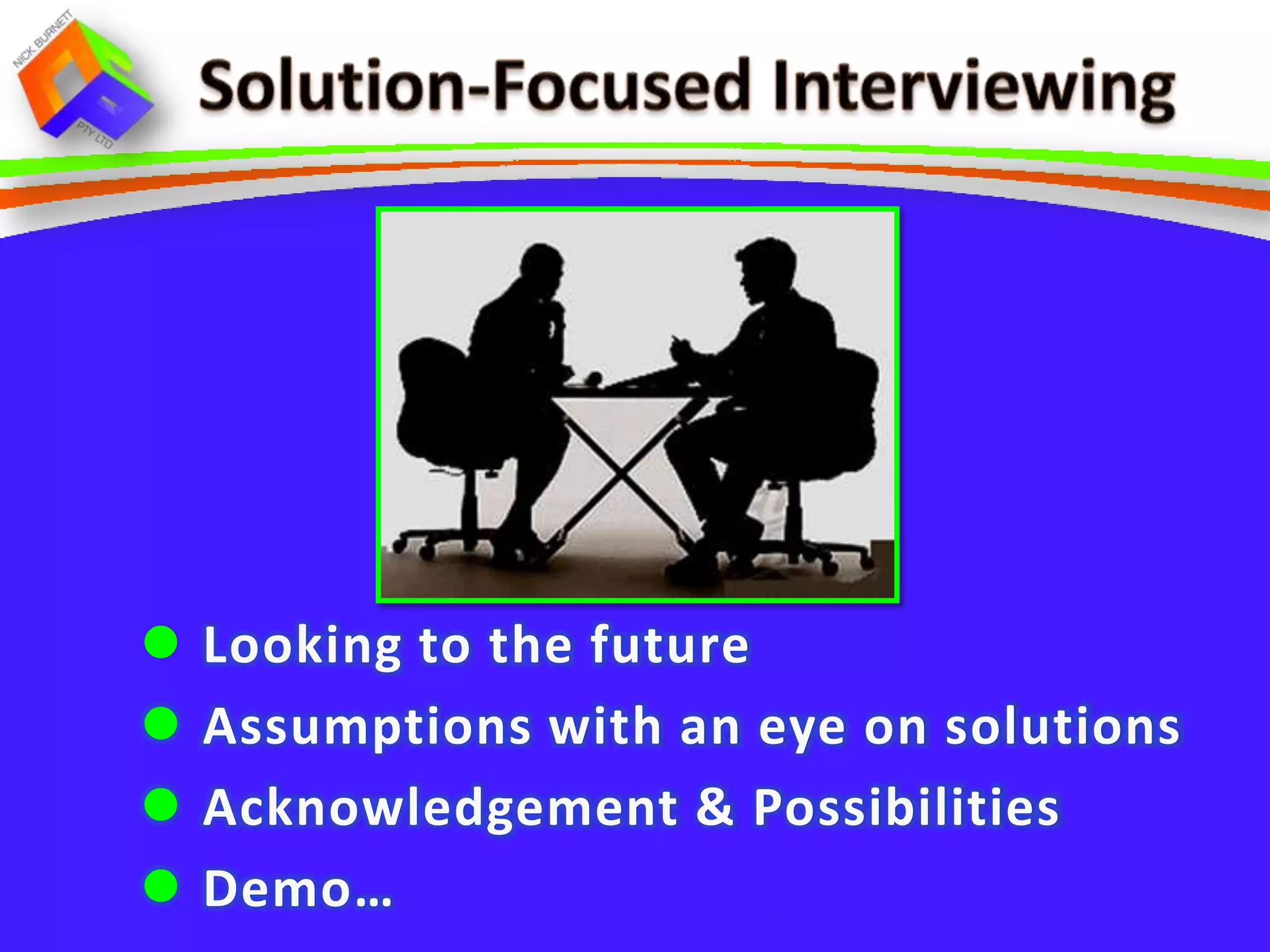
   Looking to the future
   Assumptions with an eye on solutions
   Acknowledgement & Possibilities
   Demo…
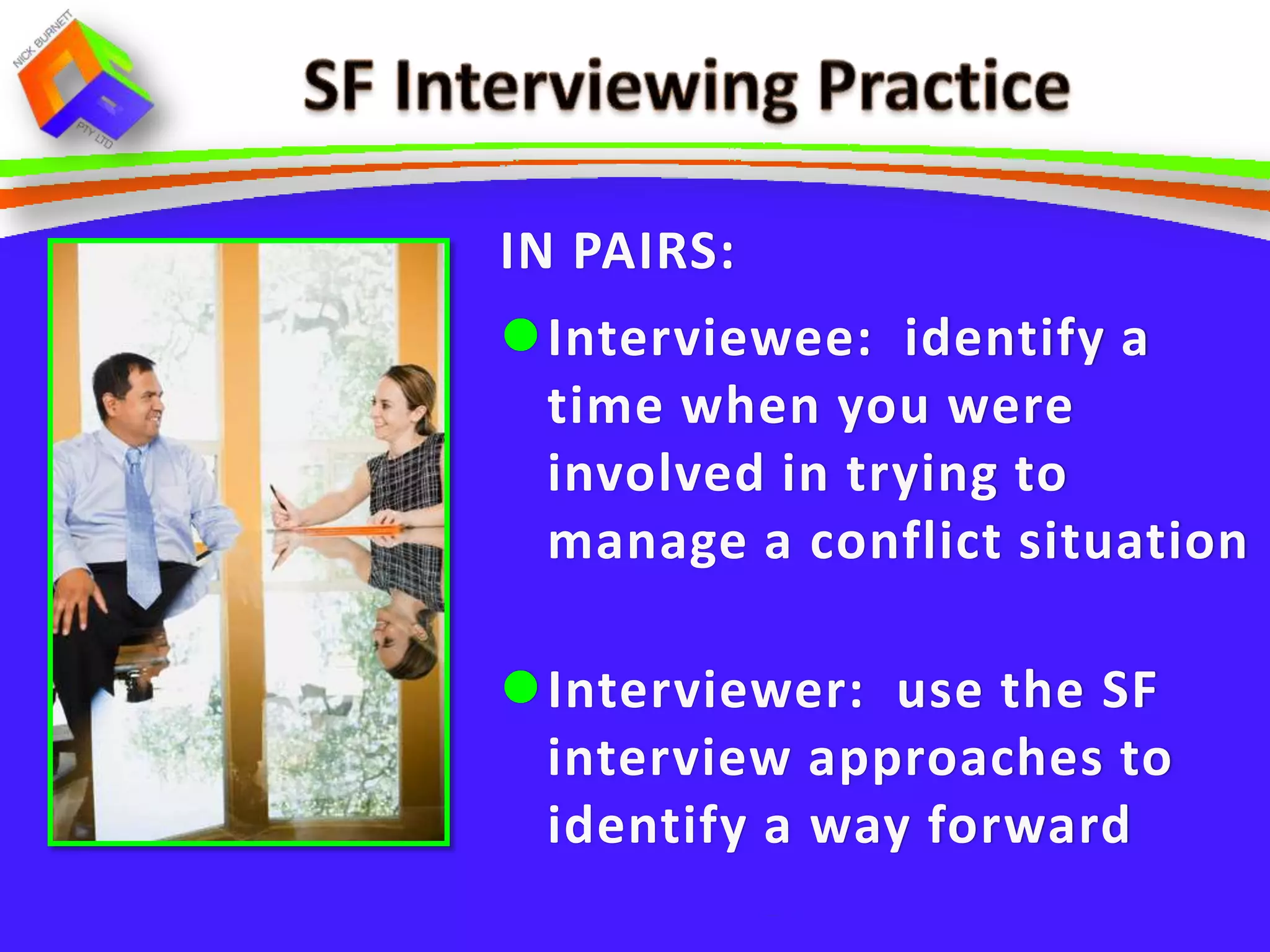
IN PAIRS:
Interviewee: identify a
 time when you were
 involved in trying to
 manage a conflict situation

Interviewer: use the SF
 interview approaches to
 identify a way forward
What worked well?
 What might be done
 differently next time?

Swap roles & repeat

Return to main group
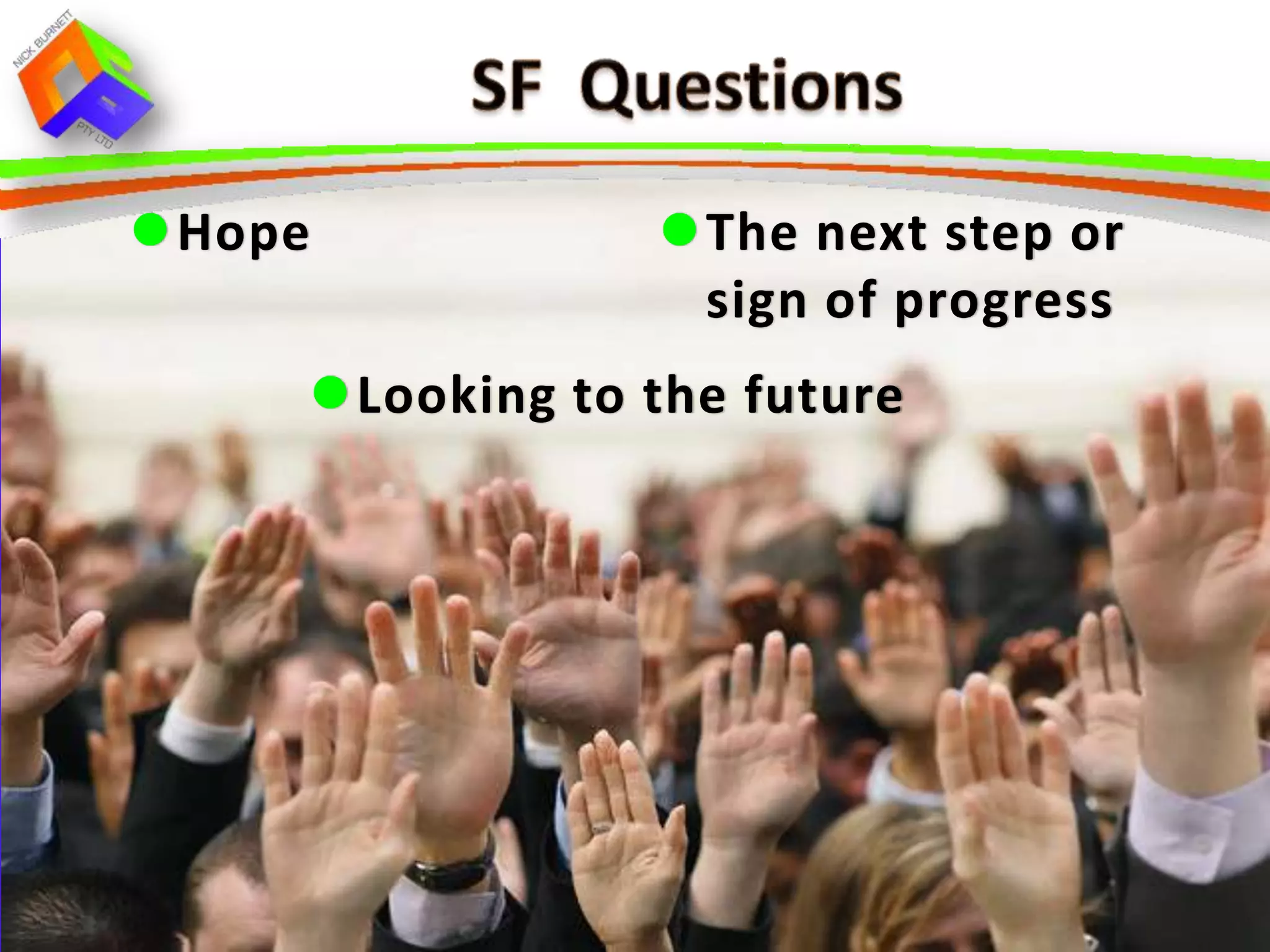
Hope           The next step or
                 sign of progress
    Looking to the future
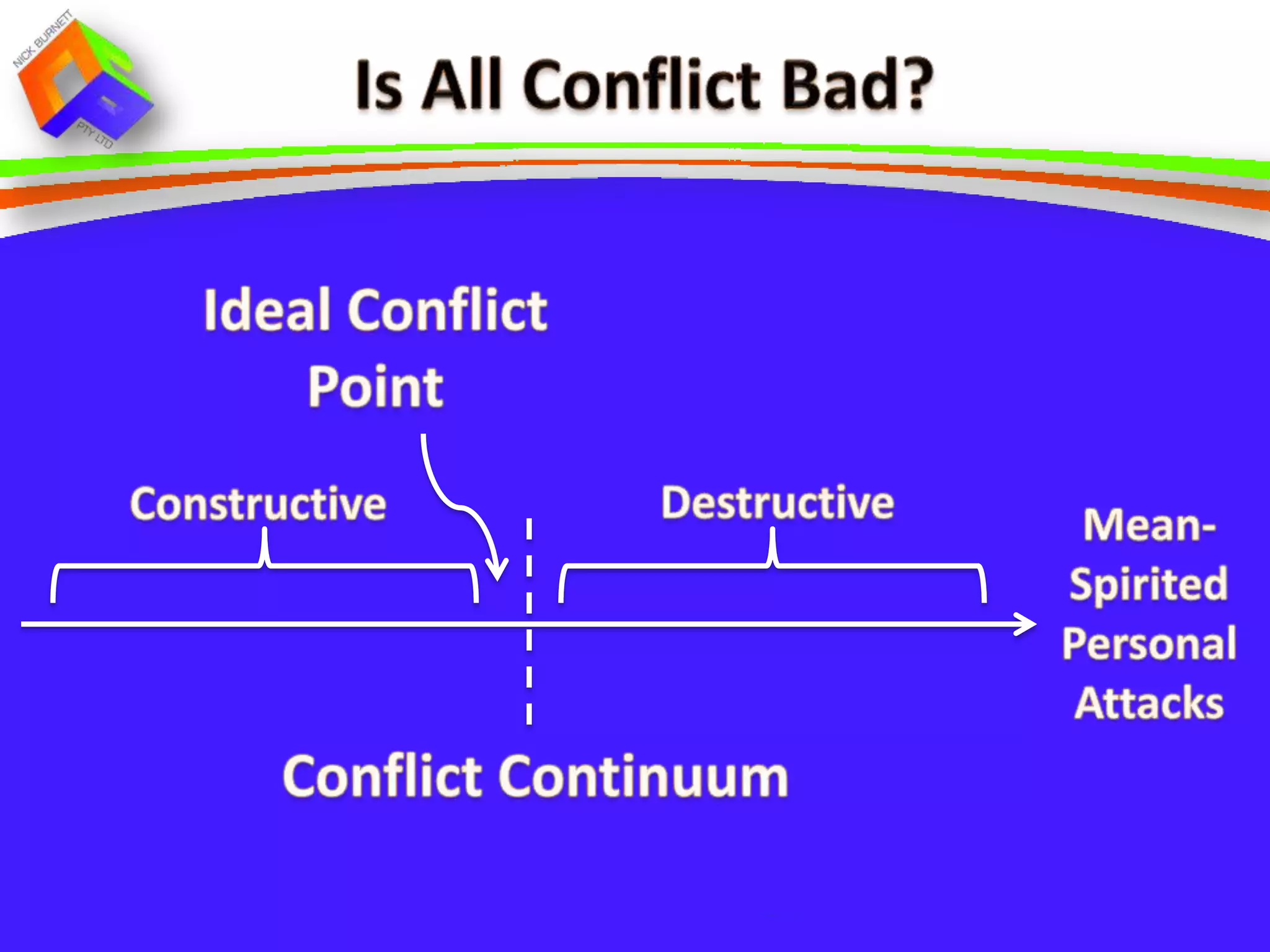
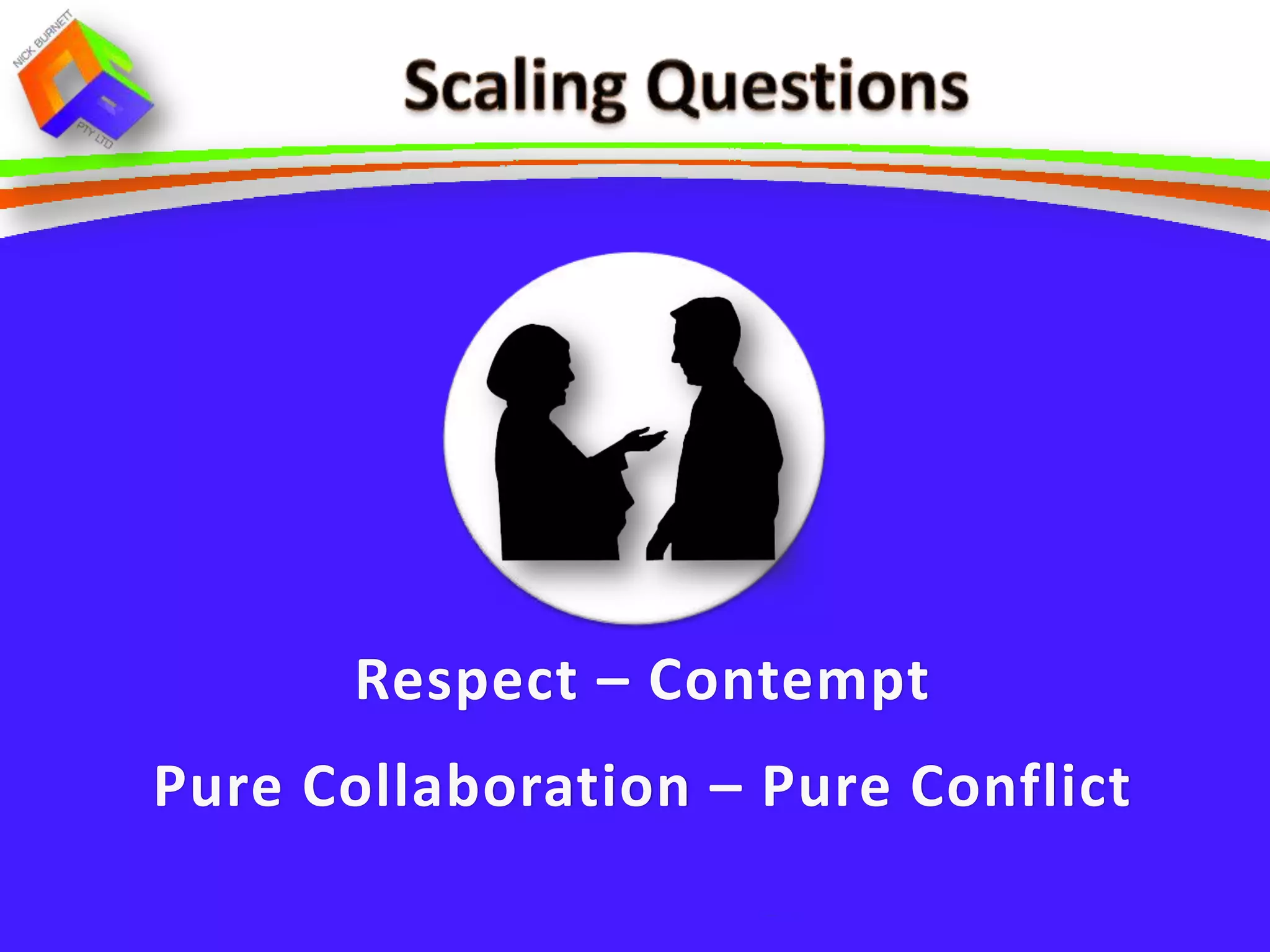
Respect – Contempt
Pure Collaboration – Pure Conflict
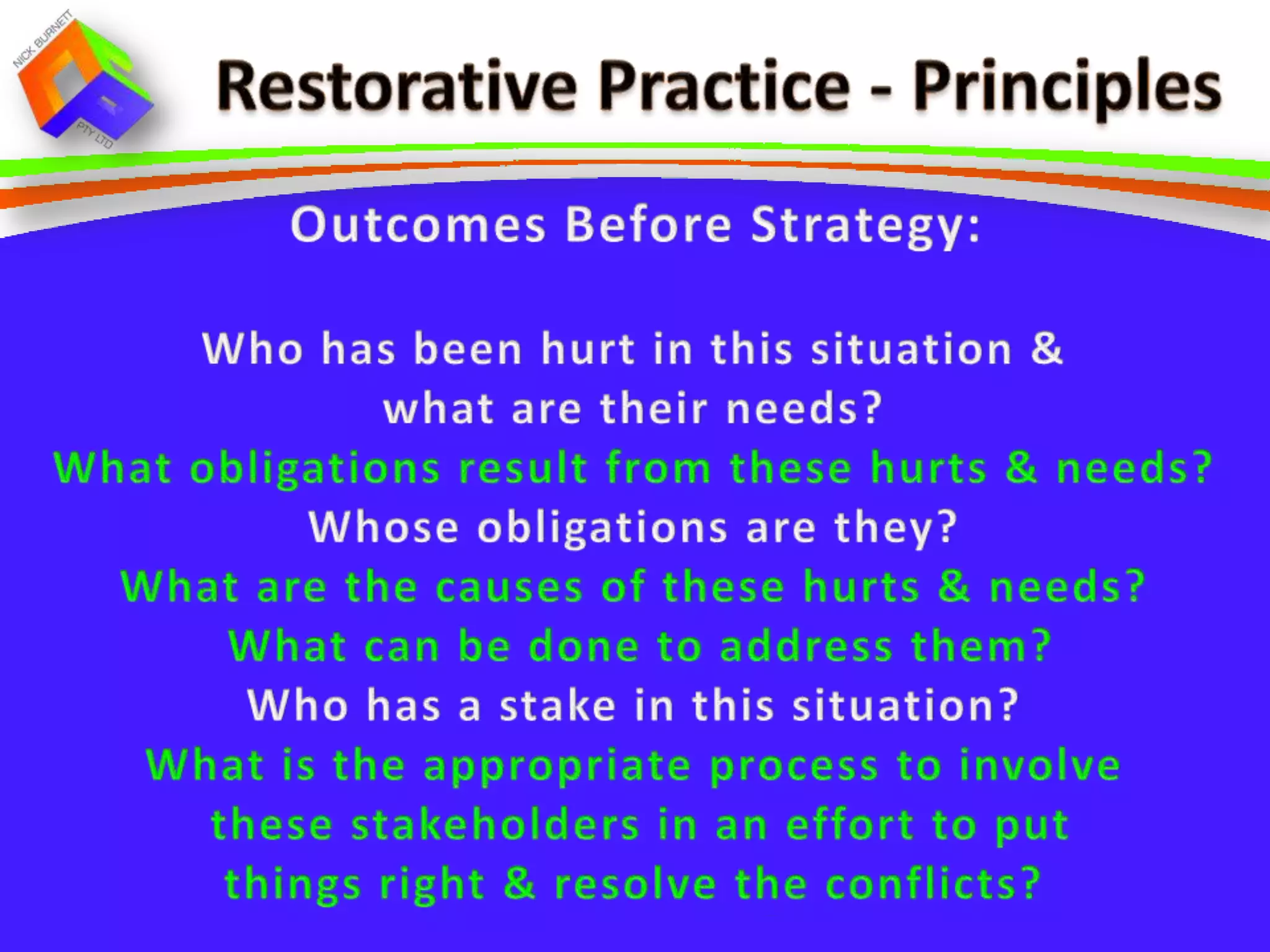
Possible Questions:
 Building on what works
 On a scale from 1-10,
  where is 10? Where is 1?
  Where are you now?
 What’s helping you reach that level? What else?
 What would one step higher up the scale look like?
 What would be the first tiny signs of progress?
 What would take you one small step higher?
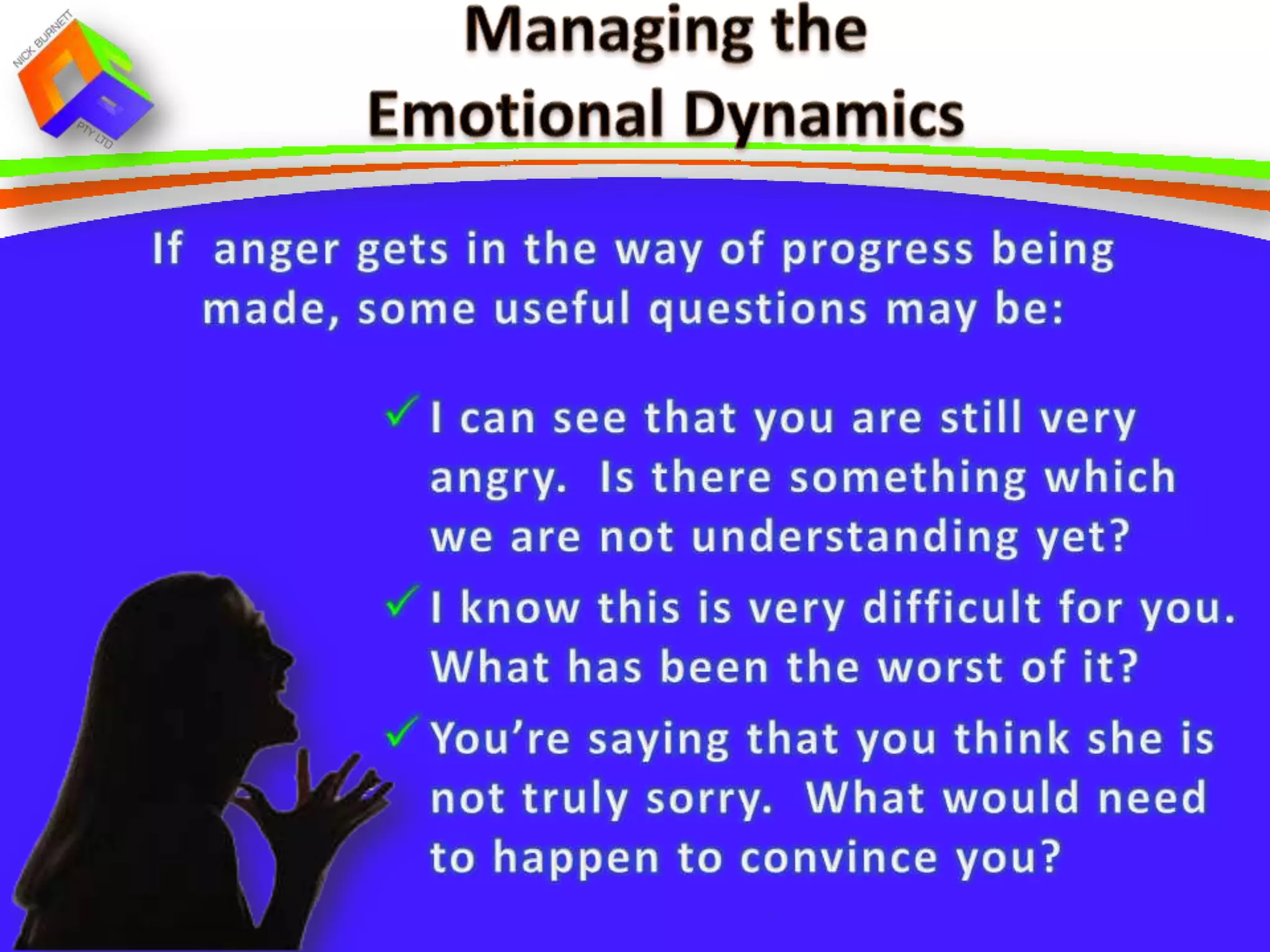
I see that your feelings are very strong about
this topic. What would you like to feel instead
    in the future when the conflict is solved?
              How will you know this
            meeting has been useful?
              How will you know the
             conflict has been solved?
          What has been working well?
                  What is better?
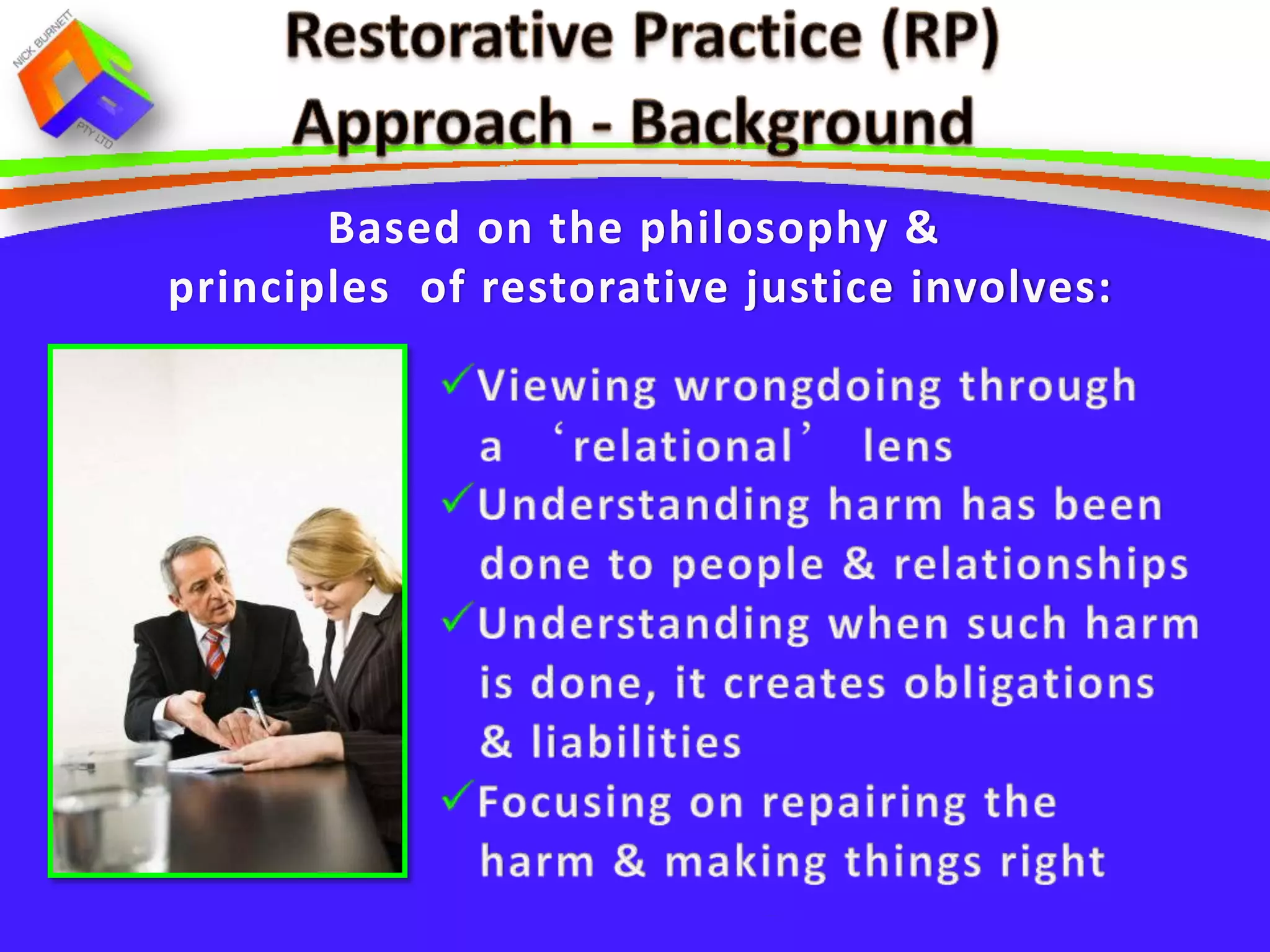
Based on the philosophy &
principles of restorative justice involves:
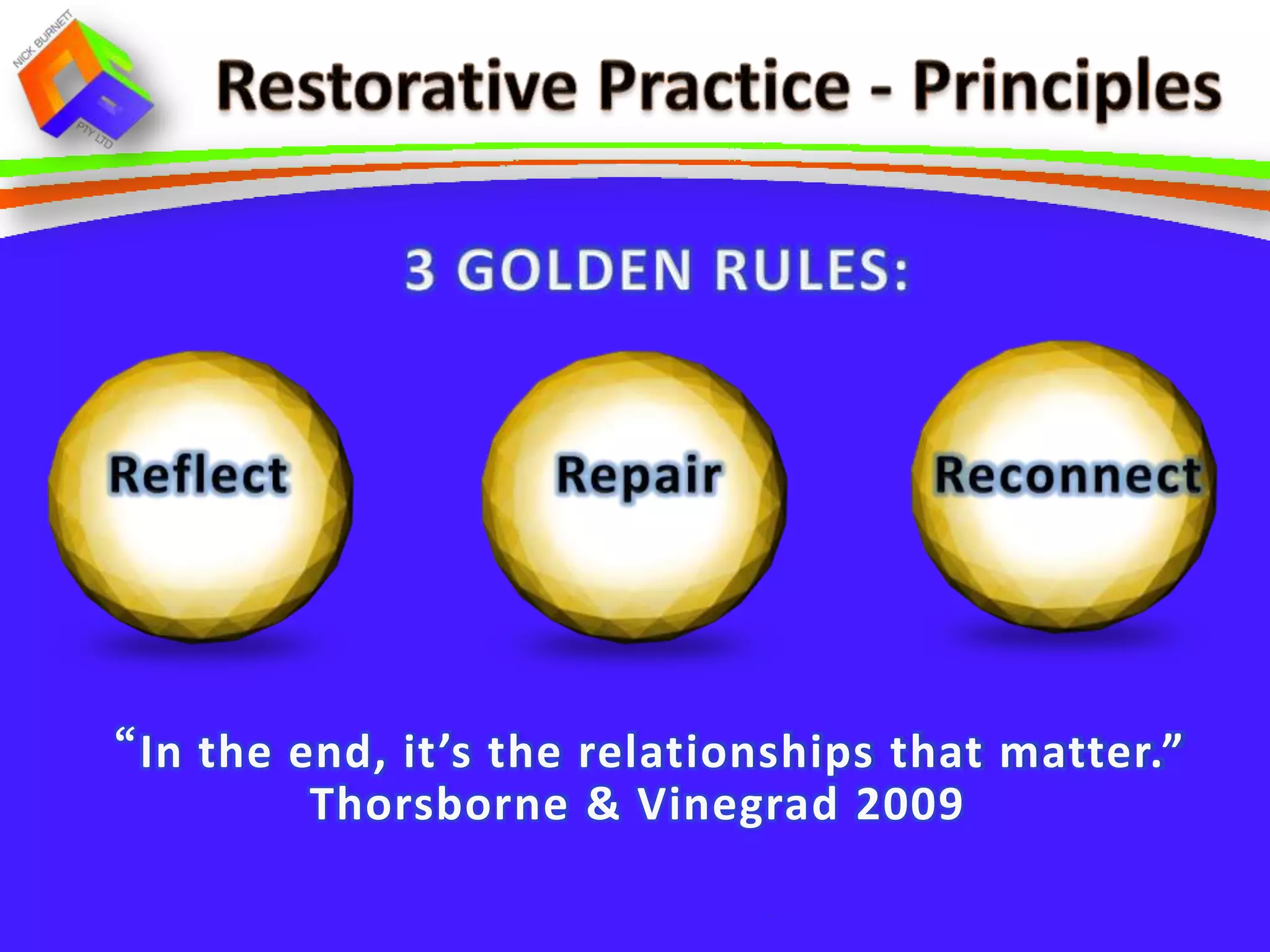
“In the end, it’s the relationships that matter.”
         Thorsborne & Vinegrad 2009
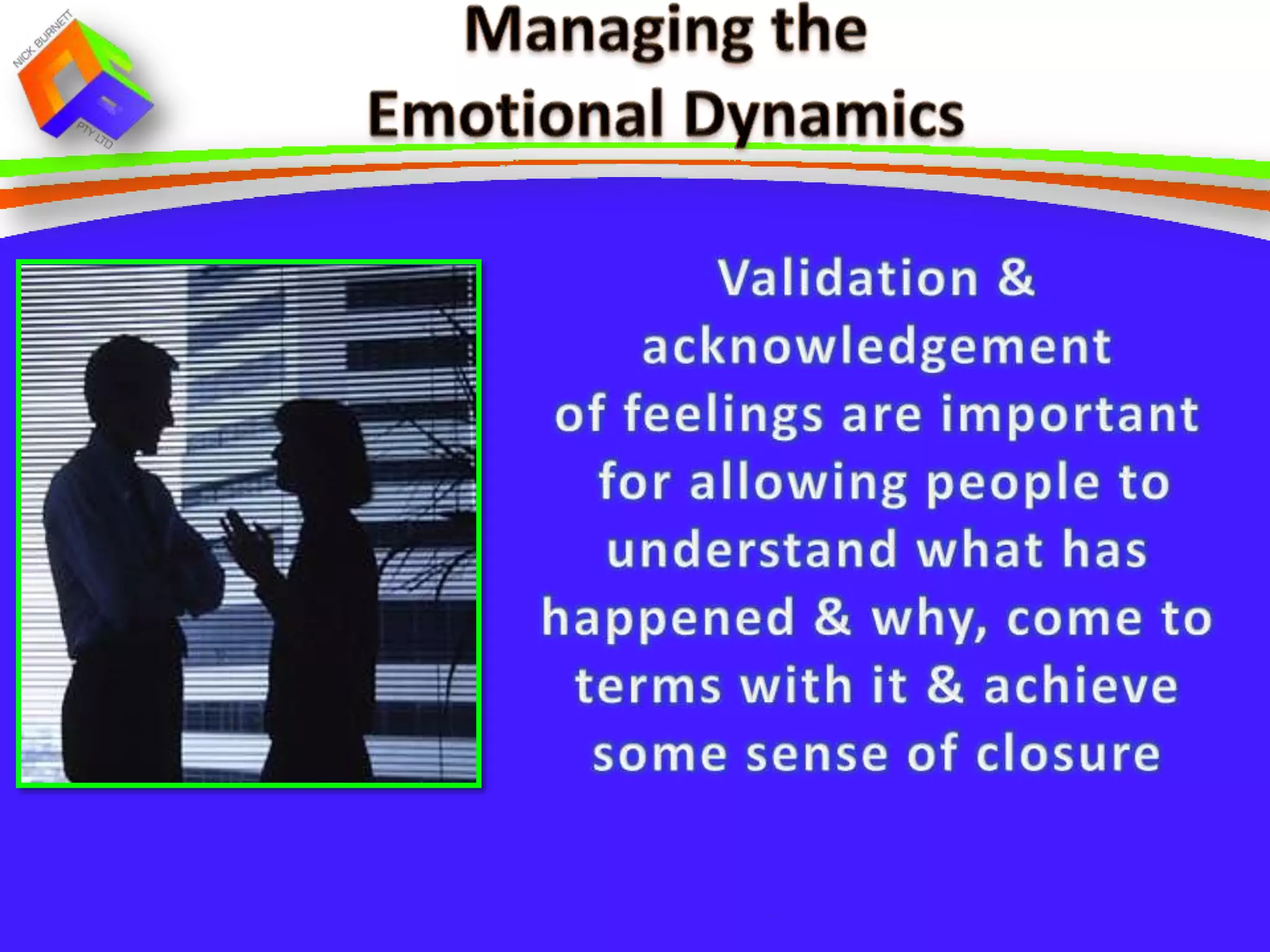
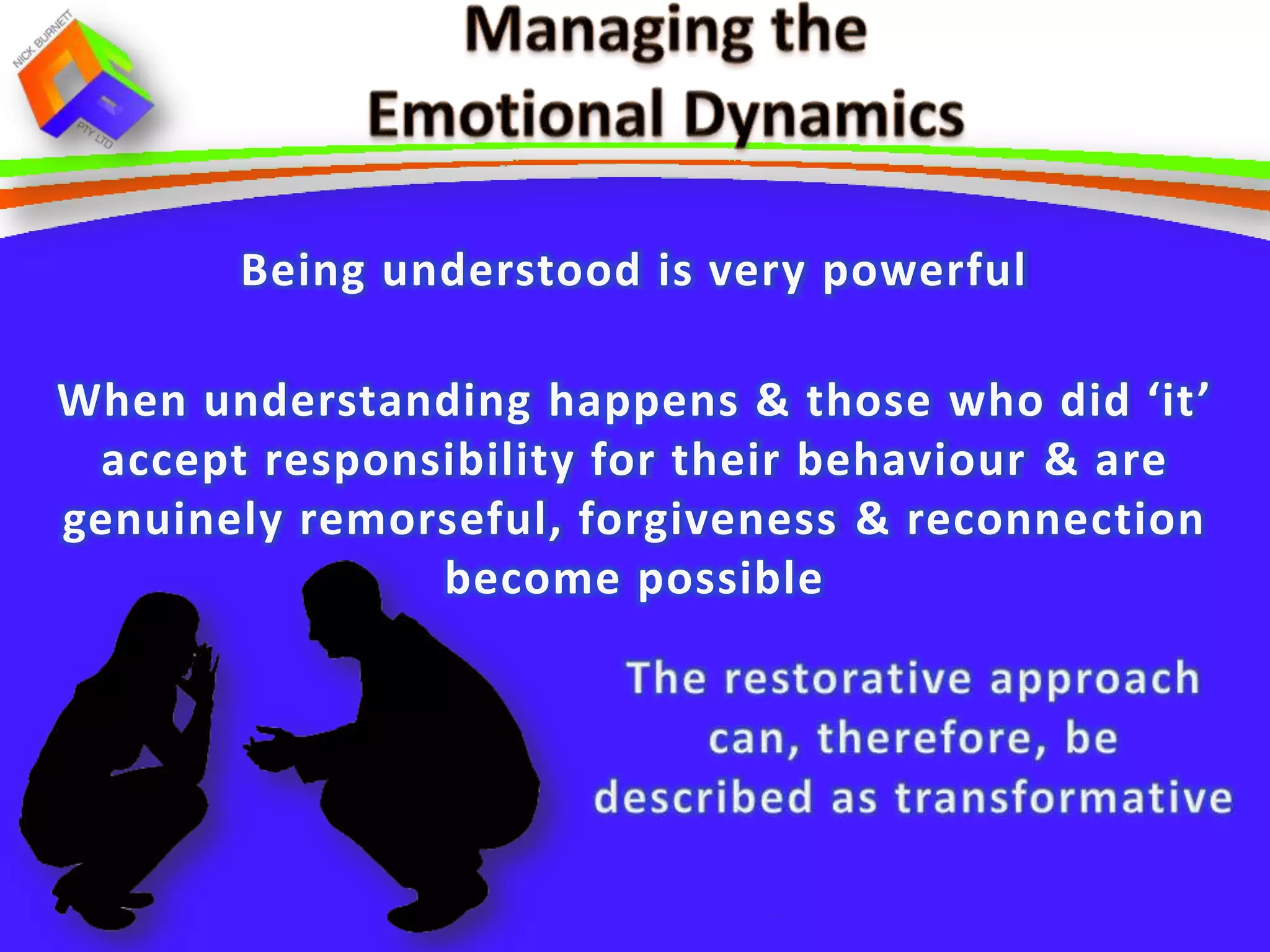
Being understood is very powerful

When understanding happens & those who did ‘it’
 accept responsibility for their behaviour & are
genuinely remorseful, forgiveness & reconnection
               become possible
Use silence
Ask more open-ended
 questions:
  Can you tell us some more
   about that?
  Can you just explain what you
   meant by that comment?
What’s happening for you
 right at this minute?
SIMILARITIES
– They generate optimism & hopefulness for the
  future regardless of the past
– They address problem solving in positive ways
– They aim to increase individual & community
  self-efficacy & empowerment

                DIFFERENCES
– Expression of emotion is encouraged in RP –
  ‘What’s the worse of this for you?’
– Greater structure in place in RP
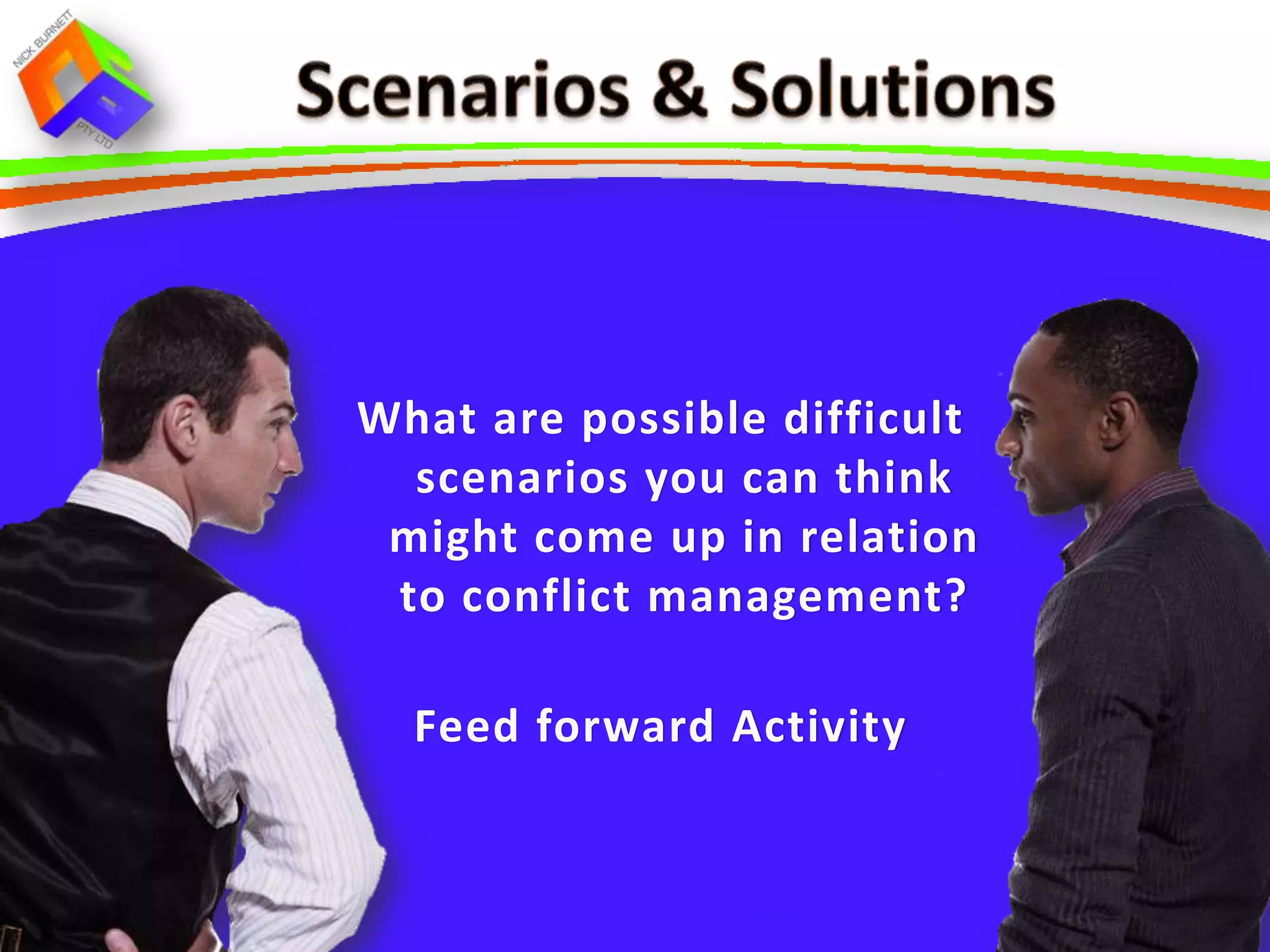
What are possible difficult
  scenarios you can think
 might come up in relation
 to conflict management?

  Feed forward Activity
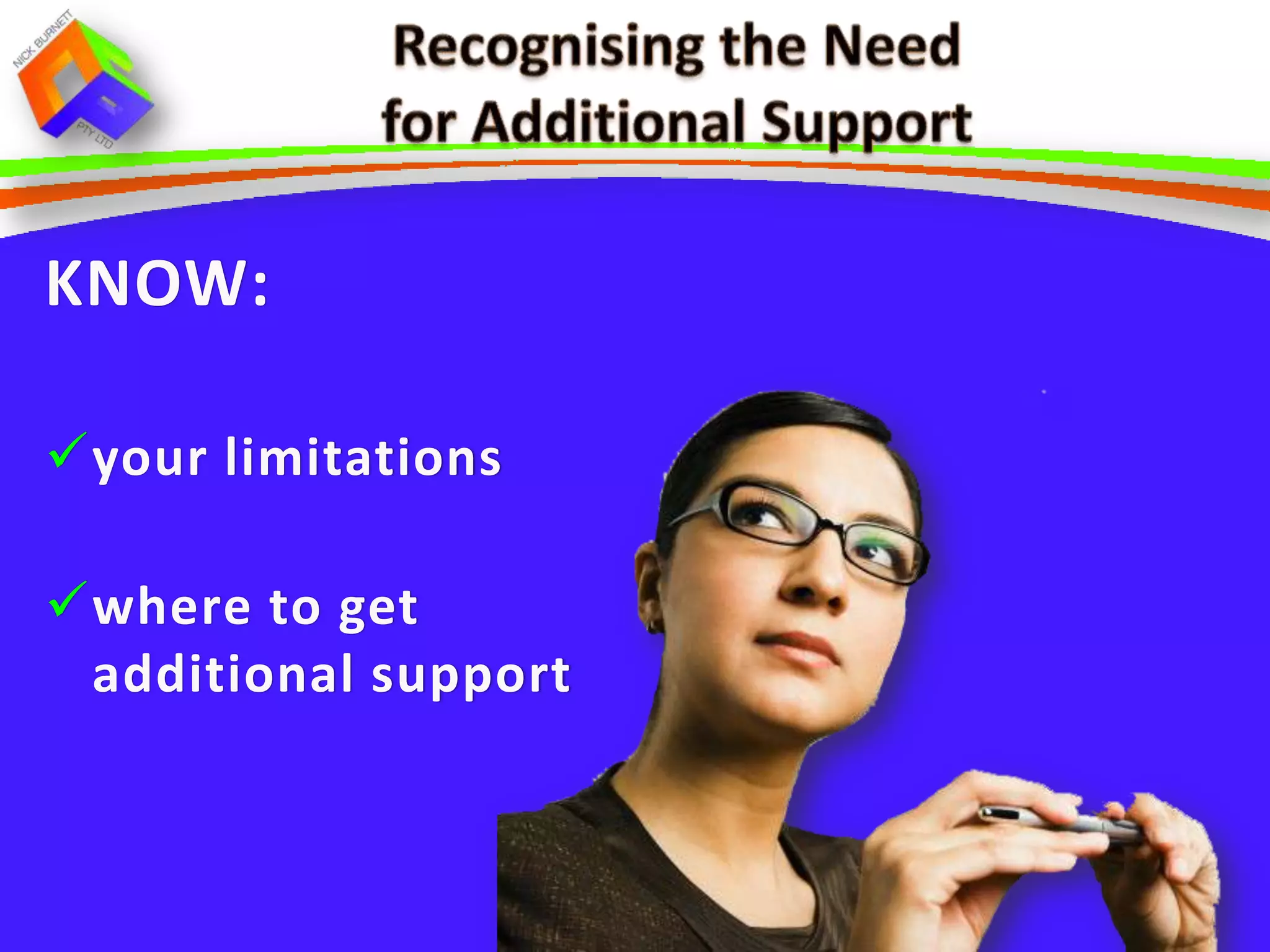
KNOW:

your limitations

where to get
 additional support
Copy of the slides…
nickburnett@me.com
Twitter – nick_burnett
LinkedIn – Nick Burnett
Want to receive the monthly newsletter on
coaching, leadership and behaviour
support? Sign up at…
www.nickburnettccp.com

Positive approaches to Conflict Management

  • 13.
    Looking to the future  Assumptions with an eye on solutions  Acknowledgement & Possibilities  Demo…
  • 14.
    IN PAIRS: Interviewee: identifya time when you were involved in trying to manage a conflict situation Interviewer: use the SF interview approaches to identify a way forward
  • 15.
    What worked well? What might be done differently next time? Swap roles & repeat Return to main group
  • 18.
    Hope The next step or sign of progress Looking to the future
  • 19.
    Respect – Contempt PureCollaboration – Pure Conflict
  • 20.
    Possible Questions:  Buildingon what works  On a scale from 1-10, where is 10? Where is 1? Where are you now?  What’s helping you reach that level? What else?  What would one step higher up the scale look like?  What would be the first tiny signs of progress?  What would take you one small step higher?
  • 23.
    I see thatyour feelings are very strong about this topic. What would you like to feel instead in the future when the conflict is solved? How will you know this meeting has been useful? How will you know the conflict has been solved? What has been working well? What is better?
  • 26.
    Based on thephilosophy & principles of restorative justice involves:
  • 28.
    “In the end,it’s the relationships that matter.” Thorsborne & Vinegrad 2009
  • 30.
    Being understood isvery powerful When understanding happens & those who did ‘it’ accept responsibility for their behaviour & are genuinely remorseful, forgiveness & reconnection become possible
  • 32.
    Use silence Ask moreopen-ended questions: Can you tell us some more about that? Can you just explain what you meant by that comment? What’s happening for you right at this minute?
  • 34.
    SIMILARITIES – They generateoptimism & hopefulness for the future regardless of the past – They address problem solving in positive ways – They aim to increase individual & community self-efficacy & empowerment DIFFERENCES – Expression of emotion is encouraged in RP – ‘What’s the worse of this for you?’ – Greater structure in place in RP
  • 37.
    What are possibledifficult scenarios you can think might come up in relation to conflict management? Feed forward Activity
  • 38.
  • 39.
    Copy of theslides… nickburnett@me.com Twitter – nick_burnett LinkedIn – Nick Burnett Want to receive the monthly newsletter on coaching, leadership and behaviour support? Sign up at… www.nickburnettccp.com

Editor's Notes

  • #2 Brief intro to my background
  • #3 Four dimensions to conflict thinkingThink, ink, pair, share page 2 of workbook
  • #8 Is all conflict bad?Stand and scale 1 - 10
  • #10 Overview of a couple of approaches we are going to briefly exploreWhat do you already know about SF and RP in table groups
  • #11 Overview of a couple of approaches we are going to briefly exploreWhat do you already know about SF and RP in table groups
  • #12 Page 3 of workbook – read through and identify with a partner what you think the 3 major points of difference are - feedback
  • #14 Make notes on page 4 about what you notice in the demo
  • #16 10 mins per turn then whole group debrief – info is on page 4 of workbook
  • #17 Complete the Solutions Focus questions in the handbook
  • #18 Complete the Solutions Focus questions in the handbook
  • #21 Possible another go with a different partner using these questions – page 4 of workbook
  • #26 Make some brief notes about the key points of taking an AD approach – should be about 2 hours into the time
  • #27 A number of similarities but also some differences which we will explore later onPeople’s current knowledge of RP
  • #31 Page 5 of workbook – what strategies do people already use to manage the emotional dynamics in conflict situations? Table groups or different pairs
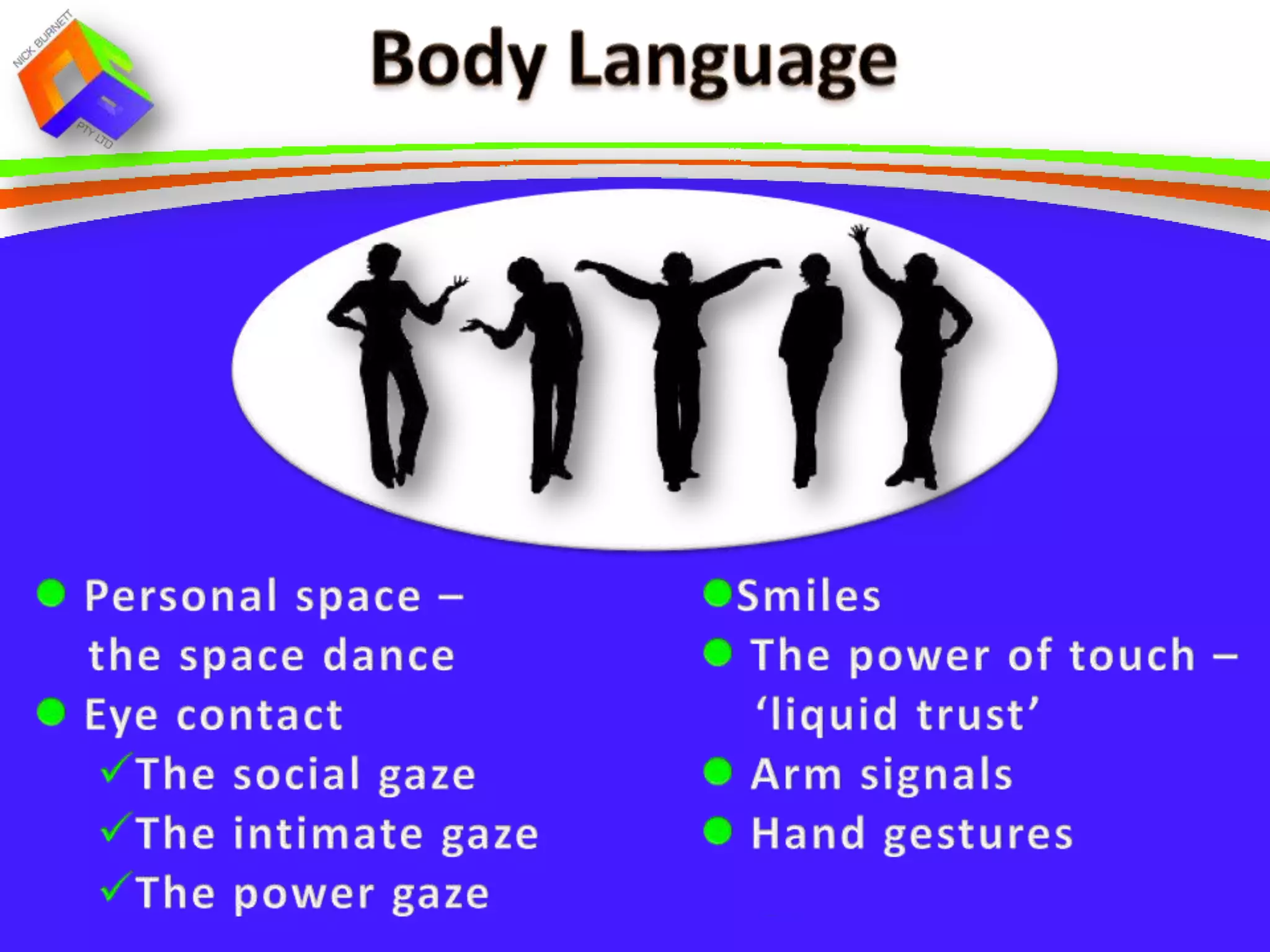
  • #36 Smiling is a submission signalScience has proved that the more you smile, the more positive reactions you will get from othersWhen you fold your arms your credibility dramatically reducesIf fists are clenched as well shows hostility as well as defensivenessPhone booth testSkillful elbow touching can give you up to three times the chance of getting what you want - no longer than 3 secondsElbow and hand are generally considered public spacesPalm up = non threateningPalm down = authorityThe pointing finger creates negative feelings - one finger away from a fistHands behind the back is a superiority-confidence gesture
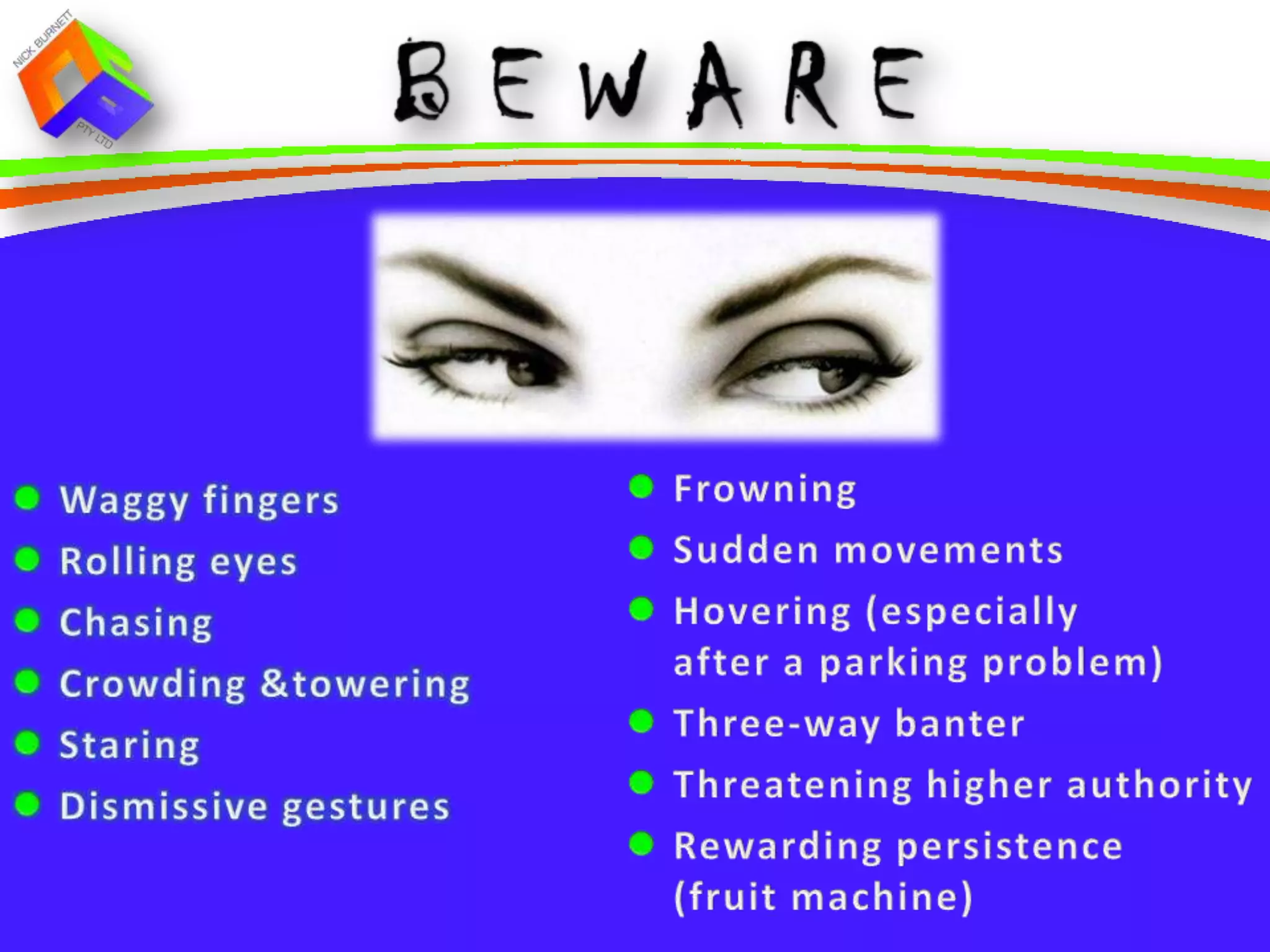
  • #37 What do you need to be aware of and manage? Stand and share with a partner
  • #38 Think of a couple of difficult scenarios that might come up and then stand up, going to complete a feedforward activity – 90 seconds with a person then change when the bell goes – person A states the scenario, person B offers a possible solution, Person A makes a brief note and says thanks, then swap, nothing more.