CONFLICT
MANAGEMENT
CONTENTS
 Introduction
 Views of conflict
 Types of conflict
 Source of conflict
 Components of Conflict
 Functional & dysfunctional
conflict
 Ways to manage conflict
 Conclusion
INTRODUCTION
CONFLICT
“AN ACTIVE DISAGREEMENT BETWEEN
PEOPLE WITH OPPOSING OPINIONS OR
PRINCIPLES”
CONFLICT MAMAGEMENT
“THE OPPORTUNITY TO IMPROVE
SITUATIONS AND STRENGTHEN
RELATIONSHIPS”
VIEWS OF CONFLICT
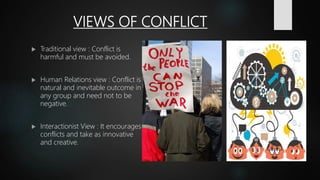
 Traditional view : Conflict is
harmful and must be avoided.
 Human Relations view : Conflict is
natural and inevitable outcome in
any group and need not to be
negative.
 Interactionist View : It encourages
conflicts and take as innovative
and creative.
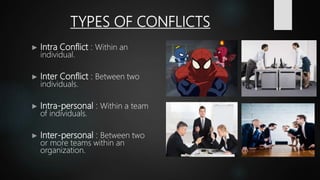
TYPES OF CONFLICTS
► Intra Conflict : Within an
individual.
► Inter Conflict : Between two
individuals.
► Intra-personal : Within a team
of individuals.
► Inter-personal : Between two
or more teams within an
organization.
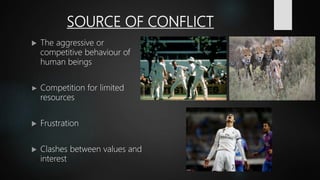
SOURCE OF CONFLICT
 The aggressive or
competitive behaviour of
human beings
► Competition for limited
resources
 Frustration
 Clashes between values and
interest
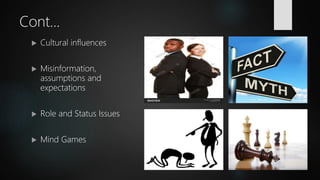
Cont...
 Cultural influences
 Misinformation,
assumptions and
expectations
 Role and Status Issues
 Mind Games
COMPONENTS OF
CONFLICT
► Good Consequences of Conflict
► Bad Consequences of Conflict
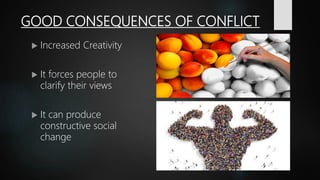
GOOD CONSEQUENCES OF CONFLICT
 Increased Creativity
 It forces people to
clarify their views
 It can produce
constructive social
change
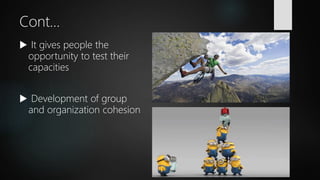
Cont…
 It gives people the
opportunity to test their
capacities
 Development of group
and organization cohesion
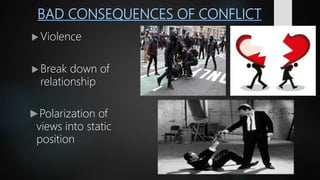
BAD CONSEQUENCES OF CONFLICT
 Violence
 Break down of
relationship
►Polarization of
views into static
position
Cont…
 A breakdown of
collaborative ventures
 Destruction of
Communication
FUNCTIONAL & DYSFUNCTIONAL
CONFLICT
Functional conflict: works toward the
goals of an organization or group
Dysfunctional conflict: blocks an
organization or group from reaching its
goals
Functional Conflict
 Mutually Beneficial
 Increase information &
ideas
 Encourages innovative
thinking
 Unshackles different
points of view
 Reduce Inactivity
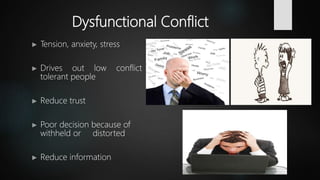
Dysfunctional Conflict
► Tension, anxiety, stress
► Drives out low conflict
tolerant people
► Reduce trust
► Poor decision because of
withheld or distorted
► Reduce information
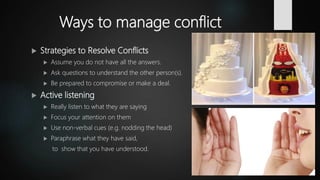
Ways to manage conflict
 Strategies to Resolve Conflicts
 Assume you do not have all the answers.
 Ask questions to understand the other person(s).
 Be prepared to compromise or make a deal.
 Active listening
 Really listen to what they are saying
 Focus your attention on them
 Use non-verbal cues (e.g. nodding the head)
 Paraphrase what they have said,
to show that you have understood.
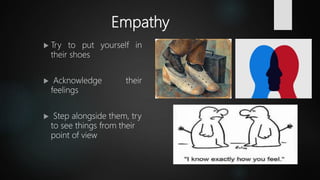
Empathy
 Try to put yourself in
their shoes
 Acknowledge their
feelings
 Step alongside them, try
to see things from their
point of view
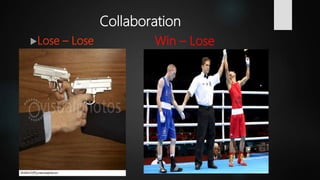
Collaboration
Lose – Lose Win – Lose
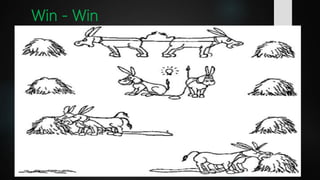
Win - Win
CONCLUSION
► Individuals should understand their own personal
triggers to better deal with conflict situations in the
workplace.

► Group members should think about other group
members early on to identify privately those
individuals and behaviors that may push their
buttons.
THANK…
YOU…!

CONFLICT MANAGEMENT

  • 1.
  • 2.
    CONTENTS  Introduction  Viewsof conflict  Types of conflict  Source of conflict  Components of Conflict  Functional & dysfunctional conflict  Ways to manage conflict  Conclusion
  • 3.
    INTRODUCTION CONFLICT “AN ACTIVE DISAGREEMENTBETWEEN PEOPLE WITH OPPOSING OPINIONS OR PRINCIPLES” CONFLICT MAMAGEMENT “THE OPPORTUNITY TO IMPROVE SITUATIONS AND STRENGTHEN RELATIONSHIPS”
  • 4.
    VIEWS OF CONFLICT Traditional view : Conflict is harmful and must be avoided.  Human Relations view : Conflict is natural and inevitable outcome in any group and need not to be negative.  Interactionist View : It encourages conflicts and take as innovative and creative.
  • 5.
    TYPES OF CONFLICTS ►Intra Conflict : Within an individual. ► Inter Conflict : Between two individuals. ► Intra-personal : Within a team of individuals. ► Inter-personal : Between two or more teams within an organization.
  • 7.
    SOURCE OF CONFLICT The aggressive or competitive behaviour of human beings ► Competition for limited resources  Frustration  Clashes between values and interest
  • 8.
    Cont...  Cultural influences Misinformation, assumptions and expectations  Role and Status Issues  Mind Games
  • 9.
    COMPONENTS OF CONFLICT ► GoodConsequences of Conflict ► Bad Consequences of Conflict
  • 10.
    GOOD CONSEQUENCES OFCONFLICT  Increased Creativity  It forces people to clarify their views  It can produce constructive social change
  • 11.
    Cont…  It givespeople the opportunity to test their capacities  Development of group and organization cohesion
  • 12.
    BAD CONSEQUENCES OFCONFLICT  Violence  Break down of relationship ►Polarization of views into static position
  • 13.
    Cont…  A breakdownof collaborative ventures  Destruction of Communication
  • 14.
    FUNCTIONAL & DYSFUNCTIONAL CONFLICT Functionalconflict: works toward the goals of an organization or group Dysfunctional conflict: blocks an organization or group from reaching its goals
  • 15.
    Functional Conflict  MutuallyBeneficial  Increase information & ideas  Encourages innovative thinking  Unshackles different points of view  Reduce Inactivity
  • 16.
    Dysfunctional Conflict ► Tension,anxiety, stress ► Drives out low conflict tolerant people ► Reduce trust ► Poor decision because of withheld or distorted ► Reduce information
  • 17.
    Ways to manageconflict  Strategies to Resolve Conflicts  Assume you do not have all the answers.  Ask questions to understand the other person(s).  Be prepared to compromise or make a deal.  Active listening  Really listen to what they are saying  Focus your attention on them  Use non-verbal cues (e.g. nodding the head)  Paraphrase what they have said, to show that you have understood.
  • 18.
    Empathy  Try toput yourself in their shoes  Acknowledge their feelings  Step alongside them, try to see things from their point of view
  • 19.
  • 20.
  • 21.
    CONCLUSION ► Individuals shouldunderstand their own personal triggers to better deal with conflict situations in the workplace. ► Group members should think about other group members early on to identify privately those individuals and behaviors that may push their buttons.
  • 22.