CONFLICT MANAGEMENT
Some facts:
 Research shows that 60-80% of all
  difficulties in organizations stem from
  strained relationships between employees
 Ernst & Young reports that the cost of
  losing and replacing an employee may be
  as high as 150% of the departing
  employee’s annual salary.
 Fortune 500 Senior Executives spend
  20% of their time in litigation activities.
   It is estimated that more than 65% of
    performance problems result from strained
    relationships between employees -- not from
    deficits in individual employees' skill or
    motivation.

   It costs 1.5 times the position salary to replace
    the employee in it (Drake Beam Morin, 2000).

   two-thirds of managers spend more than 10% of
    their time handling workplace conflict and 44%
    of managers spend more than 20% of their time
    in conflict-related issues.
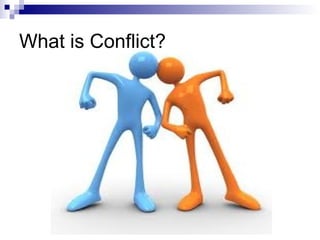
What is Conflict?
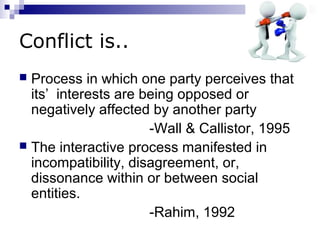
Conflict is..
 Process in which one party perceives that
  its’ interests are being opposed or
  negatively affected by another party
                      -Wall & Callistor, 1995
 The interactive process manifested in
  incompatibility, disagreement, or,
  dissonance within or between social
  entities.
                      -Rahim, 1992
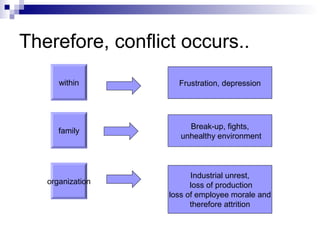
Therefore, conflict occurs..
      within        Frustration, depression


                       Break-up, fights,
      family
                     unhealthy environment


                        Industrial unrest,
   organization         loss of production
                  loss of employee morale and
                        therefore attrition
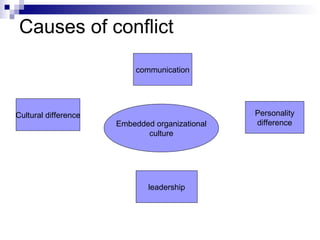
Causes of conflict

                           communication


Cultural difference                             Personality
                      Embedded organizational   difference
                             culture


                              leadership
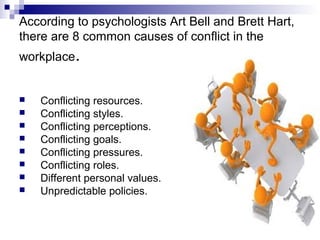
According to psychologists Art Bell and Brett Hart,
there are 8 common causes of conflict in the
workplace.


   Conflicting resources.
   Conflicting styles.
   Conflicting perceptions.
   Conflicting goals.
   Conflicting pressures.
   Conflicting roles.
   Different personal values.
   Unpredictable policies.
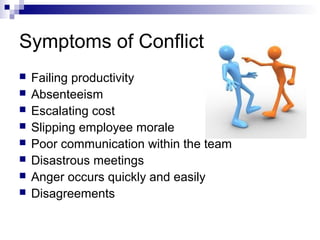
Symptoms of Conflict
   Failing productivity
   Absenteeism
   Escalating cost
   Slipping employee morale
   Poor communication within the team
   Disastrous meetings
   Anger occurs quickly and easily
   Disagreements
Conflict Management Strategies
There is a menu of strategies we can
choose from when in conflict situations:

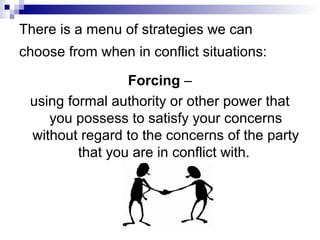
                 Forcing –
 using formal authority or other power that
    you possess to satisfy your concerns
 without regard to the concerns of the party
         that you are in conflict with.
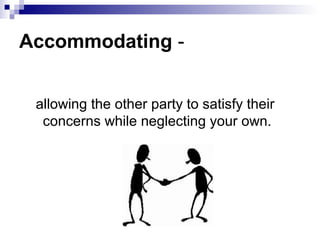
Accommodating -


 allowing the other party to satisfy their
  concerns while neglecting your own.
Avoiding
not paying attention to the conflict and not
      taking any action to resolve it.
Compromising
attempting to resolve a conflict by identifying
    a solution that is partially satisfactory to
  both parties, but completely satisfactory to
                     neither.
Collaborating
   cooperating with the other party to
 understand their concerns and expressing
  your own concerns in an effort to find a
   mutually and completely satisfactory
            solution (win-win).
Thank You!!!

Conflict management

  • 1.
  • 2.
    Some facts:  Researchshows that 60-80% of all difficulties in organizations stem from strained relationships between employees  Ernst & Young reports that the cost of losing and replacing an employee may be as high as 150% of the departing employee’s annual salary.  Fortune 500 Senior Executives spend 20% of their time in litigation activities.
  • 3.
    It is estimated that more than 65% of performance problems result from strained relationships between employees -- not from deficits in individual employees' skill or motivation.  It costs 1.5 times the position salary to replace the employee in it (Drake Beam Morin, 2000).  two-thirds of managers spend more than 10% of their time handling workplace conflict and 44% of managers spend more than 20% of their time in conflict-related issues.
  • 4.
  • 5.
    Conflict is..  Processin which one party perceives that its’ interests are being opposed or negatively affected by another party -Wall & Callistor, 1995  The interactive process manifested in incompatibility, disagreement, or, dissonance within or between social entities. -Rahim, 1992
  • 6.
    Therefore, conflict occurs.. within Frustration, depression Break-up, fights, family unhealthy environment Industrial unrest, organization loss of production loss of employee morale and therefore attrition
  • 7.
    Causes of conflict communication Cultural difference Personality Embedded organizational difference culture leadership
  • 8.
    According to psychologistsArt Bell and Brett Hart, there are 8 common causes of conflict in the workplace.  Conflicting resources.  Conflicting styles.  Conflicting perceptions.  Conflicting goals.  Conflicting pressures.  Conflicting roles.  Different personal values.  Unpredictable policies.
  • 9.
    Symptoms of Conflict  Failing productivity  Absenteeism  Escalating cost  Slipping employee morale  Poor communication within the team  Disastrous meetings  Anger occurs quickly and easily  Disagreements
  • 11.
  • 12.
    There is amenu of strategies we can choose from when in conflict situations: Forcing – using formal authority or other power that you possess to satisfy your concerns without regard to the concerns of the party that you are in conflict with.
  • 13.
    Accommodating - allowingthe other party to satisfy their concerns while neglecting your own.
  • 14.
    Avoiding not paying attentionto the conflict and not taking any action to resolve it.
  • 15.
    Compromising attempting to resolvea conflict by identifying a solution that is partially satisfactory to both parties, but completely satisfactory to neither.
  • 16.
    Collaborating cooperating with the other party to understand their concerns and expressing your own concerns in an effort to find a mutually and completely satisfactory solution (win-win).
  • 18.