



Leading Behaviour 4 Learning
                     Nick Burnett
                           i-for-k
Teaching Behaviour?

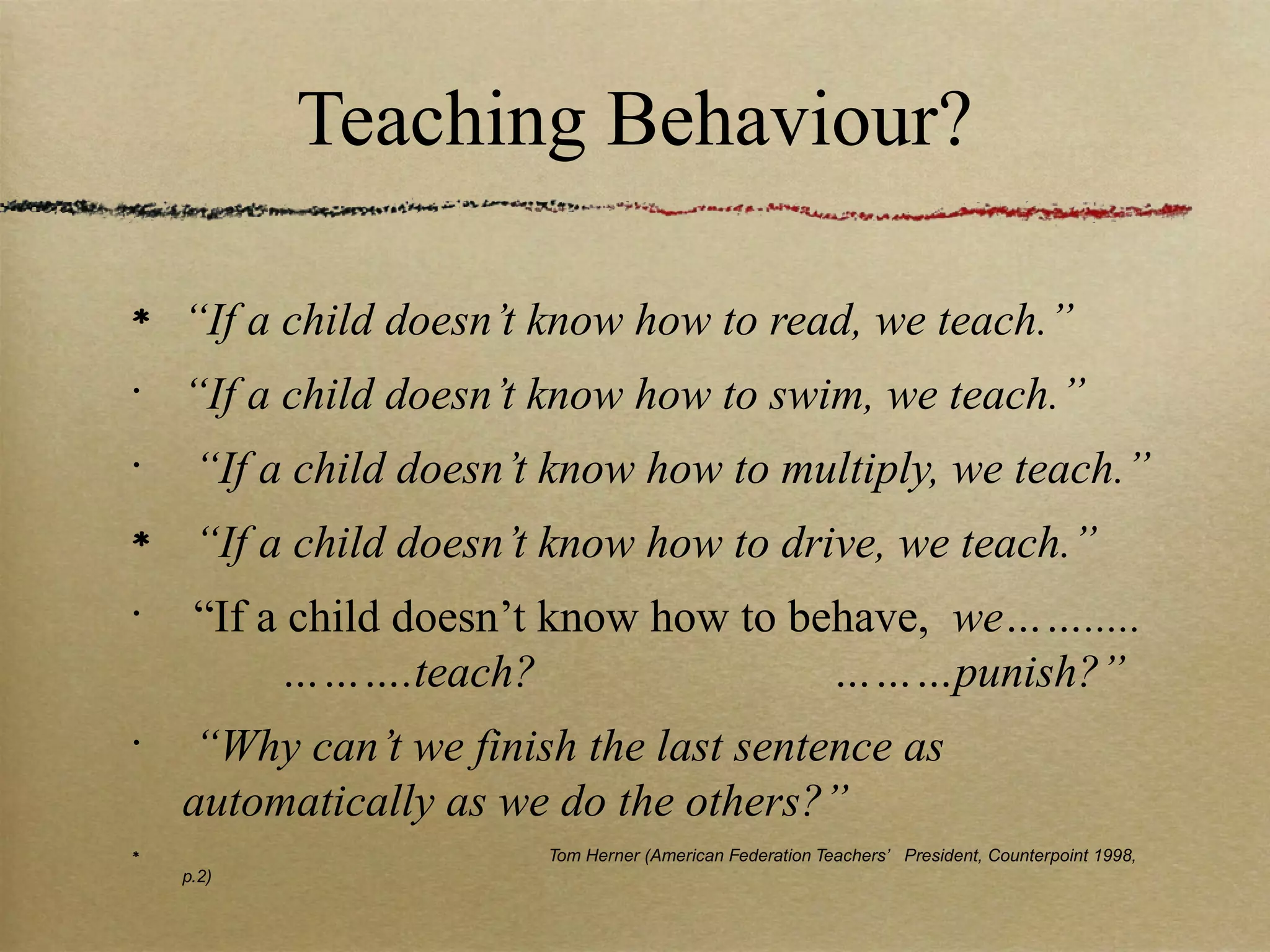
    “If a child doesn’t know how to read, we teach.”
•
    “If a child doesn’t know how to swim, we teach.”
•
     “If a child doesn’t know how to multiply, we teach.”
     “If a child doesn’t know how to drive, we teach.”
•
     “If a child doesn’t know how to behave, we…….....
          ……….teach?                   ………punish?”
•
    “Why can’t we finish the last sentence as
    automatically as we do the others?”
                        Tom Herner (American Federation Teachers’ President, Counterpoint 1998,
    p.2)
Leading Behaviour 4 Learning
    Understanding Context
    Physical Environment
•
    Structures and Systems
•
    Leadership Behaviour
    Support
•
    Cultural change
•
    Sustainability
•
    Imperatives
•
    NCSL and University of Manchester 2004
Has behaviour got worse?
Understanding Context

Do leaders collect and engage with evidence
in order to develop a deeper understanding
of the school?
Is use made of various forms of qualitative
data in order to probe behind patterns
suggested by statistical evidence?
Do staff listen to the voice of students?
Is use made of evidence about external
factors that impact on the school?
Understanding Context

Evidence
  Hard
  Soft
Analysis
  Use of software
Whole School Approaches
Models to review current practice
Understanding Context

Use of software
  EarlyMark via i-for-k web-site
Whole School Approaches
  Team-Teach
  PBIS
  Assertive Discipline
Models to review current practice
EBS Self-Assessment Survey


School wide systems
Non-classroom settings systems
Classroom setting systems
Individual Student systems
  Adapted from EBS Self-Assessment Survey version 2.0 August 2003 ©2000 Sugai, Horner &
  Todd, Educational and Community Supports University of Oregon
Reducing Risk and Restraint
Employer Strategy
Policy
Critical Friends
Risk Assessment
Incident Records
Positive Handling Plan
Complaint, concern and reflection
Staff training
   Team-Teach Australia
Behaviour 4 Learning


Whole school issues
Out of class behaviour
Multidisciplinary working
  www.behaviour4learning.ac.uk
Physical Environment
To what extent is improvement and
continued upkeep of the school's physical
environment a priority?
Have there been recent improvements to
school buildings?
Are efforts made to create a sense of
personal identity towards the school?
How is the school regarded in the local
community?
Structures and Systems

Are there clear policies and procedures
regard to attendance, behaviour, the
management of crisis incidents?
Is there continuity of policy practice in
these areas?
In what ways do the senior management
team monitor teaching and learning in
the school?
Leading a challenging school
Leadership Behaviour
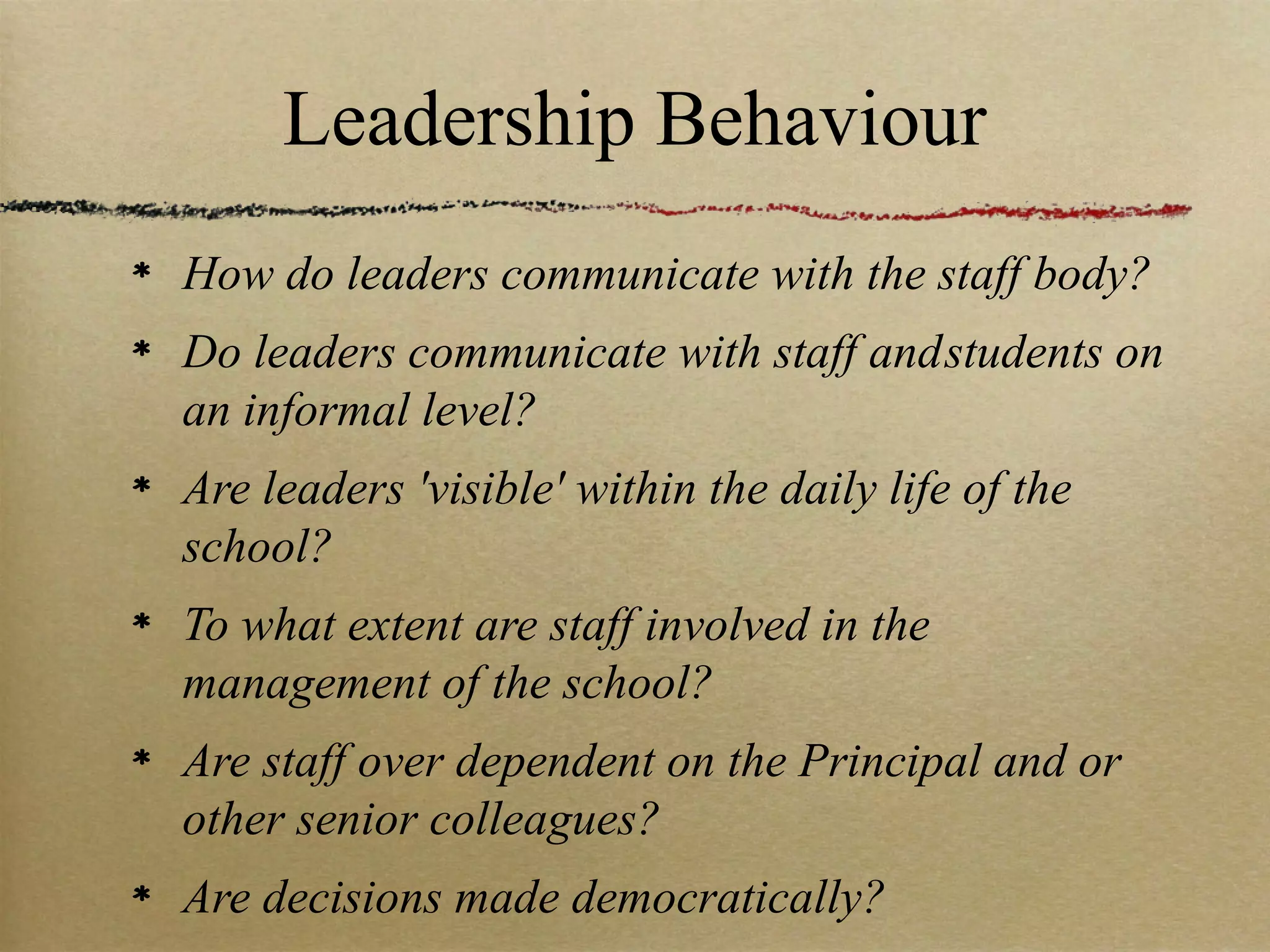
How do leaders communicate with the staff body?
Do leaders communicate with staff and students on
an informal level?
Are leaders 'visible' within the daily life of the
school?
To what extent are staff involved in the
management of the school?
Are staff over dependent on the Principal and or
other senior colleagues?
Are decisions made democratically?
Supporting Staff to
 Support Students
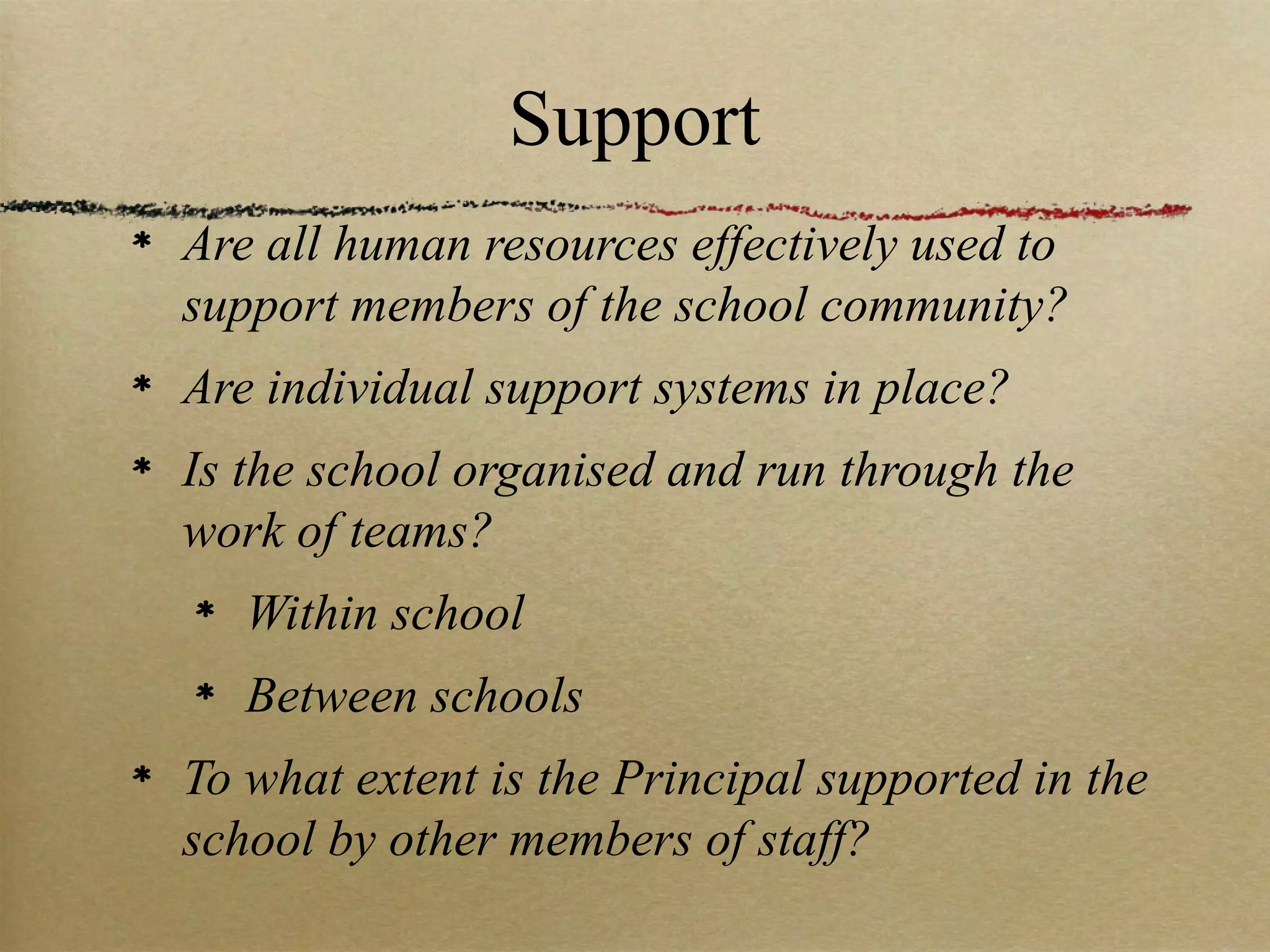
Support
Are all human resources effectively used to
support members of the school community?
Are individual support systems in place?
Is the school organised and run through the
work of teams?
   Within school
   Between schools
To what extent is the Principal supported in the
school by other members of staff?
Support
Careless Cultures
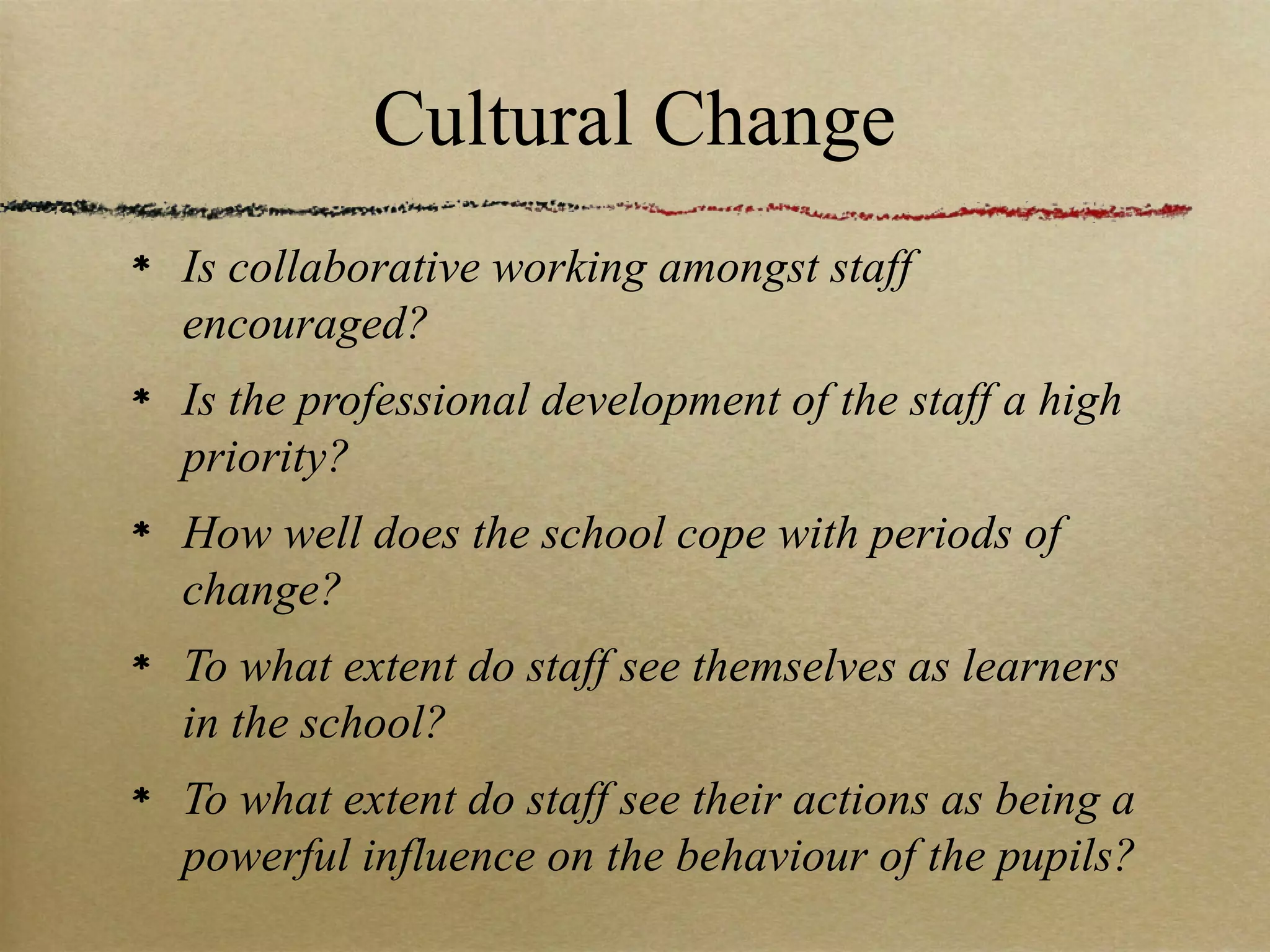
Cultural Change
Is collaborative working amongst staff
encouraged?
Is the professional development of the staff a high
priority?
How well does the school cope with periods of
change?
To what extent do staff see themselves as learners
in the school?
To what extent do staff see their actions as being a
powerful influence on the behaviour of the pupils?
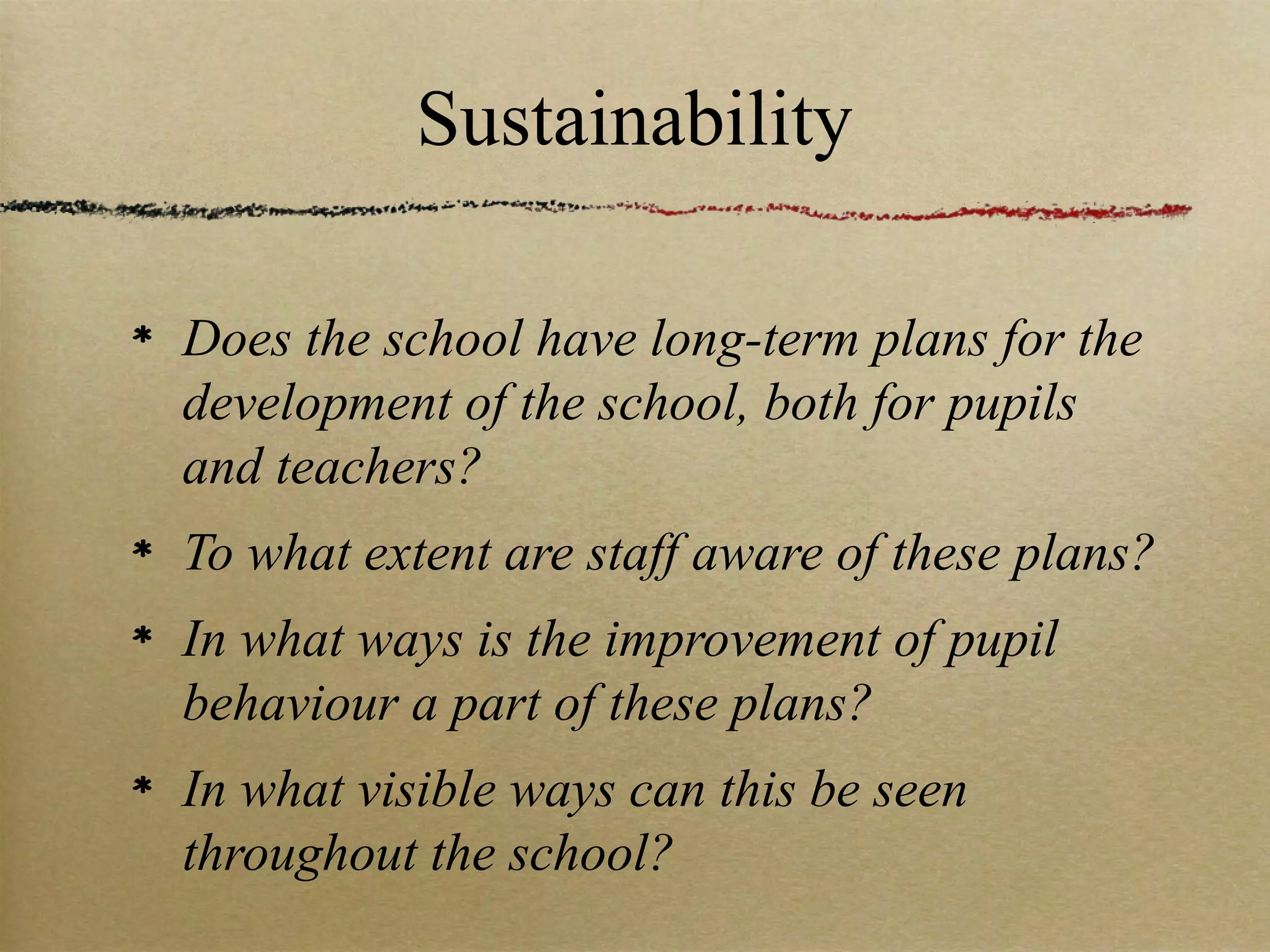
Sustainability

Does the school have long-term plans for the
development of the school, both for pupils
and teachers?
To what extent are staff aware of these plans?
In what ways is the improvement of pupil
behaviour a part of these plans?
In what visible ways can this be seen
throughout the school?
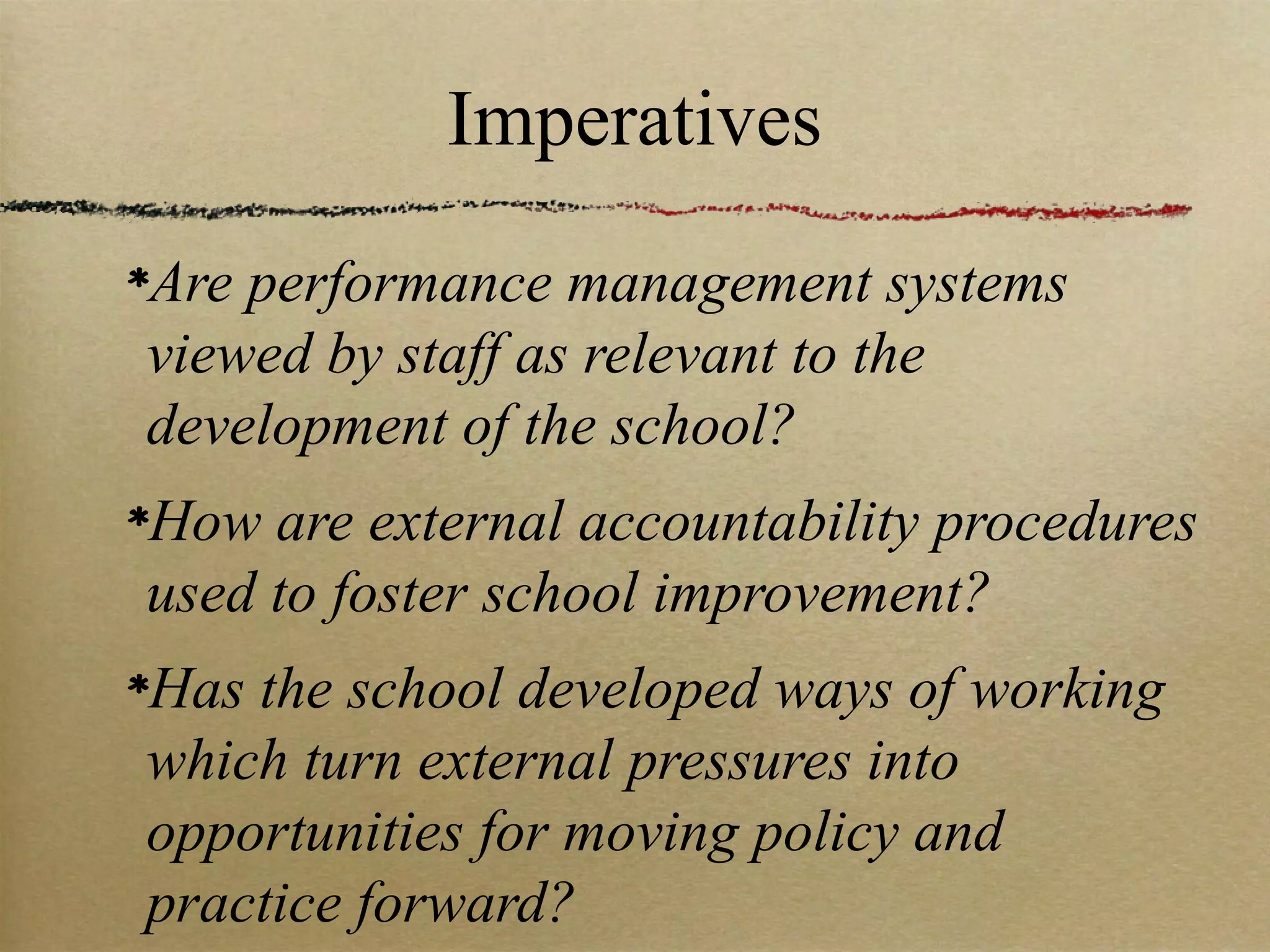
Imperatives
Are performance management systems
viewed by staff as relevant to the
development of the school?
How are external accountability procedures
used to foster school improvement?
Has the school developed ways of working
which turn external pressures into
opportunities for moving policy and
practice forward?
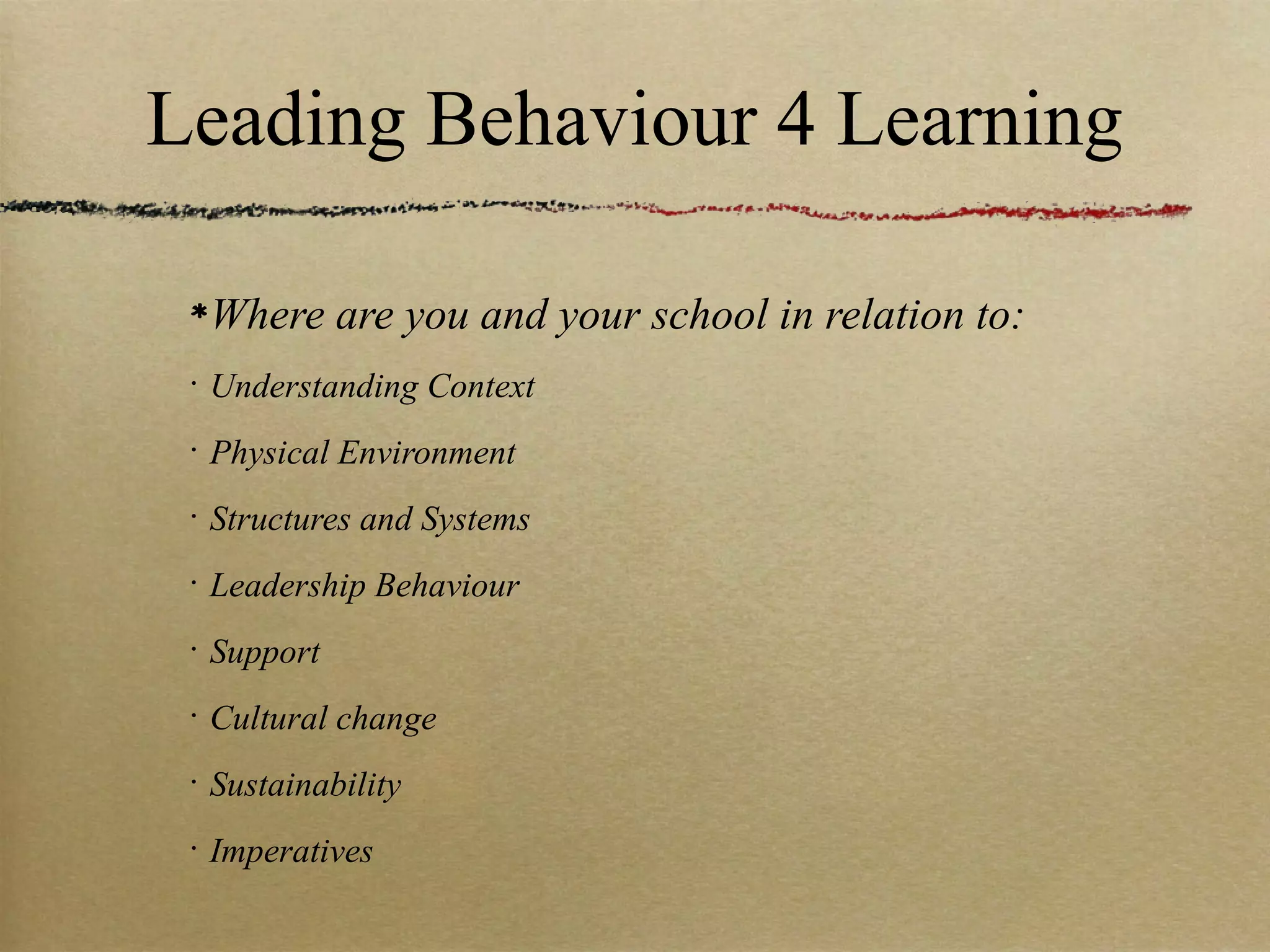
Leading Behaviour 4 Learning

     Where are you and your school in relation to:
 •
     Understanding Context
 •
     Physical Environment
 •
     Structures and Systems
 •
     Leadership Behaviour
 •
     Support
 •
     Cultural change
 •
     Sustainability
 •
     Imperatives
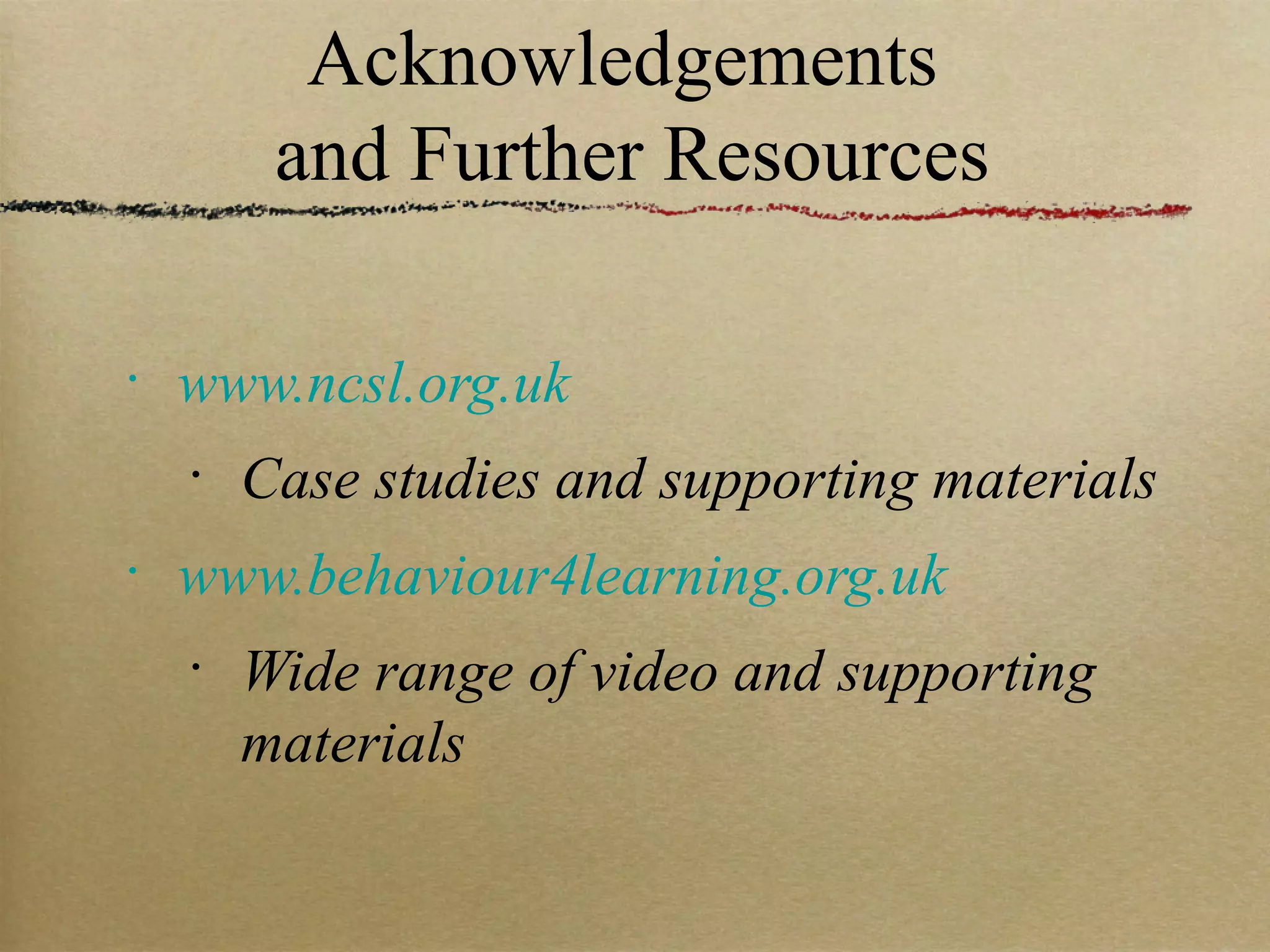
Acknowledgements
         and Further Resources

•
    www.ncsl.org.uk
    •
        Case studies and supporting materials
•
    www.behaviour4learning.org.uk
    •
        Wide range of video and supporting
        materials
Contact Details and More Info


Nick Burnett
www.i-for-k.com.au
nick@i-for-k.com.au
0405 411871

Leading 4 behaviour 4 learning

  • 1.
    Leading Behaviour 4Learning Nick Burnett i-for-k
  • 2.
    Teaching Behaviour? “If a child doesn’t know how to read, we teach.” • “If a child doesn’t know how to swim, we teach.” • “If a child doesn’t know how to multiply, we teach.” “If a child doesn’t know how to drive, we teach.” • “If a child doesn’t know how to behave, we……..... ……….teach? ………punish?” • “Why can’t we finish the last sentence as automatically as we do the others?” Tom Herner (American Federation Teachers’ President, Counterpoint 1998, p.2)
  • 3.
    Leading Behaviour 4Learning Understanding Context Physical Environment • Structures and Systems • Leadership Behaviour Support • Cultural change • Sustainability • Imperatives • NCSL and University of Manchester 2004
  • 4.
  • 5.
    Understanding Context Do leaderscollect and engage with evidence in order to develop a deeper understanding of the school? Is use made of various forms of qualitative data in order to probe behind patterns suggested by statistical evidence? Do staff listen to the voice of students? Is use made of evidence about external factors that impact on the school?
  • 6.
    Understanding Context Evidence Hard Soft Analysis Use of software Whole School Approaches Models to review current practice
  • 7.
    Understanding Context Use ofsoftware EarlyMark via i-for-k web-site Whole School Approaches Team-Teach PBIS Assertive Discipline Models to review current practice
  • 8.
    EBS Self-Assessment Survey Schoolwide systems Non-classroom settings systems Classroom setting systems Individual Student systems Adapted from EBS Self-Assessment Survey version 2.0 August 2003 ©2000 Sugai, Horner & Todd, Educational and Community Supports University of Oregon
  • 9.
    Reducing Risk andRestraint Employer Strategy Policy Critical Friends Risk Assessment Incident Records Positive Handling Plan Complaint, concern and reflection Staff training Team-Teach Australia
  • 10.
    Behaviour 4 Learning Wholeschool issues Out of class behaviour Multidisciplinary working www.behaviour4learning.ac.uk
  • 11.
    Physical Environment To whatextent is improvement and continued upkeep of the school's physical environment a priority? Have there been recent improvements to school buildings? Are efforts made to create a sense of personal identity towards the school? How is the school regarded in the local community?
  • 12.
    Structures and Systems Arethere clear policies and procedures regard to attendance, behaviour, the management of crisis incidents? Is there continuity of policy practice in these areas? In what ways do the senior management team monitor teaching and learning in the school?
  • 13.
  • 14.
    Leadership Behaviour How doleaders communicate with the staff body? Do leaders communicate with staff and students on an informal level? Are leaders 'visible' within the daily life of the school? To what extent are staff involved in the management of the school? Are staff over dependent on the Principal and or other senior colleagues? Are decisions made democratically?
  • 15.
    Supporting Staff to Support Students
  • 16.
    Support Are all humanresources effectively used to support members of the school community? Are individual support systems in place? Is the school organised and run through the work of teams? Within school Between schools To what extent is the Principal supported in the school by other members of staff?
  • 17.
  • 18.
  • 19.
    Cultural Change Is collaborativeworking amongst staff encouraged? Is the professional development of the staff a high priority? How well does the school cope with periods of change? To what extent do staff see themselves as learners in the school? To what extent do staff see their actions as being a powerful influence on the behaviour of the pupils?
  • 20.
    Sustainability Does the schoolhave long-term plans for the development of the school, both for pupils and teachers? To what extent are staff aware of these plans? In what ways is the improvement of pupil behaviour a part of these plans? In what visible ways can this be seen throughout the school?
  • 21.
    Imperatives Are performance managementsystems viewed by staff as relevant to the development of the school? How are external accountability procedures used to foster school improvement? Has the school developed ways of working which turn external pressures into opportunities for moving policy and practice forward?
  • 22.
    Leading Behaviour 4Learning Where are you and your school in relation to: • Understanding Context • Physical Environment • Structures and Systems • Leadership Behaviour • Support • Cultural change • Sustainability • Imperatives
  • 23.
    Acknowledgements and Further Resources • www.ncsl.org.uk • Case studies and supporting materials • www.behaviour4learning.org.uk • Wide range of video and supporting materials
  • 24.
    Contact Details andMore Info Nick Burnett www.i-for-k.com.au nick@i-for-k.com.au 0405 411871