Conflict Resolution Training
          October 14, 2010
Define Conflict-when someone‟s behavior is
 bothering you or offends you.
Conflict resolution- is teaching people new
 ways to work through and resolve disputes
 without escalating the situation.
The real causes of conflict-system problems,
 ethical issues, differing work habits and
 HURT feelings.
If I am not part of the problem, there is no
  solution…
                              Maravelas, 2005

   Gossiping, enhancing your status, blaming
    others creating cliques…
   The
    avoider, complainer, pretender, bully, shout
    and displace?
   Self -Assessment
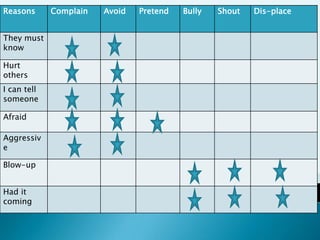
Reasons      Complain   Avoid   Pretend   Bully   Shout   Dis-place


They must
know

Hurt
others
I can tell
someone

Afraid

Aggressiv
e

Blow-up


Had it
coming
Why don’t people resolve their conflicts
   You think the other person knows better
   Fear, still need to work together, it may be the boss
   You allowed it- you deserve it
   Afraid of what may happen
   Afraid of becoming aggressive


The Reality- You are unskilled at Conflict Resolution
   Instead of attacking the competence and
    character of someone – seek a dialogue…

   Benefits- physical health, effectiveness,
    relationships, productivity and personal
    happiness.
Three ways we deal with
               conflict
1.   Ignore
2.   Aggressive
3.   Appropriately- Assertive
Key Messages about Conflict
   Conflict is neither good nor bad
   Conflict is inevitable
   Conflict does not have to result in winners and
    losers
   In conflict both parties tend to believe that their
    opinion is fact
   Too often both parties see themselves as
    innocent victims who represent the side of truth
    and fairness
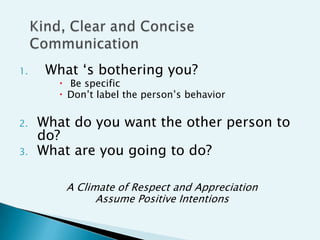
1.    What „s bothering you?
         Be specific
         Don‟t label the person‟s behavior

2.   What do you want the other person to
     do?
3.   What are you going to do?

         A Climate of Respect and Appreciation
               Assume Positive Intentions
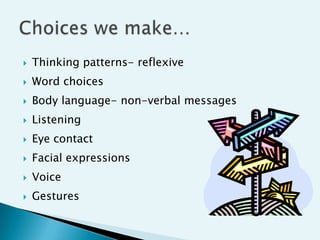
   Thinking patterns- reflexive
   Word choices
   Body language- non-verbal messages
   Listening
   Eye contact
   Facial expressions
   Voice
   Gestures
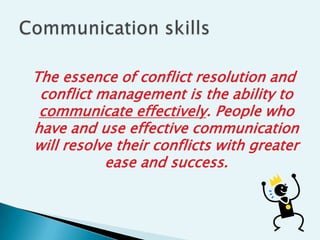
The essence of conflict resolution and
 conflict management is the ability to
 communicate effectively. People who
have and use effective communication
will resolve their conflicts with greater
           ease and success.
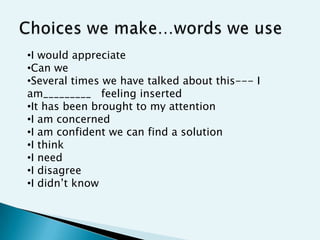
•I would appreciate
•Can we
•Several times we have talked about this--- I
am_________ feeling inserted
•It has been brought to my attention
•I am concerned
•I am confident we can find a solution
•I think
•I need
•I disagree
•I didn‟t know
   Rude tone of voice
   Having people ask you to do something “
    right now”
   Employees respond negatively
   Too busy

              Let‟s break into group
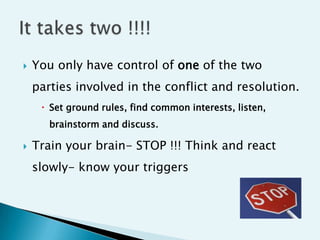
   You only have control of one of the two
    parties involved in the conflict and resolution.
      Set ground rules, find common interests, listen,
       brainstorm and discuss.

   Train your brain- STOP !!! Think and react
    slowly- know your triggers
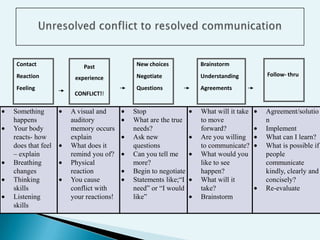
Contact             Past           New choices         Brainstorm
 Reaction                           Negotiate           Understanding       Follow- thru
                  experience
 Feeling                            Questions           Agreements
                  CONFLICT!!

Something        A visual and      Stop                 What will it take   Agreement/solutio
happens          auditory          What are the true    to move             n
Your body        memory occurs     needs?               forward?            Implement
reacts- how      explain           Ask new              Are you willing     What can I learn?
does that feel   What does it      questions            to communicate?     What is possible if
– explain        remind you of?    Can you tell me      What would you      people
Breathing        Physical          more?                like to see         communicate
changes          reaction          Begin to negotiate   happen?             kindly, clearly and
Thinking         You cause         Statements like;“I   What will it        concisely?
skills           conflict with     need” or “I would    take?               Re-evaluate
Listening        your reactions!   like”                Brainstorm
skills
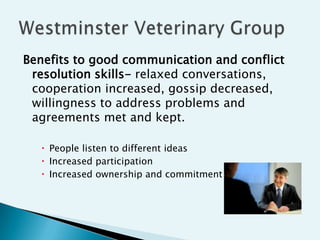
Benefits to good communication and conflict
 resolution skills- relaxed conversations,
 cooperation increased, gossip decreased,
 willingness to address problems and
 agreements met and kept.

    People listen to different ideas
    Increased participation
    Increased ownership and commitment
 Gain awareness of how you present
  yourself- your confrontation style
 Assume positive intentions
 Have a confrontation – when
  necessary – be kind, clear and concise
 Learn how to reduce conflict in your
  life- use humor correctly, be polite, be
  considerate, don‟t interrupt, be
  sincere, eye contact,
Westminster’s Communication Contract


The real causes of conflict-system problems, ethical
 issues, differing work habits and HURT feelings.


               Practice-Practice-Practice

Westminster veterinary group conflict resolution

  • 1.
  • 2.
    Define Conflict-when someone‟sbehavior is bothering you or offends you. Conflict resolution- is teaching people new ways to work through and resolve disputes without escalating the situation. The real causes of conflict-system problems, ethical issues, differing work habits and HURT feelings.
  • 3.
    If I amnot part of the problem, there is no solution… Maravelas, 2005  Gossiping, enhancing your status, blaming others creating cliques…  The avoider, complainer, pretender, bully, shout and displace?  Self -Assessment
  • 4.
    Reasons Complain Avoid Pretend Bully Shout Dis-place They must know Hurt others I can tell someone Afraid Aggressiv e Blow-up Had it coming
  • 5.
    Why don’t peopleresolve their conflicts  You think the other person knows better  Fear, still need to work together, it may be the boss  You allowed it- you deserve it  Afraid of what may happen  Afraid of becoming aggressive The Reality- You are unskilled at Conflict Resolution
  • 6.
    Instead of attacking the competence and character of someone – seek a dialogue…  Benefits- physical health, effectiveness, relationships, productivity and personal happiness.
  • 7.
    Three ways wedeal with conflict 1. Ignore 2. Aggressive 3. Appropriately- Assertive
  • 8.
    Key Messages aboutConflict  Conflict is neither good nor bad  Conflict is inevitable  Conflict does not have to result in winners and losers  In conflict both parties tend to believe that their opinion is fact  Too often both parties see themselves as innocent victims who represent the side of truth and fairness
  • 9.
    1. What „s bothering you?  Be specific  Don‟t label the person‟s behavior 2. What do you want the other person to do? 3. What are you going to do? A Climate of Respect and Appreciation Assume Positive Intentions
  • 10.
    Thinking patterns- reflexive  Word choices  Body language- non-verbal messages  Listening  Eye contact  Facial expressions  Voice  Gestures
  • 11.
    The essence ofconflict resolution and conflict management is the ability to communicate effectively. People who have and use effective communication will resolve their conflicts with greater ease and success.
  • 12.
    •I would appreciate •Canwe •Several times we have talked about this--- I am_________ feeling inserted •It has been brought to my attention •I am concerned •I am confident we can find a solution •I think •I need •I disagree •I didn‟t know
  • 13.
    Rude tone of voice  Having people ask you to do something “ right now”  Employees respond negatively  Too busy Let‟s break into group
  • 14.
    You only have control of one of the two parties involved in the conflict and resolution.  Set ground rules, find common interests, listen, brainstorm and discuss.  Train your brain- STOP !!! Think and react slowly- know your triggers
  • 15.
    Contact Past New choices Brainstorm Reaction Negotiate Understanding Follow- thru experience Feeling Questions Agreements CONFLICT!! Something A visual and Stop What will it take Agreement/solutio happens auditory What are the true to move n Your body memory occurs needs? forward? Implement reacts- how explain Ask new Are you willing What can I learn? does that feel What does it questions to communicate? What is possible if – explain remind you of? Can you tell me What would you people Breathing Physical more? like to see communicate changes reaction Begin to negotiate happen? kindly, clearly and Thinking You cause Statements like;“I What will it concisely? skills conflict with need” or “I would take? Re-evaluate Listening your reactions! like” Brainstorm skills
  • 16.
    Benefits to goodcommunication and conflict resolution skills- relaxed conversations, cooperation increased, gossip decreased, willingness to address problems and agreements met and kept.  People listen to different ideas  Increased participation  Increased ownership and commitment
  • 17.
     Gain awarenessof how you present yourself- your confrontation style  Assume positive intentions  Have a confrontation – when necessary – be kind, clear and concise  Learn how to reduce conflict in your life- use humor correctly, be polite, be considerate, don‟t interrupt, be sincere, eye contact,
  • 18.
    Westminster’s Communication Contract Thereal causes of conflict-system problems, ethical issues, differing work habits and HURT feelings. Practice-Practice-Practice