CONFLICT MANAGEMENT
CONFLICT
Situation of disagreement;
that may be the result of different:
 Ideas
 Perspectives
 Priorities
 Preferences
 Beliefs
 Values
 Goals
CONFLICT
An unavoidable part of our Professional &
Personal lives.
Conflict happens when two or more values,
perspectives & opinions are contradictory & haven’t
been agreed.
 Opposition
 Incompatible behavior
 Antagonistic interaction
 Block another party from reaching her or his goals
Nature of CONFLICT
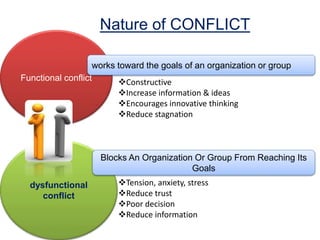
Functional conflict
works toward the goals of an organization or group
dysfunctional
conflict
Blocks An Organization Or Group From Reaching Its
Goals
Constructive
Increase information & ideas
Encourages innovative thinking
Reduce stagnation
Tension, anxiety, stress
Reduce trust
Poor decision
Reduce information
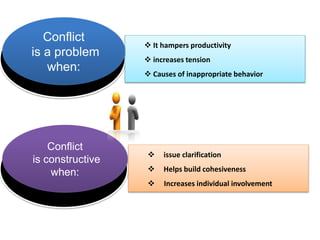
Conflict
is constructive
when:
 It hampers productivity
 increases tension
 Causes of inappropriate behavior
 issue clarification
 Helps build cohesiveness
 Increases individual involvement
Conflict
is a problem
when:
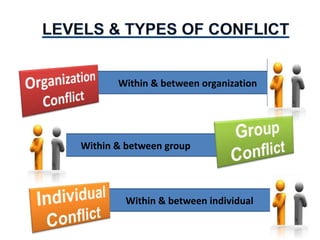
Within & between organization
Within & between group
Within & between individual
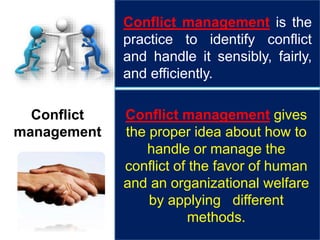
Conflict
management
Conflict management is the
practice to identify conflict
and handle it sensibly, fairly,
and efficiently.
Conflict management gives
the proper idea about how to
handle or manage the
conflict of the favor of human
and an organizational welfare
by applying different
methods.
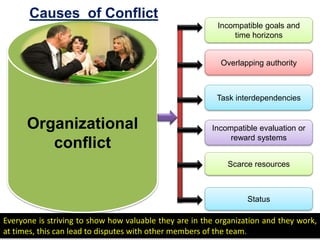
Status
Scarce resources
Incompatible evaluation or
reward systems
Task interdependencies
Overlapping authority
Incompatible goals and
time horizons
Organizational
conflict
Causes of Conflict
Everyone is striving to show how valuable they are in the organization and they work,
at times, this can lead to disputes with other members of the team.
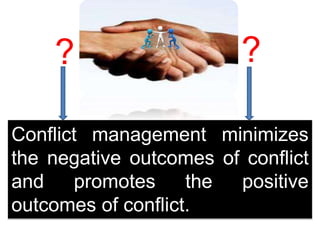
Conflict management minimizes
the negative outcomes of conflict
and promotes the positive
outcomes of conflict.
??
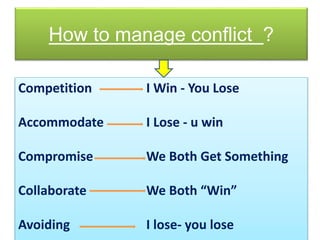
How to manage conflict ?
Competition I Win - You Lose
Accommodate I Lose - u win
Compromise We Both Get Something
Collaborate We Both “Win”
Avoiding I lose- you lose
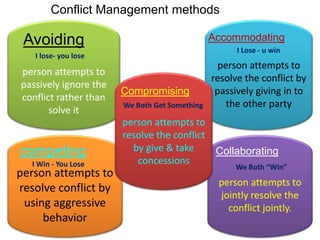
person attempts to
passively ignore the
conflict rather than
solve it
person attempts to
resolve the conflict by
passively giving in to
the other party
person attempts to
jointly resolve the
conflict jointly.
person attempts to
resolve conflict by
using aggressive
behavior
person attempts to
resolve the conflict
by give & take
concessions
competing
Avoiding Accommodating
Collaborating
Compromising
Conflict Management methods
I Win - You Lose
I Lose - u win
We Both Get Something
We Both “Win”
I lose- you lose
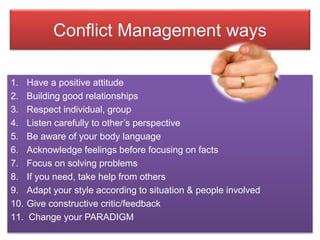
1. Have a positive attitude
2. Building good relationships
3. Respect individual, group
4. Listen carefully to other’s perspective
5. Be aware of your body language
6. Acknowledge feelings before focusing on facts
7. Focus on solving problems
8. If you need, take help from others
9. Adapt your style according to situation & people involved
10. Give constructive critic/feedback
11. Change your PARADIGM
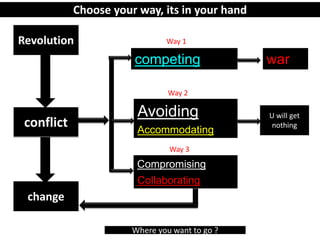
Conflict Management ways
Revolution
conflict
change
competing
Avoiding
Accommodating
Collaborating
Compromising
war
U will get
nothing
Choose your way, its in your hand
Where you want to go ?
Way 1
Way 2
Way 3
Thank you ‫ٳٳٳ‬
Go green

Conflict management

  • 1.
  • 2.
    CONFLICT Situation of disagreement; thatmay be the result of different:  Ideas  Perspectives  Priorities  Preferences  Beliefs  Values  Goals
  • 3.
    CONFLICT An unavoidable partof our Professional & Personal lives. Conflict happens when two or more values, perspectives & opinions are contradictory & haven’t been agreed.  Opposition  Incompatible behavior  Antagonistic interaction  Block another party from reaching her or his goals
  • 4.
    Nature of CONFLICT Functionalconflict works toward the goals of an organization or group dysfunctional conflict Blocks An Organization Or Group From Reaching Its Goals Constructive Increase information & ideas Encourages innovative thinking Reduce stagnation Tension, anxiety, stress Reduce trust Poor decision Reduce information
  • 5.
    Conflict is constructive when:  Ithampers productivity  increases tension  Causes of inappropriate behavior  issue clarification  Helps build cohesiveness  Increases individual involvement Conflict is a problem when:
  • 6.
    Within & betweenorganization Within & between group Within & between individual
  • 7.
    Conflict management Conflict management isthe practice to identify conflict and handle it sensibly, fairly, and efficiently. Conflict management gives the proper idea about how to handle or manage the conflict of the favor of human and an organizational welfare by applying different methods.
  • 8.
    Status Scarce resources Incompatible evaluationor reward systems Task interdependencies Overlapping authority Incompatible goals and time horizons Organizational conflict Causes of Conflict Everyone is striving to show how valuable they are in the organization and they work, at times, this can lead to disputes with other members of the team.
  • 9.
    Conflict management minimizes thenegative outcomes of conflict and promotes the positive outcomes of conflict. ??
  • 10.
    How to manageconflict ? Competition I Win - You Lose Accommodate I Lose - u win Compromise We Both Get Something Collaborate We Both “Win” Avoiding I lose- you lose
  • 11.
    person attempts to passivelyignore the conflict rather than solve it person attempts to resolve the conflict by passively giving in to the other party person attempts to jointly resolve the conflict jointly. person attempts to resolve conflict by using aggressive behavior person attempts to resolve the conflict by give & take concessions competing Avoiding Accommodating Collaborating Compromising Conflict Management methods I Win - You Lose I Lose - u win We Both Get Something We Both “Win” I lose- you lose
  • 12.
    1. Have apositive attitude 2. Building good relationships 3. Respect individual, group 4. Listen carefully to other’s perspective 5. Be aware of your body language 6. Acknowledge feelings before focusing on facts 7. Focus on solving problems 8. If you need, take help from others 9. Adapt your style according to situation & people involved 10. Give constructive critic/feedback 11. Change your PARADIGM Conflict Management ways
  • 13.
  • 14.