polyuria

  excessive or abnormally large production
  and/or passage of urine (>3 L per day in
  adults).
 Frequent urination – accompanying
  syndrome
 Diuresis – increased production and passage
  of urine
Mechanisms of polyuria

   Due to excretion of increased
    nonabsorbable solutes(such as glucose)
    – SOLUTE DIURESIS

   Due to excretion of increased
    water(from a defect in ADH production
    or renal responsiveness) – WATER
    DIURESIS
Water diuresis

   Urine output >3 L per day

   Urine is dilute (<250 mosmol/ L)

   Causes – polydipsia , central diabetes
    insipidus , nephrogenic diabetic
    insipidus
Solute diuresis

   Urine output > 3 L per day

   Urine osmolarity > 300 msmol/L

   Causes – increased glucose,mannitol or
    urea medullary cystic
    diseases,obstruction,diuretics
TYPES OF POLYURIA
I. pathological polyuria


   Polyuria caused by a disease of the
    kidney or disorder anywhere in the body
       eg. Diabetes mellitus, diabetes
    insipidus,liver failure
II. Pharmacological polyuria


   Polyuria caused by administerd fluids or
    by medication such as glucocorticoids or
    diuretics
III. Physiological poyuria
 Compensatory mechanism to increased
  fluid intake
 Cold diuresis – in hypothermia as a
  result of peripheral
  vasoconstriction,hyperglycemia and
  decresed renal tubular reabsorption
 Altitude diuresis
polydipsia
   Increase in thirst

   Often appear in conjugation with
    polyuria

   It can either be cause or effect of
    polyuria
Psychogenic polydipsia

   Also called primary polydipsia

   Patient intakes increased amount of fluid
    due to sensation of having a dry mouth

   Most commonly due to phenothiazine
    medication used in mental disorders
Diabetes insipidus
 Disorder that causes polyuria
 due to impaired urinary concentrating
  ability leading to increased free water
  clearance

 Polydipsia present
 Plasma sodium may be normal
.

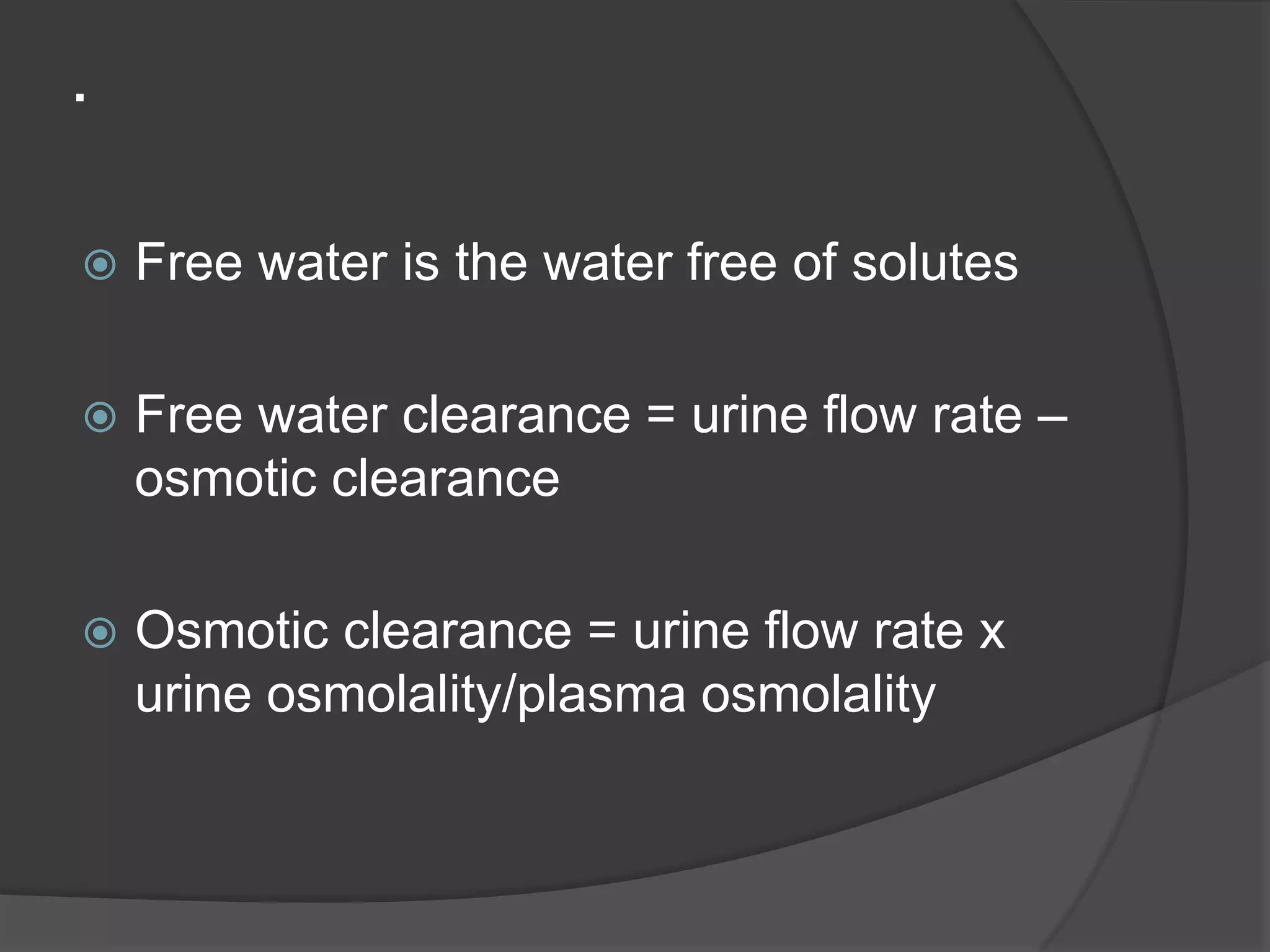
   Free water is the water free of solutes

   Free water clearance = urine flow rate –
    osmotic clearance

   Osmotic clearance = urine flow rate x
    urine osmolality/plasma osmolality
Two types of DI

   Central DI – amount of ADH produced
    by the pituitary is below normal

   Nephrogenic DI – kidney’s ability bto
    respond to ADH is defective
Polyuria

Polyuria

  • 2.
    polyuria  excessiveor abnormally large production and/or passage of urine (>3 L per day in adults).  Frequent urination – accompanying syndrome  Diuresis – increased production and passage of urine
  • 3.
    Mechanisms of polyuria  Due to excretion of increased nonabsorbable solutes(such as glucose) – SOLUTE DIURESIS  Due to excretion of increased water(from a defect in ADH production or renal responsiveness) – WATER DIURESIS
  • 4.
    Water diuresis  Urine output >3 L per day  Urine is dilute (<250 mosmol/ L)  Causes – polydipsia , central diabetes insipidus , nephrogenic diabetic insipidus
  • 5.
    Solute diuresis  Urine output > 3 L per day  Urine osmolarity > 300 msmol/L  Causes – increased glucose,mannitol or urea medullary cystic diseases,obstruction,diuretics
  • 6.
    TYPES OF POLYURIA I.pathological polyuria  Polyuria caused by a disease of the kidney or disorder anywhere in the body eg. Diabetes mellitus, diabetes insipidus,liver failure
  • 7.
    II. Pharmacological polyuria  Polyuria caused by administerd fluids or by medication such as glucocorticoids or diuretics
  • 8.
    III. Physiological poyuria Compensatory mechanism to increased fluid intake  Cold diuresis – in hypothermia as a result of peripheral vasoconstriction,hyperglycemia and decresed renal tubular reabsorption  Altitude diuresis
  • 9.
    polydipsia  Increase in thirst  Often appear in conjugation with polyuria  It can either be cause or effect of polyuria
  • 10.
    Psychogenic polydipsia  Also called primary polydipsia  Patient intakes increased amount of fluid due to sensation of having a dry mouth  Most commonly due to phenothiazine medication used in mental disorders
  • 11.
    Diabetes insipidus  Disorderthat causes polyuria  due to impaired urinary concentrating ability leading to increased free water clearance  Polydipsia present  Plasma sodium may be normal
  • 12.
    .  Free water is the water free of solutes  Free water clearance = urine flow rate – osmotic clearance  Osmotic clearance = urine flow rate x urine osmolality/plasma osmolality
  • 13.
    Two types ofDI  Central DI – amount of ADH produced by the pituitary is below normal  Nephrogenic DI – kidney’s ability bto respond to ADH is defective