GENERAL EXAMINATION AND
SYSTEMIC EXAMINATION IN A
CASE OF PALPITATION
PALPITATION
   Definition:

    „an awareness of ones heartbeat that is thought
    inappropriate to the circumstances
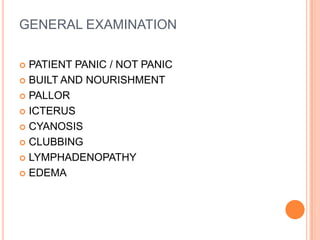
GENERAL EXAMINATION

 PATIENT PANIC / NOT PANIC
 BUILT AND NOURISHMENT

 PALLOR

 ICTERUS

 CYANOSIS

 CLUBBING

 LYMPHADENOPATHY

 EDEMA
GENERAL EXAMINATION

   VITALS
    PULSE-
         RATE- tachycardia/bradycardia
               Heart rate >120 beats/min or < 45 beats/min
               while at rest

         RHYTHM-
              Regular-
              occasional-SVT/VT
              continuous-sinus tachycardia
                          high output states

               Irregular- Atrial Fibrillation / Ectopics
               sustained and irregularly irregular /chaotic -AF
GENERAL EXAMINATION

          Intermittent and irregular/ felt as
   missed beats- Ectopics
   Volume-high/low
   character-normal/abnormal
   Condition of vessel wall-thickened/not
                              thickend
   Radiofemoral delay-present/absent
   peripheral pulsations-felt normal/not
GENERAL EXAMINATION

   BP
    Hypotension / Hypertension
SYSTEMIC EXAMINATION
 INSPECTION
 shape of precodium

 Position of apex beat

 Visible pulsations-jvp elevated/not

 Visible scars
SYSTEMIC EXAMINATION
 Palpation
 Palpation of the apcal impulse

 Left parasternal heave

 Sub xiphoid pulsations

 Palpation of the pulmonary arterial pulsation

 Thrills – palpable murmurs
SYSTEMIC EXAMINATION
 Percussion
 Identfy whether heart is enlarged or not
SYSTEMIC EXAMINATION
 Auscultation
 S1

 S2

 Ejection sounds

 murmurs
Resting ECG

• Features to check
    Sinus rhythm / arrhythmia
    PR interval
    QRS duration
    QT Intervals
    ST segment shape (LVH/Brugada)
    T waves (? Cardiomyopathy)
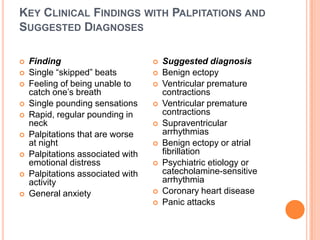
KEY CLINICAL FINDINGS WITH PALPITATIONS AND
SUGGESTED DIAGNOSES

   Finding                           Suggested diagnosis
   Single “skipped” beats            Benign ectopy
   Feeling of being unable to        Ventricular premature
    catch one‟s breath                 contractions
   Single pounding sensations        Ventricular premature
   Rapid, regular pounding in         contractions
    neck                              Supraventricular
   Palpitations that are worse        arrhythmias
    at night                          Benign ectopy or atrial
   Palpitations associated with       fibrillation
    emotional distress                Psychiatric etiology or
   Palpitations associated with       catecholamine-sensitive
    activity                           arrhythmia
   General anxiety                   Coronary heart disease
                                      Panic attacks
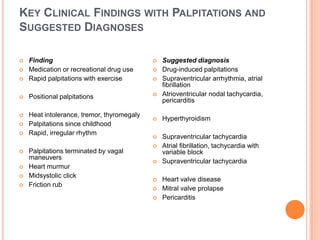
KEY CLINICAL FINDINGS WITH PALPITATIONS AND
SUGGESTED DIAGNOSES

   Finding                                    Suggested diagnosis
   Medication or recreational drug use        Drug-induced palpitations
   Rapid palpitations with exercise           Supraventricular arrhythmia, atrial
                                                fibrillation
   Positional palpitations                    Atrioventricular nodal tachycardia,
                                                pericarditis

   Heat intolerance, tremor, thyromegaly
                                               Hyperthyroidism
   Palpitations since childhood
   Rapid, irregular rhythm
                                               Supraventricular tachycardia
                                               Atrial fibrillation, tachycardia with
   Palpitations terminated by vagal            variable block
    maneuvers
                                               Supraventricular tachycardia
   Heart murmur
   Midsystolic click
                                               Heart valve disease
   Friction rub
                                               Mitral valve prolapse
                                               Pericarditis
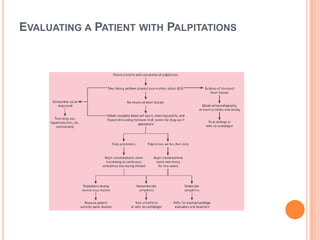
EVALUATING A PATIENT WITH PALPITATIONS
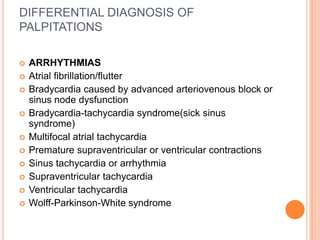
DIFFERENTIAL DIAGNOSIS OF
PALPITATIONS

   ARRHYTHMIAS
   Atrial fibrillation/flutter
   Bradycardia caused by advanced arteriovenous block or
    sinus node dysfunction
   Bradycardia-tachycardia syndrome(sick sinus
    syndrome)
   Multifocal atrial tachycardia
   Premature supraventricular or ventricular contractions
   Sinus tachycardia or arrhythmia
   Supraventricular tachycardia
   Ventricular tachycardia
   Wolff-Parkinson-White syndrome
DIFFERENTIAL DIAGNOSIS OF
PALPITATIONS


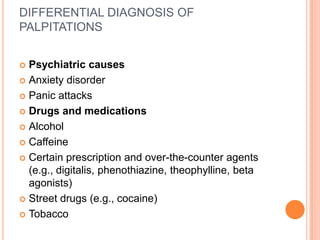
 Psychiatric causes
 Anxiety disorder

 Panic attacks

 Drugs and medications

 Alcohol

 Caffeine

 Certain prescription and over-the-counter agents
  (e.g., digitalis, phenothiazine, theophylline, beta
  agonists)
 Street drugs (e.g., cocaine)

 Tobacco
DIFFERENTIAL DIAGNOSIS OF
PALPITATIONS


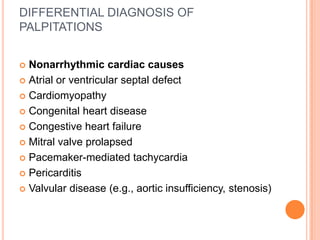
 Nonarrhythmic cardiac causes
 Atrial or ventricular septal defect

 Cardiomyopathy

 Congenital heart disease

 Congestive heart failure

 Mitral valve prolapsed

 Pacemaker-mediated tachycardia

 Pericarditis

 Valvular disease (e.g., aortic insufficiency, stenosis)
DIFFERENTIAL DIAGNOSIS OF
PALPITATIONS


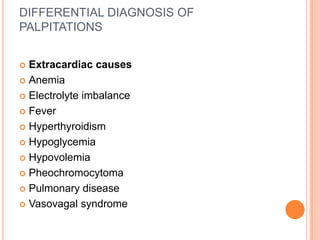
 Extracardiac causes
 Anemia

 Electrolyte imbalance

 Fever

 Hyperthyroidism

 Hypoglycemia

 Hypovolemia

 Pheochromocytoma

 Pulmonary disease

 Vasovagal syndrome

Examination in palpitation

  • 1.
    GENERAL EXAMINATION AND SYSTEMICEXAMINATION IN A CASE OF PALPITATION
  • 2.
    PALPITATION  Definition: „an awareness of ones heartbeat that is thought inappropriate to the circumstances
  • 3.
    GENERAL EXAMINATION  PATIENTPANIC / NOT PANIC  BUILT AND NOURISHMENT  PALLOR  ICTERUS  CYANOSIS  CLUBBING  LYMPHADENOPATHY  EDEMA
  • 4.
    GENERAL EXAMINATION  VITALS PULSE- RATE- tachycardia/bradycardia Heart rate >120 beats/min or < 45 beats/min while at rest RHYTHM- Regular- occasional-SVT/VT continuous-sinus tachycardia high output states Irregular- Atrial Fibrillation / Ectopics sustained and irregularly irregular /chaotic -AF
  • 5.
    GENERAL EXAMINATION Intermittent and irregular/ felt as missed beats- Ectopics Volume-high/low character-normal/abnormal Condition of vessel wall-thickened/not thickend Radiofemoral delay-present/absent peripheral pulsations-felt normal/not
  • 6.
    GENERAL EXAMINATION  BP Hypotension / Hypertension
  • 7.
    SYSTEMIC EXAMINATION  INSPECTION shape of precodium  Position of apex beat  Visible pulsations-jvp elevated/not  Visible scars
  • 8.
    SYSTEMIC EXAMINATION  Palpation Palpation of the apcal impulse  Left parasternal heave  Sub xiphoid pulsations  Palpation of the pulmonary arterial pulsation  Thrills – palpable murmurs
  • 9.
    SYSTEMIC EXAMINATION  Percussion Identfy whether heart is enlarged or not
  • 10.
    SYSTEMIC EXAMINATION  Auscultation S1  S2  Ejection sounds  murmurs
  • 11.
    Resting ECG • Featuresto check Sinus rhythm / arrhythmia PR interval QRS duration QT Intervals ST segment shape (LVH/Brugada) T waves (? Cardiomyopathy)
  • 12.
    KEY CLINICAL FINDINGSWITH PALPITATIONS AND SUGGESTED DIAGNOSES  Finding  Suggested diagnosis  Single “skipped” beats  Benign ectopy  Feeling of being unable to  Ventricular premature catch one‟s breath contractions  Single pounding sensations  Ventricular premature  Rapid, regular pounding in contractions neck  Supraventricular  Palpitations that are worse arrhythmias at night  Benign ectopy or atrial  Palpitations associated with fibrillation emotional distress  Psychiatric etiology or  Palpitations associated with catecholamine-sensitive activity arrhythmia  General anxiety  Coronary heart disease  Panic attacks
  • 13.
    KEY CLINICAL FINDINGSWITH PALPITATIONS AND SUGGESTED DIAGNOSES  Finding  Suggested diagnosis  Medication or recreational drug use  Drug-induced palpitations  Rapid palpitations with exercise  Supraventricular arrhythmia, atrial fibrillation  Positional palpitations  Atrioventricular nodal tachycardia, pericarditis  Heat intolerance, tremor, thyromegaly  Hyperthyroidism  Palpitations since childhood  Rapid, irregular rhythm  Supraventricular tachycardia  Atrial fibrillation, tachycardia with  Palpitations terminated by vagal variable block maneuvers  Supraventricular tachycardia  Heart murmur  Midsystolic click  Heart valve disease  Friction rub  Mitral valve prolapse  Pericarditis
  • 14.
    EVALUATING A PATIENTWITH PALPITATIONS
  • 15.
    DIFFERENTIAL DIAGNOSIS OF PALPITATIONS  ARRHYTHMIAS  Atrial fibrillation/flutter  Bradycardia caused by advanced arteriovenous block or sinus node dysfunction  Bradycardia-tachycardia syndrome(sick sinus syndrome)  Multifocal atrial tachycardia  Premature supraventricular or ventricular contractions  Sinus tachycardia or arrhythmia  Supraventricular tachycardia  Ventricular tachycardia  Wolff-Parkinson-White syndrome
  • 16.
    DIFFERENTIAL DIAGNOSIS OF PALPITATIONS Psychiatric causes  Anxiety disorder  Panic attacks  Drugs and medications  Alcohol  Caffeine  Certain prescription and over-the-counter agents (e.g., digitalis, phenothiazine, theophylline, beta agonists)  Street drugs (e.g., cocaine)  Tobacco
  • 17.
    DIFFERENTIAL DIAGNOSIS OF PALPITATIONS Nonarrhythmic cardiac causes  Atrial or ventricular septal defect  Cardiomyopathy  Congenital heart disease  Congestive heart failure  Mitral valve prolapsed  Pacemaker-mediated tachycardia  Pericarditis  Valvular disease (e.g., aortic insufficiency, stenosis)
  • 18.
    DIFFERENTIAL DIAGNOSIS OF PALPITATIONS Extracardiac causes  Anemia  Electrolyte imbalance  Fever  Hyperthyroidism  Hypoglycemia  Hypovolemia  Pheochromocytoma  Pulmonary disease  Vasovagal syndrome