Oliguria &
Anuria
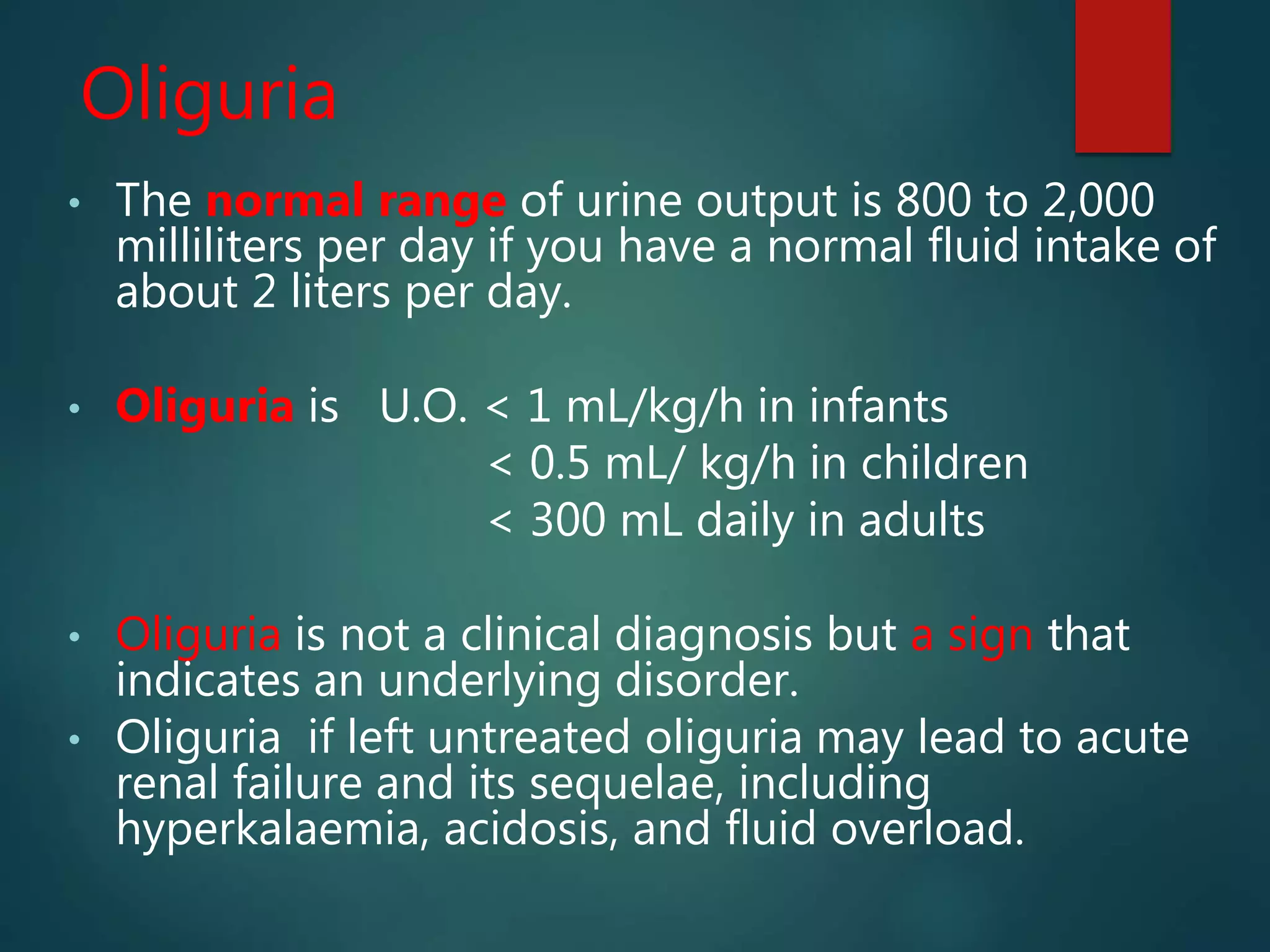
Oliguria
• The normal range of urine output is 800 to 2,000
milliliters per day if you have a normal fluid intake of
about 2 liters per day.
• Oliguria is U.O. < 1 mL/kg/h in infants
< 0.5 mL/ kg/h in children
< 300 mL daily in adults
• Oliguria is not a clinical diagnosis but a sign that
indicates an underlying disorder.
• Oliguria if left untreated oliguria may lead to acute
renal failure and its sequelae, including
hyperkalaemia, acidosis, and fluid overload.
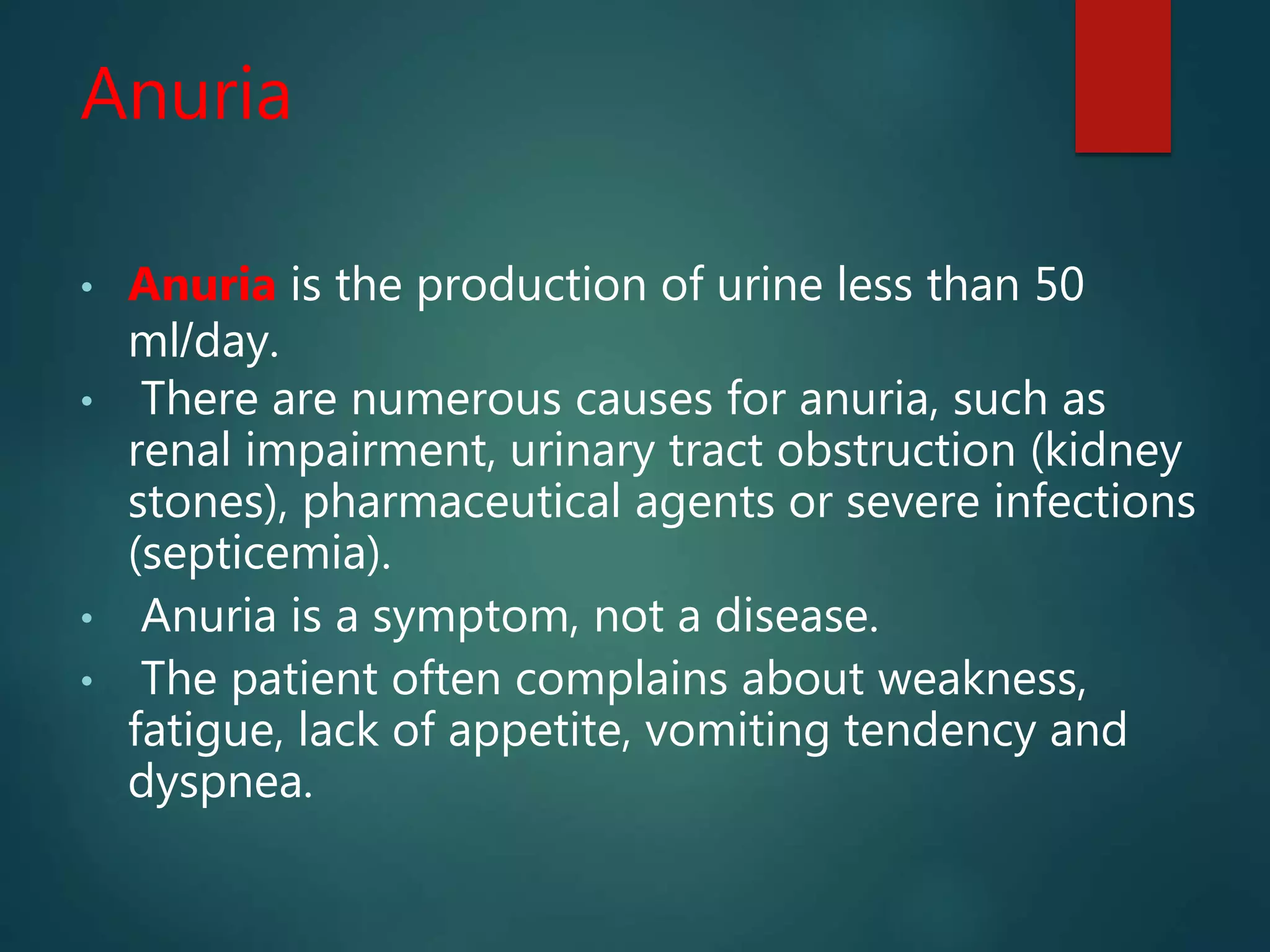
Anuria
• Anuria is the production of urine less than 50
ml/day.
• There are numerous causes for anuria, such as
renal impairment, urinary tract obstruction (kidney
stones), pharmaceutical agents or severe infections
(septicemia).
• Anuria is a symptom, not a disease.
• The patient often complains about weakness,
fatigue, lack of appetite, vomiting tendency and
dyspnea.
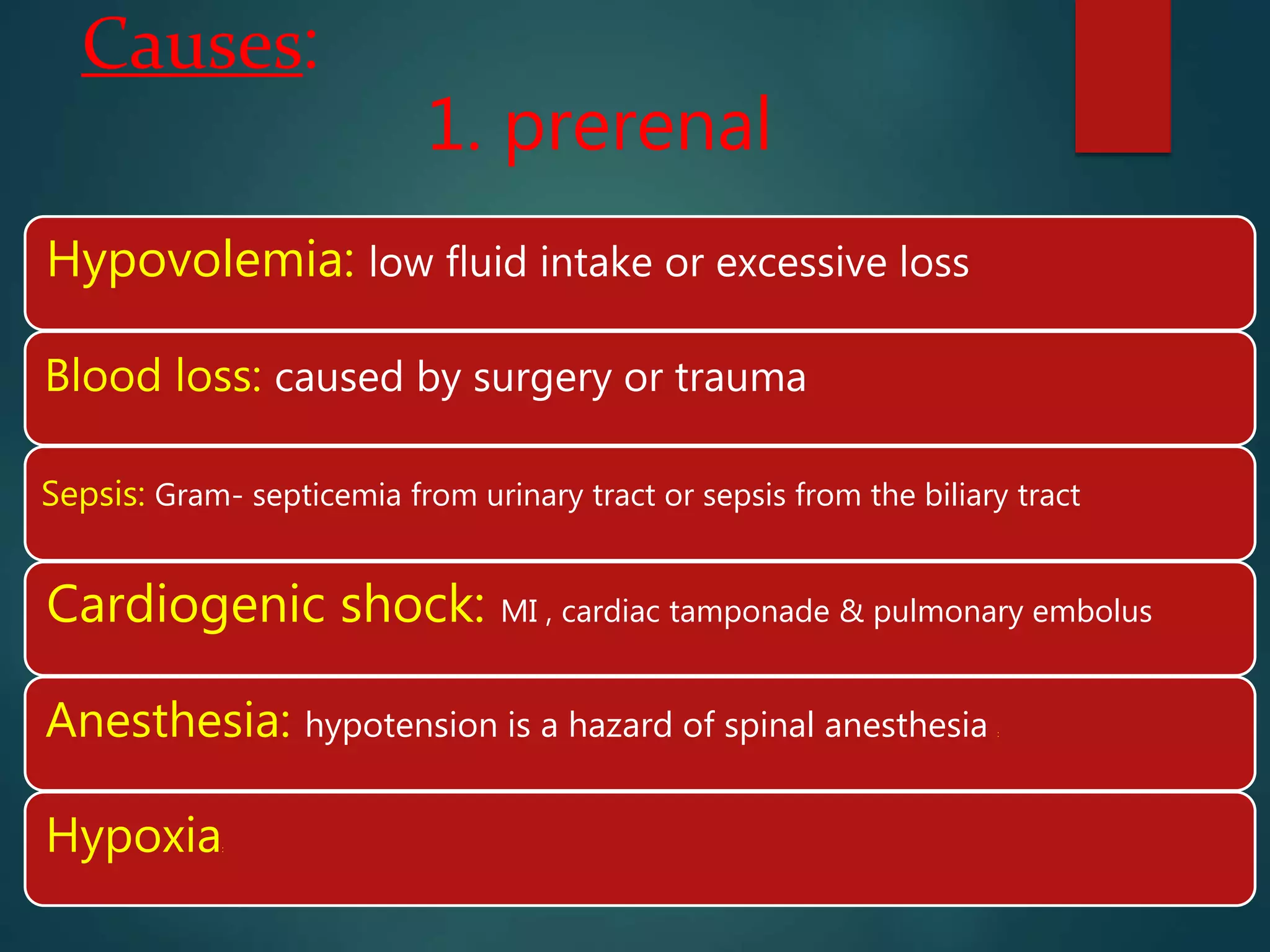
Causes:
1. prerenal
Hypovolemia: low fluid intake or excessive loss
Blood loss: caused by surgery or trauma
Sepsis: Gram- septicemia from urinary tract or sepsis from the biliary tract
Cardiogenic shock: MI , cardiac tamponade & pulmonary embolus
Anesthesia: hypotension is a hazard of spinal anesthesia :
Hypoxia:
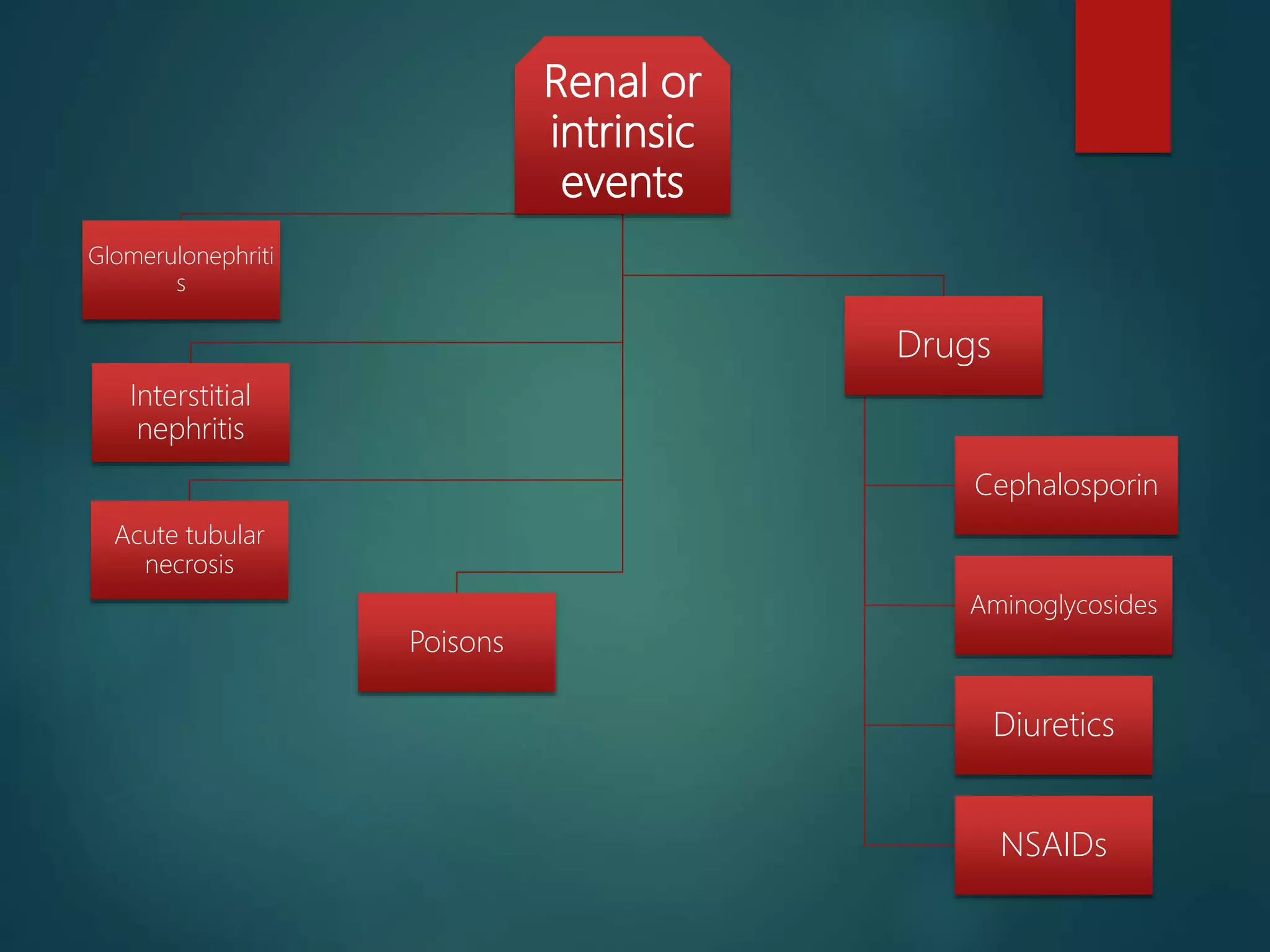
Renal or
intrinsic
events
Poisons
Drugs
Aminoglycosides
Cephalosporin
Diuretics
NSAIDs
Acute tubular
necrosis
Interstitial
nephritis
Glomerulonephriti
s
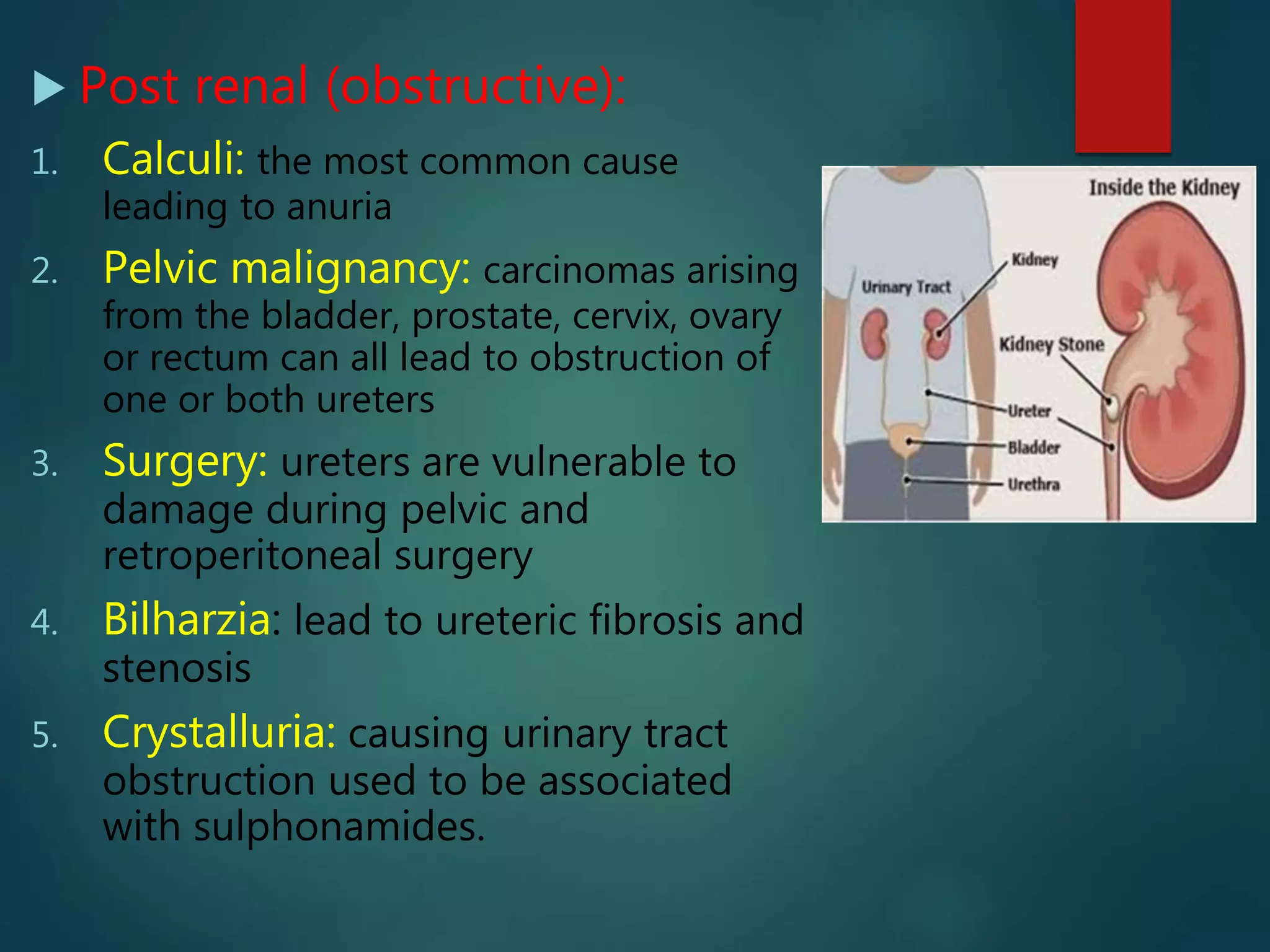
 Post renal (obstructive):
1. Calculi: the most common cause
leading to anuria
2. Pelvic malignancy: carcinomas arising
from the bladder, prostate, cervix, ovary
or rectum can all lead to obstruction of
one or both ureters
3. Surgery: ureters are vulnerable to
damage during pelvic and
retroperitoneal surgery
4. Bilharzia: lead to ureteric fibrosis and
stenosis
5. Crystalluria: causing urinary tract
obstruction used to be associated
with sulphonamides.
Oliguria
Things you should keep in
mind:
 Age of the patient.
 The nature of onset.
 Recent drinking habit.
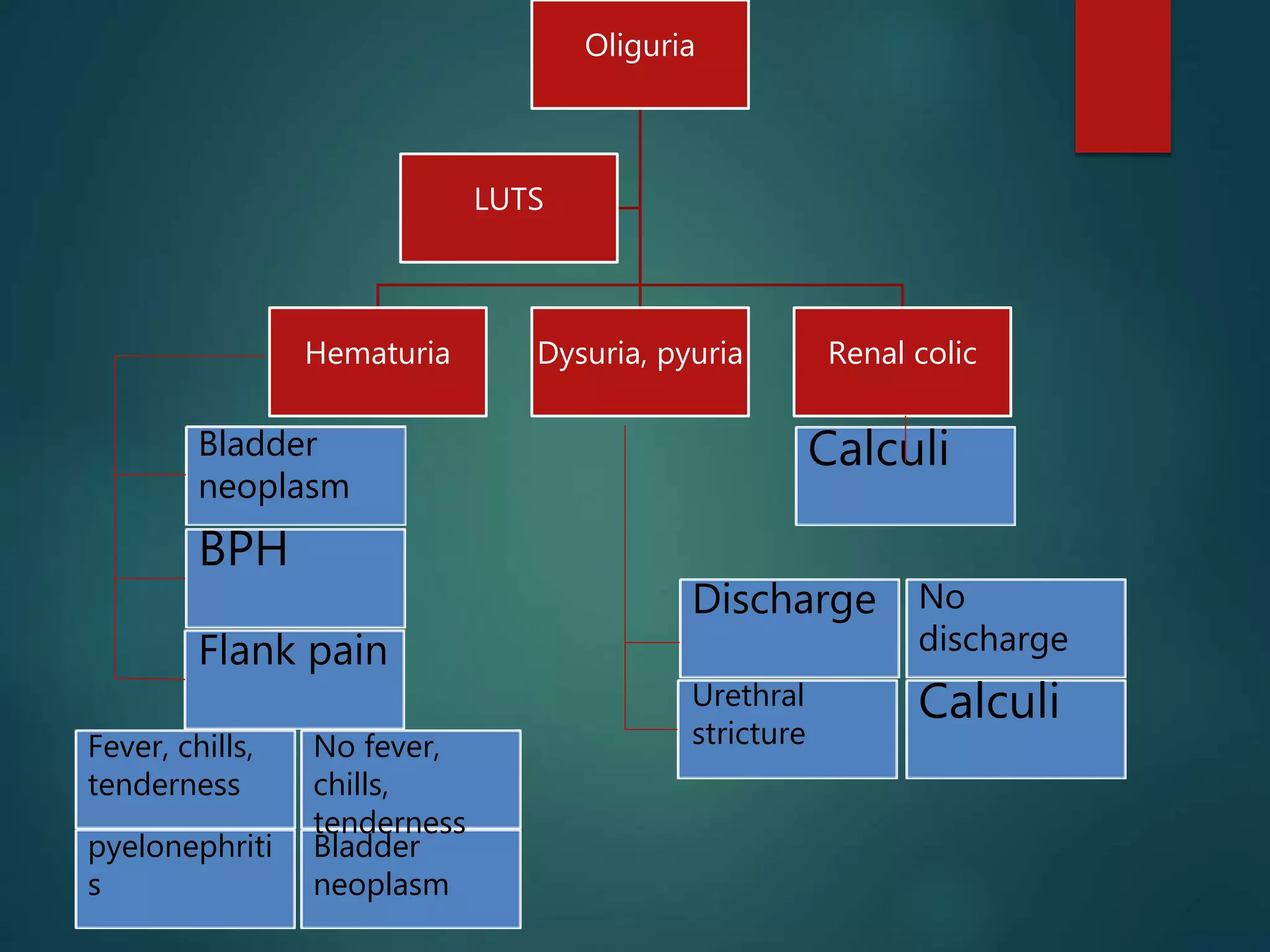
Oliguria
Hematuria Dysuria, pyuria Renal colic
LUTS
Bladder
neoplasm
BPH
Flank pain
Fever, chills,
tenderness
pyelonephriti
s
No fever,
chills,
tenderness
Bladder
neoplasm
Calculi
Discharge No
discharge
Urethral
stricture
Calculi
If there is history of water
loss or hypovolemiaoliguria
Signs of heart
failure
diarrhea &
vomiting
History of
trauma, shock,
bleeding
burns
AKI Cholera Sunken eye
Poor skin
turgor
Dry mucus
membrane
Those causes share
common things
including:
1- signs of
hyperkalemia
(weakness, cardiac
arrhythmia)
2- features of
uremia (anorexia,
confusion, lethargy,
twitching, seizures,
pruritis, kussmaul’s
respiration)
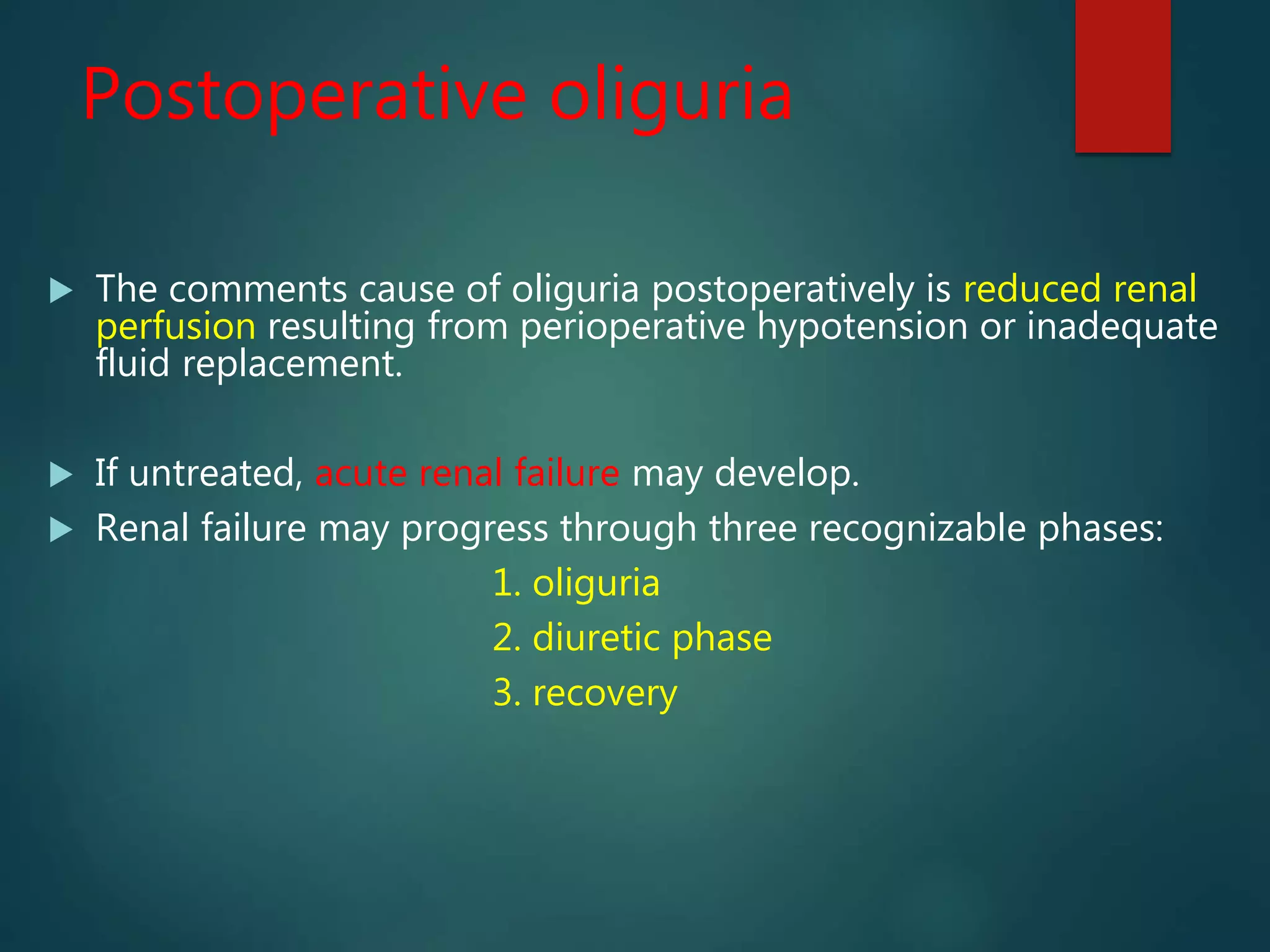
Postoperative oliguria
 The comments cause of oliguria postoperatively is reduced renal
perfusion resulting from perioperative hypotension or inadequate
fluid replacement.
 If untreated, acute renal failure may develop.
 Renal failure may progress through three recognizable phases:
1. oliguria
2. diuretic phase
3. recovery
Common causes of acute renal
failure:
Prerenal
• Hypotension
• Hypovolemia
Renal
•Nephrotoxic drug
•Gentamicin
•Myoglobinuria
•Sepsis
Postrenal
•Ureteric injury
•Blocked urethral catheter
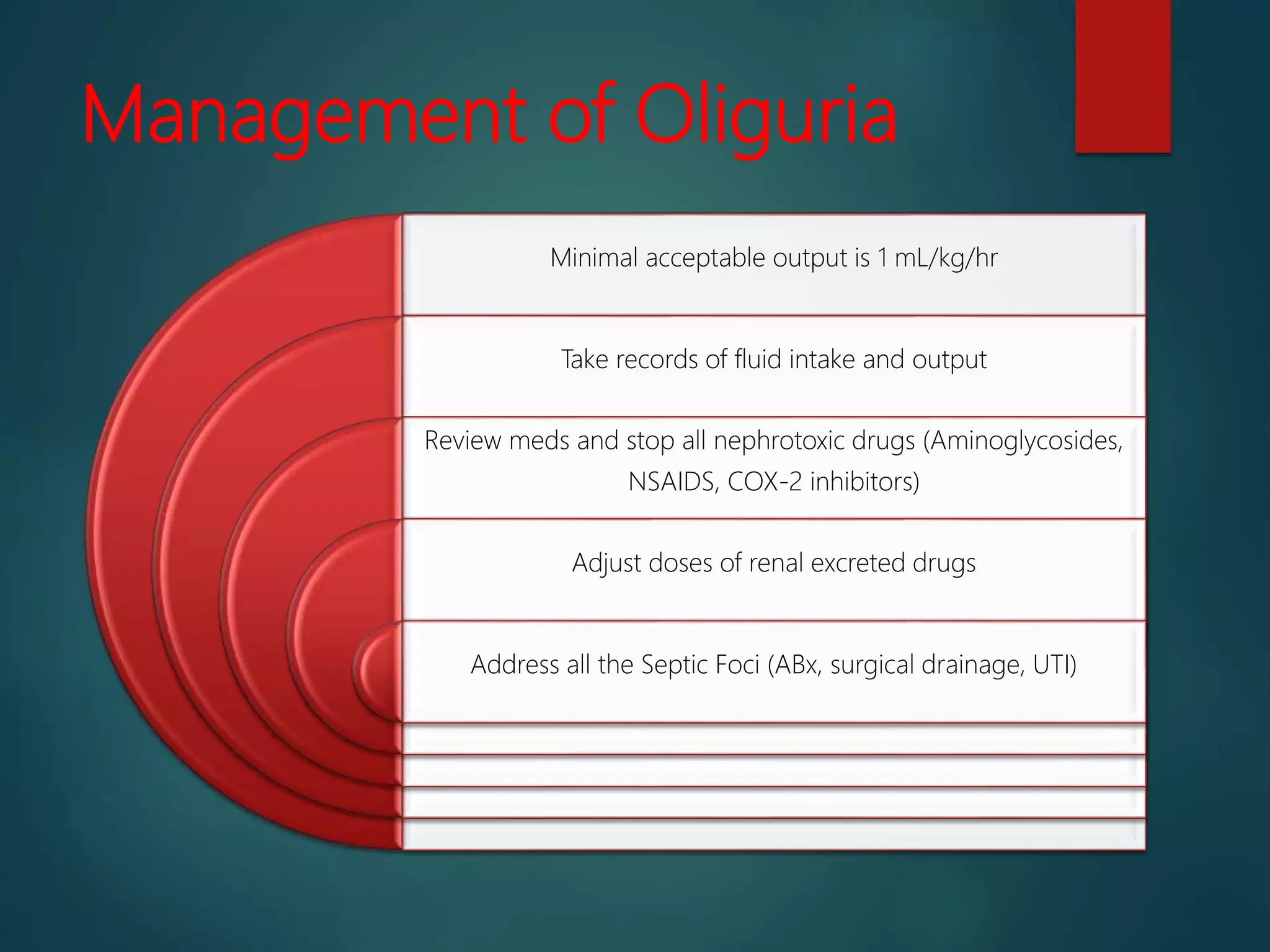
Management of Oliguria
Minimal acceptable output is 1 mL/kg/hr
Take records of fluid intake and output
Review meds and stop all nephrotoxic drugs (Aminoglycosides,
NSAIDS, COX-2 inhibitors)
Adjust doses of renal excreted drugs
Address all the Septic Foci (ABx, surgical drainage, UTI)
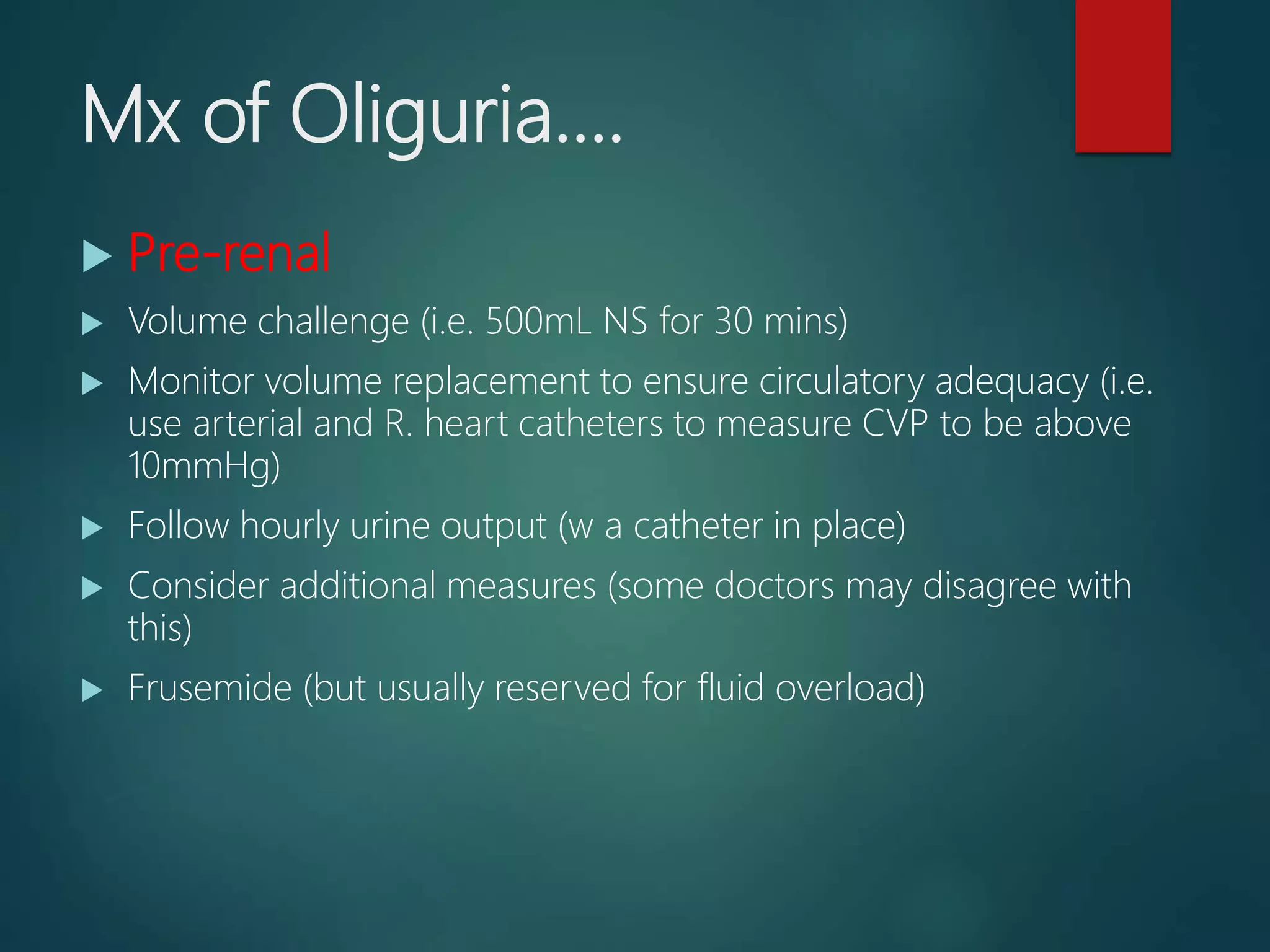
Mx of Oliguria….
 Pre-renal
 Volume challenge (i.e. 500mL NS for 30 mins)
 Monitor volume replacement to ensure circulatory adequacy (i.e.
use arterial and R. heart catheters to measure CVP to be above
10mmHg)
 Follow hourly urine output (w a catheter in place)
 Consider additional measures (some doctors may disagree with
this)
 Frusemide (but usually reserved for fluid overload)
 Renal causes
 Consider frusemide and mannitol
 Emergency dialysis in the following:
– Severe hypovolemia unresponsive to diuretics
– Intractable acidosis
– Severe hyperkalemia
– Pericarditis secondary to uremia
– Severe uremic symptoms or encephalopathy
 Post Renal causes
 Place a catheter, if immediate flow starts then urethral obstruction
very
 likely
 If catheter already present, replace or irrigate it as it could be
obstructed
 Consult a urologist
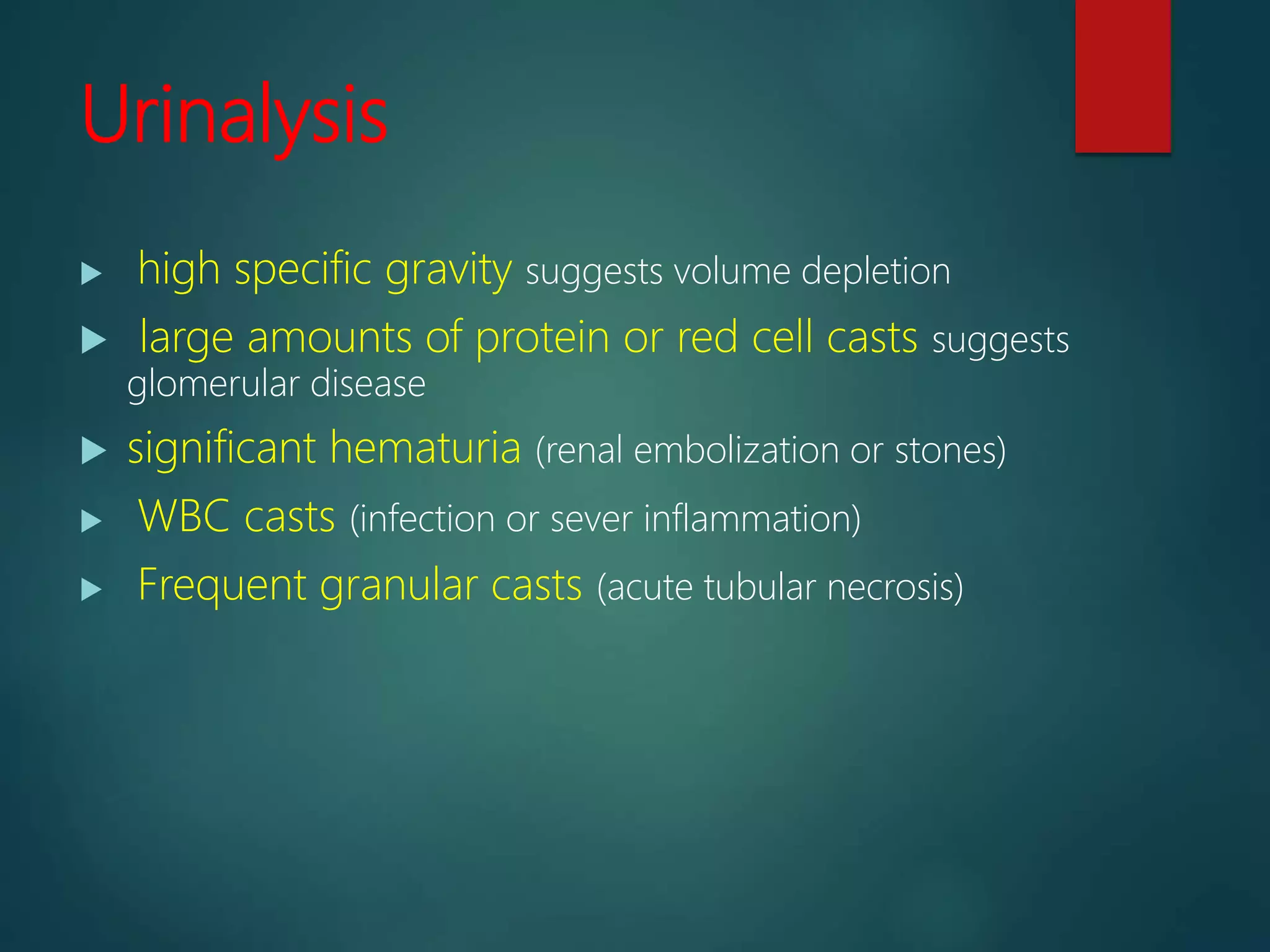
Urinalysis
 high specific gravity suggests volume depletion
 large amounts of protein or red cell casts suggests
glomerular disease
 significant hematuria (renal embolization or stones)
 WBC casts (infection or sever inflammation)
 Frequent granular casts (acute tubular necrosis)
The following studies are
indicated
1-Midstream specimen of urine (MSU) dipstick
2-Blood urea nitrogen and serum creatinine
3-Serum sodium
4-Serum potassium
5-Urinary index
6-Complete blood count
Midstream specimen of urine (MSU)
dipstick:
Prerenal:
There are few hyaline and fine granular casts.
There is little protein, haemoglobin or red cells.
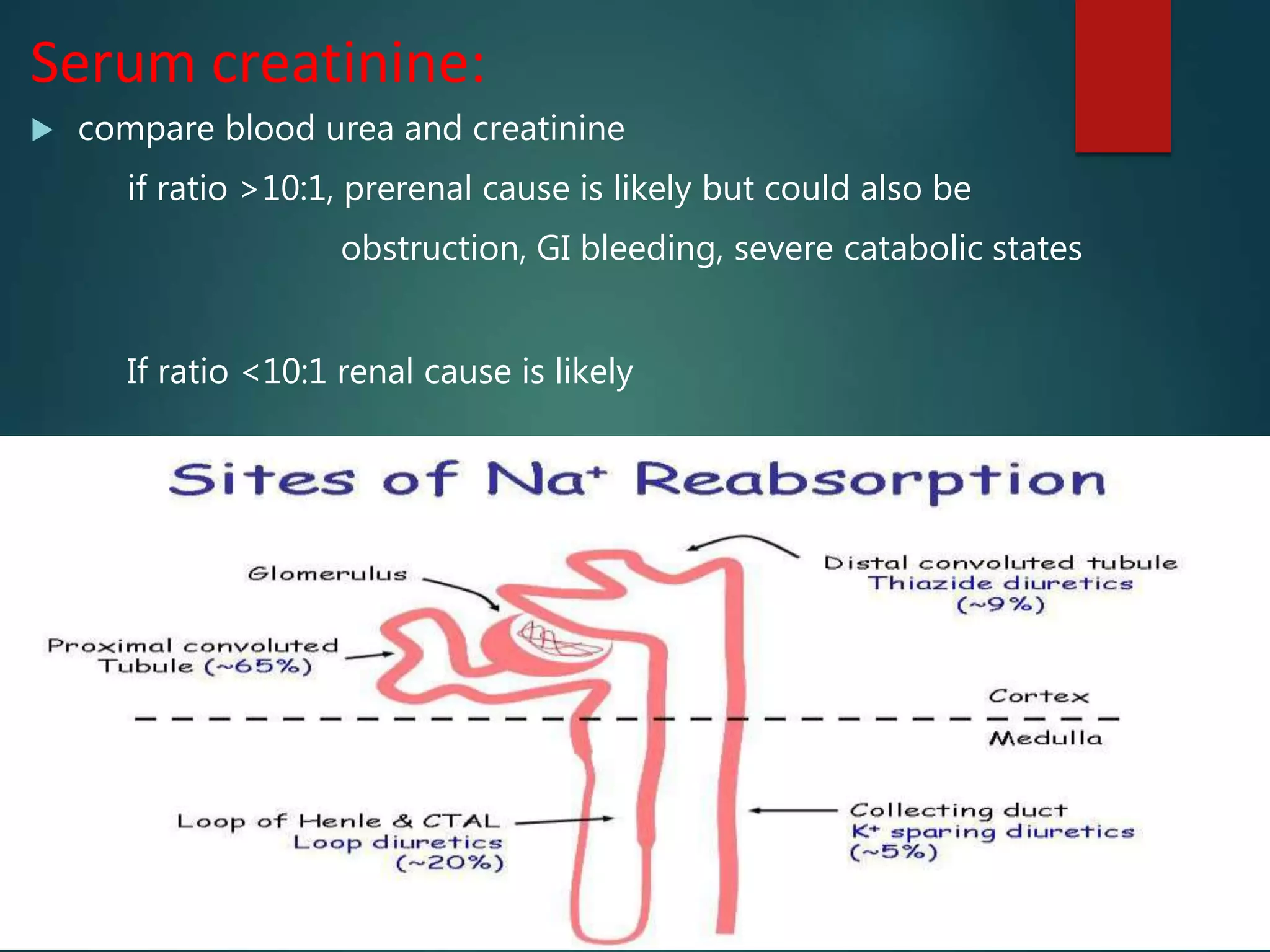
Serum creatinine:
 compare blood urea and creatinine
if ratio >10:1, prerenal cause is likely but could also be
obstruction, GI bleeding, severe catabolic states
If ratio <10:1 renal cause is likely

Oliguria and anuria

  • 1.
  • 2.
    Oliguria • The normalrange of urine output is 800 to 2,000 milliliters per day if you have a normal fluid intake of about 2 liters per day. • Oliguria is U.O. < 1 mL/kg/h in infants < 0.5 mL/ kg/h in children < 300 mL daily in adults • Oliguria is not a clinical diagnosis but a sign that indicates an underlying disorder. • Oliguria if left untreated oliguria may lead to acute renal failure and its sequelae, including hyperkalaemia, acidosis, and fluid overload.
  • 3.
    Anuria • Anuria isthe production of urine less than 50 ml/day. • There are numerous causes for anuria, such as renal impairment, urinary tract obstruction (kidney stones), pharmaceutical agents or severe infections (septicemia). • Anuria is a symptom, not a disease. • The patient often complains about weakness, fatigue, lack of appetite, vomiting tendency and dyspnea.
  • 5.
    Causes: 1. prerenal Hypovolemia: lowfluid intake or excessive loss Blood loss: caused by surgery or trauma Sepsis: Gram- septicemia from urinary tract or sepsis from the biliary tract Cardiogenic shock: MI , cardiac tamponade & pulmonary embolus Anesthesia: hypotension is a hazard of spinal anesthesia : Hypoxia:
  • 6.
  • 7.
     Post renal(obstructive): 1. Calculi: the most common cause leading to anuria 2. Pelvic malignancy: carcinomas arising from the bladder, prostate, cervix, ovary or rectum can all lead to obstruction of one or both ureters 3. Surgery: ureters are vulnerable to damage during pelvic and retroperitoneal surgery 4. Bilharzia: lead to ureteric fibrosis and stenosis 5. Crystalluria: causing urinary tract obstruction used to be associated with sulphonamides.
  • 9.
  • 10.
    Things you shouldkeep in mind:  Age of the patient.  The nature of onset.  Recent drinking habit.
  • 11.
    Oliguria Hematuria Dysuria, pyuriaRenal colic LUTS Bladder neoplasm BPH Flank pain Fever, chills, tenderness pyelonephriti s No fever, chills, tenderness Bladder neoplasm Calculi Discharge No discharge Urethral stricture Calculi
  • 12.
    If there ishistory of water loss or hypovolemiaoliguria Signs of heart failure diarrhea & vomiting History of trauma, shock, bleeding burns AKI Cholera Sunken eye Poor skin turgor Dry mucus membrane Those causes share common things including: 1- signs of hyperkalemia (weakness, cardiac arrhythmia) 2- features of uremia (anorexia, confusion, lethargy, twitching, seizures, pruritis, kussmaul’s respiration)
  • 13.
    Postoperative oliguria  Thecomments cause of oliguria postoperatively is reduced renal perfusion resulting from perioperative hypotension or inadequate fluid replacement.  If untreated, acute renal failure may develop.  Renal failure may progress through three recognizable phases: 1. oliguria 2. diuretic phase 3. recovery
  • 14.
    Common causes ofacute renal failure: Prerenal • Hypotension • Hypovolemia Renal •Nephrotoxic drug •Gentamicin •Myoglobinuria •Sepsis Postrenal •Ureteric injury •Blocked urethral catheter
  • 15.
    Management of Oliguria Minimalacceptable output is 1 mL/kg/hr Take records of fluid intake and output Review meds and stop all nephrotoxic drugs (Aminoglycosides, NSAIDS, COX-2 inhibitors) Adjust doses of renal excreted drugs Address all the Septic Foci (ABx, surgical drainage, UTI)
  • 16.
    Mx of Oliguria…. Pre-renal  Volume challenge (i.e. 500mL NS for 30 mins)  Monitor volume replacement to ensure circulatory adequacy (i.e. use arterial and R. heart catheters to measure CVP to be above 10mmHg)  Follow hourly urine output (w a catheter in place)  Consider additional measures (some doctors may disagree with this)  Frusemide (but usually reserved for fluid overload)
  • 17.
     Renal causes Consider frusemide and mannitol  Emergency dialysis in the following: – Severe hypovolemia unresponsive to diuretics – Intractable acidosis – Severe hyperkalemia – Pericarditis secondary to uremia – Severe uremic symptoms or encephalopathy  Post Renal causes  Place a catheter, if immediate flow starts then urethral obstruction very  likely  If catheter already present, replace or irrigate it as it could be obstructed  Consult a urologist
  • 19.
    Urinalysis  high specificgravity suggests volume depletion  large amounts of protein or red cell casts suggests glomerular disease  significant hematuria (renal embolization or stones)  WBC casts (infection or sever inflammation)  Frequent granular casts (acute tubular necrosis)
  • 20.
    The following studiesare indicated 1-Midstream specimen of urine (MSU) dipstick 2-Blood urea nitrogen and serum creatinine 3-Serum sodium 4-Serum potassium 5-Urinary index 6-Complete blood count
  • 21.
    Midstream specimen ofurine (MSU) dipstick: Prerenal: There are few hyaline and fine granular casts. There is little protein, haemoglobin or red cells.
  • 22.
    Serum creatinine:  compareblood urea and creatinine if ratio >10:1, prerenal cause is likely but could also be obstruction, GI bleeding, severe catabolic states If ratio <10:1 renal cause is likely

Editor's Notes

  • #6 The maintenance of renal function and urine production depends upon perfusion of the kidneys with oxygenated blood. Reduced renal blood flow or hypoxia impairs renal function. When both are present, the danger of acute renal failure is even greater. Renal failure is traditionally divided into : Prerenal Renal Post renal (obstructive)