NEPHRITIC SYNDROME
Dr. Salman Ansari
Kanachur Institute of Medical Sciences
Contents
● Glomerular diseases
● Glomerulonephritis: causes + pathogenesis
● Acute Nephritic Syndrome
● Post streptococcal glomerulonephritis(PSGN)
Glomerular diseases
Glomerular diseases include:
- Acute nephritic syndrome
- Rapidly progressive glomerulonephritis
- Nephrotic syndrome
- Chronic nephritis
- Asymptomatic urinary abnormalities(hematuria,
proteinuria or both)
Glomerulonephritis
Definition: inflammation of glomeruli
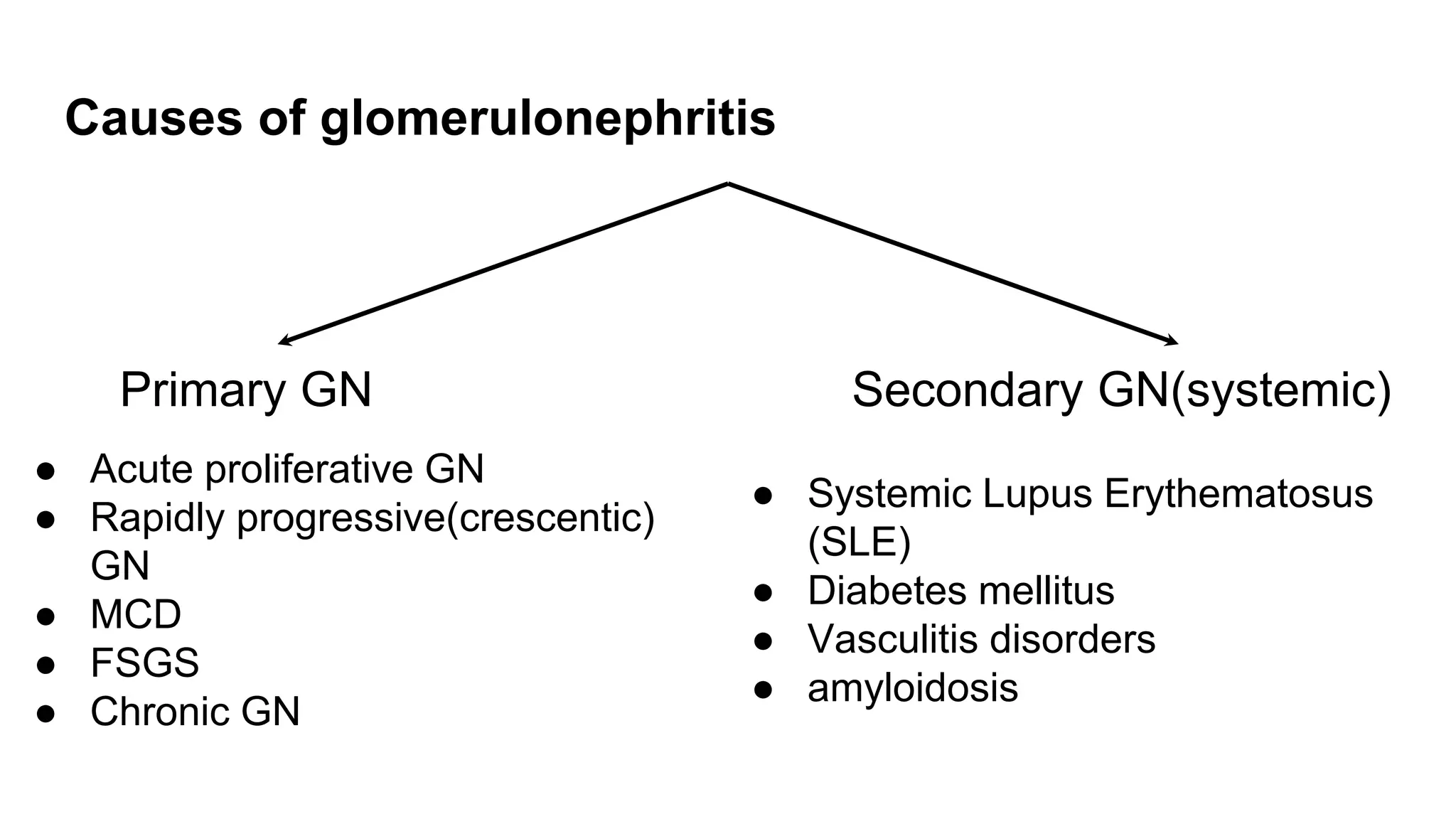
Causes of glomerulonephritis
Primary GN Secondary GN(systemic)
Causes of glomerulonephritis
Primary GN Secondary GN(systemic)
● Acute proliferative GN
● Rapidly progressive(crescentic)
GN
● MCD
● FSGS
● Chronic GN
Causes of glomerulonephritis
Primary GN Secondary GN(systemic)
● Systemic Lupus Erythematosus
(SLE)
● Diabetes mellitus
● Vasculitis disorders
● amyloidosis
Causes of glomerulonephritis
Primary GN Secondary GN(systemic)
● Systemic Lupus Erythematosus
(SLE)
● Diabetes mellitus
● Vasculitis disorders
● amyloidosis
● Acute proliferative GN
● Rapidly progressive(crescentic)
GN
● MCD
● FSGS
● Chronic GN
3rd category: hereditary disorders
- Alport syndrome
- Fabry disease
- Thin basement membrane disease
Pathogenesis
- It is immune complex-mediated
- Antigen attaches to antibody and forms antigen-antibody
complex(or immune complex)
- This circulates in blood and reaches the glomerulus of kidney
and causes inflammation
- In some cases, antibodies are produced against antigen of
basement membrane - this is called anti-GBM antibody-
induced glomerulonephritis
Acute Nephritic Syndrome
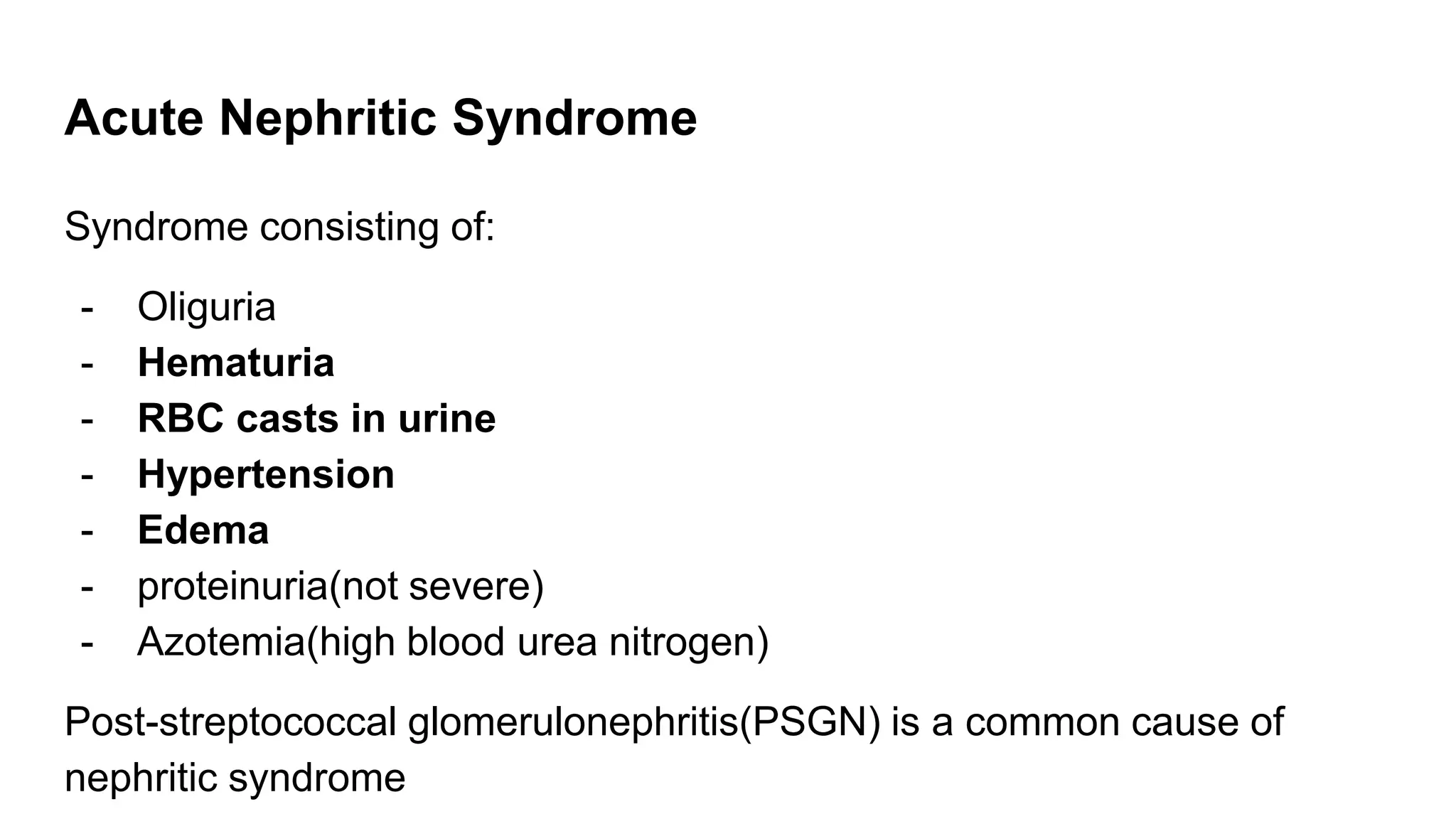
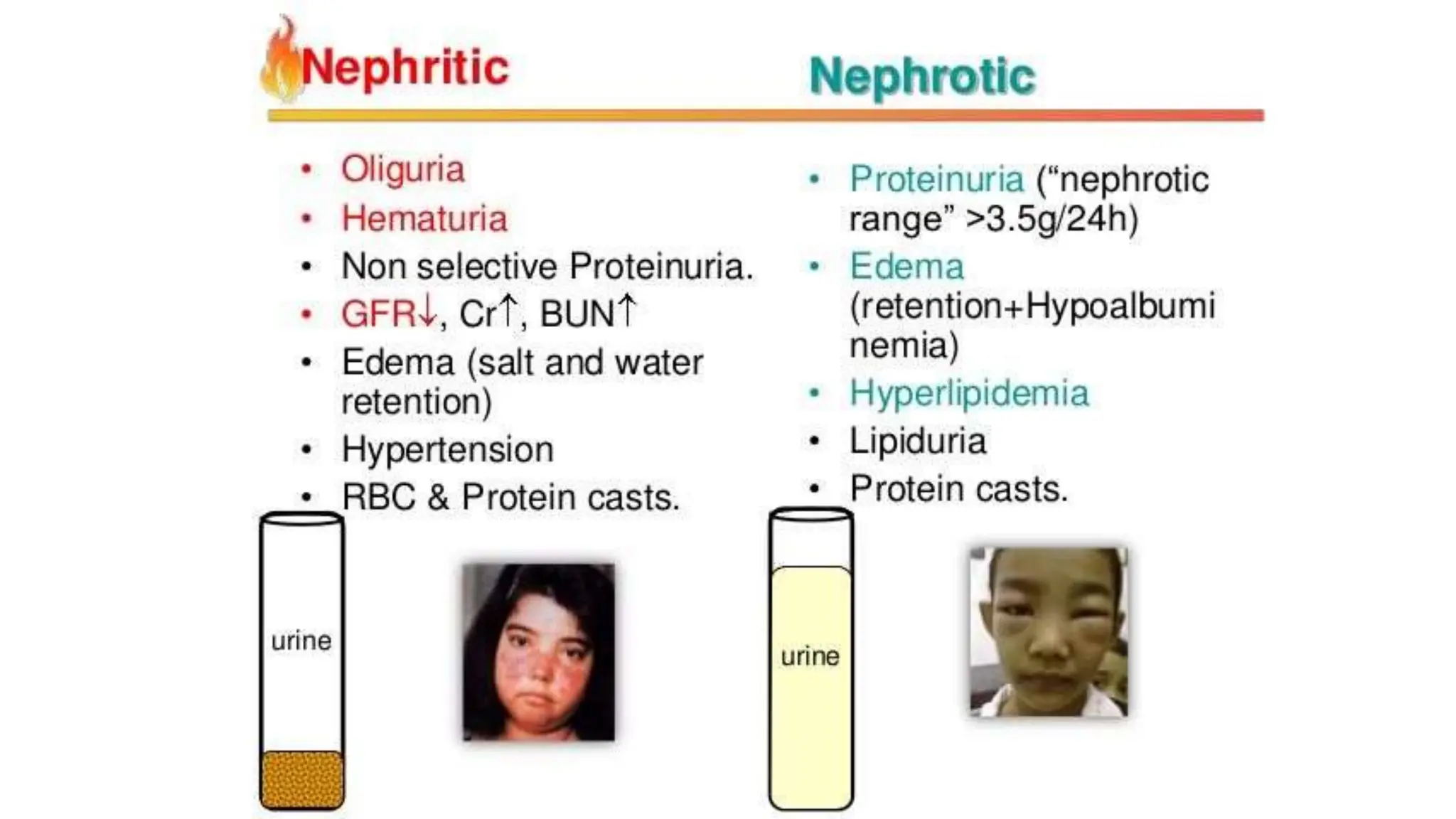
Syndrome consisting of:
- Oliguria
- Hematuria
- RBC casts in urine
- Hypertension
- Edema
- proteinuria(not severe)
- Azotemia(high blood urea nitrogen)
Post-streptococcal glomerulonephritis(PSGN) is a common cause of
nephritic syndrome
Etiology of PSGN
- Causative organism: group A streptococcus(GAS)
- Occurs few weeks after streptococcus infection of
pharynx(pharyngitis) or skin infection(impetigo)
- Immune complex-mediated - type III hypersensitivity reaction
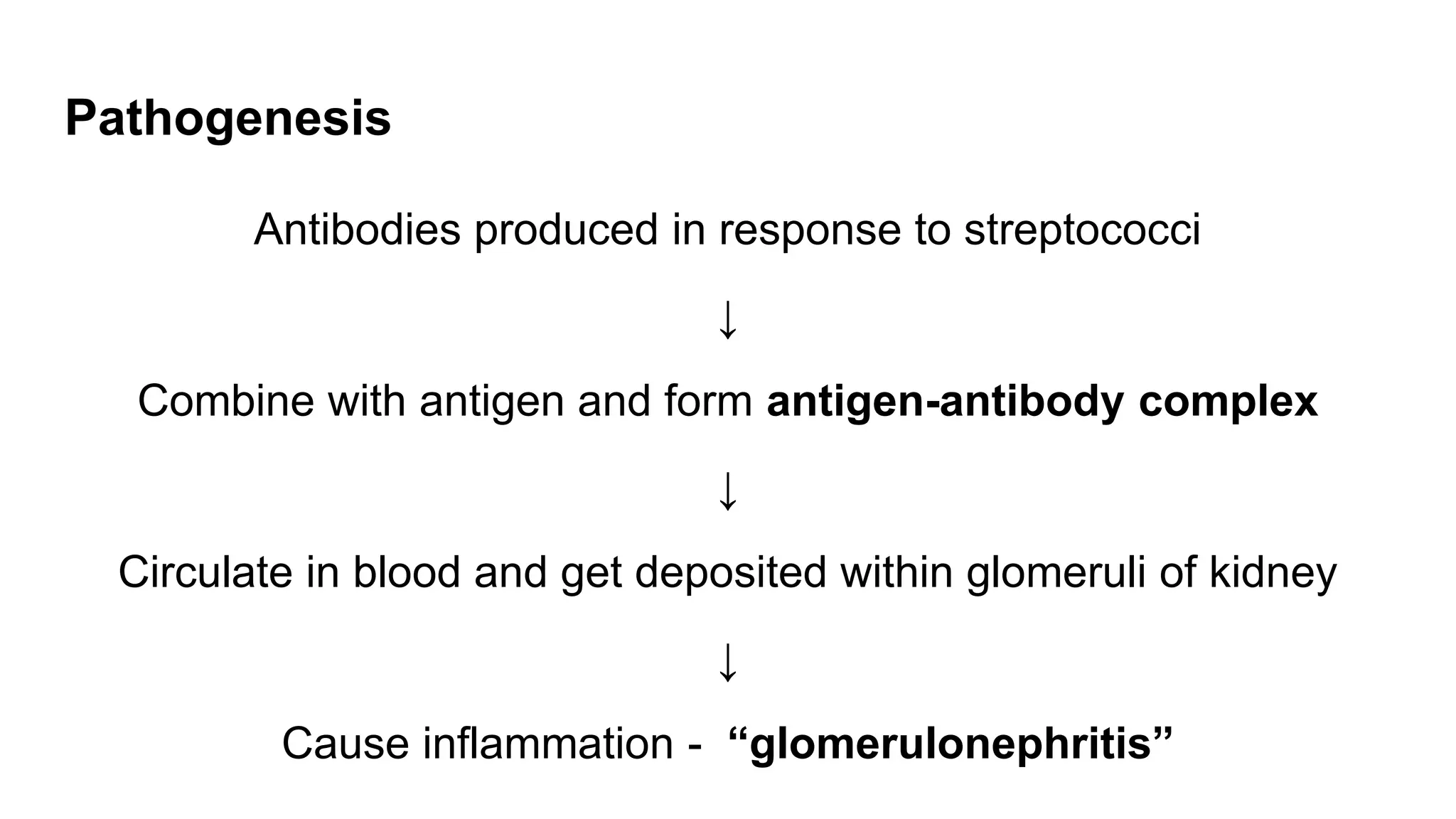
Pathogenesis
Antibodies produced in response to streptococci
↓
Combine with antigen and form antigen-antibody complex
↓
Circulate in blood and get deposited within glomeruli of kidney
↓
Cause inflammation - “glomerulonephritis”
Clinical features
● Children between 6-10 years of age
● Malaise, fever, nausea, oliguria
● Classic triad
1. hematuria(smoky or cola-coloured urine)
2. Periorbital edema
3. hypertension
● Other: proteinuria(less than 3.5 g/day)
● In adults: sudden hypertension and elevation of BUN
PSGN
Hematuria
Edema
Hypertension
Diagnosis
● High Anti-Streptolysin O(ASO) titer
● Low serum complement(C3)
● RFT: Elevated urea and creatinine
● Urinalysis: hematuria, RBC casts, mild proteinuria ☆
● Renal biopsy: acute inflammation in glomerulus with neutrophils
and immunoglobulin deposits
Treatment:
● Supportive treatment - rest
● Salt restriction
● Diuretics for edema
● Antihypertensives to control high BP
● Dialysis is done in severe oliguria and hyperkalemia
Complications of PSGN
● Rapidly progressive glomerulonephritis
● Pulmonary edema
● Hypertensive encephalopathy
● Renal failure
Short answers
Hematuria: Presence of blood in urine
Causes of hematuria:
● Post-streptococcal glomerulonephritis
● Alport syndrome
● IgA nephropathy
● Trauma
● Renal cell carcinoma
Proteinuria: presence of protein in urine
Causes of proteinuria:
● Glomerulonephritis
● Diabetic nephropathy
● hypertension
Urine findings in glomerulonephritis:
- Oliguria
- Mild proteinuria
- Hematuria (smoky or cola-colored urine)
- Urine microscopy shows RBC casts
Questions:
LE:
SE: Acute nephritic syndrome or acute glomerulonephritis or post-
streptococcal GN = all 3 are same
SA:
- define hematuria
- 3 causes of hematuria
- urine findings in GN
For notes, click here
or scan:
References:
● Archith Boloor, Ramadas Nayak - Exam
Preparatory Manual
Questions:
salman.s.ansari92@gmail.com
For PPT, scan:

Nephritic syndrome - Medicine - RDT

  • 1.
    NEPHRITIC SYNDROME Dr. SalmanAnsari Kanachur Institute of Medical Sciences
  • 2.
    Contents ● Glomerular diseases ●Glomerulonephritis: causes + pathogenesis ● Acute Nephritic Syndrome ● Post streptococcal glomerulonephritis(PSGN)
  • 3.
    Glomerular diseases Glomerular diseasesinclude: - Acute nephritic syndrome - Rapidly progressive glomerulonephritis - Nephrotic syndrome - Chronic nephritis - Asymptomatic urinary abnormalities(hematuria, proteinuria or both)
  • 4.
  • 5.
    Causes of glomerulonephritis PrimaryGN Secondary GN(systemic)
  • 6.
    Causes of glomerulonephritis PrimaryGN Secondary GN(systemic) ● Acute proliferative GN ● Rapidly progressive(crescentic) GN ● MCD ● FSGS ● Chronic GN
  • 7.
    Causes of glomerulonephritis PrimaryGN Secondary GN(systemic) ● Systemic Lupus Erythematosus (SLE) ● Diabetes mellitus ● Vasculitis disorders ● amyloidosis
  • 8.
    Causes of glomerulonephritis PrimaryGN Secondary GN(systemic) ● Systemic Lupus Erythematosus (SLE) ● Diabetes mellitus ● Vasculitis disorders ● amyloidosis ● Acute proliferative GN ● Rapidly progressive(crescentic) GN ● MCD ● FSGS ● Chronic GN
  • 9.
    3rd category: hereditarydisorders - Alport syndrome - Fabry disease - Thin basement membrane disease
  • 10.
    Pathogenesis - It isimmune complex-mediated - Antigen attaches to antibody and forms antigen-antibody complex(or immune complex) - This circulates in blood and reaches the glomerulus of kidney and causes inflammation - In some cases, antibodies are produced against antigen of basement membrane - this is called anti-GBM antibody- induced glomerulonephritis
  • 11.
    Acute Nephritic Syndrome Syndromeconsisting of: - Oliguria - Hematuria - RBC casts in urine - Hypertension - Edema - proteinuria(not severe) - Azotemia(high blood urea nitrogen) Post-streptococcal glomerulonephritis(PSGN) is a common cause of nephritic syndrome
  • 12.
    Etiology of PSGN -Causative organism: group A streptococcus(GAS) - Occurs few weeks after streptococcus infection of pharynx(pharyngitis) or skin infection(impetigo) - Immune complex-mediated - type III hypersensitivity reaction
  • 13.
    Pathogenesis Antibodies produced inresponse to streptococci ↓ Combine with antigen and form antigen-antibody complex ↓ Circulate in blood and get deposited within glomeruli of kidney ↓ Cause inflammation - “glomerulonephritis”
  • 15.
    Clinical features ● Childrenbetween 6-10 years of age ● Malaise, fever, nausea, oliguria ● Classic triad 1. hematuria(smoky or cola-coloured urine) 2. Periorbital edema 3. hypertension ● Other: proteinuria(less than 3.5 g/day) ● In adults: sudden hypertension and elevation of BUN
  • 18.
  • 19.
    Diagnosis ● High Anti-StreptolysinO(ASO) titer ● Low serum complement(C3) ● RFT: Elevated urea and creatinine ● Urinalysis: hematuria, RBC casts, mild proteinuria ☆ ● Renal biopsy: acute inflammation in glomerulus with neutrophils and immunoglobulin deposits
  • 20.
    Treatment: ● Supportive treatment- rest ● Salt restriction ● Diuretics for edema ● Antihypertensives to control high BP ● Dialysis is done in severe oliguria and hyperkalemia
  • 21.
    Complications of PSGN ●Rapidly progressive glomerulonephritis ● Pulmonary edema ● Hypertensive encephalopathy ● Renal failure
  • 25.
    Short answers Hematuria: Presenceof blood in urine Causes of hematuria: ● Post-streptococcal glomerulonephritis ● Alport syndrome ● IgA nephropathy ● Trauma ● Renal cell carcinoma
  • 26.
    Proteinuria: presence ofprotein in urine Causes of proteinuria: ● Glomerulonephritis ● Diabetic nephropathy ● hypertension
  • 27.
    Urine findings inglomerulonephritis: - Oliguria - Mild proteinuria - Hematuria (smoky or cola-colored urine) - Urine microscopy shows RBC casts
  • 28.
    Questions: LE: SE: Acute nephriticsyndrome or acute glomerulonephritis or post- streptococcal GN = all 3 are same SA: - define hematuria - 3 causes of hematuria - urine findings in GN
  • 29.
    For notes, clickhere or scan: References: ● Archith Boloor, Ramadas Nayak - Exam Preparatory Manual Questions: salman.s.ansari92@gmail.com For PPT, scan: