By Veronica Deja DeRosa
             Biology 120
 Glycosuria is the presence of glucose in the
  urine. This is caused by the overabundance
  of glucose in the blood, and therefore, must
  be excreted through the urine.

 It   may occur for the following reasons:
   Emotional stress
   Hyperthyroidism
   Insufficiency of insulin
   Pregnancy
 Other more serious causes of Glycosuria are
 the following:
  Thyrotoxicosis – elevations in thyroid hormone
   levels
  Cushing’s syndrome – overexposure of tissues to
   high level cortisone hormone.
  Acromegaly – overabundance of growth hormones
   resulting in large body tissues.
  Peptic Ulcers – open sores on the inner lining of
   the small intestine, stomach or espophagus
  Meningitis – inflammation of the brain and spinal
   cord membrane
  Diabetes
 RenalGlycosuria is a rare form of Glycosuria
 where glucose is eliminated through the
 urine, but the blood glucose levels are
 normal to low.
    This usually happens as a sign of improper
     function of renal tubules to reabsorb the glucose.
    It is non-life threatening and is hereditary.

      
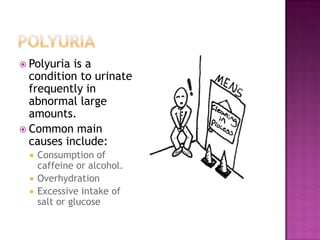
 Polyuria is a
  condition to urinate
  frequently in
  abnormal large
  amounts.
 Common main
  causes include:
   Consumption of
    caffeine or alcohol.
   Overhydration
   Excessive intake of
    salt or glucose
   It is important to keep track of the liquid intake,
    how often you urinate and how much you weigh.
    It may be a sign of the following conditions:
     Diabetes Mellitus and Insipidus
     Polycystic kidney disease
     Sickle cell disease
   Certain tests may be administered at the doctor’s
    office to help depict the main cause of polyuria:
     Blood glucose test
     Blood urea nitrogren test
     Creatinine studies
     Urinalysis
http://en.wikipedia.org/wiki/Polyuria

Myword.info/definition.php?id=uria_1-a

Chapter 11 the endocrine system

  • 1.
    By Veronica DejaDeRosa Biology 120
  • 2.
     Glycosuria isthe presence of glucose in the urine. This is caused by the overabundance of glucose in the blood, and therefore, must be excreted through the urine.  It may occur for the following reasons:  Emotional stress  Hyperthyroidism  Insufficiency of insulin  Pregnancy
  • 3.
     Other moreserious causes of Glycosuria are the following:  Thyrotoxicosis – elevations in thyroid hormone levels  Cushing’s syndrome – overexposure of tissues to high level cortisone hormone.  Acromegaly – overabundance of growth hormones resulting in large body tissues.  Peptic Ulcers – open sores on the inner lining of the small intestine, stomach or espophagus  Meningitis – inflammation of the brain and spinal cord membrane  Diabetes
  • 4.
     RenalGlycosuria isa rare form of Glycosuria where glucose is eliminated through the urine, but the blood glucose levels are normal to low.  This usually happens as a sign of improper function of renal tubules to reabsorb the glucose.  It is non-life threatening and is hereditary. 
  • 5.
     Polyuria isa condition to urinate frequently in abnormal large amounts.  Common main causes include:  Consumption of caffeine or alcohol.  Overhydration  Excessive intake of salt or glucose
  • 6.
    It is important to keep track of the liquid intake, how often you urinate and how much you weigh. It may be a sign of the following conditions:  Diabetes Mellitus and Insipidus  Polycystic kidney disease  Sickle cell disease  Certain tests may be administered at the doctor’s office to help depict the main cause of polyuria:  Blood glucose test  Blood urea nitrogren test  Creatinine studies  Urinalysis
  • 7.