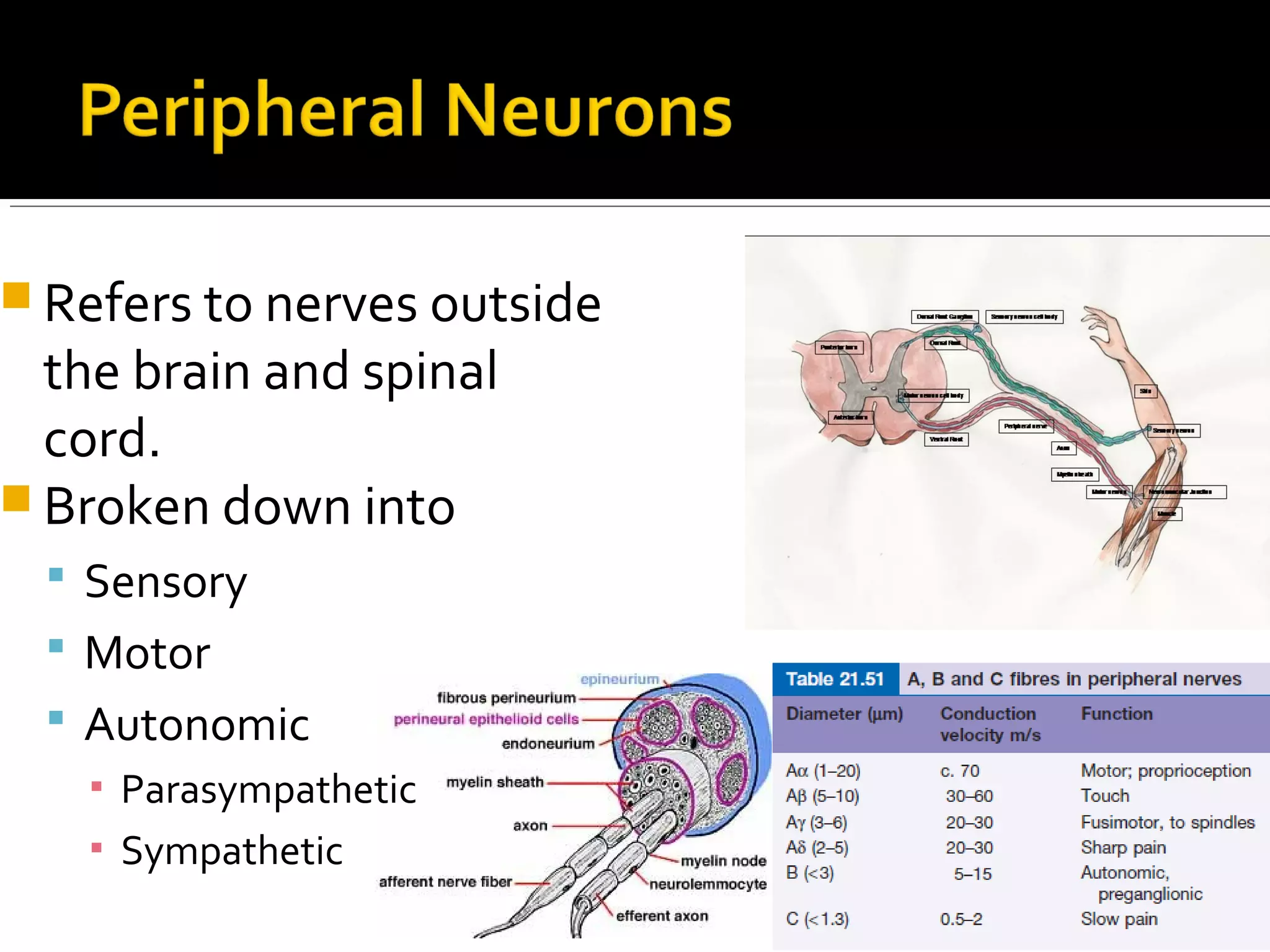
 Refers to nerves outside
the brain and spinal
cord.
 Broken down into
 Sensory
 Motor
 Autonomic
▪ Parasympathetic
▪ Sympathetic
 Neuropathies might be acute or chronic
 Mononeuropathy – affecting a single nerve
 Polyneuropathy – diffuse, symmetrical disease
usually starting peripherally.
 Mononeuritis multiplex – affects several or
multiple nerves.
 Radiculopathy – disease affecting nerve roots
 Peripheral Neuropathy can affect:
 Sensory pathways
 Motor pathways
 Autonomic pathways
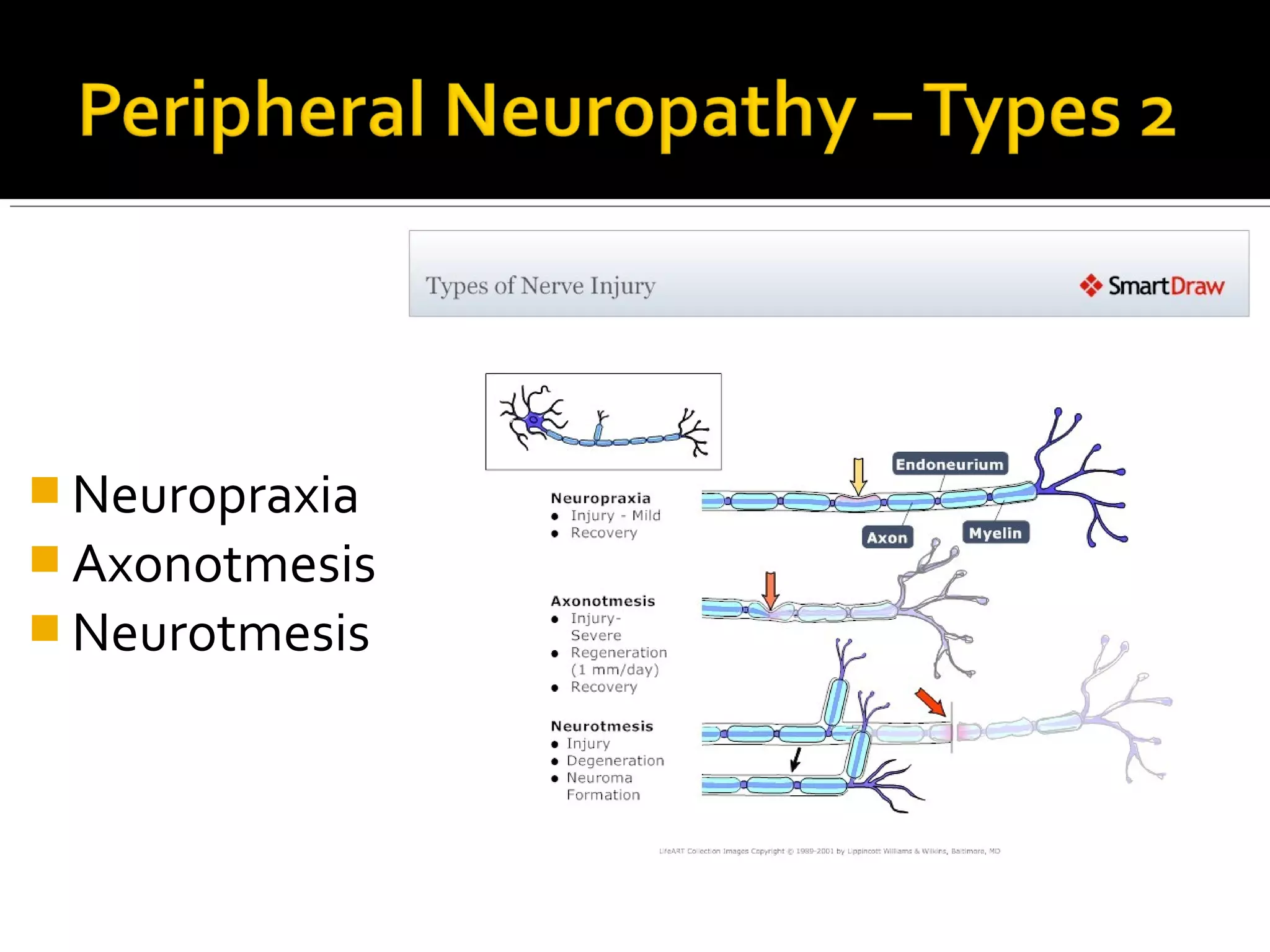
 Neuropraxia
 Axonotmesis
 Neurotmesis
 There are 6 possible mechanisms of
peripheral nerve degeneration
 Demyelination – e.g. Guillain-Barre Syndrome
 Axonal degeneration - e.g. toxic neuropathies
 Wallerian degeneration
 Compression – e.g. carpal tunnel syndrome
 Infarction – e.g. diabetes
 Infiltration – e.g. leprosy and granulomas
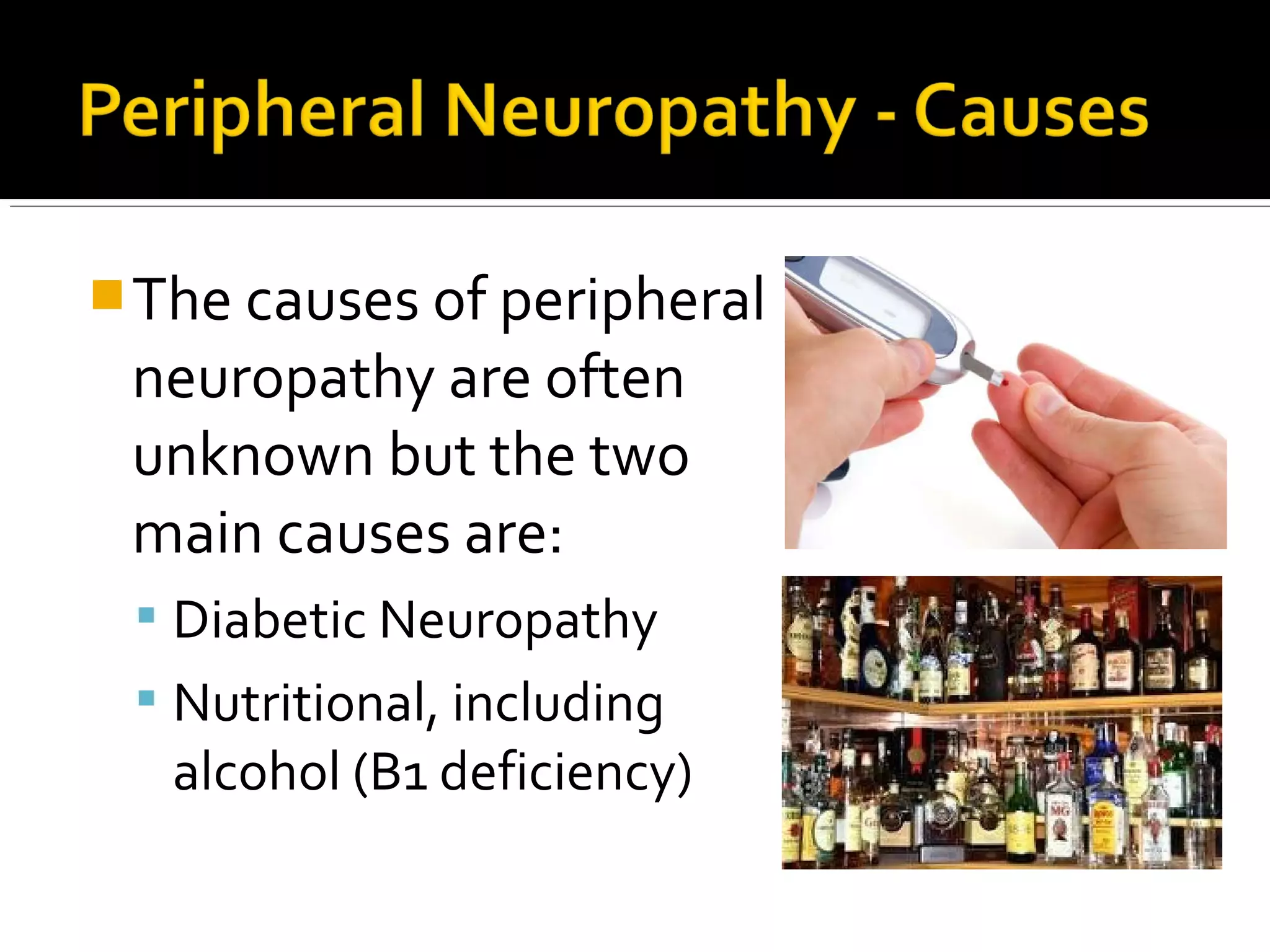
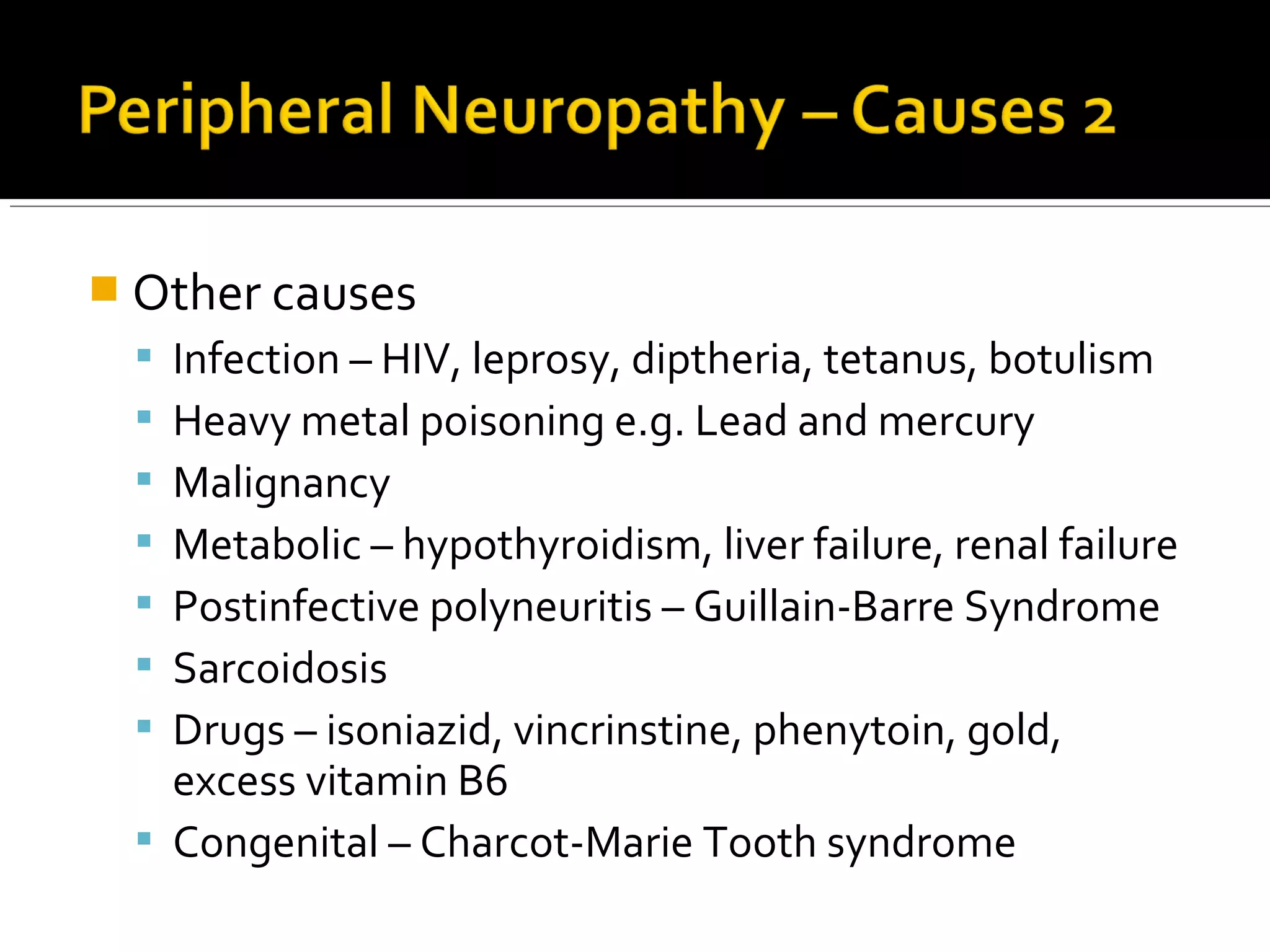
The causes of peripheral
neuropathy are often
unknown but the two
main causes are:
 Diabetic Neuropathy
 Nutritional, including
alcohol (B1 deficiency)
 Other causes
 Infection – HIV, leprosy, diptheria, tetanus, botulism
 Heavy metal poisoning e.g. Lead and mercury
 Malignancy
 Metabolic – hypothyroidism, liver failure, renal failure
 Postinfective polyneuritis – Guillain-Barre Syndrome
 Sarcoidosis
 Drugs – isoniazid, vincrinstine, phenytoin, gold,
excess vitamin B6
 Congenital – Charcot-Marie Tooth syndrome
 Pneumonic to remember DAVID:
 Diabetes
 Alcoholism
 Vitamin deficiency – B12
 Infective/inherited – Guillain-Barre
 Drugs – e.g. isoniazid
 Peripheral nerve compression and
entrapment
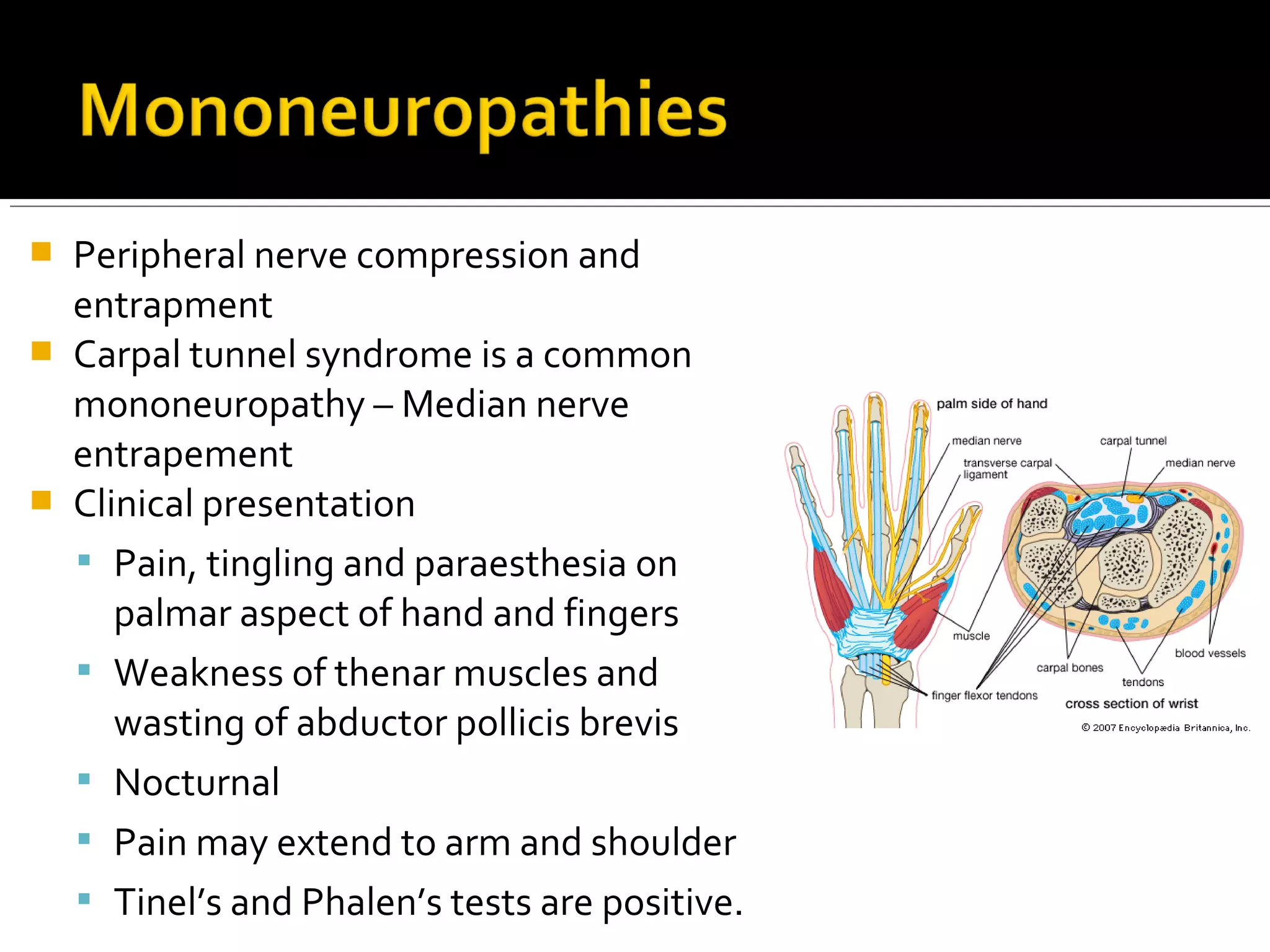
 Carpal tunnel syndrome is a common
mononeuropathy – Median nerve
entrapement
 Clinical presentation
 Pain, tingling and paraesthesia on
palmar aspect of hand and fingers
 Weakness of thenar muscles and
wasting of abductor pollicis brevis
 Nocturnal
 Pain may extend to arm and shoulder
 Tinel’s and Phalen’s tests are positive.
 Paraesthesia
 Numbness
 Burning pain
 Loss of vibration sense and
position sense
 Difficulty using small
objects e.g. needles
 Subacute with ataxia due
to loss of sense of posture
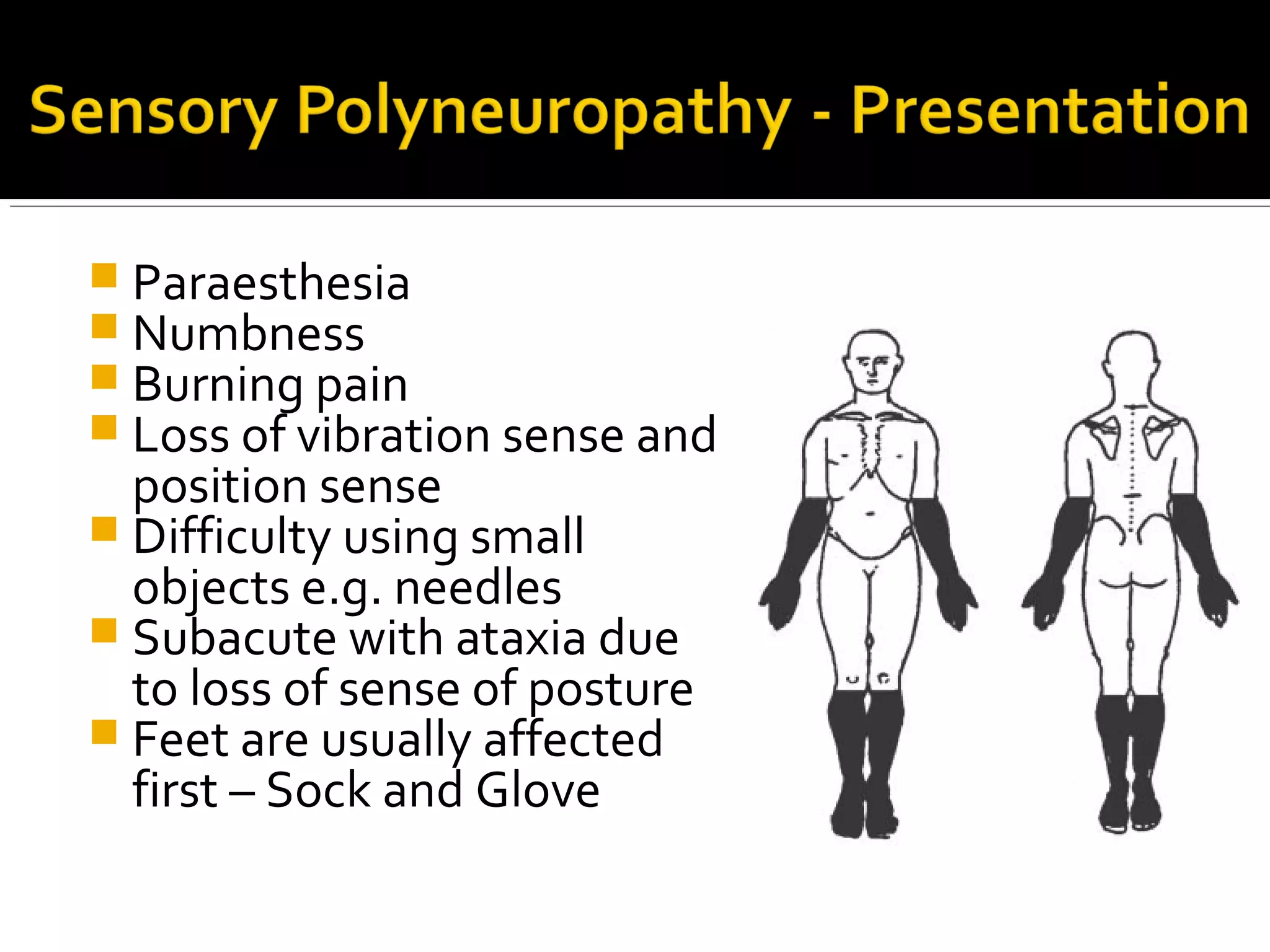
 Feet are usually affected
first – Sock and Glove
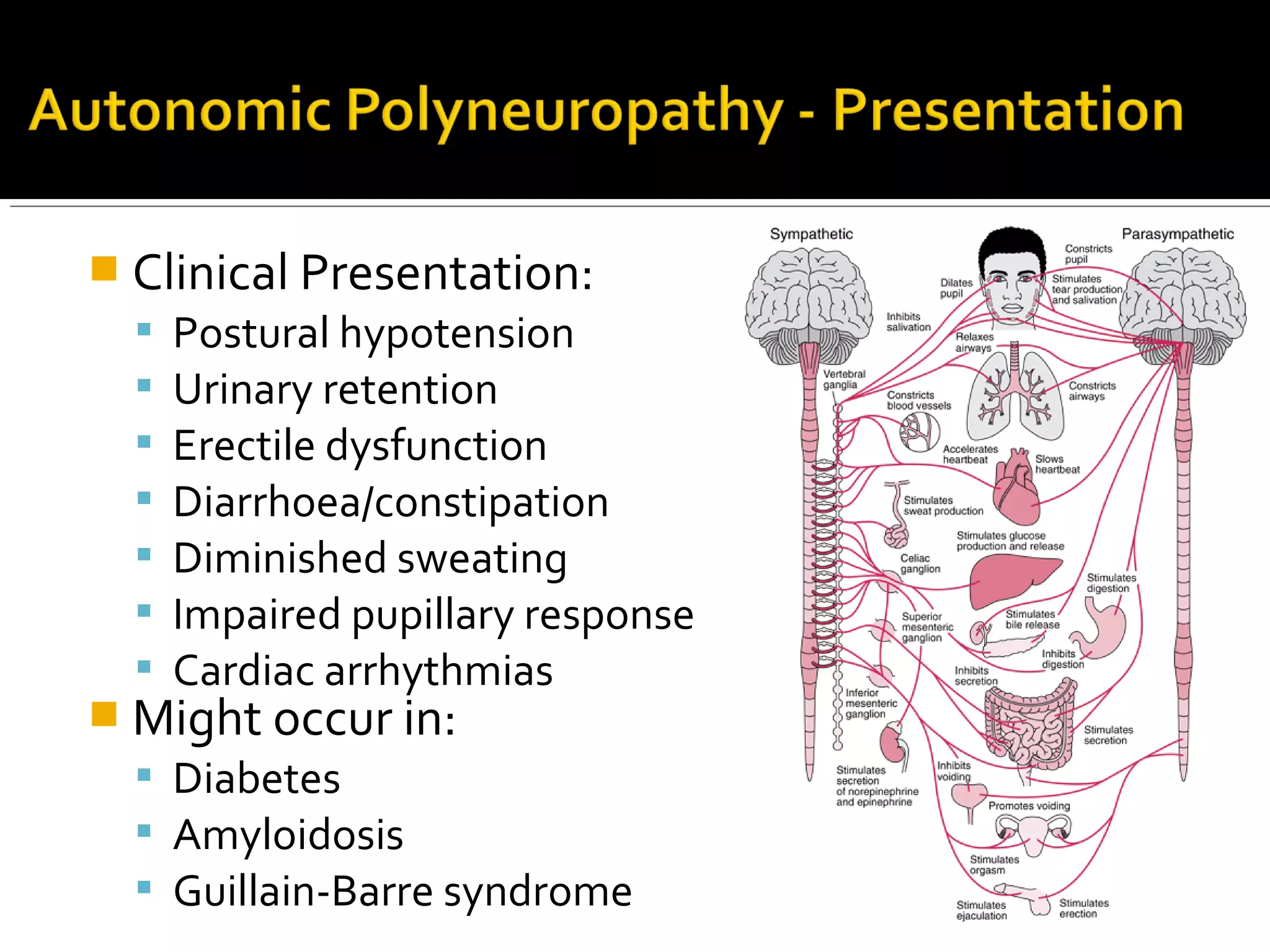
 Clinical Presentation:
 Postural hypotension
 Urinary retention
 Erectile dysfunction
 Diarrhoea/constipation
 Diminished sweating
 Impaired pupillary response
 Cardiac arrhythmias
 Might occur in:
 Diabetes
 Amyloidosis
 Guillain-Barre syndrome
 Clinical presentation:
 Progressive weakness or clumsiness
 Difficulty walking (falling or stumbling)
 Respiratory difficulties (falling vital capacity)
 Wasting
 Foot or wrist drop might be seen
 Reflexes absent or reduced
 Directly related to the duration and degree of
abnormal metabolic control – occurring relatively
early in disease
 Due to metabolic disturbance and accumulation of
fructose and sorbitol in Scwann cells  degradation
 Types of Diabetic neuropathy
 Symmetrical mainly sensory neuropathy
 Acute painful neuropathy
 Mononeuropathy and mononeuritis multiplex
 Diabetic amyotrophy
 Autonomic Neuropathy
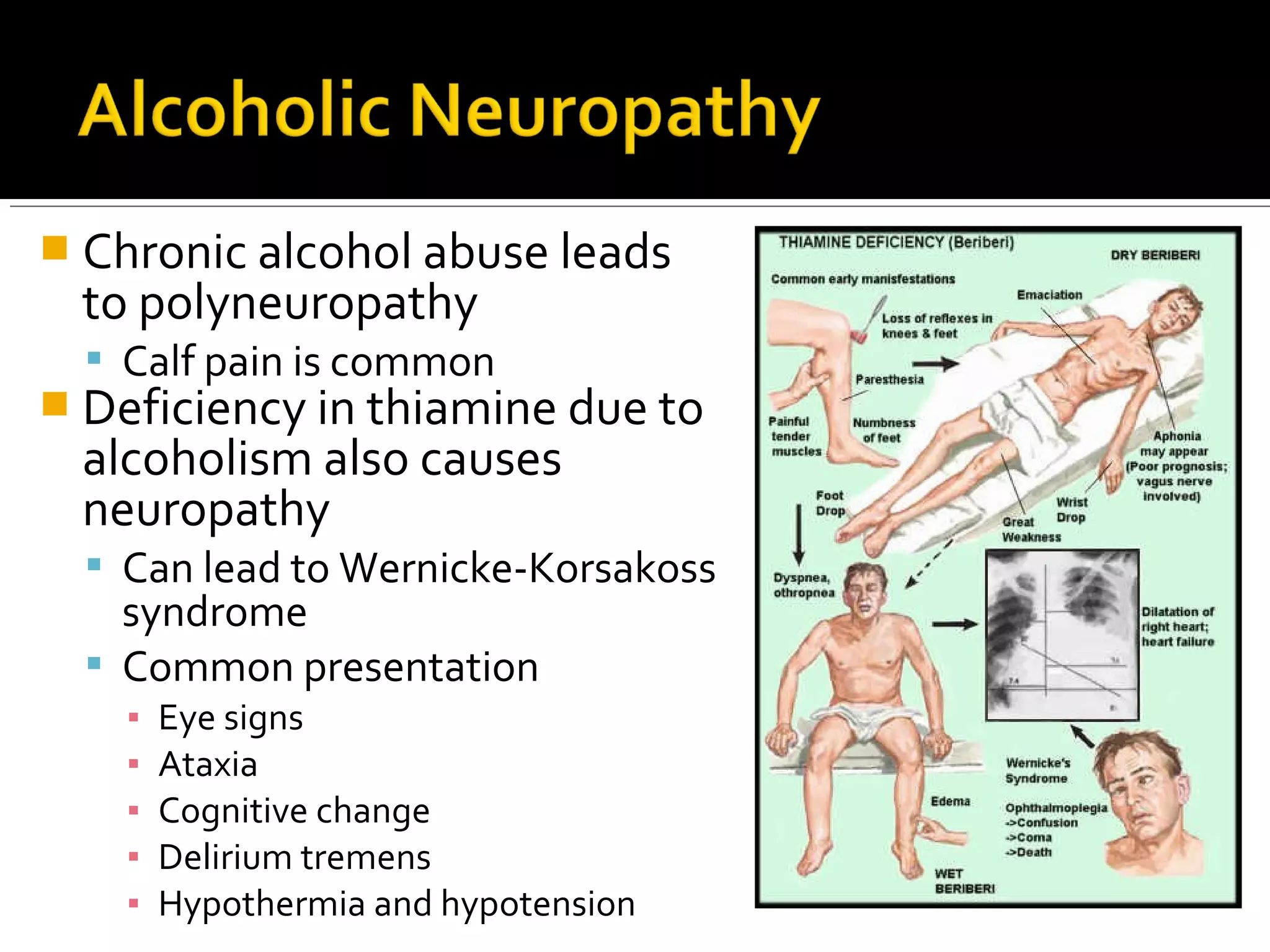
 Chronic alcohol abuse leads
to polyneuropathy
 Calf pain is common
 Deficiency in thiamine due to
alcoholism also causes
neuropathy
 Can lead to Wernicke-Korsakoss
syndrome
 Common presentation
▪ Eye signs
▪ Ataxia
▪ Cognitive change
▪ Delirium tremens
▪ Hypothermia and hypotension
 Acute polyneuropathy – acute inflammatory or postinfective
neuropathy
 Usually demyelinating but can be axonal
 Monophasic – following Campylobacter jejuni and CMV
infections
 Infection induces antibody responses against peripheral nerves
 Paralysis 1-3 weeks following infection
 Weakness of distal limb muscles and/or distal numbness
 Symptoms progress proximally
 Loss of tendon reflexes
 Facial muscle weakness
 Autonomic features - uncommon
 Might need ventilatory support
 SC heparin is required to reduce risk of thrombosis
 Spontaneous recovery begins after several weeks
 Cancer - Paraneoplastic syndrome, sometimes
with anti-neuronal antibodies
 Polyarteritis nodusa
 Sarcoidosis
 Giant cell arteritis
 Rheumatoid disease
 Vitamin B12 defeciency
 Charcot-Marie-Tooth disease
 Thyroid disease
 Uraemia
 Cranial polyneuropathy
 Urine – glucose, protein
 Haematology – FBC, ESR, vitamin B12, folate
 Biochemistry – fasting glucose, RFT, LFT,
TSH
 Neurophysiology testing
 Nerve conduction studies
 Needle electromyography
 Nerve biopsy
 Need to find cause of neuropathy to treat
 If pain can give antiepileptic, antidepressant
drugs or tramadol.
 Foot care – good shoes
 Weight reduction
 Walking aids for those with severe leg
weakness
 Occupational therapy
 Physiotherapy
 Images from Google Images and Kumar and
Clark

Peripheral Neuropathy

  • 2.
     Refers tonerves outside the brain and spinal cord.  Broken down into  Sensory  Motor  Autonomic ▪ Parasympathetic ▪ Sympathetic
  • 4.
     Neuropathies mightbe acute or chronic  Mononeuropathy – affecting a single nerve  Polyneuropathy – diffuse, symmetrical disease usually starting peripherally.  Mononeuritis multiplex – affects several or multiple nerves.  Radiculopathy – disease affecting nerve roots  Peripheral Neuropathy can affect:  Sensory pathways  Motor pathways  Autonomic pathways
  • 5.
  • 6.
     There are6 possible mechanisms of peripheral nerve degeneration  Demyelination – e.g. Guillain-Barre Syndrome  Axonal degeneration - e.g. toxic neuropathies  Wallerian degeneration  Compression – e.g. carpal tunnel syndrome  Infarction – e.g. diabetes  Infiltration – e.g. leprosy and granulomas
  • 7.
    The causes ofperipheral neuropathy are often unknown but the two main causes are:  Diabetic Neuropathy  Nutritional, including alcohol (B1 deficiency)
  • 8.
     Other causes Infection – HIV, leprosy, diptheria, tetanus, botulism  Heavy metal poisoning e.g. Lead and mercury  Malignancy  Metabolic – hypothyroidism, liver failure, renal failure  Postinfective polyneuritis – Guillain-Barre Syndrome  Sarcoidosis  Drugs – isoniazid, vincrinstine, phenytoin, gold, excess vitamin B6  Congenital – Charcot-Marie Tooth syndrome
  • 9.
     Pneumonic toremember DAVID:  Diabetes  Alcoholism  Vitamin deficiency – B12  Infective/inherited – Guillain-Barre  Drugs – e.g. isoniazid
  • 10.
     Peripheral nervecompression and entrapment  Carpal tunnel syndrome is a common mononeuropathy – Median nerve entrapement  Clinical presentation  Pain, tingling and paraesthesia on palmar aspect of hand and fingers  Weakness of thenar muscles and wasting of abductor pollicis brevis  Nocturnal  Pain may extend to arm and shoulder  Tinel’s and Phalen’s tests are positive.
  • 11.
     Paraesthesia  Numbness Burning pain  Loss of vibration sense and position sense  Difficulty using small objects e.g. needles  Subacute with ataxia due to loss of sense of posture  Feet are usually affected first – Sock and Glove
  • 12.
     Clinical Presentation: Postural hypotension  Urinary retention  Erectile dysfunction  Diarrhoea/constipation  Diminished sweating  Impaired pupillary response  Cardiac arrhythmias  Might occur in:  Diabetes  Amyloidosis  Guillain-Barre syndrome
  • 13.
     Clinical presentation: Progressive weakness or clumsiness  Difficulty walking (falling or stumbling)  Respiratory difficulties (falling vital capacity)  Wasting  Foot or wrist drop might be seen  Reflexes absent or reduced
  • 14.
     Directly relatedto the duration and degree of abnormal metabolic control – occurring relatively early in disease  Due to metabolic disturbance and accumulation of fructose and sorbitol in Scwann cells  degradation  Types of Diabetic neuropathy  Symmetrical mainly sensory neuropathy  Acute painful neuropathy  Mononeuropathy and mononeuritis multiplex  Diabetic amyotrophy  Autonomic Neuropathy
  • 15.
     Chronic alcoholabuse leads to polyneuropathy  Calf pain is common  Deficiency in thiamine due to alcoholism also causes neuropathy  Can lead to Wernicke-Korsakoss syndrome  Common presentation ▪ Eye signs ▪ Ataxia ▪ Cognitive change ▪ Delirium tremens ▪ Hypothermia and hypotension
  • 16.
     Acute polyneuropathy– acute inflammatory or postinfective neuropathy  Usually demyelinating but can be axonal  Monophasic – following Campylobacter jejuni and CMV infections  Infection induces antibody responses against peripheral nerves  Paralysis 1-3 weeks following infection  Weakness of distal limb muscles and/or distal numbness  Symptoms progress proximally  Loss of tendon reflexes  Facial muscle weakness  Autonomic features - uncommon  Might need ventilatory support  SC heparin is required to reduce risk of thrombosis  Spontaneous recovery begins after several weeks
  • 17.
     Cancer -Paraneoplastic syndrome, sometimes with anti-neuronal antibodies  Polyarteritis nodusa  Sarcoidosis  Giant cell arteritis  Rheumatoid disease  Vitamin B12 defeciency  Charcot-Marie-Tooth disease  Thyroid disease  Uraemia  Cranial polyneuropathy
  • 18.
     Urine –glucose, protein  Haematology – FBC, ESR, vitamin B12, folate  Biochemistry – fasting glucose, RFT, LFT, TSH  Neurophysiology testing  Nerve conduction studies  Needle electromyography  Nerve biopsy
  • 19.
     Need tofind cause of neuropathy to treat  If pain can give antiepileptic, antidepressant drugs or tramadol.  Foot care – good shoes  Weight reduction  Walking aids for those with severe leg weakness  Occupational therapy  Physiotherapy
  • 20.
     Images fromGoogle Images and Kumar and Clark

Editor's Notes

  • #5 Mononeuritis multiplex – frequently evolves quickly – Vasculitis – polyarteritis nodosa, connective tissue disease (RA), malignancy, diabetes mellitus, sarcoidosis, HIV. Can be hard to distinguish from polyneuropathy if there is symmetrical distrubution.
  • #6 The mildest grade is called neurapraxia. Neurapraxia is a reduction or complete block of conduction across a segment of a nerve with axonal continuity conserved. More specifically, it is dysfunction and/or paralysis without loss of nerve sheath continuity and peripheral wallerian degeneration. Nerve conduction is preserved both proximal and distal to the lesion but not across the lesion. A person's foot "falling asleep" after his legs have been crossed is an example of a functional loss without abnormal change. Axonotmesis is a more severe grade of nerve injury compared to neurapraxia. Axonotmesis is a result of damage to the axons with preservation of the neural connective tissue sheath (endoneurium), epineurium, Schwann cell tubes, and other supporting structures. Thus, the internal architecture is relatively preserved. This can guide proximal axonal regeneration to reinnervate distal target organs. Distal wallerian degeneration occurs in axonotmesis. Neurotmesis is the most severe grade of peripheral nerve injury. It occurs when the axon, myelin, and connective tissue components are damaged and disrupted or transected. Recovery through axonal regeneration cannot occur. This grade of injury includes nerve lesions in which external continuity is preserved but intraneural fibrosis occurs and blocks axonal regeneration.
  • #7 Demyelination Schwann cell damage leads to myelin sheath disruption. This causes marked slowing of conduction, seen for example in Guillain–Barré syndrome, post-diphtheritic neuropathy and many hereditary sensorimotor neuropathies. Axonal degeneration Axon damage leads to the nerve fibre dying back from the periphery. Conduction velocity initially remains normal (cf. demyelination) because axonal continuity is maintained in surviving fibres. Axonal degeneration occurs typically in toxic neuropathies. Wallerian degeneration This describes changes following nerve section. Both axon and distal myelin sheath degenerate, over several weeks. is a process that results when a nerve fiber is cut or crushed, in which the part of the axon separated from the neuron's cell body degenerates distal to the injury Compression Focal demyelination at the point of compression causes disruption of the myelin sheath. This occurs typically in entrapment neuropathies, e.g. carpal tunnel syndrome (p. 508). Infarction Microinfarction of vasa nervorum occurs in diabetes and arteritis, e.g. polyarteritis nodosa, Churg–Strauss syndrome (medium and small vessel autoimmune vasculitis leading to necrosis, effects peripheral nerves, lungs, appearing like asthma, and GI vessels – Severe nerve pains in the legs, arms and hands – in late disease) (p. 870). Wallerian degeneration occurs distal to the ischaemic zone. Infiltration Infiltration of peripheral nerves by inflammatory cells occurs in leprosy and granulomas, e.g. sarcoid, and by neoplastic cells, causing neural metastases.
  • #9 Lead – motor neuropathy Arsenic – polyneuropathy, initially sensory.
  • #11 Associated with hypothyroidism ■ diabetes mellitus ■ pregnancy (third trimester) ■ obesity ■ rheumatoid disease ■ acromegaly ■ amyloid ■ renal dialysis patients. Trauma Do nerve conduction studies to confirm diagnosis Treatment A wrist splint at night or a local steroid injection (p. 509) in the wrist gives relief in mild cases. In pregnancy CTS is often self-limiting as fluid retention subsides postpartum. Reduction in obesity usually alleviates CTS. Surgical decompression of the carpal tunnel is the definitive treatment. Foot drop is another common mononeuropathy Trauma Ulner nerve compression in cubital tunnel – clawaing of the hand, sensory loss in one-half finger on ulnar side Radial nerve compression at humerus – Saturday night palsy
  • #12 Usually starts distally and is usually symmetrical Ankle jerks may be depressed Foot plantar flexion remains strong Might get distal muscle wasting and weakness with reduced/absent tendon relfexes Knowing duration or course of symptoms is important in finding cause
  • #13 Motor neuropathy – progressive weakness or clumsiness of hands, difficulty walking (falling, stumbling), respiratory difficulty (falling vital capacity) – signs of LMN lesion – wasting, weakness most marked in distal muscles of hands and feet (foot or wrist drop). Reflexes reduced or absent Cranial nerves – swallowing/speaking difficulties, diplopia.
  • #15 Symmetrical mainly sensory neuropathy – “stocking and glove” distribution. Not noticed for while – like walking on cotton wool, loss of balance when walking in dark as no proprioception. Acute painful neuropathy – often felt in shins and feet, worse at night. Treat with TCA, gabapentin and carbamezapine if chronic. TENS and acupuncture Mononeuropathy and mononeuritis multiplex – most commonly in CN III and VI, and carpal tunnel syndrome. Sudden and painful onset, mostly full spontaneous recovery Diabetic amyotrophy – this is progressive wasting of muscle tissues. Usually starting with Quads Autonomic neuropathy = CV and bladder problems; silent MI; erectile dysfunction delayed nerve signal transit time Diabetic Foot Most diabetic problems are avoidable, but patients must be educated about the principles of foot care, as foot problems are the major cause of admission for diabetic patients. Older patients should visit a chiropodist regularly and not cut their own toe nails.
  • #17 This is established on clinical grounds and confirmed by nerve conduction studies; these show slowing of conduction in the common demyelinating form, prolonged distal motor latency and/or conduction block. CSF protein is often raised to 1–3 g/L; cell count and glucose level remain normal. Management – IV immunoglobulins are given to reduce duration and severity of parlaysis in first 2 weeks. Screen for IgA deficiency first. Plasma exchange can also be used. Steroids useless. Recovery takes 6 weeks for respiratory. Being mobile may take months. Some 15% die or are left disabled.
  • #18 Uraemia – progressive sensorimotor neuropathy – usually improves following transplant Thyroid – hypo/hyper might show mild chronic sensorimotor neuropathy. Cranial polyneuropathy This means multiple cranial nerve lesions. These can develop in diabetes, malignant infiltration, particularly with nasopharyngeal and breast carcinoma, lymphomas, sarcoidosis, as part of a paraneoplastic syndrome and occasionally with giant cell arteritis. Relapsing and remitting cranial polyneuropathy of unknown cause is sometimes seen in South East Asia. Refsum’s disease This is an autosomal recessive rarity. It is a treatable sensorimotor polyneuropathy with ataxia, retinal damage and deafness, due to defective phytanic acid metabolism. Vit b6 def – mainly sensory neuropathy – limb numbness – usually after TB is treated with isonizid so give pyridoxine (b6) with isonizid. Subacute combined degeneration of the cord (SACD). Combined cord and peripheral nerve damage is a sequel of Addisonian pernicious anaemia and rarely other causes of vitamin B12 deficiency (p. 399). Initially there is numbness and tingling of fingers and toes, distal sensory loss, particularly posterior column, absent ankle jerks and, with cord involvement, exaggerated knee jerks and extensor plantars. Optic atrophy and retinal haemorrhage may occur. In later stages sphincter disturbance, severe generalized weakness and dementia develop. Exceptionally, dementia develops in the early stages. Macrocytosis with megaloblastic marrow is usual though not invariable in SACD. Parenteral B12 reverses nerve damage but has little effect on the cord and brain. Without treatment, SACD is fatal within 5 years. Copper deficiency is a very rare cause of a similar picture.