PN Junction Diodes
PN Junctions
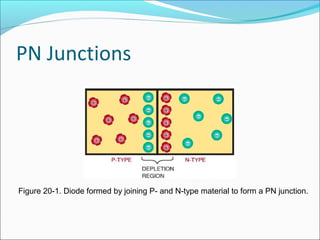
Figure 20-1. Diode formed by joining P- and N-type material to form a PN junction.
PN Junctions (cont’d.)
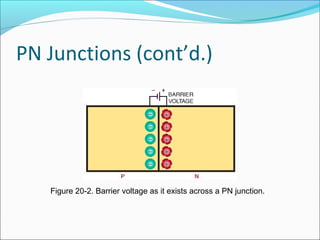
Figure 20-2. Barrier voltage as it exists across a PN junction.
Diode Biasing
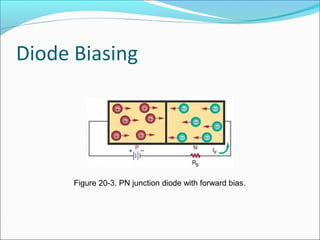
Figure 20-3. PN junction diode with forward bias.
Diode Biasing (cont’d.)
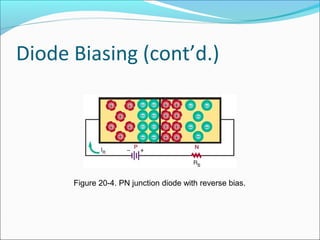
Figure 20-4. PN junction diode with reverse bias.
Diode Characteristics
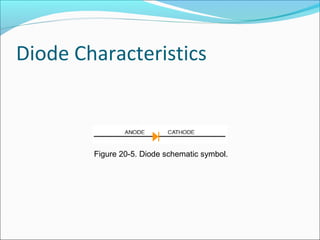
Figure 20-5. Diode schematic symbol.
Diode Characteristics (cont’d.)
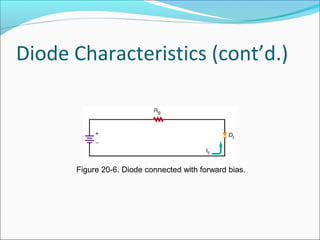
Figure 20-6. Diode connected with forward bias.
Diode Characteristics (cont’d.)
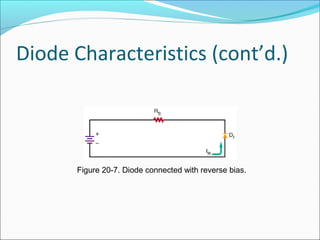
Figure 20-7. Diode connected with reverse bias.
Diode Construction Techniques
Types of PN junctions
Grown junction
Alloyed junction
Diffused junction
Diode Construction Techniques
(cont’d.)
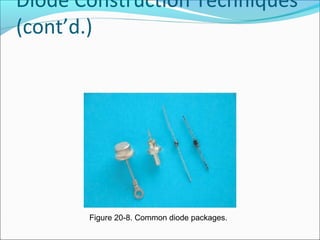
Figure 20-8. Common diode packages.
Diode Construction Techniques
(cont’d.)
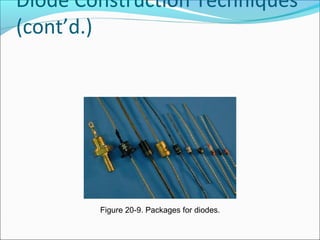
Figure 20-9. Packages for diodes.
Testing PN Junction Diodes
Ohmmeter
Checks the forward-to-reverse-resistance ratio of a
diode
Forward-biased diode
Low resistance
Reverse-biased diode
High resistance
Summary
A junction diode is created by joining N-type and P-
type materials together
The region near the junction is referred to as the
depletion region
The charge at the junction creates a voltage called the
barrier voltage
A diode that is forward biased conducts current
Summary (cont’d.)
A diode that is reverse biased conducts only a small
leakage current
Diodes can be constructed by the grown junction,
alloyed junction, or diffused junction method
A diode is tested by comparing the forward to the
reverse resistance with an ohmmeter

pn junction diodes