
Capacitive AC Circuits
Capacitors in AC Circuits
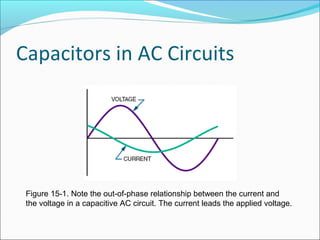
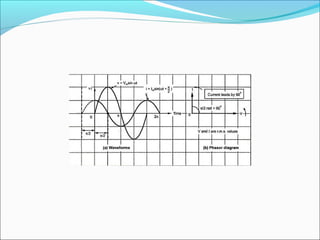
Figure 15-1. Note the out-of-phase relationship between the current and
the voltage in a capacitive AC circuit. The current leads the applied voltage.
Capacitors in AC Circuits
(cont’d.)
Capacitive reactance
Opposition a capacitor offers to the applied AC voltage
Represented by Xc
Measured in ohms
Capacitors in AC Circuits
(cont’d.)
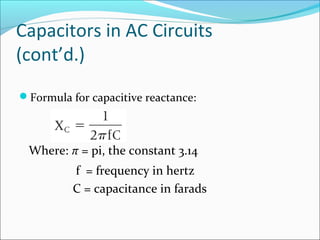
Formula for capacitive reactance:
Where: π = pi, the constant 3.14
f = frequency in hertz
C = capacitance in farads
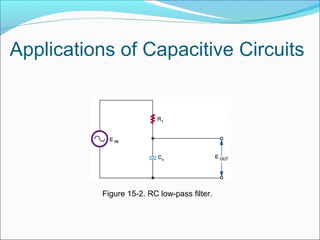
Figure 15-2. RC low-pass filter.
Applications of Capacitive Circuits
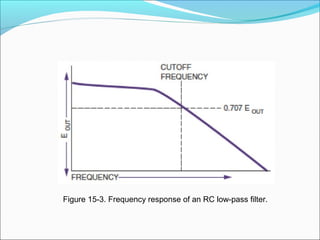
Figure 15-3. Frequency response of an RC low-pass filter.
Applications of Capacitive Circuits
(cont’d.)
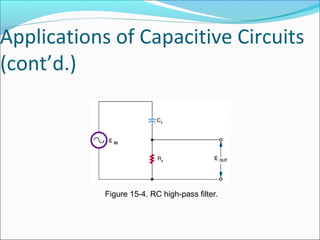
Figure 15-4. RC high-pass filter.
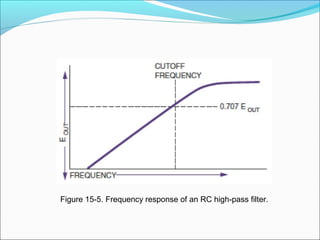
Figure 15-5. Frequency response of an RC high-pass filter.
Applications of Capacitive Circuits
(cont’d.)
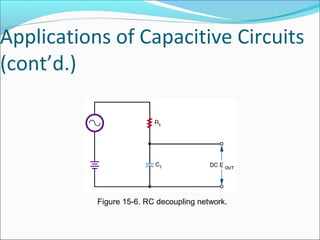
Figure 15-6. RC decoupling network.
Applications of Capacitive Circuits
(cont’d.)
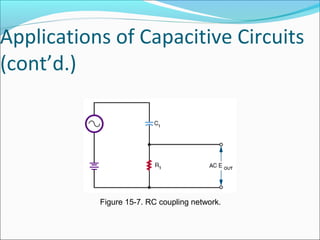
Figure 15-7. RC coupling network.
Applications of Capacitive Circuits
(cont’d.)
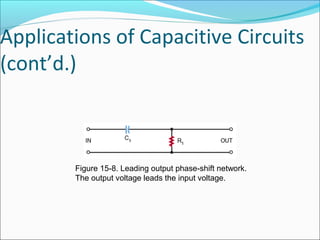
Figure 15-8. Leading output phase-shift network.
The output voltage leads the input voltage.
Applications of Capacitive Circuits
(cont’d.)
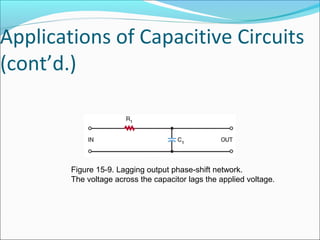
Figure 15-9. Lagging output phase-shift network.
The voltage across the capacitor lags the applied voltage.
Applications of Capacitive Circuits
(cont’d.)
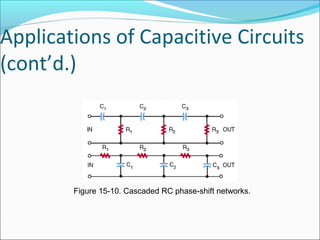
Figure 15-10. Cascaded RC phase-shift networks.
Summary
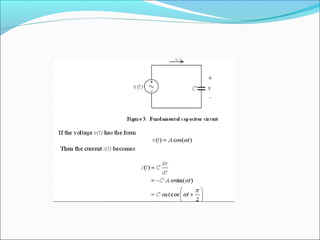
When an AC voltage is applied to a capacitor, it gives
the appearance of current flow
The capacitor charging and discharging represents
current flow
The current leads the applied voltage by 90 degrees in
a capacitive circuit
Summary (cont’d.)
Capacitive reactance is the opposition a capacitor
offers to the applied voltage
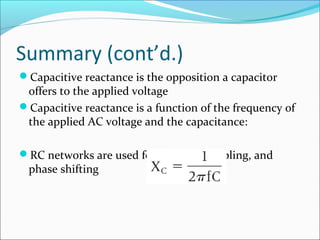
Capacitive reactance is a function of the frequency of
the applied AC voltage and the capacitance:
RC networks are used for filtering, coupling, and
phase shifting
capacitive ac circuits

capacitive ac circuits

  • 1.
  • 2.
    Capacitors in ACCircuits Figure 15-1. Note the out-of-phase relationship between the current and the voltage in a capacitive AC circuit. The current leads the applied voltage.
  • 4.
    Capacitors in ACCircuits (cont’d.) Capacitive reactance Opposition a capacitor offers to the applied AC voltage Represented by Xc Measured in ohms
  • 5.
    Capacitors in ACCircuits (cont’d.) Formula for capacitive reactance: Where: π = pi, the constant 3.14 f = frequency in hertz C = capacitance in farads
  • 6.
    Figure 15-2. RClow-pass filter. Applications of Capacitive Circuits
  • 7.
    Figure 15-3. Frequencyresponse of an RC low-pass filter.
  • 8.
    Applications of CapacitiveCircuits (cont’d.) Figure 15-4. RC high-pass filter.
  • 9.
    Figure 15-5. Frequencyresponse of an RC high-pass filter.
  • 10.
    Applications of CapacitiveCircuits (cont’d.) Figure 15-6. RC decoupling network.
  • 11.
    Applications of CapacitiveCircuits (cont’d.) Figure 15-7. RC coupling network.
  • 12.
    Applications of CapacitiveCircuits (cont’d.) Figure 15-8. Leading output phase-shift network. The output voltage leads the input voltage.
  • 13.
    Applications of CapacitiveCircuits (cont’d.) Figure 15-9. Lagging output phase-shift network. The voltage across the capacitor lags the applied voltage.
  • 14.
    Applications of CapacitiveCircuits (cont’d.) Figure 15-10. Cascaded RC phase-shift networks.
  • 15.
    Summary When an ACvoltage is applied to a capacitor, it gives the appearance of current flow The capacitor charging and discharging represents current flow The current leads the applied voltage by 90 degrees in a capacitive circuit
  • 16.
    Summary (cont’d.) Capacitive reactanceis the opposition a capacitor offers to the applied voltage Capacitive reactance is a function of the frequency of the applied AC voltage and the capacitance: RC networks are used for filtering, coupling, and phase shifting